This article contains advertising. Some of the hotel, tour, activity, flight and transfer links in it are paid links: if you book through one, we get a commission from the booking company, and your price is the same either way. It never affects what we recommend. Affiliate disclosure
Two days in Athens is enough to see the Acropolis, its museum, the Ancient Agora and the old centre properly, as long as each morning goes to one big ticketed site and the afternoons go to walking. This 2 days in Athens itinerary puts the Acropolis at its 08:00 opening and the Acropolis Museum on day one, then the Agora, the market streets, Syntagma and a Lycabettus sunset on day two, with the swaps to make when the calendar, the heat or your feet object.
It’s built for a first visit with two full days, which usually means two nights. The caveat that shapes it: from September the ancient sites close earlier every fortnight, and in a summer heatwave the Acropolis can shut through the afternoon, so every ticketed stop sits in a morning. For shorter or longer stays, see our Athens itineraries for every trip length. Details checked 27 September 2026 against the Hellenic Ministry of Culture, the Acropolis Museum, the National Archaeological Museum, the Panathenaic Stadium, the Presidency of the Hellenic Republic and OASA.
| At a glance | Two days in Athens |
|---|---|
| Cost | €82 a person in tickets for the core plan (Acropolis €30, Acropolis Museum €20, Ancient Agora €20, Panathenaic Stadium €12), or €92 with the Roman Agora; €20 for a 3-day transport ticket that includes the airport both ways |
| Time needed | Two full days of 9-10 hours, with a long mid-afternoon break from June to September |
| Getting around | On foot, almost entirely. Useful metro stations: Akropoli (Line 2), Thissio (Line 1), Monastiraki (Lines 1 and 3) and Syntagma (Lines 2 and 3) |
| Book ahead? | The Acropolis: book the 08:00 opening on the official Hellenic Heritage platform, tickets.hh.gr |
| Best time | April to early June and mid-September to October; in July and August, start at 08:00 and hide from 14:00 to 17:00 |
What’s changed in 2026?
Plenty of two-day plans online were written for prices and passes that no longer exist. What affects this route:
- No combined ticket. The €30 five-day pass for the Acropolis and six other sites is no longer sold. Each site sells its own ticket now, and all seven bought separately cost €105.
- One Acropolis price all year: €30 (reduced €15), winter included. The free days are 6 March, 18 April, 18 May, the last weekend of September and 28 October, plus the first and third Sundays of each month from November to March.
- The Acropolis Museum is €20 (reduced €10) in every season.
- The Ancient Agora’s entrance has changed. Look up which gate is in use on the site’s hh.gr page before you go, and whether the upper floor of the Stoa of Attalos is open.
- The Kerameikos is open again after a long closure for works, with its own €10 ticket.
- The Panathenaic Stadium costs €12 (reduced €6) since 1 October 2025.
The 2 days in Athens itinerary on one page
Here’s the skeleton. The times are targets rather than a timetable; the only ones that really matter are the two 08:00 starts.
| Slot | Day 1: the Acropolis side | Day 2: old city to new |
|---|---|---|
| 08:00 | The Acropolis, leaving by the South Slope | Ancient Agora and the Temple of Hephaestus |
| Late morning | Acropolis Museum | Roman Agora, Monastiraki and the market streets |
| Lunch | Makrygianni or Koukaki | Monastiraki or Psirri |
| Afternoon | A proper rest | Syntagma on the hour, the National Garden, a rest |
| Late afternoon | Plaka and Anafiotika | Panathenaic Stadium |
| Sunset | Areopagus or Philopappos Hill | Lycabettus Hill |
The logic is simple. The two tickets that matter most take the cool, quiet first hours; the museum absorbs the midday heat; the free hills fill the evenings, when the sites have shut anyway. With only 24 hours, our one day in Athens itinerary squeezes the essentials into a single day. With a third day, switch to the 3-day Athens itinerary rather than stretching this one.
Day 1: the Acropolis, its museum and Plaka
Day one never strays much more than a kilometre from the rock, but a lot of it is uphill on marble worn slippery by centuries of feet. Wear shoes with grip.
08:00: the Acropolis, at opening
€30, 2 to 3 hours. Book the 08:00 slot as soon as your dates are fixed. Buy it on the Ministry of Culture’s official Hellenic Heritage platform at tickets.hh.gr, which sells the standard ticket (€30, reduced €15).
Why the first slot and not the last? It’s the coolest part of the day on a hilltop with almost no shade, and the morning is the safest bet against the heat, though temporary closures can still affect a visit. In heatwaves the Ministry has closed the Acropolis through the hottest hours (on 8 July 2025 it was shut until 17:00), and from September the closing time creeps earlier every fortnight. In the second half of October the last entry is 17:40, so check the sunset time for your date before you plan an evening visit.
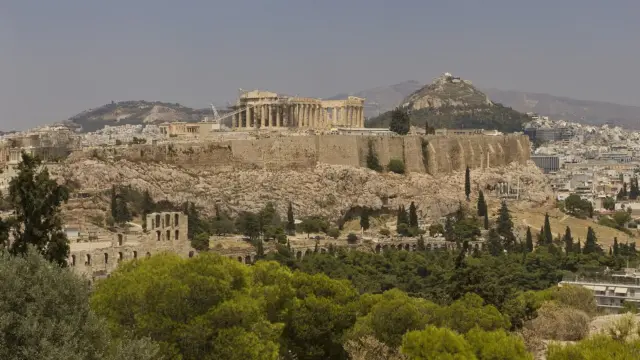
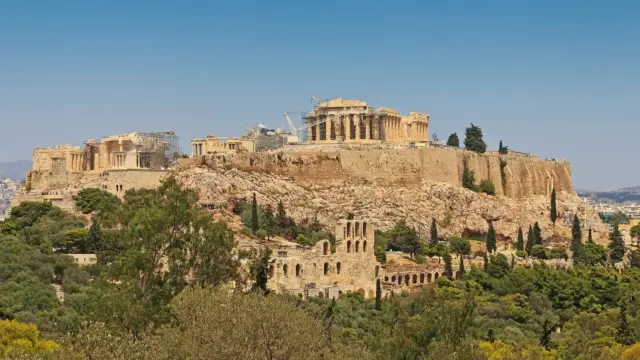
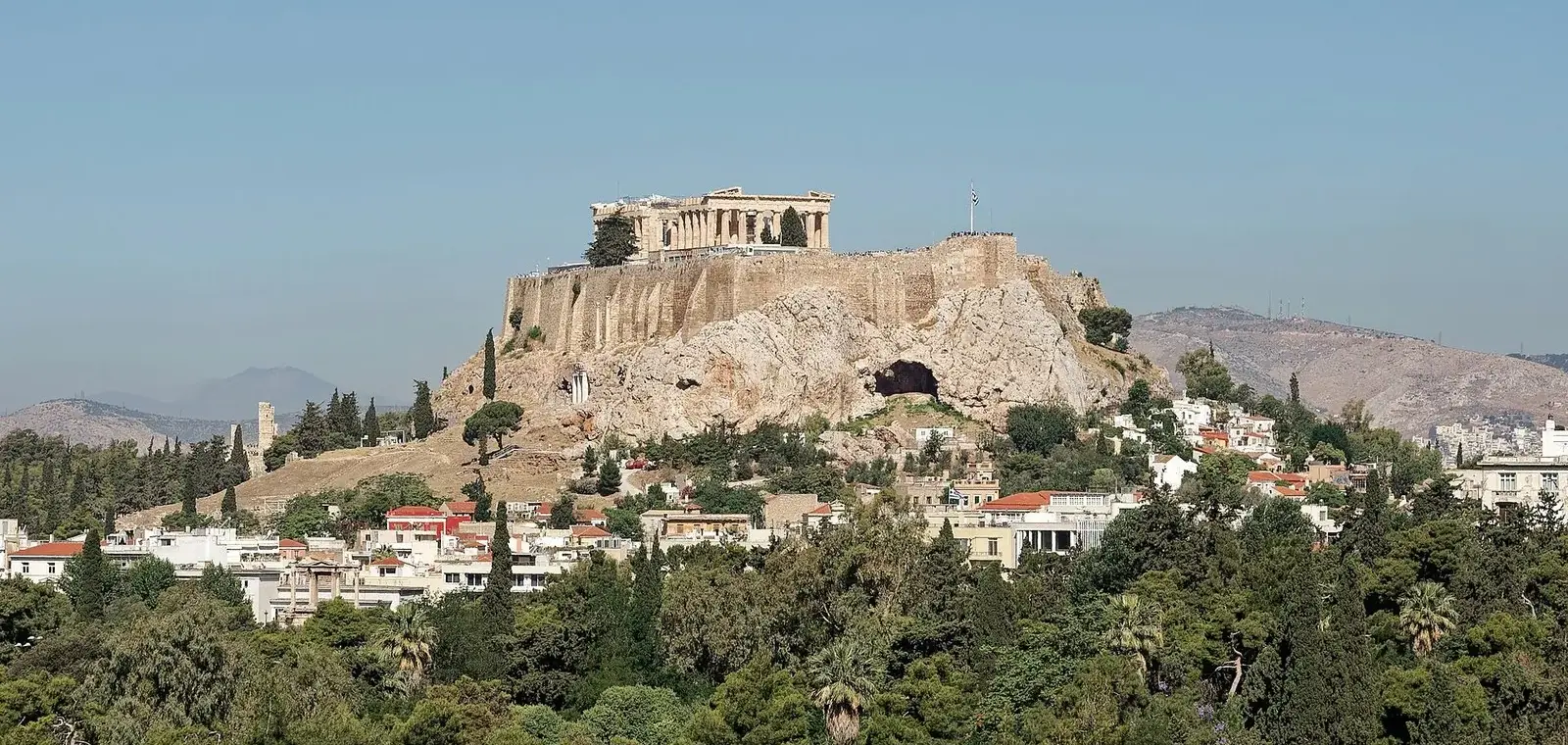
Walk up the pedestrian Dionysiou Areopagitou from Akropoli station to the main entrance at the west end. Climb through the Propylaia, the monumental gateway, with the little Temple of Athena Nike on your right; then walk the length of the Parthenon, which you circle rather than enter; then cross to the Erechtheion and its porch of Caryatids. Those six maidens are casts. Five of the originals are in the Acropolis Museum, where you’ll be in a couple of hours, and the sixth is in the British Museum.
Leave through the Beulé Gate and follow the signs south down the slope instead of going back out the way you came. The path runs along the South Slope to the Theatre of Dionysus, where Sophocles and Euripides first staged their plays, and lets you out at the South Slope gate on Dionysiou Areopagitou at Thrasyllou Street, a short walk from the museum.
Plan it: €30 (reduced €15) all year; opens 08:00 in every season; last entry 20 minutes before closing, from 19:40 in midsummer down to 17:40 in late October and 16:40 from November; Akropoli (Line 2); allow 2 to 3 hours with the slopes. The site rules ban eating and smoking, so have breakfast first.
The ticket is single-entry: once you leave the summit or the South Slope you can’t go back in, so finish your photographs first. Visitors with disabilities use a specially designed entrance north of the main entrance, where a lift serves the north side of the rock; it can be suspended in extreme weather, so contact the site about access before you visit.
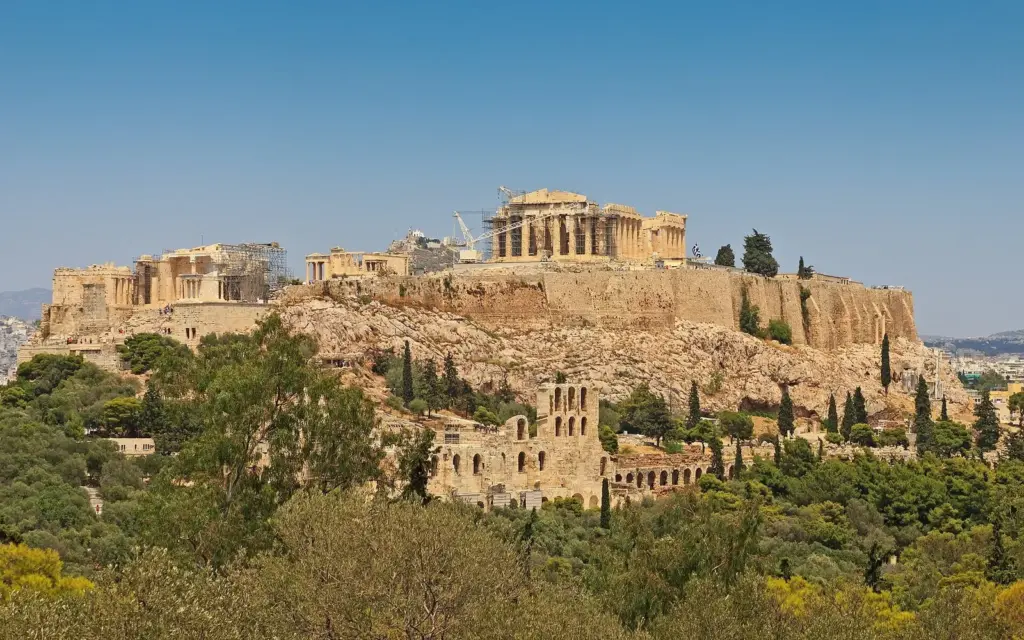
10:45: the Acropolis Museum
€20, about 2 hours in this plan. Bags go through an X-ray at the door and backpacks go to the ground-floor cloakroom, so bring as little as you can. Two hours is enough if you’re selective. Walk slowly over the glass floor above the excavated ancient streets at the entrance. On the first floor, the Archaic gallery holds the korai, marble maidens with traces of their paint, and the five Caryatids stand on their balcony nearby. Then go straight up to the top-floor Parthenon Gallery, laid out to the temple’s dimensions and turned to line up with it, with the Parthenon itself framed in the windows. The frieze runs round the walls at eye level, original marble alternating with white plaster casts of the pieces in London, and those pale gaps argue the case for the sculptures’ return better than any placard.
Should the museum come first, for context? Only in winter, when noon on the rock is pleasant and reversing the order costs nothing, except that from November to March the museum closes at 17:00 from Monday to Thursday. From April to October the order above wins: the rock while it’s cool, the galleries while it isn’t.
Plan it: €20 (reduced €10) all year; April to October 09:00-20:00 Tuesday to Sunday, 09:00-17:00 on Monday and until 22:00 on Friday; November to March 09:00-17:00 Monday to Thursday, 09:00-22:00 on Friday and 09:00-20:00 at weekends; last entry 30 minutes before closing; beside Akropoli station (Line 2).
13:00: lunch, then stop
The streets behind the museum, Makrygianni and Koukaki, are residential, with ordinary tavernas and souvlaki counters that cost less than the terraces facing the rock. After lunch, go back to your room. From June to September this isn’t optional: the ticketed sites are done, and at 15:00 in July the marble is a griddle. You’ll be out until late.
17:00: Plaka and Anafiotika on foot
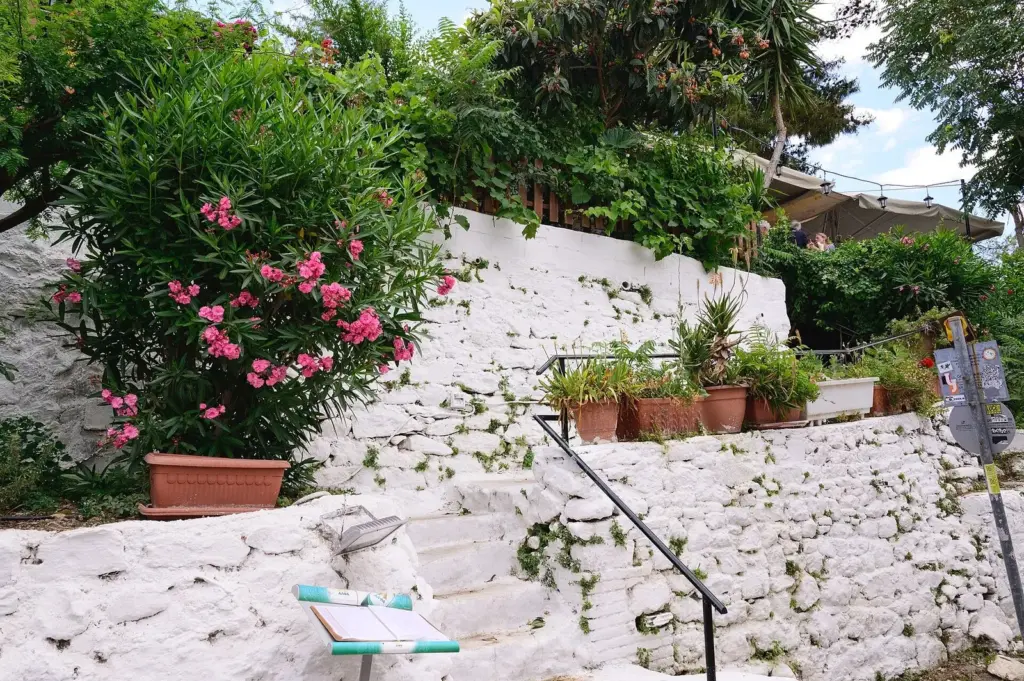
Free, 1.5 hours. Start at the Lysicrates Monument, a small round monument of the 4th century BC, and follow Tripodon Street, which traces the ancient Street of the Tripods, into upper Plaka. Where the houses meet the rock, Anafiotika begins: whitewashed cottages and stepped lanes put up in the 19th century by builders from the Cycladic island of Anafi, which is why this corner looks like an island village. It’s tiny and lived in, its paths are narrow and stepped, and the only sensible pace is slow.
From its western end, beside the church of Agios Symeon, drop to Theorias Street and follow it west along the north slope. The stepped Klepsydras lane falls away from it towards the Roman Agora, where you’ll be tomorrow morning; carry on west and you reach the Areopagus. Lower Plaka, around Adrianou and Kydathineon Streets, is the souvenir-and-menu-board strip: fine to wander, rarely the place to eat.
Sunset: the Areopagus or Philopappos Hill
Free, 1 hour. Two free hills face the Acropolis from the west, and which one you pick depends on your legs.
The Areopagus is the bare rock just below the Acropolis entrance, 325 metres from the Parthenon: the meeting place of the ancient city’s high council and court, and where St Paul is said to have preached to the Athenians. There’s no ticket. It’s the easy option, so it fills up at sunset, and the rock is polished smooth, so mind your step.
Philopappos Hill, a gentle climb to the south-west, gives the better picture. From the 147-metre summit the Parthenon stands 590 metres away at almost eye level, and on a clear evening the Saronic Gulf spreads out behind you. Take the path from Dionysiou Areopagitou past the little church of Agios Dimitrios Loumbardiaris; the Philopappos Monument is about 300 metres further on. The Western Hills are free to enter; on a hot, windy summer day, check the news before you climb.
Sunset falls around 20:50 in late June, about 19:08 on 1 October and 18:36 on 24 October, the day before the clocks go back. Stay 20 minutes after it: the sky holds its colour for about half an hour. Then walk down to Thiseio, where the café terraces on Apostolou Pavlou face the floodlit rock, or back to Koukaki for dinner.
Day 2: the Agora, the market streets, Syntagma and Lycabettus
Day two starts in the civic heart of the ancient city and ends on the highest hill of the modern one, crossing the whole centre on foot in between.
08:00: the Ancient Agora
€20; give it 1.5 to 2 hours. If you pay for one site after the Acropolis, make it this one. The Agora was the ancient city’s everyday centre, with its market, law courts and council house, the ground where Socrates argued with anyone who’d stop, and walking it makes sense of what you looked down on from the rock yesterday.
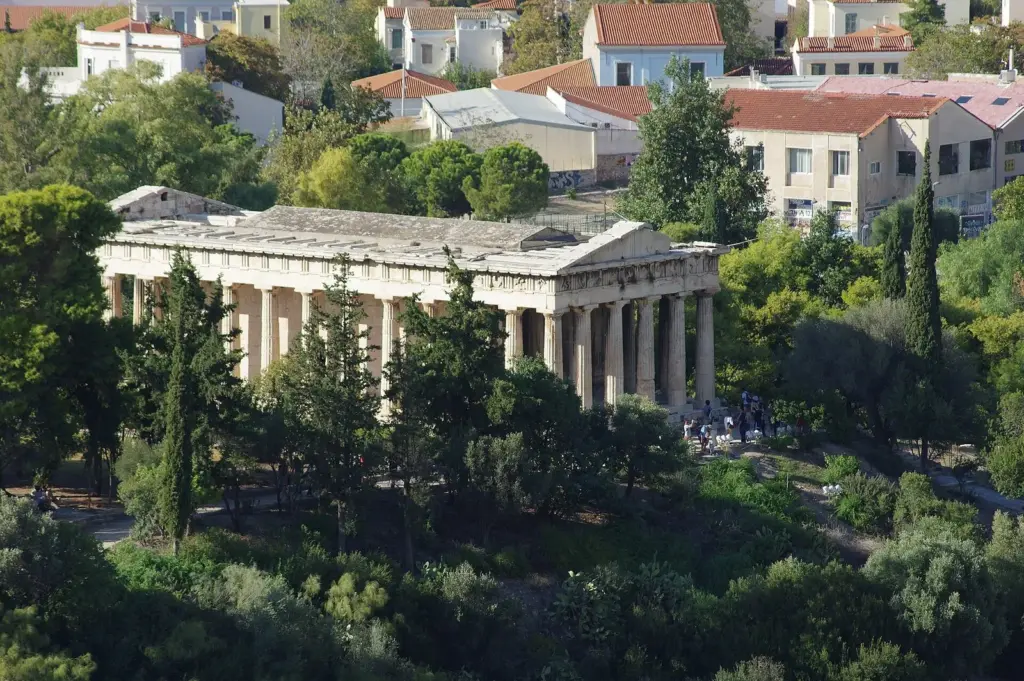
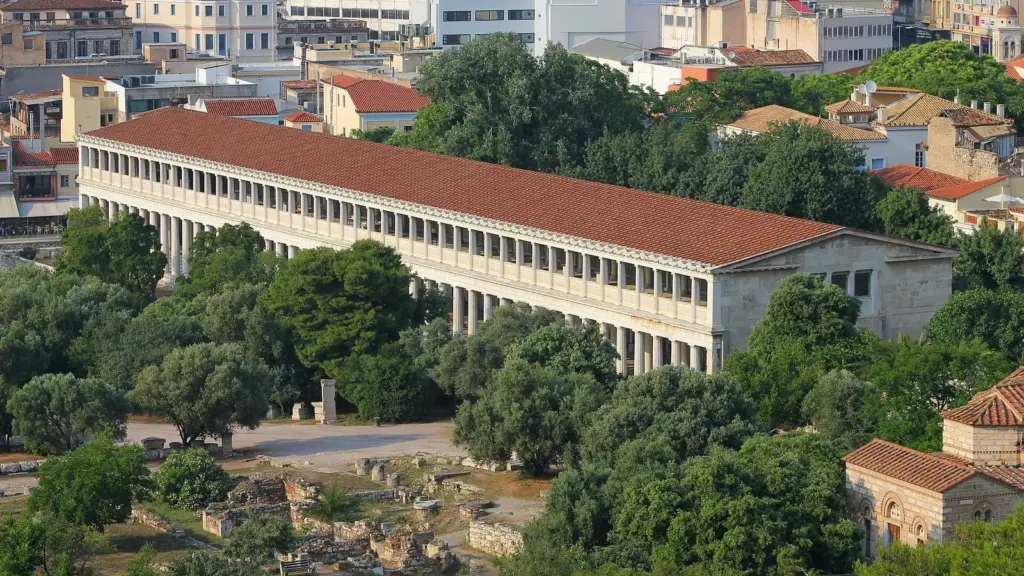
Thissio station (Line 1) is the nearest stop. The Agora’s entrance arrangements have changed, so read the site’s current notice for the gate in use before you set off. Climb first to the Temple of Hephaestus on its low hill: a Doric temple of the 5th century BC that still stands with its full colonnade, one of the best-preserved Greek temples anywhere. Then cross to the Stoa of Attalos, a 2nd-century BC colonnade rebuilt in the 1950s, whose ground floor holds the Agora museum: an allotment machine for choosing jurors, and the pottery shards on which Athenians scratched the names of politicians they wanted ostracised. The same notice will tell you whether the upper floor and the little Church of the Holy Apostles are open.
Plan it: €20 (reduced €10); 08:00-20:00 from April to August, 08:00-18:30 on 1-15 October, 08:00-18:00 from 16 October and 08:00-17:00 in winter, with last entry 20 minutes before closing; Thissio (Line 1).
10:00: the Roman Agora, or a look over the railings
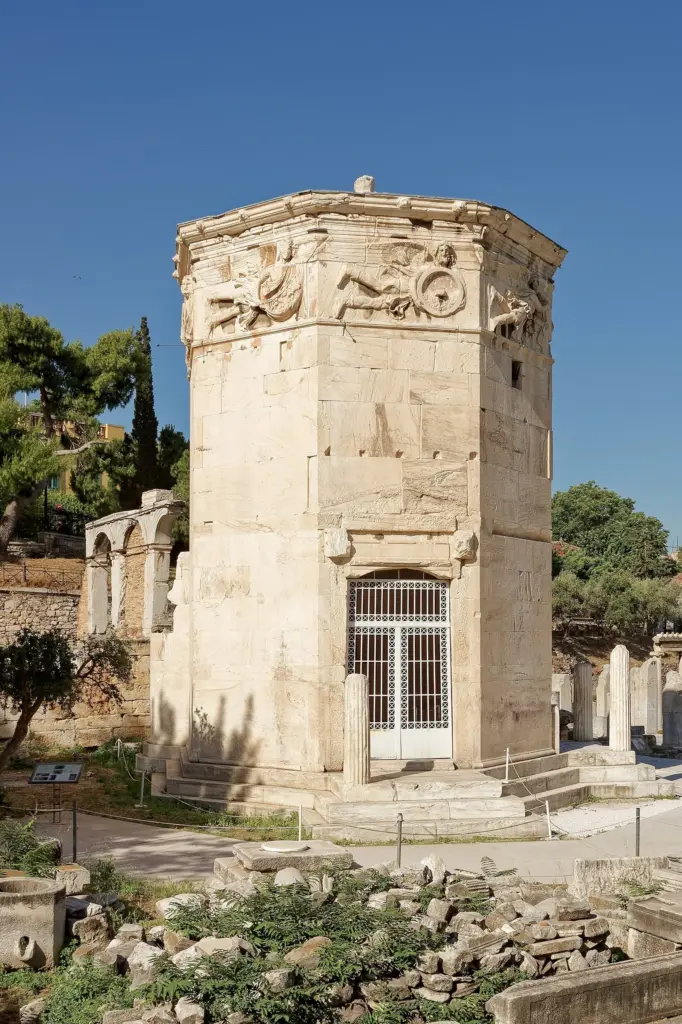
€10; this plan allows 30 minutes. Walk east along Adrianou Street towards Monastiraki. The Roman Agora, the market square the Romans added, lies a few minutes south of it, entered through the Gate of Athena Archegetis. Its reason to exist is the Tower of the Winds, an octagonal marble clock tower of the 1st century BC with a wind god carved on each face.
The honest trade-off: the tower stands at the site’s eastern edge, and you can see it well over the railings from the lane outside. Pay the €10 to walk round it; otherwise keep the money for lunch. Hadrian’s Library, on Areos Street beside Monastiraki Square, deserves the same treatment: look at its Corinthian gateway from the street and keep the €10.
Plan it: Roman Agora €10 (reduced €5), 08:00-20:00 in summer and 08:00-15:00 in winter, with shorter hours through the autumn; Hadrian’s Library the same price, closing at 18:30 on 1-15 October and 18:00 from 16 October; Monastiraki (Lines 1 and 3).
11:00: Monastiraki and the market streets
Free, 2 hours with lunch. Monastiraki Square is where metro Lines 1 and 3 meet and where the old bazaar begins. West of it, Ifestou Street and the lanes around Avyssinias Square are the flea market: second-hand furniture, records, brass, army surplus and a great many souvenirs. North up Athinas Street, Varvakios, the central food market at number 42, sells everything from whole lambs to octopus, with olive, cheese and spice shops around it and more spices on Evripidou Street. It’s a working market rather than a show, so go before lunch, buy some olives or oregano and keep out of the porters’ way.
Mind your pockets here and on the metro: the UK Foreign Office warns that thefts of wallets, bags and passports are common in crowded tourist places in central Athens. For lunch, eat souvlaki at the grills around the square or head into Psirri, just to the north, for meze.
13:00: Syntagma and the Evzones, on the hour
Free, 20 minutes. Walk up Ermou, the pedestrian shopping street that splits around the little Byzantine church of Kapnikarea, to Syntagma Square. In front of the Parliament, two Evzones of the Presidential Guard stand at the Tomb of the Unknown Soldier around the clock and in all weathers, and the pair changes every hour, on the hour. Get there ten minutes early for a place at the front.
Sunday is different. At 11:00 a large detachment of Evzones marches with a military band from the Presidential Guard’s camp to the tomb for the full ceremony, and it’s worth reordering the morning for: on a Sunday, do the two agoras briskly and reach Syntagma by 10:45. On other days the hourly change is short, and not worth waiting 45 minutes for.
15:00 or 17:00: the National Garden and the Panathenaic Stadium
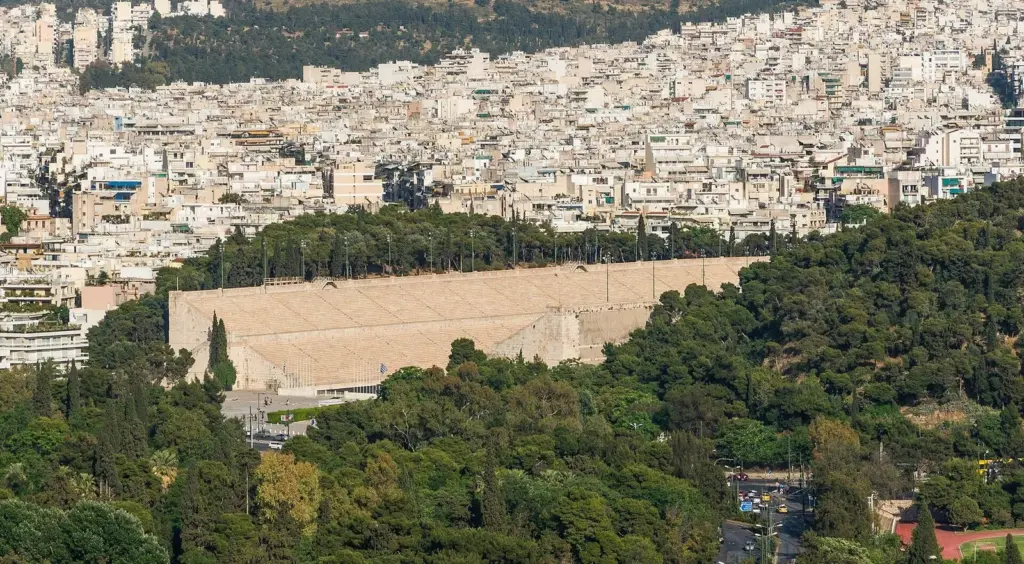
€12; budget 1 to 1.5 hours. Behind the Parliament, the National Garden is the shadiest walk in the centre. Cross it to the Zappeion hall at its southern end and walk on to the Panathenaic Stadium, rebuilt in marble on the ancient stadium’s site for the first modern Olympic Games in 1896. A ticket lets you walk the track (run a lap if you must), climb the tiers, go through the vaulted passage and see the small museum, and an audio tour is included.
Tickets are sold only at the stadium’s own desk, by cash or card, and are valid only on the day, so there’s nothing to book. Do check its website first: event days and track closures are posted there, and four notices affected September 2026 alone. The stadium itself recommends summer visits in the morning or late afternoon, so from June to September take your break after Syntagma and come here at about 17:00, on the way to Lycabettus. From November to February it closes at 17:00, so go straight on from the garden.
Plan it: €12 (reduced €6); 08:00-19:00 March to October and 08:00-17:00 November to February, with last entry at closing time; the entrance faces the Discobolus statue on Vasileos Konstantinou Avenue, a walk through the National Garden from Syntagma (Lines 2 and 3); toilets €1.50.
Sunset: Lycabettus Hill
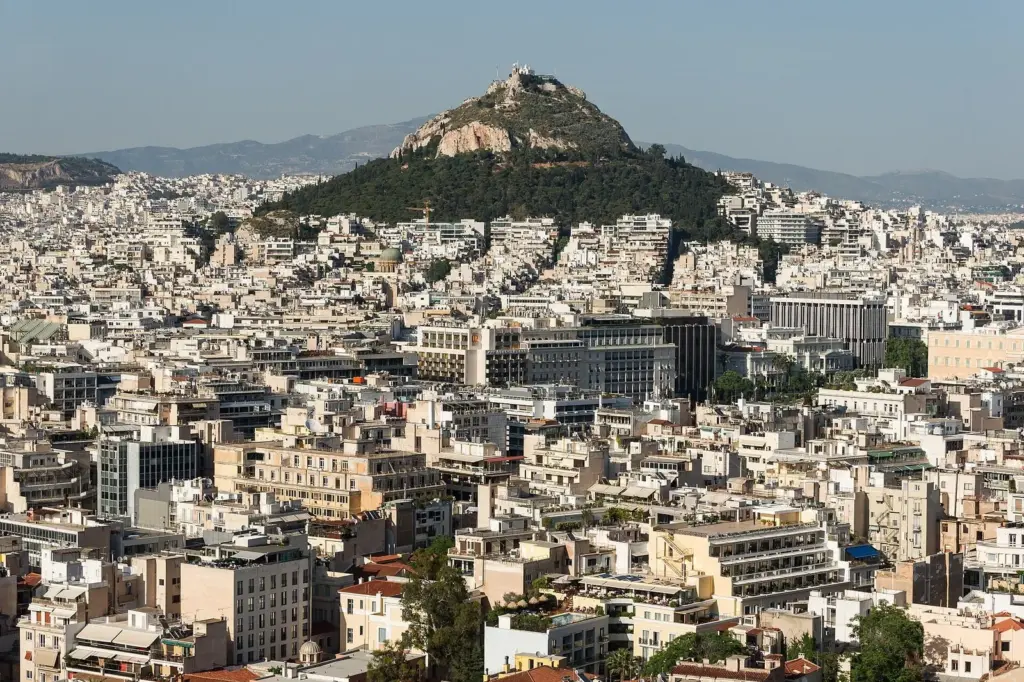
Funicular or free on foot; allow 1.5 hours. Lycabettus is the highest hill in central Athens, with a panoramic view over the whole city and the Acropolis. From the chapel at the top, the Parthenon lies to the south-west, the stadium you’ve just left to the south, and the sea beyond both.
The funicular climbs through a tunnel from the top of Aristippou Street in Kolonaki, an uphill walk from the stadium or from Evangelismos (Line 3). Check the current one-way and return fares at the ticket window. The footpaths are steep, partly stepped and exposed, so give yourself plenty of time if you walk. The best compromise is to ride up and walk down in the dusk. Eat afterwards in Kolonaki, on the hill’s south-west flank, or cross back to Pangrati, behind the stadium, for cheaper and more local tavernas.
Which day of the week changes the plan?
- Monday: the Acropolis Museum closes at 17:00 (Monday to Thursday from November to March), so keep it in the late-morning slot.
- Tuesday: the National Archaeological Museum opens at 13:00, summer and winter, so it can’t be a Tuesday-morning swap.
- Friday: the Acropolis Museum stays open until 22:00 all year. Use it: do the Acropolis at 08:00, go on to the Agora, and save the museum for the evening.
- Sunday: the full changing of the guard at 11:00. From November to March the first and third Sundays are free at both the National Archaeological Museum and the Acropolis (6 and 20 December 2026, 3 and 17 January 2027).
- Free-admission days: the Acropolis and the Ministry’s other sites are free on 6 March, 18 April, 18 May, the last weekend of September and 28 October, and, from November to March, on the first and third Sundays of the month, and busy with it. The Acropolis Museum’s free days are 6 March, 25 March, 18 May and 28 October.
- Holidays: the Acropolis, the Ancient Agora and the Olympieion close on Easter Sunday and 1 May, and Easter-week opening hours vary from site to site, so check each site’s holiday notice. The Acropolis Museum also closes on 1 January and 25-26 December.
How the plan changes with the season
June to August. The plan as written assumes heat. Take the 08:00 slots even if it means an early alarm, use the museum as your midday shelter and schedule nothing outdoors between 14:00 and 17:00. Check the news the evening before: heatwaves have shut the Acropolis for the afternoon, and high fire-risk days close Philopappos. Sunset comes at about 20:35-20:50 in June and July, so the hills make for a late dinner.
September and October. The best weeks for this route, with one trap: the sites close earlier every fortnight. The Acropolis and the Ancient Agora both shut at 19:30 until 15 September, 19:00 to the end of the month, 18:30 until 15 October and 18:00 until 31 October. The upside is an early sunset (18:47 on 15 October) that fits both hills before dinner. On 28 October, a national holiday and a free-admission day, expect crowds everywhere.
November to March. Winter hours squeeze the afternoons. From November the Acropolis and the Ancient Agora run 08:00-17:00 until the end of March, the Roman Agora and Hadrian’s Library 08:00-15:00, and the stadium 08:00-17:00 until the end of February. The National Archaeological Museum’s 2025-26 winter hours were 08:30-15:30 from Wednesday to Monday and 13:00-20:00 on Tuesday; look up the 2026-27 timetable on its visiting page before you plan around it. Do every ticketed site before 15:00, keep the museums for rainy spells, and enjoy the short queues and the low, gold light.
What two days of tickets cost in 2026
With no combined ticket, you pay site by site:
| Ticket | Full | Reduced | In this plan? |
|---|---|---|---|
| Acropolis and Slopes | €30 | €15 | Yes, day 1: book the 08:00 slot |
| Acropolis Museum | €20 | €10 | Yes, day 1 |
| Ancient Agora | €20 | €10 | Yes, day 2 |
| Panathenaic Stadium | €12 | €6 | Yes, day 2: pay at the desk |
| Roman Agora | €10 | €5 | Optional |
| Hadrian’s Library | €10 | €5 | Skip on a short trip |
| Temple of Olympian Zeus | €20 | €10 | Skip on a short trip |
| Kerameikos | €10 | €5 | A swap (see below) |
| National Archaeological Museum | €20 | €10 | A swap (see below) |
| Lycabettus funicular | Posted at the window | Ask at the window | Optional: walking is free |
The core plan comes to €82 a person, or €92 with the Roman Agora. As a worked example, a couple in a 3-star hotel between April and October pays €164 in tickets, €40 for two 3-day transport tickets and €10 in Climate Crisis Resilience Fee for two nights (€5 per room per night at three stars, on a scale of €2 to €15 by star rating, lower in winter): €214 before a single meal. EU citizens under 25 get into both museums free, and the Acropolis Museum issues free and reduced tickets only at its desk, on proof of eligibility.
Swaps worth making
The National Archaeological Museum instead of the Agora
€20; set aside 2.5 hours. If you’ve walked Greek ruins before, or it’s raining, this is the stronger second morning. It holds what the Acropolis Museum doesn’t: the gold mask from Mycenae once credited to Agamemnon, the bronze god raised from the sea off Cape Artemision, the bronze Jockey and the corroded gears of the Antikythera mechanism. It’s on Patission Street, a walk from Omonia (Lines 1 and 2) or Viktoria (Line 1), and until 15 November 2026 it opens 08:00-20:00 from Wednesday to Monday and 13:00-20:00 on Tuesday. On a first trip to Greece, though, keep the Agora: it’s the better introduction.
Cape Sounion instead of Lycabettus
The Temple of Poseidon at Cape Sounion, on the headland at the southern tip of Attica, is the classic sunset trip and an excursion that fits into 48 hours. It takes the whole second half of day two, so you lose Syntagma, the stadium and Lycabettus. It’s worth it if the sea matters more to you than the modern city.
The Kerameikos instead of Hadrian’s Library
€10; allow 45 minutes. The ancient city’s most important cemetery, at 148 Ermou Street, about seven minutes’ walk from Thissio, is welcoming visitors again after works. Its museum holds funerary monuments, among them inscribed grave stelae and statues, and it’s the better use of €10.
Or add a third day
If you can stretch the trip, don’t bolt extras onto this plan; take a longer one. Our guide to how many days to spend in Athens weighs up the options, and the itineraries hub collects every plan we publish.
What to skip with only two days
With 48 hours in Athens you cover the core, not all of it. These are the cuts we’d make.
The Temple of Olympian Zeus. Its surviving columns are huge and plainly visible through the fence. Up close, for €20, it’s more of the same. Verdict: look from outside unless Roman engineering is your thing.
Hadrian’s Library. The facade on Areos Street is the best of it. Verdict: enjoy it free from the pavement.
Waiting for a weekday changing of the guard. It’s brief and small. Verdict: catch it if you pass on the hour; plan around it only on a Sunday.
Delphi or an island day trip. Either one eats a whole day, which is half your trip. Verdict: not on a 48-hour visit. Sounion is the one exception.
Dinner on Plaka’s busiest streets. The tables on lower Adrianou and Kydathineon trade on location. Verdict: have a drink there and eat in Koukaki, Thiseio or Pangrati.
Fitting the 48 hours around your flights
- Airport metro: Line 3 runs to Syntagma and Monastiraki. The airport ticket is €9 (reduced €4.50) and covers transfers on OASA services for 90 minutes, except the Airport Express buses and the X80; the ordinary €1.20 ticket isn’t valid on the Koropi-Airport section. A return costs €16 and lasts 30 days.
- 3-day tourist ticket: €20 for 72 hours of city travel with one airport trip each way. It beats the return plus single tickets once you ride four times, and it saves thinking.
- X95 bus: airport to Syntagma 24 hours a day for €5.50, taking about an hour depending on traffic.
- Contactless: tap a bank card, touching in and out at the metro with the same card, and OASA caps city travel at €4.10 a day, charging airport trips on top.
- Taxis: a fixed day or night fare to the centre that has changed several times, so check the current rate at the rank rather than trusting an old figure.
- Bags on the last day: the City of Athens lists lockers beside Monastiraki and Syntagma stations: Leave Your Luggage (07:00-21:00) and Lockers 4all (24 hours at Monastiraki, 07:00-23:00 at Syntagma). Prices change often.
Where to sleep: within walking distance of the Acropolis, because a trip this short can’t spare commuting time. Plaka and Makrygianni are closest to an 08:00 start, Koukaki is quieter and usually cheaper, Monastiraki and Psirri are lively late, and Syntagma is the easiest arrival. Rates climb with an Acropolis view and from June to September, and the resilience fee is added per room per night, usually at check-out. Starting or ending a cruise? Our Athens cruise port guide covers the Piraeus end.
Worked example: Thursday lunchtime to Saturday evening
Land at 13:00 on a Thursday in October with a Saturday-night flight home, and the plan bends like this:
- Thursday afternoon: metro to Syntagma on a 3-day ticket, check in, then day one’s evening: Plaka, Anafiotika and sunset from the Areopagus (18:47 on 15 October).
- Friday 08:00: the Acropolis, entering at the South Slope gate and leaving by the main entrance, then downhill past the Areopagus to the Ancient Agora.
- Friday afternoon: the Roman Agora, Monastiraki and the market, then a rest.
- Friday 18:00: the Acropolis Museum, open until 22:00 on Fridays, then dinner in Koukaki.
- Saturday: the National Archaeological Museum at opening (08:00 until 15 November 2026; check its winter timetable after that), Syntagma at noon and the stadium, then bags from the locker and the metro to the airport by mid-afternoon on the same tourist ticket, which runs for 72 hours from its first use.
2 Days in Athens FAQ
Is 2 days enough in Athens?
Yes, for the essentials: the Acropolis, the Acropolis Museum, the Ancient Agora, the old centre and a couple of sunset hills. What you give up is the National Archaeological Museum (unless you swap it in), the smaller ticketed sites and any trip beyond the city other than Sounion. If those matter to you, our three-day plan is the better fit.
Should I visit the Acropolis or the Acropolis Museum first?
The Acropolis, in most months. The 08:00 slot is the coolest and quietest of the day, and the museum, a short walk from the South Slope exit, keeps you indoors for the hot hours. Seeing the Caryatids and the frieze after standing beside the temple works well too. In winter the order matters less, but the museum closes at 17:00 from Monday to Thursday.
Do I need to book the Acropolis in advance?
Yes. Book through the Ministry of Culture’s official Hellenic Heritage platform, tickets.hh.gr, and take the 08:00 slot once your dates are fixed, especially from April to October.
Is there a combined ticket for Athens sites in 2026?
No. The €30 five-day pass for the Acropolis and six other sites has been withdrawn, and each site now sells its own ticket; the seven former package sites cost €105 bought separately. This itinerary needs four tickets, for the Acropolis, the Acropolis Museum, the Ancient Agora and the Panathenaic Stadium: €82 at full price.
How much does 2 days in Athens cost?
Tickets for this plan cost €82 per adult at full price, or €92 with the Roman Agora, and a 3-day transport ticket with airport trips both ways is €20. Hotels also add a Climate Crisis Resilience Fee per room per night, which rises with the star rating. Food is the big variable, and souvlaki lunches keep it low.
Can I fit a day trip into 2 days in Athens?
One, and only as a swap. Cape Sounion’s Temple of Poseidon fits into the second half of day two if you give up Syntagma, the stadium and Lycabettus. Delphi, the Peloponnese or an island ferry each need a full day, which would halve your time in the city, so keep those for a longer trip.
Related Athens Guides
- Athens Itineraries: every plan we publish, sorted by trip length.
- One Day in Athens: the essentials when you only have 24 hours.
- 3-Day Athens Itinerary for First-Timers: the next step up when you can add a day.
- How Many Days in Athens?: help deciding how long to stay.
- Cape Sounion Day Trip: the one excursion worth swapping into a two-day visit.
Sources and How We Checked
Details were checked on 27 September 2026 against the official sources below.
- Hellenic Ministry of Culture: Acropolis, Ancient Agora, Temple of Olympian Zeus and Western Hills pages (hours, prices, closures and free days)
- Hellenic Heritage: tickets.hh.gr, the Ministry’s official ticket platform
- Acropolis Museum: Plan your visit (hours, prices and bag rules)
- National Archaeological Museum: Visiting information
- Panathenaic Stadium: Visit and ticket prices from October 2025
- Presidency of the Hellenic Republic: The Presidential Guard
- OASA: ticket prices and Airport Express bus lines
- City of Athens: Varvakios Market and luggage storage
Athens Tourism Guide is an independent publication. We are not affiliated with the Hellenic Ministry of Culture, OASA, the Greek National Tourism Organisation or any business named here, and no business paid to be included.
Photo Credits
- The Acropolis from Philopappos Hill: photo by A.Savin, via Wikimedia Commons (CC BY-SA 3.0)
- Steps and flowers in Anafiotika: photo by Zde, via Wikimedia Commons (CC BY-SA 4.0)
- The Temple of Hephaestus: photo by Berthold Werner, via Wikimedia Commons (CC BY-SA 3.0)
- The Tower of the Winds: photo by Jakub Hałun, via Wikimedia Commons (CC BY 4.0)
- The Panathenaic Stadium from the Acropolis: photo by Jebulon, via Wikimedia Commons (CC0)
- Lycabettus Hill from the Acropolis: photo by Jebulon, via Wikimedia Commons (CC0)
- The Stoa of Attalos: photo by Pedro P. Palazzo, via Wikimedia Commons (CC BY-SA 4.0)
- The Acropolis from the Panathenaic Stadium (featured image): photo by Jakub Hałun, via Wikimedia Commons (CC BY 4.0)