This article contains advertising. Some of the hotel, flight and transfer links in it are paid links: if you book through one, we get a commission from the booking company, and your price is the same either way. It never affects what we recommend. Affiliate disclosure
Three full days is the right length for most first visits to Athens, and two is the least we’d plan on. That buys you the Acropolis, the Acropolis Museum, the National Archaeological Museum and a few long evenings in Plaka and Psirri, with a spare half-day for Cape Sounion or the coast. Beyond that, working out how many days an Athens itinerary needs comes down to what you bolt on: one day is a sprint round the ancient core, four or five make room for Delphi or Hydra, and a week only makes sense with an island or two at the end.
This page is for first-timers choosing dates, and for anyone fitting Athens around a flight connection, a cruise call or a ferry. One caveat matters more than the number of days: the Acropolis now runs on timed tickets, closes earlier from September and has shut for the hottest part of the day during summer heatwaves, so the order of your days counts as much as how many you have. Details checked 26 September 2026 against the Ministry of Culture, the Acropolis Museum, the National Archaeological Museum, OASA, Athens International Airport, the City of Athens and Blue Star Ferries.
| Question | Short answer |
|---|---|
| Best length for a first visit | Three full days; two at the least |
| Shortest stop worth leaving the airport for | About 8 hours between landing and take-off |
| The three big tickets | Acropolis €30, Acropolis Museum €20, National Archaeological Museum €20 |
| Book ahead | Your timed Acropolis slot on tickets.hh.gr, the Ministry’s only official online seller (older links say hhticket.gr) |
| Airport to the centre | Metro Line 3 (blue), €9 one way or €16 return; X95 express bus to Syntagma, €5.50 |
| Best months | Late September to October, and April to early June |
| Hardest months | July and August (midday heat, occasional Acropolis closures) and deep winter (early closing) |
| Add a day for | Each full-day trip: Delphi, Hydra or the Peloponnese sites |
What’s changed in 2026?
Plenty of itineraries online still promise a winter half price at the Acropolis and a free visit on the first Sunday of the month. Neither exists now. These are the rules that shape a plan in 2026:
- The Acropolis costs €30 all year (reduced €15). The winter half price has gone, so a January trip saves nothing on the biggest ticket of the lot.
- Its free days are fixed dates: 6 March, 18 April, 18 May, the last weekend of September and 28 October. First Sundays from November to March are off the list. The National Archaeological Museum still opens free on the first and third Sundays from November to March, and the Acropolis Museum keeps its own free days: 6 March, 25 March, 18 May and 28 October.
- The old €30 combined ticket ended on 1 April 2025. Each site now sells only its own ticket, online at tickets.hh.gr or at its ticket office: the Ancient Agora and the Temple of Olympian Zeus cost €20 each (reduced €10), and the Roman Agora, Hadrian’s Library and Kerameikos €10 each (reduced €5).
- Entry is timed. You choose a slot when you buy. Tickets are sold at the site’s ticket offices and online only through the Ministry’s Hellenic Heritage site, tickets.hh.gr, and there is no official skip-the-line ticket: what resellers sell under that name is a tour.
- Closing time moves with the season. Summer hours are 08:00-20:00 (last entry 19:30). The gates shut at 19:30 in the first half of September and 19:00 in the second, and winter hours are 08:00-17:00 with last entry at 16:30.
- Heatwaves can shut the hill. On 8 July 2025, with temperatures above 40°C, the Ministry of Culture kept the Acropolis closed until 17:00 “for the safety of workers and visitors”, as it had during heatwaves in earlier summers.
- Hotels add a nightly fee. The Climate Crisis Resilience Fee is charged per room per night, usually when you leave: from April to October it is €2 at one- and two-star hotels, €5 at three-star, €10 at four-star and €15 at five-star, falling to between €0.50 and €4 from November to March.
- The airport metro costs €9. The standard €1.20 90-minute ticket doesn’t cover the airport run.
How many days an Athens itinerary needs
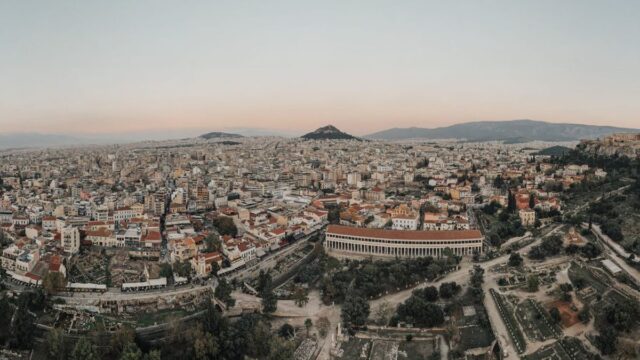
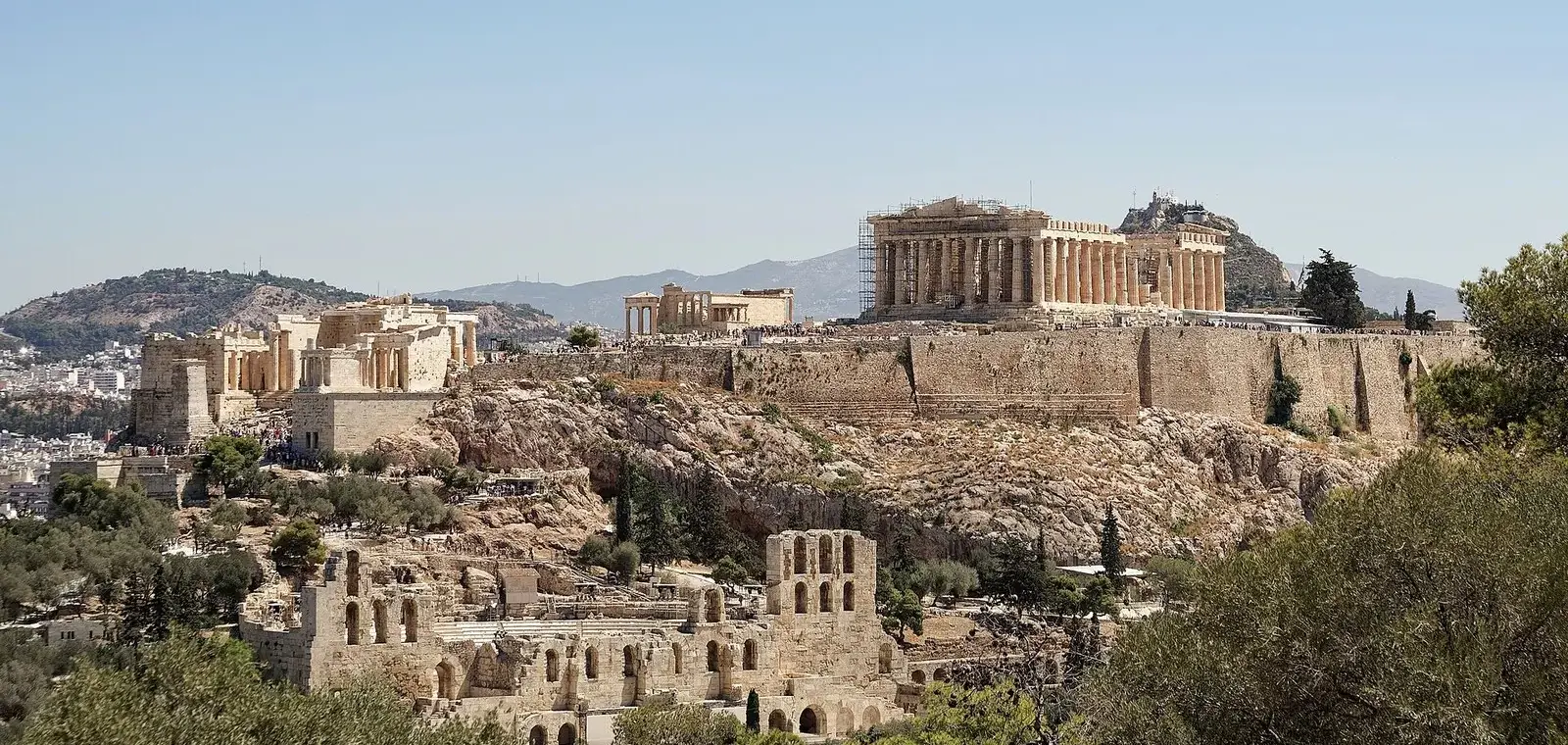
Start with the Acropolis, because everything in central Athens arranges itself around it. The hill, the Acropolis Museum at its foot, the Ancient Agora below its north-west side, Plaka and Monastiraki all sit within walking distance of one another, and together they fill a long first day. The Acropolis takes two to three hours if you add the south slope, the museum about two, and the Agora an unhurried ninety minutes. Put a proper lunch in the middle and there’s no daylight left over.
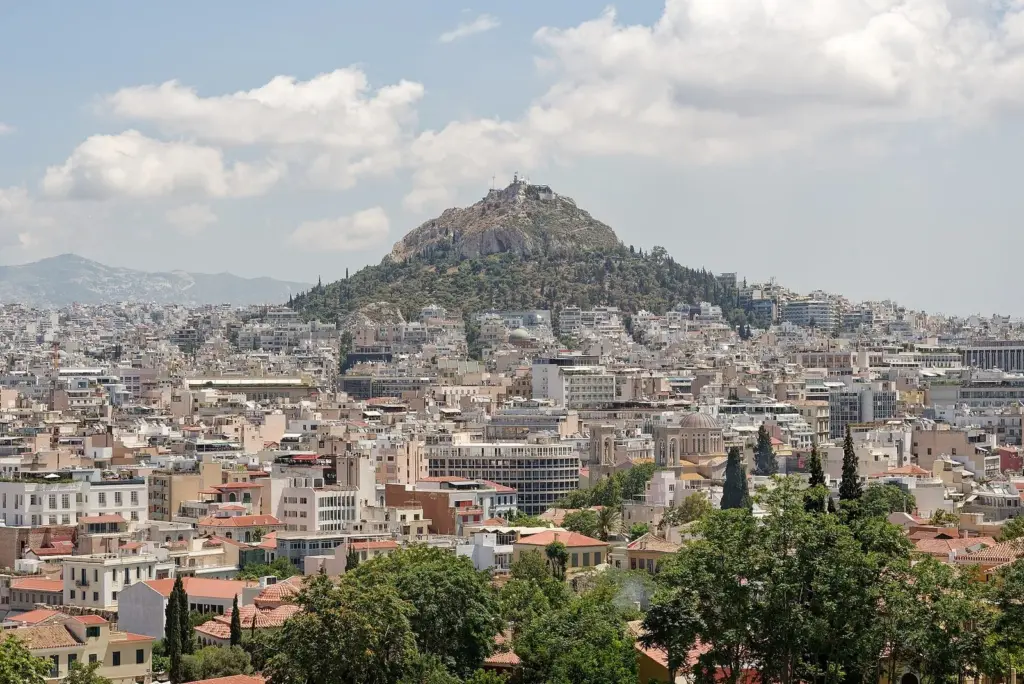
Day two belongs to the National Archaeological Museum, Greece’s largest archaeological museum, which stands between Omonia and Victoria metro stations and deserves a morning to itself. Spend the afternoon on the Syntagma side of the centre (the Changing of the Guard, the National Garden, the Temple of Olympian Zeus and the marble Panathenaic Stadium) or in Kolonaki, with a climb up Lycabettus (Lykavittos) for sunset. Two days gets you that far, briskly.
The third day is where a checklist turns into a holiday. It can go to Cape Sounion and the Temple of Poseidon at sunset, to an afternoon on the Athens Riviera, or to the smaller ancient sites that two-day visitors walk straight past. It’s also your insurance: a heatwave closure, a transport strike or a sold-out morning slot costs you a morning rather than the Acropolis. That’s why we recommend three full days, and why our three-day plan for first-timers is the one we’d hand most people.
Count days, not nights. A three-night booking that lands at 22:00 and flies out at 10:00 is two days of sightseeing, and the afternoon after an overnight flight is rarely worth much. When we say three days, we mean three full days on the ground. Each day beyond that buys one thing: a day trip (Delphi, Hydra, or Nafplio and the Peloponnese sites), a longer museum list, or nights on an island. The table shows what each length realistically covers and where we’d draw the line.
Arrival afternoons still have their uses. If you land by early afternoon, spend what’s left of the day on the free sights: the pedestrian walk along Dionysiou Areopagitou, Plaka, and sunset on Filopappou Hill. Don’t book the Acropolis for arrival day, though; a delayed flight shouldn’t cost you a €30 timed ticket.
| Trip length | What fits | What you give up | Our verdict |
|---|---|---|---|
| Layover (8+ hours) | The Acropolis or the Acropolis Museum, plus a meal in Plaka | Everything else | Worth it from about 8 hours; under 6, stay airside |
| 1 day | Acropolis, Acropolis Museum, the Ancient Agora or Anafiotika, sunset on Filopappou Hill | The National Archaeological Museum, Lycabettus, any day trip | A sprint that works if you start at 08:00 |
| Cruise call | The Acropolis and a walk through Plaka, or the Acropolis and its museum | Anything that puts the all-aboard time at risk | Go early and keep a 90-minute cushion |
| 2 days | The ancient core, the National Archaeological Museum, one sunset hill, two evenings | The coast and the smaller ancient sites | The minimum we’d call a proper visit |
| Weekend | Two days, plus a Friday evening at the Acropolis Museum and Sunday’s 11:00 guard ceremony | Day trips | Arrive on Friday by midday |
| 3 days | All of the above, plus Cape Sounion or the Riviera | Delphi and the islands | The best length for a first visit |
| 4 days | Three days plus the smaller ancient sites or one long day trip | The islands | Right for repeat visitors and summer trips |
| 5 days | The city plus two day trips: Hydra, Sounion or Delphi | Island nights | The pick if you aren’t going on to the islands |
| 7 days | Three days in Athens, then four nights on the islands | Depth on either side | Two islands at most |
Still choosing flights, a budget or a base? Planning your Athens trip covers that groundwork; the rest of this page is about how to spend the days once you’re there.
Which trip length fits your plans?
Each length below comes with what fits, what it costs you in trade-offs and how we’d run it. The three-, five- and seven-day trips have full day-by-day itineraries of their own, summarised here; the others are sketched in enough detail to plan from.
A layover: is 8 hours enough?
Worth it from about 8 hours, airport to airport. Athens airport sits well east of the city, so a layover visit is mostly transport arithmetic. Metro Line 3 (blue) runs from the airport through Syntagma and Monastiraki to Piraeus, a journey the airport puts at about an hour end to end. Syntagma comes sooner, but once you add the walk to the platform, the wait for a train and the ride back, the round trip takes a good two hours. A one-way ticket is €9, a return €16. The X95 express bus to Syntagma costs €5.50 but crawls in traffic, and taxis to the centre charge a fixed flat fare, so check the current rate on the airport’s website before you get in.
Now subtract passport control, which can be slow for arrivals from outside the Schengen area, and however early your airline wants you back. An 8-hour layover leaves about three hours in town: enough for the Acropolis, or for the Acropolis Museum and a long lunch below the hill, but not both at a sane pace. Choose the Acropolis if you’ve booked a timed slot that fits your window. Choose the museum on a hot summer afternoon, or if you’d rather not gamble on a slot you might miss.
Plan it: €9 each way on the metro; Line 3 to Syntagma, then one stop on Line 2 (red) to Akropoli for the museum and the south side of the hill, or stay on Line 3 to Monastiraki for Plaka; allow 8 hours minimum, airport to airport; best for hand-luggage travellers with a daytime connection.
Verdict: with 8 hours or more, go. With 6 to 8, only if you’re carrying nothing and yours isn’t the last flight of the day. Under 6, stay airside and save Athens for a trip that gives it a day.
A single day: the ancient core and a sunset
12 hours, starting at 08:00. One day buys you the ancient core and a sunset, and it works as long as you accept that you’ll see the city’s greatest hits and very little of the city itself. This is the order we’d follow in spring and autumn. In July and August, replace the afternoon ruins with a long lunch and a rest, and don’t set foot on anything open-air again until the sun is low.
- The Acropolis, 08:00: take the first timed slot and give it two and a half hours, ending with the view back over the city from the Propylaea.
- The Acropolis Museum, late morning: about two hours. Save the top-floor Parthenon Gallery for last, while the building you’ve just walked round is fresh in your mind.
- Lunch in Makrygianni or Koukaki: the streets south of the museum are calmer than the lanes directly below the Acropolis.
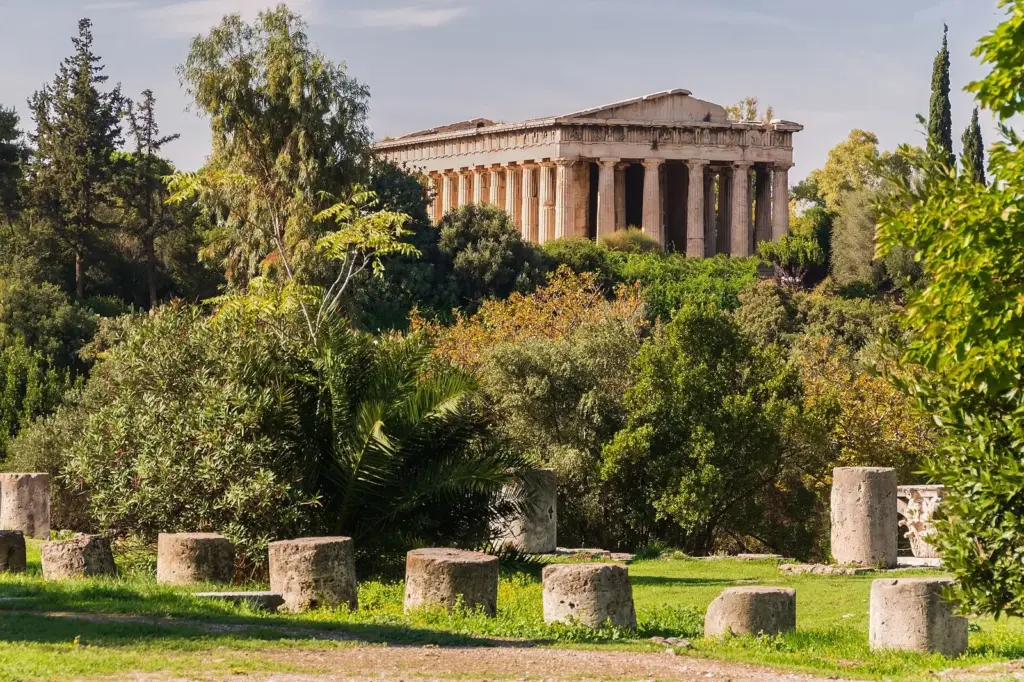
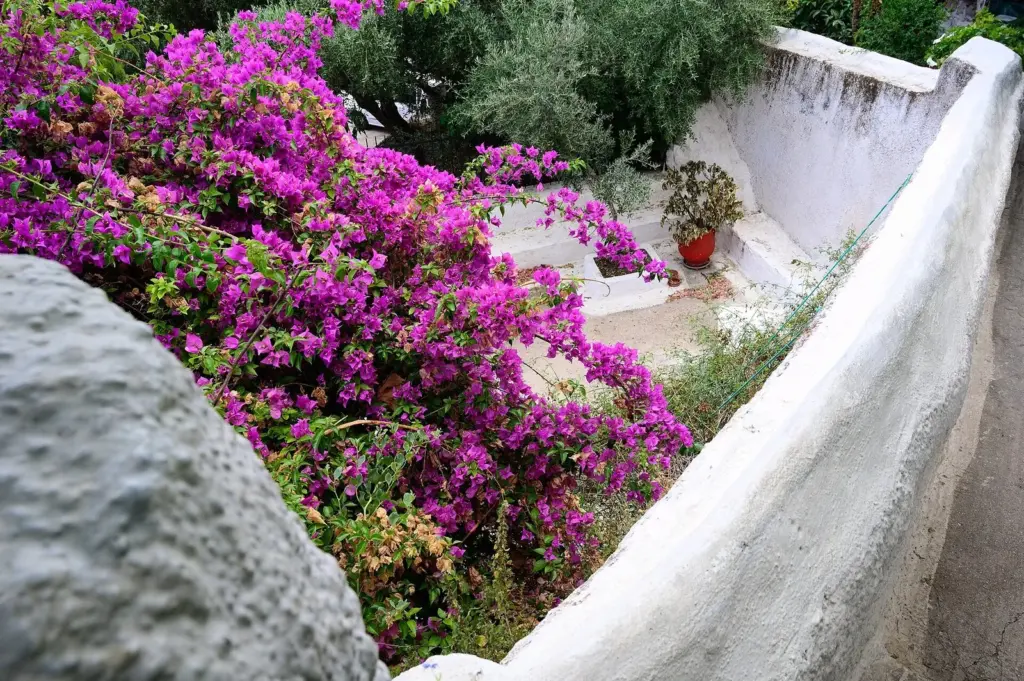
- The Ancient Agora or Anafiotika, afternoon: the Agora and its Temple of Hephaestus if you still want ruins (ticketed separately), or the whitewashed lanes of Anafiotika above Plaka if you’d rather wander for free.
- Syntagma, on the hour: the Evzones change guard at the Tomb of the Unknown Soldier, in front of Parliament, every hour, and watching costs nothing.
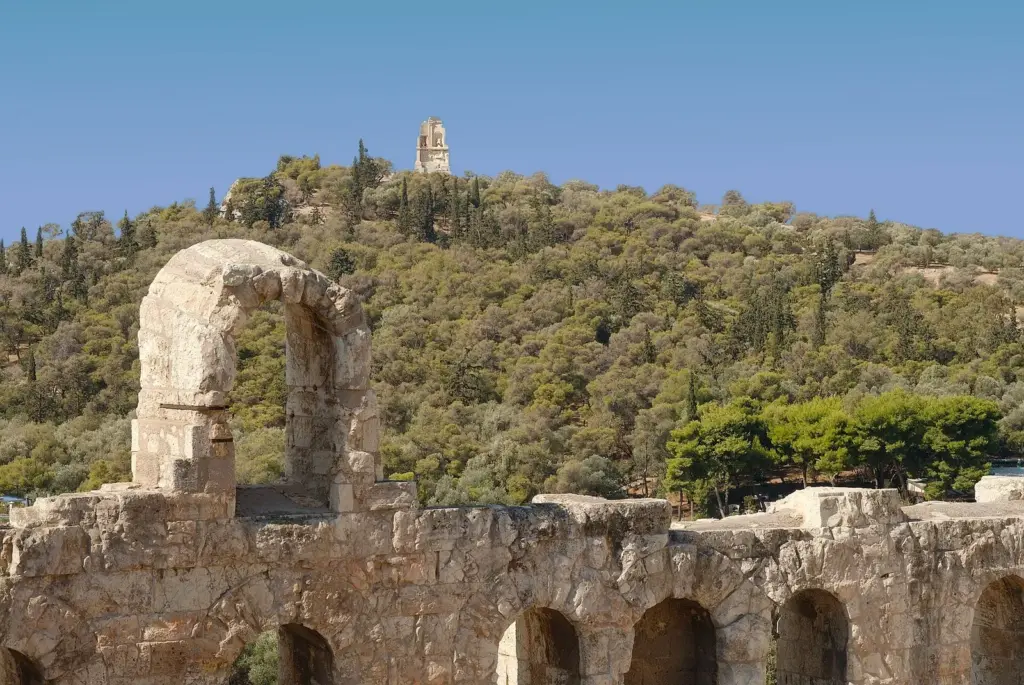
- Filopappou Hill, sunset: a free path climbs from Dionysiou Areopagitou to a view of the Parthenon almost at eye level.
- Dinner in Psirri or Monastiraki: downhill from the sunset, and busy until late.
Plan it: €30 for the Acropolis and €20 for the Acropolis Museum; Akropoli station (Line 2, red) for the museum and the south side of the hill, Monastiraki (Lines 1 and 3) for the Agora and Psirri; allow a full 12 hours; best for first-timers who fully intend to come back.
What to leave out: the National Archaeological Museum, which deserves a fresh morning and isn’t near the Acropolis; Lycabettus, because Filopappou gives you the better Parthenon view for no fare; and any day trip at all. Verdict: doable, tiring, and it will leave you wanting a second day, which is no bad thing.
A cruise call at Piraeus
6 to 9 hours ashore, starting from Piraeus. Cruise ships berth at Piraeus, a separate city and port south-west of central Athens, so your time in Athens is shorter than the ship’s timetable suggests. Metro Line 1 (green) runs from Piraeus station, at the head of the harbour, to Thissio and Monastiraki below the Acropolis without a change, and Line 3 (blue) links Piraeus with Monastiraki and Syntagma. How far your berth is from the station decides whether you walk or ride there, so ask at the terminal before you set off.
Do one thing well. Get to the Acropolis as early as the ship allows, walk down through Plaka and Monastiraki, and head back with at least 90 minutes in hand before all-aboard. If your ship stays into the evening, add the Acropolis Museum; if it sails mid-afternoon, don’t. Organised shore excursions take care of the transport and the tickets, at the price of moving at the group’s pace.
If your cruise also calls at Santorini or Mykonos, Greece has charged a per-passenger fee there since 21 July 2025: €20 from June to September, €12 in April, May and October, and €4 from November to March.
Plan it: a €1.20 90-minute ticket covers Piraeus to Monastiraki or Thissio on Line 1; allow the whole call; best for first-timers happy with the Acropolis and a walk. Verdict: Athens from a ship is the Acropolis and a stroll rather than the city, and it’s still well worth getting off for.
Two days: the minimum for a proper visit
Two full days, briskly paced. Day one is the single-day plan above. Day two starts at the National Archaeological Museum, whose summer timetable runs until 15 November 2026: 08:00-20:00 from Wednesday to Monday, but 13:00-20:00 on Tuesdays, so don’t plan a Tuesday morning there. Give it two to three hours. The Mycenaean gold, including the so-called Mask of Agamemnon, and the great bronzes are the reason to come.
In the afternoon, cross to the Syntagma side of the centre. Catch the Changing of the Guard on the hour, cut through the National Garden, look at the Temple of Olympian Zeus from the railings beside Hadrian’s Arch on Amalias Avenue (or pay to walk among the columns), and finish at the Panathenaic Stadium, the marble arena of the first modern Olympics in 1896. The evening goes to Lycabettus for sunset if you did Filopappou on day one, then dinner in Kolonaki or back in Psirri.
What you give up: the coast, the smaller ancient sites (Kerameikos, the Roman Agora, Hadrian’s Library) and any sense of the neighbourhoods beyond the centre. Verdict: two days covers the essentials without turning into a raid, as long as the Acropolis slot is booked before you land.
A weekend, Friday to Sunday
Friday afternoon to Sunday evening. A weekend is two days with better edges, because both big museums keep useful hours at either end. The Acropolis Museum stays open until 22:00 on Fridays all year (last entry 21:30), so a Friday arrival can check in, eat early and spend the evening with the Parthenon sculptures before a walk along Dionysiou Areopagitou under the floodlit hill.
Saturday is the ancient-core day: the Acropolis at 08:00, the Agora or Anafiotika, Filopappou for sunset and dinner in Psirri. On Sunday, build the morning around 11:00, when the whole Presidential Guard marches to the Tomb of the Unknown Soldier with a military band. The ordinary change happens every hour, but the Sunday ceremony is the one worth planning for. Give the afternoon to the National Archaeological Museum (open until 20:00 on Sundays under the summer timetable, 15:30 in winter) or to a long lunch and Lycabettus, depending on your flight.
From November to March, the first and third Sundays of each month are free at the National Archaeological Museum; the Acropolis no longer does free Sundays at all. Verdict: arrive on Friday by midday and leave on Sunday night, and a weekend does most of what a three-day trip does. Arrive on Friday night and leave at Sunday lunchtime, and it’s one full day with two short ends.
Three days: the length we recommend
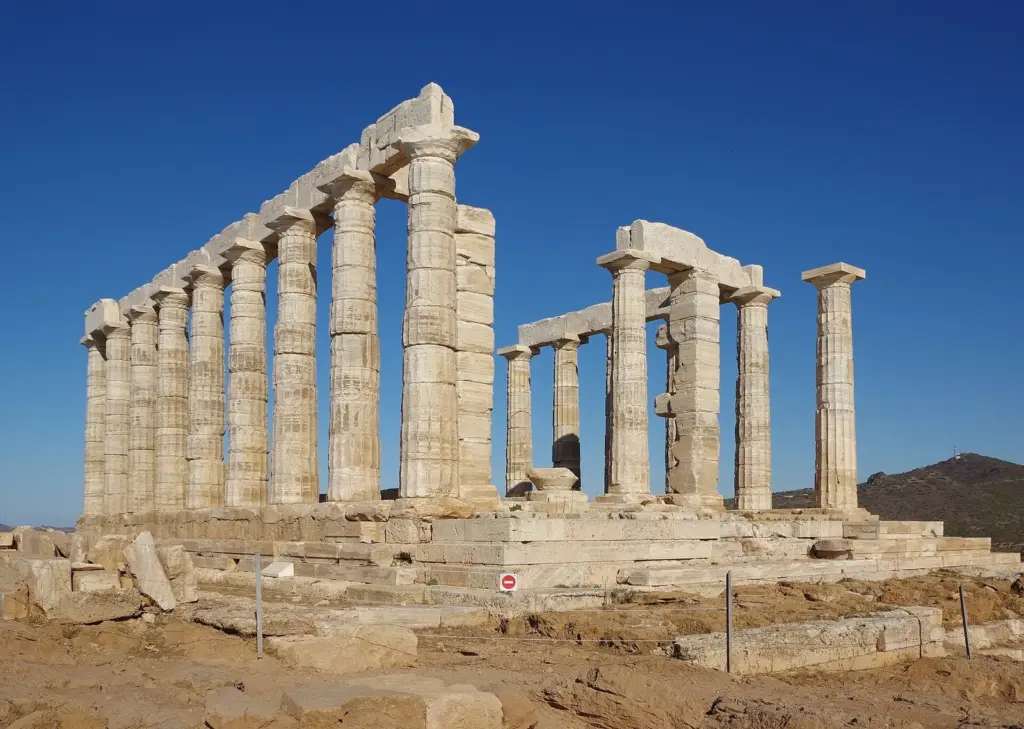
Three full days, at a human pace. Our 3-day Athens itinerary sets out the whole plan hour by hour. In outline, day one is the Acropolis cluster: the Acropolis, the Acropolis Museum and the Ancient Agora, with dinner in Plaka and a rooftop sunset. Day two pairs the National Archaeological Museum with Lycabettus or the Museum of Cycladic Art and ends in Monastiraki. Day three heads for the coast, either a half-day at Lake Vouliagmeni on the Athens Riviera or a longer trip to the Temple of Poseidon at Cape Sounion for sunset. It also covers costs, where to stay and the mistakes three-day visitors tend to make.
Why three rather than two? The third day absorbs whatever goes wrong. A heatwave closure, a strike or a morning slot you couldn’t get costs you a morning, not the Acropolis. It’s also the first length at which you see Athens as a place people live in rather than a row of monuments, because you finally have an evening with nothing booked.
Four days: three plus one choice
Four days, with room to breathe. The fourth day can go one of two ways. Stay in town and collect the smaller ancient sites that shorter plans walk past (Kerameikos, the Roman Agora, Hadrian’s Library and the Temple of Olympian Zeus, all close to Monastiraki or Syntagma), with the Benaki Museum or the Museum of Cycladic Art in the afternoon. Or take one long day trip: Delphi, Hydra, or Nafplio with Mycenae and Epidaurus.
We’d suggest four days to repeat visitors, to families who need a slower pace, and to anyone travelling in July or August, when the heat removes the middle of each day and four days cover roughly what three do in May. Verdict: the best upgrade from three days, as long as you resist filling the extra day with a second big excursion.
Five days: the city and two day trips
Five days, two of them out of town. Our 5-day Athens itinerary with day trips keeps the Acropolis cluster for day one and gives day two to the National Archaeological Museum, Kolonaki and a Lycabettus sunset, with dinner in Psirri. Day three is the big excursion (Hydra, Cape Sounion with the Riviera, or Delphi). Day four collects the central sites short trips skip, namely Kerameikos, the Roman Agora, the Temple of Olympian Zeus and the Panathenaic Stadium, with a wander through Anafiotika. Day five is yours: a beach day at Glyfada and Lake Vouliagmeni, a second day trip, contemporary art at EMST and the Onassis Stegi, or the markets.
Five days suits travellers who aren’t continuing to the islands, or who’d rather see Hydra in a day than stay on it. If you are heading for the islands, take three days in Athens and give the other two to an island. Either way, keep excursions off the final day: Blue Star posted bad-weather schedule changes as recently as August 2026, and a wind-bound ferry shouldn’t cost you a flight home. Verdict: the right length for a city-only trip with some depth.
Seven days: Athens and the islands
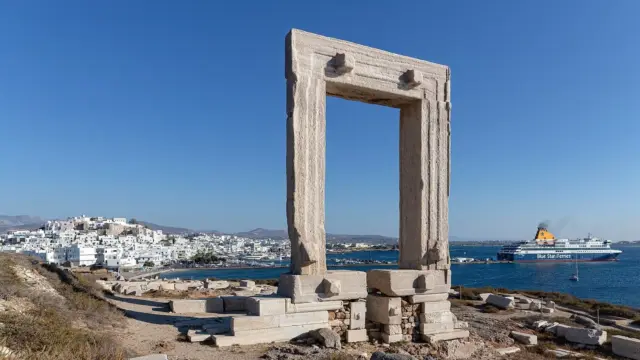
A week: three days in Athens, four nights on the islands. Our 7-day Athens and islands itinerary runs the three-day city plan first, then heads for the Cyclades. Its main route pairs Santorini with Mykonos; the quieter alternative swaps them for Naxos and Paros, with the island days and the hops between them laid out.
Getting out there is quicker by air and cheaper by sea. Aegean and SKY express both fly Athens to Santorini nonstop. Blue Star’s conventional ferries take from 6 hours 6 minutes on the Piraeus-Santorini run, leave from gates E6 and E7, and sell a limited number of €20 Super Economy seats on Cyclades routes, which can’t be changed or cancelled. Two rules we’d insist on: no more than two islands in seven days, and your last night before a long-haul flight spent in Athens rather than on an island, because wind cancels sailings in summer as well as winter.
Athens first or last? Our week-long plan front-loads the city, which suits a short-haul flight home. On a long-haul return we’d move one Athens day to the end: it costs an extra hotel change and buys a buffer that can absorb a cancelled sailing.
Verdict: a week is the shortest trip that does justice to both Athens and the islands. With less time, one island is plenty; with none, make the sea a day trip instead.
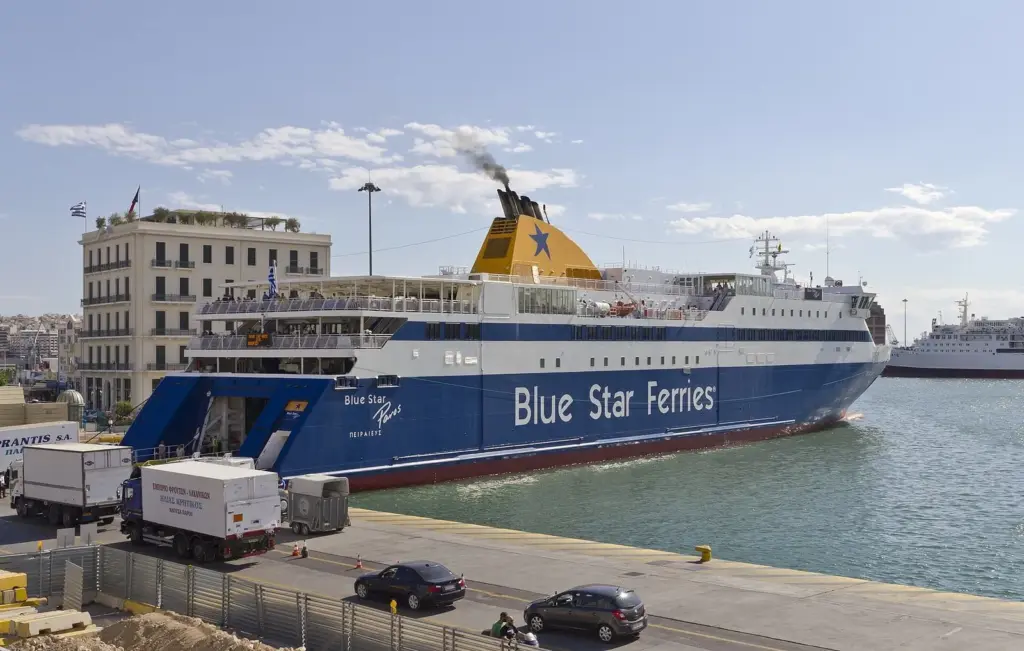
How much of a trip does each day trip take?
Every excursion out of Athens is paid for in days rather than euros, and this is how we’d budget them. The half-days fit inside a three-day trip; the full days need four or more. Transport, timings and prices for each are in our guide to day trips from Athens.
| Day trip | Time it takes | Where it fits | Worth it from |
|---|---|---|---|
| Cape Sounion (Temple of Poseidon) | Half a day, afternoon into sunset | The last afternoon of a three-day trip | 3 days |
| Athens Riviera and Lake Vouliagmeni | Half a day | Any hot afternoon | 3 days |
| Aegina | A full day by ferry from Piraeus | Mid-trip | 4 days |
| Hydra | A full day by ferry from Piraeus | Mid-trip, never the last day | 4 days |
| Delphi | A long full day by road | Mid-trip | 4 days |
| Nafplio, Mycenae and Epidaurus | A long full day by road | Mid-trip | 5 days |
Which sights earn a place, and how long does each take?
The times below are what we’d allow, not the minimum a tour group manages, and the prices are full adult fares. Everything except Cape Sounion is in central Athens, and all but the National Archaeological Museum and Lycabettus are a short walk from the Acropolis.
| Sight | Allow | Ticket | Best time |
|---|---|---|---|
| Acropolis and its slopes | 2-3 hours | €30, timed slot | The 08:00 slot, or the last two hours |
| Acropolis Museum | 2 hours | €20 | Late morning, or Friday evening (open to 22:00) |
| Ancient Agora | 1.5 hours | Sold separately | Straight after the Acropolis |
| National Archaeological Museum | 2-3 hours | €20 | A morning; on Tuesdays it opens at 13:00 |
| Changing of the Guard, Syntagma | 15 minutes | Free | On the hour; Sunday at 11:00 for the full ceremony |
| Filopappou (Philopappos) Hill | 1 hour | Free | Sunset |
| Lycabettus (Lykavittos) Hill | 1.5 hours | Free on foot; the funicular charges a fare | Sunset or after dark |
| Plaka and Anafiotika | 1-2 hours | Free | Early morning or early evening |
| Kerameikos, Roman Agora, Hadrian’s Library, Temple of Olympian Zeus | 30-60 minutes each | Sold separately | Day three or four |
| Cape Sounion | Half a day | See day trips | Late afternoon, staying for sunset |
Which comes first, the Acropolis or the museum? The hill, almost always. The slot and the heat decide it for you, since the coolest, calmest hours on the rock are the first ones, and the museum lands better afterwards: the top-floor Parthenon Gallery is laid out to match the temple, with the Parthenon itself in view through the glass, and it means more once you’ve stood beside the real thing. The exception is a Friday, when the museum’s late opening makes it the obvious evening.
For site-by-site hours and tickets, our guide to Athens historical sites and museums goes deeper. For everything beyond the ancient core, from food markets to rooftop bars, start with the full list of things to do in Athens.
Which metro stations does an Athens itinerary use?
Only a handful, and one €1.20 ticket covers 90 minutes on the metro, buses, trolleys and trams, though not the airport lines. These are the stops that matter for the plans above:
| Station (line) | What it’s for |
|---|---|
| Akropoli (Line 2, red) | The Acropolis Museum, the south side of the hill, Makrygianni and Koukaki |
| Monastiraki (Lines 1 and 3) | Plaka, the Ancient Agora, Hadrian’s Library, the Roman Agora and Psirri |
| Thissio (Line 1, green) | The western side of the Agora, Apostolou Pavlou and the path up Filopappou Hill |
| Syntagma (Lines 2 and 3) | Parliament and the Changing of the Guard, the National Garden and the airport trains |
| Evangelismos (Line 3, blue) | Kolonaki and the walk up to the Lycabettus funicular |
| Omonia and Victoria (Line 1; Omonia also Line 2) | The National Archaeological Museum |
| Kerameikos (Line 3) | The Kerameikos archaeological site and the bars of Gazi |
| Piraeus (Lines 1 and 3) | Ferries and cruise ships |
When is the best time for an Athens trip?
Late September into October, and April to early June, are the months we’d choose. The Acropolis keeps long hours, midday is usable, and a three-day plan runs in the order it was written. July and August work too, but the heat rewrites every day. There is next to no shade on the Acropolis, the marble hands the heat straight back to you, and in a heatwave the ministry can close the site for the afternoon, as it did until 17:00 on 8 July 2025. In high summer, take the 08:00 slot, put museums in the middle of the day, rest through the worst of the afternoon and save the hills for the evening. That’s why a four-day summer trip covers roughly what three days cover in May.
Winter flips the problem. Days are short, the Acropolis closes at 17:00 and the National Archaeological Museum at 15:30 from mid-November, so museum mornings and early-afternoon walks become the rhythm. In exchange, the city is at its calmest, and the first and third Sundays of each month are free at the National Archaeological Museum.
Orthodox Easter moves every year and reshapes a spring trip. The Acropolis Museum closes on Easter Sunday (and on 1 May), so check the date before you build a museum day around it; in return, the candlelit Good Friday processions through every neighbourhood are worth an evening of any itinerary.
| Site | Summer hours | Winter hours | Watch for |
|---|---|---|---|
| Acropolis | 08:00-20:00, last entry 19:30 | 08:00-17:00, last entry 16:30 | Closes at 19:30 on 1-15 September and 19:00 on 16-30 September; heatwave closures |
| Acropolis Museum | 1 April-31 October: Tuesday-Sunday 09:00-20:00 (Friday to 22:00), Monday 09:00-17:00 | 1 November-31 March: Monday-Thursday 09:00-17:00, Friday 09:00-22:00, Saturday-Sunday 09:00-20:00 | Closed 1 January, Orthodox Easter Sunday, 1 May and 25-26 December |
| National Archaeological Museum | Until 15 November 2026: Wednesday-Monday 08:00-20:00, Tuesday 13:00-20:00 | From mid-November: Wednesday-Monday 08:30-15:30 (last admission 15:00), Tuesday from 13:00 | Free on the first and third Sundays, November-March |
Four fixed points shape any week in Athens. On Mondays the Acropolis Museum closes at 17:00, summer and winter. On Tuesdays the National Archaeological Museum doesn’t open until 13:00. On Fridays the Acropolis Museum stays open until 22:00 (last entry 21:30), the best evening slot in the city. And on Sundays at 11:00 the whole Presidential Guard marches to the Tomb of the Unknown Soldier with a band.
Free days tempt short-trip planners, but they cut both ways. The last weekend of September and 28 October are free at the Acropolis, which is exactly why we wouldn’t build a two-day trip around one: you’d share the hill with everyone who had the same idea.
What does each trip length cost?
Sight tickets are the predictable part of the budget. At full price, the big three come to €70, and most itineraries add the Ancient Agora and one or two smaller sites, each sold separately on tickets.hh.gr. The table adds transport and the per-night hotel fee; hotel rates themselves swing too much with location and season for one figure to mean anything.
| Trip | Big-ticket sights, full price | Getting around | Hotel fee, April-October |
|---|---|---|---|
| Layover or cruise call | €30 for the Acropolis, or €20 for the Acropolis Museum | Airport metro €9 each way; from Piraeus, a €1.20 90-minute ticket | None |
| 1-2 days | €50, rising to €70 with the National Archaeological Museum | Airport metro €16 return; 90-minute tickets at €1.20 | €5 a night at a three-star, €10 at a four-star |
| 3 days | €70 plus the smaller sites you choose | 3-day tourist ticket, €20, including a return airport journey | €15 for three nights at a three-star |
| 4-5 days | As for three days, plus day-trip transport or tours | Ticket packs: five for €5.70, or ten plus one free for €12 | €20-€25 at a three-star |
| 7 days with islands | Athens as above, plus island sites | Ferries (Blue Star’s €20 Super Economy seats, when available) or flights | Charged on the islands too |
Two ways to trim the ticket bill: EU citizens under 25 get into both the Acropolis Museum and the National Archaeological Museum free, and the Acropolis’s reduced ticket is €15 for those who qualify. At the Acropolis Museum, reduced and free tickets are issued only at the ticket desk, on showing proof of eligibility. For money, cards and the rest of the practical side, see our Athens trip-planning guide.
On accommodation, location drives the price as much as the stars do. Rooms within a short walk of the Acropolis (Plaka, Makrygianni, Koukaki and Monastiraki) cost more than those around Omonia or further out, an Acropolis view adds a premium, and Easter and July-August lift every tier. On a trip of three days or fewer, pay for the location: a central base hands you back an hour a day.
What if heat, a strike or a sold-out slot hits the plan?
A heat closure. Swap the order, not the day. If the ministry shuts the Acropolis for the afternoon, go straight to the Acropolis Museum or the National Archaeological Museum and take the hill at 08:00 the next morning. It’s the best argument for putting the Acropolis on the first full day of a longer trip: you leave yourself room to try again.
A transport strike. They happen in Athens, often for a day or part of one, and the metro is what you’ll miss. Everything in the ancient core is walkable, so make a strike day a centre day, and move any day trip or airport run to another date or budget for a taxi.
A sold-out morning. If the early slots are gone for your dates, take one of the last two hours instead, when the low light flatters the marble. A guided tour that includes a ticket is the fallback, at a price.
Rain. It’s rare in summer and more likely from November to March. The museums absorb it: the big two plus the Benaki and the Museum of Cycladic Art will fill two wet days without repeating a room.
What should you skip, and which mistakes cost a day?
“Skip-the-line” Acropolis tickets. No official one exists. The timed slot on tickets.hh.gr is the only queue control there is, and resellers’ versions are guided tours with a markup. Verdict: book the ticket direct; if you want a guide, book the guide.
The Acropolis at midday in summer. Open marble, almost no shade and an uphill path: between noon and 16:00 in July and August it’s an endurance test, and on the worst days it’s closed anyway. Verdict: the 08:00 slot, or one of the last two hours of the day.
Delphi on a two- or three-day trip. Delphi, on the slopes of Mount Parnassus, is a superb site and a long day, most of it spent on the road. On a short trip it costs you the National Archaeological Museum or your only afternoon by the sea. Verdict: from four days up, and only if ancient sites are the point of your trip; our day trips guide weighs it against Sounion, Hydra and the Peloponnese.
Three islands in a week. Every island change costs half a day of packing, port waits and transfers. Verdict: two islands, or one island and an extra day in Athens.
Basing yourself in Piraeus. It’s handy for a 07:00 ferry and inconvenient for everything else on this page. Verdict: one night at most, the night before an early boat.
Lycabettus as your only sunset. The summit shows you the whole city with the Acropolis small in the middle distance, and you’ll pay a funicular fare unless you walk up. Filopappou is free, closer and looks straight across at the Parthenon. Verdict: Filopappou on a short trip; Lycabettus as the second sunset on a longer one.
A hop-on hop-off bus in the historic centre. The ancient core is a walking city, and much of Plaka and the streets around the Acropolis are pedestrianised. Verdict: skip it unless walking is difficult for you.
A crammed last day. Flights, ferries and strikes don’t read your itinerary. Verdict: give the final half-day to something you can abandon, and leave an hour for the airport metro.
Athens Itinerary FAQ
How many days do you need in Athens?
Three full days suits most first visits: one for the Acropolis, its museum and the Ancient Agora, one for the National Archaeological Museum and the Syntagma side of the centre, and one for Cape Sounion, the coast or the smaller sites. Two days covers the essentials at a quick pace. Four or five leave room for Delphi or Hydra.
Is 2 days enough in Athens?
Enough for the essentials, if you start early. Day one covers the Acropolis, the Acropolis Museum and Plaka; day two the National Archaeological Museum, Syntagma and a sunset hill. You’ll miss the coast, the smaller ancient sites and any day trip, and in July or August, when midday is too hot for sightseeing outdoors, two days feels closer to one and a half.
Is 3 days in Athens enough?
For a first visit, yes. Three days covers the major sites without rushing and leaves a third day for Cape Sounion or the Riviera. It also gives you a spare morning if a heatwave shuts the Acropolis for the afternoon or a strike stops the metro. You’ll only want longer if you plan day trips to Delphi or Hydra.
Can you see Athens in 24 hours?
You can see the ancient core: the Acropolis at 08:00, the Acropolis Museum, the Ancient Agora or Anafiotika, the Changing of the Guard on the hour and sunset on Filopappou Hill. You can’t fit in the National Archaeological Museum or a day trip as well. Book your timed Acropolis slot on tickets.hh.gr before you arrive.
How should I split a week between Athens, Santorini and Mykonos?
Three nights in Athens, then two each on Santorini and Mykonos, or on Naxos and Paros if you’d prefer somewhere quieter. Two islands is the limit in seven days, because each move costs half a day. Keep your last night before a long-haul flight in Athens, so a wind-cancelled ferry can’t strand you on an island.
Do I need to book the Acropolis in advance?
On a short trip, yes. Entry is by timed slot, and tickets.hh.gr, the Ministry’s Hellenic Heritage site, is the only official online seller; the site’s ticket offices also sell tickets, but not necessarily for the slot you want. The full price is €30 (reduced €15) all year, and there is no official skip-the-line ticket, whatever resellers call their tours.
When is the best time of year for an Athens trip?
Late September to October, or April to early June. The Acropolis keeps long hours and you can be outdoors at midday. July and August mean 08:00 starts and indoor afternoons, with the occasional heat closure. Winter is calmer, but the Acropolis closes at 17:00 and the National Archaeological Museum at 15:30, which shortens every sightseeing day.
Related Athens Guides
- 3-Day Athens Itinerary for First-Timers: the hour-by-hour version of the length we recommend.
- 5-Day Athens Itinerary with Day Trips: the city plus Hydra, Sounion or Delphi.
- 7-Day Athens and Greek Islands Itinerary: three days in the city and four on the islands.
- Day Trips from Athens: which excursions justify a day of a short trip.
- Athens Travel Planning: budgets, transport and the practical groundwork.
Sources and How We Checked
We checked every price, opening time and rule on this page on 26 September 2026 against the official sources below, compiled it from them rather than from other travel lists, and don’t claim a first-hand visit.
- Hellenic Ministry of Culture: Acropolis visitor information and the official e-ticket shop, tickets.hh.gr (Hellenic Heritage Tickets; older links say hhticket.gr)
- Acropolis Museum: Plan your visit
- National Archaeological Museum: Visiting information
- OASA: Ticket prices
- Athens International Airport: Public transport to and from the airport
- City of Athens official guide: Tomb of the Unknown Soldier and the Changing of the Guard
- Blue Star Ferries: Santorini route page
- Heat closures: Al Jazeera’s report of the Ministry of Culture’s July 2025 closure
What we couldn’t verify: the airport’s current flat taxi fare; Lycabettus funicular fares and hours; metro frequencies on the airport branch; and the Acropolis’s closing times in October.
Athens Tourism Guide is an independent publication. We are not affiliated with the Hellenic Ministry of Culture, OASA, the Greek National Tourism Organisation or any business named here, and no business paid to be included.
Photo Credits
- Lycabettus Hill from the Areopagus: photo by Jakub Hałun, via Wikimedia Commons (CC BY 4.0)
- Temple of Hephaestus in the Ancient Agora: photo by Jebulon, via Wikimedia Commons (CC0)
- Bougainvillea in Anafiotika: photo by Zde, via Wikimedia Commons (CC BY-SA 4.0)
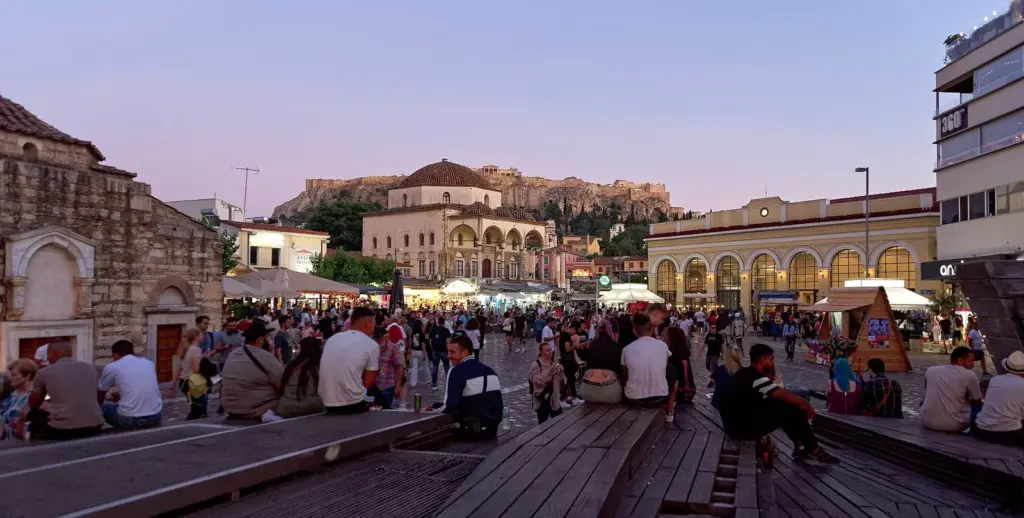
- Monastiraki Square at dusk: photo by Jakub Hałun, via Wikimedia Commons (CC BY 4.0)
- Temple of Poseidon, Cape Sounion: photo by Berthold Werner, via Wikimedia Commons (CC BY-SA 3.0)
- Blue Star ferry at Piraeus: photo by A.Savin, via Wikimedia Commons (CC BY-SA 3.0)
- Philopappos Hill from the Odeon of Herodes Atticus: photo by Jebulon, via Wikimedia Commons (CC0)
- Acropolis from Philopappos Hill (featured image): photo by Jakub Hałun, via Wikimedia Commons (CC BY 4.0)