This article contains advertising. Some of the hotel, flight and transfer links in it are paid links: if you book through one, we get a commission from the booking company, and your price is the same either way. It never affects what we recommend. Affiliate disclosure
Athens is one of the oldest cities in the world, and virtually every neighborhood holds traces of its extraordinary 3,400-year history. From the iconic Acropolis crowning the skyline to quiet archaeological parks where you might be the only visitor, the city is an open-air museum unlike any other. This comprehensive Athens historical sites and museums guide covers every major landmark, world-class museum, hidden gem, and practical detail you need to plan the perfect history-focused itinerary through the Greek capital.
Whether you have a single afternoon or an entire week, this guide will help you prioritize which Athens historical sites and museums deserve your time, how to buy tickets efficiently, and how to beat the crowds at the most popular attractions. We have also included lesser-known sites that even repeat visitors often miss, along with sample itineraries and money-saving tips for free admission days.
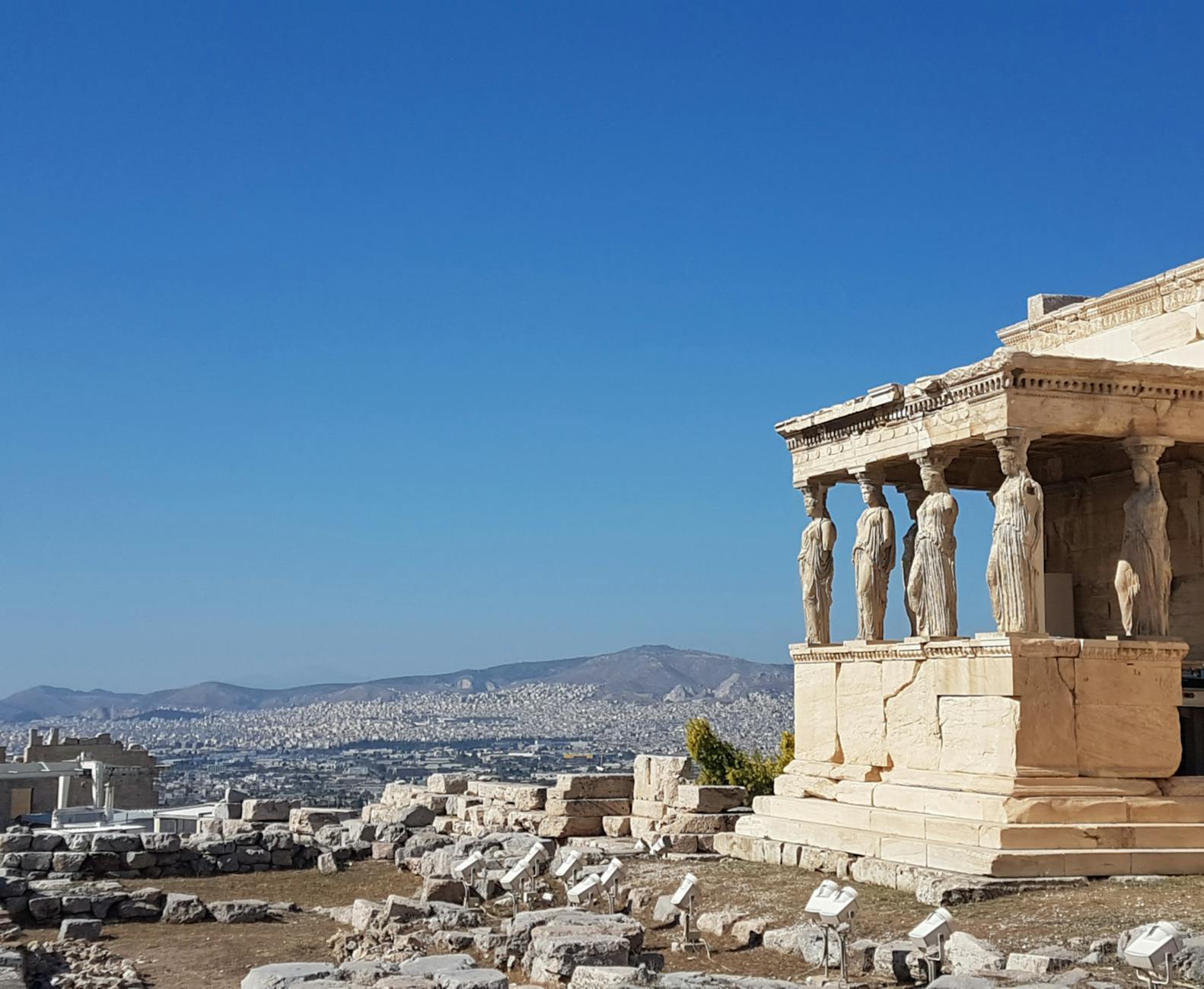
The Acropolis of Athens: Greece’s Most Iconic Landmark
No guide to Athens historical sites and museums would be complete without starting at the Acropolis. Perched on a limestone plateau 156 meters above sea level, the Acropolis has been a place of worship, defense, and civic pride for over three millennia. Its monuments — above all the Parthenon — remain the most recognized symbols of classical Greek civilization and Western democracy.
History of the Acropolis
Human habitation on the Acropolis rock dates back to at least the Neolithic period, around 4000 BCE. During the Mycenaean era (1600–1100 BCE), it served as a fortified citadel and royal palace. The Classical-era buildings visitors see today were largely constructed during the ambitious building program of the Athenian statesman Pericles in the fifth century BCE, a period often called the Golden Age of Athens. The Parthenon, Erechtheion, Propylaea, and Temple of Athena Nike were all completed between roughly 447 and 406 BCE.
Over the centuries the Acropolis monuments were converted into Christian churches, an Ottoman mosque, and even a gunpowder magazine — a Venetian mortar strike in 1687 caused the devastating explosion that blew out the Parthenon’s central section. Major restoration campaigns beginning in the 1970s and continuing today aim to stabilize the structures and return scattered architectural elements to their original positions.
What to See on the Acropolis
The Parthenon is the crowning glory: a Doric temple dedicated to Athena Parthenos, measuring roughly 70 by 31 meters. Even in its partly ruined state, the mathematical precision of its columns — which lean slightly inward and bulge subtly at their midpoints to counter optical illusions — remains astonishing. The original Parthenon Marbles (many of which are now in the British Museum and the Acropolis Museum) depicted mythological battles and the grand Panathenaic procession.
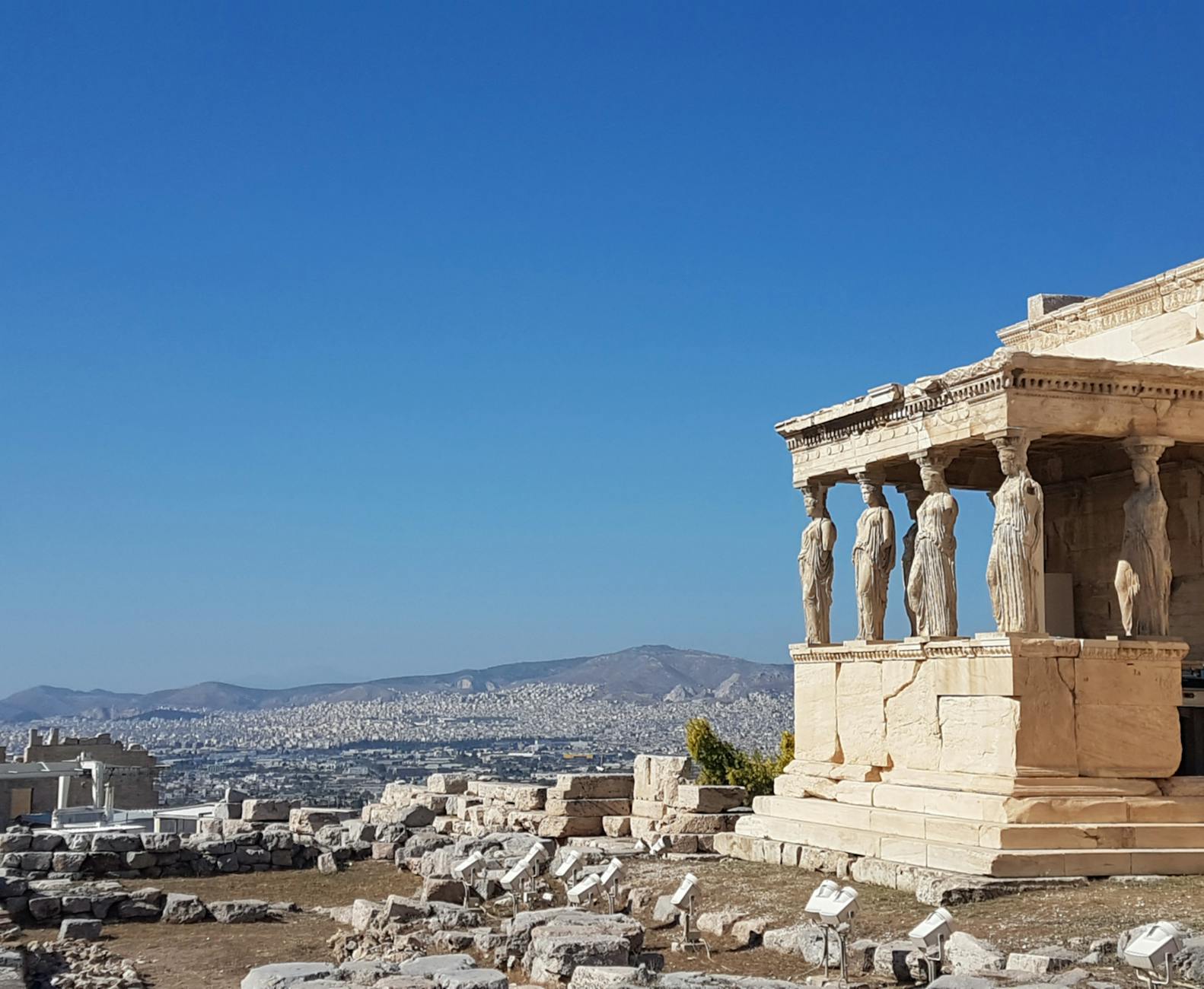
The Erechtheion is recognizable by its famous Porch of the Caryatids — six female figures that serve as supporting columns. This Ionic temple was sacred to both Athena and Poseidon, and legend holds that it marks the spot where the two gods competed for patronage of the city.
The Propylaea is the monumental gateway to the Acropolis, designed by the architect Mnesicles. Its imposing Doric and Ionic columns frame visitors’ first glimpse of the Parthenon beyond.
The Temple of Athena Nike is the smallest temple on the Acropolis, perched on a bastion to the right of the Propylaea. Built between 427 and 424 BCE, it celebrated Athenian military victories and once housed a wooden statue of the goddess.
Acropolis Tickets, Hours & Practical Tips (2026)
As of 2026, a standard adult ticket to the Acropolis costs €30. Visitors aged 6–25 from EU countries receive reduced admission, and children under 6 enter free. Tickets are timed, with hourly slots, and you should book online in advance through the official Hellenic Heritage site (hhticket.gr) to avoid long queues.
Summer opening hours (April 1 – October 31) run from 8:00 AM to 8:00 PM, with last entry at 7:30 PM. Winter hours (November 1 – March 31) are 8:00 AM to 5:00 PM. The site closes on January 1, March 25, May 1, Easter Sunday, and December 25–26.
Crowd-beating tip: Arrive at 8:00 AM sharp or after 5:00 PM in summer for the smallest crowds and the best photography light. The southeast entrance (accessed from the Acropolis Museum side) is typically less congested than the main west entrance.
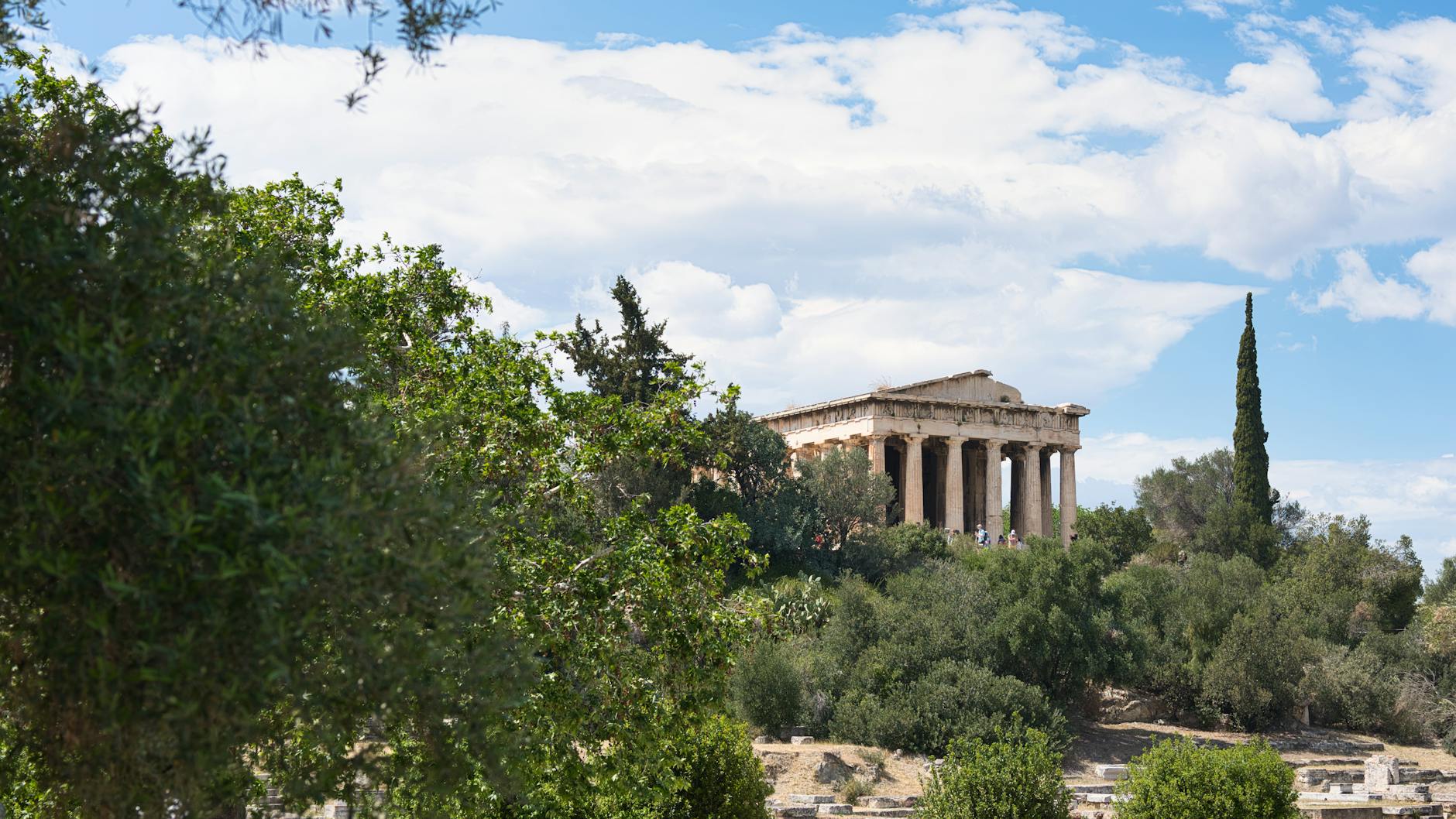
Ancient Agora of Athens: Birthplace of Democracy
Spread across 12 acres at the foot of the Acropolis, the Ancient Agora was the political, commercial, judicial, and social heart of classical Athens. This is where Socrates debated philosophy, where citizens voted in the world’s first democracy, and where merchants sold everything from olive oil to enslaved people. For visitors interested in understanding how daily life actually worked in ancient Athens, the Agora is arguably more rewarding than the Acropolis itself.
Key Monuments in the Ancient Agora
The Temple of Hephaestus (also called the Hephaisteion or Theseion) is the best-preserved ancient Greek temple in existence. Built between 449 and 415 BCE, its 34 Doric columns still stand to their full height, and much of the original roof structure survives. The temple was dedicated to Hephaestus, god of metalworking, and Athena, goddess of crafts — fitting patrons for a district once filled with smithies and potters’ workshops.
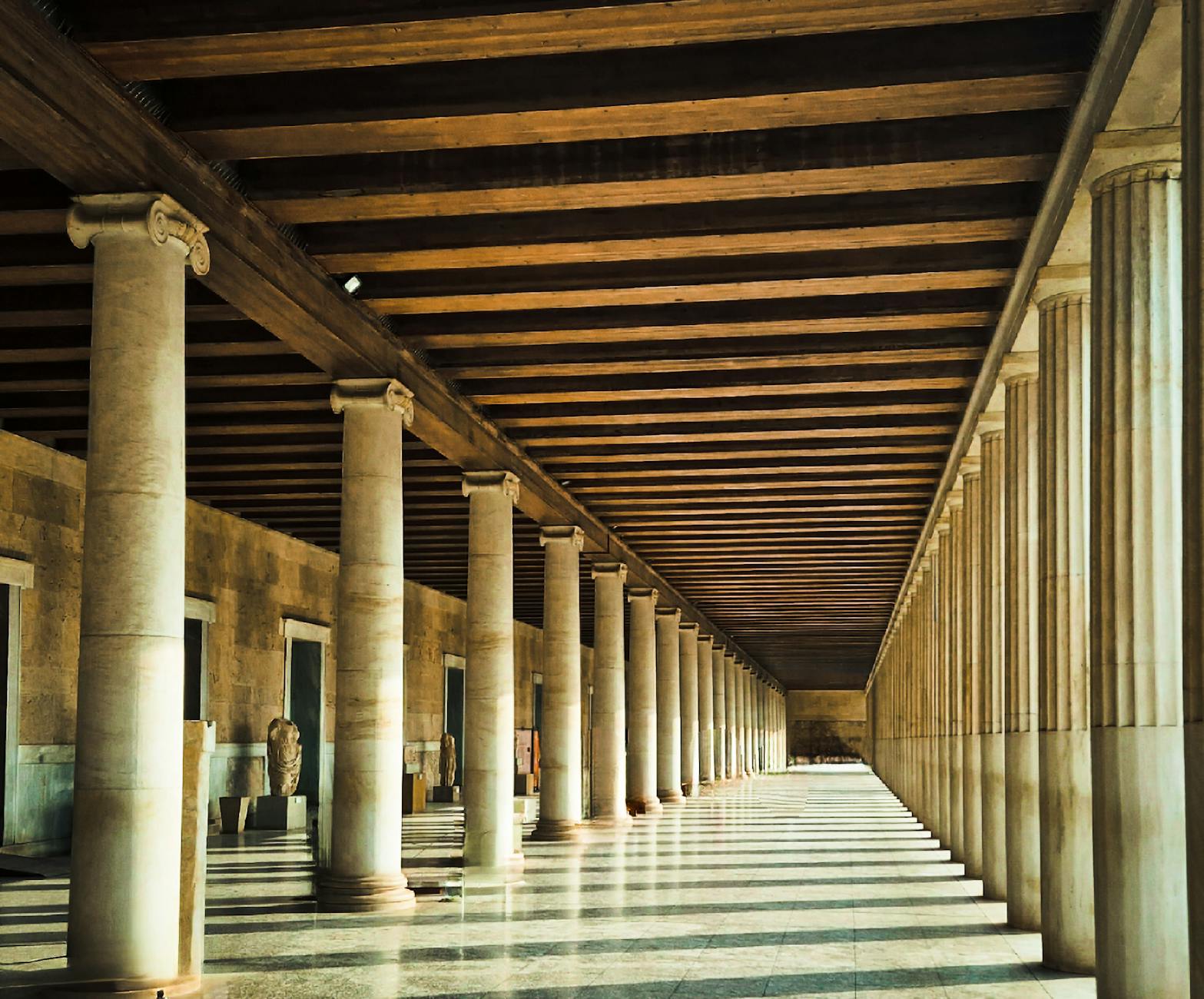
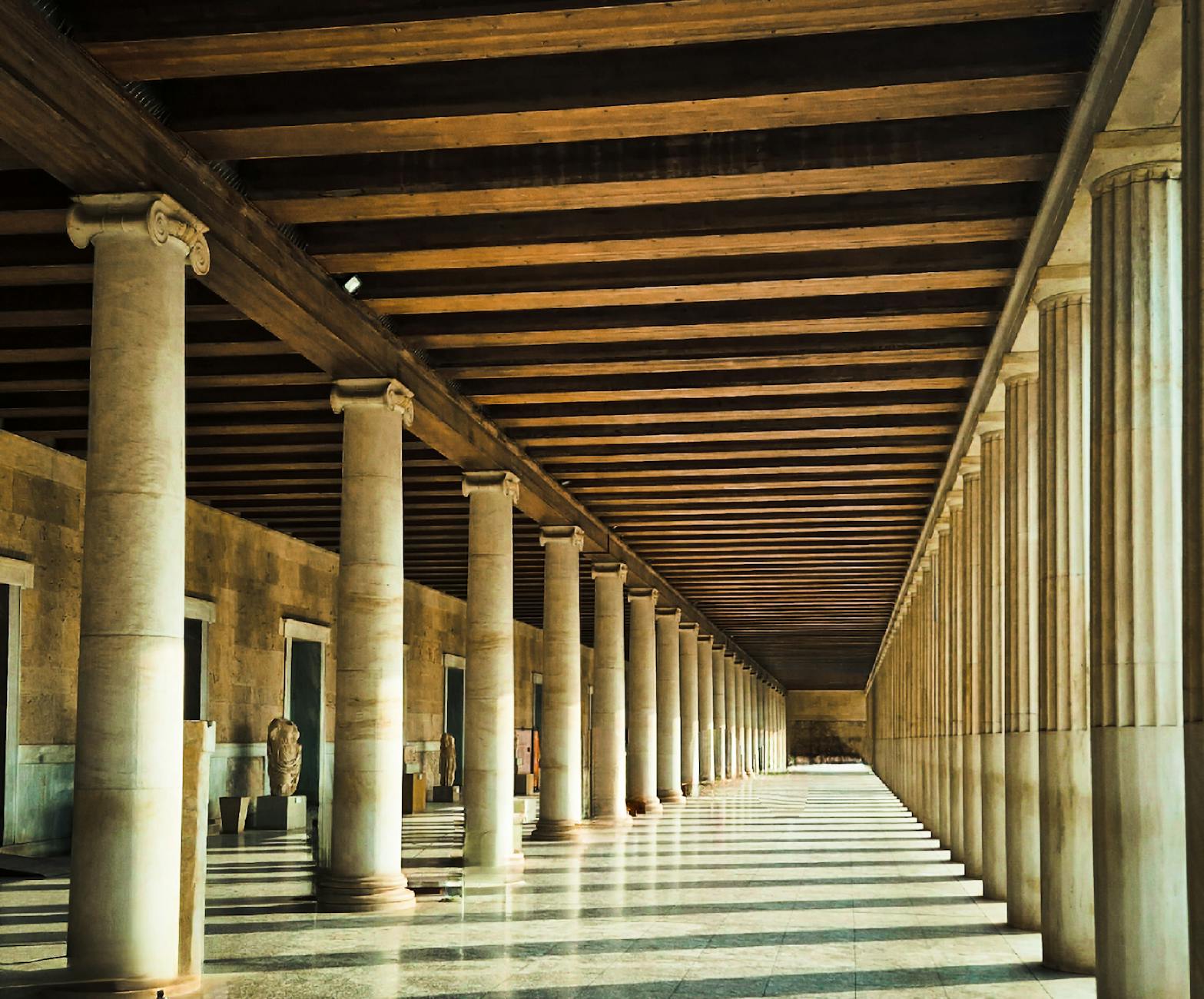
The Stoa of Attalos is a meticulously reconstructed two-story colonnade that originally served as a covered shopping arcade. Today it houses the Museum of the Ancient Agora, displaying pottery, coins, bronze ballots, and an ingenious 5th-century BCE water clock (klepsydra) used to time speeches in the law courts. The museum is included with your Agora entry ticket.
The Tholos was a round building where the 50-member executive committee of the Athenian Council dined and slept, ensuring that government officials were available around the clock. Only its foundations remain, but they mark one of the most important political sites in the history of democracy.
The Ancient Agora is open on the same schedule as other major archaeological sites. Standard admission is €20, though a combined ticket that includes multiple sites is no longer officially offered by the government as of April 2025 — check locally for any bundled tour options.
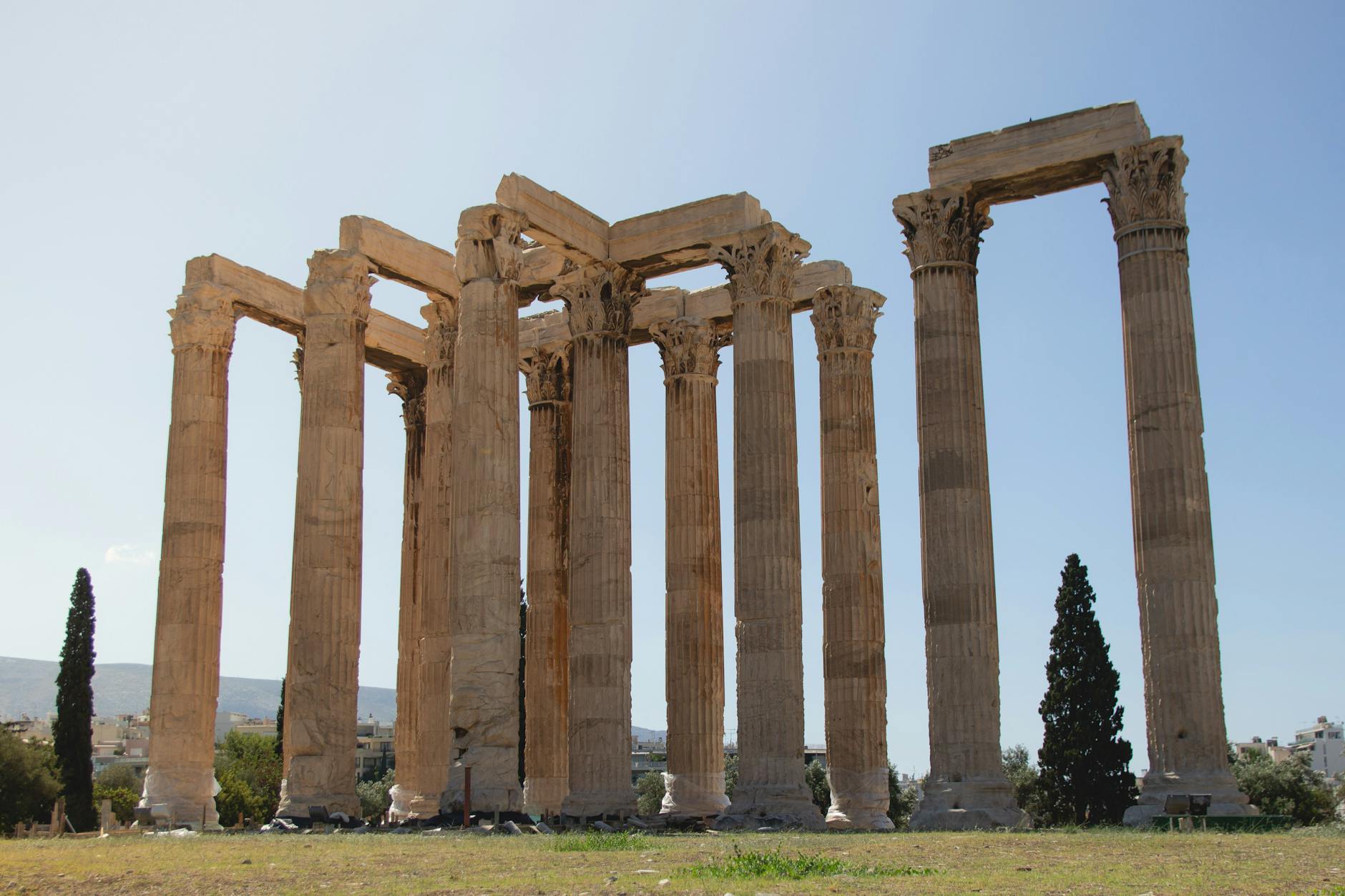
Temple of Olympian Zeus: Athens’ Largest Ancient Temple
Standing in the shadow of the Acropolis, the Temple of Olympian Zeus (Olympieion) was once the most ambitious building project in the Greek world. Measuring 96 by 40 meters, it was the largest temple in mainland Greece and housed a chryselephantine (gold and ivory) statue of Zeus that rivaled the famous one at Olympia.
Construction began under the Athenian tyrant Peisistratos around 515 BCE, but the project was so enormous that it remained unfinished for nearly 650 years. It was finally completed by the Roman Emperor Hadrian in 131 CE, who dedicated it and placed a colossal statue of Zeus inside alongside one of himself.
Of the original 104 Corinthian columns — each standing over 17 meters tall — only 15 remain upright today, with one additional column lying where it toppled during a storm in 1852. Despite this, the sheer scale of the surviving columns makes the site one of the most photogenic in Athens, particularly at sunset when the marble glows gold against the Acropolis backdrop.
Adjacent to the temple stands Hadrian’s Arch, a monumental gateway built in 131 CE to mark the boundary between the old city of Theseus and the new Roman quarter of Hadrian. One side of the arch reads “This is Athens, the ancient city of Theseus” and the other “This is the city of Hadrian, not of Theseus.”
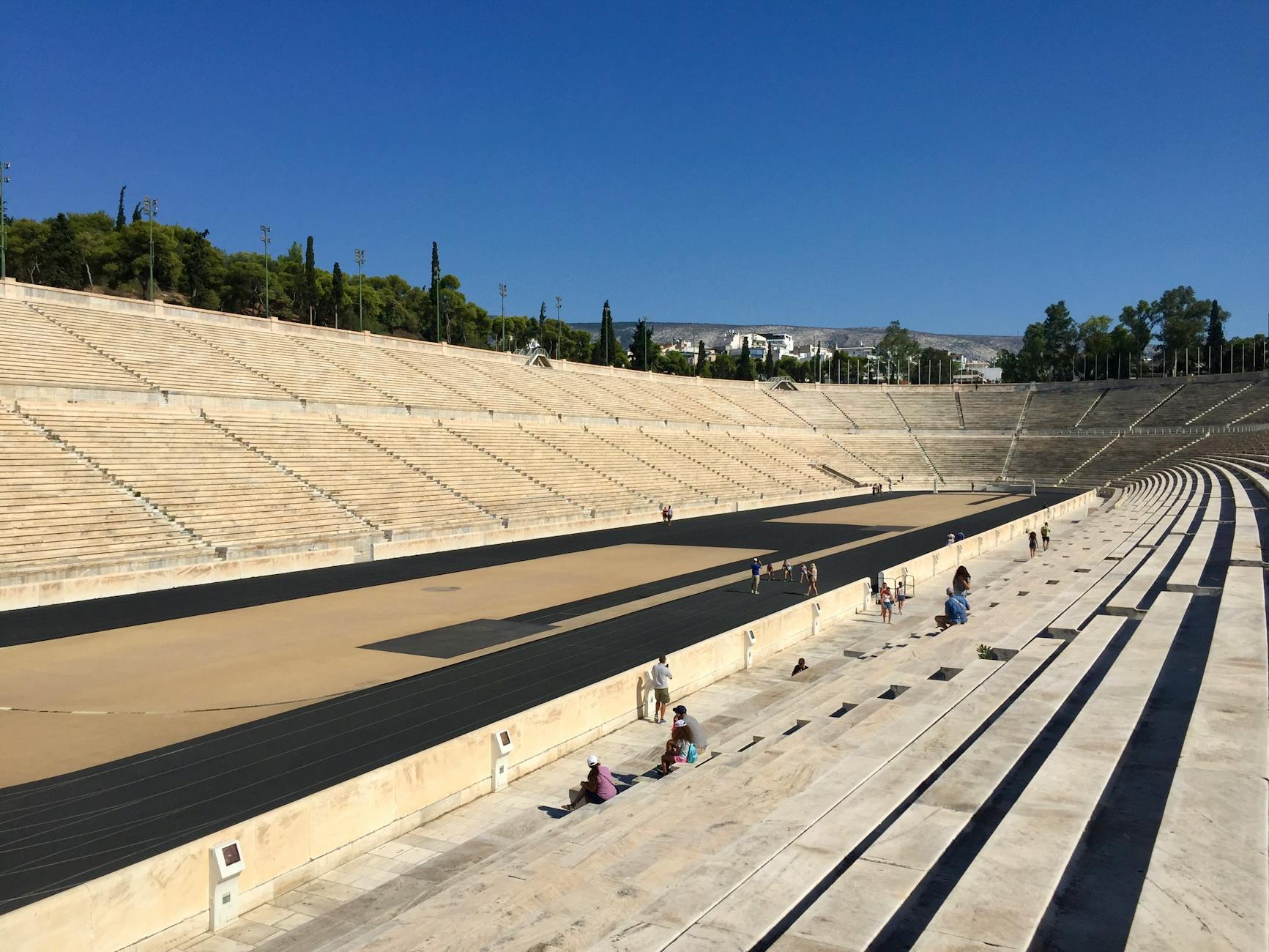
Panathenaic Stadium: The World’s Only All-Marble Stadium
The Panathenaic Stadium (Kallimarmaro) is one of Athens’ most stirring sights — a horseshoe-shaped arena carved entirely from white Pentelic marble, seating approximately 50,000 spectators. Originally built around 330 BCE for athletic competitions during the Panathenaic Games, the stadium was rebuilt in marble by the Roman senator Herodes Atticus in 144 CE and then fully restored for the first modern Olympic Games in 1896.
Today the stadium is both a working venue and a museum. You can walk the marble tiers, stand on the track where the 1896 Olympic athletes competed, and visit the small underground exhibition displaying torches and memorabilia from every modern Summer Olympics. The stadium also serves as the traditional finish line for the Athens Classic Marathon.
Admission is €10 for adults, with an audio guide included in the ticket price. The stadium is open daily (hours vary by season), and because it faces east, morning light offers the best conditions for photography.
Hadrian’s Library & Roman Agora
Hadrian’s Library
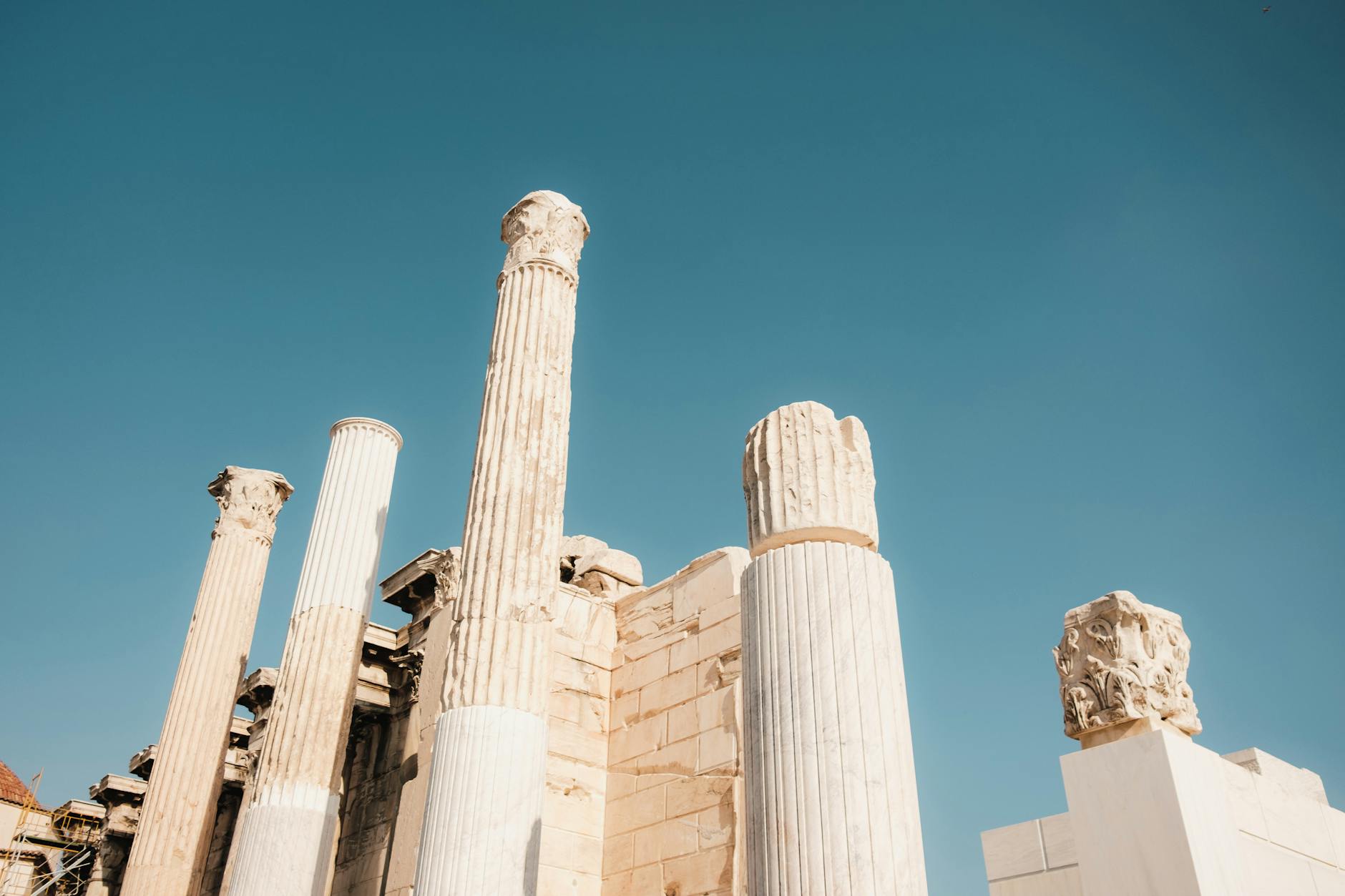
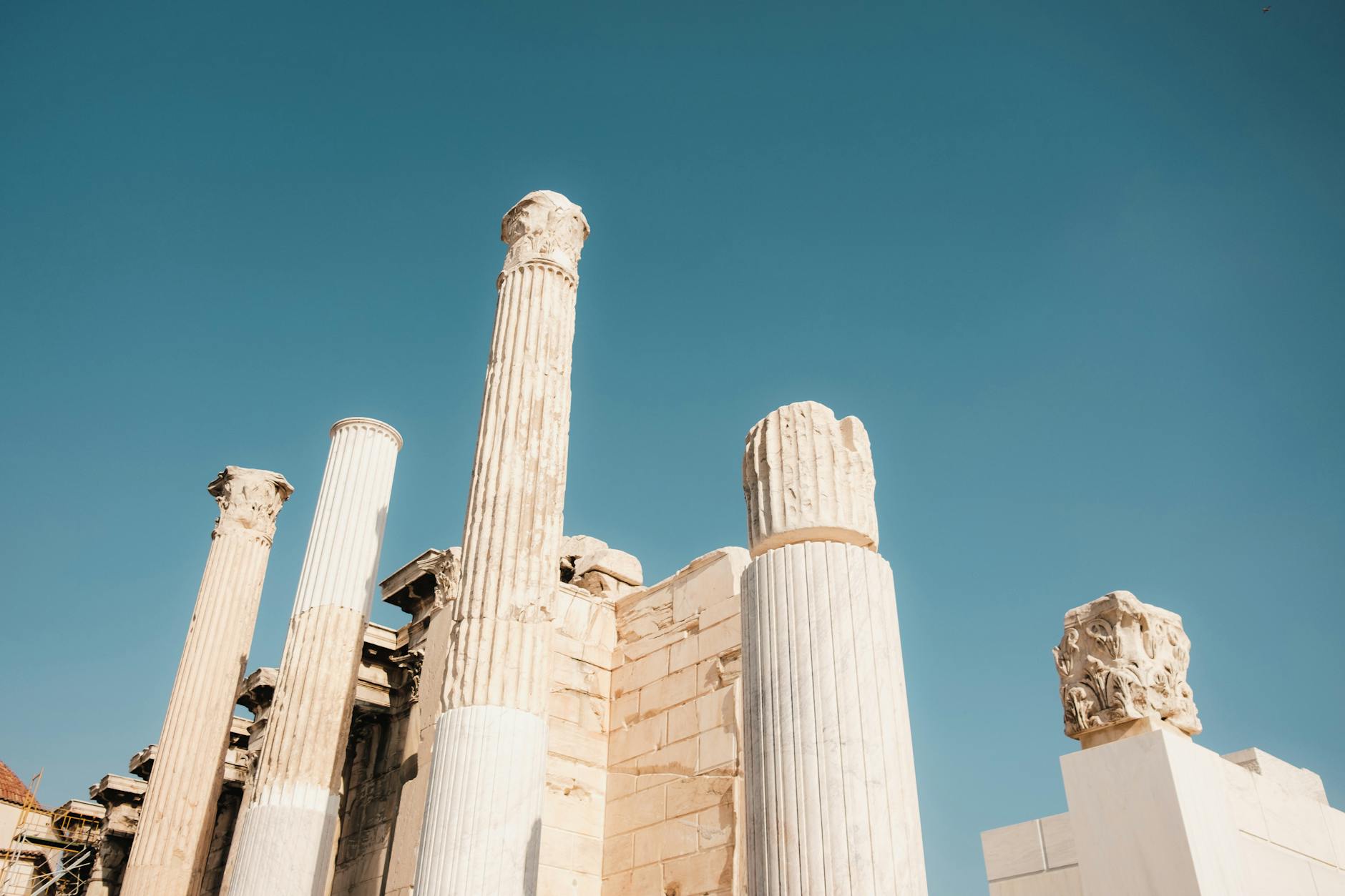
Built by Emperor Hadrian in 132 CE, this was not merely a library but a vast cultural complex encompassing reading rooms, lecture halls, a garden courtyard, and a pool. The surviving west wall along Areos Street, with its seven soaring Corinthian columns and richly carved entablature, is one of the most impressive Roman architectural facades in Athens. Despite its prominent location just behind Monastiraki Square, many visitors walk right past it — making it pleasantly uncrowded compared to the Acropolis.
Roman Agora & Tower of the Winds
Just a short walk east of Hadrian’s Library sits the Roman Agora, built between 19 and 11 BCE as a commercial expansion of the older Greek marketplace. The most remarkable surviving structure is the Tower of the Winds (Horologion of Andronikos Kyrrhestes), an octagonal marble tower from the 1st century BCE that served as the world’s first known combination of sundial, water clock, and weather vane. Each of its eight sides bears a relief sculpture personifying a different wind, and the engineering sophistication of its interior hydraulic mechanism was unmatched in the ancient world.
The Gate of Athena Archegetis at the western entrance still stands, and inscriptions on it record commercial regulations from both Roman and Ottoman periods — a reminder of how long this space functioned as Athens’ commercial center.
Kerameikos: Athens’ Ancient Cemetery & Potters’ Quarter
Kerameikos is one of Athens’ most atmospheric and least crowded archaeological sites. Straddling the banks of the Eridanos River on the northwest edge of the ancient city, this 11-acre landscape served simultaneously as Athens’ principal cemetery, its potters’ district (giving us the English word “ceramics”), and the starting point of the Sacred Way to Eleusis.
Walking through Kerameikos, you encounter carved funerary stelae (grave markers), monumental family tombs, and the impressive remains of the Dipylon Gate — the main entrance to ancient Athens and the widest gate in the ancient Greek world. The street that passed through the Dipylon was the route of the Panathenaic procession.
The on-site Kerameikos Museum houses an excellent collection of pottery, grave goods, and sculptural fragments found during excavations. Highlights include painted lekythoi (oil flasks placed in graves), terracotta figurines, and the original bull sculpture from the Tomb of Dionysios of Kollytos.
Standard admission is €10. The site sees a fraction of the visitor traffic of the Acropolis, meaning you can explore at a leisurely pace with birdsong as your soundtrack rather than tour-group chatter.
Lesser-Known Historical Sites Worth Your Time
Pnyx Hill
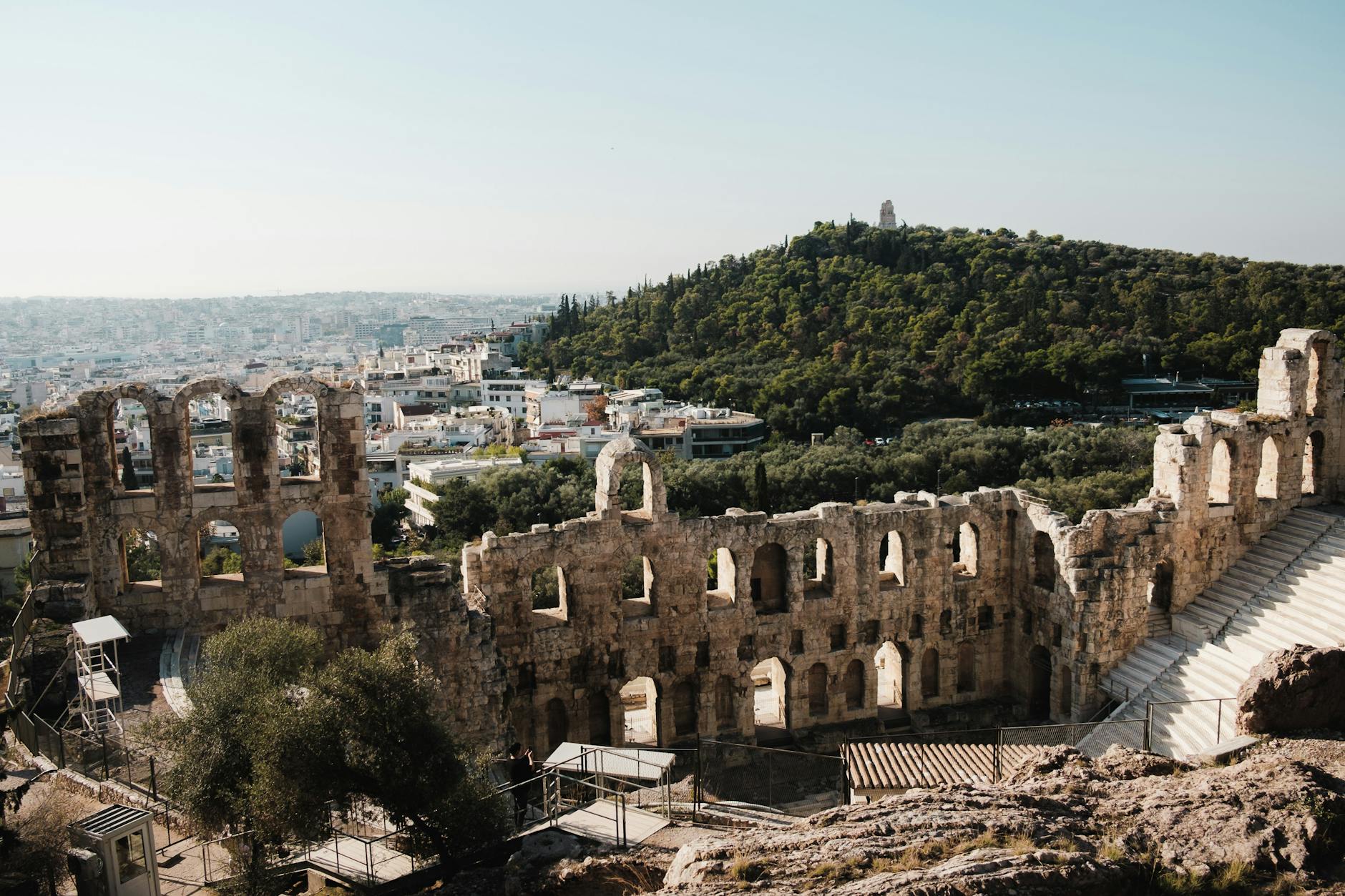
The Pnyx is where Athenian democracy was literally practiced. From the late 6th century BCE, citizens gathered on this hillside to vote on laws, debate foreign policy, and hear orators like Pericles, Demosthenes, and Themistocles. The carved speaker’s platform (the bema) still survives, and standing on it with the Acropolis directly across the valley is one of the most evocative experiences in Athens. Access is free and the hill is open during daylight hours.
Plato’s Academy (Akadimia Platonos)
Located in a quiet working-class neighborhood northwest of the city center, Plato’s Academy is the site where the philosopher taught from approximately 387 BCE until his death in 347 BCE. The word “academy” in every language derives from this place. Today, a small archaeological park preserves fragments of the gymnasium and sacred grove, and the nearby Digital Museum of Plato’s Academy offers interactive exhibits about Plato’s life and thought. Entry to the park is free.
Philopappos Hill & Monument
Rising southwest of the Acropolis, Philopappos Hill offers what many consider the finest panoramic views of the Parthenon. At its summit stands the Monument of Philopappos (116 CE), a Roman-era funerary monument dedicated to Gaius Julius Antiochus Philopappos, a Roman consul of Syrian-Commagenian descent. The shaded walking paths through pine trees make this an ideal retreat from Athens’ summer heat, and on the hill’s north slope you can find the prison of Socrates — a rock-cut chamber where tradition holds the philosopher was imprisoned before drinking hemlock in 399 BCE.
The Olympieion District & Arch of Hadrian
The area around the Temple of Olympian Zeus holds several additional sites that are easy to miss. Just south, the excavated foundations of a Roman bath complex reveal the sophisticated heating systems (hypocausts) used by Athens’ Roman residents. Nearby, the remains of houses from the classical and Hellenistic periods show how ordinary Athenians lived in the centuries when the great temples were being built just uphill.
The Acropolis Museum: A World-Class Archaeological Collection
Opened in 2009, the Acropolis Museum is consistently ranked among the best museums in the world, welcoming over 1.5 million visitors annually. Designed by architect Bernard Tschumi, the building sits directly above an active archaeological excavation — visible through glass floors in the entrance gallery — and is precisely oriented so that its top-floor Parthenon Gallery aligns with the Parthenon itself on the hill above.
Gallery Highlights
The Gallery of the Slopes of the Acropolis (ground floor) displays objects found on the slopes surrounding the sacred rock, from everyday items like cooking pots and children’s toys to marble votives and clay figurines. The glass floor panels revealing the excavation beneath your feet set the tone for the entire museum experience.
The Archaic Gallery (first floor) houses an extraordinary collection of painted marble statues from the 7th to 5th centuries BCE, including korai (maidens) and kouroi (youths) whose traces of original pigment reveal that ancient Greek sculpture was vividly colored, not the pristine white marble we imagine today.
The Parthenon Gallery (top floor) is the museum’s centerpiece: a light-filled hall where the surviving original Parthenon frieze, metopes, and pediment sculptures are displayed at the same height and orientation as they originally appeared on the temple. Where original pieces are missing (those held by the British Museum and others), plaster casts fill the gaps — making the case for reunification viscerally clear.
The Caryatids are displayed in a purpose-built alcove: five of the six original female figures that supported the porch of the Erechtheion (the sixth remains in the British Museum). Seeing them up close reveals exquisite details — the folds of their drapery, the braids in their hair — that are invisible from the ground level of the Acropolis.
Visiting Information
The Acropolis Museum is open Monday through Sunday, with extended Friday hours. General admission is €20 all year (reduced €10). Reduced tickets are available for EU seniors and students. The museum restaurant on the second floor offers panoramic Acropolis views and makes an excellent lunch stop. Plan at least two hours for a thorough visit — three if you use the multimedia guide.
National Archaeological Museum: Greece’s Largest Treasure House
The National Archaeological Museum, housed in an imposing neoclassical building near Exarchia, is the largest archaeological museum in Greece and one of the most important in the world. With over 11,000 exhibits spanning from prehistory to late antiquity, it offers a chronological journey through the civilizations that flourished on Greek soil for over 6,000 years.
Must-See Collections
The Mycenaean Collection is the museum’s most famous section, anchored by the gold Mask of Agamemnon (c. 1550–1500 BCE) discovered by Heinrich Schliemann at Mycenae. While the mask may not actually depict the legendary king, it remains one of the most iconic artifacts in archaeology. The collection also includes gold cups, daggers with inlaid hunting scenes, and a wealth of jewelry from the shaft graves.
The Bronze Collection includes two masterpieces pulled from the sea: the Artemision Bronze (c. 460 BCE), a larger-than-life figure of either Zeus hurling a thunderbolt or Poseidon throwing a trident, and the Antikythera Youth (c. 340 BCE), a graceful bronze statue recovered from a Roman shipwreck. The room also displays the Antikythera Mechanism fragments — remains of a 2nd-century BCE analog computer used to predict astronomical positions and eclipses, often called the world’s first computer.
The Cycladic Collection showcases the hauntingly modern marble figurines from the Cycladic islands (3200–2000 BCE), whose clean, abstract forms influenced artists like Picasso, Modigliani, and Henry Moore. The largest known Cycladic figure, standing nearly 1.5 meters tall, is displayed here.
The Thera Frescoes are brilliantly colored wall paintings from the Minoan-era city of Akrotiri on Santorini, preserved under volcanic ash when the island’s volcano erupted around 1600 BCE. Scenes of boxing youths, fishermen with their catch, swallows in flight, and a fleet of ships provide an astonishingly vivid window into Bronze Age daily life.
Visiting Information
The museum is open Wednesday through Monday from 8:30 AM to 3:30 PM (winter) and 8:00 AM to 8:00 PM (summer). Tuesday hours are 1:00 PM to 8:00 PM. General admission is €20, the same all year. The museum is large enough to warrant at least three hours, and serious enthusiasts could spend an entire day. If you are exploring the best things to do in Athens, this museum should be at the very top of your list.
More Essential Athens Museums
Benaki Museum of Greek Culture
The Benaki Museum traces Greek culture from prehistory to the modern era under one roof. Housed in an elegant neoclassical mansion near Syntagma Square, its collection includes Mycenaean gold jewelry, Byzantine icons, folk costumes, memorabilia from the Greek War of Independence, and two paintings by El Greco (who was born in Crete when it was under Venetian rule). The rooftop café offers lovely views of the National Garden. General admission is €12, and the museum is free every Thursday.
Museum of Cycladic Art
This Kolonaki museum holds the world’s most comprehensive collection of Cycladic marble figurines — over 3,000 artifacts from the enigmatic Cycladic civilization of the 3rd millennium BCE. Founded by collectors Nikolaos and Dolly Goulandris, the museum also displays ancient Greek art from the Bronze Age through the Roman period, with a strong emphasis on pottery and metalwork. Temporary exhibitions rotate frequently and are often outstanding. Admission is €12.
Byzantine & Christian Museum
Set in a charming 19th-century villa with a landscaped courtyard on Vasilissis Sofias Avenue, this museum covers the Byzantine period (4th–15th centuries CE) and its legacy in Greece. The collection spans over 25,000 objects, including icons, frescoes, manuscripts, textiles, and liturgical metalwork. Highlights include a collection of early Christian sarcophagi and a reconstructed basilica interior. Admission is €8 (April–October) and €4 (November–March).
National Gallery of Greece
After an extensive renovation completed in 2021, the National Gallery reopened with 20,000 works spanning from post-Byzantine art to the present day. The collection includes El Greco, Nikolaos Gyzis, Nikos Hadjikyriakos-Ghikas, and prominent European painters. The modernized building now offers significantly more exhibition space and a sculpture garden. Admission is €10.
Museum of the Ancient Agora (Stoa of Attalos)
Located inside the reconstructed Stoa of Attalos in the Ancient Agora, this focused museum displays artifacts related to Athenian democracy and daily life, including bronze ballots, pottery ostraka (shards used for ostracism votes), and the klepsydra (water clock) that timed courtroom speeches. Admission is included with the Ancient Agora entry ticket.
Tickets, Passes & Money-Saving Tips
Understanding Athens’ Ticket System in 2026
As of April 2025, the Greek government discontinued the long-standing multi-site combination ticket. Each major archaeological site and museum now requires a separate admission ticket. While this may seem less convenient, the change actually benefits visitors who were never going to visit all seven sites — you now pay only for what you see.
Current 2026 individual ticket prices for the major sites include the Acropolis at €30, the Ancient Agora at €20, Temple of Olympian Zeus at €20, Kerameikos at €10, and Hadrian’s Library at €10. Major museums are priced separately: the Acropolis Museum and the National Archaeological Museum at €20 each, the same all year.
Several private tour operators still offer bundled tickets and skip-the-line access for groups of sites, though these typically cost more than purchasing individual tickets. They may be worthwhile during peak summer months when ticket queues can be lengthy.
Free Admission Days
Greece offers several free-admission opportunities that budget travelers should plan around. State-run archaeological sites and museums are free on March 6 (in memory of former Culture Minister Melina Mercouri), on April 18 (International Day for Monuments and Sites), on May 18 (International Museum Day), on the last weekend of September (European Heritage Days), and on October 28 (Ochi Day national holiday). The National Archaeological Museum is also free on the first and third Sundays from November through March, but the Acropolis and the other ancient sites in central Athens no longer are. Even on free days, you still need to collect a complimentary ticket at the entrance.
Planning Your Historical Athens Itinerary
One Day: The Greatest Hits
If you have a single day for Athens’ historical sites and museums, focus on the Acropolis (arrive at opening for the smallest crowds), the Acropolis Museum (directly downhill — allow two hours), and either the Ancient Agora or the National Archaeological Museum depending on your interests. End the day with a stroll through Plaka, Athens’ oldest neighborhood, where Byzantine-era churches nestle among neoclassical houses and fragments of ancient walls peek out from restaurant courtyards. For dining options after your historical exploration, consult our Athens food guide.
Two Days: The Comprehensive Tour
Day 1: Acropolis (early morning), Acropolis Museum, lunch in Plaka or Makriyianni, Ancient Agora and Temple of Hephaestus, and Kerameikos in the late afternoon when golden light illuminates the funerary sculptures.
Day 2: National Archaeological Museum (morning — it is large), lunch in Exarchia, then Temple of Olympian Zeus and Hadrian’s Arch in the afternoon, followed by the Panathenaic Stadium. End with sunset from Philopappos Hill for unobstructed Acropolis views.
Three or More Days: Deep Dive
With additional days, add the Roman Agora and Tower of the Winds, Hadrian’s Library, the Benaki Museum, the Museum of Cycladic Art, the Byzantine Museum, and Plato’s Academy. Consider a half-day excursion to Cape Sounion (70 km south of Athens) to see the Temple of Poseidon perched dramatically above the Aegean — one of the most spectacular ancient sites in all of Greece.
If you are planning where to stay in Athens, choosing accommodation in the Plaka, Monastiraki, or Koukaki neighborhoods puts you within walking distance of virtually every site mentioned in this guide.
Avoiding Museum Fatigue
Even the most enthusiastic history lover can hit a wall after hours of ruins and display cases. Spread archaeological sites across multiple days rather than cramming them into one marathon session. Alternate indoor museums with open-air sites, and build in breaks for coffee (Greek coffee culture is worth experiencing in its own right), meals, and simply wandering atmospheric neighborhoods. The five-day validity on many tickets means you do not need to rush.
Practical Tips for Visiting Athens’ Historical Sites
Best Time to Visit
The shoulder seasons of April–May and September–October offer the best combination of pleasant weather, manageable crowds, and full operating hours. Summer (June–August) brings intense heat that makes midday exploration of open archaeological sites uncomfortable — plan outdoor visits for early morning and late afternoon, and schedule museum visits for the hottest part of the day. Winter (November–March) is mild by Northern European standards, with fewer tourists and lower admission prices, but shorter opening hours at outdoor sites.
What to Wear and Bring
Comfortable walking shoes with good grip are essential — marble surfaces on the Acropolis and at the Panathenaic Stadium are slippery when dry and dangerous when wet. Sun protection (hat, sunscreen, sunglasses) is critical from April through October. Carry a refillable water bottle — free water fountains are available at the Acropolis and several other sites. A portable phone charger is useful if you rely on mobile audio guides.
Accessibility
Athens has made significant accessibility improvements in recent years. The Acropolis has an elevator on the north slope for wheelchair users and visitors with mobility challenges (ask at the ticket office). The Acropolis Museum is fully wheelchair accessible, with elevators to all floors. The National Archaeological Museum is also accessible. Open-air archaeological sites with uneven terrain, such as Kerameikos and the Ancient Agora, remain challenging for wheelchair users, though the Stoa of Attalos within the Agora is accessible.
Photography Rules
Personal photography (without flash) is permitted at all outdoor archaeological sites and in most museums. The Acropolis Museum prohibits flash photography and tripods in the Parthenon Gallery. Some temporary exhibitions may restrict photography entirely — check signage at the entrance to each gallery. Drone photography is strictly prohibited above all archaeological sites and requires a government permit, which is rarely granted.
A Living City Built on Ancient Foundations
What makes Athens truly extraordinary is that its history is not confined to museums and fenced archaeological sites. The Athens Metro system doubles as an underground museum, with station concourses displaying artifacts uncovered during construction — the Syntagma station exhibition of ancient aqueducts and graves is particularly impressive. Churches throughout the city incorporate ancient columns and Roman-era marble. The neighborhoods of Plaka and Anafiotika are themselves living historical layers, with medieval street plans, Ottoman-era fountains, and neoclassical facades sitting side by side.
Athens rewards curiosity. Look down at the pavement in Monastiraki and you might notice sections of the ancient Panathenaic Way. Glance into a construction pit near Syntagma and spot recently excavated walls. Sip a coffee in a square in Thiseio and realize the Temple of Hephaestus has been presiding over this same gathering space for 2,450 years. Every visit to Athens’ historical sites and museums reveals new connections between the ancient city and the vibrant modern capital that has grown around it.
For a complete overview of all the experiences Athens offers, explore our guide to things to do in Athens, find the perfect base with our guide on where to stay in Athens, and discover the city’s culinary traditions in our Athens food guide.