This article contains advertising. Some of the hotel, tour, activity, flight and transfer links in it are paid links: if you book through one, we get a commission from the booking company, and your price is the same either way. It never affects what we recommend. Affiliate disclosure
Why Choosing the Right Neighborhood Matters When Visiting Athens
Athens is a city of distinct neighborhoods, each with its own personality, charm, and appeal. Whether you’re a first-time visitor seeking the iconic sights, a couple looking for romance, a family wanting cultural experiences, or a budget traveler searching for value, where you stay will fundamentally shape your Athens experience. The choice between staying in the bustling heart of the city near the Acropolis, in an upscale residential neighborhood, or in an alternative bohemian district isn’t just about accommodation—it’s about choosing your Athens adventure.
This comprehensive guide covers every major neighborhood in Athens, from the iconic and expensive to the authentic and affordable. We’ll explore what makes each area unique, who it’s best for, what you can expect to pay, and practical tips for making the most of your stay. By the end, you’ll understand not just where the hotels are, but which neighborhood aligns with your travel style and budget.
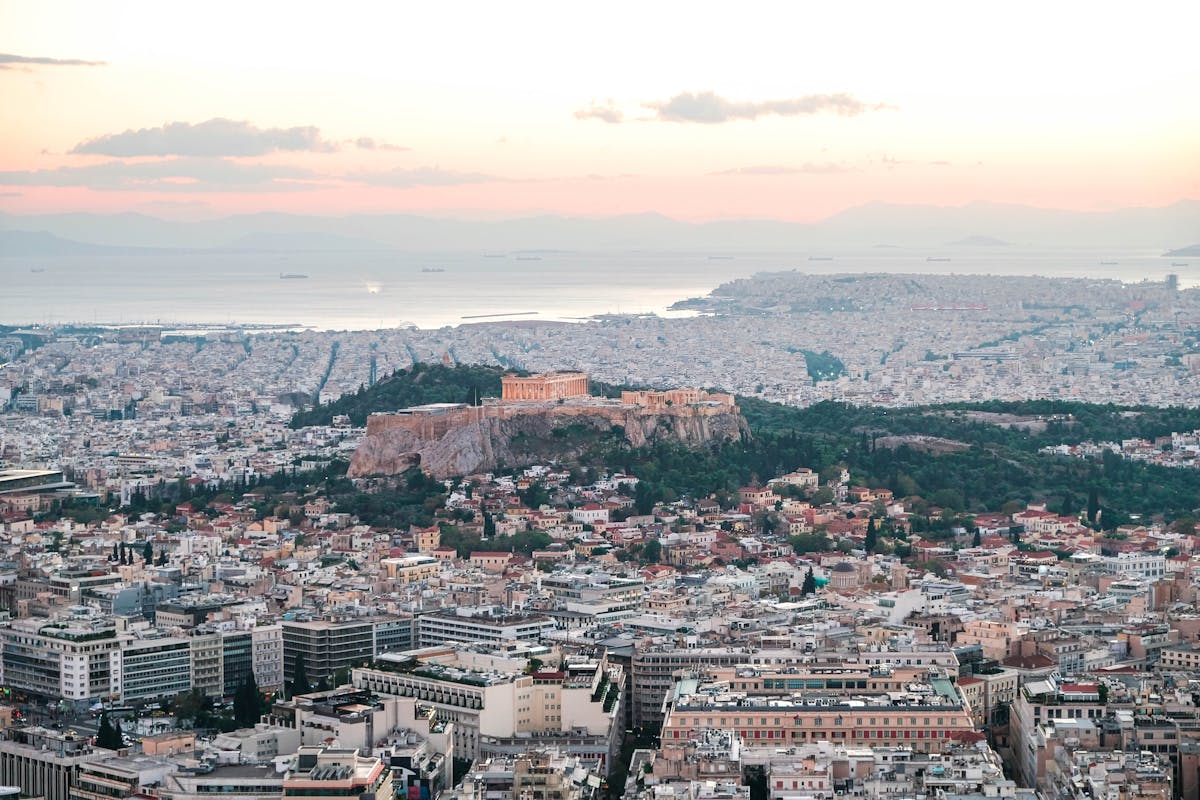
Quick Neighborhood Comparison: At-a-Glance Table
Not sure where to start? This table will help you quickly identify which neighborhoods match your travel style:
| Traveler Type | Best Neighborhoods | Why | Typical Price Range |
|---|---|---|---|
| First-Time Visitors | Plaka, Syntagma | Close to top attractions, iconic atmosphere, excellent metro access | €80-200/night |
| Couples (Romance) | Plaka, Koukaki, Petralona | Charming streets, intimate tavernas, rooftop views, quieter areas | €90-200/night |
| Families | Kolonaki, Koukaki, Pangrati | Safer, quieter, better restaurants, family-friendly activities | €100-250/night |
| Budget Travelers | Pangrati, Exarchia, Psyrri | Affordable accommodations, authentic Athens, great street food | €30-70/night |
| Luxury Seekers | Plaka, Syntagma, Kolonaki | Premium hotels, fine dining, exclusive boutiques | €200-600+/night |
| Nightlife Enthusiasts | Psyrri, Gazi, Exarchia | Bars, clubs, live music venues, alternative culture | €40-120/night |
| Culture & Art Lovers | Plaka, Monastiraki, Kolonaki | Museums, galleries, historic sites, archaeological wonders | €80-200/night |
The Historic Triangle: Understanding Athens’ Core
Before we dive into individual neighborhoods, it’s worth understanding the “Historic Triangle”—the unofficial name for the cluster of neighborhoods closest to the Acropolis: Plaka, Monastiraki, and Syntagma. These three neighborhoods form the heart of Athens tourism and are where you’ll find the most hotels, restaurants, and attractions. Most first-time visitors choose to stay in one of these three areas, and for good reason.
Plaka: The Soul of Ancient Athens
Best for: First-time visitors, couples, those seeking the classic Athens experience
Vibe: Romantic, historic, touristy, lively
Walking Distance from Acropolis: 300-500 meters (5-10 minutes)
Plaka is the postcard-perfect neighborhood that defines Athens for most visitors. Nestled at the foot of the Acropolis, this pedestrian-friendly area features narrow, winding cobblestone streets, whitewashed buildings with colorful doors and shutters, cascading bougainvillea, and tavernas with tables spilling onto alleys. It’s undeniably charming and undeniably touristy—but for good reason.
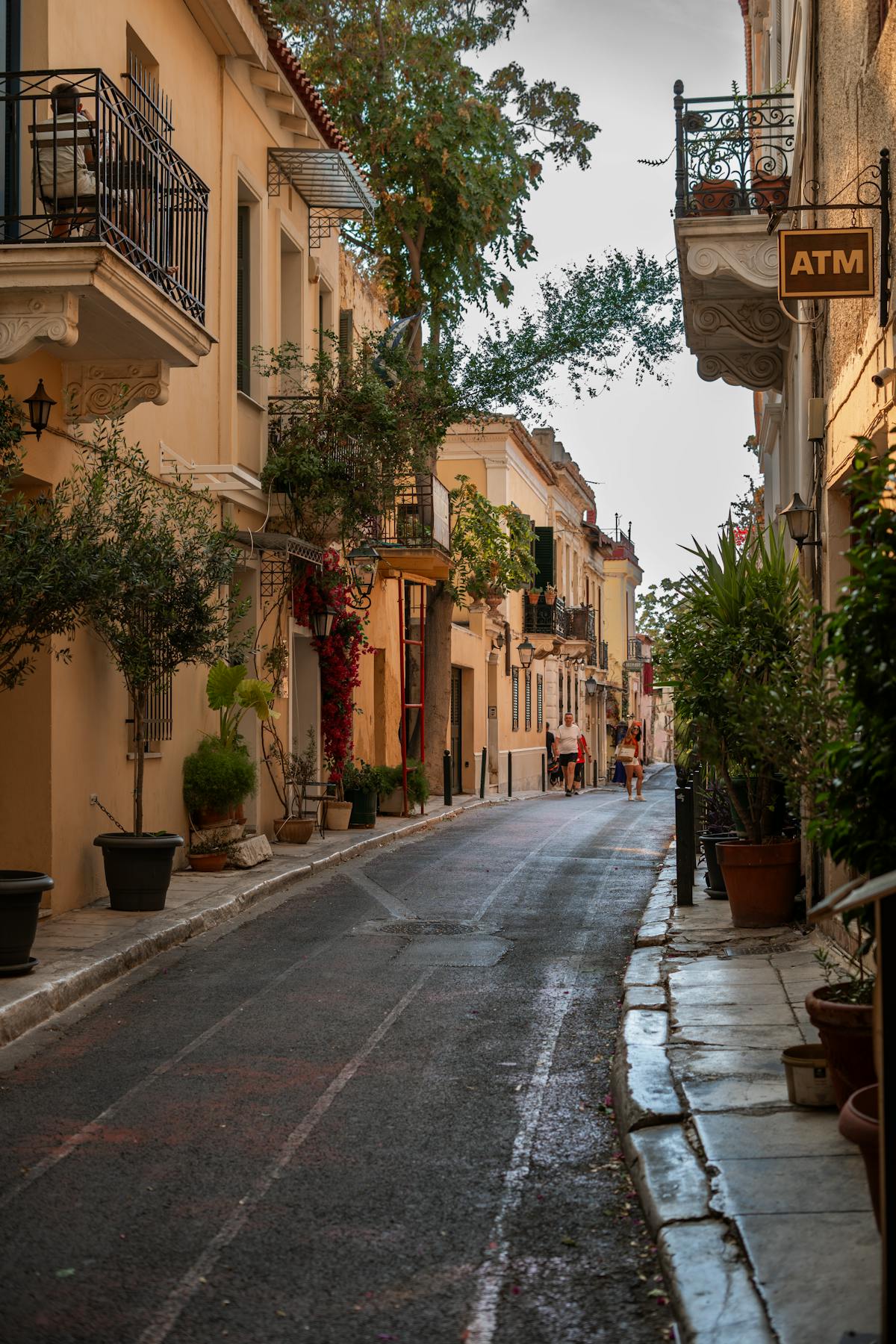
What Makes Plaka Special:
- Proximity to the Acropolis — You can walk to the main attraction in 5-10 minutes, and dozens of hotels offer views of the illuminated Acropolis at night
- Architectural Beauty — This is where you experience authentic neoclassical Athens, with buildings dating back centuries preserved to their original charm
- Tourist Infrastructure — You’ll find more restaurants, bars, souvenir shops, and tourist services here than anywhere else in Athens
- Pedestrian-Friendly — Most of Plaka is a car-free zone, creating a peaceful, walkable atmosphere despite the crowds
- Cultural Attractions — Museum of the City of Athens, Tower of the Winds, Roman Agora, and the Acropolis Museum are all within walking distance
Accommodation Options in Plaka:
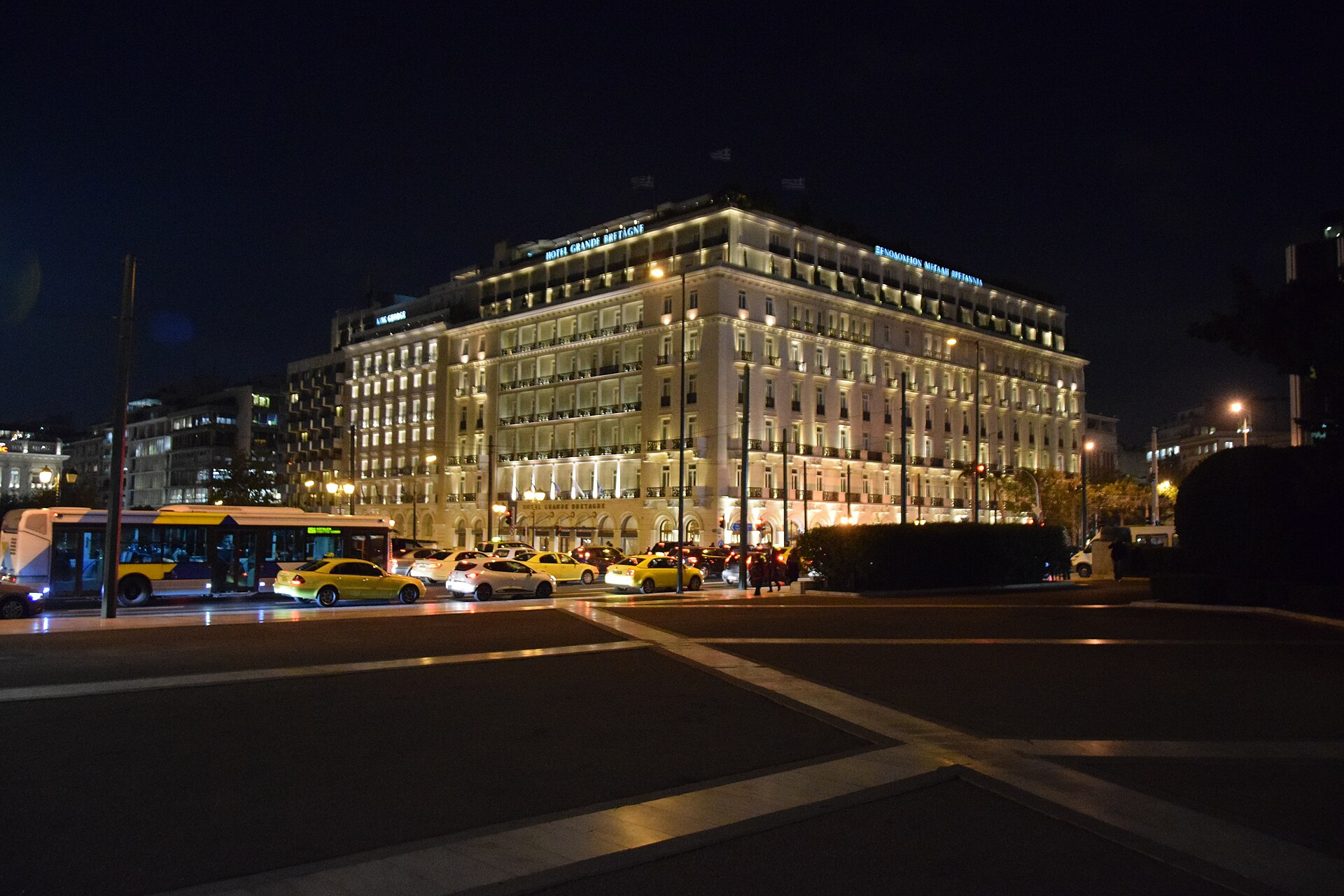
Plaka has everything from luxury boutique hotels charging €300-500+ per night to budget hostels at €30-50. Mid-range hotels typically cost €80-180 per night. Notable hotels include Hotel Grande Bretagne (the luxury standard), Hotel Acropolis House (charming mid-range), and Parliament House Hotel (budget-friendly). Many smaller properties are family-run and offer personalized service.
Dining & Nightlife:
Plaka’s restaurant scene caters heavily to tourists, which means good variety but sometimes inflated prices. Walk away from the main streets to find more authentic, reasonably-priced tavernas. Popular dishes include souvlaki, moussaka, and fresh grilled fish. Nightlife is lively but relatively tame—you’ll find bars and cafes rather than clubs (head to Psyrri or Gazi for serious nightlife).
Drawbacks to Consider:
- Crowded — Peak season (May-September) makes Plaka feel overwhelmed with tourists, especially around the main streets
- Expensive — Prices are noticeably higher than other neighborhoods, from accommodation to food to services
- Limited Authenticity — Many restaurants and shops cater to tourists rather than locals; you’ll see more souvenir shops than real Greek life
- Noisy at Night — Despite being pedestrian, the area can be loud from bars and restaurants until late, especially on weekends
- Steep Streets — The hilly terrain means lots of walking uphill, which can be challenging with luggage or for those with mobility issues
Getting Around from Plaka:
Plaka is best explored on foot. For reaching other areas, the nearest metro stations are Acropoli (Line 2, red line) and Monastiraki (Lines 1 and 3). The Syntagma metro station is about a 15-minute walk away.
Best for Which Visitors?
First-time visitors who want the “classic Athens experience,” couples seeking romance, those with limited time who want to be close to main attractions. If this is your first time in Athens and you have a reasonable budget, Plaka is a safe, excellent choice.
Monastiraki: The Beating Heart of Central Athens
Best for: Those wanting central location and everything within reach
Vibe: Bustling, commercial, energetic, lively
Walking Distance from Acropolis: 600-800 meters (10-12 minutes)
Monastiraki is where Athens’ historic center truly comes alive. Named after the small Pantanassa monastery at its core, this neighborhood is the intersection of history, commerce, and daily Athenian life. If Plaka is the tourist showcase, Monastiraki is where real Athens happens.
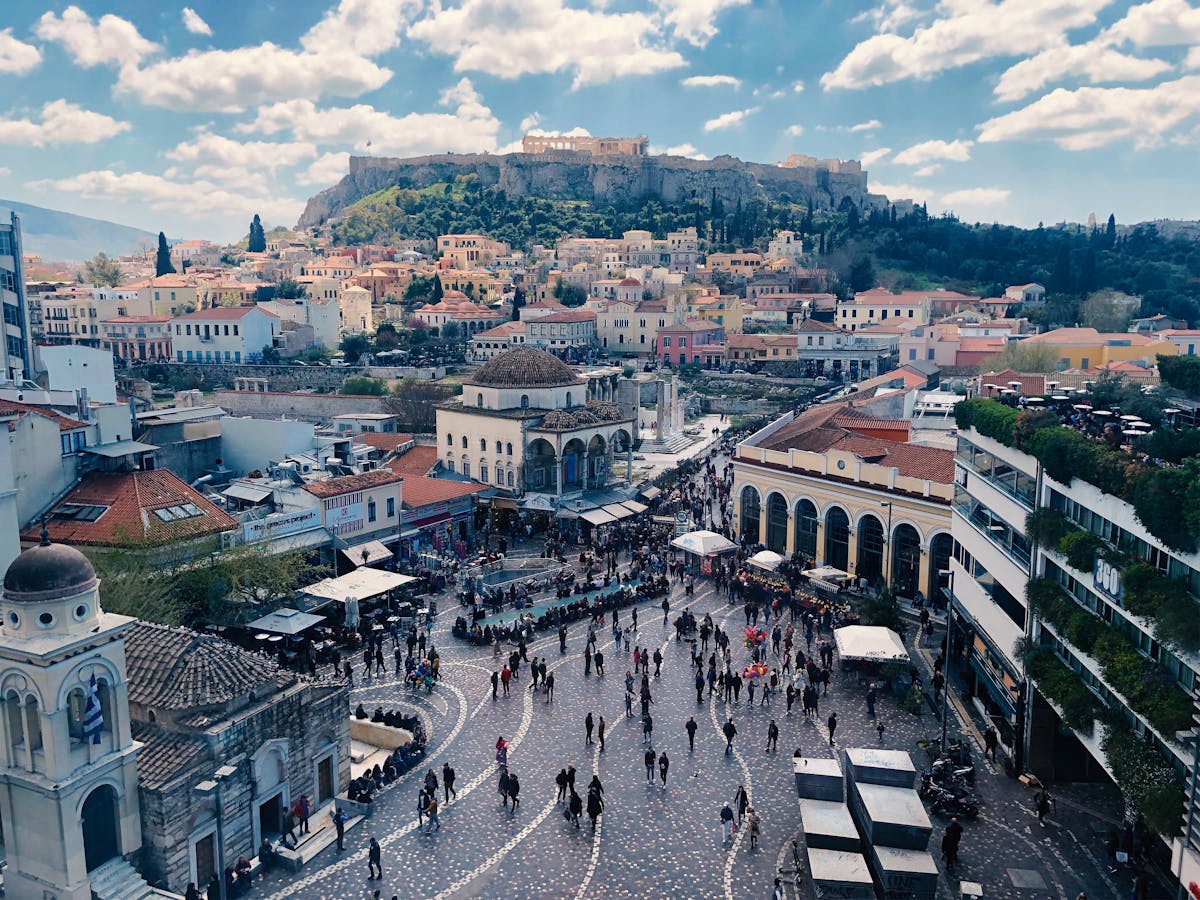
What Makes Monastiraki Special:
- Flea Market — The famous Monastiraki flea market sprawls across the neighborhood on Sundays, packed with everything from antiques to curiosities to cheap souvenirs
- Ermou Street — This long pedestrian shopping street connects Monastiraki to Syntagma, packed with boutiques, cafes, and shops
- Central Location — You’re equidistant from major attractions, with metro access to all corners of the city
- Historic Layers — Ancient Roman Agora, Ottoman mosques, Byzantine churches, and neoclassical buildings create a living museum of Athens’ history
- Local Atmosphere — Despite tourism, you’ll see Athenians going about their daily lives—shopping, working, gathering in cafes
Accommodation in Monastiraki:
Hotels here range from €50-300+ per night. You’ll find excellent value in the mid-range (€70-150), with several boutique properties offering character and location. The area has grown in popularity with travelers, so newer, modern hotels have opened alongside traditional establishments.
Dining & Nightlife:
Monastiraki’s restaurants are less touristy than Plaka’s, with better prices and more authentic Greek food. You’ll find everything from street-food souvlaki to sit-down tavernas. The nightlife is energetic—bars and cafes line Ermou Street and spill into side alleys.
Drawbacks to Consider:
- Noise and Bustle — The energy that makes Monastiraki great also makes it loud, especially on weekends and evenings
- Can Feel Chaotic — The flea market area especially can feel overwhelming, with narrow streets packed with people and merchandise
- Pickpockets — The crowded streets and markets mean you should watch your belongings carefully
- Limited Green Space — It’s entirely urban with no parks or quiet green areas nearby
Getting Around from Monastiraki:
Monastiraki metro station (Lines 1 and 3) is right in the neighborhood. Line 1 goes to Piraeus and the airport. The area is walkable to Plaka, Syntagma, and Psyrri.
Syntagma: Democracy and Central Authority
Best for: Convenience, metro access, short-stay visitors
Vibe: Official, governmental, commercial, busy
Walking Distance from Acropolis: 1.2 kilometers (15 minutes)
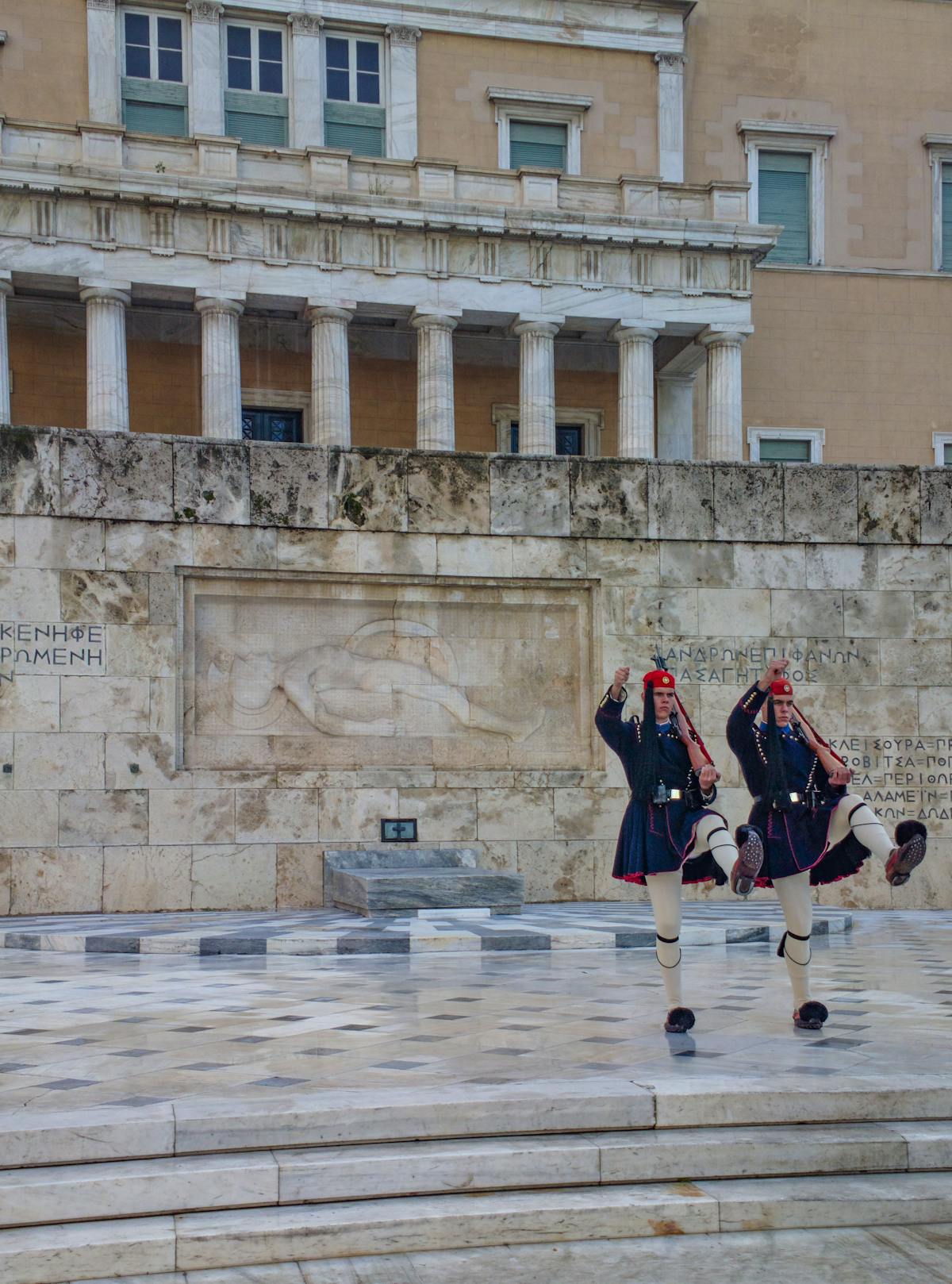
Syntagma (meaning “Constitution”) is the largest and most central square in Athens, dominated by the Greek Parliament building and the famous Evzones guards in their traditional uniforms. It’s the political heart of Greece and a major transportation hub for the city.
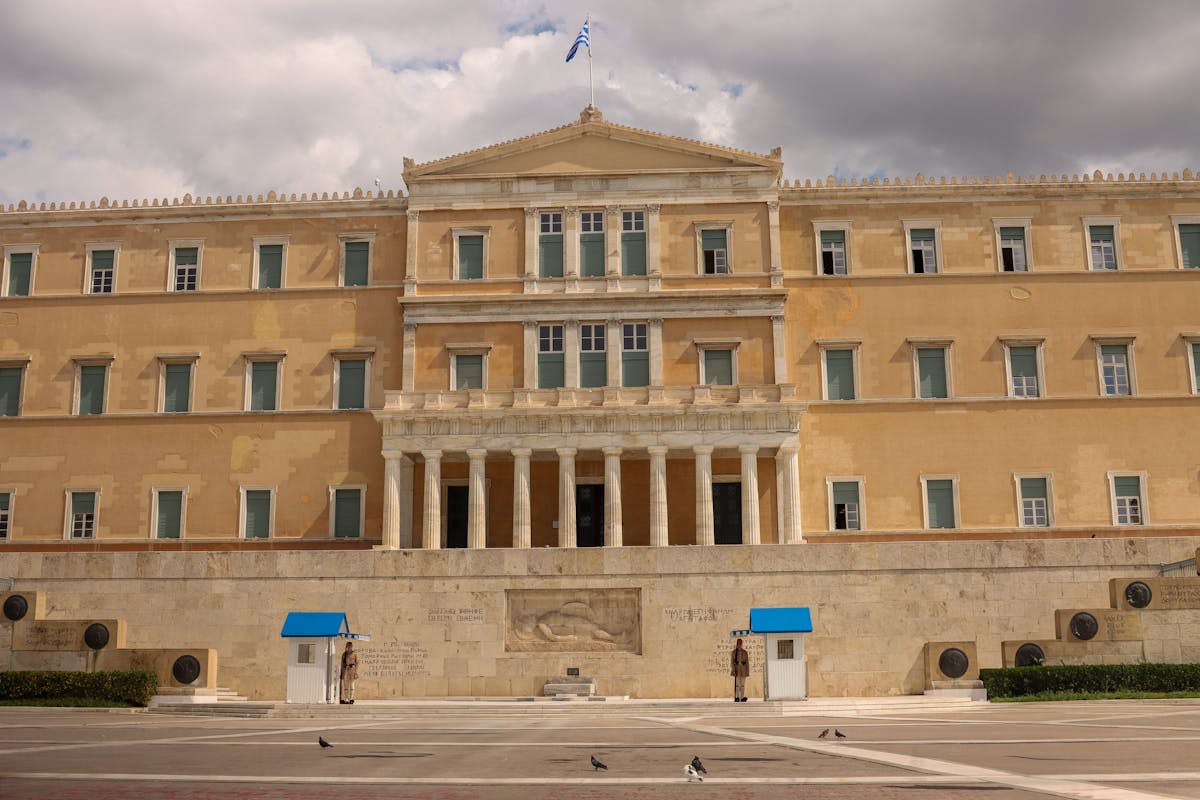
What Makes Syntagma Special:
- Iconic Square — Home to the Greek Parliament, the Evzones guards perform their ceremonial change-of-guard every hour (more elaborate on Sundays at 11am)
- Best Metro Access — Syntagma metro station is one of the city’s main hubs, connecting to Lines 2 (red) and 3 (blue)
- Ermou Street Shopping — The main pedestrian shopping street runs through Syntagma, filled with international brands and local boutiques
- Luxury Hotels — This is where you’ll find some of Athens’ best-known luxury hotels like Hotel Grande Bretagne
- Business District Convenience — If you have business meetings or need modern conveniences, Syntagma delivers
Accommodation in Syntagma:
Accommodation ranges from €100-500+ per night, with many upscale hotels. Budget options are limited (€60-80), mid-range is abundant (€100-200), and luxury is plentiful (€250+). The area has the most international hotel chains in Athens.
Dining & Nightlife:
Syntagma has many restaurants and bars along Ermou Street, but they tend toward chain restaurants and less character than other neighborhoods. However, you’ll find consistent quality and prices that are slightly less inflated than Plaka.
Drawbacks to Consider:
- Less Charming — It’s more of a business district than a tourist neighborhood, lacking the character of Plaka or Koukaki
- Crowded — As a major transportation hub, it’s always busy, especially during rush hours
- Expensive — Prices are high, though slightly less so than Plaka
- Generic — The architectural style is more modern and less distinctively Greek than other neighborhoods
Best for Which Visitors?
Those visiting for short stays who prioritize convenience and access, business travelers, those who want a “safe” choice with reliable hotels and services, and visitors planning day trips (excellent metro access).
Koukaki & Makrygianni: The Rising Star Neighborhoods
Best for: Those seeking balance between access and authenticity; couples; families with good budgets
Vibe: Authentic, residential, artistic, increasingly trendy
Walking Distance from Acropolis: 400-600 meters (6-9 minutes)
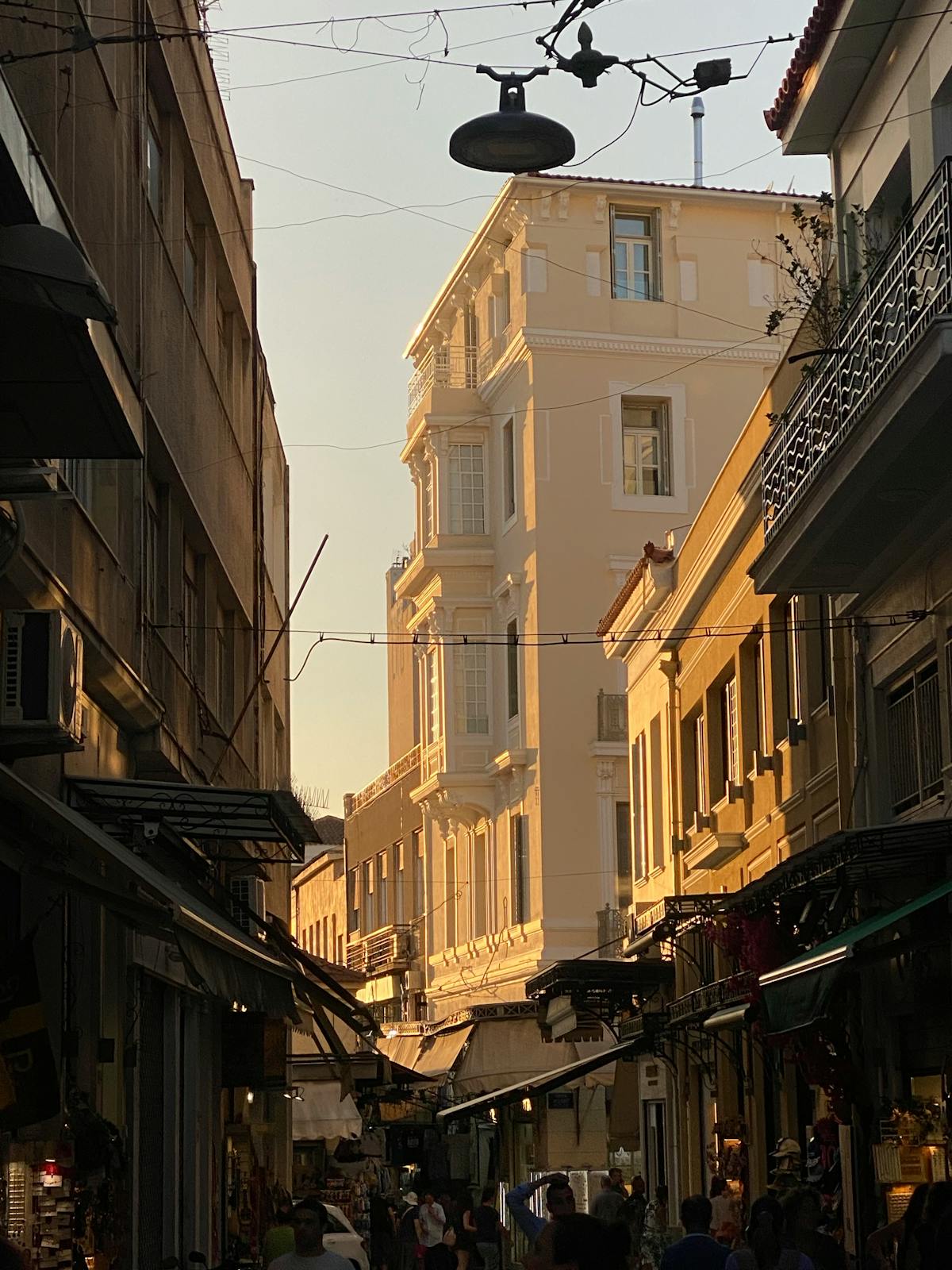
Located immediately south of the Acropolis, Koukaki and Makrygianni (often treated as one neighborhood) represent the new face of Athens tourism. In the last decade, this formerly working-class residential area has transformed into the most exciting neighborhood for visitors who want authenticity without sacrificing proximity to attractions.
What Makes Koukaki Special:
- Residential Atmosphere — It still feels like a neighborhood where locals live and work, not just a tourist district
- Culinary Scene — New restaurants, cafes, and wine bars have opened to cater to both travelers and local professionals
- Acropolis Museum — This world-class museum is located right in Makrygianni, making it perfect for culture enthusiasts
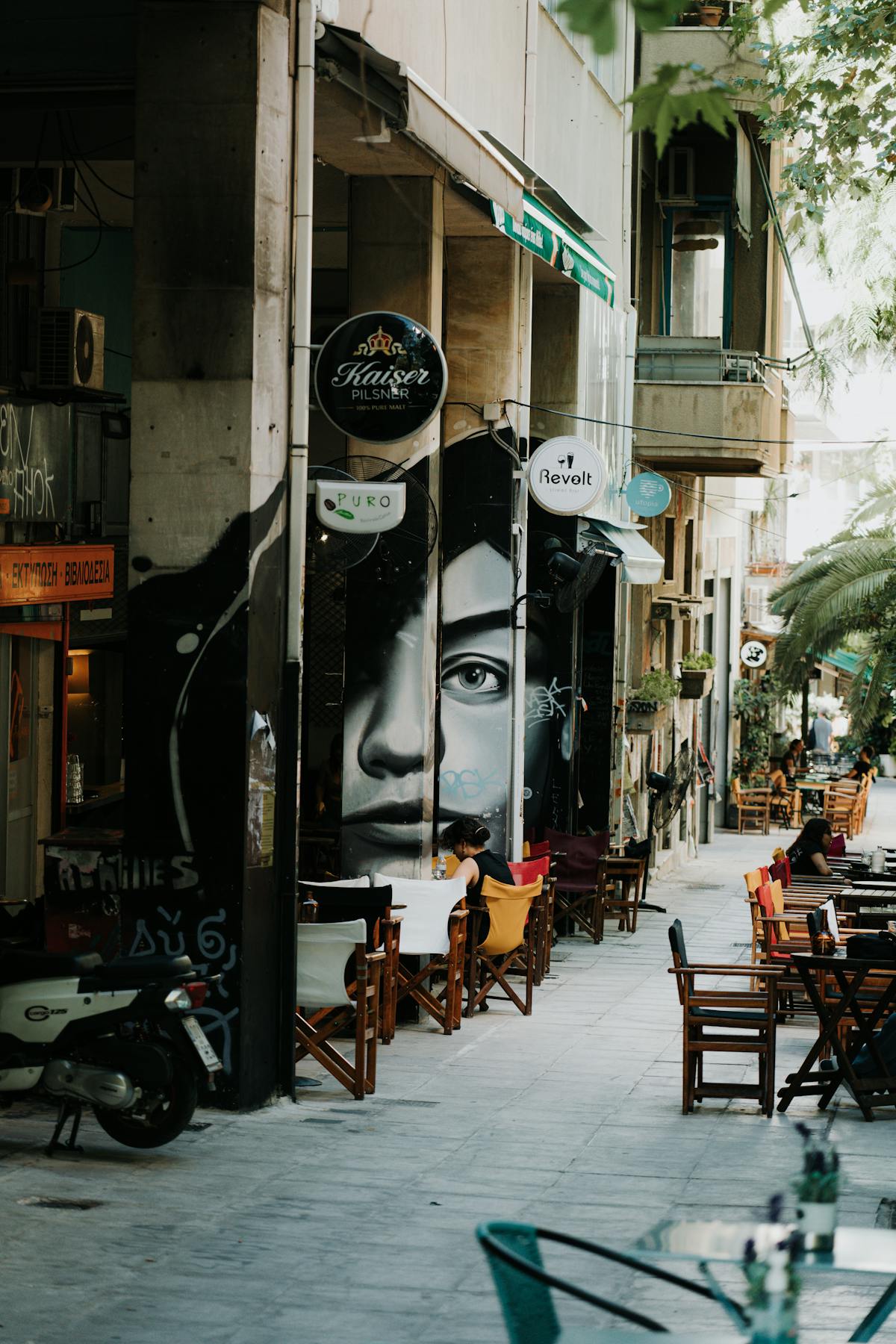
- Street Art — Vibrant murals and street art reflect Athens’ contemporary creative culture
- Better Value — You get proximity to the Acropolis at lower prices than Plaka (€70-180 vs €80-200)
- Quieter Evenings — While walkable to nightlife, the neighborhood itself is quieter than Plaka for sleeping
Accommodation in Koukaki & Makrygianni:
This is where you find excellent value. Hotels range from €60-200+, with many quality mid-range options at €90-150. Airbnbs and boutique hotels are increasingly popular here. This neighborhood is particularly good for longer stays, as monthly rates are reasonable.
Dining & Nightlife:
The food scene has exploded here. You’ll find everything from casual souvlaki shops to upscale restaurants by acclaimed chefs. Many are less expensive than Plaka while offering better quality. Nightlife is quieter—mostly wine bars and cafes rather than clubs.
Drawbacks to Consider:
- Still Developing — The gentrification is relatively recent, so some areas feel a bit rough around the edges
- Fewer Tourist Services — You won’t find as many tourist shops, ATMs, or English-speaking tourist offices as in Plaka
- Hill Walking — Like Plaka, the neighborhood has steep streets, so luggage-hauling can be tiring
Getting Around from Koukaki:
The Acropoli metro station (Line 2) is on the eastern edge. Most of the neighborhood is best explored on foot, with excellent access to the Acropolis Museum, Ancient Agora, and Plaka by walking.
Kolonaki: Athens’ Most Elegant Address
Best for: Luxury seekers, families, those wanting style without tourism overload
Vibe: Upscale, elegant, quiet, sophisticated
Walking Distance from Acropolis: 1.5-2 kilometers (20-25 minutes)
If you have a generous budget and want to stay where affluent Athenians live, Kolonaki is your answer. Located on the lower slopes of Lycabettus Hill, this is the most upscale neighborhood in Athens, filled with designer boutiques, art galleries, quiet cafes, and well-maintained neoclassical buildings.
What Makes Kolonaki Special:
- Sophistication — This is where upscale Athenians shop, dine, and socialize. You’ll feel the difference compared to tourist-heavy areas
- Peaceful Atmosphere — Despite being an important neighborhood, Kolonaki feels quiet and refined
- Excellent Restaurants — Some of Athens’ best restaurants are located here, often at better value than Plaka due to a local clientele
- Lycabettus Hill — The hill offers hiking trails, parks, and a hill-top chapel with panoramic city views
- Cultural Institutions — Several museums and galleries are located here, including the Byzantine & Christian Museum
- Safe and Clean — One of the safest and most well-maintained neighborhoods in Athens
Accommodation in Kolonaki:
Hotels here start at €120 and go up to €400+ per night for luxury properties. You’ll find excellent mid-to-upscale options at €150-280. Many properties are small, family-run boutique hotels rather than large chain hotels. This is a neighborhood where you pay for quality and location rather than hype.
Dining & Nightlife:
Kolonaki’s restaurant scene is exceptional. You’ll find everything from casual lunch spots to Michelin-starred fine dining. Prices are high but justified by quality. Nightlife is sophisticated—wine bars, cocktail lounges, and upscale cafes rather than clubs.
Drawbacks to Consider:
- Expensive — Everything costs more here, from accommodation to food to coffee
- Less Characteristically Greek — The sophistication sometimes feels more European than distinctly Greek
- Farther from Main Attractions — You’re a 20-minute walk from the Acropolis, requiring metro or taxi for many activities
- Quieter Nightlife — If you’re looking for clubs and party atmosphere, this isn’t the neighborhood (head to Psyrri or Gazi)
Getting Around from Kolonaki:
The Evangelismos metro station (Line 3, blue line) is nearby. Walking access to the Acropolis and Plaka is possible but involves a long walk or metro journey. Most visitors use the metro to reach major attractions.
Psyrri & Gazi: The Nightlife Capital
Best for: Young travelers, nightlife enthusiasts, artists and creatives
Vibe: Alternative, artistic, energetic, trendy
Walking Distance from Acropolis: 1-1.5 kilometers (15-20 minutes)
If Plaka is the old Athens and Kolonaki is the refined Athens, then Psyrri and Gazi represent the contemporary, creative, alternative Athens. These adjacent neighborhoods have transformed from industrial wasteland to the city’s hippest districts, packed with street art, trendy restaurants, bars, and clubs.
What Makes Psyrri & Gazi Special:
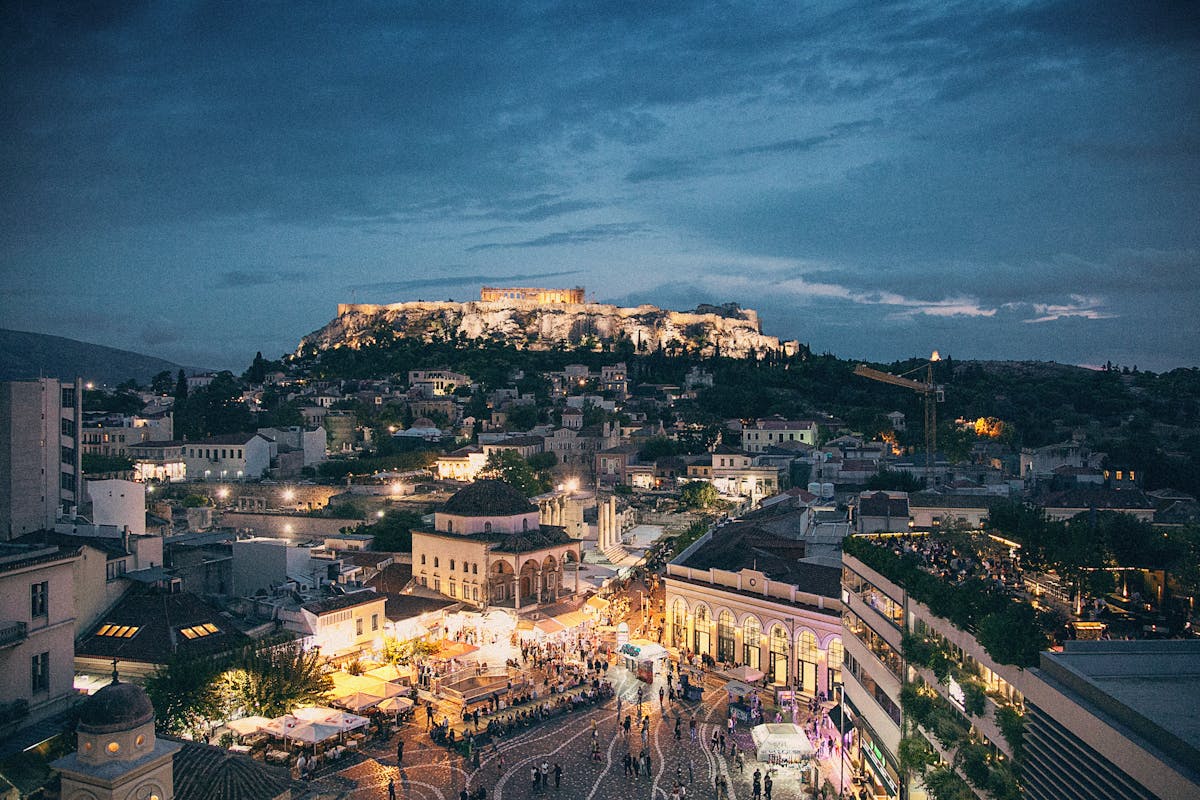
- Street Art — Vibrant graffiti, murals, and street installations on nearly every wall create an open-air gallery
- Nightlife Hub — Dozens of bars, clubs, and live music venues operate here, many open until 6am
- Trendy Restaurants — Young chefs and entrepreneurs have opened innovative eateries and gastropubs alongside traditional tavernas
- Affordable Accommodation — Hotels and hostels range from €30-120, making this popular with budget and young travelers
- Authentic Contemporary Athens — This is where you’ll see modern Athenian culture away from the tourist trail
- Technopolis — A cultural venue in Gazi hosts concerts, exhibitions, and events
Accommodation in Psyrri & Gazi:
This is budget-traveler territory. Hostels cost €25-50, basic hotels €40-100, and nicer mid-range hotels €80-150. You’ll find many Airbnbs and boutique hostels that cater to the young backpacker and creative crowd.
Dining & Nightlife:
Psyrri and Gazi are the nightlife capital of Athens. You’ll find everything from casual beer bars to sophisticated cocktail lounges to high-energy dance clubs. The restaurant scene spans gyros stands to fusion cuisine. Many venues don’t get busy until after midnight.
Drawbacks to Consider:
- Noisy — Nightlife means noise, especially on weekends. If you want quiet mornings, this might not be ideal
- Rough Around the Edges — The graffiti and street-level grit, while artistically interesting, isn’t for everyone
- Less Tourist Infrastructure — Fewer tourist shops, museum signs, and English speakers compared to Plaka
- Safety Concerns — Generally safe, but the edgier vibe means you should be aware of your surroundings at night
Best for Which Visitors?
Young backpackers, nightlife enthusiasts, artists and creatives, solo travelers on a budget, those wanting to see contemporary Athens away from the traditional tourist track.
Exarchia: The Bohemian Alternative
Best for: Budget travelers, adventurous visitors, students
Vibe: Bohemian, alternative, intellectual, gritty
Walking Distance from Acropolis: 1.5 kilometers (20-25 minutes)
Located on the north side of Syntagma Square, Exarchia is the bohemian heart of Athens—a neighborhood of students, intellectuals, artists, and activists. It’s grittier and more authentically Greek than tourist-oriented areas, with excellent tavernas, live music venues, and a thriving cultural scene.
What Makes Exarchia Special:
- Authentic Local Culture — This is where Athenians actually live and socialize, not a neighborhood designed for tourists
- Affordable — Accommodation is cheap (€30-80), and dining is inexpensive and high-quality
- Live Music Scene — Traditional rebetiko (Greek blues) clubs and live music venues are integral to the neighborhood
- Street Life — The constant social activity, café culture, and street-level energy is quintessentially Greek
- Intellectual Vibe — The presence of Athens University creates a student-friendly, intellectual atmosphere
Accommodation in Exarchia:
This is the most affordable neighborhood in central Athens. Hostels cost €25-50, basic hotels €30-70, and even decent mid-range hotels rarely exceed €100. Airbnbs are abundant and cheap.
Dining & Nightlife:
Some of Athens’ best-value tavernas are here, serving traditional food to a mix of students and locals. Nightlife centers on traditional music clubs, student bars, and small bouzouki venues. It’s less polished than Psyrri but more authentic.
Drawbacks to Consider:
- Gritty Appearance — Graffiti, neglected buildings, and street-level roughness can feel uncomfortable for some visitors
- Safety Concerns — While generally safe, the neighborhood has a grittier vibe and pickpockets operate here (as in all crowded areas)
- Language Barrier — Fewer English speakers and tourist services compared to Plaka or Syntagma
- Political Protests — Exarchia has a history of student and political activism; occasional protests occur here
Best for Which Visitors?
Budget travelers, students, those comfortable with gritty authenticity, adventurous visitors seeking real Athenian life, those interested in the intellectual and artistic side of Athens.
Pangrati: The Hidden Gem for Budget & Authentic Athens
Best for: Budget travelers, families wanting authenticity, longer stays
Vibe: Residential, authentic, quiet, family-friendly
Walking Distance from Acropolis: 1.2 kilometers (15-20 minutes walking, or 5 minutes by metro)
Located behind the Panathenaic Stadium (where the first modern Olympics were held in 1896), Pangrati is a residential neighborhood that’s increasingly popular with budget travelers and those seeking authentic Athens without the tourist crowds. It’s experiencing similar gentrification to Koukaki, with new restaurants and cafes opening alongside established tavernas.
What Makes Pangrati Special:
- Panathenaic Stadium — The historic 1896 Olympic stadium is located here, offering a connection to ancient Olympic tradition
- Great Food Scene — The neighborhood is experiencing a restaurant renaissance, with new places opening regularly
- Leafy Streets — More greenery and trees than central neighborhoods, with quieter streets and neighborhood parks
- Authentic Athenian Life — This is where regular Athenians live and work; you’ll see neighborhood life rather than tourism
- Budget-Friendly — Accommodation is affordable (€40-100), though prices are rising as the neighborhood becomes trendier
Accommodation in Pangrati:
Hotels and guesthouses range from €40-120, making this excellent value. Many are smaller properties run by families or local entrepreneurs. Airbnbs are abundant and reasonably priced.
Getting Around from Pangrati:
Evangelismos metro station (Line 3) is nearby, offering connection to Syntagma and other parts of the city. The neighborhood is easily walkable to Koukaki and the Acropolis Museum.
Petralona & Thissio: Local Favorites with Hidden Treasures
Best for: Couples, foodies, those wanting to avoid tourist crowds
Vibe: Residential, foodie-oriented, artsy, quiet
Walking Distance from Acropolis: 800 meters to 1.5 kilometers (12-22 minutes)
Located west of the Acropolis, Petralona and Thissio are neighborhoods that local Athenians rave about but many tourists overlook. Petralona is known for its incredible street food scene and vintage shops, while Thissio offers access to archaeological sites and rooftop restaurants with Acropolis views.
What Makes Petralona & Thissio Special:
- Food Scene — Some of Athens’ best souvlaki, meatballs, and street food originates from Petralona. It’s legendary among locals
- Rooftop Restaurants — Thissio has several rooftop restaurants with stunning Acropolis and sunset views
- Archaeological Sites — Ancient Agora and other sites are directly accessible from these neighborhoods
- Less Touristy — While not undiscovered, these neighborhoods see fewer tourists than Plaka or Monastiraki
- Authentic Local Life — You’ll see neighborhood life, family-run shops, and authentic Greek hospitality
- Vintage & Antique Shops — Petralona is known for vintage clothing, antiques, and unique finds
Accommodation in Petralona & Thissio:
Hotels are limited but good quality, ranging from €70-180. You’ll find more Airbnbs than traditional hotels. The neighborhoods are small, so accommodation inventory is limited compared to central areas.
Best for Which Visitors?
Couples seeking romance and views, foodies seeking authentic cuisine, those wanting to avoid tourist crowds while staying close to major attractions, longer-stay visitors wanting neighborhood living.
Understanding Athens Accommodation Types
Once you’ve chosen your neighborhood, you need to decide what type of accommodation fits your travel style and budget.
Hotels
Budget Hotels (€30-60/night): Basic rooms, communal bathrooms or private rooms in older properties, minimal amenities. Usually located in less central neighborhoods (Exarchia, outer Psyrri). Adequate for sleeping, but don’t expect style or comfort.
Mid-Range Hotels (€60-150/night): Private bathroom, air conditioning, basic breakfast, friendly service. This is where you get best value in Athens. Common in Koukaki, Pangrati, Monastiraki, and outer neighborhoods. Often family-run or small boutique properties with character.
Upscale Hotels (€150-300/night): Air conditioning, private bathroom, breakfast included, often a small pool or rooftop bar, better location. Found throughout central neighborhoods. Good service and reliability.
Luxury Hotels (€300+/night): Premium service, high-end amenities, prime locations, often with Acropolis views. Found in Plaka, Syntagma, and Kolonaki. Hotels like Grande Bretagne start at €400+.
Airbnbs & Vacation Rentals
Airbnbs are abundant in Athens and often offer better value than hotels for longer stays (3+ nights). You’ll find everything from shared rooms (€30-50) to entire apartments (€60-200). Popular neighborhoods for Airbnbs include Koukaki, Pangrati, Plaka, Petralona, and Exarchia. Advantages include kitchen access and more space; disadvantages include less service and (sometimes) unclear cancellation policies.
Hostels
Hostels cater to budget travelers and solo travelers. Beds in shared dorms cost €20-40; private rooms €40-80. Most have communal kitchens, free Wi-Fi, and social atmospheres. Located mainly in Plaka, Monastiraki, Psyrri, and Exarchia. Good for meeting other travelers; not ideal if you value quiet nights.
Practical Booking Tips for Athens Accommodation
When to Book:
Book 3-4 months in advance during peak season (May-October) to get your first choice of neighborhood and avoid price hikes. During low season (November-April), you can often book 4-6 weeks ahead and still find good availability and discounts.
Seasonal Pricing:
- Peak Season (May-September): Highest prices. Expect 30-50% premiums. Book far in advance.
- Shoulder Season (April, October): Good balance of weather and prices, fewer tourists than peak summer
- Low Season (November-March): Best prices, but some hotels have reduced hours or close; weather is cooler but still pleasant
Tourism Tax:
Athens charges a tourism tax (“city tax”) that hotels add to your bill. The amount varies by hotel category: budget hotels €0.50-2/night, mid-range €2-5/night, luxury €5-10/night. This is not included in advertised prices and must be paid at checkout. Have cash available or confirm the hotel accepts cards.
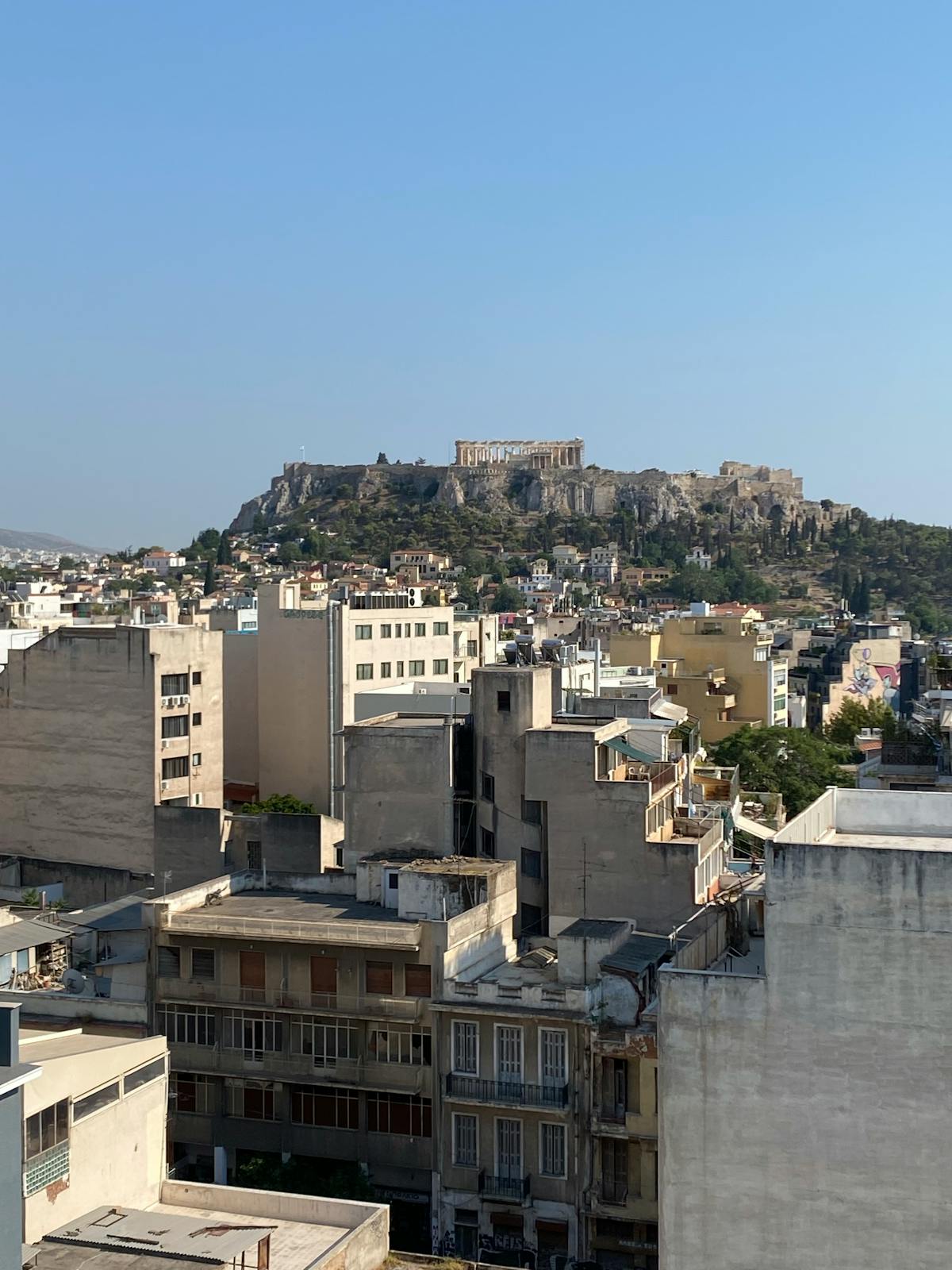
Many hotels advertise Acropolis views, but “view” is relative—it could mean a small glimpse from a rooftop bar or a direct panorama from your room. Ask specifically: “What is the view from my room?” Look at reviews and photos to verify. Hotels with genuine Acropolis views from rooms charge premium prices (€150-400+).
Rooftop Pools (Seasonal May-October):
Many Athens hotels have rooftop bars or pools open seasonally (usually May-October). These are great for evening drinks and cooling off in summer heat. However, they’re not heated and typically aren’t available in winter.
Air Conditioning:
Essential in summer. Always confirm your room has air conditioning, especially at budget properties. Look for “A/C” or “climate control” in listings. Many budget hotels have window units that may be loud; ask if quieter central AC is available.
Internet Quality:
Check reviews for Wi-Fi quality, especially if working remotely. Cheaper hotels may have unreliable internet. Ask about speed and whether it’s included.
Breakfast Included?:
Mid-range and upscale hotels usually include breakfast; budget hotels rarely do. When comparing prices, factor in whether breakfast is included. Greek breakfast typically includes bread, cheese, yogurt, and coffee.
Safety in Athens Accommodations & Neighborhoods
Overall Safety:
Athens is generally safe compared to many European capitals. Violent crime against tourists is rare. Most safety concerns involve petty theft (pickpocketing and bag snatching).
Pickpocket Awareness:
- Keep bags closed and in front of you in crowded areas (metro, markets, tourist attractions)
- Avoid displaying expensive jewelry, cameras, or smartphones
- Don’t leave valuables unattended in hotel rooms (though hotel safes are generally reliable)
- Be especially vigilant in Monastiraki flea market and Plaka at night
Neighborhoods to Be Cautious At Night:
Exarchia, parts of Psyrri, and Gazi can feel unsafe at night due to their edgy vibe and grittier appearance, though violent crime is rare. Stick to main streets and well-lit areas. The same safety rules apply everywhere—trust your instincts and avoid isolated areas late at night.
Safe Neighborhoods:
Plaka, Syntagma, Koukaki, Kolonaki, Pangrati, and Petralona are considered safest for visitors. These neighborhoods have good lighting, police presence, and active nightlife/social activity.
Getting Around Athens from Your Neighborhood
Athens is Highly Walkable:
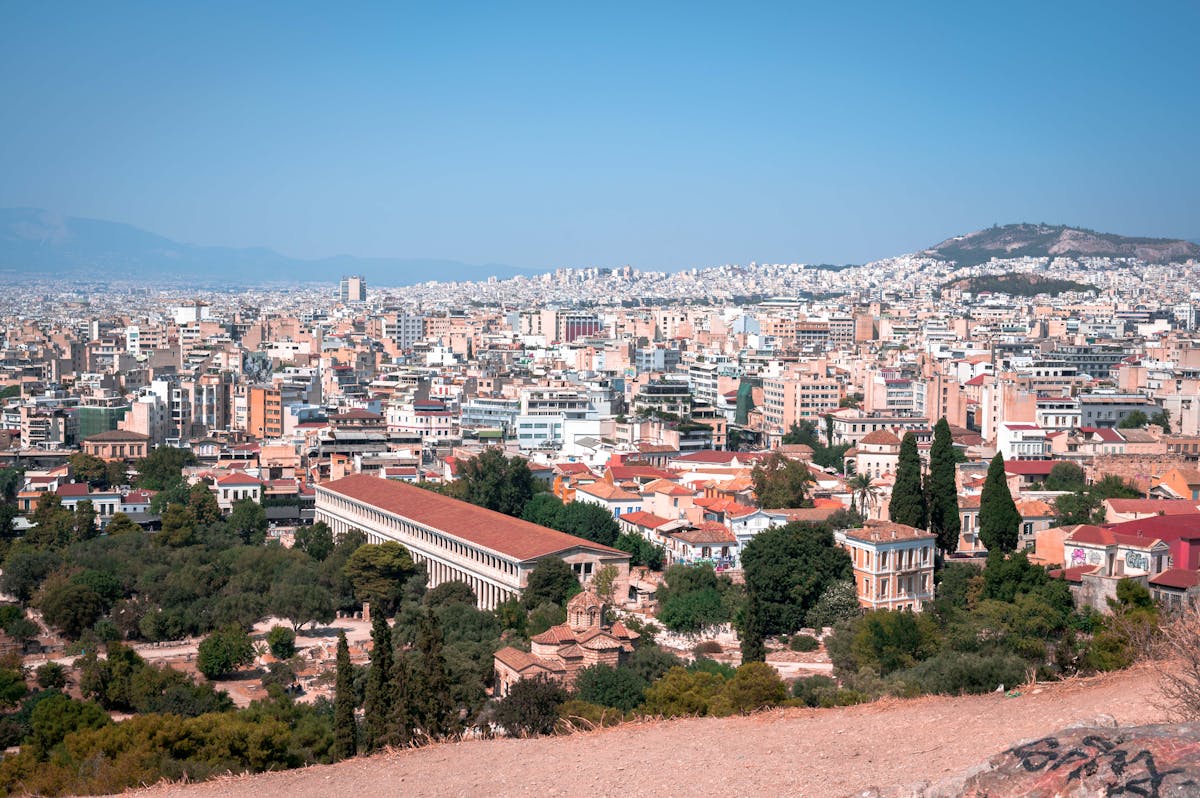
The main attractions (Acropolis, Plaka, Monastiraki, Ancient Agora, Museum) are within walking distance of each other. Most visitors can explore the historic center on foot in 1-2 days. However, if you want to visit neighborhoods farther out or stay for several days, understanding the metro is essential.
The Athens Metro
Athens has three metro lines:
- Line 1 (Green): Runs north-south from Piraeus (port) through Monastiraki, Omonia, and to the northern suburbs. Takes you to the port for island ferries.
- Line 2 (Red): Runs from Anthoupoli in the north through Syntagma and Acropoli (near the Acropolis). Connects to the airport.
- Line 3 (Blue): Runs from Egaleo in the west through Evangelismos (near Kolonaki) to Doukissis Plakentias in the northeast.
Key Stations for Visitors:
- Syntagma: Main hub, connecting Lines 2 and 3. Near Parliament and Ermou Street shopping.
- Acropoli: Line 2 station nearest the Acropolis
- Monastiraki: Lines 1 and 3, near the flea market and Roman Agora
- Omonia: Line 1 hub in central Athens
Metro Tickets:
- Single journey ticket: €1.40
- 24-hour ticket: €4.10 (unlimited travel)
- 5-day ticket: €8.20
- Airport express bus: €5.50 one-way (€11 round trip)
Buy tickets from machines at stations (accept cash and cards). Validate your ticket by touching it to the reader as you enter.
Airport Transfer Options
Airport to City Center:
- Metro: €9 airport ticket, 40 minutes to Syntagma. Most economical and reliable.
- Express Bus: €5.50, 60-90 minutes depending on traffic
- Taxi: €35-50 (fixed price), 30-60 minutes depending on traffic. Convenient if you have luggage.
- Ride-share: Uber and similar apps available, €15-35 depending on demand
Frequently Asked Questions About Athens Accommodation
Q: Which neighborhood is best for a first-time visitor?
A: Plaka or Syntagma if you want convenience and main attractions nearby; Koukaki if you want authenticity with Acropolis access; Monastiraki if you want central location and local feel.
Q: Is Athens safe for solo travelers?
A: Yes, Athens is generally safe. Use normal precautions against pickpocketing, choose well-lit neighborhoods, and stay aware of your surroundings. Many solo travelers stay in hostels to meet other travelers.
Q: How much should I budget for accommodation?
A: Budget €40-60 for hostels, €70-120 for decent mid-range hotels, €150-250 for upscale, €300+ for luxury. Prices are 30-50% higher May-September.
Q: Can I walk everywhere or do I need the metro?
A: You can walk to main attractions. But for day trips (Mount Hymettus, coastal areas, northern suburbs) or longer stays exploring different neighborhoods, the metro is useful and cheap.
Q: What’s the best season to visit?
A: April-May and September-October offer perfect weather without summer crowds and prices. June-August is hot (40°C/104°F) but popular. Winter (November-March) is mild (15°C/59°F) but some hotels close.
Q: Are Airbnbs better value than hotels?
A: For 3+ night stays, often yes. You get more space and kitchen access. For 1-2 nights, hotels may be more economical.
Q: Do I need to speak Greek?
A: No. English is widely spoken in hotels, restaurants, and tourist areas. Outside tourist areas (Exarchia, Pangrati), English is less common but you can usually communicate basics.
Final Recommendations
Choosing where to stay in Athens ultimately depends on what kind of experience you want. Here’s our hierarchy of recommendations based on your goals:
For the Full Athens Experience: Start in Plaka for 1-2 nights to see the iconic sights and enjoy the charming atmosphere, then move to Koukaki or Monastiraki for the remainder of your stay to experience more authentic Athens while still being close to attractions.
For Best Value: Koukaki or Pangrati offer proximity to attractions, authentic atmosphere, and better prices than Plaka.
For Romance: Plaka (if budget allows), Petralona, or Koukaki with a rooftop restaurant for sunset Acropolis views.
For Nightlife: Psyrri or Gazi for clubs, or Exarchia for traditional music and local scene.
For Families: Kolonaki for upscale safety and family restaurants, or Koukaki for balance of access and price.
For Budget Travelers: Exarchia, Pangrati, or Psyrri for affordable accommodation and authentic Athens.
Conclusion: Your Perfect Athens Neighborhood Awaits
Athens offers accommodation for every travel style and budget, from luxury hotels in Plaka to budget hostels in Exarchia, from quiet residential Kolonaki to the artsy energy of Psyrri. The key is matching your neighborhood choice to your travel goals and personality. A first-timer wanting iconic Athens might choose Plaka, while a returning visitor might prefer the authentic food scene and quieter streets of Petralona or Koukaki.
Use this guide to identify 2-3 neighborhoods that appeal to you, then narrow down based on hotel reviews and your budget. Book 3-4 months in advance during peak season, watch out for the tourism tax, and don’t miss checking specific hotel reviews for air conditioning quality and Wi-Fi reliability.
Most importantly, remember that you’re not just choosing a place to sleep—you’re choosing which Athens you’ll experience. Choose wisely, and you’ll have the perfect base for exploring one of the world’s most historically significant and culturally rich cities.
Have you stayed in Athens? Share your favorite neighborhoods and hotels in the comments below!
Detailed Athens Hotel Guides by Area & Style
Narrowed down your neighborhood? These guides compare specific properties:
- Athens Airbnb Apartments & Vacation Rentals: 2026 Guide
- Kolonaki Athens Luxury Hotels: 12 Best Upscale Picks (2026)
- Koukaki Athens Hotels: 12 Best in the Trendiest Area (2026)
- Best Hotels Near Syntagma Square Athens: 15 Top Picks (2026)
- Best Hotels in Monastiraki Athens: 15 Top Picks (2026)
Photo Credits
- Hotel Grande Bretagne at night: 20211115 486 athens by Jean Housen, CC BY-SA 4.0, via Wikimedia Commons.