This article contains advertising. Some of the hotel, tour, activity, flight and transfer links in it are paid links: if you book through one, we get a commission from the booking company, and your price is the same either way. It never affects what we recommend. Affiliate disclosure
Introduction: Athens as a Food Destination
Athens is not just the cradle of Western civilization and home to the Parthenon—it is also one of Europe’s greatest food destinations. The Greek capital’s food culture is deeply rooted in thousands of years of history, Mediterranean geography, and a philosophy that celebrates simplicity, freshness, and the joy of sharing meals with family and friends.
Greek cuisine is built on a foundation of exceptional ingredients: sun-ripened tomatoes that burst with flavor, creamy feta cheese made from sheep’s milk, golden olive oil pressed from ancient olive groves, fresh seafood from the Aegean and Ionian Seas, and fragrant herbs like oregano and thyme that grow wild across the Greek islands. What makes Greek food truly special is how these ingredients are treated—with respect for their natural qualities, minimal processing, and a commitment to letting each flavor shine.
Food in Athens isn’t just sustenance; it’s a cornerstone of Greek culture. Meals are social events meant to be lingered over, with multiple courses, plenty of conversation, and an unhurried pace. The concept of philoxenia (hospitality) means that sharing food is an expression of warmth and friendship. Whether you’re sitting in a taverna in Plaka overlooking the Acropolis, eating souvlaki from a street vendor in Monastiraki, or enjoying fresh grilled octopus at a neighborhood restaurant, you’re participating in a food tradition that stretches back millennia.
This comprehensive guide will take you through the essential dishes you must try in Athens, the neighborhoods where locals eat, the markets that feed the city, and the customs that make Greek dining memorable. Whether you’re a first-time visitor or a returning food enthusiast, this is your roadmap to eating your way through Athens.
Essential Greek Dishes You Must Try
Souvlaki & Gyros: The Street Food Classics
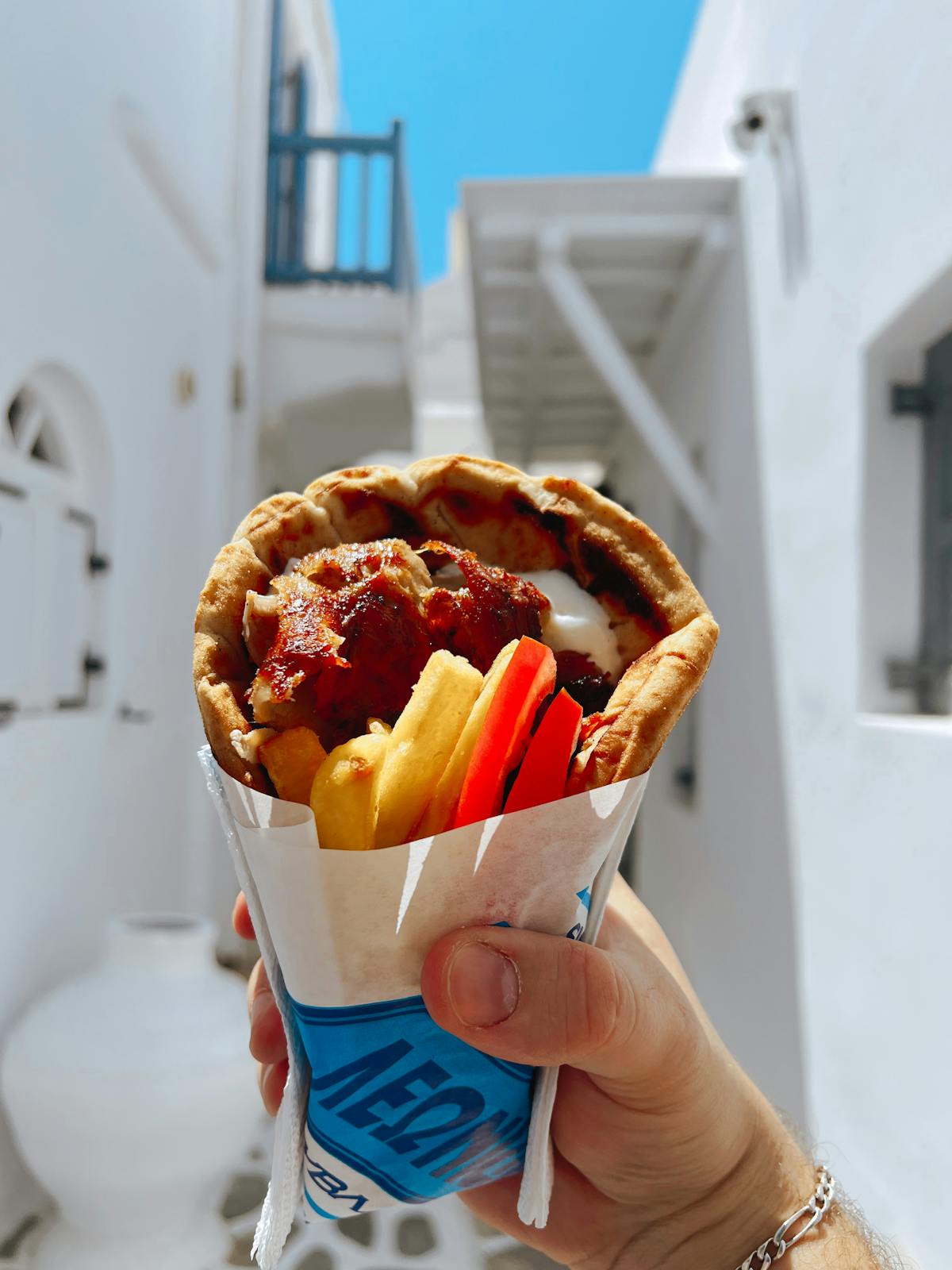
Souvlaki and gyros are the street food ambassadors of Athens. You’ll see them everywhere—from hole-in-the-wall shops to sit-down restaurants—and for good reason: they’re delicious, affordable (€3–6 for a full meal), and perfectly representative of casual Greek eating culture.
Souvlaki (σουβλάκι) consists of meat grilled on a skewer: traditionally pork (hirino), but also chicken (kotopoulo), lamb (arnaki), or even fish (psari). The meat is marinated in olive oil, lemon juice, oregano, and garlic, then grilled over charcoal until it’s charred on the outside and juicy inside. It’s served in a pita bread (sometimes wrapped in paper for street eating) with tomatoes, onions, and tzatziki sauce—a yogurt-based sauce with cucumber, garlic, and dill.
Gyros (γύρος) is the rotation-cooked version: meat (pork, chicken, or lamb) is stacked on a vertical rotisserie, sliced thin as it cooks, and served in a pita with the same accompaniments. The key difference is cooking method—souvlaki is grilled meat on a skewer, while gyros comes from a rotating spit. Both are fantastic.
Where to find the best: O Thanasis in Monastiraki is a legendary souvlaki spot that’s been operating since 1973. The queue is long, but the pork souvlaki is worth the wait. Meat the Greek on Athinas Street specializes in premium grilled meats. For quick, authentic gyros, Kosta’s is a hole-in-the-wall favorite in Monastiraki that locals swear by. Falafel Club offers excellent souvlaki in a younger, trendier setting.
Pro tip: Order “ena souvlaki hirino me horta” (one pork souvlaki with salad) or “gyro me tzatziki” (gyro with yogurt sauce). Ask for extra lemon—it brightens the dish. And don’t skip the fries they often add inside the pita; this is a deliberate, delicious practice.
Moussaka: The Signature Baked Dish
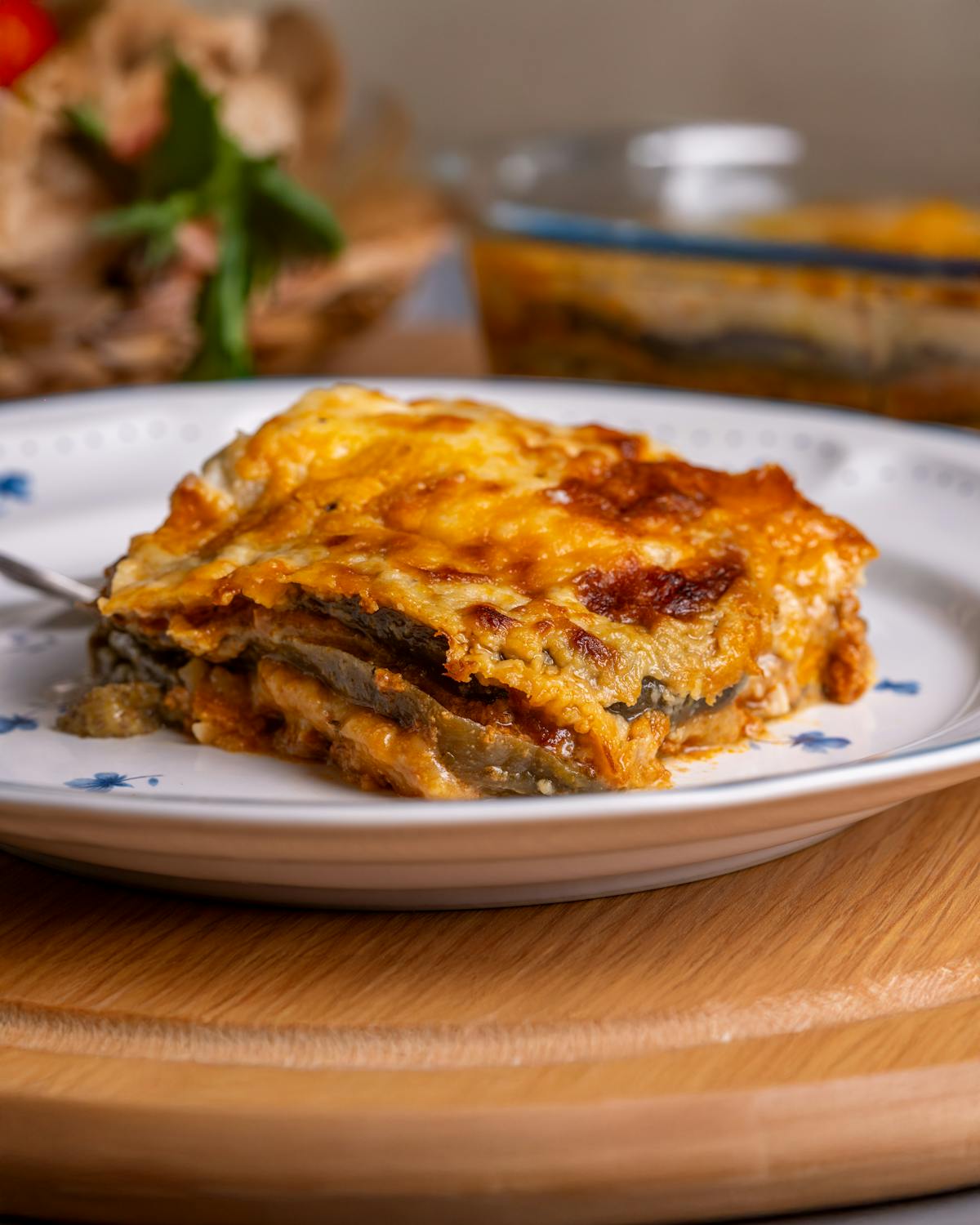
If souvlaki is Athens’ street food, moussaka (μουσακάς) is its soul on a plate. This baked casserole is Greece’s answer to lasagna, and it’s an absolute must-try.
Moussaka layers sliced eggplant (melitzana) with spiced ground meat (traditionally lamb, sometimes beef), topped with a creamy béchamel sauce, and baked until golden. The eggplant slices are typically fried first (or grilled, in lighter versions), which gives them a rich, slightly caramelized exterior. The meat sauce is seasoned with cinnamon, nutmeg, and oregano—warm spices that create a distinctive flavor. The béchamel layer is silky and provides a creamy contrast to the savory meat and tender eggplant.
Each forkful combines multiple textures and temperatures: the soft eggplant, the warming meat sauce, and the smooth béchamel. When it’s done well, moussaka is comfort food at its finest—hearty, flavorful, and deeply satisfying.
Where to find excellent moussaka: Family-run tavernas serve the best versions. Ta Karamanlidika tou Fani in Psyrri makes exceptional moussaka as part of their traditional Greek menu. Rozalia in Exarchia serves a generous portion that represents classic home cooking. Most traditional tavernas (ταβέρνες) will have moussaka on the menu—it’s not optional in Athens.
Price range: €8–14 for a main course serving, often with a side salad included.
Greek Salad (Horiatiki): Simple Perfection
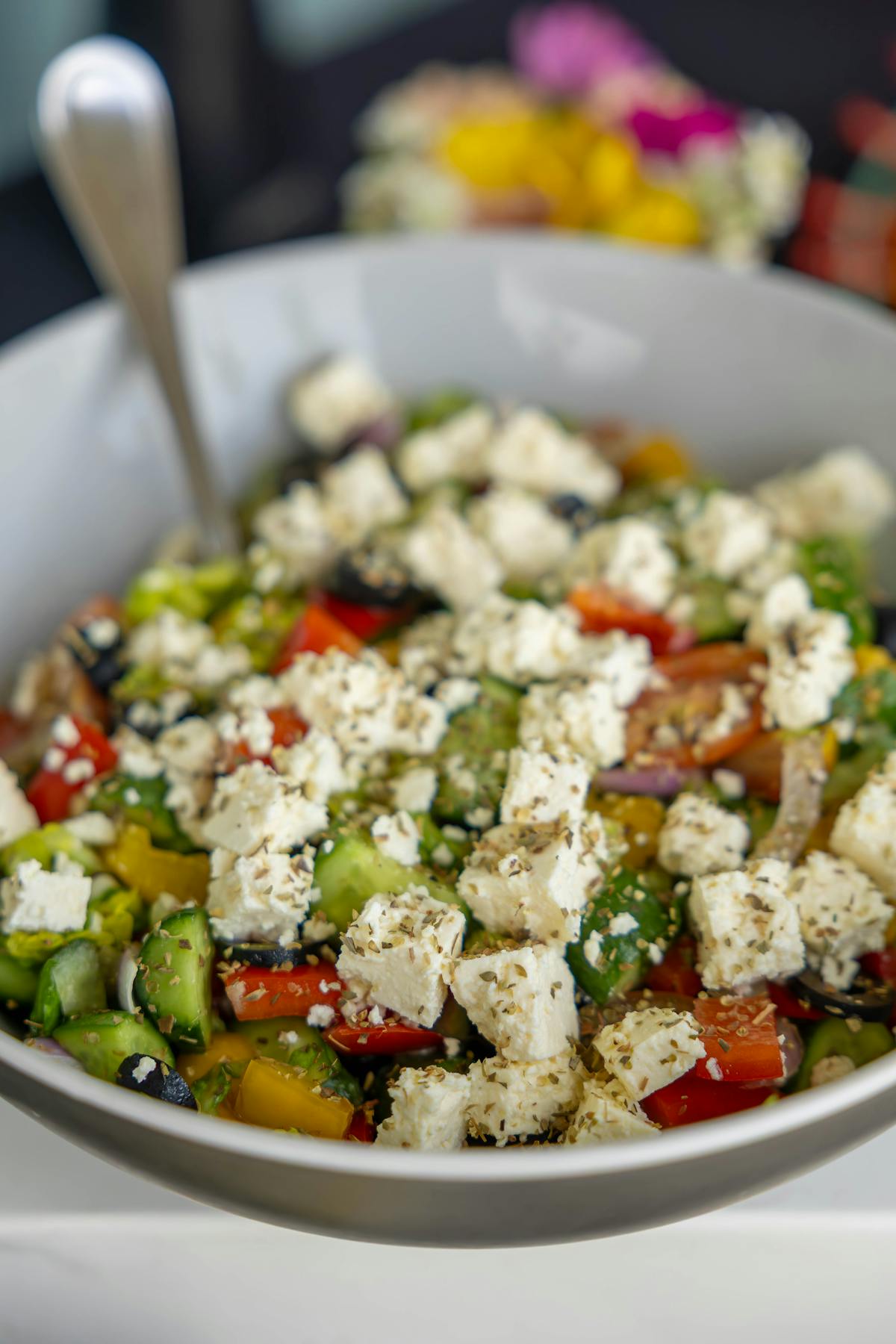
The Greek salad (χωριάτικη σαλάta, literally “village salad”) is perhaps the most iconic Greek dish outside Greece—and for good reason. It’s deceptively simple, but when made with quality ingredients, it’s absolute perfection.
A proper horiatiki contains: ripe tomatoes (cut into wedges), crisp cucumber (cut into chunks), red onion (sliced thin), Kalamata olives (dark, briny, irreplaceable), and a large block of feta cheese (feta, made from sheep’s milk). The whole thing is dressed with excellent olive oil and oregano. No lettuce. (This is important—Greek salad doesn’t contain lettuce. If it does, it’s been Americanized.)
The beauty of horiatiki lies in the interaction of its parts: the salty feta against the juicy tomato, the brininess of the olives, the sweetness of the onion, and the crisp texture of the cucumber. The olive oil should be generous and high-quality.
Key point: The quality of the ingredients matters enormously. A Greek salad made with mediocre supermarket tomatoes and pre-crumbled feta will be disappointing. Made with seasonal tomatoes and proper feta, it’s transcendent.
Where to eat it: Everywhere serves Greek salad, but seek out versions at neighborhood tavernas (especially in Koukaki and Pangrati) where the owners are sourcing fresh produce from local markets. Price: €6–10 depending on portion size and quality.
Spanakopita & Tiropita: The Phyllo Pies
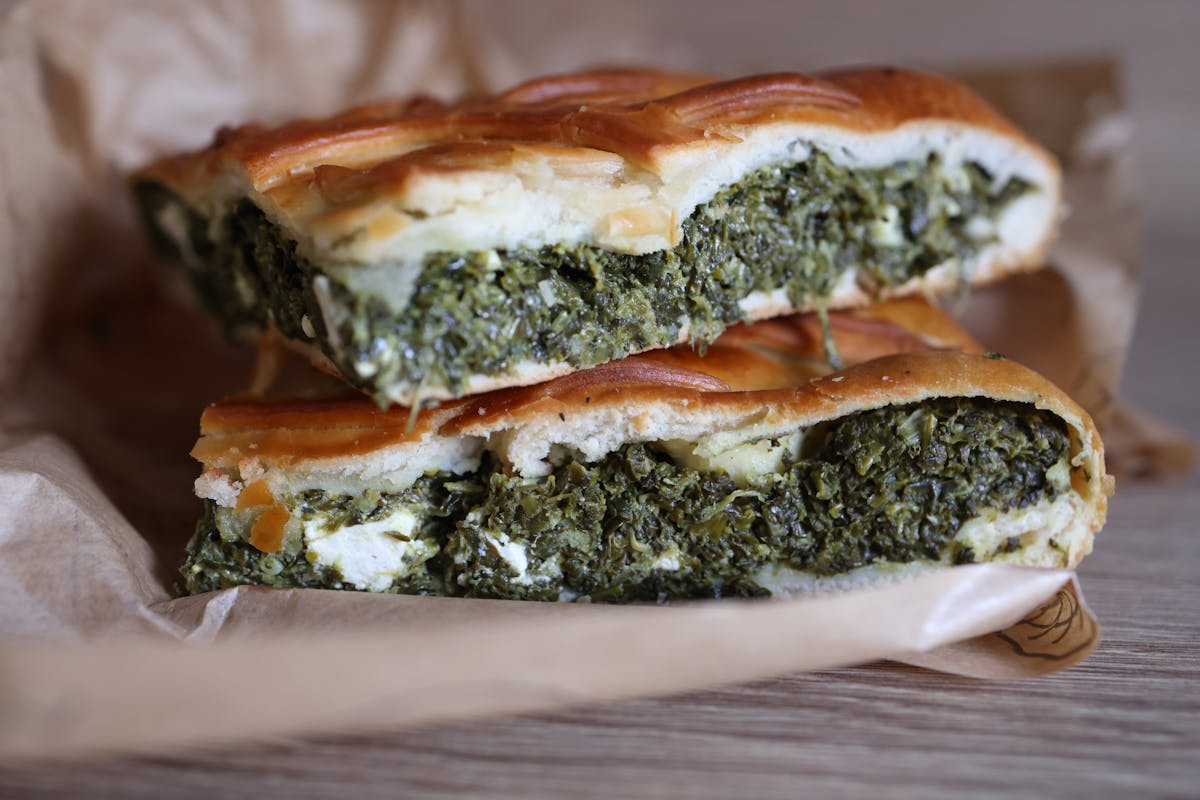
Spanakopita (σπανακόπιτα) and tiropita (τυρόπιτα) are savory phyllo pastries—crispy on the outside, warm and creamy on the inside—that Athenians eat for breakfast, lunch, snacks, or appetizers.
Spanakopita is spinach pie: fresh spinach mixed with feta cheese and sometimes onions, wrapped in thin sheets of phyllo dough (which is brushed with olive oil or butter), and baked until the phyllo is golden and crackling. The filling should taste fresh and herbaceous, never mushy.
Tiropita is cheese pie—a simpler filling of feta and sometimes phyllo layers, baked until crispy. Some versions include a béchamel layer, making them richer.
Both are best eaten fresh and warm, with a squeeze of lemon. They’re perfect as a quick breakfast, eaten standing up at a bakery, or as a leisurely appetizer with ouzo at a meze bar.
Where to find them: Bakeries (φούρνος, fourno) throughout Athens sell spanakopita and tiropita. Evripidis in Psyrri has excellent versions. Many tavernas also serve them as appetizers. Street bakeries sell them for €2–3 for a large slice.
Saganaki: Fried Cheese with Ceremony
Saganaki (σαγανάκι) is a slice of cheese (typically kasseri or feta) dredged in flour, pan-fried until golden and oozing, and then—here’s where it gets fun—drizzled with lemon juice while still sizzling in the pan. The lemon causes an immediate sizzle and release of steam. The cheese becomes hot, creamy, and slightly stringy.
It’s often served as an appetizer and is traditionally accompanied by the shout “Opa!“—a celebratory exclamation. You’re meant to eat it immediately, while it’s still hot and the exterior is crispy.
Best enjoyed: At a taverna as a meze (appetizer), paired with ouzo or wine. It appears on most traditional restaurant menus. €5–8 per order.
Dolmades: Stuffed Vine Leaves
Dolmades (ντολμάδες) are grape vine leaves (ambelofilla) stuffed with rice, herbs (mint and dill), and sometimes ground meat, rolled tightly, and then steamed. They arrive at your table either warm or at room temperature, depending on the restaurant.
The delicate vine leaf wraps around a fragrant filling, and when you bite into one, there’s a subtle tartness from the leaf itself combined with the herbaceous rice filling. Some versions include pine nuts, adding a slight crunch. They’re often served with a squeeze of fresh lemon.
Vegetarian vs. meat versions: Dolmades yalantzi (the name humorously means “tricking the bride”) are the vegetarian version without meat, relying on herbs and rice for flavor. Both are delicious.
Where: Any taverna will have dolmades. They’re a standard meze. €8–12 for a portion of 6–8 pieces.
Tzatziki & the Meze Culture
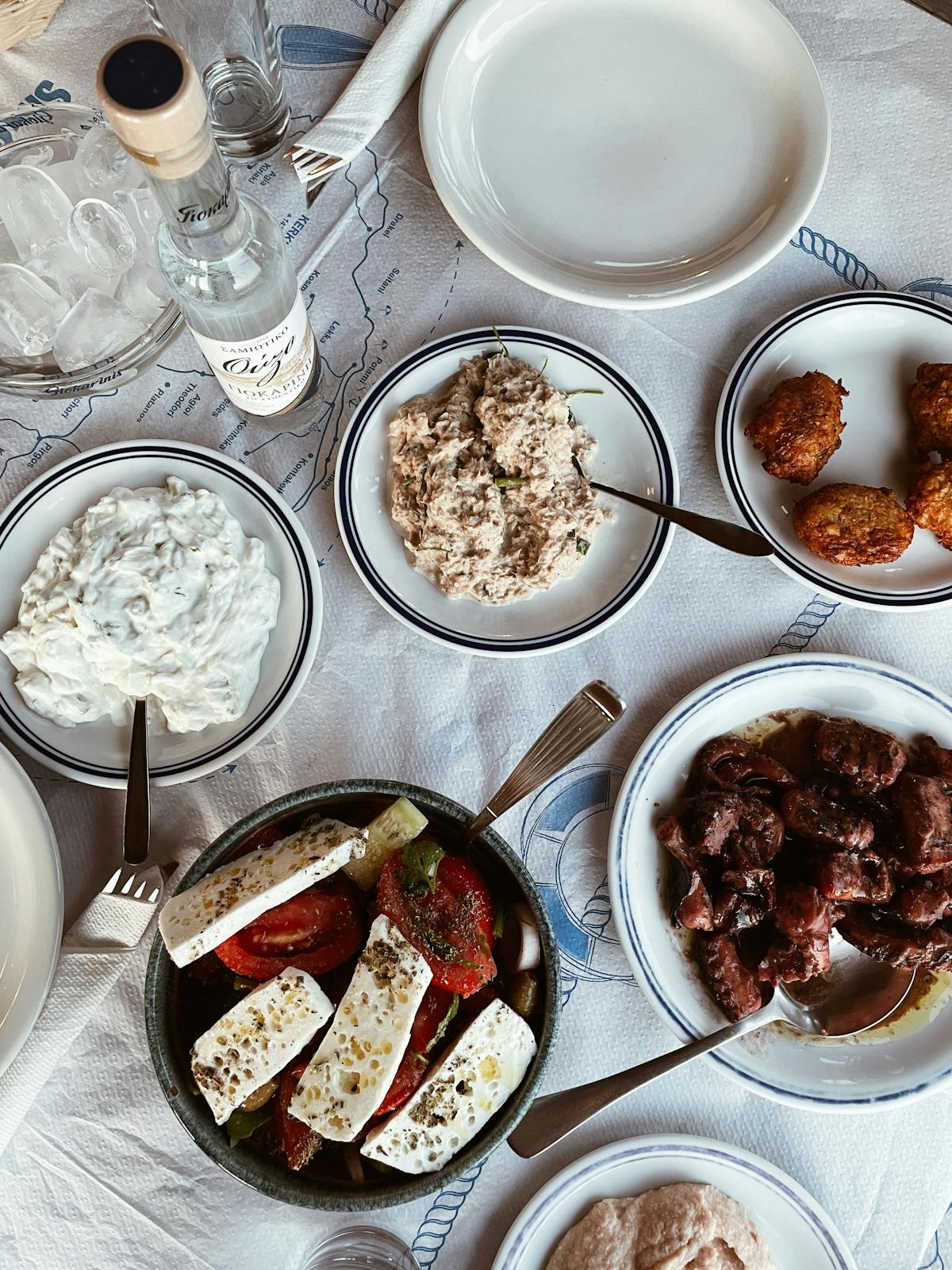
Tzatziki (τζατζίκι) is a yogurt-based sauce made from strained yogurt (yiaourti, traditionally made from sheep’s milk), cucumber, garlic, olive oil, and dill. It’s cool, creamy, garlicky, and herbaceous—one of the most versatile sauces in Greek cuisine. You’ll eat it with souvlaki, as a dip with bread or vegetables, or alongside fried fish.
But tzatziki is just one component of the meze culture (μεζέδες), which is central to how Greeks eat socially. Meze (plural: mezedes) are small plates—appetizers and shareable dishes—meant to be ordered in multiples and shared among the table while nursing drinks.
A typical meze spread might include:
- Tzatziki – the yogurt-cucumber sauce
- Melitzanosalata – creamy eggplant dip
- Saganaki – fried cheese
- Keftedes – small meatballs
- Souvlaki – grilled meat skewers
- Feta salade – tomatoes, olives, feta
- Fried octopus – tender and delicate
- Gigantes plaki – giant beans in tomato sauce
- Horta – boiled greens with lemon and olive oil
The meze tradition is less about a main course and more about variety, sharing, and lingering conversation. It’s how Athenians socialize—ordering mezedes with wine or ouzo, talking for hours, sharing bites. This is the heart of Greek hospitality.
Pro tip: At a traditional taverna, order 3–5 different mezedes rather than main courses, especially if you’re with a group. It’s more fun, you’ll try more flavors, and it’s often cheaper and less heavy.
Grilled Octopus & Seafood: The Aegean’s Bounty
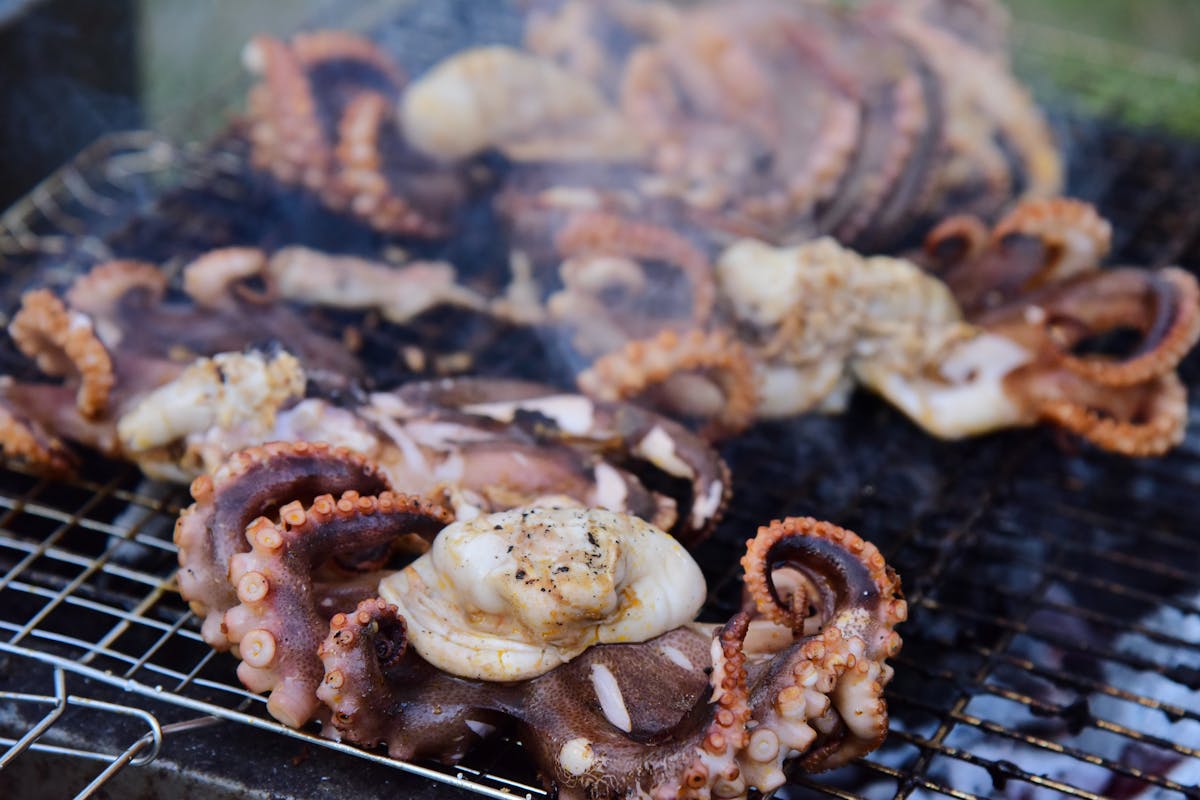
Athens sits on the doorstep of the Aegean Sea, and the seafood reflects this geography. Grilled octopus (chtapodi sti schara) is perhaps the most iconic seafood dish: a whole octopus is boiled first (to tenderize it), then grilled over charcoal, and served with just lemon juice and olive oil.
When done well, grilled octopus is tender, slightly charred, and mineral-fresh. The chewy texture becomes tender through proper cooking. There’s a sophisticated simplicity to it: you’re tasting the octopus itself, not a heavy sauce.
Other Aegean seafood to try:
- Calamari – sliced squid, either grilled or fried (crispy and tender when done right)
- Sardines – grilled whole, eaten bones and all, with lemon (incredibly fresh and flavorful)
- Shrimp/prawns – grilled or saganaki-style (pan-fried with tomato sauce and feta)
- Sea urchin – urchini, eaten raw with lemon (intense, briny, luxurious)
- Grouper – garos, grilled whole or filleted
- Whitebait – marithes, tiny fried fish eaten whole (delicate and buttery)
Where to eat seafood: Head to the Psyrri district, where many restaurants specialize in grilled fish and octopus. Ydria is known for excellent preparations. Waterfront restaurants (though often touristy) in Plaka offer fresh catches. The Central Market has excellent seafood options. Price: €15–30 per main course for quality seafood.
Pastitsio: Greek Lasagna
Pastitsio (παστίτσιο) is Greece’s version of lasagna—baked pasta with meat sauce and béchamel. Unlike Italian lasagna with its thin noodles, pastitsio uses thicker pasta (often tubetti or penne), which holds the sauce better. The meat sauce is similar to moussaka’s (with warm spices like cinnamon), the béchamel is creamy, and the whole thing is baked until golden.
It’s hearty, warming, and a staple of Greek home cooking and taverna menus. Many families have a secret family recipe, passed down through generations.
Where: Traditional tavernas and home-cooking restaurants serve pastitsio. Rozalia in Exarchia is famous for theirs. €8–12 per main course.
Gemista: Stuffed Tomatoes and Peppers
Gemista (γεμιστή) literally means “filled.” In Athens, it typically refers to ripe tomatoes and peppers (both bell peppers and sometimes larger green peppers) that are hollowed out, filled with rice, herbs, and sometimes ground meat, then baked until the vegetables are soft and the filling is cooked through.
It’s a summer vegetable dish, best made with peak-season tomatoes. The tomato juice mingles with the filling and olive oil, creating a light sauce. It’s often eaten slightly cooled to room temperature, making it perfect for warm weather.
Where: Home-cooking tavernas and regional restaurants. €8–10 per portion.
Street Food Guide: Eating on the Move
One of the joys of Athens is eating excellent food while moving through the city. Street food isn’t an afterthought here—it’s a legitimate and delicious way to eat.
Souvlaki Stands & Quick Bites
As mentioned earlier, souvlaki shops are ubiquitous. Look for small shops with a grill and a queue—that’s a good sign. A full souvlaki meal (meat on skewer or in pita, with salad, rice or fries) costs €4–6 and is a complete, satisfying meal. Popular stands in Monastiraki, Syntagma, and Omonia get very busy at lunch and after midnight.
Koulouri: The Sesame Bread Ring
Koulouri (κουλούρι) is a ring of bread covered with sesame seeds, traditionally sold by street vendors from carts, especially in the morning. It’s the quintessential Athens quick breakfast or snack. Crunchy on the outside, chewy inside, it tastes like pure butter and salt. Buy one for €0.80–1.50, pair it with a coffee, and you’ve got the classic Athenian breakfast.
Roasted Chestnuts
In cooler months (fall and winter), you’ll see street vendors selling roasted chestnuts from charcoal-fired drums. They’re warm, slightly sweet, and perfect for snacking while you walk. €2–3 for a paper cone of chestnuts.
Pastry & Pie Shops
Bakeries (fourno) sell spanakopita, tiropita, and bougatsa (a custard-filled pastry) in slices for €2–4. These make excellent quick breakfasts or midday snacks. Walk into any neighborhood bakery and you’ll find warm pastries ready to go.
Budget Eating Tips
Eating well in Athens is genuinely affordable:
- Street souvlaki: €3–5 for a full meal
- Bakery pastries: €2–4 per item
- Koulouri: €1
- Greek coffee & pastry: €4–5
- Taverna meze portions: €8–12 per plate (order multiple meze instead of mains)
- Lunch specials: Many tavernas offer set lunch menus for €10–14, including appetizer, main, and side
You can eat very well in Athens for €20–30 per day if you mix street food, bakeries, and neighborhood tavernas.
Where to Eat by Neighborhood
Plaka & Monastiraki: Touristy But Delightful
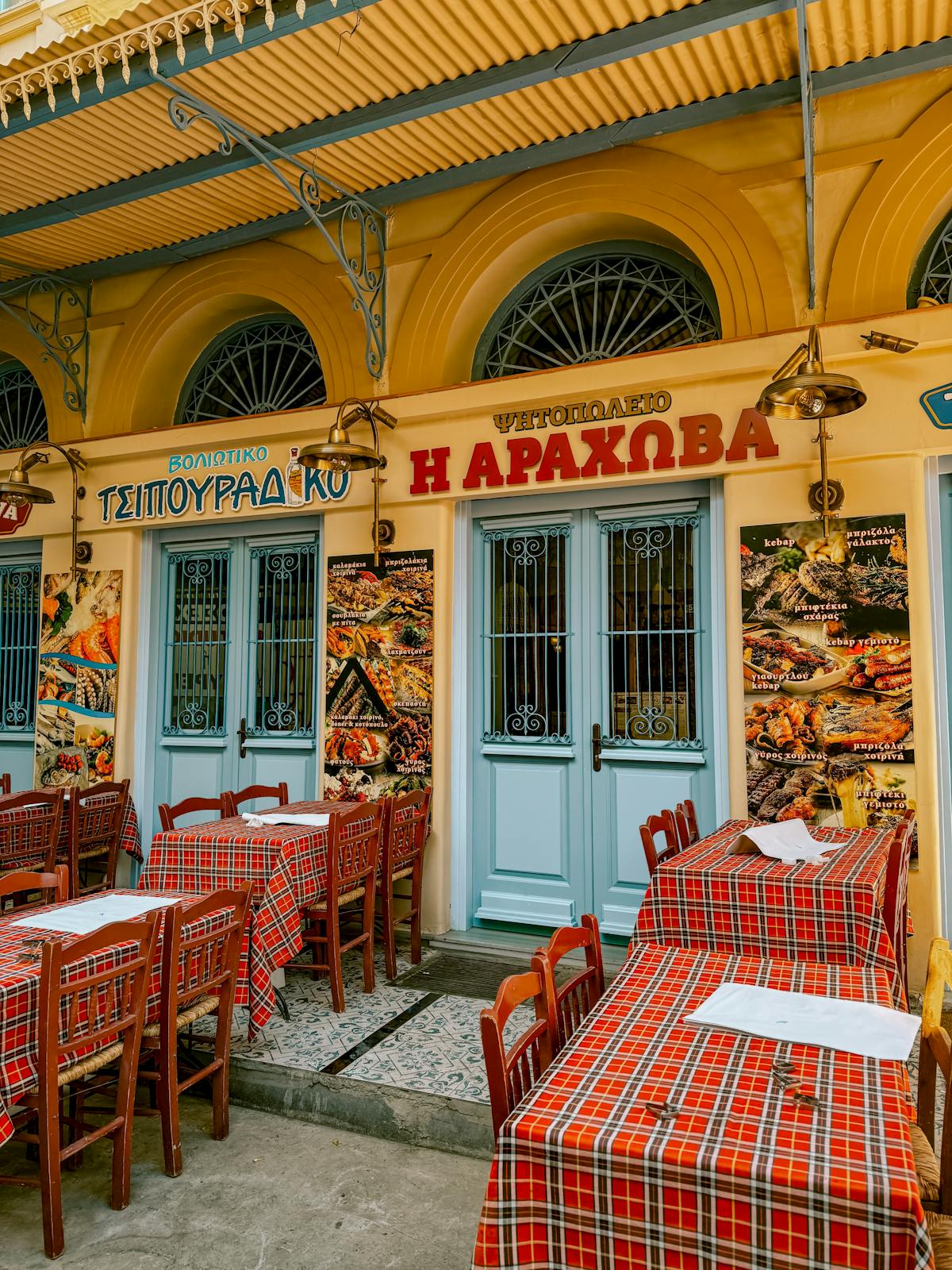
Plaka (the pedestrian area below the Acropolis) and Monastiraki (the market district) are heavily touristed, but they’re touristy for a reason—the food can be excellent, the atmosphere is lively, and you’ll see the Acropolis lit up at night.
Best for: Souvlaki from O Thanasis (the institution), grilled fish with a view, ouzo and mezedes, atmosphere and people-watching.
Pro tip: Go just off the main streets. Walk a block or two away from the main pedestrian thoroughfare and you’ll find less touristy, cheaper, more authentic places. Scholarhio (on a quiet side street) serves excellent traditional food at reasonable prices.
Psyrri: Trendy & Food-Forward
Psyrri has transformed from a gritty industrial area into Athens’ trendiest neighborhood, with excellent restaurants, wine bars, and meze spots. This is where young Athenians go to eat well.
Must-visits: Ta Karamanlidika tou Fani for incredible charcuterie and traditional dishes, Ydria for grilled seafood and fish, Local Burger for quality burgers (yes, really—locals love it), Kuzina for modern Greek cuisine with views.
Best for: Dinner, wine, modern interpretations of traditional Greek food, people-watching on warm evenings.
Exarchia: Affordable Tavernas & Real Athens
Exarchia is a gritty, bohemian neighborhood known for student life, graffiti art, and incredibly authentic, cheap tavernas. The food is unpretentious but excellent—this is where Greeks eat.
Must-visit: Rozalia is a legendary taverna where locals eat real Greek food at real prices. Get there early or expect a queue. Moussaka, roasted meats, fresh salads—everything is good.
Best for: Lunch, budget eating, seeing what locals actually eat.
Koukaki: Local Favorites
A quiet residential neighborhood (just south of the Acropolis) with family-run tavernas that serve locals. No tourists, genuine Greek hospitality, excellent food.
Best for: Authentic Greek taverna experience, getting to know a neighborhood beyond tourism.
Pangrati: Hidden Food Gems
Another residential neighborhood where locals actually live and eat. Small tavernas, neighborhood restaurants, zero pretension.
Best for: Finding where Athenians eat when not catering to tourists.
Kolonaki: Upscale Dining
The wealthy, fashionable neighborhood with designer shops and upscale restaurants. Here you’ll find fine dining, modern Greek cuisine, and restaurant scenes.
Best for: Special occasion dinners, modern interpretations of Greek food.
Varvakios Agora: The Central Market
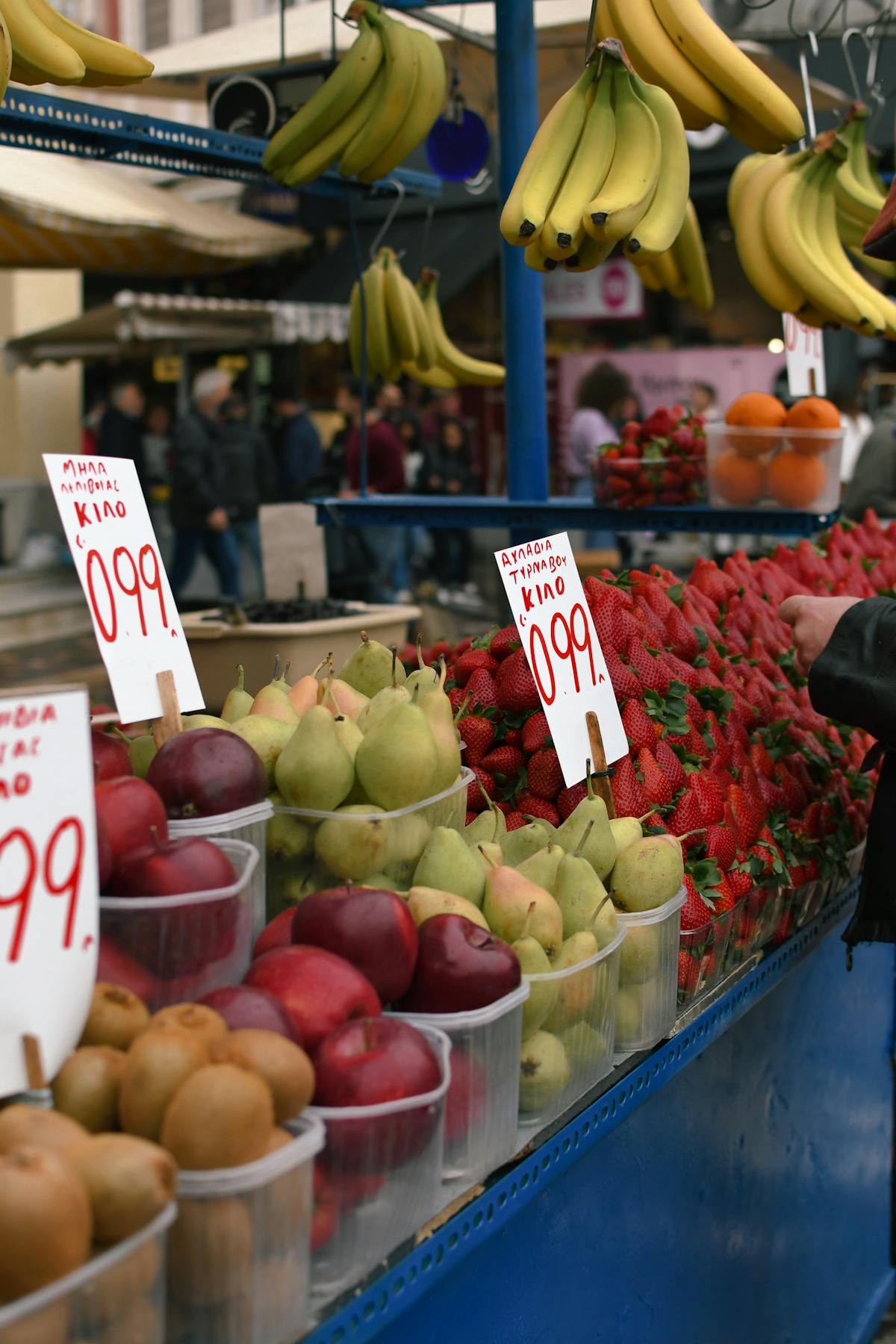
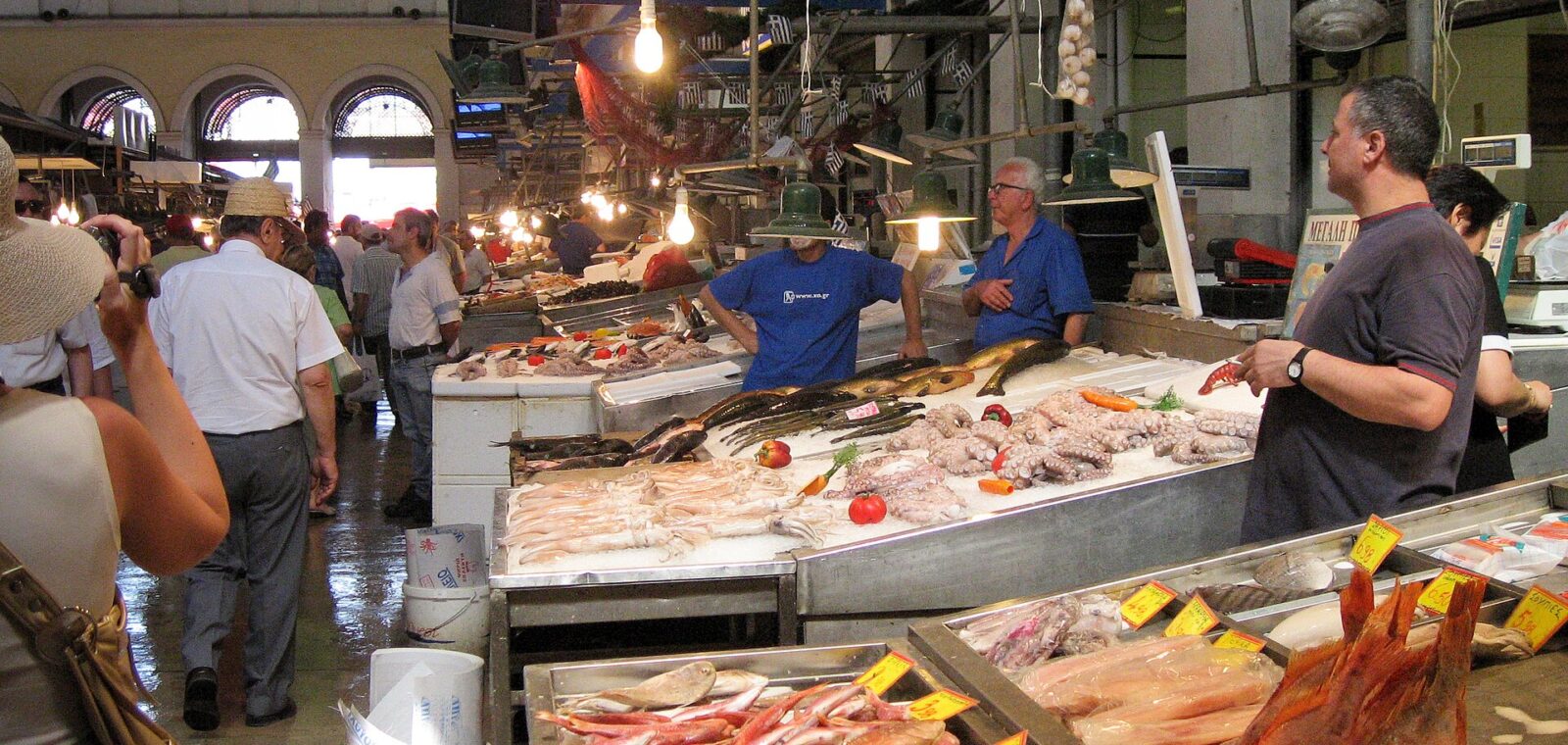
The Varvakios Agora (Βαρβάκειος Αγορά), Athens’ central market, is one of Europe’s most vibrant and essential food markets. Built in 1886, it remains the city’s primary produce, fish, and meat market—a place where Athenians do their daily shopping and where you can witness food culture in action.
What You’ll Find
The market is divided into sections:
- Fruit & vegetable section: Over 80 produce stands selling seasonal vegetables, fruits, and herbs. In spring, you’ll find artichokes, asparagus, and fresh greens. Summer brings tomatoes, cucumbers, and peppers. Fall has grapes, figs, and pomegranates.
- Meat section: Over 100 butcher shops. Hanging carcasses, skilled butchers, incredibly fresh meat. Greeks are particular about their butchers—many families have their trusted kreatopoulo (butcher shop).
- Seafood section: Over 150 fish and seafood stalls, making it one of Europe’s largest fresh fish markets. The Aegean provides incredibly fresh catches daily.
- Spice section: Evripidou Street, adjacent to the market, is lined with spice shops selling everything: saffron, sumac, dried oregano from the islands, nuts, dried fruits, and bulk goods.
When to Visit
Come early (7:00–10:00 AM) for the best selection and liveliest atmosphere. By midday, some vendors are packing up. It’s loud, crowded, fragrant, and utterly authentic—this is how real Athens sources food.
Eating in the Market
You’ll find small eateries and ouzeries within and around the market where you can eat fresh seafood, mezedes, and Greek coffee. Ouzeri Kosti sits right in the heart of the market and serves fresh fish and mezedes.
Market and cooking class: Combine a food market visit with a hands-on Greek cooking class and wine.
Greek Coffee Culture
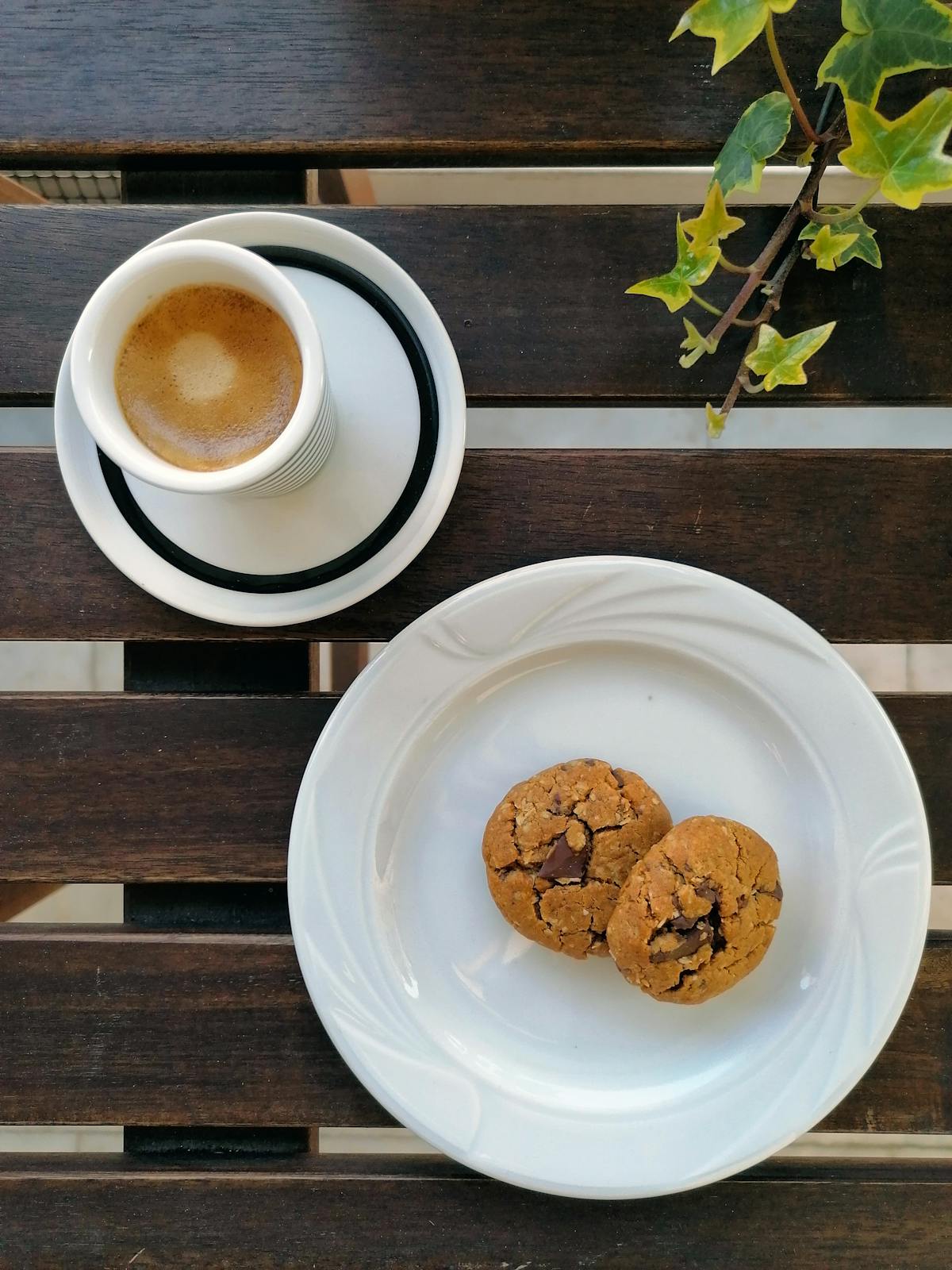
Coffee culture is central to Athenian life. Greeks take their coffee seriously, and there are specific types, each with its own ritual and meaning.
Greek Coffee (Traditional Briki)
Greek coffee (elliniko kafe) is an unfiltered coffee made in a small brass pot called a briki (μπρίκι). Finely ground coffee is mixed with cold water and sugar (or not—it depends on your preference), heated slowly until it rises, and poured into a small cup, creating a layer of foam on top.
The ritual is deliberate: you order it, you wait, you sip slowly, you let the grounds settle to the bottom of the cup (and don’t drink them). It’s not about speed; it’s about taking a moment. Greeks often accompany Greek coffee with a sweet treat—a pastry, a loukoumi (Turkish delight), or a cookie.
How to order: Specify sweetness level: sketo (no sugar), metrio (medium sugar), or gliko (very sweet). You can also request it “me to froudi” (with the foam).
Freddo Espresso & Freddo Cappuccino
Greeks have embraced cold coffee in a major way, particularly the freddo espresso (a double shot of espresso shaken with ice and sugar, topped with foam) and freddo cappuccino (espresso, milk, and ice). These are summer staples, ordered at every café and consumed throughout the day.
Frappé
The frappé is Greece’s answer to the iced coffee: instant coffee shaken with ice, water, and milk (optional). It’s refreshing, uncontroversial, and everywhere.
Café Culture
A coffee in Athens isn’t a quick transaction—it’s a social experience. You order, you sit (often for hours), you watch the world pass by. Many Athenians camp at a café for 2–3 hours nursing a single coffee, reading, working on laptops, or meeting friends. This is normal and expected.
Price: Greek coffee €2–3, freddo €3–4, coffee at tourist areas €4–6.
Specialty Coffee Scene
Alongside traditional Greek coffee, Athens now has a thriving specialty coffee scene. Third-wave coffee shops, espresso bars, and filter coffee specialists have opened throughout the city, particularly in Psyrri, Kolonaki, and Syntagma. Places like Taf Coffee and Void serve excellent single-origin pour-overs and espresso drinks for those interested in modern coffee culture.
Bakeries & Sweet Treats
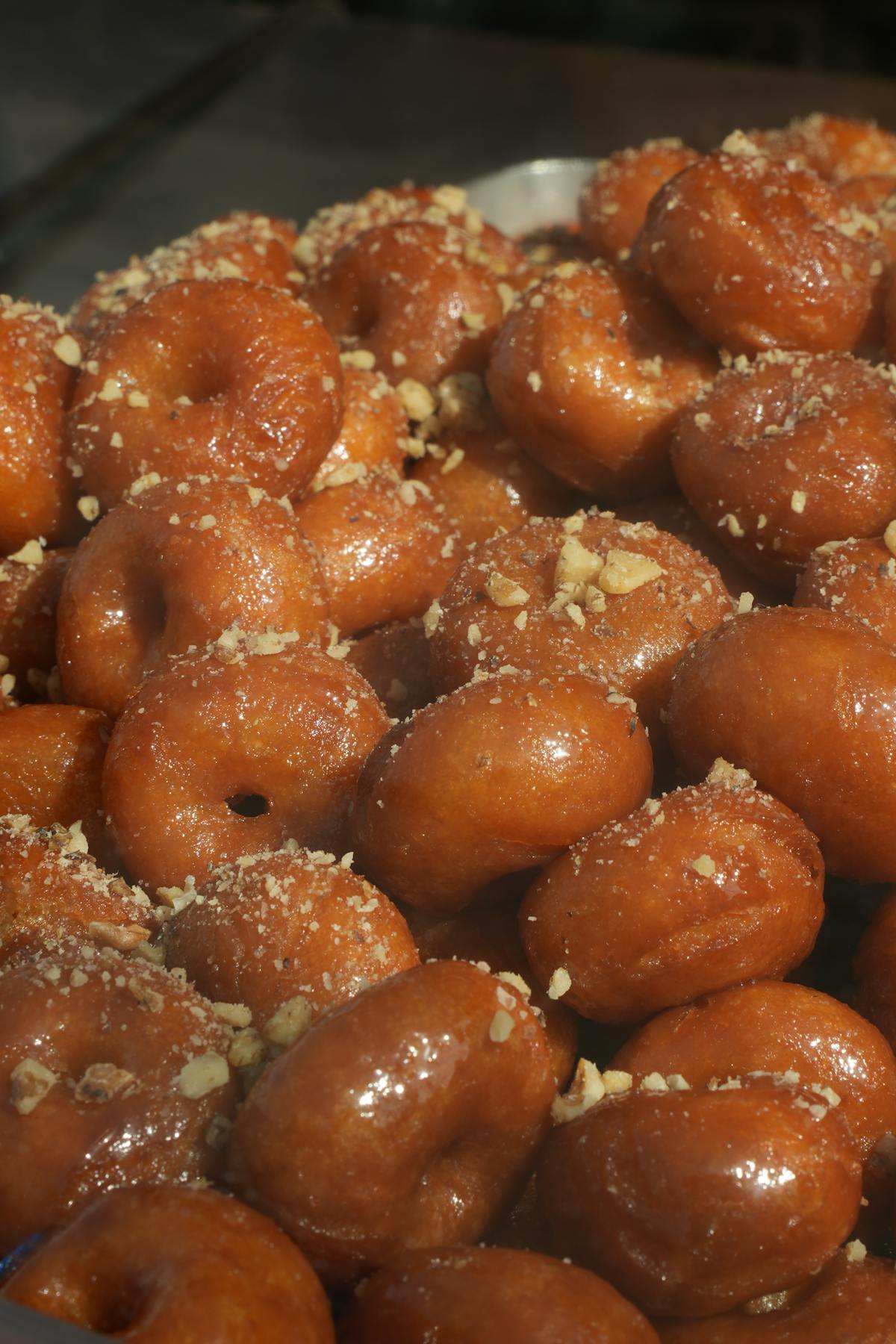
Greek sweets are rich, often syrup-soaked, and absolutely delicious. A Greek breakfast or afternoon snack typically includes something sweet.
Loukoumades
Loukoumades (λουκουμάδες) are fried dough balls, served warm and drizzled with honey and sprinkled with crushed walnuts or cinnamon. They’re soft inside, slightly crispy outside, and completely addictive. Street vendors sell them fresh throughout Athens. €3–5 for a portion.
Bougatsa
Bougatsa (μπουγάτσα) is a pastry with a custard (or sometimes meat or cheese) filling, wrapped in crispy phyllo. It’s served warm, often sprinkled with cinnamon and powdered sugar, and is a standard bakery item. €3–4 per slice.
Baklava & Galaktoboureko
Baklava (μπακλαβά)—phyllo with nuts and honey—and galaktoboureko (γαλακτομπούρεκο)—phyllo with custard filling, often syrup-soaked—are richer sweets, less commonly eaten daily but absolutely worth trying. Found in traditional bakeries and pastry shops. €5–8 per slice.
Koulouri with Sesame
The bread ring mentioned in street food is also eaten as a sweet snack. Some versions are plain, others are studded with sesame seeds. €0.80–1.50.
Where to Find the Best Bakeries
Walk into any neighborhood bakery (φούρνος, fourno) and you’ll find good pastries. But for specifically excellent sweets, Ariston (multiple locations) is known for quality, and local neighborhood bakeries often have dedicated following for their specific specialties.
Greek Wine, Ouzo & Spirits
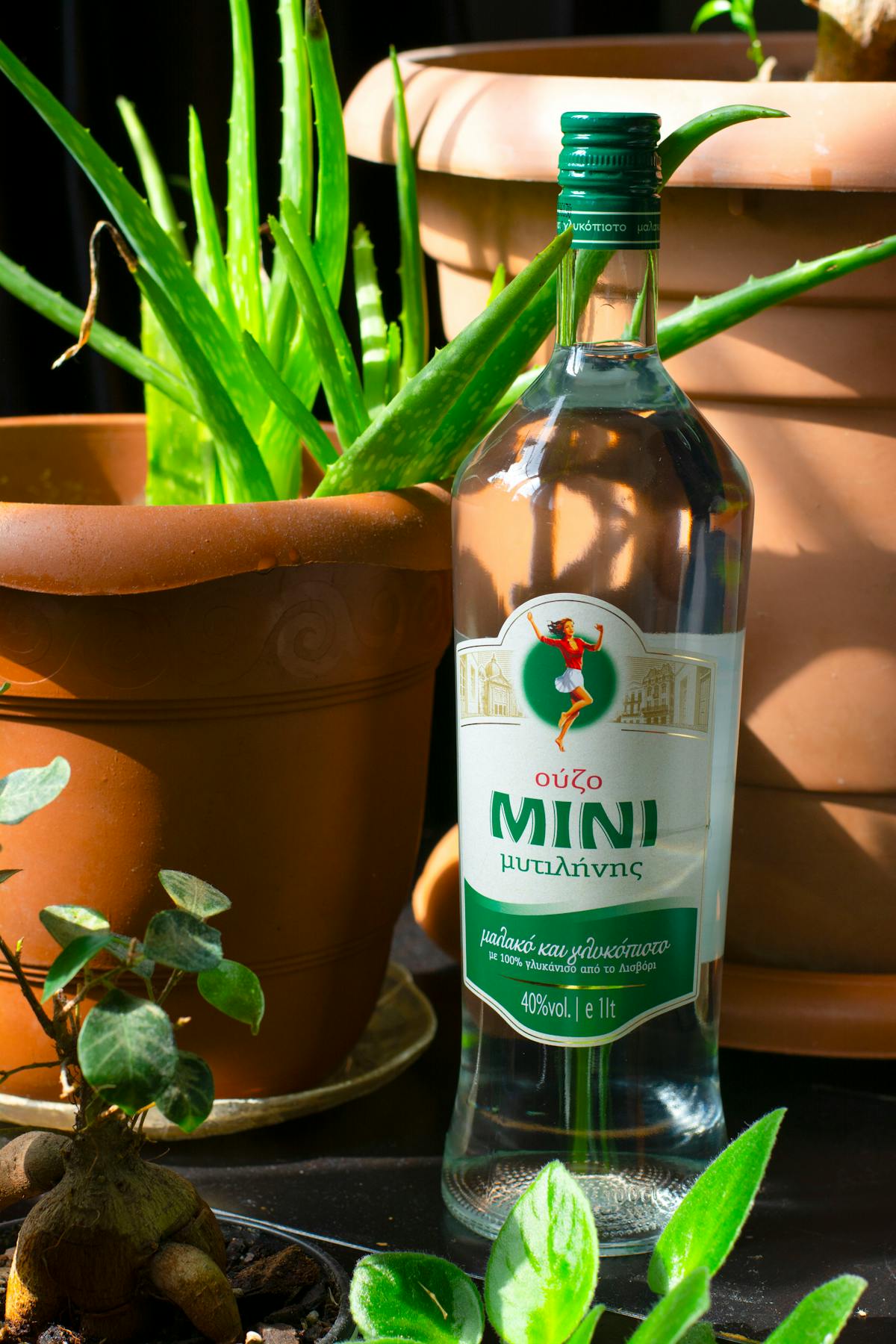
Greek wine has been consumed for thousands of years (remember ancient Greek symposiums?), and modern Greek wine is exceptional. Beyond wine, Greece has distinctive spirits with their own traditions.
Greek Wine
Red wines: Agiorgitiko from Nemea is a full-bodied, elegant red wine—one of Greece’s finest. Xinomavro from Naoussa in northern Greece is structured and age-worthy.
White wines: Assyrtiko from Santorini is crisp, mineral, and perfect with seafood—one of the world’s great white wines. Moschofilero from Mantinia is aromatic and fresh.
Retsina: The traditional resin-infused white wine that tastes like pine trees. It’s an acquired taste, but trying it in Athens (where it’s a local tradition) is worthwhile. Pairs well with mezedes and seafood.
Wine is served everywhere, and Athens has a growing wine bar scene. Try Greek wines throughout your visit.
Ouzo
Ouzo (ούζο) is Greece’s national spirit—an anise-flavored, clear distilled drink that turns milky when water is added (the “louche” effect). It’s traditionally served with mezedes and sipped slowly. Ouzo at a Greek taverna with friends and food is a quintessential experience.
Brands vary widely in quality; Ouzo Plomari from Lesbos is highly regarded.
Tsipouro & Rakomelo
Tsipouro is a stronger, less refined spirit—often served in small glasses as a digestif. Rakomelo is tsipouro heated with honey, spices (cinnamon, cloves), and sometimes citrus—a winter warmer.
Greek Beer
While Greece is wine and ouzo country, Greek beer has a following. Athenian Brewery produces craft beers, and Mythos is the mainstream Greek beer. Freddo beers (iced, cold versions) are popular in summer.
Practical Dining Tips
Dinner timing: Athenians eat dinner late. Restaurants open for dinner around 6:00 PM but are empty until 9:00–10:00 PM. Don’t arrive before 8:30 PM expecting a full restaurant.
Tipping: Tipping is not obligatory but appreciated. Leave 5–10% if service was good. Many restaurants don’t expect tips, but it’s a nice gesture.
Kouvert (cover charge): Some restaurants charge a small “bread & cover” charge (usually €1–2 per person) for bread and table setting. It’s standard and not negotiable.
Water: Tap water in Athens is safe and excellent. Water is free at restaurants, even if you only order coffee. You can bring a reusable bottle and fill it at water fountains.
Bread charge: If bread is brought to your table, you’ll likely be charged (€1–2). You can decline the bread and avoid the charge.
Ordering strategy: Order multiple mezedes rather than one main course, especially with a group. It’s more interesting, lets you try more, and is less overwhelming. Greeks eat this way socially.
Vegetarian & vegan options: Greek cuisine has vegetarian traditions (spanakopita, salade, dolmades yalantzi, roasted vegetables). Vegan options are more limited but increasingly available. Specify dietary restrictions clearly.
Cash vs. cards: Many small tavernas and street vendors are cash-only. Larger restaurants accept cards. ATMs are abundant.
Food Tours & Cooking Classes
If you want a guided introduction to Athenian food, food tours and cooking classes are excellent options. They provide context, introduce you to local vendors, and create memorable experiences.
- Food tours: Walking tours of neighborhoods (Psyrri, Plaka) or the Central Market with tastings and narration.
- Cooking classes: Classes teaching you to cook Greek dishes (moussaka, spanakopita, Greek salads) with local instructors.
These aren’t necessary—you can absolutely eat your way through Athens on your own—but they’re enriching and fun, especially for first-time visitors.
Food tour: Guided small-group food tour of Athens tasting traditional Greek dishes.
Frequently Asked Questions
Q: Is Greek food spicy? A: No. Greek cuisine relies on fresh ingredients and herbs (oregano, dill, mint) rather than heat. If you like spicy food, bring hot sauce or request piperia (red pepper).
Q: Do I need to eat souvlaki, moussaka, and Greek salad in Athens? A: Absolutely. These are iconic dishes. But don’t limit yourself—try octopus, seafood, spanakopita, mezedes, and everything else.
Q: Where’s the best Greek food in Athens? A: The best food is at small neighborhood tavernas where locals eat, not necessarily at the most famous or expensive restaurants. Explore side streets in Psyrri, Exarchia, Koukaki, and Pangrati.
Q: Can I eat well on a budget? A: Absolutely. Street souvlaki, bakery pastries, neighborhood tavernas with lunch specials, and meze meals are all affordable (€5–15 per meal).
Q: What should I do if I get food poisoning? A: Athens has excellent healthcare. Call emergency number 166 or visit a clinic. But honestly, the risk is minimal—food safety standards are good.
Q: Should I tip my server? A: Tipping is appreciated (5–10%) but not obligatory. Many Greeks don’t tip.
Conclusion
Eating in Athens is one of the great joys of visiting the city. From street-corner souvlaki to refined moussaka in neighborhood tavernas, from mezedes shared with friends to a simple Greek salad bursting with flavor, the food culture of Athens reflects thousands of years of Mediterranean tradition, the generosity of Greek hospitality, and a genuine love of good eating.
The secret to eating well in Athens isn’t finding the most famous or expensive restaurants. It’s following the locals: eating late, ordering mezedes to share, choosing neighborhood tavernas over tourist traps, and taking time to linger over meals with friends. Food in Greece isn’t rushed—it’s meant to be savored, shared, and remembered.
Whether you’re tasting moussaka for the first time, discovering your new favorite taverna, learning to appreciate ouzo, or realizing why Greeks spend hours in cafés, you’re participating in a food culture that has remained true to itself for millennia while evolving with the times. This is Athens at its most authentic and its most delicious.
Related articles: Learn more about things to do in Athens and where to stay in Athens.
More Athens Food & Drink Guides
Dig into a particular corner of the Athens eating scene:
- Best Rooftop Restaurants in Athens with Acropolis View (2026)
- Athens Food Tours & Cooking Classes: 15 Best (2026)
- Best Restaurants in Plaka & Monastiraki Athens: 25 Picks (2026)
Photo Credits
- Fish counters inside Varvakios market: 2007 Greece Athens Central Market 02 by Nicholas Hartmann, CC BY-SA 4.0, via Wikimedia Commons.