This article contains advertising. Some of the hotel, tour, activity, flight and transfer links in it are paid links: if you book through one, we get a commission from the booking company, and your price is the same either way. It never affects what we recommend. Affiliate disclosure
While Athens itself offers enough history, culture, and cuisine to fill an entire vacation, some of Greece’s most spectacular landscapes and archaeological treasures lie within easy reach of the capital. From ancient oracles and clifftop monasteries to car-free islands and Venetian harbor towns, the day trips from Athens Greece reveal an astonishing diversity of experiences — all achievable as single-day excursions or comfortable overnight getaways.
This complete guide covers the best day trips from Athens Greece for every type of traveler, whether you want to stand where the Oracle of Delphi prophesied, watch the sunset from a temple perched above the Aegean, island-hop by ferry, or explore the mighty fortifications of Mycenaean kings. We include how to get there independently and by organized tour, what to expect in terms of costs and time, and practical tips to make each excursion as smooth as possible.
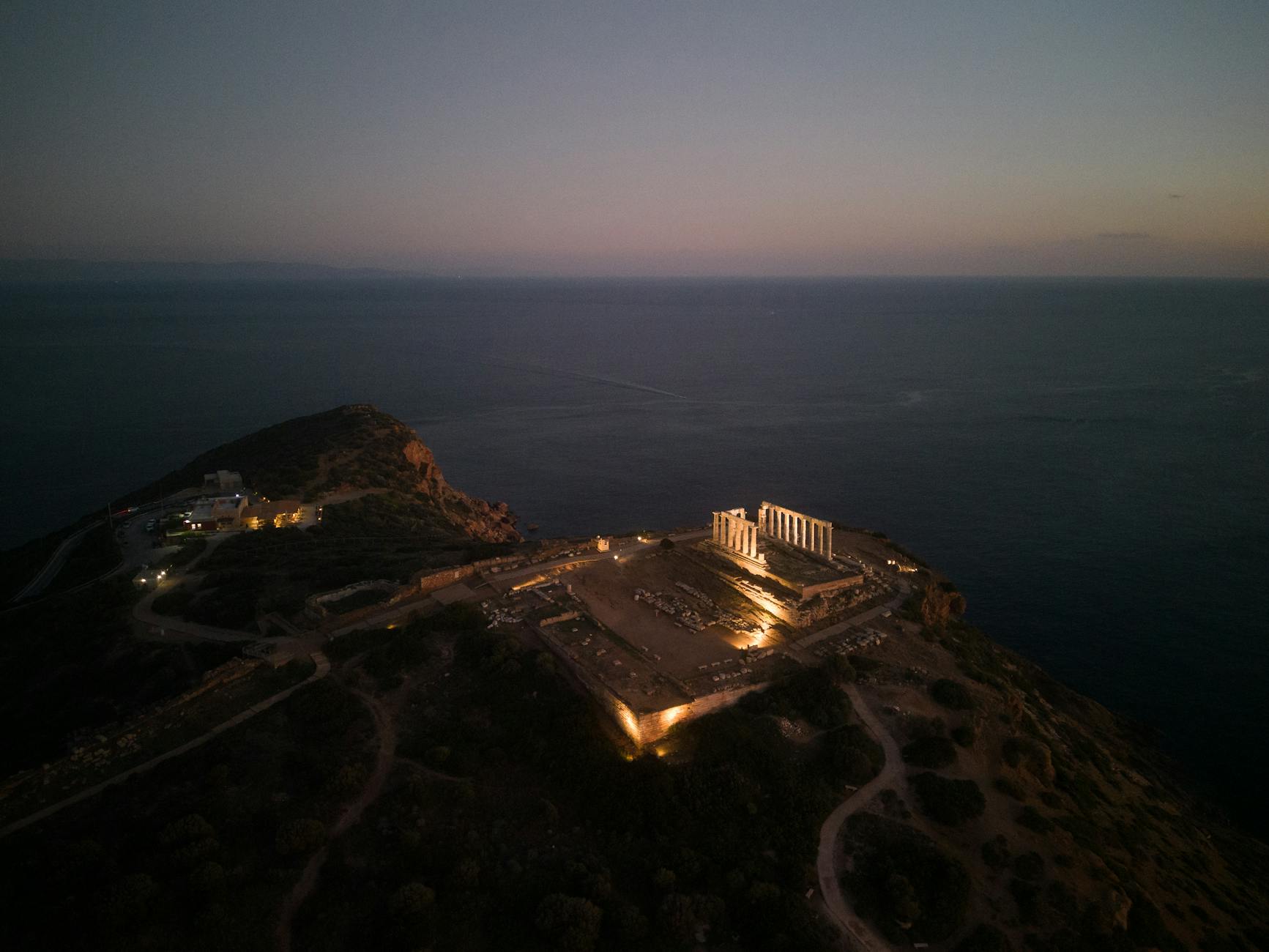
Cape Sounion & the Temple of Poseidon: The Perfect Sunset Excursion
If you only have time for one day trip from Athens Greece, make it Cape Sounion. Located 70 kilometers (43 miles) southeast of the city center, this dramatic headland is crowned by the 5th-century BCE Temple of Poseidon, whose gleaming white Doric columns have guided sailors home for 2,500 years. The combination of ancient architecture and a sunset over the Aegean that turns the entire sky gold and crimson makes this one of the most photographed spots in all of Greece.
What to See and Do
The Temple of Poseidon was built between 444 and 440 BCE — roughly contemporary with the Parthenon — and 15 of its original 34 marble columns still stand. The temple sits almost 60 metres above the sea, on a headland that looks straight out over the Aegean. Look for Lord Byron’s name on a column base: the inscription survives, though nobody can say for certain that the English Romantic poet carved it himself, or exactly when.
The drive along the Athens Riviera to Cape Sounion is itself a highlight. The coastal road passes through the upscale suburbs of Glyfada, Vouliagmeni, and Varkiza, with plenty of beaches, seaside cafés, and swimming coves where you can stop en route. Lake Vouliagmeni, a natural thermal lake fed by underground springs, makes a luxurious mid-trip detour; its water runs between 22 and 29°C depending on the season.
How to Get There
By car, Sounion is about 70 kilometres from Athens along the coastal road, and Friday-evening traffic will slow you down. The KTEL bus leaves from near Pedion Areos park; check the current fare and timetable on KTEL Attikis’ site before you go. Organised sunset tours also run from central Athens, so compare what each one includes before you book. For the best experience, time your arrival to be at the temple about an hour before sunset, giving you time to explore the ruins in golden light before the main event.
Day trip: Sunset tours from Athens to the Temple of Poseidon at Cape Sounion.
Delphi: Center of the Ancient World
The ancient Greeks considered Delphi the omphalos — the navel of the world — and visiting this mountainside sanctuary, about three hours by road northwest of Athens, you may agree. Perched on the slopes of Mount Parnassus with vertiginous views down to a valley of olive trees stretching to the Gulf of Corinth, Delphi’s setting is as awe-inspiring as its history. For over a thousand years, kings, generals, and ordinary citizens traveled here to consult the Pythia, the Oracle of Apollo, whose cryptic pronouncements shaped the course of Greek history.
The Archaeological Site
The Sacred Way winds uphill through the ruins, passing the treasuries where Greek city-states stored their offerings, to the monumental Temple of Apollo — the heart of the oracle’s sanctuary. Higher still, the well-preserved ancient theatre held about 4,500 spectators and looks out over the sanctuary and the valley below. At the very top, the ancient stadium once hosted the Pythian Games, second in prestige only to the Olympics.
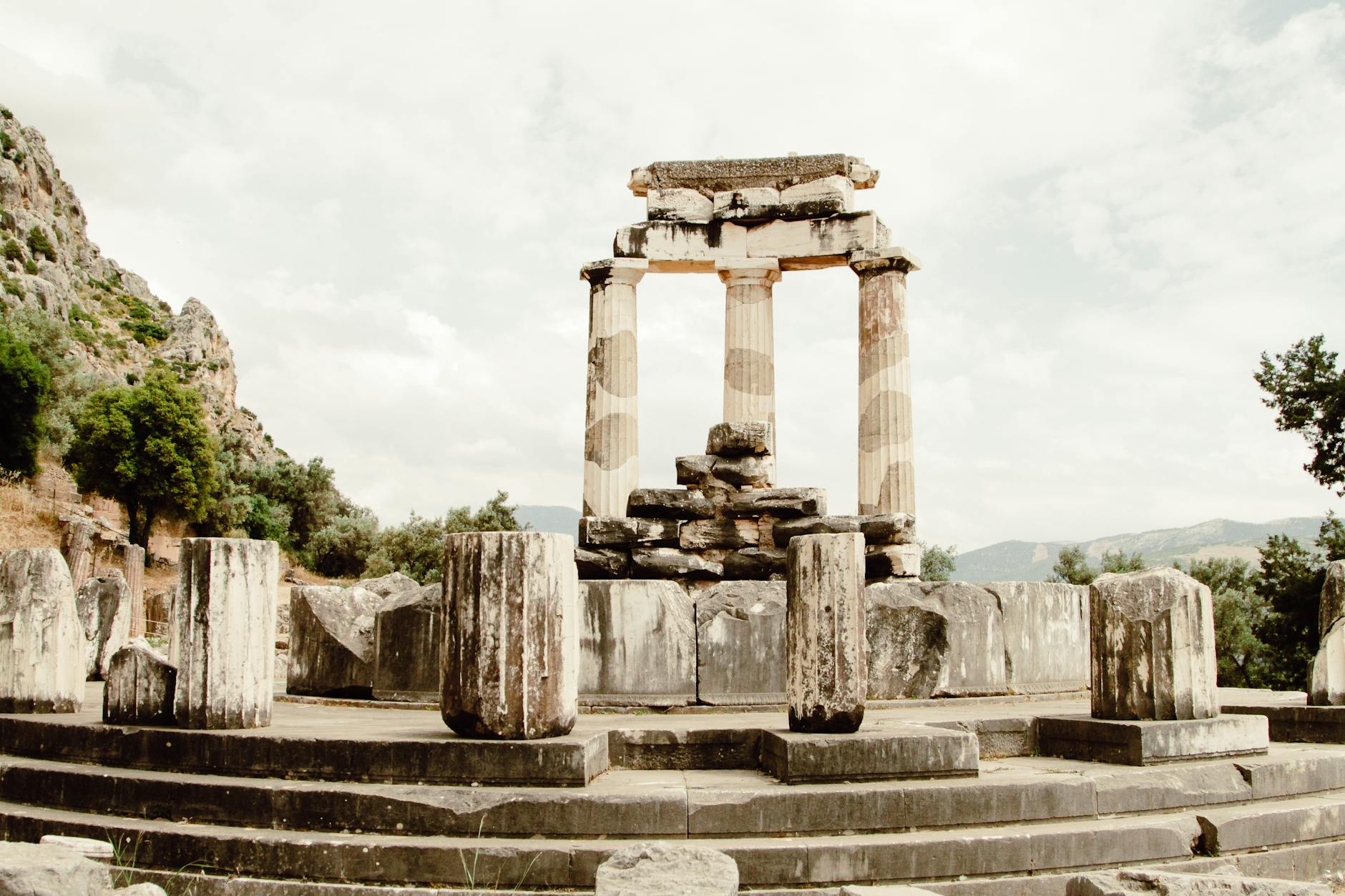
Below the main site, the Sanctuary of Athena Pronaia contains the Tholos, a circular temple with three restored Doric columns that has become the most photographed monument in Delphi (check the Ministry of Culture’s site for the sanctuary’s current opening status before you go). The adjacent Delphi Archaeological Museum houses an extraordinary collection including the famous Charioteer of Delphi, a bronze statue dated to 478 or 474 BCE.
How to Get There
Hellenic Heritage advises allowing about three hours for the drive from Athens. KTEL buses depart from Athens’ Liosion Bus Station (Terminal B) several times daily; check the fare and journey time with KTEL Fokidas before you travel. Organised full-day tours run from Athens as well, and what they include varies, so read the itinerary before you book. One ticket covers both the archaeological site and the museum: €20, or €10 reduced.
Tip: The charming mountain village of Arachova, just east of Delphi, is known for its stone architecture, colourful rugs, local wine, and formaella cheese. Budget time for a coffee or lunch stop — it adds considerably to the day’s experience.
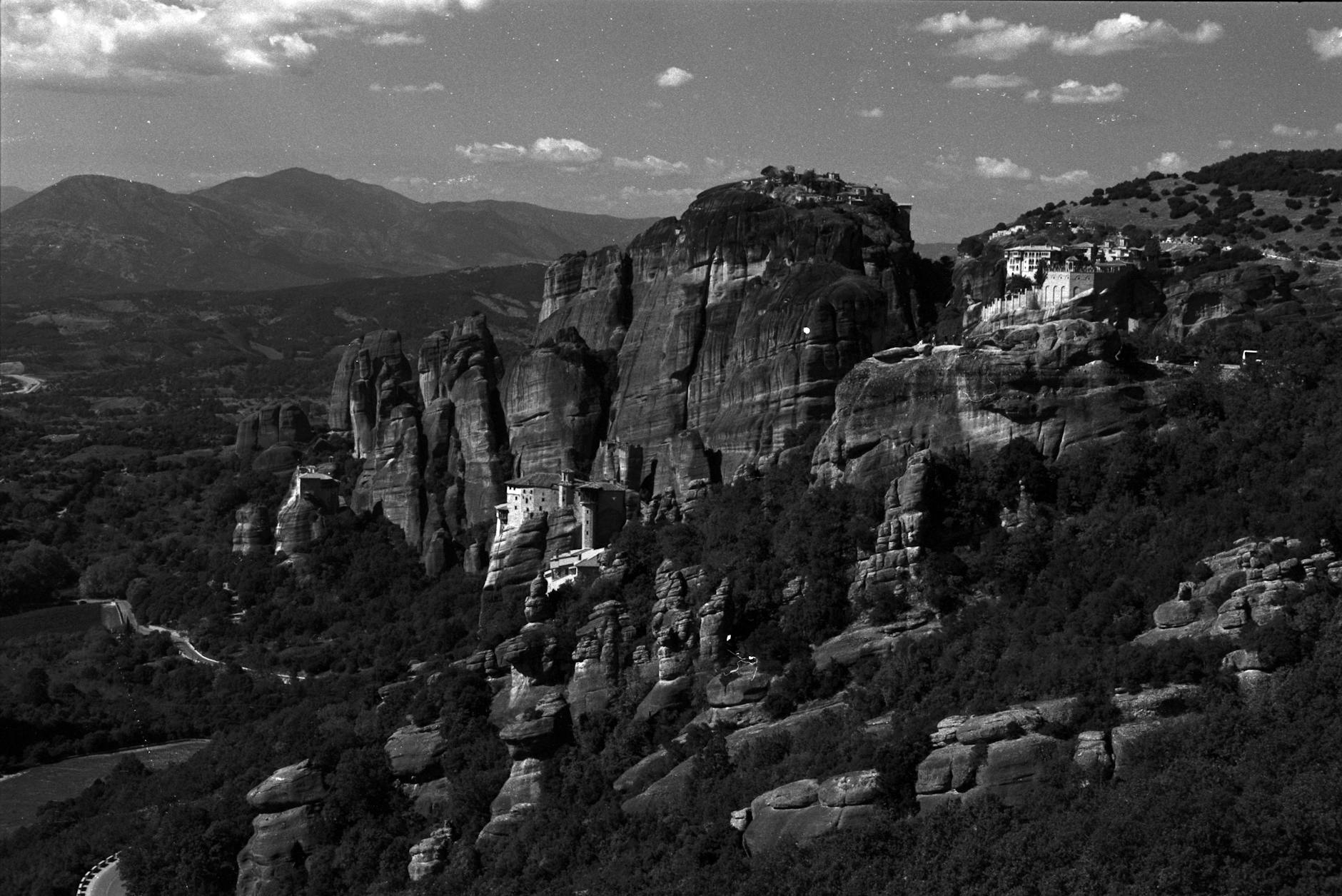
Meteora: Monasteries in the Sky
Meteora — meaning “suspended in the air” — is one of Greece’s most otherworldly landscapes and a UNESCO World Heritage Site since 1988. Enormous sandstone pillars rise more than 400 metres above the ground, and perched impossibly on their summits are medieval monasteries built by monks seeking isolation from the world below. While technically a long day trip from Athens Greece, Meteora is so extraordinary that it deserves inclusion in any Athens-based travel plan.
The Monasteries
Of the 24 monasteries built on the rocks, six are still active today. The Great Meteoron (Holy Monastery of the Transfiguration) is the largest and oldest, founded around 1340, with a spectacular central church and a museum of monastic life. Varlaam is nearly as grand, with outstanding 16th-century frescoes. The Holy Trinity Monastery, dramatically perched on a slender pinnacle accessible via 140 carved steps, was featured in the James Bond film “For Your Eyes Only.” Roussanou, built impossibly on a narrow rock, is run by nuns and has particularly beautiful gardens and frescoes. The monasteries of St. Stephen and St. Nicholas Anapausas round out the group, each with unique character and artworks.
How to Get There
Public transport starts with the train from Athens’ Larissa Station towards Kalambaka (the town at the base of the rocks), but the Palaiofarsalos-Kalambaka section is served by a replacement bus, so check Hellenic Train’s site for the current connections, total journey time and fares. From Kalambaka, local buses, taxis, or hotel shuttles reach the monasteries. Driving is the other option, and a long day behind the wheel.
Realistic advice: While technically possible as a day trip, Meteora is far better experienced as an overnight stay. One night in Kalambaka or neighboring Kastraki allows you to visit several monasteries at a comfortable pace, watch both sunset and sunrise over the rock pillars, and avoid the exhaustion of a full day of driving or riding there and back. Organised two-day tours from Athens are another option; check what each one includes before you book.
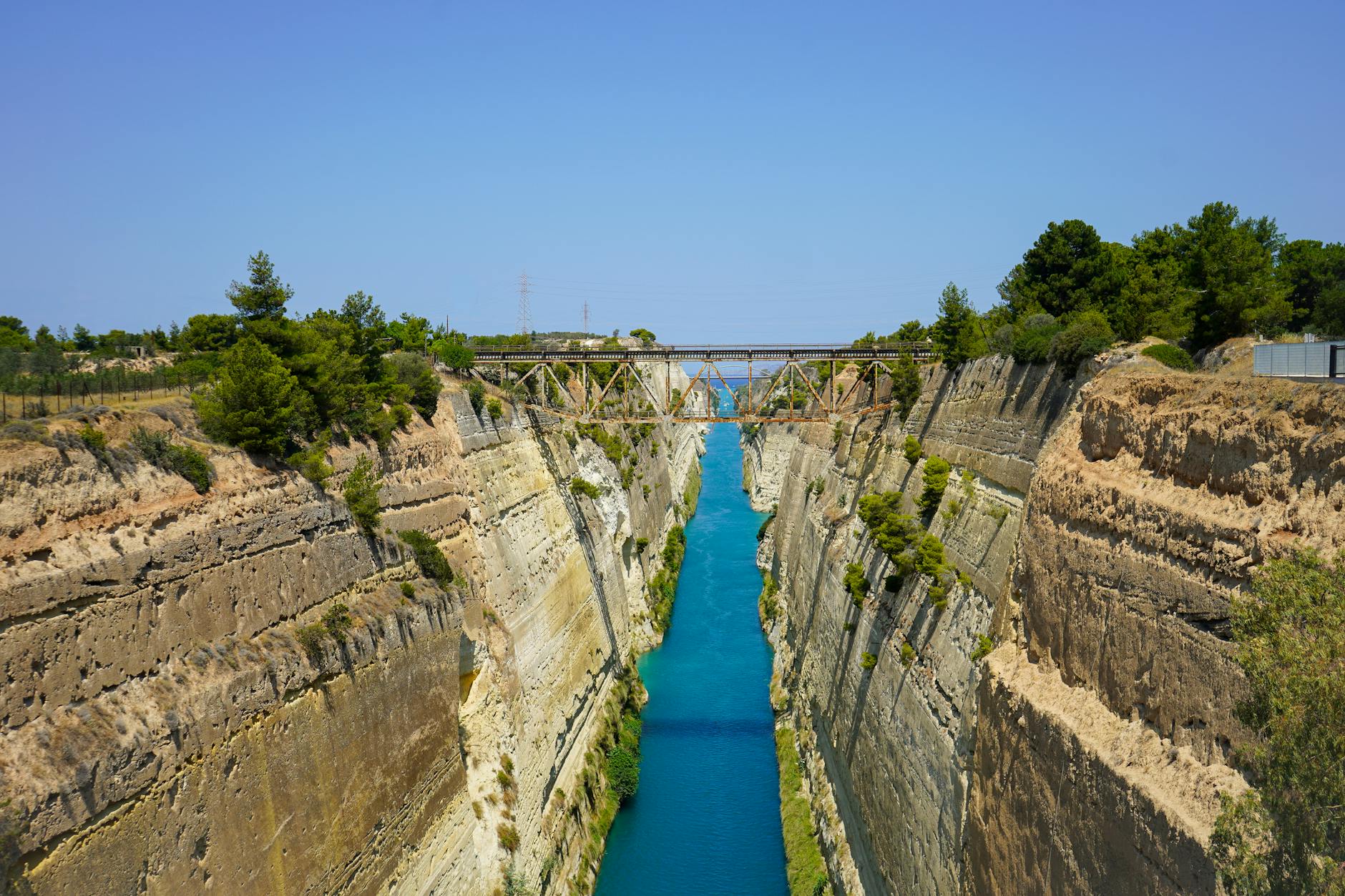
The Peloponnese: Mycenae, Epidaurus, Nafplio & Ancient Corinth
The northeastern Peloponnese packs an extraordinary concentration of ancient sites and picturesque towns into a region easily accessible from Athens. A well-planned day trip from Athens Greece can combine two or three of these highlights, though covering all four would make for a very long day — choose based on your interests.
The Corinth Canal & Ancient Corinth
The Corinth Canal is usually the first stop on a Peloponnese day trip, as it straddles the narrow isthmus connecting mainland Greece to the Peloponnese. This remarkable 6.4-kilometre channel, 24.6 metres wide at sea level, was carved through solid rock between 1881 and 1893. The idea goes back much further, to Periander in the 7th century BCE, and the Roman emperor Nero began an excavation in 67 CE that was never finished. Viewing platforms on the bridge look straight down between rock walls that rise up to 90 metres above the sea.
Nearby, the ruins of Ancient Corinth — once one of the wealthiest and most powerful cities in Greece — include the imposing Temple of Apollo (6th century BCE), the Roman-era forum, and the excellent on-site museum. The adjacent fortress of Acrocorinth, rising about 575 metres above sea level, offers panoramic views across the Gulf to central Greece.
Mycenae: Kingdom of Agamemnon
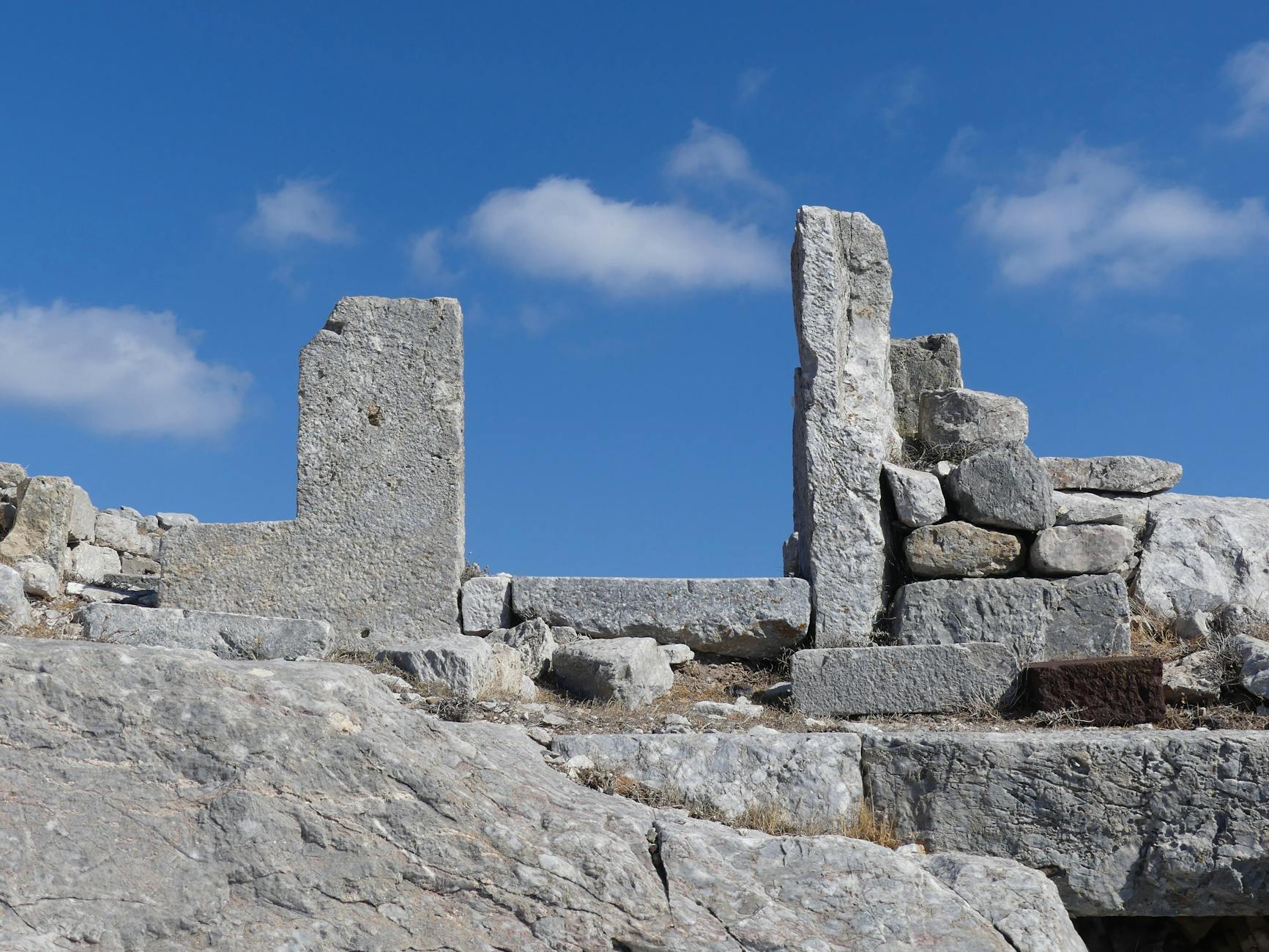
The fortified citadel of Mycenae, approximately 120 kilometers southwest of Athens, was the center of one of the earliest advanced civilizations in Europe and gave its name to the Mycenaean period (1600–1100 BCE). According to Homer, this was the kingdom of Agamemnon, who led the Greek expedition against Troy.
The approach through the famous Lion Gate, which dates to around 1250 BCE, is unforgettable. Inside the walls, you can explore the royal palace, the grave circles where Heinrich Schliemann discovered the gold Mask of Agamemnon (now in Athens’ National Archaeological Museum), and the massive Cyclopean walls built with limestone blocks so large that later Greeks believed only the mythical Cyclopes could have moved them. The Treasury of Atreus (Tomb of Agamemnon), a beehive-shaped tholos tomb just outside the citadel walls, is an engineering marvel: its domed chamber is about 13.2 metres high and 14.5 metres across, and it remained the tallest and widest stone dome in the world for over a thousand years, until the Roman period.
Epidaurus: The Greatest Ancient Theater
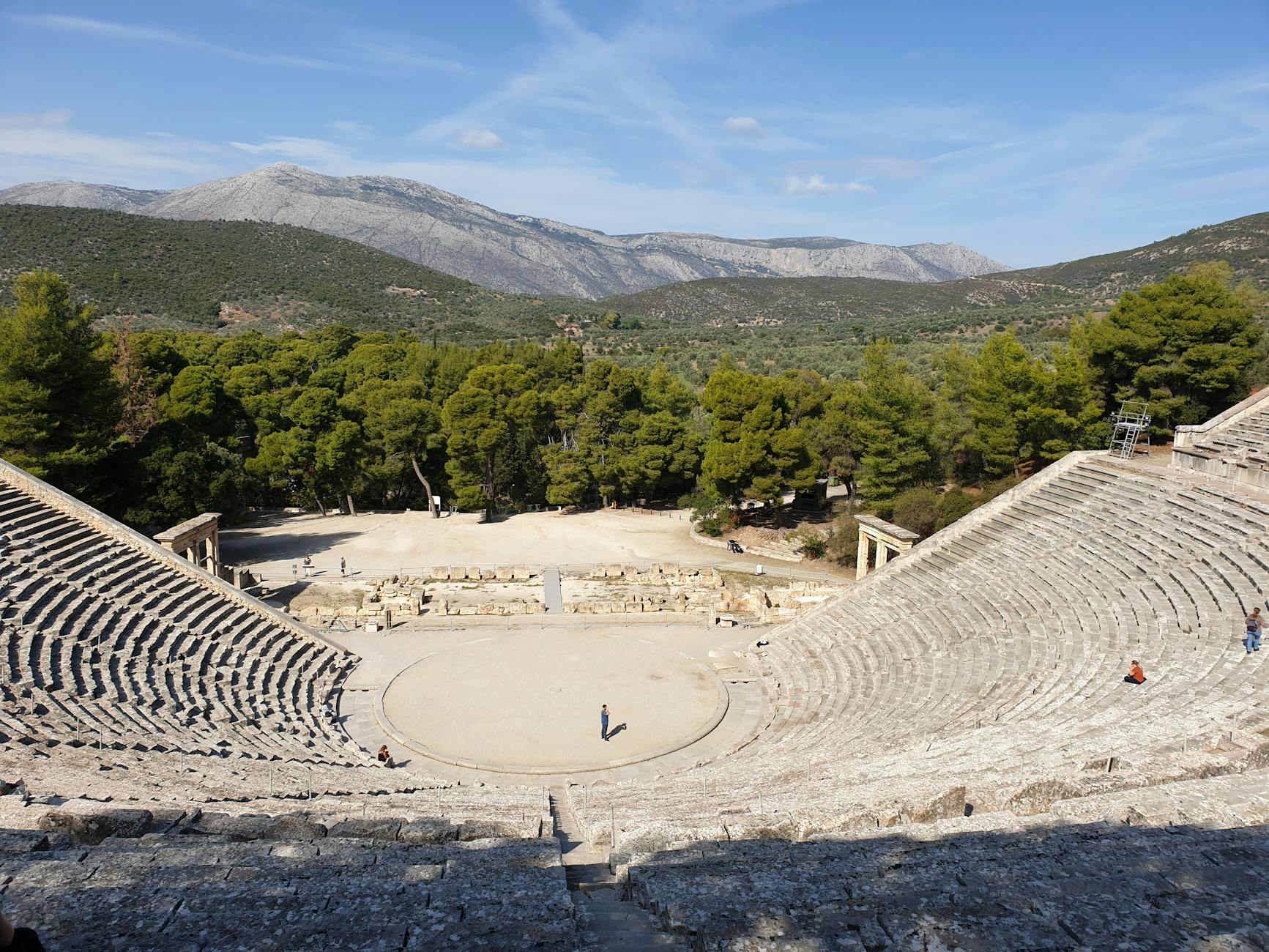
The Ancient Theatre of Epidaurus, built in the late 4th century BCE, is admired above all for its acoustics, its symmetry and how well it has survived. It held 13,000 to 14,000 spectators across 55 rows of limestone seats. The theater was part of the larger Sanctuary of Asklepios (Asclepius), the god of medicine, making Epidaurus an ancient healing center where patients combined rest, exercise, and divine intervention as therapy.
The theater is still in use today. Every summer (June through August), the Athens & Epidaurus Festival stages performances of ancient Greek tragedy and comedy under the stars — an experience that connects modern audiences directly to 2,500 years of theatrical tradition. If your visit coincides with the festival season, attending a performance is one of the most memorable experiences in Greece.
Nafplio: Greece’s Most Beautiful Town
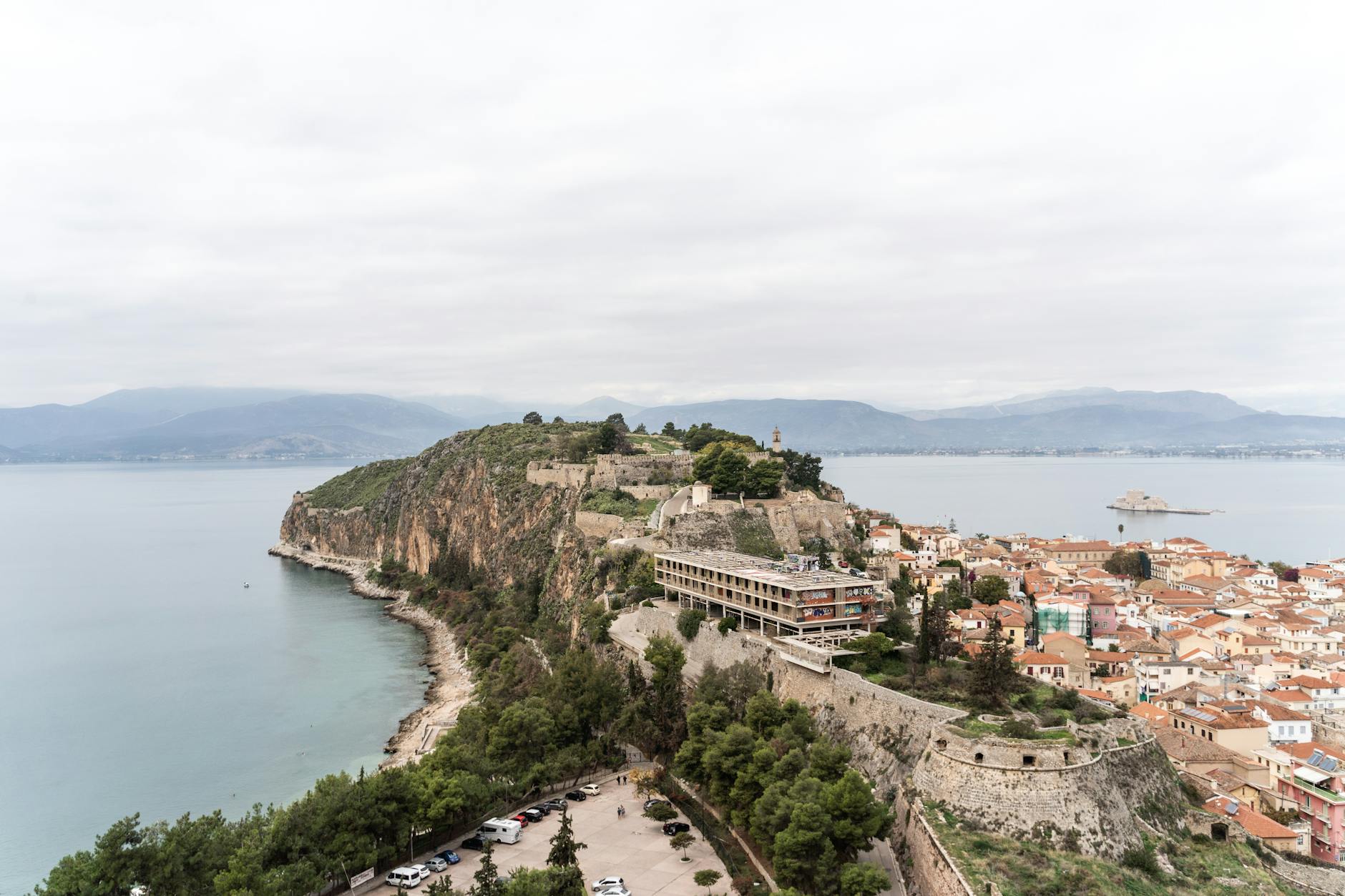
Nafplio was the capital of the modern Greek state until the capital moved to Athens in 1834, and remains one of the country’s most charming towns. Its elegant old quarter mixes Venetian mansions, Ottoman fountains, neoclassical facades, and bougainvillea-draped alleys spilling down to a crescent harbor. The massive Palamidi Fortress, reached by a famous (and strenuous) staircase of 857 steps (legend says 999), rewards with sweeping views over the Argolic Gulf. In the harbor, the tiny Bourtzi fortress sits photogenically on its own island.
Nafplio’s waterfront promenade is lined with excellent restaurants and gelato shops, making it the ideal place for a leisurely lunch during a Peloponnese day trip. For dining inspiration, check our Athens food guide for recommendations on authentic Greek cuisine.
Getting to the Peloponnese
By car, the Corinth Canal makes a natural first stop, with Mycenae and Nafplio a further drive beyond it. KTEL buses serve all major Peloponnese destinations from Athens’ Kifissos Bus Station (Terminal A). Organised full-day tours combining Mycenae, Epidaurus, and Nafplio (sometimes with a Corinth Canal stop) also run from Athens; check whether admission fees and lunch are included before you book.
Day trip: Day trips from Athens that take in Mycenae and the Peloponnese.
Saronic Island Day Trips: Hydra, Aegina & Poros
The Saronic Gulf islands are the closest islands to Athens, making them the easiest island day trips from Athens Greece. Whether you opt for an organized three-island cruise or catch a public ferry to a single island for a more relaxed experience, the Saronic islands offer a taste of Greek island life without the commitment of an overnight trip.
Hydra: The Car-Free Jewel
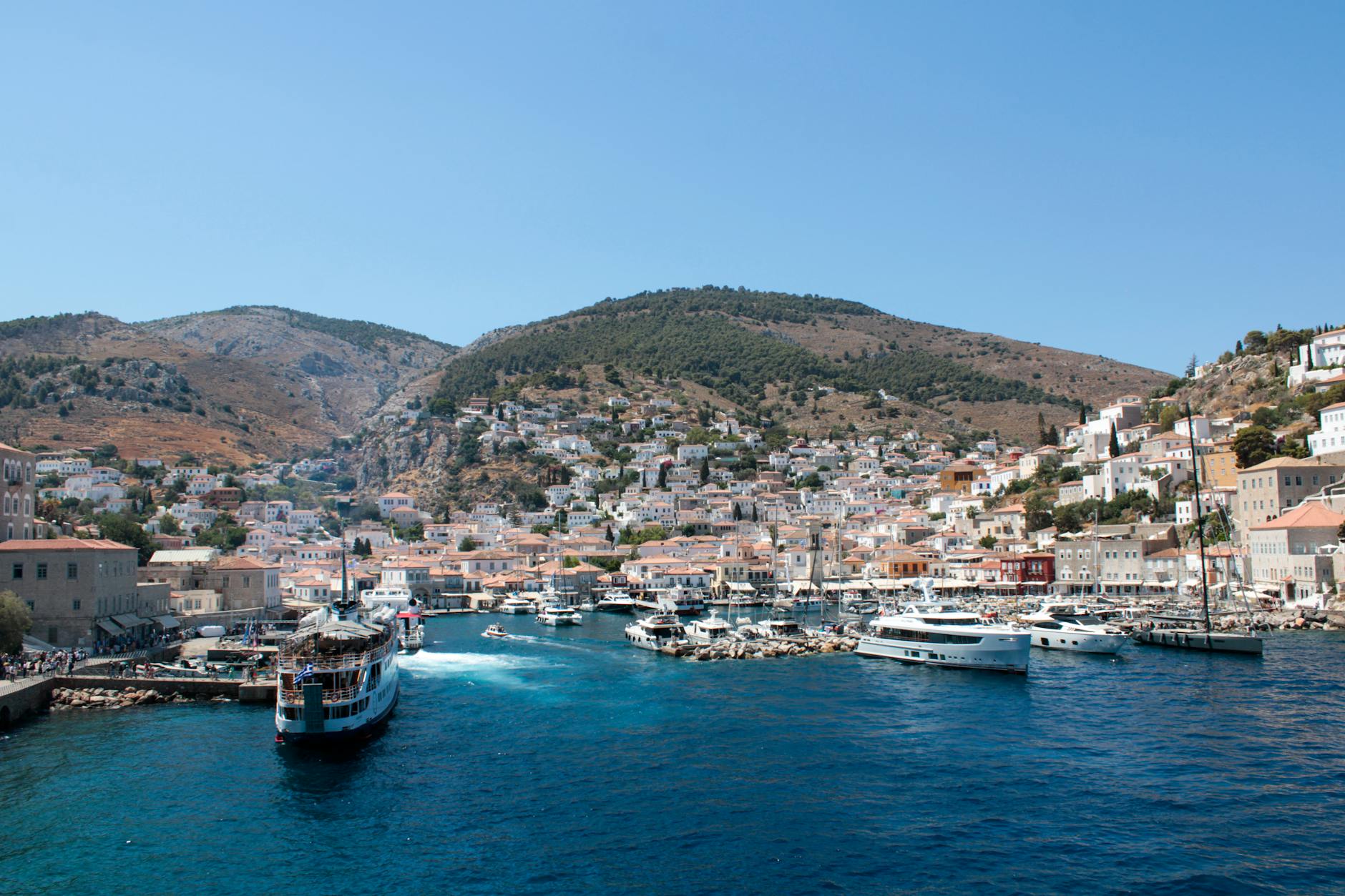
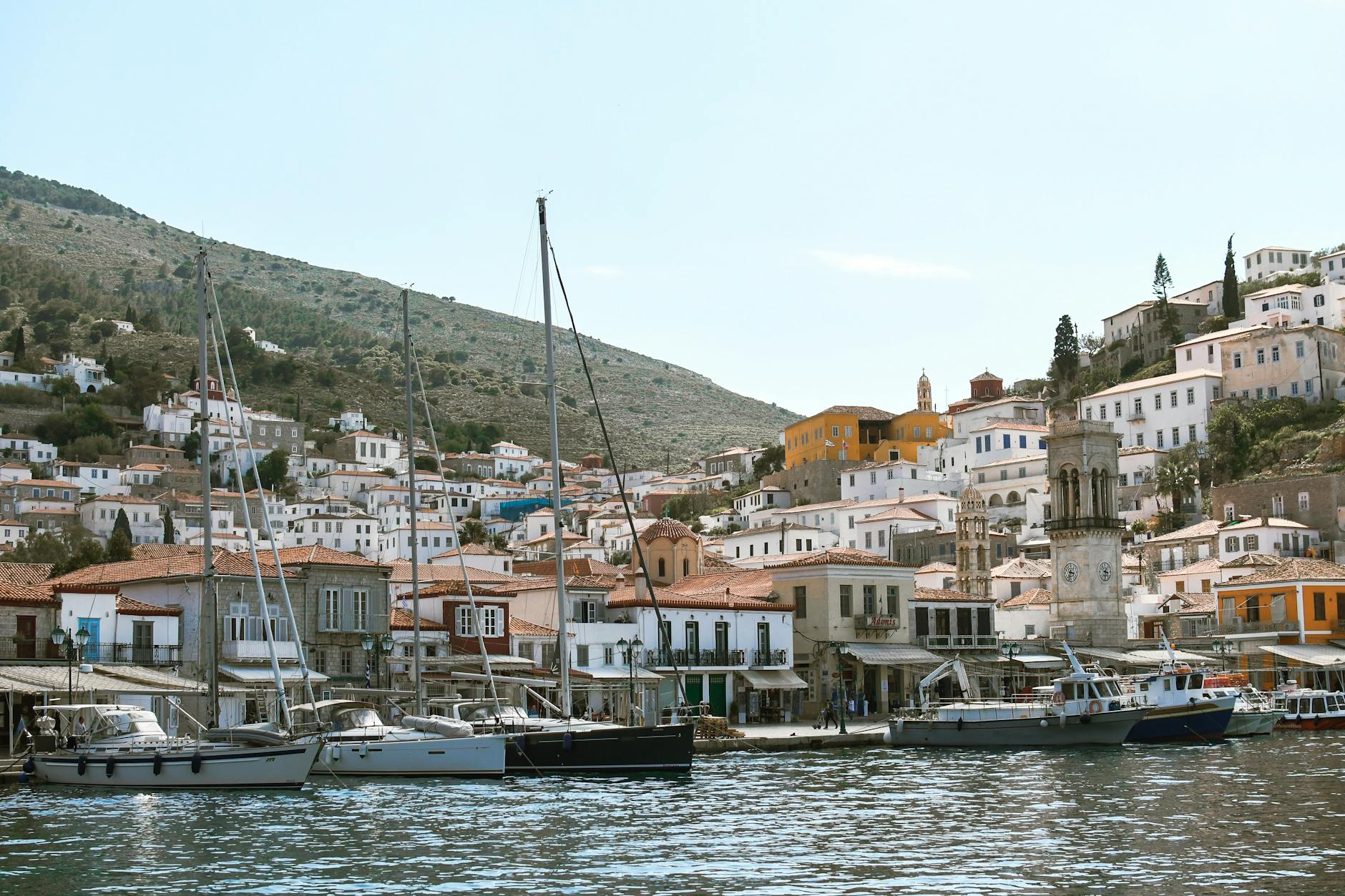
Hydra is perhaps the most enchanting of the Saronic islands — and certainly the most atmospheric. Private cars, motorcycles, and even bicycles are banned (the rubbish trucks are the exception); horses, mules, donkeys and water taxis do the work instead. The crescent harbor, ringed by stone mansions built by wealthy sea captains, has attracted artists, writers, and musicians for decades — Leonard Cohen famously lived here in the 1960s. The walk along the waterfront, the climb to the hilltop monasteries, and the swimming at secluded rocky coves make Hydra an unforgettable day out.
Both high-speed and regular ferries sail from Piraeus to Hydra. Journey times and fares differ by operator and boat, so check Hellenic Seaways or Alpha Lines for the current timetable and prices.
Aegina: Temples and Pistachios
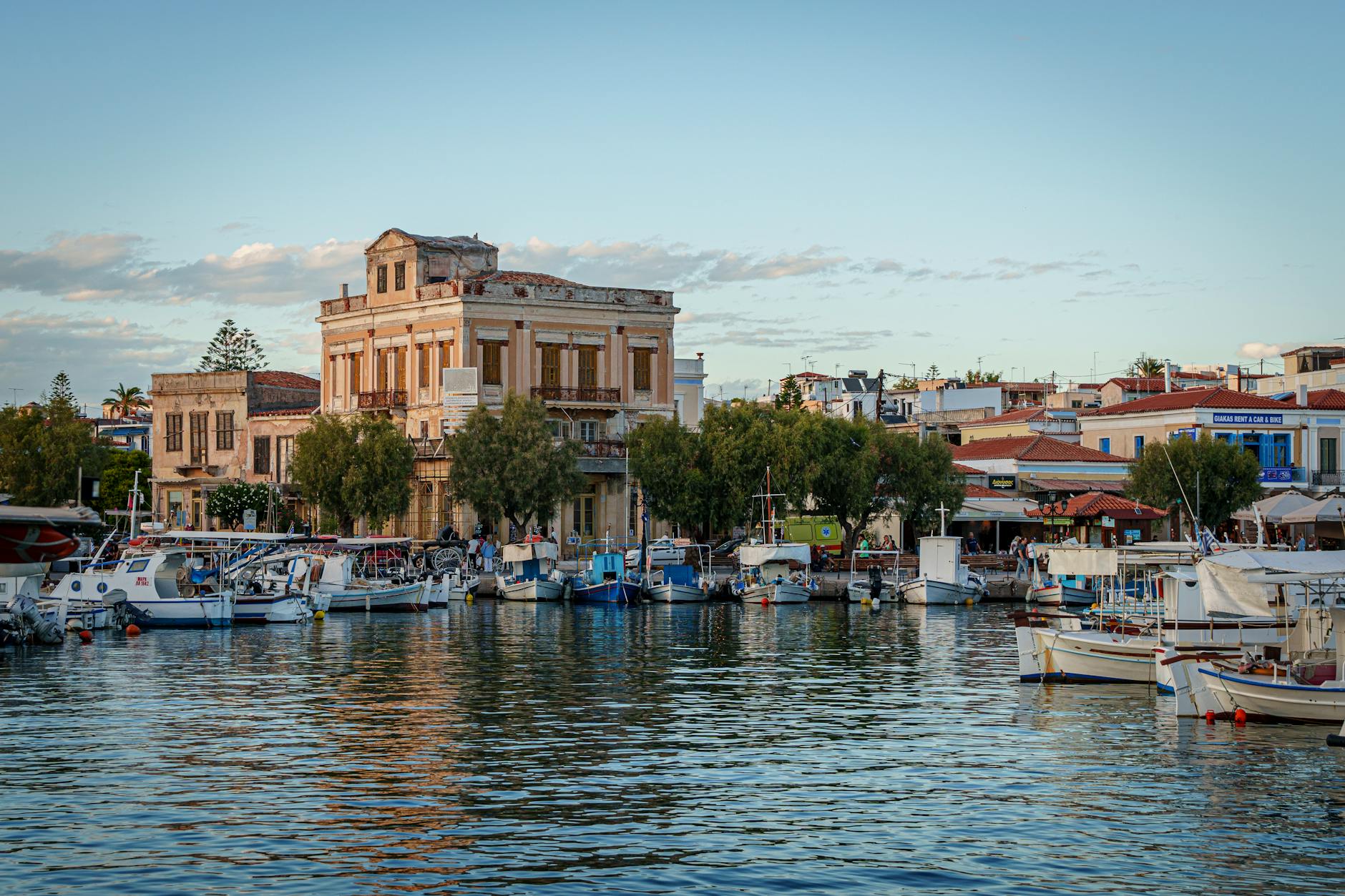
Aegina, one of the most historically significant Saronic islands, is about 1 hour 10 minutes from Piraeus by conventional ferry, and quicker by high-speed boat. The island’s star attraction is the remarkably well-preserved Temple of Aphaia, a late Archaic Doric temple perched on a pine-forested hilltop with views across to Athens. The temple forms one vertex of a “sacred triangle” with the Parthenon and the Temple of Poseidon at Sounion.
Aegina town has a lively waterfront with fish tavernas, and the island is famous throughout Greece for its pistachios — roasted, salted, or turned into ice cream, nougat, and liqueur. The fishing village of Perdika on the island’s southern tip offers a more tranquil atmosphere and excellent seafood. Ferry fares vary by operator, speed and season, so compare them when you book.
Poros: The Green Island
Poros is separated from the Peloponnese mainland by a narrow 200-meter channel, giving it a unique, almost fjord-like setting. The island’s clock tower hill provides panoramic views of this dramatic strait, and the pine-forested interior offers pleasant walking trails. Poros town, with its pastel-colored houses cascading down to the harbor, is a pleasant place for a seafood lunch and a swim. High-speed ferries also run from Piraeus, with times and fares set by each operator.
Three-Island Cruise Option
The classic Saronic Islands day cruise makes for a long day out: Athens Day Cruise’s Hydra, Poros and Aegina itinerary leaves at 07:45 and returns at 19:30, though timings can change. Its standard experience starts at €115 per adult and includes the boat trip to all three islands, a lunch buffet, a live Greek show on board, and free time on each island: about 1 hour 40 minutes on Hydra, 45 minutes on Poros and 1 hour 45 minutes on Aegina. While this is a packed day, it offers an efficient taste of three very different islands.
Island cruise: Day cruises and island tours from Athens to the Saronic islands.
Getting to Piraeus: Your Gateway to the Islands
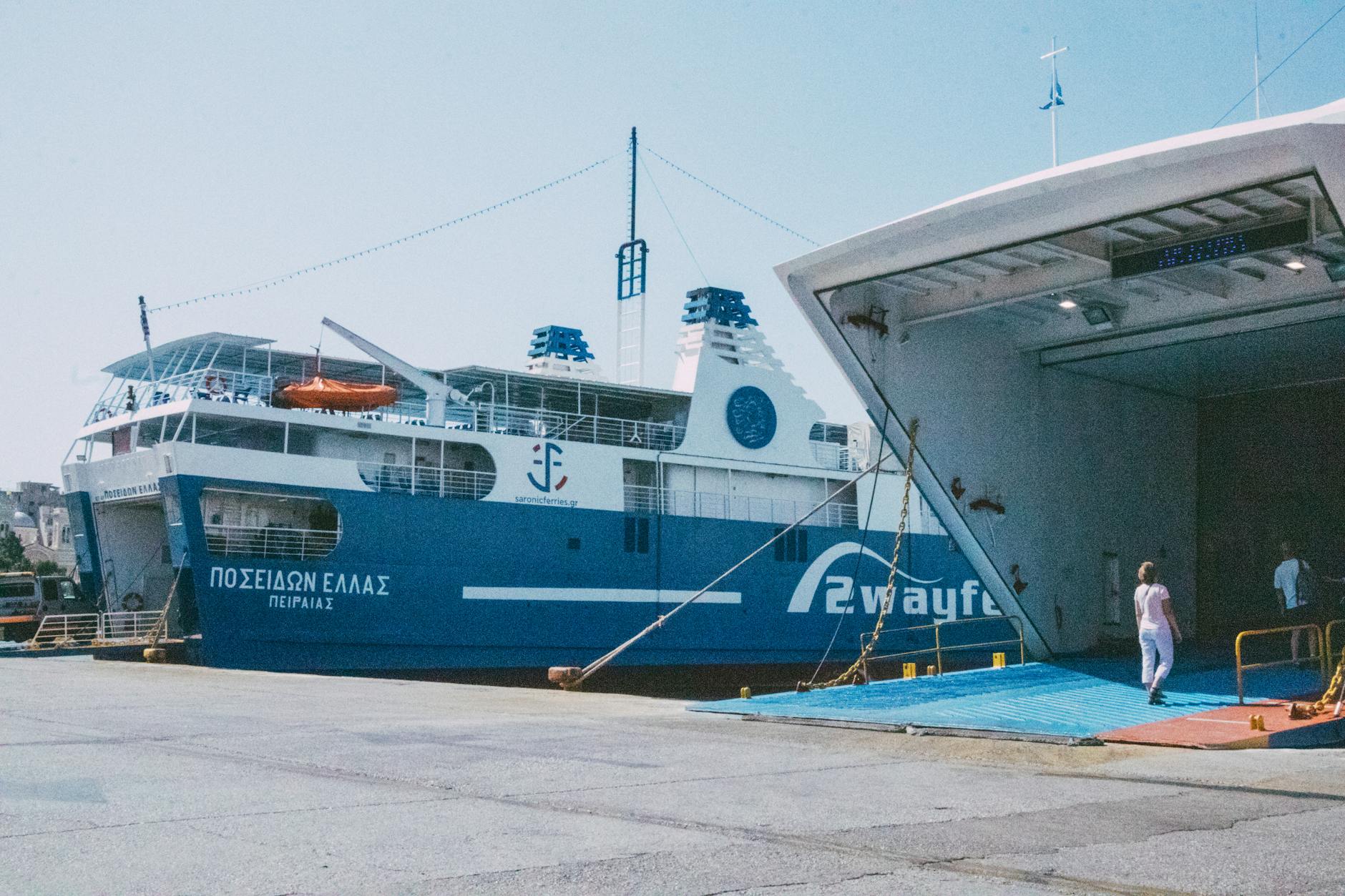
Many island day trips from Athens Greece depart from Piraeus, the city’s main port and the largest in Greece. Getting there is straightforward. The Athens Metro green line (M1) runs directly to Piraeus station — the journey from Monastiraki takes about 20 minutes and costs €1.20. Alternatively, the X96 express bus links Athens International Airport with Piraeus around the clock for €5.50; OASA allows about 90 minutes, depending on traffic and the time of day. A taxi between central Athens and Piraeus costs around €25 by the city’s own estimate, and heavy traffic can push it higher.
Arrive at the port at least 30 minutes before your ferry departure. Piraeus is organized into gates (E1 through E12), and different ferry companies and destinations depart from different gates — check your ticket for the specific gate number. If you are staying near the port, our guide on where to stay in Athens covers the best neighborhoods for easy access.
Lesser-Known Day Trips Worth Considering
Marathon & the Battlefield
The plain of Marathon, about 40 kilometres northeast of Athens, is where an estimated 10,000 to 11,000 Athenian and Plataean soldiers defeated a larger Persian invasion force in 490 BCE — one of the most consequential battles in Western history. The burial mound (Tumulus of the Athenians), 10 metres high and 50 metres across, holds the ashes of the 192 Athenians who fell. The excellent Marathon Museum displays finds from the battlefield and the surrounding area. The site is peaceful, uncrowded, and deeply moving. KTEL buses run to Marathon from Athens; check the operator’s timetable for departures and journey time.
Eleusis (Elefsina)
Ancient Eleusis, just 20 kilometers west of Athens, hosted the Eleusinian Mysteries — the most famous and secretive religious rites in the ancient world — for nearly 2,000 years. While the details of the Mysteries died with their initiates, the archaeological site preserves impressive remains of the Telesterion (initiation hall), Roman-era arches, and a small but fascinating museum. Eleusis was named a European Capital of Culture in 2023. You can reach it from Athens by suburban train or KTEL bus.
Mount Parnitha National Park
For a complete change of pace from ancient ruins, Mount Parnitha rises to 1,413 meters just 30 kilometers north of central Athens. This national park of dense fir forests, ravines, and alpine meadows offers hiking trails ranging from easy nature walks to challenging full-day treks. Wildlife includes red deer, wild boar, and numerous bird species. A cable car provides access to the upper slopes; it runs continuously, weather permitting and outside scheduled maintenance, with access to the National Park until 17:00. The mountain is accessible by car or by bus from Athens, making it an excellent option for nature lovers looking to escape the city heat.
Ancient Brauron (Vravrona)
This often-overlooked archaeological site in eastern Attica was one of the most important sanctuaries dedicated to the goddess Artemis. The site preserves a colonnade (stoa), a sacred spring, and a small temple, while the on-site museum displays votive offerings and sculptures found during excavations. What makes Brauron especially appealing is its location near the coast — combine a morning at the ruins with an afternoon on the nearby beaches of the Attic Riviera. The site is easily reached from Athens by car.
Planning Tips for Day Trips from Athens Greece
Organized Tours vs. Independent Travel
Both approaches have clear advantages. Organized tours eliminate logistical stress, provide knowledgeable guides who bring sites to life, and handle all transportation. They work best for Delphi, Meteora, and the Peloponnese circuit (Mycenae/Epidaurus/Nafplio), where driving distances are significant and having context at the sites makes a major difference.
Independent travel gives you more flexibility, lets you linger where you want, and is often cheaper for two or more people. It works especially well for the Saronic Islands (public ferries are frequent and easy to navigate), Cape Sounion (straightforward drive or bus), and Marathon/Eleusis (short distances, simple access).
Best Seasons
Spring (April–May) and autumn (September–October) are ideal for most day trips from Athens Greece, offering comfortable temperatures, manageable crowds, and full access to all sites. Summer (June–August) brings intense heat that makes open archaeological sites challenging — start early and carry plenty of water. The Saronic Islands and Cape Sounion are at their best in summer, when swimming becomes part of the experience. Winter (November–March) offers mild temperatures and virtually no crowds at archaeological sites, though ferry schedules to the islands are reduced and some museums may have limited hours.
What to Bring
For archaeological sites: comfortable walking shoes, sun protection (hat, sunscreen, sunglasses), a refillable water bottle, and a camera. For island trips: swimwear, a towel, sunscreen, and cash (smaller islands may have limited ATM access). For Meteora: modest clothing covering shoulders and knees is required to enter the monasteries.
Combining Day Trips with Your Athens Stay
A typical week-long Athens itinerary might include two to three day trips woven between city exploration. After experiencing the things to do in Athens and touring the Athens historical sites and museums, a day trip provides welcome contrast and a broader perspective on Greek history and landscapes. Consider scheduling more active excursions (Delphi, Peloponnese) early in your trip when energy levels are highest, and saving the more relaxed island trips for later days when you want to unwind.
Quick Reference: Day Trip Comparison Table
| Destination | Getting There | Best For | Difficulty |
|---|---|---|---|
| Cape Sounion | About 70 km by road, or KTEL bus | Sunset, temple, coastal drive | Easy (half-day) |
| Delphi | About 3 hrs by road | Oracle, museum, mountain scenery | Moderate (full day) |
| Meteora | Train with a bus section, or a long drive | Monasteries, dramatic landscapes | Challenging (overnight recommended) |
| Mycenae | About 120 km by road | Bronze Age ruins, Agamemnon myth | Moderate (full day) |
| Epidaurus | By car, KTEL bus or tour | Ancient theater, healing sanctuary | Moderate (full day) |
| Nafplio | By car or KTEL bus | Venetian charm, fortress, dining | Easy to moderate |
| Hydra | Ferry from Piraeus | Car-free island, art, swimming | Easy (full day) |
| Aegina | About 1 hr 10 min by conventional ferry | Temple of Aphaia, pistachios | Easy (half or full day) |
| Marathon | About 40 km by road, or KTEL bus | Battle site, history | Easy (half-day) |
With so many remarkable destinations within reach, day trips from Athens Greece transform a city break into a deep exploration of Greek civilization, landscapes, and island life. Plan your perfect Athens base using our guide on where to stay in Athens, explore the capital with our guide to things to do in Athens, and fuel your adventures with our Athens food guide.