
This article contains advertising. Some of the hotel, flight and transfer links in it are paid links: if you book through one, we get a commission from the booking company, and your price is the same either way. It never affects what we recommend. Affiliate disclosure
The Acropolis is the single most-visited paid attraction in Greece and probably the most recognised piece of architecture in human history. The 5th-century-BC limestone citadel crowned by the Parthenon has been continuously visited for 2,500 years, but the modern visitor experience requires more planning than ever. New mandatory timed-entry rules, dynamic pricing, summer crowd caps, and significant ongoing restoration work mean that arriving without preparation is a mistake. This is the complete Acropolis of Athens guide for 2026 with current ticket prices, opening hours, the best time of day to visit, every monument explained, accessibility information, and the practical tips visitors most often need.
All information was verified for the 2026 season against the Hellenic Heritage ticket portal (hhticket.gr), the Greek Ministry of Culture, and on-the-ground updates from January 2026.
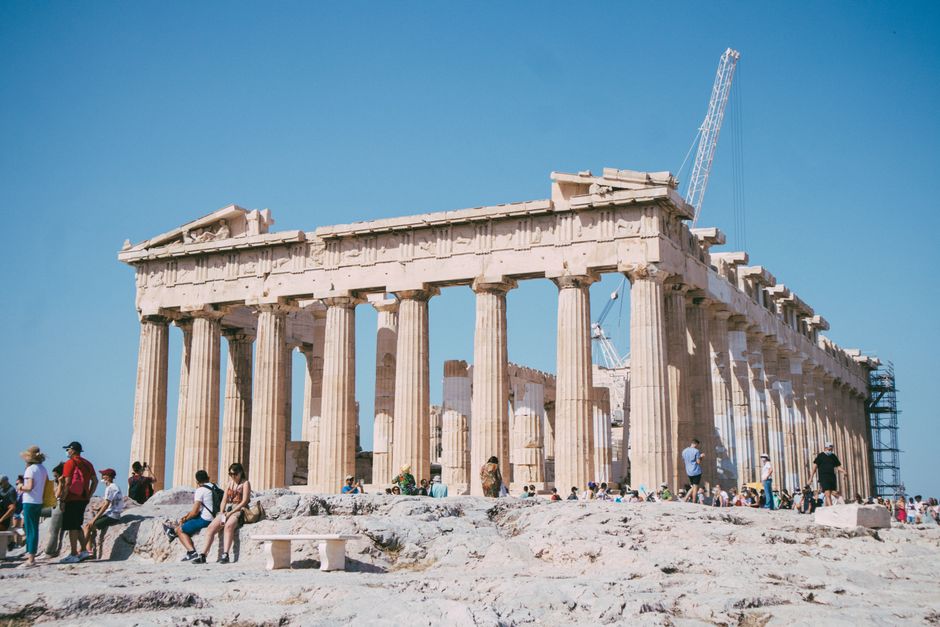
What Is the Acropolis?
The Acropolis (literally “high city” in ancient Greek) is the limestone citadel rising 156 metres above central Athens. It has been continuously occupied since the Bronze Age and was rebuilt as a religious sanctuary under the leadership of Pericles in the 5th century BC, using profits from the Athenian-led Delian League. The classical-period structures, the Parthenon, Erechtheion, Propylaea, and Temple of Athena Nike, were built over 50 years between 447 and 406 BC and represent the high point of Greek classical architecture. The site has been a UNESCO World Heritage Site since 1987.
For broader context, see our Athens Historical Sites pillar, our top attractions guide, and our things to do guide.
Acropolis 2026 Ticket Prices
Standard Ticket
€30 full price (April-October summer rate), €15 reduced (children 6-25 non-EU, students with valid ID). EU citizens under 25 free year-round with ID. Children under 6 free. The standard ticket is single-entry only, with a 2-hour timed slot.
Combined Ticket (Best Value)
€36 full price. Covers seven major Athens archaeological sites: Acropolis, Ancient Agora, Roman Agora, Hadrian’s Library, Kerameikos, Temple of Olympian Zeus, and Aristotle’s Lyceum. Valid for 5 days from first use. The smartest purchase for any visitor planning to see more than the Acropolis. Note: the combined ticket still requires a timed-entry slot for the Acropolis specifically.
Winter Reduced Rate
From November through March, the Acropolis is on a winter rate of €15 standard / €8 reduced. Combined ticket €18 in winter.
Free Admission Days for 2026
The Acropolis is free on these specific days: March 6 (Melina Mercouri Day), April 18 (International Monuments Day), May 18 (International Museum Day), September 26-27 (European Heritage Weekend), October 28 (OXI Day national holiday), and the first Sunday of every month from November through March (free Sundays 2026: January 4, February 1, March 1, November 1, December 6). Free days still require a timed-entry reservation.
How to Book Acropolis Tickets
The official booking portal is hhticket.gr (Hellenic Heritage ticketing). Booking opens 60 days in advance. Tickets become QR codes you scan at the entrance gate. Book at least 1 week ahead in summer; 2-3 weeks for July-August prime slots. The 8 AM opening slot and the final summer slot before closing (5-7 PM) sell out fastest.
Third-party booking sites (GetYourGuide, Viator, Tiqets) charge a 10-20% markup but are sometimes easier to navigate than the official Greek-language portal. Skip-the-line tickets do not exist; the timed-entry system functions as the queue management.
Opening Hours for 2026
Summer (April 1 to October 31)
Daily 8:00 AM to 7:30 PM. Last entry 7:00 PM. The site closes promptly at 7:30 PM; guards begin clearing visitors at 7:15 PM.
Winter (November 1 to March 31)
Daily 8:00 AM to 5:00 PM. Last entry 4:30 PM. Shorter daylight; arrive earlier.
Closed Dates
The Acropolis is closed on January 1, March 25, May 1, Easter Sunday (April 12, 2026), December 25, and December 26. The site closes early at 12:30 PM on Good Friday (April 10, 2026).
Getting to the Acropolis
By metro: Akropoli station (red line 2). Exit toward the Acropolis Museum, then walk 5 minutes uphill to the south slope entrance. Monastiraki (blue/green line) is the second-closest stop, with a 15-minute walk through Plaka or Anafiotika.
By foot: The Acropolis is 15 minutes’ walk from Syntagma, 10 minutes from Plaka, 5 minutes from the Acropolis Museum, and 15 minutes from Monastiraki.
By taxi: €6-10 from any central Athens hotel.
Entrances: There are two entrances. The main south slope entrance (near the Acropolis Museum and Dionysiou Areopagitou) is the most popular. The west entrance (near the Areopagus rock) is less busy and shorter to reach the Propylaea. Both accept the same ticket.
The Five Key Monuments on the Acropolis
1. The Propylaea (Monumental Gateway)
Built 437-432 BC by Mnesicles, the Propylaea is the dramatic marble gateway that visitors enter through. Doric columns on the outside, Ionic on the inside; the first temple-style gateway in Greek architecture. The right wing (which would have been the picture gallery, the Pinakotheke) is the smaller side; the left wing was never completed because of the Peloponnesian War. Note the deep stairs cut for chariots and processional traffic.
2. The Temple of Athena Nike
To your right as you exit the Propylaea, the tiny Temple of Athena Nike (Athena the Victory-Bringer) was built 427-424 BC. Only 8.27 metres long; the smallest classical temple on the rock. The four Ionic columns front and back are particularly elegant. The exterior frieze depicts the Greek victory over the Persians.
3. The Parthenon
The 5th-century-BC marble temple dedicated to Athena Parthenos (Athena the Virgin) is the headline monument. 70 by 31 metres at the base, 13.7 metres tall to the roof; 46 outer Doric columns; built 447-432 BC by Iktinos and Kallikrates under the supervision of the sculptor Pheidias. The Parthenon contained a massive gold-and-ivory statue of Athena and the city’s treasury. The west pediment showed the contest between Athena and Poseidon for Athens; the east pediment showed Athena’s birth from the head of Zeus. The frieze (the famous Parthenon Marbles, most now at the British Museum and the Acropolis Museum) ran 160 metres around the inner colonnade.
Important 2026 update: The Parthenon underwent major scaffolding removal in 2025-2026. The east facade is now largely scaffold-free; some restoration work continues on the west and north sides through 2026 and into 2027.
4. The Erechtheion
Built 421-406 BC on a smaller scale than the Parthenon but architecturally more complex, on a multi-level site that combined four separate temples. The most famous element is the Porch of the Caryatids: six marble columns sculpted as female figures (the “Caryatids”). Five of the six originals are now in the Acropolis Museum; one is in the British Museum; all six on the Acropolis itself are replicas.
5. The Odeon of Herodes Atticus
Built in 161 AD by the Roman senator Herodes Atticus as a memorial to his wife. Not classical (Roman period) but visually integrated with the rest of the rock. The 5,000-seat amphitheatre was carved into the south slope of the Acropolis and is still used today for the Athens & Epidaurus Festival summer programme. The Odeon is not normally accessible during day visits but visible from the rock above.
Best Time of Day to Visit the Acropolis
First Thing in the Morning (8:00 AM Opening)
The single best time. The rock is at its coolest, the crowds are smallest, and the golden morning light hits the Parthenon from the east. Book the 8 AM slot at least 1 week in advance. Allow 90 minutes to 2 hours on the rock.
Late Afternoon (5-7 PM in Summer)
The second-best window. Temperatures drop as the sun sets and the marble takes on the famous “honey gold” colour that has fascinated photographers for 200 years. The last hour of operation gives you the rock at its most theatrical.
Avoid: 11 AM to 4 PM in Summer
The cruise crowds arrive between 10:30 and 11:30 AM, the temperature regularly hits 35-40°C on the exposed rock, and the queues at the entrance and the Parthenon platform can run 30-45 minutes. Avoid these hours if at all possible.
Practical Visiting Tips
What to Wear
Comfortable closed-toe shoes with grip are non-negotiable; the marble is genuinely slippery, especially after rain. Avoid sandals and flip-flops. In summer: light cotton clothing, wide-brimmed hat, sunscreen, sunglasses. In winter: layers and a waterproof jacket; rain showers are common November-February.
What to Bring
1 litre of water per person (the Acropolis south slope has a single drinking fountain near the entrance). Small camera or phone; tripods, monopods, and selfie sticks are prohibited on the rock. A small backpack (large bags must be left at the cloakroom near the entrance). Greek currency or card for the cloakroom and toilets. Sun protection in summer.
What’s Prohibited
Food and drink other than water; tripods and monopods; selfie sticks; drones (entire area is a drone exclusion zone); umbrella stands or large beach umbrellas; pets (except service animals); touching the ancient stones (heavily enforced); climbing on any monument; smoking on the rock.
Photography Rules
Hand-held photography is permitted everywhere for personal use. Tripods, monopods, and selfie sticks are forbidden. Commercial photography requires a permit from the Hellenic Ministry of Culture (apply at culture.gov.gr at least 30 days in advance, €100+ fee). Drones are forbidden entirely.
Accessibility
The Acropolis has a wheelchair lift on the north slope of the rock (the elevator entrance is reached via the secondary north entrance off the Theorias Street path). The lift takes visitors up to the Acropolis platform; from there the rock is mostly paved or smooth marble with some uneven sections. Wheelchair-accessible toilets are at the main south slope entrance. Visitors with walking limitations should ask for the “accessible” entrance route at any ticket counter. The Acropolis Museum is fully wheelchair-accessible with elevators throughout.
Guided Tours: Are They Worth It?
For most visitors, yes. The Acropolis has limited on-site information (a few weathered signs), and the historical context greatly enriches what you see. Options range from professional guided tours (€40-80 per person; 2.5-3 hours; small-group; the highest-quality experience), audio guides (€7-12 from the official audio guide app or Rick Steves’ free audio guide), and private guides (€150-300 for a private 3-hour tour for up to 4 people). Skip the cheap “skip-the-line” group tours from major tour aggregators; they often have poor guides and rushed schedules.
The Acropolis Museum
The 2009 Acropolis Museum, 300 metres downhill from the rock, is the essential complementary visit. Bernard Tschumi’s glass-and-concrete building was designed to display the original Acropolis sculptures (the Caryatids, the Parthenon Marbles that Greece retains, plus the substantial early Greek collection) in a setting oriented at the exact angle of the Acropolis above. €15 summer, €10 winter, separate from Acropolis ticket. Allow 2-3 hours. See our complete Acropolis Museum guide.
What’s Around the Acropolis Worth Visiting?
Pair your Acropolis visit with: the Acropolis Museum (5 minutes’ walk), the Ancient Agora (10 minutes’ walk via Plaka), the Areopagus rock (free, 2 minutes from the Acropolis main entrance), Anafiotika village (5 minutes’ walk through Plaka), the Theatre of Dionysus (included in your Acropolis ticket, on the south slope path), the Odeon of Herodes Atticus exterior (also on the south slope path), and Filopappou Hill for sunset views back at the rock (15 minutes’ walk).
Suggested Itineraries
The Half-Day Acropolis Experience (3-4 hours)
8 AM Acropolis (90 minutes), walk down to the Acropolis Museum and have a coffee at the rooftop café with the Parthenon view, 10 AM Acropolis Museum (90 minutes), 11:30 AM lunch in Koukaki or Plaka. Total cost: €45 entry + €15-25 lunch.
The Full Day Classical Athens Experience (6-7 hours)
8 AM Acropolis (90 minutes), 10 AM Acropolis Museum (2 hours), 12 PM lunch at Strofi or any modern Greek restaurant in Koukaki, 1:30 PM walk down Dionysiou Areopagitou to the Ancient Agora (2 hours), 4 PM coffee and cake at a Plaka café, 5 PM Anafiotika village walk, 6 PM evening drinks at a Plaka rooftop bar with floodlit Parthenon view. Total cost: €81 entry + €40-60 food.
Common Mistakes Visitors Make
Going in the wrong shoes (no grippy soles = slipping). Visiting at midday in summer (heat exhaustion is real). Not pre-booking (turning up without a slot in summer means a 1-2 hour wait at the ticket office). Skipping the Acropolis Museum (it’s essential context for what you see on the rock). Climbing on or touching the monuments (heavily enforced; visitors have been removed and fined). Confusing the Parthenon (Greek temple to Athena) with the Erechtheion (separate building with the Caryatids). Trying to bring tripods or selfie sticks (confiscated at the entrance).
Frequently Asked Questions
How much does it cost to visit the Acropolis?
€30 standard summer ticket; €15 winter; €36 combined ticket for 7 archaeological sites (best value). Free for EU citizens under 25 with ID, children under 6, and on 5 free admission days per year plus the first Sunday of each month November-March.
Do I need to book Acropolis tickets in advance?
Yes. As of 2026 the Acropolis requires a timed-entry slot year-round. Book at hhticket.gr at least 1 week before in summer, 2-3 weeks for July-August. The 8 AM opening slot sells out fastest.
What are the Acropolis opening hours in 2026?
Summer (April-October): 8 AM to 7:30 PM daily, last entry 7 PM. Winter (November-March): 8 AM to 5 PM daily, last entry 4:30 PM. Closed January 1, March 25, May 1, Easter Sunday, December 25 and 26.
How long do you need at the Acropolis?
Allow 90 minutes to 2 hours on the rock itself. Add another 2-3 hours if you’re also visiting the Acropolis Museum. A full Acropolis-and-Acropolis-Museum half-day is 4-5 hours.
Is the Acropolis open in the rain?
Usually yes, but the marble becomes treacherous when wet. The site occasionally closes for safety during heavy rain or lightning. If your timed slot is on a rainy day, the ticket office may rebook you free of charge.
Can I see the Acropolis at night?
The site closes at sunset, but the Parthenon is illuminated every evening from sunset until midnight. The best free vantage points are the Areopagus rock (below the entrance), Mitropoleos Street looking up, Filopappou Hill across the valley, and the Anafiotika village on the north slope. The Acropolis Museum stays open until 10 PM on Fridays for evening viewing of the sculptures with the floodlit Parthenon visible through the glass walls.
Is the Acropolis wheelchair accessible?
Yes, partially. A wheelchair lift on the north slope brings visitors up to the rock platform. The platform itself is largely accessible with some uneven sections. Ask for the “accessible” route at any ticket counter. The Acropolis Museum is fully accessible with elevators throughout.
Can I see the Parthenon Marbles in Athens?
The surviving Parthenon Marbles that remain in Greece are displayed at the Acropolis Museum’s top-floor Parthenon Gallery, oriented at the exact angle of the temple above. The largest portion (the “Elgin Marbles” removed by Lord Elgin in the early 1800s) is at the British Museum in London. The Greek government continues to formally request repatriation.
What’s the best month to visit the Acropolis?
April, May, late September, and October give the best combination of pleasant weather, longer opening hours, manageable crowds, and good photographic light. Avoid July-August for heat and peak cruise crowds. November-March is excellent for fewer crowds and lower prices, with the trade-off of shorter opening hours and occasional rain.
Plan the Rest of Your Athens Trip
For more historical sites, see our pillar guide to Athens historical sites and museums, our top 25 attractions, our things to do guide, our photography spots guide, our transport guide, and our self-guided walking tours.