This article contains advertising. Some of the hotel, flight and transfer links in it are paid links: if you book through one, we get a commission from the booking company, and your price is the same either way. It never affects what we recommend. Affiliate disclosure
Sail to any island the ferry reaches in under about six hours; when the crossing runs overnight, fly or book a cabin and sleep through it. That rule puts the Saronic islands, Kea, Andros, Tinos, Mykonos, Paros and Naxos on the ferry, sends Crete to an overnight cabin or a short flight, makes Rhodes a flight, and leaves Santorini (from 6 hours 6 minutes on Blue Star) right on the line. Deciding Athens to the Greek islands by ferry or flight also means deciding where you start, because Athens has three ferry ports and one airport, and they are a long way apart.
This page is for first-time visitors working out the hop from Athens: which port, which transfer from the airport or the centre, and when a flight earns its price. The caveat that matters is that ferry timetables are seasonal and at the mercy of the wind, so treat every time below as the shape of the journey and your ticket as the final word. Details checked 26 September 2026 against Blue Star Ferries, Minoan Lines, ANEK Lines, Aegean, SKY express, OASA, KTEL Attikis, Athens International Airport and Visit Greece.
| Option | Cost | Time | Getting there | Book ahead? | Best time |
|---|---|---|---|---|---|
| Ferry from Piraeus | From €20 on Blue Star’s limited Super Economy seats (€25 to Heraklion) | Paros about 4 h; Santorini from 6 h 6 min; Chania 9 h 25 min | Metro Line 3 from the airport, about 60 min, €9; Line 1 or Line 3 from the centre | July, August, holiday weekends and every Crete cabin | Late May to June, September |
| Ferry from Rafina | Set by each operator | Andros is the shortest hop; Tinos and Mykonos take longer | KTEL bus from airport Arrivals, between Exits 2 and 3 | Summer weekends | Late May to June, September |
| Ferry from Lavrio | Set by each operator | Kea about 1 h; Kythnos about 1 h 40 min | KTEL bus from Pedion Areos; from the airport via Markopoulo, daytime only | Summer weekends | Late May to June, September |
| Flight from Athens airport | Santorini from €49-50 one way for October dates (seen late September 2026) | About 50 min to Santorini; most island flights an hour or less | Metro Line 3 or the X95 bus from Syntagma | Yes, as soon as your dates are fixed | All year |
What’s changed in 2026?
Not all of this is new this year, but each point catches out people who plan from older guides.
- A cruise fee on Santorini and Mykonos. Since 21 July 2025 Greece has charged cruise passengers a per-person fee at both islands: €20 from June to September, €12 in April, May and October, and €4 from November to March. It is a cruise-ship charge, not part of a ferry or flight ticket, and Piraeus is not on the list.
- A higher nightly fee at island hotels. The Climate Crisis Resilience Fee rose on 1 January 2025. From April to October it is €2 per room per night at 1-2 star hotels, €5 at 3-star, €10 at 4-star and €15 at 5-star, lower from November to March, and usually paid when you check out. Five island nights in a 4-star room add €50 to the bill.
- Summer is not weather-proof. Blue Star posted bad-weather itinerary changes for 28 July to 2 August and 9 to 11 August 2026, on top of long stretches of the winter. Build a spare day in before any flight home.
- Airport fares are not city fares. The €1.20 90-minute ticket does not cover the airport lines. The airport metro costs €9 one way (€16 return, €4.50 reduced) and the X95, X96 and X97 express buses €5.50 (€2.70 reduced). Our guide to Athens metro and bus tickets explains the rest of the system.
- Taxi flat fares keep moving. The fixed airport-to-centre taxi fare has changed several times, and older guides quote figures that no longer apply. Check the current day and night rate on the airport’s own site before you count on one.
Athens to the Greek islands by ferry or flight: how to choose
Start with hours, not prices. The ferry is usually the cheaper seat, but a fair comparison runs from hotel door to hotel door. A flight adds the ride out to the airport, the security queue and a transfer from a small island airport at the far end. A ferry adds the ride to the right port, the walk to the gate and however long the boat takes. For short crossings the ferry wins outright. For long ones the plane wins by most of a day. In the middle, where Naxos and Santorini sit, it comes down to what you would rather spend: money or daylight.
Santorini shows the trade most clearly. Here is a realistic day from a hotel near Syntagma, built on the operators’ own journey times plus sensible margins.
| Step | Ferry via Piraeus | Flight via Athens airport |
|---|---|---|
| Hotel to port or airport | Metro to Piraeus and the walk to gate E6 or E7: allow 1 hour | Metro Line 3 or the X95 bus: allow 1 hour |
| Margin before departure | 30-45 minutes at the gate | About 90 minutes for bag drop and security |
| Time at sea or in the air | From 6 hours 6 minutes | About 50 minutes |
| Island port or airport to hotel | Allow 30-60 minutes | Allow 30 minutes |
| Door to door | About 8-9 hours | About 4 hours |
| Lowest fare seen | €20 on Blue Star’s limited Super Economy seats | €49-50 one way for October dates (late September 2026) |
The flight halves the day. The ferry cuts the fare by more than half and gives you the arrival by sea into the caldera. On a week-long trip, the day at sea is part of the holiday; on a four-day trip it is a quarter of it. For the practical side of buying and boarding, our guide to Greek ferry tickets from Athens takes you through it step by step.
Now put prices on it, for two people starting from central Athens and using the lowest fares we saw:
| Santorini, cost for two | Ferry | Flight |
|---|---|---|
| Getting to the port or airport | €2.40 (two €1.20 metro tickets to Piraeus) | €18 (two €9 airport metro tickets) |
| Fares | €40 (two Super Economy seats, if any are left) | From €98-100 (two seats at €49-50) |
| Total | About €42 | About €116-118, before any bag fees |
So roughly €75 buys back four or five hours. Once the €20 seats sell out, standard Economy on the ferry costs more and the gap narrows, which is why the answer can change between one booking search and the next.
Five rules cover almost every island trip from Athens:
- Under four hours at sea: sail. None of the Saronic islands, Kea, Kythnos, Andros or Tinos has an airport, so there is nothing to weigh. Paros is about four hours on a conventional Blue Star boat, which is roughly what flying costs you door to door anyway.
- Four to seven hours: decide by the day you would lose. Naxos and Santorini sit here. With a week or more on the islands, sail at least one way and treat the crossing as part of the trip. With four days, fly in.
- Overnight: cabin or plane. Crete is the classic case. A cabin on the night boat doubles as a hotel room; the flight gives you the evening in Athens and a bed on land.
- Long multi-stop lines: fly. Rhodes and the Dodecanese are served by long lines that call at island after island through the night. Unless the voyage is the point, the flight wins easily.
- Island-hopping: ferries in the middle, flights at the ends. Fly to the far end of your route and ferry back towards Piraeus, or the reverse. From Santorini, Blue Star lists onward connections to Ios, Naxos, Paros, Anafi, Heraklion and Sitia, so an open-jaw trip is easy to build.
The table sets out the call for the islands most first-time visitors choose.
| Island | Athens port | By sea | Flights from Athens | Our call |
|---|---|---|---|---|
| Aegina, Agistri, Poros, Hydra, Spetses | Piraeus | The shortest crossings from Athens | No airports | Ferry |
| Kea (Tzia), Kythnos | Lavrio | About 1 h and 1 h 40 min | No airports | Ferry |
| Andros, Tinos | Rafina | The first stops out of Rafina | No airports | Ferry |
| Mykonos | Rafina or Piraeus | Shorter from Rafina | Aegean, SKY express | Ferry from Rafina |
| Paros | Piraeus | About 4 h (Blue Star 1, 30 July 2026) | SKY express | Ferry |
| Naxos | Piraeus | 5 h 45 min on the same sailing | SKY express | Ferry, unless days are short |
| Milos | Piraeus | ANEK and Minoan Lines sailings | Aegean, SKY express | Either |
| Santorini | Piraeus | From 6 h 6 min (Blue Star) | Aegean, SKY express | Fly one way, sail the other |
| Crete | Piraeus | Overnight; Chania 9 h 25 min | To Chania and Heraklion | Cabin, or fly on a short trip |
| Rhodes | Piraeus | Long multi-stop lines | Aegean, SKY express | Fly |
| Corfu, Kefalonia, Zakynthos | None of the three | Ferries run from west-coast ports | Yes | Fly |
Verdict: the ferry is the default and the better experience up to about six hours at sea. Past that, the only question is whether you would rather lose a day or pay for a seat, and on a short trip the seat is usually the better buy.
Piraeus, Rafina or Lavrio: which port do you need?
Your ticket names the port, and the three are not interchangeable. Piraeus sits on the south-western edge of Athens, a city and port in its own right at the end of two metro lines. Rafina is a small harbour on Attica’s east coast, much closer to the airport than to the centre. Lavrio lies near Cape Sounion at the south-eastern tip. Book the boat first and plan the transfer second: the people sprinting between ports on the morning of a sailing are the ones who did it the other way round.
Piraeus: the default for most islands
Most routes, most sailings, the biggest crowds. Piraeus is Greece’s largest port, and it handles the Saronic islands, most of the Cyclades, Crete, the Dodecanese and the North Aegean. It is also enormous. Gates run for a long way around the harbour, and which one you need depends on the operator and the island: Blue Star’s Santorini boats use gates E6 and E7, Minoan Lines sails from E2 and ANEK from E3. Check the gate on your ticket before you leave the hotel, then again on the boards at the port, because allocations can change.
Getting there is easy. Two metro lines end at Piraeus: Line 1 (green) from Omonia, Monastiraki and Thissio, and Line 3 (blue) from Syntagma and the airport. From the airport, Line 3 takes about 60 minutes and costs €9 one way. The X96 express bus takes about 90 minutes for €5.50 and makes sense when the fare difference matters, say for a family of four (€22 against €36). Our Piraeus port guide covers the gates, the walk from the station and where to wait.
Plan it: metro Line 1 or Line 3 to Piraeus; leave time for a long walk to the far gates with luggage; be at the gate 30-45 minutes before sailing. Best for most of the Cyclades, Crete, Rhodes and the Saronic islands.
Verdict: use Piraeus unless your island is on the Rafina or Lavrio list below. It is the only one of the three ports on the metro, and the one with sailings to almost everywhere in the Aegean.
Rafina: the port nearest the airport
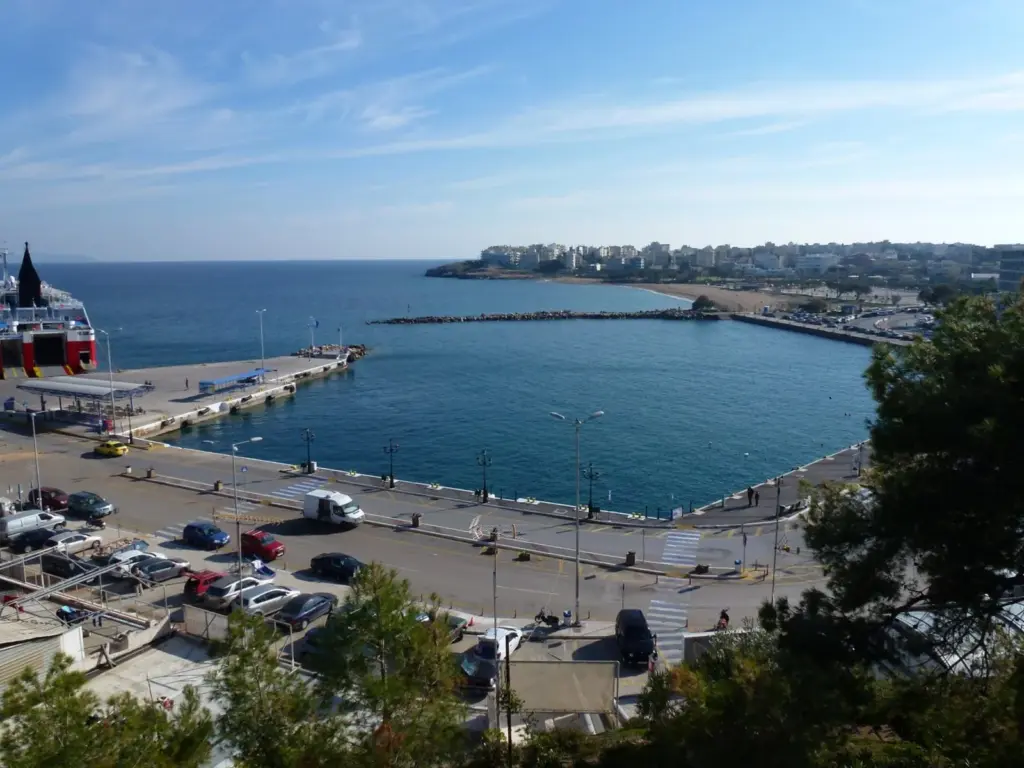
Smaller, closer to the airport, and the short way to Andros, Tinos and Mykonos. Rafina sits on Attica’s east coast, on the side of Athens that faces the northern Cyclades. Its year-round routes run to Andros, Tinos and Mykonos, with a crossing to Marmari on Evia as well. Because it starts further east than Piraeus, the sea leg to those islands is shorter, and the port is a fraction of the size: one compact harbour instead of a city of gates.
From the airport, KTEL Attikis runs a direct bus to the port. It leaves from the Arrivals level between Exits 2 and 3, in the outer lane opposite the Sofitel. Timetables and fares are on KTEL’s own site; we couldn’t confirm the current fare, so check it there before you travel. KTEL also runs buses to Rafina from central Athens, and a taxi is the fallback when a late landing misses the last bus.
Plan it: KTEL bus from airport Arrivals (between Exits 2 and 3) or from central Athens; no metro. Best for Andros, Tinos and Mykonos, especially on the day you land.
Verdict: for Mykonos, start from Rafina unless your only good sailing leaves from Piraeus. The shorter crossing and the short ride from the airport add up to hours saved.
Lavrio: only for Kea and Kythnos
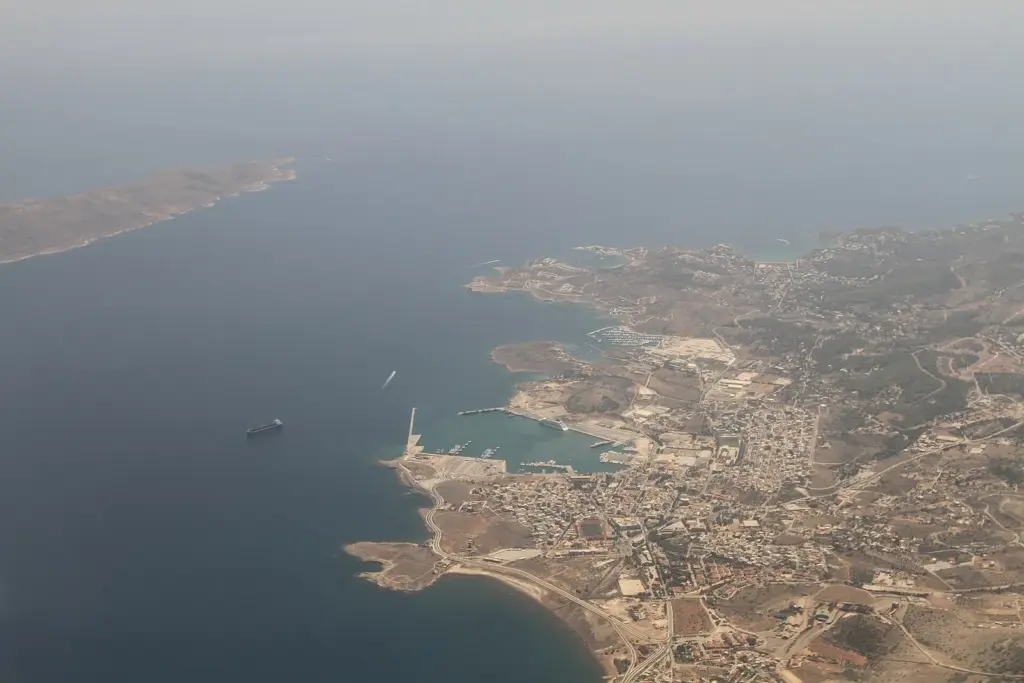
A quiet port for the two closest Cyclades. Lavrio is an old mining town near Cape Sounion, and Visit Greece, the national tourism organisation’s site, names Kea and Kythnos as its main ferry destinations. Both are short crossings: about an hour to Kea (also called Tzia) and about 1 hour 40 minutes to Kythnos. Kea in particular is a weekend island for Athenians, so book summer weekend boats early.
Getting there is the catch. KTEL Attikis buses run to Lavrio from its Pedion Areos station in central Athens. From the airport, the official advice is a KTEL bus to Markopoulo and a change to the Lavrio line, a connection the airport itself describes as sparse and daytime-only. With luggage and a sailing to catch, a taxi from the airport is the realistic option. The upside of the long ride is Sounion: Lavrio is close to the cape, so a return from Kea can end with the sunset at the Temple of Poseidon.
Plan it: KTEL bus from Pedion Areos, or a taxi from the airport; no metro. Best for Kea and Kythnos, and nothing else most visitors need.
Verdict: go to Lavrio only when your ticket says Lavrio. For every other island it is the wrong corner of Attica.
Some booking sites group all three ports under “Athens”. Before you pay, check the port on the sailing itself: Piraeus and Rafina are on opposite sides of Attica, and the cheapest tickets are the least forgiving. Blue Star’s €20 Super Economy seats, for example, cannot be cancelled or changed.
Flying to the islands from Athens airport
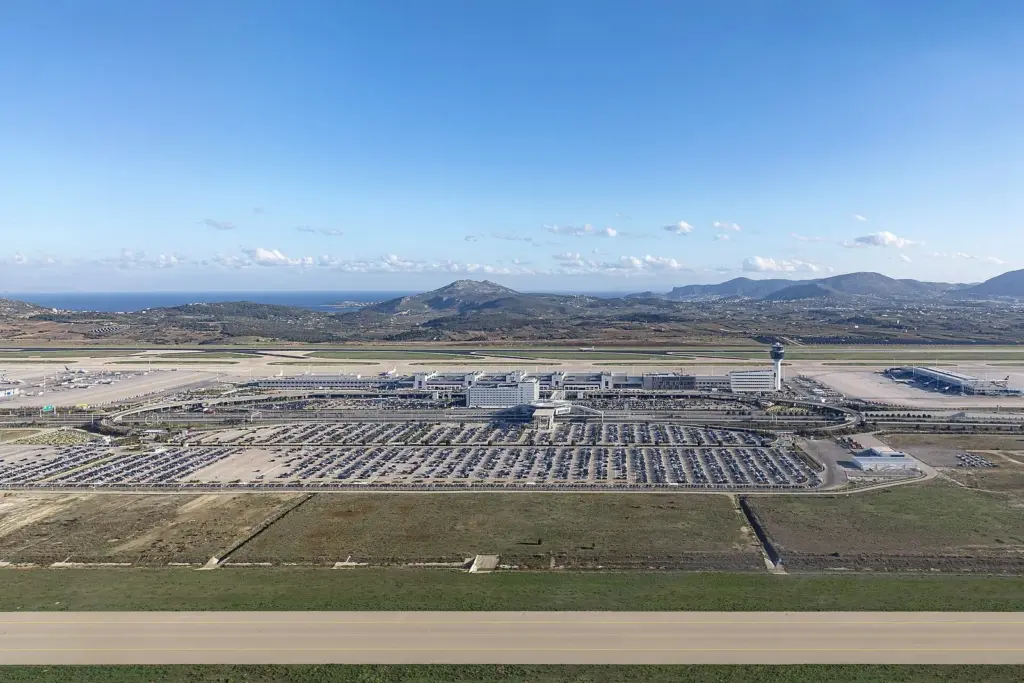
Two airlines, one airport, flights of about an hour or less. Athens International Airport is the hub for Greek domestic flying, and two airlines cover the islands from it: Aegean, which now sells its Olympic Air flights under the Aegean brand, and SKY express. Between them they fly to the islands most visitors want, including Santorini, Mykonos, Naxos, Paros, Milos, Chania and Heraklion on Crete, and Rhodes. The flights are short: Santorini is about 50 minutes in the air.
Fares move with demand. On 26 September 2026, SKY express’s own route page showed Athens to Santorini from €49 one way for October, November and December and from €64 for January and February 2027, though some dates cost more: 28 September was from €64 and 3 October from €57. Aegean’s own route page, checked on 24 September, showed from €50 on most late-September and October dates, rising to €68 on 25 September. Expect more in July and August, when the cheapest seats go first, so book as soon as your dates are fixed. Before you set a fare against a ferry ticket, read what it includes: the lowest airline fares may not cover a checked bag, and a suitcase fee can wipe out the saving.
The airport also works as a gateway in its own right. Arriving on an international flight and flying straight on to an island, you stay at the same airport; nothing involves a change of airport or a trip into the city. If you arrive from outside the Schengen area, you clear passport control in Athens before the domestic leg, so allow for the queue. With both flights on one ticket, the airline rebooks you if a delay breaks the connection. On separate tickets that risk is yours, so leave at least three hours between them, and more in summer.
At the other end, island airports are small and their taxi ranks can be thin in high season. Ask your hotel about a transfer before you land in July or August, and have the address written down in case you end up sharing a cab.
Verdict: fly for Crete on a short trip, for Rhodes and the rest of the Dodecanese, and for Santorini at least one way. For anywhere within four hours by sea, the flight rarely saves enough time to justify the airport.
Can you go straight from the airport to a ferry?
Yes, and plenty of people do, but the margin is what separates a relaxed first evening on an island from a night in a Piraeus hotel you never planned. The transfer times themselves are predictable. The unknowns are your landing time, passport control if you are arriving from outside the Schengen area, and the bags.
| Airport to | How | Time | Fare | Note |
|---|---|---|---|---|
| Piraeus | Metro Line 3 (blue) | About 60 min | €9 one way, €16 return | The quickest reliable option; the €1.20 city ticket is not valid |
| Piraeus | X96 express bus | About 90 min | €5.50 | Cheaper for groups; traffic sets the time |
| Rafina | KTEL Attikis bus | Check KTEL’s timetable | Check KTEL | Leaves Arrivals between Exits 2 and 3 |
| Lavrio | KTEL via Markopoulo | Daytime only, infrequent | Check KTEL | A taxi is the practical choice |
| Central Athens | Metro Line 3 or X95 bus | Traffic sets the bus time | €9 metro, €5.50 bus | For a night in the city before sailing |
Work it through in this order before you buy the ferry ticket:
- Your landing time: take the scheduled arrival and add four hours. That is the earliest sailing worth booking, from Piraeus or Rafina.
- Landing to kerb: allow 30 minutes from a Schengen flight with hand luggage, and an hour or more from outside Schengen with checked bags.
- Kerb to port: metro Line 3 to Piraeus in about 60 minutes, or the KTEL bus to Rafina from between Exits 2 and 3. Check the next departure while you wait for bags, because airport trains and buses run far less often than services in the centre.
- Port to gate: at Piraeus, find the gate number on your ticket and follow the port’s signs; the far gates are a long walk with a suitcase. Rafina’s quay is compact.
- At the gate: be there 30-45 minutes before departure. Big ferries load their vehicles first and leave on time, and a ramp that is up stays up.
For the full run from the arrivals hall to the Piraeus quay, including which gates are furthest from the station, the gate-by-gate Piraeus guide fills in the detail.
Verdict: a same-day connection is sensible when you land before about midday and your boat leaves in the late afternoon or evening. If you land after about 16:00, or the only sailing is at dawn, sleep in Athens and enjoy the evening: a night in a hotel costs less than a missed ferry and a new ticket.
The main routes from Athens, island by island
Here is the decision in brief for the routes most visitors take: the port, the crossing, the flight and our call.
Santorini
Piraeus, from 6 hours 6 minutes; or about 50 minutes by air. Blue Star’s Santorini sailings leave Piraeus from gates E6 and E7 and take from 6 hours 6 minutes, longer when the boat calls at Paros, Naxos and others on the way. On 30 July 2026, for example, Blue Star 1 left Piraeus at 17:30 and reached Santorini at 02:00. High-speed boats cut the time but cost more, and they are usually the first held in port when the wind gets up. Aegean and SKY express both fly nonstop, and in late September 2026 both were selling October seats from about €50 one way. The cruise fee applies to cruise-ship passengers, not to ferry or flight tickets.
Verdict: fly one way and sail the other. Arriving by sea into the caldera is worth one six-hour crossing; doing it twice on a short trip is not.
Mykonos
Rafina for the shorter crossing, Piraeus for more choice; both airlines fly. Mykonos is on Rafina’s year-round line with Andros and Tinos, which makes it the easiest Cycladic island to reach on the day you land: the KTEL bus from Arrivals runs straight to the port. Piraeus has sailings too, and Aegean and SKY express fly nonstop. Mykonos is also one of the two islands where cruise passengers pay the per-person fee (€20 from June to September), a reminder of how busy its harbour gets on cruise days. From Mykonos, onward boats run to the rest of the Cyclades, Santorini included.
Verdict: take the ferry from Rafina unless you land late, and save the flight for a trip where time, not money, is short.
Naxos and Paros
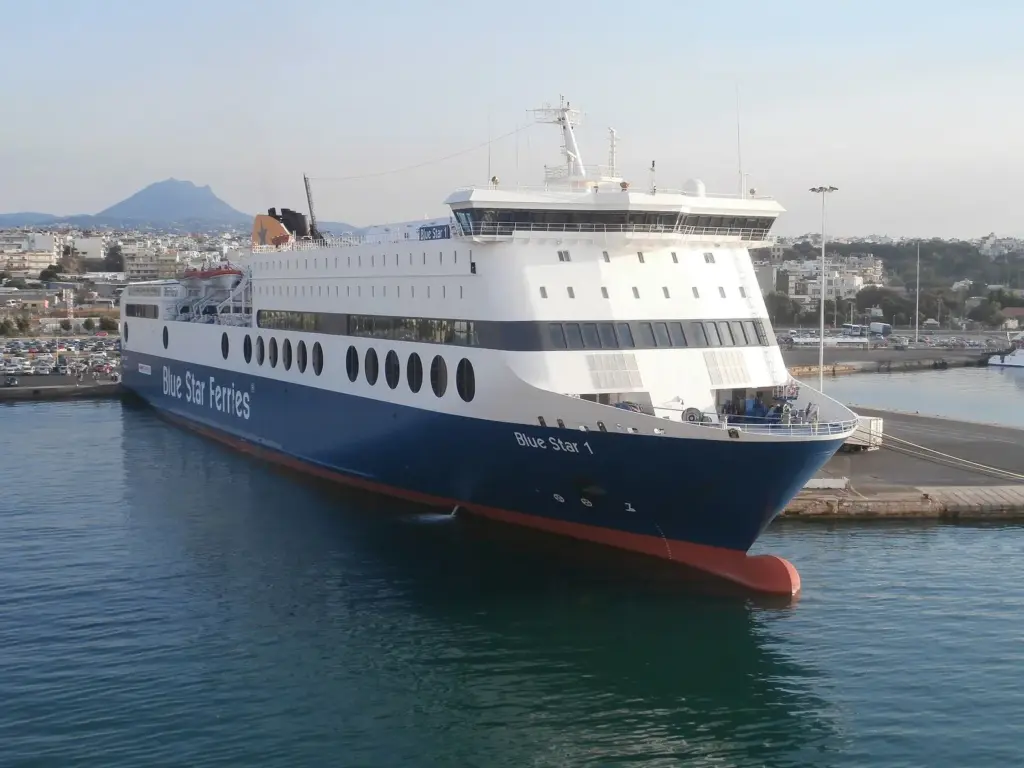
Piraeus, about 4 hours to Paros and under 6 to Naxos; short flights on both. These neighbours are the classic first pair for island-hoppers, and the ferry is hard to beat. A real 2026 sailing shows the rhythm: on 30 July, Blue Star 1 left Piraeus at 17:30, reached Paros at 21:30 and Naxos at 23:15, then carried on to Santorini and Anafi through the night. Its Syros call was cancelled that day for bad weather. Evening departures like that one land you after dark, so a morning sailing is the kinder start if one suits your dates. SKY express flies from Athens to both islands, but door to door the flight saves little against a four-hour crossing.
Verdict: sail. Paros first if you want the livelier port towns, Naxos if you want long beaches and inland villages; they are close enough to do both.
Crete
Overnight from Piraeus, or a short flight to Chania or Heraklion. Crete is the one big island where the night ferry is a genuinely good option rather than a budget compromise. Minoan Lines runs daily and nightly sailings between Piraeus and Heraklion from Gate E2, and ANEK Lines sails daily to Chania and Heraklion from Gate E3. The Chania crossing is listed at 9 hours 25 minutes, which on a night boat means a full sleep. You can book a whole cabin, a bed in a shared cabin, a numbered seat or plain deck passage. Blue Star also carries passengers to Heraklion, and its limited Super Economy seats on that route cost €25.
Pick the port by where you are staying: Chania for the west of the island, Heraklion for the centre and east. Crete is big enough that the wrong one costs you a long drive on the first morning.
Verdict: with a week or more, book a cabin and treat it as a hotel night that moves. On a short trip, fly. Skip the deck ticket unless you can sleep anywhere.
The islands closest to Athens
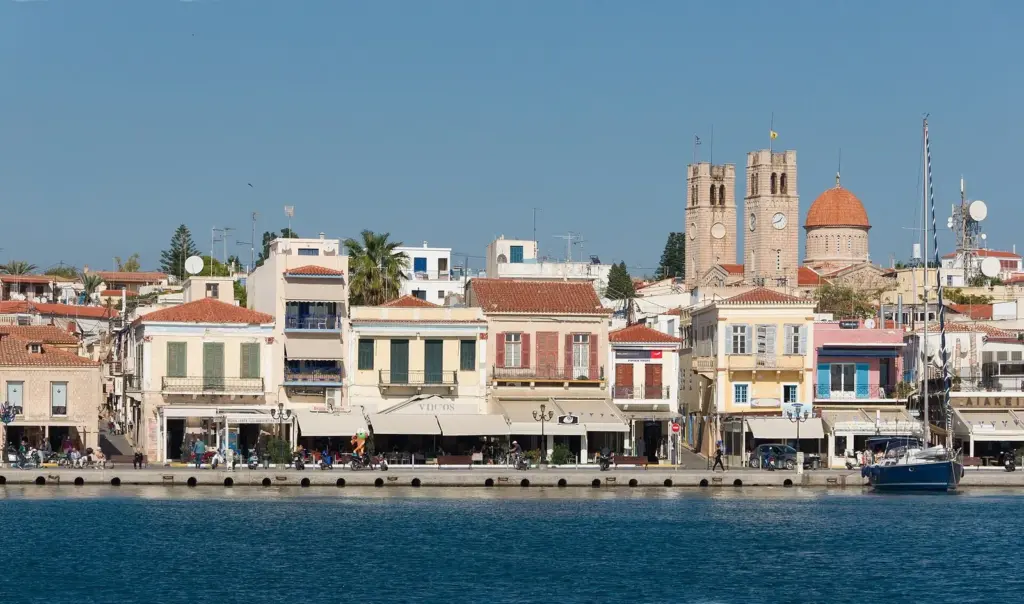
Saronic islands from Piraeus, Kea and Kythnos from Lavrio, Andros and Tinos from Rafina. For a short trip, the nearest islands beat the famous ones. The Saronic Gulf islands (Aegina, Agistri, Poros, Hydra and Spetses) are the shortest crossings from Piraeus, and Aegina in particular works as a day out. Car-free Hydra and pine-covered Poros suit a night or two. Kea, about an hour from Lavrio, is the closest of the Cyclades to Athens and a proper island weekend; Kythnos is 40 minutes further on. Andros and Tinos, the first stops out of Rafina, are greener and quieter than Mykonos next door. None of these has an airport, so the only question is the port.
For a single day, set an island against the mainland options in our guide to day trips from Athens; for anything longer, give the island at least one night so the ferry times stop running your day.
Milos, Rhodes and the long lines
Milos is a toss-up; Rhodes is a flight; the Ionian islands are not on this map at all. ANEK and Minoan Lines both sail to Milos from Piraeus, and Aegean and SKY express fly there, so Milos is a genuine choice: ferry for the budget, flight for the time. Rhodes and the rest of the Dodecanese are a different matter. Their ferries run long multi-stop lines: in January 2026 Blue Star Chios left Piraeus at 17:00 and called at Santorini, Anafi, Kasos, Karpathos, Chalki, Rhodes and Heraklion, with some calls in the small hours. Blue Star’s Super Economy fares cover Dodecanese and North Aegean routes from Piraeus too, so the long way is cheap, but it is long. Corfu, Kefalonia and Zakynthos are the odd ones out: they lie off the west coast, no ferry from Piraeus, Rafina or Lavrio reaches them, and flying is the sensible way from Athens.
How many nights make the journey worth it?
The longer the crossing, the longer the stay. Travel days eat into short trips faster than people expect, so match the island to the nights you have rather than to the photos you have seen.
| Island | Minimum we’d suggest | Why |
|---|---|---|
| Aegina, Agistri | A day, or one night | The shortest crossings from Piraeus |
| Hydra, Poros, Kea | Two nights | Close, but a day trip spends too much of the day in transit |
| Andros, Tinos, Mykonos, Paros | Three nights | Up to half a day’s travel each way |
| Naxos, Milos, Santorini | Three nights, four if you sail both ways | Longer crossings, or a flight plus transfers |
| Crete | Five nights or more | A night crossing or a flight, then a big island once you land |
| Rhodes | Four nights | Fly both ways; the island rewards the time |
Linking islands: which port or airport for each leg?
Most trips take in two or three islands, and the transport works best when the outbound and return legs use different routes. These pairings keep backtracking to a minimum.
| Combination | Outbound | Between islands | Return | Why it works |
|---|---|---|---|---|
| Paros and Naxos | Ferry from Piraeus | Short ferry hop between neighbours | Ferry to Piraeus, or fly from either island | Both islands have flights, so the return can be quick |
| Santorini with Naxos or Paros | Fly to Santorini | Ferry north; Blue Star lists Santorini connections to both | Ferry to Piraeus | One flight, one arrival by sea, no backtracking |
| Andros, Tinos and Mykonos | Ferry from Rafina | Along Rafina’s line | Ferry to Rafina | One port, one line, a short ride to the airport |
| Crete end to end | Overnight ferry to Heraklion or Chania | Drive across the island | Fly from the other airport | Saves a hotel night one way and a long drive back |
| Kea weekend | Ferry from Lavrio | None | Ferry to Lavrio | The closest Cycladic island, with a detour to Sounion on the way home |
That open-jaw idea, arriving by one route and leaving by another, is the most useful trick in Greek island planning. It turns the long crossing into a one-way event and lets the flight take the tired leg home.
Ferry tickets and fares: what changes the decision
How to book, collect and board is covered in our Athens ferry guide. Three things matter for the ferry-or-flight choice itself.
- The cheapest ferry seats are rigid. Blue Star’s Super Economy offer sells a limited number of Economy tickets at €20 on Cyclades, Dodecanese and North Aegean routes from or to Piraeus (€25 Piraeus-Heraklion), and they cannot be cancelled or changed. Its Special Economy offer takes 20% off a limited number of Economy tickets, Crete routes included, and those can be cancelled, made open-date or moved under the company’s terms. If your flight into Athens could slip, pay for the flexible fare.
- Fast boats cost more. High-speed craft save hours on the longer Cyclades routes, but you pay for the speed, and in a strong wind they are the first to be cancelled.
- Cabins change the maths on Crete. A cabin costs more than a deck ticket but replaces a hotel night, which puts the overnight ferry level with flying plus a room.
When to go, and when the wind decides
The ferry year never really stops, but it changes character. From late May to June and in September, timetables are full and the wind is usually manageable. In July and August the meltemi, the dry northerly that blows hardest in those months, can make crossings rough and tends to stop the smaller fast boats first; the big conventional ferries keep sailing through most of it. Winter timetables are thinner and storms more frequent.
Blue Star’s own notices show how often plans change. In 2026 it posted bad-weather itinerary changes for 10 to 18 January, 19 January to 4 February, 5 to 8 February, 24 March to 1 April, 1 to 7 April, 1 to 9 May, 28 July to 2 August and 9 to 11 August. Most of that is winter, but two of the notices fall in the height of summer.
- Keep a spare day. Be back in Athens the day before an international flight, never the same morning.
- Choose the big boat in August if you are prone to seasickness, even when a fast boat would save time.
- Watch the forecast two days out, and check your operator’s site on the morning of sailing, where changes are posted.
How do you get back to Athens from the islands?
The return leg is where trips go wrong, because it ends at a time you cannot move: your flight home. Plan it backwards from that departure.
- Sail in the day before. Reach Athens the day before an international flight. A same-day ferry-to-plane connection leaves no room for a delayed or cancelled sailing, and 2026 brought bad-weather schedule changes in August as well as in winter.
- From Piraeus to the airport, metro Line 3 takes about 60 minutes and the X96 bus about 90. If your boat is due in late, check the last metro and bus times before you book it, and keep a taxi as the fallback.
- From Rafina, the KTEL bus runs back to the airport, which makes Rafina the easiest port to finish at if you are sleeping near the airport before an early flight.
- From Crete, the night boat reaches Piraeus in the morning. That can feed an evening flight home, but only if you accept the risk; most people are better off flying from Heraklion or Chania to Athens and connecting at the airport on one ticket.
- From Lavrio, book a taxi in advance for the ride to the airport or the city, because the bus connection is sparse.
Your Athens nights before and after the islands
Most island trips start and end with a night or two in Athens, and where you sleep should follow the timetable. If your ferry leaves Piraeus early in the morning, a hotel in Piraeus saves a pre-dawn metro ride; otherwise stay central and take Line 1 or Line 3 down to the port. Our guide to where to stay in Athens sets the neighbourhoods side by side.
An airport hotel makes sense in two cases: a late-evening landing followed by an early flight or a morning Rafina ferry, and a dawn departure home after your last island. For everything else, central Athens is a better use of the night, with the metro out to the airport in the morning. If you are heading into town first, our guide to getting from the airport to the city centre covers the metro, the express buses and taxis.
Plan the city days around the islands, not the other way round. Two or three days is enough for a first look at Athens, and our Athens itineraries show how to use them. Put them at the start if you arrive jet-lagged, or at the end if you want a buffer before the flight home. For the wider checklist of passes, seasons and budgets, start with planning your Athens trip.
What to skip
- A Santorini day trip from Athens. Two flights and a day of queues for a few hours on the caldera rim. Give it two nights or save it for another trip.
- A same-day long-haul-to-ferry connection in August. One late flight and you are sleeping in Piraeus anyway, holding a ticket you may not be able to change.
- The ferry to Rhodes, unless the voyage is the point. A long multi-stop line is an adventure, not a transfer.
- Lavrio for anything but Kea and Kythnos. It is the hardest of the three ports to reach without a car.
- A deck ticket on the night boat to Crete if you need to function the next day.
Verdict: the mistakes that cost the most are about margins, not about ferry against plane. Leave room at both ends and either one works.
Athens to the Islands FAQ
Can you fly from Athens to the Greek islands?
Yes. Aegean and SKY express fly from Athens International Airport to many islands, including Santorini, Mykonos, Naxos, Paros, Milos, Crete (Chania and Heraklion) and Rhodes, and most flights last about an hour or less. The Saronic islands, Kea, Kythnos, Andros and Tinos have no airports, so those trips are ferry-only from Piraeus, Lavrio or Rafina.
Which islands can you reach by ferry from Athens?
Almost every Aegean island. Piraeus serves the Saronic islands, most of the Cyclades, Crete, the Dodecanese and the North Aegean. Rafina adds the short route to Andros, Tinos and Mykonos, and Lavrio handles Kea and Kythnos. The Ionian islands are the exception: Corfu, Kefalonia and Zakynthos lie off the west coast, and no ferry from the three Attica ports goes there.
What is the closest island to Athens by ferry?
Of the islands visitors actually go to, the Saronic Gulf group is closest to Piraeus, with Aegina the usual pick for a day out. Among the Cyclades, Kea is the nearest, about an hour from Lavrio, but Lavrio is a long way from central Athens, so Kea works better for a night or two than for a day trip.
Should you fly or take the ferry to Santorini?
Do one of each if you can. Blue Star’s crossing from Piraeus takes from 6 hours 6 minutes, while the flight is about 50 minutes, and in late September 2026 both airlines showed October fares from €49-50 one way. Arriving by sea into the caldera is worth doing once; with fewer than five island nights, fly at least one way.
How long are the ferries from Athens to the islands?
Anything from about an hour to a full night. Kea is about an hour from Lavrio. On 30 July 2026 Blue Star 1 reached Paros four hours after leaving Piraeus and Naxos in 5 hours 45 minutes. Santorini takes from 6 hours 6 minutes, and the Chania crossing is listed at 9 hours 25 minutes. Fast boats are quicker but cost more.
Can you catch a ferry on the day you land in Athens?
Yes, with a margin. The airport metro reaches Piraeus in about 60 minutes and the X96 bus in about 90, before the walk to your gate, and the KTEL bus to Rafina leaves from Arrivals. Book a sailing at least four hours after your scheduled landing, more in August, and sleep in Athens if you land in the evening.
Which Athens port should you use?
The one on your ticket, which follows from the island. Piraeus covers most of the Cyclades, Crete, the Dodecanese and the Saronic islands, and it is the only one of the three on the metro. Rafina is the short way to Andros, Tinos and Mykonos, and the easiest from the airport. Lavrio is for Kea and Kythnos only.
Related Athens Guides
- Athens to the Greek Islands Ferry Guide: booking, ticket types and boarding, step by step
- Piraeus Port Guide: the gates, the walk from the metro and where to wait
- Athens Airport to the City Centre: metro, express buses and taxis into town
- Where to Stay in Athens: neighbourhoods for the nights either side of the islands
- Athens Itineraries: how to spend the city days before or after
- Getting Around Athens: metro lines, tickets and buses
Sources and How We Checked
We checked every price, time and route on 26 September 2026 against the official sources below and compiled this page from them rather than from other travel lists; it does not rest on a first-hand visit.
- Blue Star Ferries: Santorini route page, Super Economy and Special Economy offers, bad-weather itinerary notices
- Minoan Lines: Piraeus-Heraklion and Piraeus-Chania route pages
- ANEK Lines: routes and departure gate
- Athens International Airport: public transport to and from the airport
- OASA: airport express bus lines and fares
- KTEL Attikis: Airport-Rafina line and Lavrio lines
- Aegean and SKY express: Aegean Athens-Santorini, SKY express Athens-Santorini and SKY express island network
- Visit Greece and the Municipality of Kythnos: Lavrio, Kea and Kythnos transport
What we couldn’t verify: KTEL Attikis’s current fares and timetables for the Rafina and Lavrio buses, as its pages would not load for us; crossing times from Rafina, which vary widely by vessel; high-speed ferry times and fares; the current airport taxi flat fares; and gate allocations at Piraeus beyond those the operators publish, which can change. Ferry and airline fares change daily, so treat every fare here as a snapshot.
Athens Tourism Guide is an independent publication. We are not affiliated with the Hellenic Ministry of Culture, OASA, the Greek National Tourism Organisation or any business named here, and no business paid to be included.
Photo Credits
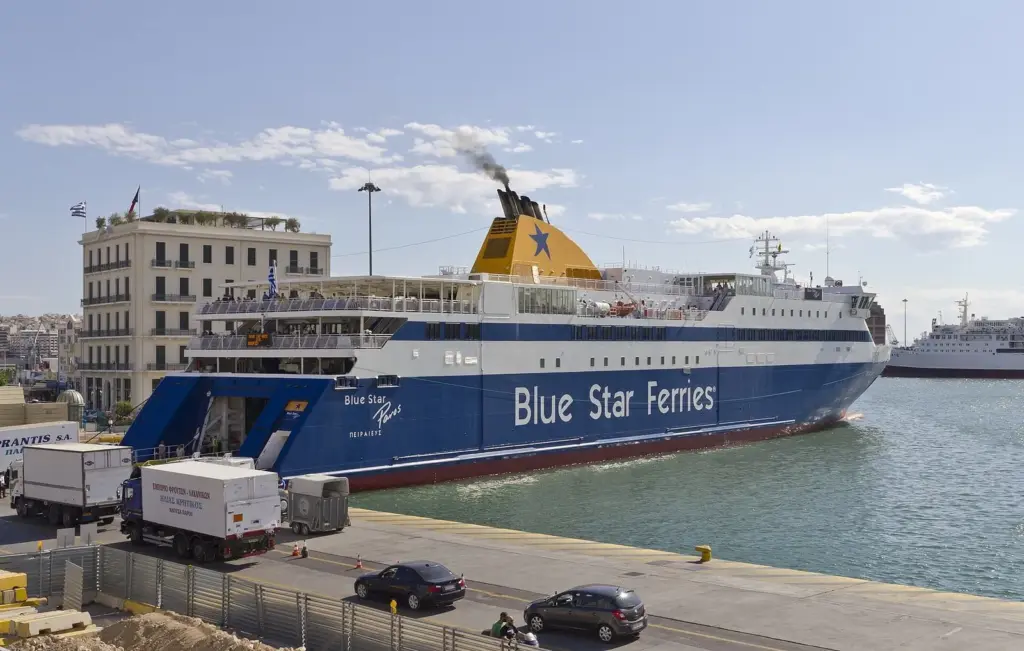
- Blue Star ferry at Piraeus: photo by A.Savin, via Wikimedia Commons (CC BY-SA 3.0)
- Rafina harbour: photo by Ossony, via Wikimedia Commons (CC BY-SA 4.0)
- Lavrio port and Makronisos from the air: photo by 7777777kz, via Wikimedia Commons (CC BY 3.0)
- Athens International Airport: photo by Manfred Werner (Tsui), via Wikimedia Commons (CC BY-SA 4.0)
- Blue Star 1 at Heraklion: photo by C messier, via Wikimedia Commons (CC BY-SA 3.0)
- Aegina town waterfront: photo by Jebulon, via Wikimedia Commons (CC0)
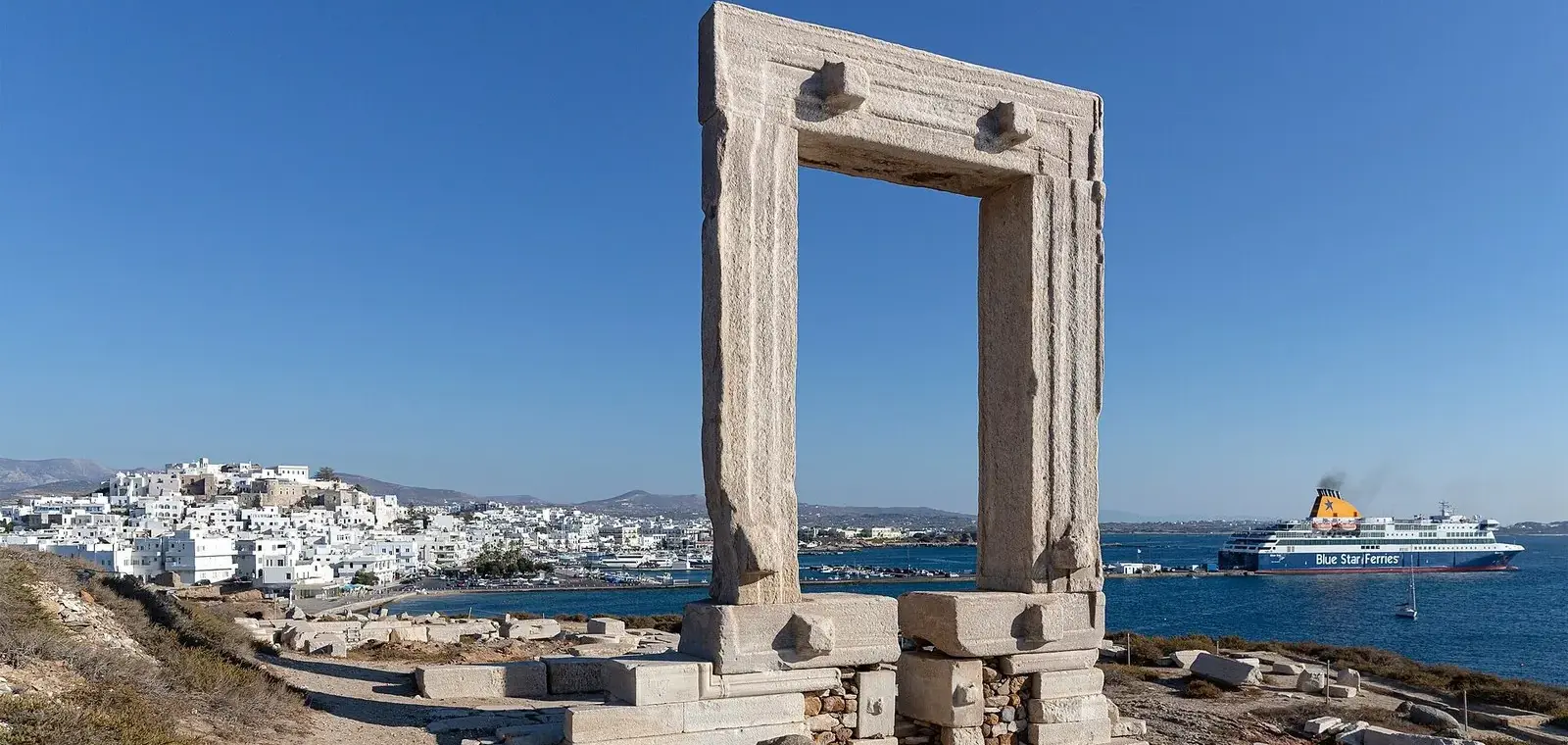
- Portara and Blue Star ferry, Naxos (featured image): photo by Manfred Werner (Tsui), via Wikimedia Commons (CC BY-SA 4.0)