This article contains advertising. Some of the hotel, flight and transfer links in it are paid links: if you book through one, we get a commission from the booking company, and your price is the same either way. It never affects what we recommend. Affiliate disclosure
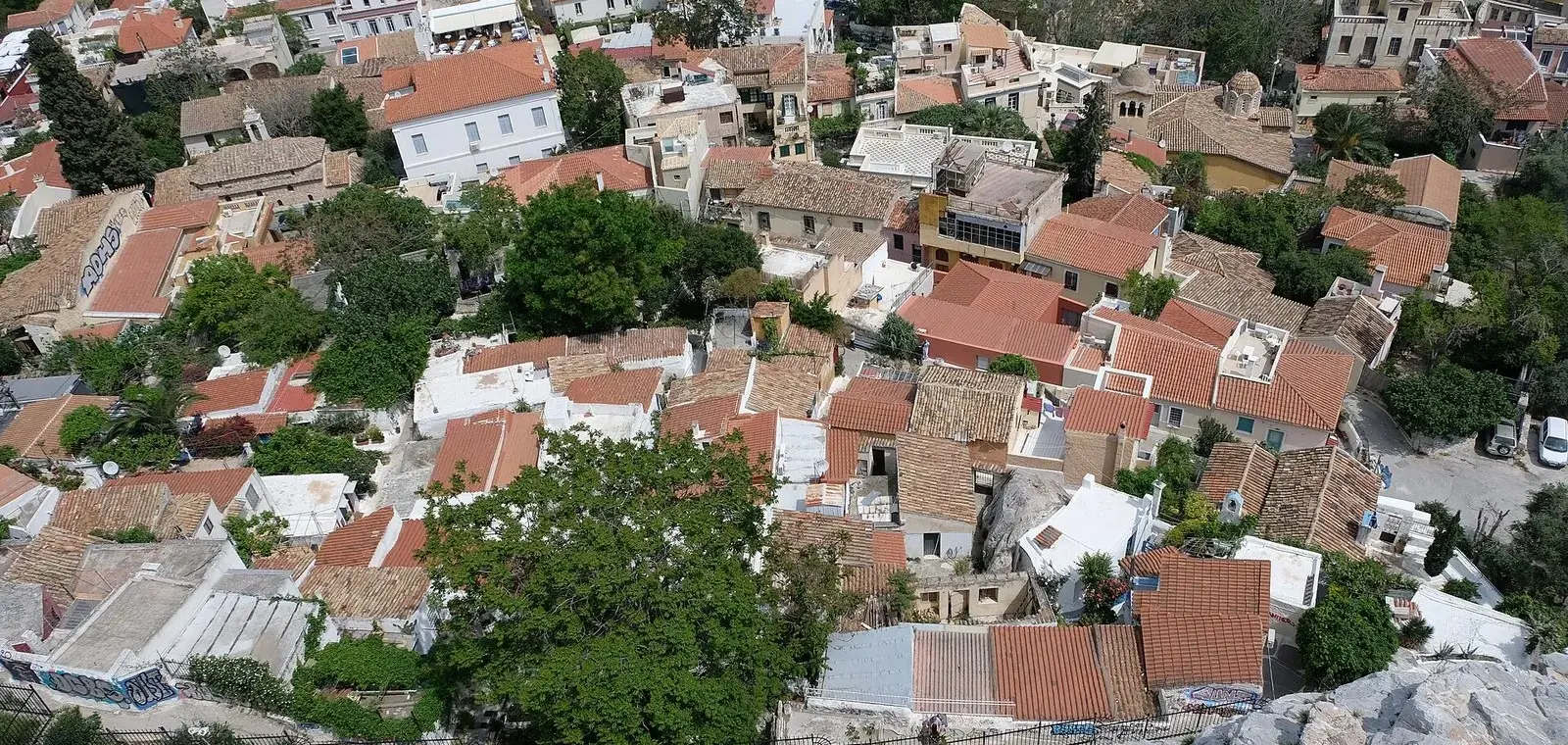
Up on the north-east slope of the Acropolis, at the very top of Plaka, Anafiotika in Athens is a few dozen whitewashed, island-style houses built in the 19th century by craftsmen from the Cycladic island of Anafi. It is free, it never closes, and you can walk through it in 20 minutes. It is also where people live, so how you walk it matters as much as where. What follows: its exact edges, a 40-minute route between the churches that frame it, and the handful of manners that keep it a neighbourhood rather than a film set.
It is written for first-time visitors who have heard about the ‘Cycladic village under the Acropolis’ and want to find it without circling Plaka for an hour. The one caveat: it is tiny and residential, with nothing to buy or book, so treat it as a detour on the way to or from the Acropolis rather than a destination in itself. Details checked 26 September 2026 against OpenStreetMap’s street data, the City of Athens’ official visitor guide, Visit Greece, OASA and the Hellenic Ministry of Culture.
| Anafiotika at a glance | The short answer |
|---|---|
| Cost | Free. Public lanes: no ticket, no gate, no opening hours |
| Time needed | 20 minutes for the lanes alone; 40-60 minutes for the full loop below |
| Where | The north-east slope of the Acropolis, above Prytaneiou street at the top of Plaka |
| Getting there | Akropoli metro (Line 2, red), 7-8 minutes’ walk uphill; Monastiraki (Lines 1 and 3), 10-12 minutes; a €1.20 90-minute ticket covers the ride |
| Book ahead? | No. A guided tour adds little in lanes this small |
| Best time | Before 10:00, or late afternoon outside July and August |
| Step-free? | No. Every approach involves steps and worn marble |
What’s changed in 2026?
Nothing in Anafiotika itself. It is still free, still residential and still a place to walk rather than shop. The changes are up the hill, and they shape how you pair the two. The Acropolis now costs €30 (reduced €15) in every season, with no winter half-price, and its free days are 6 March, 18 April, 18 May, the last weekend of September and 28 October; the old free first Sundays of winter are gone. Tickets are timed and single-entry, so walk Anafiotika before your slot or after it, not in the middle. In heatwaves the Ministry of Culture shuts the Acropolis through the hottest hours: on 8 July 2025, for example, it stayed closed until 17:00. Anafiotika never shuts, though at 14:00 in July the whitewash throws the heat straight back at you.
Where is Anafiotika in Athens, exactly?
It sits on the north-east slope of the Acropolis, above Prytaneiou street, where the top of Plaka runs out of room and meets the rock. It turns up on every list of things to do in Athens, usually as a footnote to the Acropolis, and people still walk straight past it. There is no gate or ticket booth, and many of the lanes look like private passages because some of them nearly are.
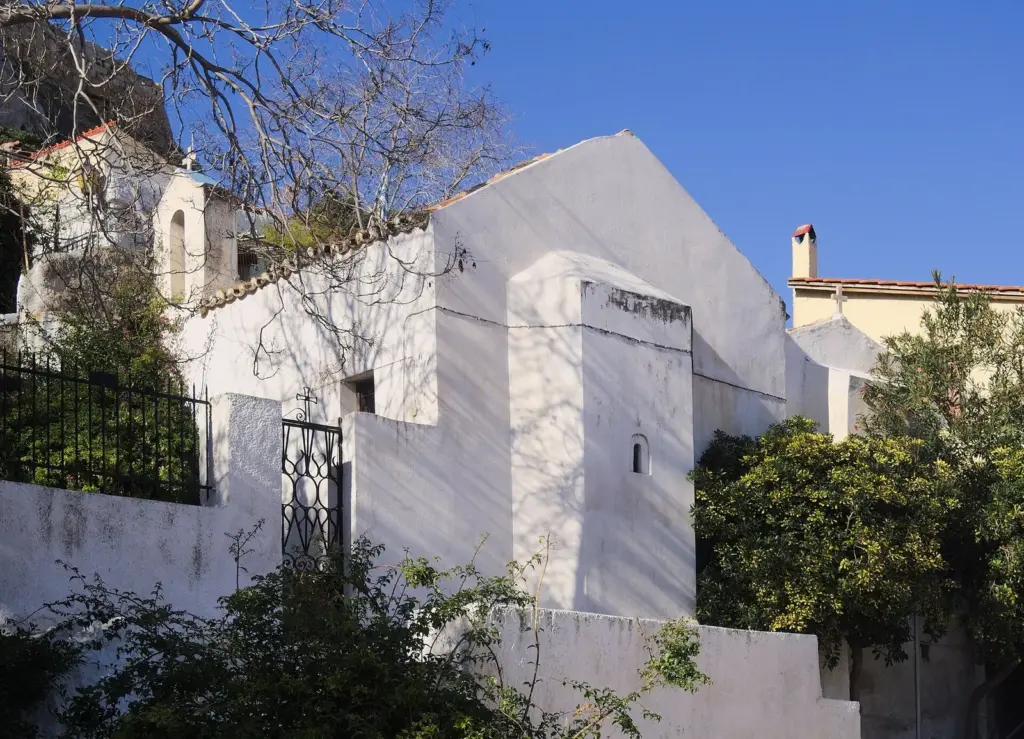
The City of Athens’ official guide gives the neatest definition: two small churches mark its ends, St George of the Rock (Agios Georgios tou Vrachou) in the east and Agios Symeon in the west. On the map they are about 100 metres apart as the crow flies. That is the scale of the place. The table turns its four edges into landmarks you can navigate by.
| Edge | What marks it | How you’ll know |
|---|---|---|
| East | St George of the Rock on Stratonos street | A whitewashed church set hard against the foot of the cliff |
| West | Agios Symeon | A small church beside an old flight of steps down to Theorias and Prytaneiou streets |
| Top (south) | The Acropolis rock and its fenced north slope | The houses stop at the rock; there is no way up to the Acropolis from here |
| Bottom (north) | Prytaneiou street | The churches of Agioi Anargyroi and Agios Nikolaos Rangavas stand along it; below is Plaka proper |
Everything below Prytaneiou belongs to the rest of the old town, with its tavernas, shops and small museums, and our guide to the Plaka neighbourhood covers all of that. This page stays up the slope.
Why is there a Cycladic village under the Acropolis?
Because the builders brought their island with them. Once Athens became the capital of the new Greek state in the 1830s, the town needed craftsmen, and men from Anafi, a small island east of Santorini, came to work. Visit Greece, the national tourism organisation’s site, says the Anafi craftsmen arrived in the 1860s. Many other accounts put the first houses a couple of decades earlier, in the building years of King Otto’s reign. Treat any single founding date with suspicion.
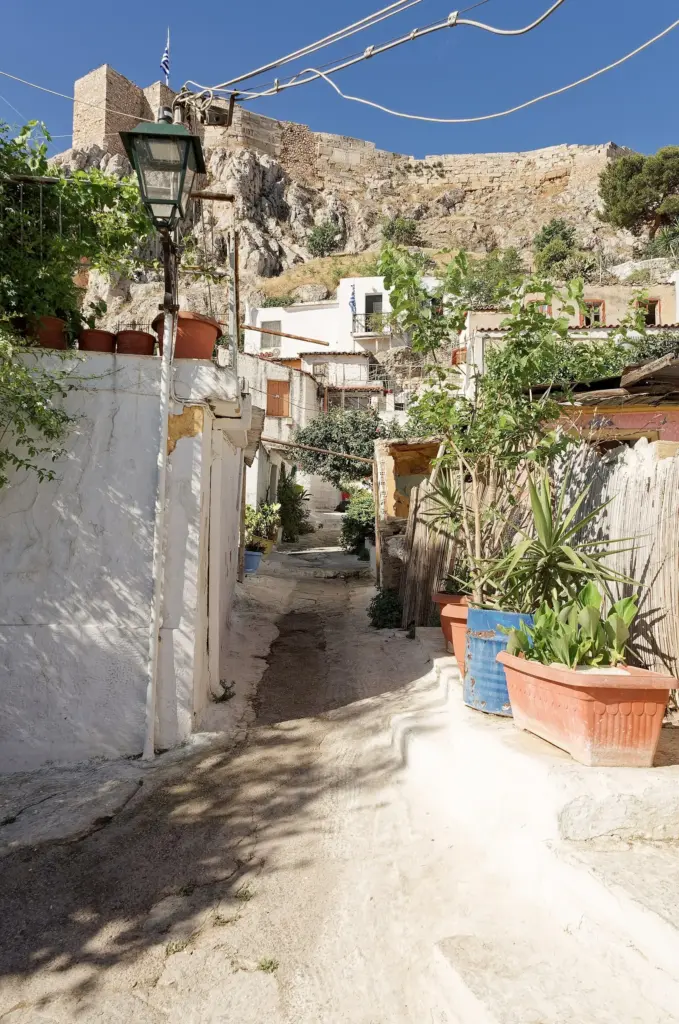
What they built is what they knew: small, boxy houses stacked up the slope and painted white, reached by lanes barely wide enough for two people to pass. Visit Greece says the result strongly resembles Anafi’s own Hora, its main village.
Then there is the story everyone repeats. Under an Ottoman-era custom, it goes, a house with its roof on by sunrise could not be torn down, so the Anafiots built by night. It is a good story. Enjoy it as folklore rather than law. What survives today is small: a few dozen houses, two churches at its ends, two more just below on Prytaneiou, and a tangle of lanes that the Acropolis rock stops dead.
How do you get to Anafiotika?
On foot, uphill, from one of three metro stations. A standard €1.20 ticket, valid for 90 minutes, covers the ride unless you are coming straight from the airport, which has its own fare. Which station you pick decides which end you arrive at.
From Akropoli (Line 2, red): the quickest
About 400 metres, 7-8 minutes. Walk the short block from the station to the Dionysiou Areopagitou pedestrian avenue, then take Thrasyllou street uphill. At the top it meets Stratonos, which bends north under the cliff to St George of the Rock, the east end of Anafiotika. It is uphill all the way, and it is the same station you would use for the Acropolis Museum.
From Monastiraki (Lines 1 and 3): up Plaka’s steps
About 650 metres, 10-12 minutes. Head south into Plaka and climb the stepped upper end of Mnisikleous street to its top, where an old flight of steps continues up beside Agios Symeon into the western end. The steepest part comes last, when your legs least want it.
From Syntagma (Lines 2 and 3): the long way
About 900 metres, 13-15 minutes. Walk down through Plaka to Agios Nikolaos Rangavas on the corner of Prytaneiou and Epicharmou. It is the longest approach and the natural start for the route below, which runs east to west.
Plan it: free and open around the clock; Akropoli (Line 2) is the closest station; allow 40-60 minutes for the loop; wear shoes with grip; best for early risers and anyone with an Acropolis slot the same morning.
The Anafiotika walking route, church to church
This loop runs east to west through the whole quarter and back down into Plaka: well under a kilometre, most of it on steps, about 40 minutes at an unhurried pace. You cannot really get lost. Every lane ends at the rock, ends at someone’s gate or drops down a flight of steps into Plaka.
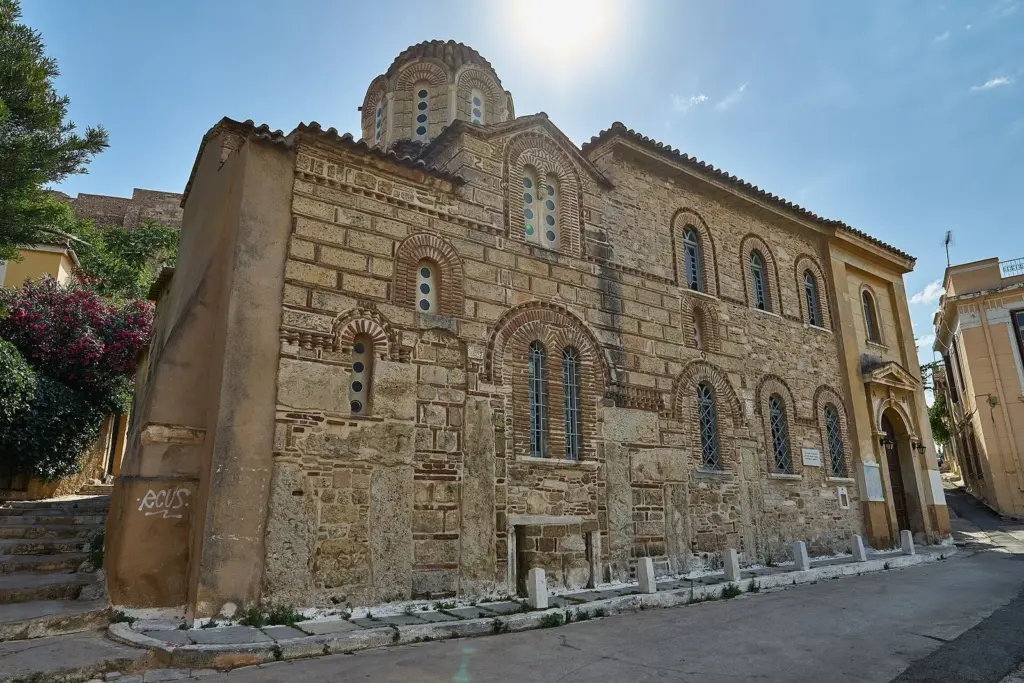
- Agios Nikolaos Rangavas: start at the Byzantine church on the corner of Prytaneiou and Epicharmou, a solid block of brick and stone that anyone in Plaka can point you to. It is a working parish church, so if a service is on, look in from the door or come back later.
- Up to St George of the Rock: take the stepped lane uphill from the church for a couple of minutes to Stratonos street and the whitewashed church of Agios Georgios tou Vrachou, pressed against the foot of the cliff. This is the eastern edge of Anafiotika.
- Into the lanes: from St George, keep the rock on your left and follow the narrow lanes heading north-west. This is the quarter proper: small white houses, painted doors, pot plants on the steps, cats asleep in whatever shade there is. Where a lane narrows to a gate or a terrace, it is private. Turn round.
- Agios Symeon: the lanes split and rejoin, but they all lead west to the small church of Agios Symeon. It is about 100 metres from St George in a straight line and anywhere from five to fifteen minutes on foot, depending on how often you stop.
- Down the old steps: beside Agios Symeon an old flight of steps drops towards Theorias and Prytaneiou. Look back up before you reach the bottom, when the houses stack up against the rock behind you.
- Pick your exit: go west along Theorias for the Acropolis’s main entrance (10-15 minutes, past the Kanellopoulos Museum), down the Klepsydras steps for the Roman Agora and the Tower of the Winds (about 5 minutes), or east along Prytaneiou, past the church of Agioi Anargyroi, back to where you started.
Don’t trust a map app’s walking directions in here. In lanes this tight the GPS dot wanders, and a suggested shortcut can end at somebody’s front door. Navigate by the churches in the edge table above instead. There is nothing to buy inside the lanes, so carry water in summer; Plaka’s cafés are a couple of minutes downhill.
How should you behave among the residents?
Anafiotika’s problem is that it is photogenic. A few dozen households live along lanes narrower than a hotel corridor, and on a fine spring morning a steady stream of strangers files past their front doors. Most of what follows is common sense. It still bears saying, because the lanes are so quiet that one loud group changes the whole place.
- Keep your voice down. Windows open straight onto the lanes and sound bounces off the walls. Save the loud stories for the tavernas below.
- Don’t sit on steps or walls. In most lanes the step is somebody’s doorstep. If you need a rest, Plaka’s squares are a few minutes away.
- Photograph the lanes, not the people. No lenses through windows, over gates or into courtyards, and ask before you photograph a resident.
- Leave doors, gates and plants alone. Don’t open a gate, move a pot for a better shot or pose on a terrace. If a lane narrows to a gate, it belongs to someone.
- Give way. Residents carry their shopping up these steps. Step aside where the lane widens and let them pass.
- Keep groups small. Twenty people block a lane completely. If you are with a large group, split up, or look at the quarter from Stratonos and move on.
- No drones, speakers or tripods. A tripod blocks a lane, a speaker fills it, and a drone buzzes over people’s roofs and terraces.
- Carry your litter out. Whatever you bring in goes back down with you.
- Dress for church if you go in. Don’t count on the churches being open. If one is, cover shoulders and knees and keep your voice low.
The simplest test: if you would mind a stranger doing it outside your own front door, don’t do it here.
When is the best time to visit Anafiotika?
Before 10:00 is best. The lanes are at their quietest, the slope faces north-east into the morning sun, and you can walk on to an early Acropolis slot straight afterwards. Late afternoon is the second choice outside high summer. Because the rock sits between the quarter and the afternoon sun, the lanes fall into shade well before sunset.
Avoid the middle of the day from June to August. There is little shade, the white walls reflect the heat, and the steps are hard work at 35°C. Spring and autumn are the comfortable seasons: April to early June, and late September through October. Winter is quiet and often bright, but after rain the marble steps turn slippery.
After dark the lanes are lit but uneven, and this is when residents are home and trying to sleep. A quiet stroll through at dusk is fine; a late-night group is not.
Photographers: a phone does the job, since the lanes are too tight for long lenses anyway. For the city’s other camera-friendly corners, and the manners that go with them, see our round-up of Athens photography spots.
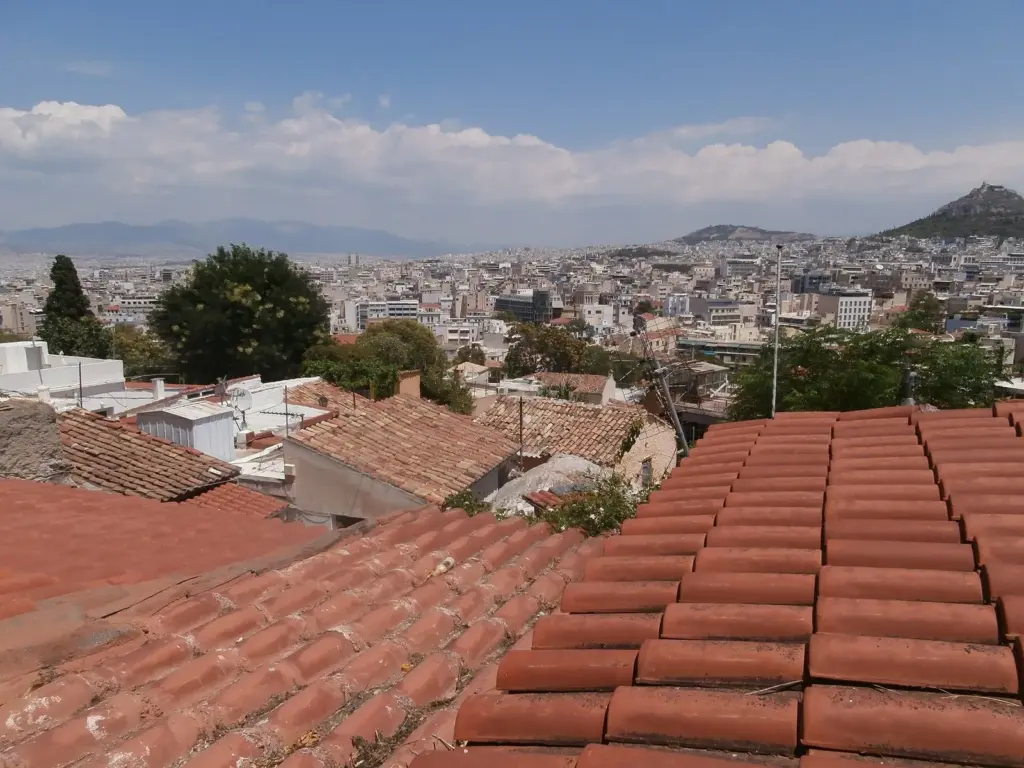
Is Anafiotika worth visiting, and what should you skip?
Yes, as a detour, but the ‘hidden village’ billing oversells it. It is a handful of lanes, not an island, and not every house is freshly painted.
Skip paying for a guide just for this part. The history fits in a paragraph, the lanes take 20 minutes, and a group of 15 is exactly what the residents don’t need. If you would rather fold Anafiotika into a longer walk, our self-guided walking tour of central Athens links the big sights, and the quarter slots in neatly between the Acropolis and Monastiraki.
Don’t expect a Parthenon view. You are directly under the rock, so from most lanes you see its walls and cliffs rather than the temples on top.
Verdict: worth 40 minutes if you are already in Plaka or at the Acropolis, and one of the best free hours in the centre, alongside the rest of our free things to do in Athens. Not worth crossing town for on its own if the real Cyclades are next on your trip. It is also the best-known ‘hidden’ corner in the city, which rather defeats the word; for genuinely quieter ones, try our Athens hidden gems.
What’s near Anafiotika?
A lot, because it sits where Plaka, the Acropolis slopes and the old Roman market quarter meet. These are the places within 15 minutes on foot, and what they cost.
| Nearby | Walk from Anafiotika | Cost | Why go |
|---|---|---|---|
| Acropolis (main west entrance) | 10-15 minutes west along Theorias | €30, reduced €15; timed tickets | The obvious pairing: Anafiotika before your slot or after it |
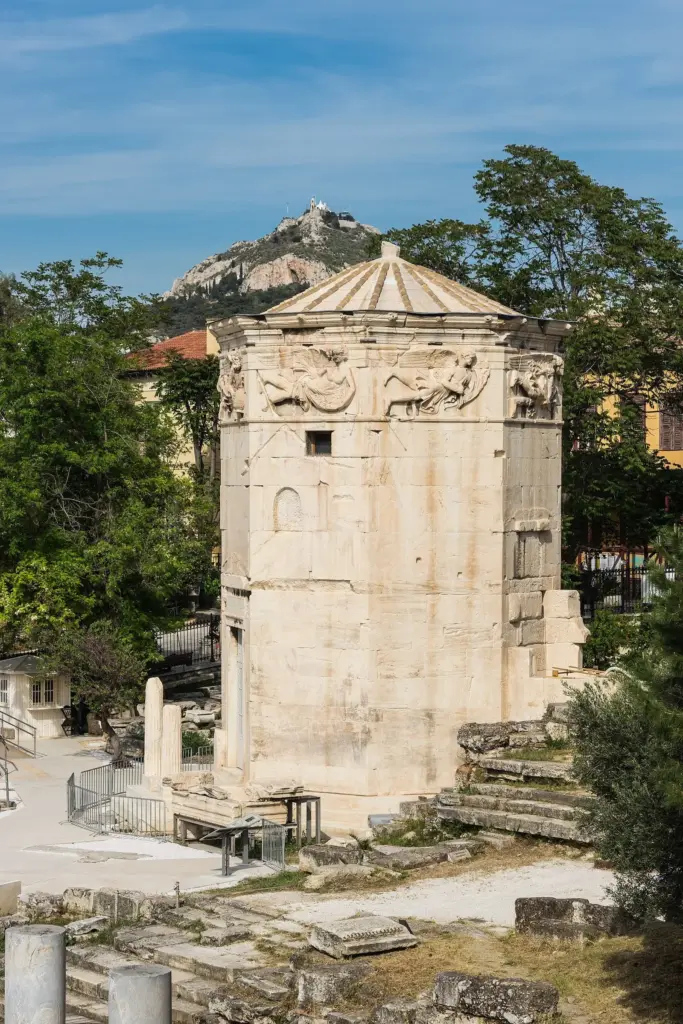
| Roman Agora and Tower of the Winds | About 5 minutes down the Klepsydras steps | Separate ticket | An octagonal marble tower you can see over the railings even if you don’t go in |
| Lysicrates Monument | About 5 minutes from St George, via Stratonos and the Epimenidou steps | Free, outdoors | An ancient monument standing in the open in a small square |
| Athens University History Museum | 2 minutes from Agios Symeon, on Tholou street | Check before you go | A quiet museum just below the western end |
| Kanellopoulos Museum | 3-4 minutes along Theorias | Check it is open | A couple’s collection of antiquities and Byzantine icons at the corner of Theorias and Panos |
| Ancient Agora | 10-15 minutes west | €20, reduced €10, including the Stoa of Attalos museum | The ancient city’s civic heart and the Temple of Hephaestus |
The Acropolis is open 08:00-18:30 until 15 October (last entry 18:00), then 08:00-18:00 to the end of the month, before winter hours of 08:00-17:00 take over. The Ancient Agora’s autumn hours shorten every two weeks in the same way. Book the Acropolis slot first and fit Anafiotika around it. For the wider picture, from the big museums to the evening options, our overview of the best Athens sights and activities puts it all in order.
Anafiotika FAQ
What does Anafiotika mean, and how do you say it?
Anafiotika means, roughly, the Anafiot quarter: the place built by people from Anafi, a small Cycladic island east of Santorini. Say it ah-nah-fee-OH-tee-kah, with the stress on the ‘o’. In Greek it is written Αναφιώτικα, which is worth knowing if you type it into a map app or ask a local for directions.
How old is Anafiotika?
The houses date from the 19th century, but sources disagree on the decade. Visit Greece says the Anafi craftsmen arrived in the 1860s, while many other accounts tie the first houses to builders working in the new capital under King Otto a couple of decades earlier. The City of Athens’ guide dates the two churches at its ends to the 17th century, older than the houses.
Is Anafiotika part of Plaka?
Yes. It is a small sub-quarter at the very top of Plaka, on the north-east slope of the Acropolis above Prytaneiou street. Maps often label it separately because it looks so different, but you reach it through Plaka’s streets and it shares Plaka’s postcode, 105 58. Everything below Prytaneiou is Plaka proper.
How far is Anafiotika from the Acropolis?
It sits directly below the Acropolis rock, but there is no way in from it. The ticketed main entrance is on the west side of the hill, 10-15 minutes’ walk along Theorias street. From Akropoli metro station, beside the Acropolis Museum, you reach Anafiotika’s eastern end in 7-8 minutes via Thrasyllou and Stratonos streets.
Is Anafiotika safe?
By day it is a quiet residential quarter and feels like one. The real hazards are underfoot: worn marble steps that turn slippery after rain, uneven lanes and a few dim corners after dark. Watch your bag in the Plaka crowds below, as anywhere central, and don’t tackle the steps in flip-flops.
Is Anafiotika worth visiting?
Yes, as a detour rather than a destination. It gives you 40 quiet minutes in island-style lanes right under the Acropolis, free and open at any hour. It is not worth a special trip if you are heading to the Cyclades anyway, and it is only worth it at all if you treat the doorsteps as doorsteps.
Related Athens Guides
- Things to Do in Athens: where Anafiotika fits among the city’s sights, with the big hitters first
- Plaka Neighbourhood Guide: the old town below, from its tavernas to its small museums
- Self-Guided Walking Tour of Athens: a route that strings the Acropolis, Plaka and Monastiraki together
- Athens Hidden Gems: quieter corners that fewer visitors reach
Sources and How We Checked
Checked on 26 September 2026 against the official sources below. This page was compiled from them and from OpenStreetMap’s street data rather than from other travel lists, and no first-hand visit is claimed.
- City of Athens (This is Athens): Anafiotika and the Plaka neighbourhood guide
- Greek National Tourism Organisation (Visit Greece): Anafi
- OpenStreetMap contributors: Anafiotika, its churches and the surrounding streets
- Hellenic Ministry of Culture: Acropolis of Athens and Ancient Agora of Athens
- OASA (Athens Urban Transport Organisation): ticket prices
Athens Tourism Guide is an independent publication. We are not affiliated with the Hellenic Ministry of Culture, OASA, the Greek National Tourism Organisation or any business named here, and no business paid to be included.
Photo Credits
- Agios Georgios tou Vrachou, Anafiotika: photo by C messier, via Wikimedia Commons (CC BY-SA 4.0)
- Agios Nikolaos Rangavas, Plaka: photo by George E. Koronaios, via Wikimedia Commons (CC BY-SA 4.0)
- A lane in Anafiotika under the Acropolis rock: photo by Jakub Hałun, via Wikimedia Commons (CC BY 4.0)
- Anafiotika rooftops and Lycabettus: photo by C messier, via Wikimedia Commons (CC BY-SA 4.0)
- Tower of the Winds, Roman Agora: photo by Jebulon, via Wikimedia Commons (CC0)
- Anafiotika from the Acropolis (featured image): photo by Davide Mauro, via Wikimedia Commons (CC BY-SA 4.0)