
This article contains advertising. Some of the hotel, tour, activity, flight and transfer links in it are paid links: if you book through one, we get a commission from the booking company, and your price is the same either way. It never affects what we recommend. Affiliate disclosure
Athens visa and entry requirements changed more between 2025 and 2026 than in the previous twenty years combined. Passport stamps are gone. A biometric border system now records every arrival and departure. And the travel authorisation that half the internet insists you already need is, as of September 2026, still not in operation. This guide sets out exactly what a visitor to Athens needs by nationality, what happens at the border at Athens International Airport, and which of the rules circulating online are simply wrong.
Greece is a member of the Schengen area, so the rules that govern your entry are European rather than Greek. That has one liberating consequence and one trap. The liberating part is that if you can enter Greece, you can move on to Italy, France or Spain without another border check. The trap is that your ninety days are shared across the whole area, not granted afresh in each country. Everything below flows from that single fact. For the wider picture of getting a trip together, see our complete Athens travel planning guide.
The Short Answer for Most Visitors
If you hold a passport from the United States, United Kingdom, Canada, Australia, New Zealand, Japan, South Korea, Brazil, Mexico, Argentina, Chile, Singapore, the UAE or Israel, you need no visa to visit Athens. You need a passport that satisfies two separate validity tests, and you may stay up to ninety days in any rolling one-hundred-and-eighty-day period. You do not need to apply for anything in advance. You do not currently need ETIAS, whatever a search result told you.
If you hold a passport from an EU or EEA country, or from Switzerland, you need only a valid national identity card. No passport, no visa, no time limit that concerns a holidaymaker, and no biometric registration at the border.
If your nationality is not on the visa-exempt list, you need a Schengen short-stay visa before you travel, applied for through the Greek consulate that covers where you live. Budget six to eight weeks and ninety euros. The detail is further down.

EES: Why Nobody Stamps Your Passport Any More
The Entry/Exit System, universally shortened to EES, is the single biggest change to arriving in Athens in a generation. It replaced the ink stamp with a digital record of every entry and exit made by a non-EU national. The rollout began on 12 October 2025 and ran in phases; Athens International Airport finished its own implementation on 30 March 2026, slightly ahead of schedule, and the system became fully operational across all Schengen external borders on 10 April 2026. By late July 2026 the European Commission reported that more than 145 million entries and exits had been registered.
Twenty-nine countries operate EES: the twenty-seven EU member states minus Cyprus and Ireland, plus Iceland, Liechtenstein, Norway and Switzerland. Cyprus and Ireland still stamp passports by hand, which matters if your trip continues to either.
What Actually Happens at the Border
Your first crossing since EES started. The officer creates a digital file for you. If you are visa-exempt, that means four fingerprints and a facial image. If you hold a short-stay Schengen visa, it means a facial image only, because your fingerprints are already held in the visa system. Children under twelve do not have fingerprints taken; a photograph is enough. Your passport is not stamped, whether or not it is biometric.
Every crossing after that, for three years. Your biometrics are already on file, so the officer verifies rather than enrols. This is considerably faster, and travellers with biometric passports can often use the self-service gates and skip the officer entirely.
Refusing to give biometrics means refusal of entry. There is no opt-out, and the point is not negotiable at the desk.
How long enrolment takes depends who you ask, and the honest answer is that the published figures disagree. The European Commission puts the average at around seventy seconds per passenger. IATA measured roughly ninety seconds, against twenty to twenty-five seconds for a pre-EES passport check. Airports Council International Europe has said it can reach five minutes in practice. Assume the higher end during a summer afternoon at Athens and you will not be disappointed.
Your record is kept for three years from your last exit. If no exit is recorded against an entry, the file is held for five years from the expiry of your authorised stay, which is the system’s quiet way of flagging a suspected overstay.
Who Is Exempt from EES
EU, EEA and Swiss nationals are not registered, and neither are citizens of Cyprus or Ireland. Holders of Andorran, Monegasque, San Marino and Vatican passports are exempt. So are holders of residence permits or long-stay visas issued by an EES country, cross-border workers, accredited diplomats, heads of state, and international train crew.
The exemption that catches people is the one for non-EU family members of EU citizens. It applies only if you hold a residence card. The Commission’s own worked examples make the distinction plain: a Moroccan married to a French citizen and holding a French residence card is not registered, while a Canadian married to a Lithuanian but holding no Lithuanian residence card is. Note too that residence permits issued by Cyprus or Ireland do not exempt you, because those two countries sit outside EES.
One footnote for British readers. The UK government’s own Greece travel advice has carried a note saying Greek authorities indicated they would not collect fingerprints and photographs from UK travellers under EES. It sits awkwardly beside the Commission’s position that the system is fully operational everywhere, no Greek source confirms it, and it could be withdrawn at any time. Treat it as a possible pleasant surprise rather than a plan: turn up expecting to be enrolled.
ETIAS: Not Live, and No Launch Date
This is the most misreported fact in European travel, so it is worth stating without hedging. As of September 2026, ETIAS is not in operation. No applications are being collected. The official EU site says so on every page, and adds that the Union will announce the start date several months before launch.
The history explains the confusion. In July 2025 the Commission announced a twenty-euro fee and a target of the final quarter of 2026, and that target was still being quoted in the EU Visa Strategy published in January 2026. It has since been removed from the official ETIAS site, which now carries no date at all. Since the EU has committed to giving several months’ notice and has given none, a 2026 launch looks effectively off the table — though no official source supports naming a 2027 date either, so we will not invent one.
The practical consequence matters more than the timetable. Every website currently selling you an ETIAS is a scam. Governments across Europe have issued warnings about fraudulent ETIAS sites, and since no legitimate application process exists, anyone taking your money for one is simply taking your money.
When it does arrive, here is what to expect. The fee will be twenty euros, waived for applicants under eighteen and over seventy. An authorisation will last three years or until your passport expires, whichever comes first, and will cover multiple entries. Most applications will be answered within minutes, with a reply guaranteed within ninety-six hours; cases needing more information or an interview may take up to thirty days. It will apply to thirty countries, being the twenty-nine EES states plus Cyprus. It will not be a visa, and it will never guarantee entry.

The 90/180 Rule, Explained Properly
You may spend up to ninety days in any rolling one-hundred-and-eighty-day period across the Schengen area as a whole. Not ninety days in Greece and another ninety in Italy. One pooled allowance.
Both the day you arrive and the day you leave count in full, so a day trip costs you a whole day. The window is rolling rather than fixed: on any given date, look back one hundred and eighty days and count the days you were present. Days drop off the back of the window as it advances.
A worked example. You arrive in Athens on 1 March and leave on 29 May. That is ninety days, and your allowance is spent. On 30 May, looking back one hundred and eighty days, all ninety of those days still sit inside the window, so you cannot re-enter. Your first day becomes available again one hundred and eighty days after 1 March, in late August, and your full ninety only returns one hundred and eighty days after 29 May, in late November. The common and expensive error is assuming the counter resets the moment you cross the border outward. It does not.
The EU publishes an official calculator, and with stamps abolished it is now the only reliable way to audit your own history. Two transitional caveats apply at the time of writing: the calculator does not reflect time spent in the Schengen area on a stay that began before 10 April 2026, and until 6 October 2026 its result may be unreliable for holders of single or double-entry visas who used an entry between 12 October 2025 and 9 April 2026.
One genuine exception is worth knowing if your trip continues east: because Cyprus is outside the EES group, time spent there is counted separately. The Commission’s own example has a traveller spend thirty days in Malta and Greece, then up to ninety days in Cyprus, then return for the remaining sixty days of the Schengen allowance.
What Overstaying Now Costs
Overstaying used to depend on a border officer squinting at faded stamps. Since 10 April 2026 the system generates a list of overstayers automatically, which is the single most consequential practical change for casual travellers. Detection is no longer a matter of luck.
An illegal stay triggers return procedures under EU law, and a return decision may carry an entry ban recorded in the Schengen Information System. Such bans should not in principle exceed five years; the UK government warns its own citizens that overstaying the ninety-day limit may mean a ban of up to three years. Attempting to enter with your allowance already spent means refusal at the border, and that refusal is itself recorded.
Extending beyond ninety days is possible only where a bilateral agreement exists between your country and a specific Schengen state, must be requested at entry or during the stay, permits you to remain in that one country only, and requires you to exit through that country’s external border. It is not a general-purpose escape hatch.
Passport Validity: The Rule That Strands People
There are two tests, measured at two different moments, and failing either one gets you turned away.
Test one. Your passport must have been issued less than ten years before the date you arrive in the Schengen area.
Test two. It must remain valid for at least three months after the date you intend to leave. The expiry date does not itself need to fall within ten years of issue.
The second test is widely known. The first is not, and it is why people get stopped at check-in with a passport that still shows months of validity. Before around October 2018, the UK Passport Office added unused validity from your old passport to your new one, up to nine months. A British passport can therefore run for ten years and nine months. Because the Schengen test is on the issue date, such a passport becomes unusable for European travel while it still looks perfectly valid.
Concretely: a passport issued on 10 May 2016 with nine months carried over expires on 10 February 2027. Arrive in Athens after 10 May 2026 and the issue date is more than ten years old. Entry can be refused despite eight months of apparent validity on the page.
Here is the part worth knowing regardless of nationality. Of the major English-speaking countries, only the UK and Australia tell their own citizens about the ten-year issue rule. The United States, Canadian and New Zealand government pages mention only the three-month rule. If you are American, Canadian or a New Zealander, your own government has probably not warned you about the test most likely to catch you. Check the issue date on your passport now, not at the airport.
EU, EEA and Swiss Citizens
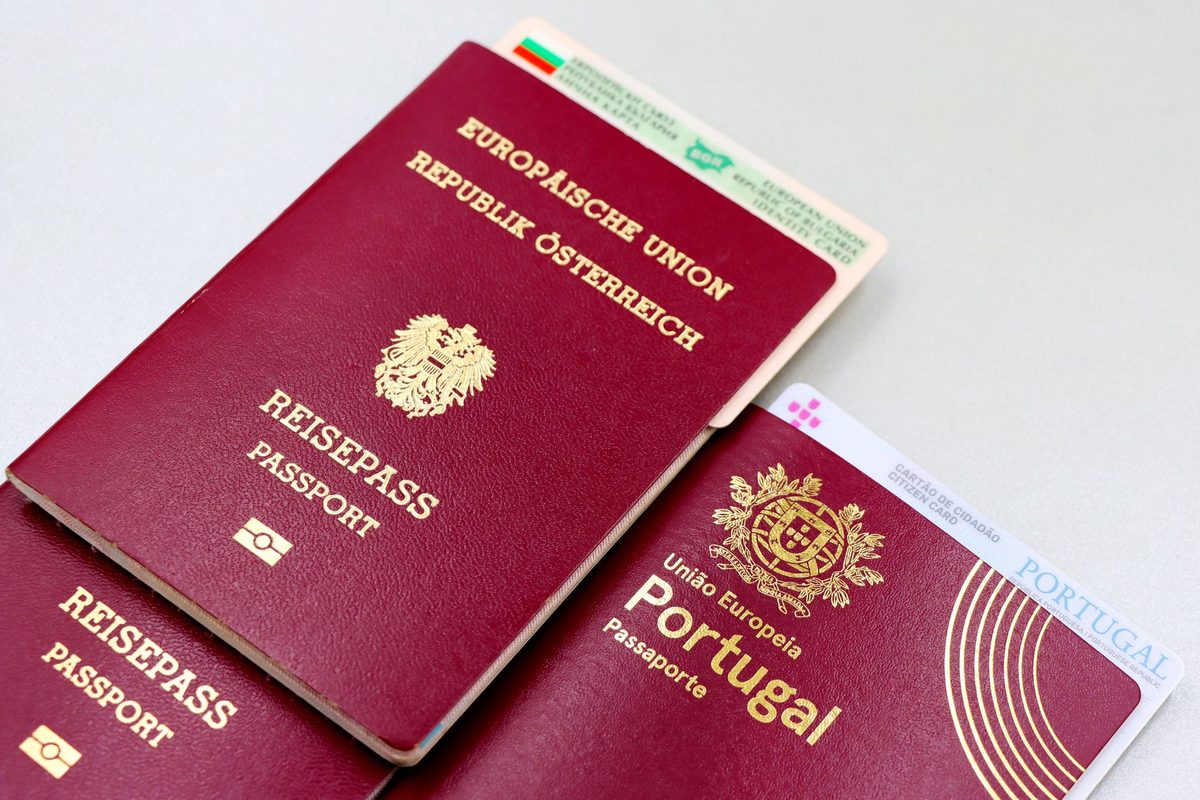
A valid national identity card is sufficient for travel to Greece. No passport is required, and children need their own document rather than an entry on a parent’s. You are not registered in EES and no time limit applies to an ordinary visit.
One live change is worth checking before you pack. Under EU rules on identity card security, cards lacking the international security standard or a machine-readable zone ceased to be valid travel documents on 3 August 2026 — a month before this article was published. Non-biometric but machine-readable cards remain valid until 3 August 2031. Driving licences, bank cards and tax cards have never been travel documents and are not accepted.
Applying for a Schengen Visa Through Greece
If you need a visa, you apply to the country that is your sole destination. Where you are visiting several, you apply to your main destination judged by length of stay, or by purpose where the days are equal. Where there is no main destination, you apply to the country of first entry. Applications go to the Greek consulate with jurisdiction over your place of residence.
Fees. Ninety euros for an adult, forty-five for a child aged six to eleven, free for under-sixes. These have been unchanged since June 2024. Several commercial sites are circulating a claim that the fee rises from eighty to ninety euros in June 2026; that is a garbled account of the 2024 change and it is false.
Timing. Processing takes fifteen calendar days, extendable to forty-five where further scrutiny is required, and for certain nationalities consultation with other member states adds up to another fourteen. You may lodge an application up to six months before travel and, as a rule, no later than fifteen days before. Applying two months out is sensible; applying three weeks out is a gamble.
Documents. Evidence of the purpose of your journey, accommodation, sufficient means, and an intention to leave. A passport with at least two blank pages, issued within ten years and valid at least three months beyond departure. A photograph to international standard, and fingerprints unless yours were taken for a visa in the previous fifty-nine months.
Insurance. Travel medical insurance with minimum cover of thirty thousand euros, valid across the Schengen area for the whole stay, covering emergency treatment, hospital care, medical repatriation and death. This is a visa requirement and applies to visa applicants only — see the correction below.
Two Greece-specific points. Where a friend, relative or company in Greece writes you an invitation, the signature must be attested by a competent Greek authority, meaning a KEP citizen service centre or a police station. And Greece outsources visa intake to different partners in different countries — VFS Global in some, Global Visa Center World in others, with some posts still taking applications directly — so check the page of the Greek mission covering your country rather than assuming. Be aware that individual consulate pages are demonstrably out of date in places, still publishing the superseded eighty-euro fee and old lodging windows. Where a consulate page and the European Commission disagree, the Commission is right.
Recent Changes to the Visa-Exempt List
Vanuatu was moved to the visa-required list with effect from early February 2025, following concerns about its citizenship-by-investment scheme. In November 2025 the EU strengthened its visa suspension mechanism, adding grounds covering investor citizenship schemes, hybrid threats and human rights, and lowering the threshold that triggers it.
The first use of that new mechanism affected Georgia from 6 March 2026, for twelve months. It is narrower than the headlines suggested: the suspension applies to diplomatic, service and official passports only. Holders of ordinary Georgian biometric passports remain visa-exempt. No other country was added to or removed from the list during 2025 and 2026.

Arriving at Athens International Airport
Athens airport splits into two lettered areas in the Main Terminal Building plus a Satellite Terminal reached by an underground link. Area A, gates A1 to A27, handles non-Schengen traffic. Area B, gates B1 to B31, handles Schengen and domestic Greek flights. The Satellite Terminal covers gates C15 to C40.
Area A is where flights from the UK, Turkey, Israel, Egypt, the Gulf states, the Balkans and the Caucasus arrive — and, counter-intuitively, flights from Cyprus and Ireland, which are EU but not Schengen. A transfer within Area B needs no passport control and no rescreening. Any transfer between A and B means passport control plus a fresh security check, so build time in.
Passport control is run by the Hellenic Police, with separate flows for EU documents and non-EU passports. Automated eGates operate in the Main Terminal Building only, for nationals of EU, EEA and Swiss countries aged over twelve holding a biometric passport, with no pre-registration needed. Remove hats and sunglasses, present the passport open at the photo page with any cover removed, and leave the trolley behind — it will not fit through.
Queues, honestly. The airport’s standing advice is to arrive at least two and a half hours before departure, with an explicit warning that passport control may be significantly affected. Reporting from May 2026, before the peak, described waits of at least two hours for non-Schengen checks, with the airport processing around six thousand third-country travellers a day and expecting roughly double that at the summer peak. Comparable European hubs saw waits roughly double year on year after EES came in. No reliable off-season figures have been published, so we will not guess at them; if you are arriving in February, expect it to be considerably better than the above.
Once you are through, our guide to getting from Athens airport to the city centre covers the metro, the express buses and the fixed taxi fare.
What a Border Officer Can Ask You For
Under the Schengen Borders Code an officer may require a valid travel document meeting both validity tests, a visa where one is needed, justification of the purpose and conditions of your stay, and evidence of sufficient means for the visit and your return. They may ask for a return or onward ticket, proof of accommodation, and an itinerary.
Greece publishes an actual figure for sufficient means, which most guides omit because it is buried in the border guards’ handbook: fifty euros per person per day, with a minimum of three hundred euros for a stay of up to five days. Both amounts are halved for minors, so twenty-five euros a day and a hundred and fifty euro minimum. Cash, travellers’ cheques, credit cards and sponsorship declarations are all acceptable proof. For context, Greece sits mid-table in Europe — Croatia, Estonia and Slovenia specify seventy euros a day, Germany forty-five, while Austria and Cyprus set no figure at all.
In practice, tourists arriving on a return ticket with a hotel booking are rarely asked for any of this. Have the booking confirmation reachable on your phone and you will almost certainly never need it. Our guide to how much an Athens trip costs gives a realistic sense of daily spending.
Ferries, Cruises and Sea Arrivals
EES applies at every external Schengen crossing point, not only airports, so cruise and international ferry passengers are enrolled at the port. In practice this rarely affects Athens visitors, because Piraeus handles overwhelmingly domestic and intra-Schengen traffic; see our Piraeus port guide for how the terminals work. The Greek ports that function as external borders are the eastern islands with Turkish ferry links — Chios, Lesvos, Samos, Kos, Rhodes, Leros, Kalymnos and Kastellorizo. A day trip to the Turkish coast from any of those islands takes you out of the Schengen area and back in, with the entry and exit both recorded.
Nine Things People Get Wrong
“I need to apply for ETIAS before I go.” No. It is not in operation and no applications are being collected. Anyone selling you one is defrauding you.
“My passport is valid for another eight months, so I am fine.” Not necessarily. The issue date test is separate, and it is the one that strands British travellers at check-in.
“The ninety days reset when I leave.” No. The window rolls; days only become available again one hundred and eighty days after they were used.
“It is ninety days per country.” No. One pooled allowance across all twenty-nine EES states. Cyprus is the genuine exception, counted separately.
“I will get a stamp as proof of my dates.” You will not. Stamping was abolished on 10 April 2026. Use the EU’s official calculator instead.
“Travel insurance is required to enter Greece.” Not for visa-exempt visitors. The thirty-thousand-euro requirement applies to visa applicants at the point of application. It is not one of the entry conditions in the Schengen Borders Code, and Greece’s own entry in the border guards’ handbook does not mention it. Many competing articles list it alongside the return ticket and proof of funds as though it were equivalent, and they are wrong. Buy insurance anyway, because Greek hospital treatment is not free to visitors — but buy it as sensible practice, not because a border officer will demand it.
“EU citizens need a passport for Greece.” No, a compliant national ID card is enough.
“EU citizens get fingerprinted under EES.” No. They are explicitly excluded.
“Georgians now need a visa.” Only holders of diplomatic, service and official passports. Ordinary biometric passport holders remain visa-free.
A Sensible Pre-Departure Sequence
Six months out, check both passport tests — the issue date and the expiry — and renew if either fails. If you need a visa, begin the application now rather than later. Three months out, book accommodation and a return flight, since both may be asked for. One month out, buy travel insurance and check whether the Greek public holiday calendar affects your dates. The week before, save your hotel confirmation offline and check the EU calculator if you have travelled in Europe recently. Our Athens packing list and guide to SIM cards and staying connected cover the rest of the pre-flight admin.
Frequently Asked Questions
Do I need a visa to visit Athens as a tourist? Not if you hold an EU, EEA or Swiss document, and not if you hold a passport from one of the roughly sixty visa-exempt countries including the US, UK, Canada, Australia and New Zealand. Everyone else needs a Schengen short-stay visa arranged before travel.
Is ETIAS required for Greece in 2026? No. As of September 2026 ETIAS is not in operation, no applications are being taken, and the official EU site gives no launch date. Any website offering to sell you one is fraudulent.
Will my passport be stamped at Athens airport? No. Manual stamping was abolished across the Schengen area on 10 April 2026 and replaced by the digital EES record.
How long can I stay in Greece without a visa? Ninety days in any rolling one-hundred-and-eighty-day period, and that allowance is shared across all twenty-nine EES countries rather than granted separately for Greece.
How much money do I need to show to enter Greece? Greece specifies fifty euros per person per day, with a minimum of three hundred euros for stays of up to five days, halved for minors. Cash, cards and sponsorship declarations all count. Tourists on a return ticket are rarely asked.
How long does the EES check take at Athens airport? Roughly seventy to ninety seconds for a first registration according to the Commission and IATA, though the airports’ own trade body says up to five minutes is realistic. Later crossings are much faster because your biometrics are already on file. Athens airport advises allowing two and a half hours before departure.
Final Thoughts
Almost everyone reading this needs to do exactly two things: confirm that their passport passes both validity tests, and count their recent Schengen days honestly. The rest — the biometric enrolment, the vanished stamp, the authorisation that has not launched — is background that will not cost you anything as long as those two boxes are ticked. Check the issue date on your passport today. It takes ten seconds and it is the single most common reason people are turned away at the gate for a trip they have already paid for.
Rules in this area are moving quickly, and dates have slipped before. Verify anything time-sensitive against the European Commission’s own pages and your national foreign ministry before you fly.
Back to the main guide: for itineraries, budgets, timing and everything else you need before you fly, return to our complete guide to planning your Athens trip, or read on about the best time to visit Athens month by month and how safe Athens is for tourists.