This article contains advertising. Some of the hotel, tour, activity, flight and transfer links in it are paid links: if you book through one, we get a commission from the booking company, and your price is the same either way. It never affects what we recommend. Affiliate disclosure
Yes. The tap water in central Athens is safe to drink straight from the tap: it comes from EYDAP, the city’s water company, which treats it and tests it every day. So if you’re asking can you drink tap water in Athens, the practical answer is to fill your bottle at the sink and spend the saving on a freddo espresso. The answer only wobbles in two places: inside buildings whose own pipes or tanks let the water down, and on most islands, which run their own supplies.
This page is for first-time visitors working out whether to drink from the tap, where to refill and what a bottle of water should cost, and it’s one piece of our practical Athens tips. The one caveat that matters: EYDAP answers for the water it delivers to your building, not for the building’s own plumbing. Details checked 26 September 2026 against EYDAP, the Ministry of Development’s bottled-water price decision, the Ministry of Culture’s site rules and the national rules for food-service businesses.
| Question | Short answer |
|---|---|
| Safe to drink from the tap? | Yes, on the EYDAP mains in central Athens, Piraeus and most suburbs |
| Who tests it? | EYDAP, daily, in accredited laboratories: about 120,000 analyses a year |
| Where does it come from? | Four reservoirs: Mornos, Evinos, Yliki and Marathon |
| What does a refill cost? | Nothing, from the cold tap in your hotel or apartment |
| Capped price of a 500 ml bottle | €0.50 at museum, archaeological-site and bus-station canteens; €0.60 at the airport and on ferries (standing customers) |
| When to buy bottled instead | A building with a storage tank, water that looks or smells wrong, a ferry day |
| The islands | A separate question: ask your host on each island |
| Best habit | A 1-litre bottle, refilled at base in the morning and again mid-afternoon |
What’s changed in 2026?
Two things have moved since most of the answers online were written. Neither changes the verdict on the tap.
Attica has been through a water emergency. After a run of dry seasons, emergency measures for Attica and the Dodecanese islands of Leros and Patmos were being considered on 27 November 2025, and by 29 November the region’s reservoirs held less than 30% of their capacity. The winter was kinder. On 8 April 2026 the Mornos reservoir, the largest in the system, held 491.6 million cubic metres of water, nearly three times the 167.8 million it held on 10 October 2025. The emergency was about how much water Attica has, not about what comes out of the tap, and the official response has focused on securing new supply.
What it asks of you is small. Drink the tap water, and don’t waste it: short showers and reusing towels are the easy wins, and in a dry year they’re more than a hotel slogan.
The bottled-water price cap is narrower than a flat €0.50 everywhere. The Ministry of Development’s decision 84429/2022 caps a 500 ml bottle at €0.50 only in listed places such as museums, archaeological sites, intercity bus stations and ticketed beaches, only for customers served standing at the counter, and at €0.60 at airports and on passenger ships. A kiosk on a Plaka corner isn’t on the list, and nor is the café table where you sit down.
Can you drink tap water in Athens? What EYDAP actually says
Most answers to this question stop at “yes, it’s fine”. The more useful answer is who says so, and how they check.
Athens gets its water from EYDAP (ΕΥΔΑΠ in Greek), the Athens Water Supply and Sewerage Company. EYDAP states that the drinking water it supplies to Athens fully meets Greece’s regulation on the quality of water intended for human consumption, the joint ministerial decision that writes European drinking-water standards into Greek law. That’s a legal benchmark rather than a marketing line, and it’s the same standard every public water supplier in the country is held to.
The testing is where the yes gets earned. EYDAP runs daily quality checks on raw and treated water in chemical and microbiological laboratories accredited to ISO/IEC 17025, a standard they have held since 2005, and those checks cover 19 chemical and 6 microbiological parameters. Over a year that comes to about 120,000 analyses. Most travellers decide on the strength of a receptionist’s shrug. This is a better basis.
Safe doesn’t mean tasteless. Like most big-city supplies, Athens water is disinfected on its way to you, and some visitors notice a faint swimming-pool note, especially from a tap that hasn’t been used for a while. Chill a jug in the fridge for an hour and most of it fades; a slice of lemon hides the rest. If you still don’t like it, that’s a matter of taste, not a warning sign, and a cheap supermarket bottle solves it.
Verdict: Drink it. For a city break in Athens, buying bottled water is a habit, not a precaution.
Where does Athens tap water come from?
Athens has never had much water of its own, so its supply starts a long way off. EYDAP names four sources for the raw water it treats, and only one of them is in Attica.
| Reservoir | Where it is | What it is |
|---|---|---|
| Mornos | The mountains of Phocis, central Greece | A dammed river valley, and the largest reservoir in the system |
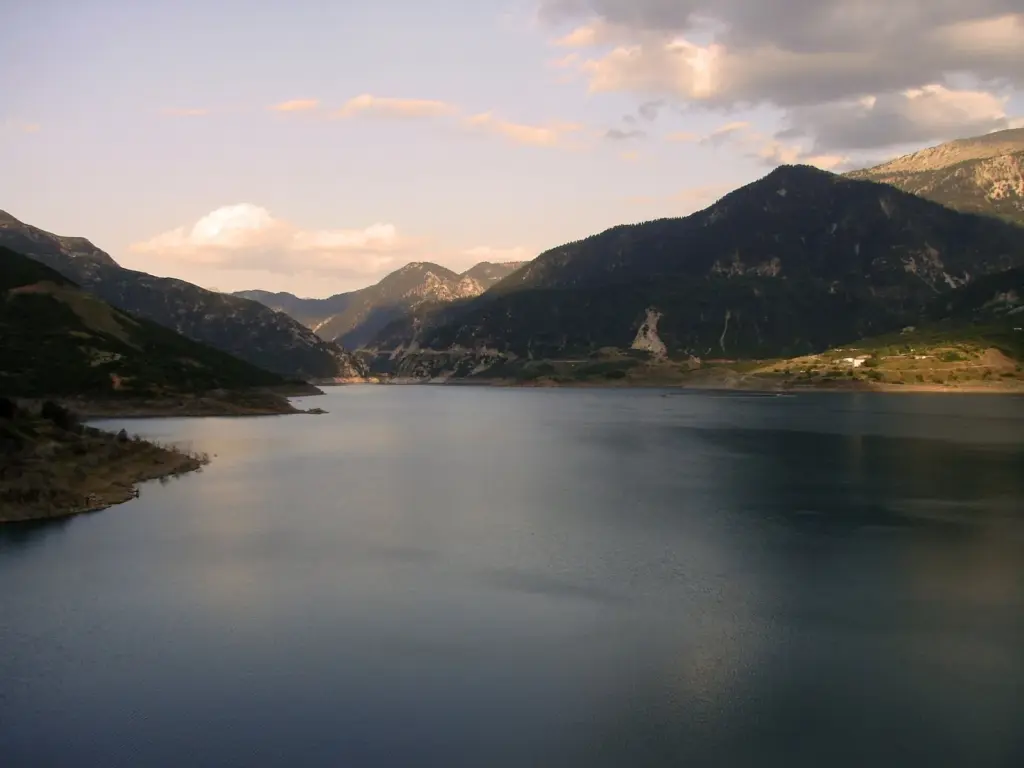
| Evinos | Aetolia-Acarnania, western Greece | A dammed river valley, the most distant of the four |
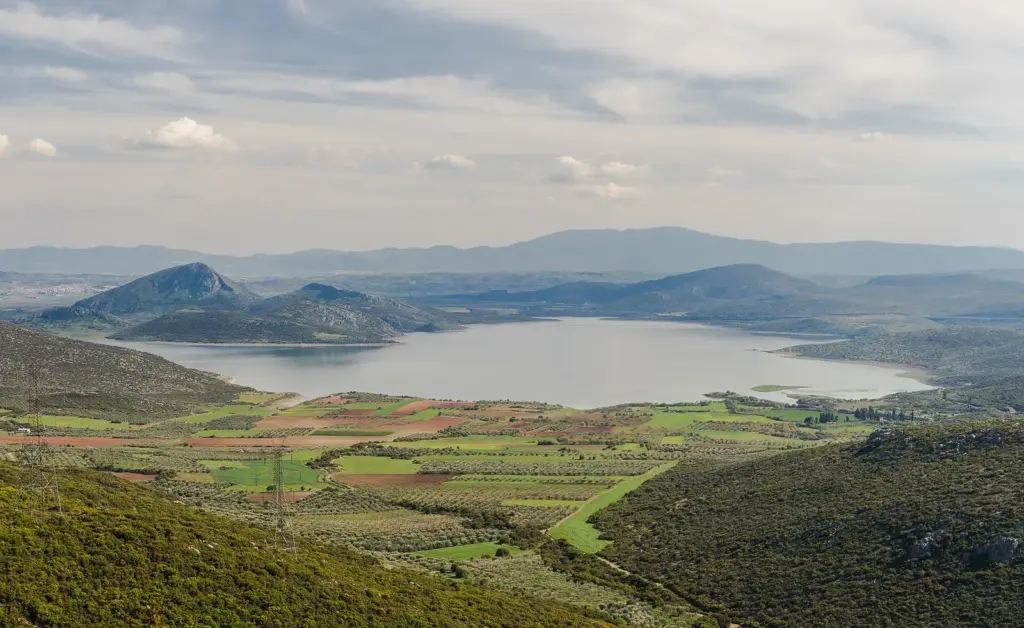
| Yliki | Boeotia, north-west of Athens | A natural lake rather than a man-made one |
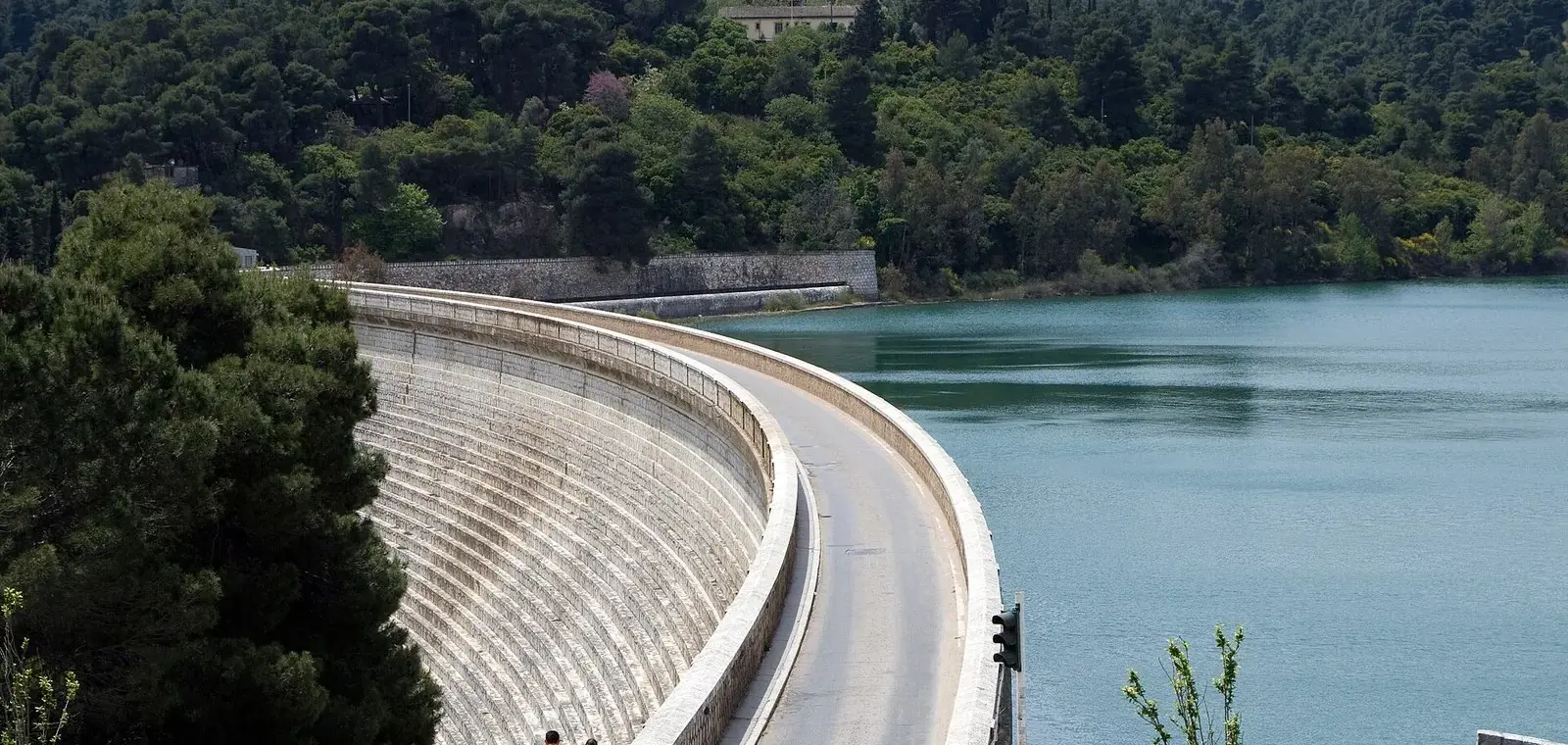
| Marathon | North-east Attica | The closest to the city, held back by the marble-faced Marathon Dam |
From the distant reservoirs the water travels to Athens by aqueduct and passes through EYDAP’s treatment plants before it enters the city network. The laboratory checks follow it along that chain, from the raw water to the treated water in the pipes. The practical upshot is that the water in a Koukaki apartment and a Kolonaki hotel is the same water. What differs is the building.
That long supply line is also why the drought mattered. When the rain fails in the mountains of central Greece, Athens feels it months later, whatever the weather in Syntagma. Worth remembering on a hot afternoon when the shower has been running for ten minutes.
Is the tap water in your hotel or apartment safe to drink?
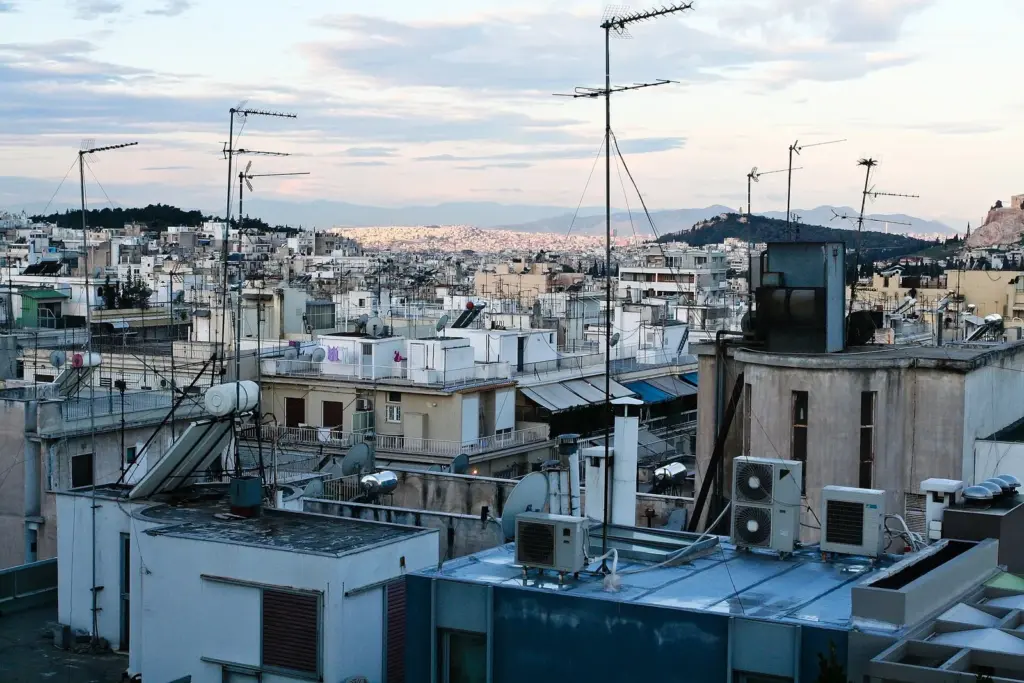
Almost always, and the reason for the “almost” is plumbing rather than EYDAP. The company’s checks cover the water it delivers. Once that water passes into a building, the pipes, any storage tank and the taps belong to the owner, and that last stretch is where taste and quality can change.
Modern and renovated hotels are the easy case. A hotel fed straight from the mains, with pipes that are looked after, gives you the same water EYDAP tested. Fill up from the cold tap in the bathroom and get on with your day.
Older apartment blocks are where to ask one question. Some buildings store water in a tank, and the water in your glass is then only as good as that tank’s upkeep. You won’t see it from the flat, so ask your host: “Is the drinking water straight from the mains?” A clear yes means drink it. A pause, or talk of a tank, means buy bottled for drinking and keep the tap for the kettle and the washing-up.
Hot water is not drinking water. In many Athens flats it comes from a rooftop solar heater or an electric boiler, where it sits warm for hours. Drink from the cold tap only, and run it for a few seconds first if the room has been empty.
Three signs mean switch to bottled until someone checks: water that runs brown or yellow, a smell of anything beyond a faint hint of disinfectant, or cloudiness that doesn’t clear. Cloudiness that clears from the bottom of the glass upwards within a minute is only air. Tell reception either way; a well-run hotel will want to know.
If you travel with a kettle, check the sockets before you pack it: our guide to Greek plugs and adapters covers the round two-pin sockets you’ll find.
Plan it: ask the mains-or-tank question at check-in, drink from the cold tap, and keep one sealed bottle in the room for the first night if you arrive late and tired.
Athens, Piraeus and the islands: where does the answer change?
Everything above belongs to EYDAP’s network, which covers central Athens, Piraeus and the suburbs of the Athens basin. Leave that network and you’re asking a new question.
Piraeus is a separate city with its own mayor, but its taps run on the same Athens supply, so the answer holds right up to the port. The ferry is where it stops: a ship carries its own water, and a sealed bottle from the canteen is the sensible buy for the crossing.
The suburbs and the Athens Riviera are mostly on the same system. Further out in Attica, some towns run municipal networks of their own, so if you’re staying well outside the city, ask your host rather than assume.
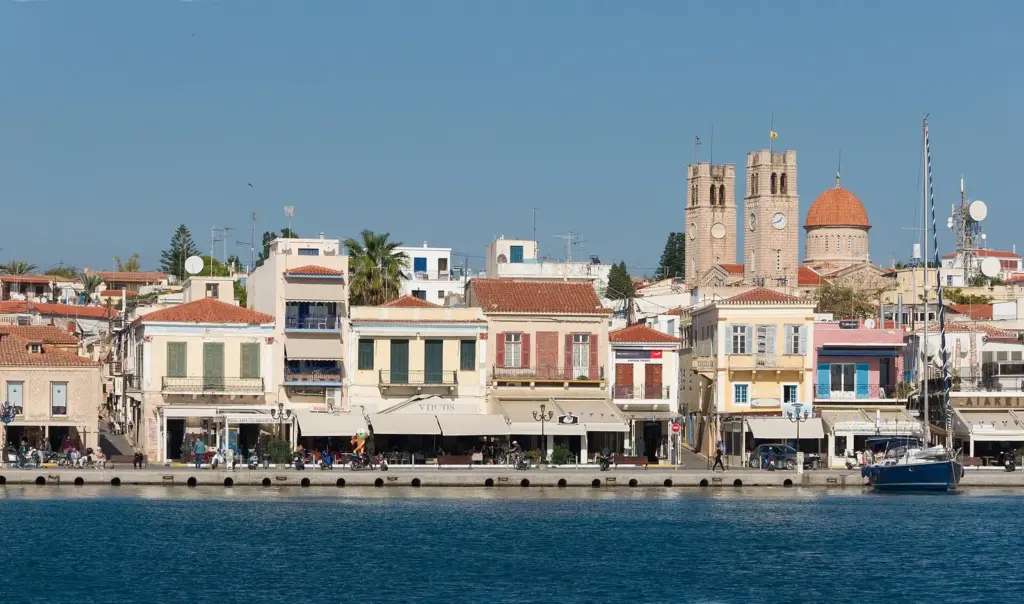
The islands are a patchwork. Each has its own supply, usually run by the local municipality, and the sources vary: springs, boreholes and reservoirs on the greener islands, desalination on many of the dry ones in the Aegean, and in bad years water shipped in by tanker to some small islands. The water at your tap depends on all of that, on the season and on the building. The drought didn’t stop at the coast either: emergency measures were being considered for Leros and Patmos alongside Attica on 27 November 2025.
| Where you are | Whose water | Our call |
|---|---|---|
| Central Athens | EYDAP mains | Drink from the cold tap |
| Piraeus | EYDAP mains | Drink from the tap ashore; buy a bottle for the crossing |
| Suburbs and the Riviera | Mostly EYDAP; some outer Attica towns run their own | Drink it unless your host says otherwise |
| On a ferry | The ship’s own supply | Buy sealed: capped at €0.60 for 500 ml at the counter |
| Any island | The island’s own supply | Ask your host on arrival and follow the local answer |
Our rule for a new island is simple: drink sealed bottled water until someone who lives there tells you the tap is fine, and believe them over any website, this one included. A filter bottle is no substitute for that advice, because most filters don’t take out salt, and salt is the usual complaint where supplies are stretched.
Three questions at check-in settle it. Can we drink the tap water here, and do you drink it yourselves? Is the house on the town supply, or on a tank or cistern? And is the answer the same in August as in May? The second answer usually explains the first, and a host who hesitates over any of them has told you what you need to know.
Refill map: where to fill a bottle in Athens
There’s no official refill map of Athens, so the useful map is the one below: the places you’ll pass anyway, what each one gives you, and what it costs.
| Where you are | How to top up | Cost |
|---|---|---|
| Your hotel or apartment | Cold tap, if mains-fed | Free |
| A café or taverna | Ask for tap water with your order | Bottled only if you agree to it |
| Museum or archaeological-site canteen | Sealed bottle from the counter | Up to €0.50 for 500 ml, standing |
| Intercity bus station | Canteen counter | Up to €0.50 for 500 ml, standing |
| Ticketed beach on the Riviera | Beach canteen counter | Up to €0.50 for 500 ml, standing |
| Athens airport | Café or canteen counter | Up to €0.60 for 500 ml, standing |
| Ferry from Piraeus or Rafina | Ship’s canteen | Up to €0.60 for 500 ml, standing |
| Street kiosk or mini-market | The fridge by the till | Not capped: prices vary |
| Public drinking fountain | Where one is mapped and running | Free, if it works |
For fountains, use OpenStreetMap. Volunteers tag drinking-water taps on it, and they show up as a small tap symbol when you zoom right in on the centre. Apps built on the same data, such as Organic Maps and OsmAnd, let you search for “drinking water” offline. Treat every mapped fountain as a bonus rather than a plan: a tap can be dry, broken or switched off, and there’s no official list to check it against. Drink only from something clearly built as a drinking fountain. An ornamental fountain, a garden tap or an old spring is not drinking water, however inviting it looks at 15:00.
The airport deserves a word of its own. Carry your bottle through security empty; it saves any argument about liquids. Don’t count on public refill fountains airside; plan on buying a sealed bottle at a counter there, where the €0.60 cap applies to standing customers.
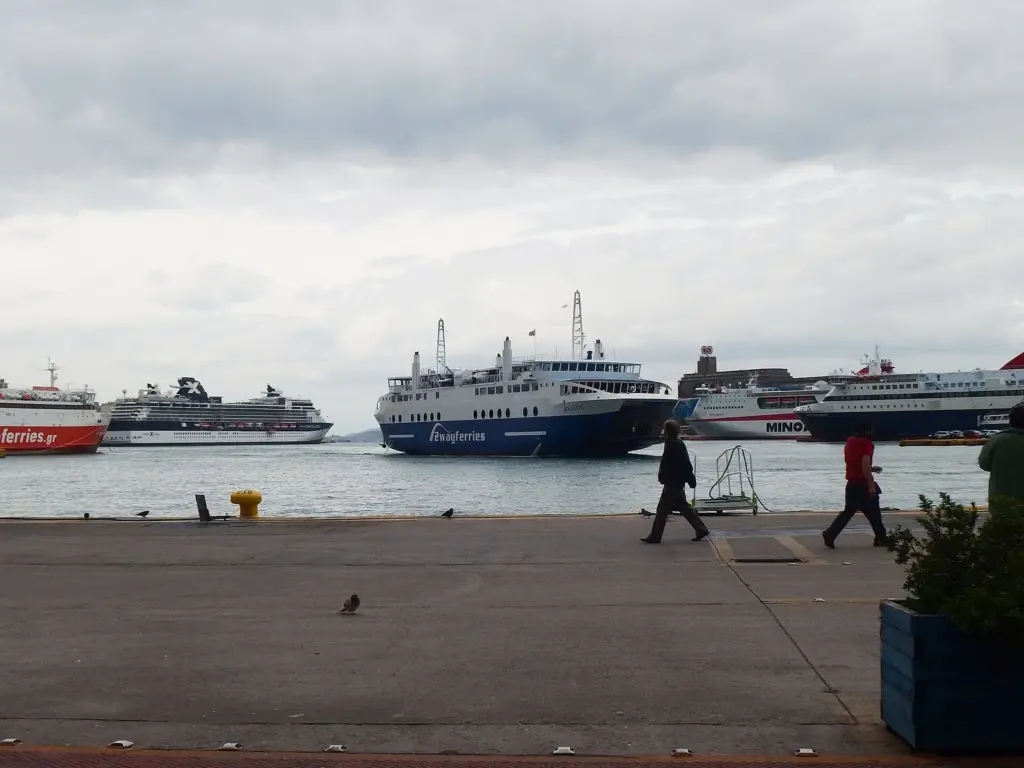
On a ferry day with hours to fill before sailing, drop your bags first (our luggage storage in Athens guide lists the options), fill your bottle at the last tap you trust, and buy the crossing’s water on board, where the price is capped.
Plan it: a litre from the hotel tap at breakfast, a top-up when you come back mid-afternoon and a capped bottle in reserve for museum days will carry most visitors through a summer day in the centre without a single kiosk stop.
What does bottled water cost in Athens?
Less than you might fear, if you buy it in the right place. Greece caps the price of bottled water where you’re effectively a captive customer, and leaves everywhere else to the market.
| Where you buy | 500 ml | 750 ml |
|---|---|---|
| Museums, archaeological sites, intercity bus stations, ticketed beaches, trains, cinemas and theatres, sports venues, hospitals | €0.50 max | €0.75 max |
| Airports and passenger ships | €0.60 max | €0.90 max |
| Street kiosks, mini-markets, supermarkets | Not capped | Not capped |
| Seated in a café or restaurant | Menu price | Menu price |
The capped prices come from the Ministry of Development’s decision 84429/2022 and include VAT, chilled or not. Three details decide whether you actually get them. The price applies to customers served standing at the counter; sit down and the outlet’s seated prices apply. Canteens must display a notice saying that bottled water, sandwiches, toasts, coffee and tea are available to standing customers at controlled prices. And the price list has to be on show. Charged more than the cap for a small bottle at a museum counter? Point at the notice. The required wording is Greek, so two phrases are worth knowing: για όρθιους πελάτες (gia orthious pelates) means “for standing customers”, and σε ελεγχόμενες τιμές (se elegchomenes times) means “at controlled prices”.
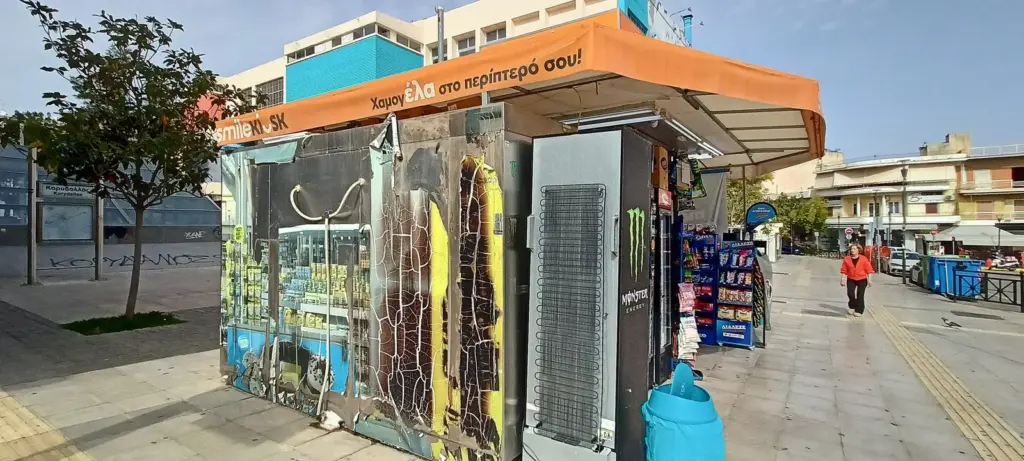
Outside those places, prices are whatever the shop sets. The periptero, the street kiosk you’ll pass on almost every block in the centre, is the most convenient option and seldom the cheapest. A supermarket is where 1.5-litre bottles and six-packs make sense, if you’re self-catering or heading to an island with doubtful taps. Expect to pay more on a tourist street than a few blocks away. We haven’t quoted kiosk or supermarket prices because nobody regulates them and they move.
Verdict: in the city, bottled water should be an emergency purchase rather than a daily one. Keep it for ferries, islands and long museum days when you’ve run dry.
How do you ask for tap water in a taverna or café?
A glass of water with your coffee is a Greek habit, and in plenty of cafés it arrives without asking. Tavernas vary: some still bring a jug of tap water as a matter of course, others arrive with a sealed bottle before you’ve opened the menu.
You’re entitled to choose. Under Greek market rules, a restaurant can’t serve you bottled water, or bread, and charge for it without your prior consent, and it can’t add a cover charge for cutlery, napkins and the like. The price list has to be displayed outside the entrance, in Greek at least, and offered to you before you order, and the bill must be itemised. So if a bottle you didn’t ask for lands on the table, you can send it back or ask for tap water instead. Do it with a smile, and do it early, before the cap comes off.
Tap water is nero tis vrysis (νερό της βρύσης). A jug of water is mia kanata nero (μια κανάτα νερό), a bottle is ena boukali nero (ένα μπουκάλι νερό) and sparkling is anthrakoucho (ανθρακούχο). Kryo, parakalo (κρύο, παρακαλώ) gets it cold.
Water isn’t a tipping question, but the bill it lands on might be: our guide to tipping in Greece covers what to leave and how.
How much water should you carry on a hot day in Athens?
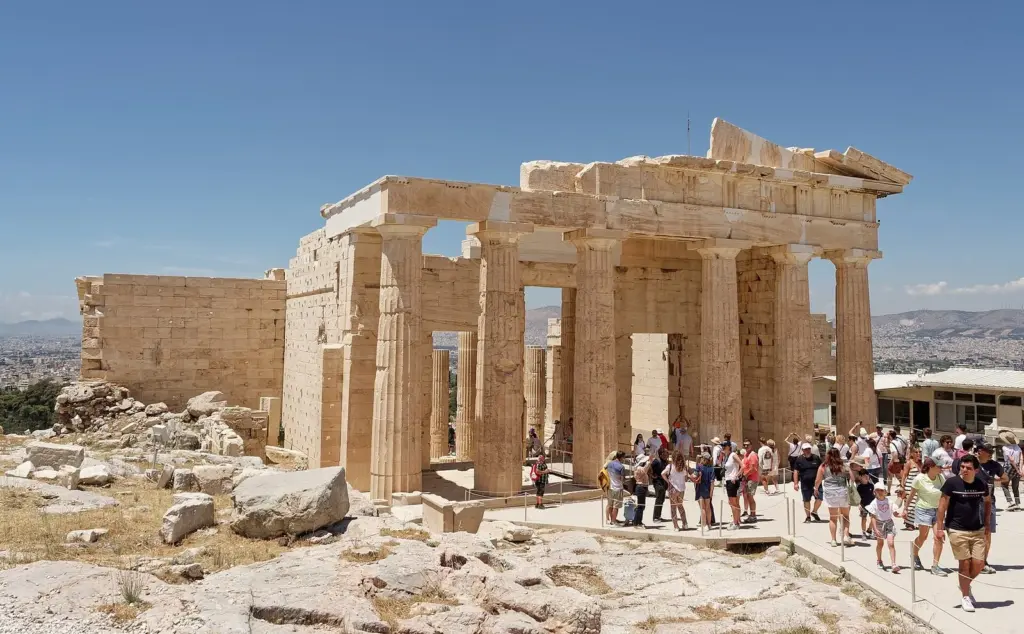
More than you think, in one bottle you can refill rather than a string of small ones. Athens in July and August is hot, bright and dry, and the big sights are exposed: the Acropolis has very little shade, and the marble underfoot throws the heat back at you. By 14:00 in August the rock works like a hotplate.
The heat now shapes opening hours too. In heatwaves the Ministry of Culture closes the Acropolis for the hottest part of the day: on 8 July 2025 it stayed shut until 17:00, and there were similar closures in July 2023 and in June 2024. Put the big outdoor sites in the first hours of the morning and build your water around that.
One rule to know before you climb: the Ministry’s operating rules for the Acropolis, the Ancient Agora and the Olympieion list eating and drinking among the things not allowed on site. Carry your bottle anyway, drink well before you go through the gate, and top up as soon as you’re out.
A refill rhythm that works for a summer day in the centre:
- Before you leave: fill a 1-litre bottle from the cold tap and drink a glass while you find your hat.
- 08:00, the Acropolis: be at the gate as it opens, when the rock is at its coolest.
- Late morning, a museum: move indoors and, if you’ve run dry, buy a capped bottle at the canteen counter.
- Lunch: ask for tap water with the meal and finish the jug.
- Mid-afternoon, back to base: sit out the worst of the heat, refill and chill a second bottle.
- Evening: take the cold bottle out with you; you’ll be glad of it on Philopappos Hill (Filopappou) at sunset.
A refillable bottle earns its place on any Athens packing list. One litre is the useful size: small enough for a day bag, big enough to last a morning. For everything else that worries first-time visitors, our guide to is Athens safe takes it point by point.
What to skip
Skip the filter bottle in Athens. EYDAP has done the filtering, and a filter only slows you down at the tap. If you already own one, it’s more use on an island, and even there it’s no substitute for local advice.
Skip the six-pack on day one. Hauling nine litres up to a fourth-floor flat for a four-night stay is a workout you don’t need. Buy one bottle for the first night if you like, then use the tap.
Skip boiling it. Athens water is already treated and tested. Boil only if a local notice tells you to.
Skip the ornamental fountains. The water in a square’s decorative fountain, a park’s garden tap or a roadside spring isn’t drinking water.
Skip the idea that one answer covers Greece. Athens tap water is fine. The island you sail to next is a different system with its own answer.
Don’t waste it. After the 2025 emergency, leaving the tap running while you brush your teeth, or taking a second long shower in the afternoon, isn’t a neutral act here.
Verdict: the only water purchases most visitors to Athens need are a refillable bottle and the odd capped bottle at a museum or on a ferry. For money, plugs, tipping and the rest of the basics, our Athens practical guide brings it all together.
Athens Tap Water FAQ
Can you drink tap water in Athens hotels?
Yes, in most. Hotels in central Athens are on EYDAP’s mains, the same tested water as everywhere else in the city. The variable is the building: if the hotel stores water in a tank or has very old pipes, ask reception whether the drinking water comes straight from the mains. Drink from the cold tap, not the hot, and run it briefly first.
Can you drink tap water at Athens airport?
The airport isn’t the place to test it. Carry your bottle through security empty, then buy a sealed bottle airside: under the Ministry of Development’s price decision, airport canteens and cafés can charge standing customers no more than €0.60 for 500 ml. Once you reach the city, switch to the cold tap at your hotel.
Do you need to boil tap water in Athens?
No. EYDAP’s water is already treated, and the company tests raw and treated water every day in accredited laboratories. Boiling does no harm, and it can soften the faint taste of the disinfectant, but it isn’t needed for safety. Follow any local water advisory, and if you suspect the water is unsafe, switch to bottled water and ask your host or the local authority for advice.
Can you drink the tap water in Greece outside Athens?
It depends where. Each island and many mainland towns run their own supplies, drawing on springs, boreholes, reservoirs or desalination, and quality and taste vary with the source, the season and the building. On arrival, ask your host whether locals drink the tap water, and follow that answer. Until then, drink sealed bottled water.
Is it safe to drink from public fountains in Athens?
Only from something clearly built as a drinking fountain. Volunteers map these on OpenStreetMap, but there’s no official list, and a mapped tap can be dry or broken when you arrive. Ornamental fountains, garden taps and old springs are not drinking water. Treat a working fountain as a bonus and your hotel tap as the plan.
How much does a bottle of water cost in Athens?
It depends where you buy it. At museums, archaeological sites, intercity bus stations and ticketed beaches, a 500 ml bottle is capped at €0.50 for customers served standing; at the airport and on ferries the cap is €0.60. Street kiosks, mini-markets and supermarkets set their own prices, and a seated café charges its menu price.
Can visitors from the UK or US drink Athens tap water?
Yes, on the same terms as anyone else. EYDAP reports that its water fully meets the Greek rules on water for human consumption, which rest on European drinking-water standards, and it tests every day. What you’ll notice is the taste, which varies with the disinfectant and a building’s pipes, not any difference in safety.
Related Athens Guides
- Practical Athens Guide: the hub for money, plugs, tipping and the rest of the basics
- Athens Packing List: what to bring for the season you’re travelling in
- Is Athens Safe?: the honest answer for first-time visitors
- Tipping in Greece: what to leave in tavernas, cafés and taxis
Sources and How We Checked
We checked these details on 26 September 2026 against the official sources and news reports below; the page is compiled from them rather than from other travel lists, and no first-hand visit is claimed.
- EYDAP (Athens Water Supply and Sewerage Company): water quality control
- Ministry of Development: decision 84429/2022 (FEK B’ 4692/07-09-2022) on maximum prices at specific points of sale, as set out by the consumer association EKPIZO in controlled prices at specific points of sale
- Region of North Aegean: national rules for food-service businesses (price lists, consent, itemised bills)
- Hellenic Ministry of Culture and Sports: site operating rules on the Odysseus portal
- ProtoThema English: Emergency measures for Attica, Leros and Patmos (27 November 2025) and reservoirs below 30% (29 November 2025)
- GreekReporter: Mornos reserves in April 2026 (10 April 2026)
Athens Tourism Guide is an independent publication. We are not affiliated with the Hellenic Ministry of Culture, OASA, the Greek National Tourism Organisation or any business named here, and no business paid to be included.
Photo Credits
- Lake Yliki, Boeotia: photo by Jebulon, via Wikimedia Commons (CC0)
- Evinos valley, western Greece: photo by Georgios Liakopoulos, via Wikimedia Commons (CC BY-SA 3.0)
- Rooftops in Athens: photo by Sharon Mollerus, via Wikimedia Commons (CC BY 2.0)
- Aegina waterfront: photo by Jebulon, via Wikimedia Commons (CC0)
- Ferries at Piraeus port: photo by Palickap, via Wikimedia Commons (CC BY-SA 4.0)
- Street kiosk in Athens: photo by GreekyAntiKubura, via Wikimedia Commons (CC0)
- Propylaia, Acropolis of Athens: photo by Jakub Hałun, via Wikimedia Commons (CC BY 4.0)
- Marathon Dam and Lake Marathon (featured image): photo by Vitaly, via Wikimedia Commons (CC BY-SA 3.0)