This article contains advertising. Some of the hotel, tour, activity, flight and transfer links in it are paid links: if you book through one, we get a commission from the booking company, and your price is the same either way. It never affects what we recommend. Affiliate disclosure
Greece is the world’s third-largest olive oil producer and consumes more olive oil per capita than any other country (24 litres per person annually vs. Italy’s 11 and Spain’s 14). The Greek olive oil that reaches small-producer estate bottles is among the best in the world — Koroneiki cultivar from Messinia, Manaki from the Peloponnese, and the unique Throuba olives from Thassos. Combined with Mt. Hymettus thyme honey (the wildflower honey Aristotle wrote about), Chian mastiha resin, Crocus sativus saffron from Kozani, and the Aegina pistachios, Greek food products are some of the most-distinctive food souvenirs available anywhere. This is the complete Greek olive oil honey food products guide for 2026 with what to buy, where, and how to identify quality.
Greek Olive Oil: The Headline Product
Greek olive oil is the single most-recommended food souvenir from Athens. The country produces 350,000+ tonnes of olive oil annually, of which 80% is extra virgin (the highest grade). The reasons Greek olive oil consistently outperforms many Italian and Spanish equivalents at international competitions: small-producer dominance (most estates produce less than 5,000 bottles annually), the Koroneiki cultivar’s high polyphenol content, careful early-harvest practices, and cold-pressing tradition.
For broader context, see our Shopping in Athens pillar, our souvenirs guide, and our Varvakios market guide.
What to Look For in Greek Olive Oil
Grade: “Extra Virgin” (Greek: Extra Partheno)
The highest grade — acidity below 0.8%, no defects, no chemical processing. Almost all small-producer Greek olive oil is extra virgin. Avoid “olive oil” without the extra virgin designation (lower grade, blended).
Cultivar / Variety
Koroneiki: the dominant Greek cultivar, especially in Messinia (Peloponnese). High polyphenol content; balanced fruity-peppery-bitter profile.
Manaki: Peloponnese variety. Milder, more delicate, often blended with Koroneiki.
Athinolia: the local Attica variety. Lighter style.
Throuba: the unique wrinkled black olive from Thassos. Used for table olives more than oil.
Kalamata: the famous large dark-purple olive (mostly for table use; some oil production).
Harvest Date
The bottle should show the harvest date (typically October-December). Greek olive oil is best within 18 months of harvest. Premium estates label the harvest date prominently.
Single-Estate vs. Co-Op vs. Blended
Single-estate (one producer, one harvest): highest quality and price. Co-operative (multiple farmers, one bottling): excellent value. Mass-market blended: avoid for serious gifts.
PDO & PGI Designations
Protected Designation of Origin (PDO) and Protected Geographical Indication (PGI) labels guarantee regional authenticity. Key Greek PDO oils: Kalamata, Messinia, Sitia (Crete), Mantineia.
Where to Buy Greek Olive Oil in Athens
Yoleni’s (Solonos, Kolonaki)
The premier Greek gourmet shop in Athens. 50+ premium Greek olive oils, in-store tasting bar, knowledgeable staff. €15-50 per 500ml bottle of premium examples. Worth the visit.
Mastiha Shop (Mitropoleos)
Best for the Chios mastiha products plus a curated Greek-pantry selection including olive oil. €15-35 per 500ml.
The Attica Department Store (Floor 7 Food Hall)
Broadest selection of Greek olive oils in a single shop. €10-50 per 500ml bottle. Cards accepted; staff can advise.
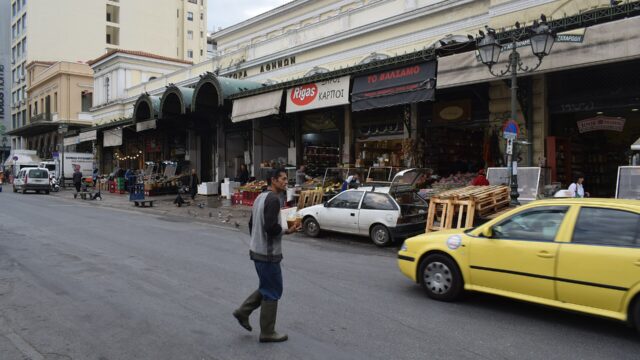
Varvakios Central Market
The historic Athens market has several olive oil vendors selling co-operative and small-producer oils at market prices. €10-25 per 500ml. Cash preferred.
Cooking class: A cooking class that starts with a food market visit and ends with a meal and wine.
Pharmacies (Selected)
Some Athens pharmacies carry Greek olive oil — counter-intuitive but the small-batch organic oils often appear in upscale pharmacy chains.
Greek Honey: The Other Headline
Greek honey is among the best in the world. Greek bees produce honey from wildflowers, mountain herbs (especially thyme), pine, orange blossom, and chestnut. The varied terroir and the survival of traditional small-producer beekeeping make Greek honey distinctive.
Thyme Honey
The headline Greek honey. From bees foraging Greek mountain thyme; particularly famous from Mt. Hymettus (the mountain east of Athens; Aristotle wrote about Hymettus honey in the 4th century BC) and Crete. Distinctive herbal floral character; €12-25 per 500g jar.
Pine Honey
From bees feeding on the resin of pine-tree-aphid secretions. Darker, more mineral, less sweet than thyme honey. €10-20 per 500g.
Orange Blossom Honey
Light citrus-floral; from the Peloponnese citrus groves. €10-18 per 500g.
Wildflower Honey (Polyanthus)
Multi-flower blend from a single beekeeper. The everyday Greek honey. €8-15 per 500g.
Chestnut Honey
From northern Greek chestnut forests. Dark, intense, slightly bitter. €12-20 per 500g.
Other Greek Food Specialty Products
Chios Mastiha
The unique resin from the Pistacia lentiscus tree, grown exclusively on Chios island. Used in liqueur (Mastiha Liqueur), chewing gum, ice cream, and as a baking ingredient. €15-40 per package or bottle. Mastiha Shop on Mitropoleos has the broadest selection.
Greek Mountain Tea (Sideritis)
Dried wildflower mountain herb. The Greek herbal remedy for everything from sleep to colds. €5-10 per pack. Best at Varvakios market.
Greek Saffron (Krokos Kozanis)
From Kozani in northern Greece — among the highest-quality saffron in the world. The PDO designation guarantees authenticity. €15-40 per gram.
Aegina Pistachios
The famous Aegina-island pistachios — sweeter and creamier than the Iranian or Californian varieties. €15-25 per 500g.
Greek Olives
Kalamata (the famous large dark-purple), throuba (Thassos wrinkled black), Chalkidiki (small green), Amfissa (medium-sized brown). Vacuum-sealed packs €5-15.
Loukoumi (Greek Delight)
Rose, mastic, pistachio, and bergamot varieties. €8-20 per box.
Pasteli (Sesame-Honey Bars)
Ancient Greek energy bar; sesame seeds and honey. €3-8 per pack.
Greek Dried Figs
Premium jumbo white figs from Kymi (Evia) or Markopoulo. €10-20 per pack.
Greek Wine
Santorini Assyrtiko, Nemea Agiorgitiko, Naoussa Xinomavro, Mantineia Moschofilero. €15-50 per bottle premium examples. See our wine bars guide.
Greek Spirits
Metaxa brandy (5-star, 7-star, 12-star), Ouzo (Plomari, Babatzim, Mini), Tsipouro (the Greek grape-pomace spirit). €10-50 per bottle.
Greek Cheese
Feta (PDO from Greek mainland), Graviera (the hard Greek cheese), Kasseri (semi-hard), Manouri (whey cheese). €8-25 per 500g. The Varvakios market has the broadest selection; vacuum-sealed packs travel well.
Greek Yogurt
Strained yogurt; the original “Greek yogurt” before the international export. Available fresh at all supermarkets; doesn’t travel internationally.
Greek Spices & Herbs
Greek wild oregano (more aromatic than the Italian), mountain sage, mint, lavender, dill. €3-8 per pack. Varvakios market for the broadest selection.
Yoleni’s: The One-Stop Greek Gourmet Shop
Yoleni’s on Solonos Street (Kolonaki) is the best-known premium Greek-food shop in Athens. The format: ground-floor retail with 500+ Greek-food products (olive oil, honey, wine, spirits, packaged specialities), plus a restaurant and tasting bar on the upper floors. The tasting flights of olive oil, honey, and wine (€15-40) are an excellent introduction. The staff knowledge is exceptional. Visit early in your trip — they can ship items home to most destinations if you can’t carry them in luggage.
Sample Greek-Food Shopping Day
10 AM: Coffee in Kolonaki. 10:30 AM: Yoleni’s tasting flight to learn the Greek olive oil styles. 11:30 AM: Make purchases at Yoleni’s (or note what you want and shop elsewhere). 12:30 PM: Walk to Mitropoleos for the Mastiha Shop visit. 1:30 PM: Lunch at a Plaka taverna. 3 PM: Varvakios Central Market for spices, herbs, olives, and cheeses. 4:30 PM: Final stops at the Attica department store food hall. Total cost: €100-300 for serious Greek-pantry shopping.
Packing Greek Food for International Flights
Liquids over 100ml: checked luggage only. Olive oil, wine, and ouzo all go in checked luggage; wrap glass bottles in clothing for protection.
Honey: often considered “liquid”; check the 100ml rule. Cargo honey in checked luggage if over 100ml.
Cheese: vacuum-sealed travels well; soft cheese (feta) should ideally arrive within 24 hours of departure.
Customs limits: EU travellers no restrictions. US travellers: dry items unrestricted; honey and cheese permitted; meats restricted. Check your home-country customs before serious shopping.
Identifying Quality & Authenticity
Read the label: the bottle should show producer name, harvest date, region of origin, and PDO/PGI designation if applicable.
Look for the small-producer bottlings: the premium Greek oils come in 500ml dark glass bottles with elegant minimal labelling.
Taste before buying when possible: Yoleni’s and several Varvakios olive-oil vendors offer tastings.
Avoid generic “Greek-style”: the international “Greek-style olive oil” is often Spanish or Italian oil rebranded. Buy from Greek shops, not from generic gift shops.
Frequently Asked Questions
What is the best Greek olive oil?
Single-estate extra virgin from Messinia (Peloponnese), particularly Koroneiki cultivar with recent harvest date. Premium Greek oils €15-50 per 500ml bottle. PDO/PGI designation guarantees regional authenticity. Yoleni’s (Solonos, Kolonaki) and the Attica department store food hall have the broadest premium selection.
Where to buy Greek honey in Athens?
Yoleni’s (Kolonaki) for the broadest premium selection; Mastiha Shop (Mitropoleos) for curated quality; Varvakios Central Market for traditional small-producer honey at market prices; the Attica department store food hall. €10-25 per 500g jar.
What is the best Greek thyme honey?
Mt. Hymettus honey (from the mountain east of Athens; the honey Aristotle wrote about in the 4th century BC) and Crete thyme honey. €12-25 per 500g jar.
Can I bring Greek olive oil home?
Yes in checked luggage (over 100ml not allowed in carry-on). Greek customs allow up to 12 litres of olive oil for personal use. Wrap glass bottles in clothing for protection. EU travellers no further restrictions; US travellers no restriction on olive oil.
What is Mastiha?
The unique resin from the Pistacia lentiscus tree, grown exclusively on Chios island. Used in Mastiha Liqueur (the distinctive pine-cedar-flavored Greek spirit), chewing gum, ice cream, and baking. €15-40 per package. Mastiha Shop on Mitropoleos has the broadest Athens selection.
What are the best Greek wines to buy?
For whites: Santorini Assyrtiko (mineral dry), Mantineia Moschofilero (aromatic), Naoussa Malagouzia (tropical). For reds: Nemea Agiorgitiko (friendly), Naoussa Xinomavro (serious tannic). For dessert: Santorini Vinsanto. €15-50 per bottle premium examples.
Is Yoleni’s worth visiting?
Yes. The Solonos Street (Kolonaki) premium gourmet shop has the broadest curated selection of Greek olive oil, honey, wine, and packaged specialities in Athens. The tasting bar (€15-40 for flights of oils, honeys, or wines) is an excellent introduction to the Greek-food landscape. Cards accepted; they can ship home.
Greek Olive Oil: The Cultivar Deep Dive
Koroneiki (Messinia, Crete)
The dominant Greek olive cultivar (60%+ of national production). Known for:
High polyphenol content: the antioxidant compounds that make Greek olive oil particularly healthy.
Balanced profile: fruity-peppery-bitter balance; the “classic Greek olive oil” character.
Stability: ages well; lasts 18-24 months in good storage.
Best examples: Sakellaropoulos, Eleones, Terra Creta, Sitia PDO oils from Crete.
Manaki (Peloponnese)
Secondary Greek cultivar. Profile:
Milder character: less peppery than Koroneiki; more delicate.
Often blended: with Koroneiki for balanced profile.
Best examples: several Nemea-area producers.
Athinolia (Attica)
The Athens-region cultivar. Lighter style; less internationally-known. Produced by Domaine Costa Lazaridi and several smaller Attica producers.
Throuba (Thassos)
Distinctive cultivar producing the unique wrinkled black table olives. Some oil production but mostly table-olive use. The Thassos Throuba PDO designation guarantees authenticity.
Kalamata (Messinia)
The famous large dark-purple olive. Primarily table-olive use; some oil production. The Kalamata PDO designation guarantees Messinia origin.
Greek Olive Oil PDO & PGI Designations
Greece has multiple Protected Designation of Origin (PDO) and Protected Geographical Indication (PGI) olive oils:
PDO Sitia (Eastern Crete): the most-respected Cretan PDO.
PDO Kolymvari (Western Crete): Kolymvari region PDO.
PDO Kalamata (Messinia): the Kalamata region PDO.
PDO Krokees (Laconia): southern Peloponnese.
PDO Lesvos: island PDO.
PDO Chania (Crete): Chania region.
PDO Lakonia: Peloponnese.
PDO Petrina Lakonias: specialised Laconian PDO.
The PDO/PGI label on a bottle guarantees the oil meets origin and quality standards.
The Mt. Hymettus Honey Tradition
Mt. Hymettus rises east of Athens (1,026m altitude). The mountain has produced honey continuously for 3,000+ years. Aristotle described Hymettus honey in his 4th-century-BC botanical writings; the Roman geographer Strabo praised it in the 1st century AD. The current Hymettus honey production:
Thyme honey: the most-famous; the bees forage on the abundant wild thyme on the mountain slopes.
Pine honey: the secondary product; darker and less sweet.
Wildflower honey: the spring blend from multiple flowers.
Mt. Hymettus thyme honey commands premium prices: €15-25 per 500g vs. €8-12 for generic Greek thyme honey. The best examples come from small Hymettus beekeepers; Yoleni’s (Kolonaki) has the broadest selection.
Greek Saffron (Krokos Kozanis) Detail
Greek saffron is among the highest-quality saffron in the world. The Kozani region in northern Greece grows Crocus sativus on volcanic-rich soil at high altitude — the combination produces particularly potent saffron. The Krokos Kozanis PDO designation guarantees:
Origin: grown exclusively in Kozani region.
Quality: top grade (“Coupé”) saffron only.
Hand-picking: traditional production methods.
Pricing: €15-40 per gram for Krokos Kozanis PDO; €25-60 per gram for the highest grades. Available at Yoleni’s, Mastiha Shop, and the Krokos Kozanis Cooperative shops in Athens.
Mastiha: The Chios Resin in Detail
Mastiha (mastic) is the unique resin from the Pistacia lentiscus tree, grown exclusively on Chios island. The production process:
Cultivation: the trees grow only in southern Chios; the soil and climate combination is unique.
Harvest: July-October; small incisions in the bark cause the resin to flow.
Processing: the resin crystallises into small “tears”; collected, cleaned, and graded.
Use: chewing gum, liqueur, cosmetics, baking ingredient, traditional medicine.
Mastiha products at the Athens Mastiha Shop (Mitropoleos Street):
Pure mastiha: €15-30 per package; the cooking and chewing form.
Mastiha liqueur: €15-25 per bottle; the distinctive pine-cedar Greek spirit.
Mastiha cosmetics: €15-40; skin care.
Mastiha sweets: €8-20; loukoumi (Greek delight) with mastiha flavour.
Aegina Pistachios in Detail
The Aegina-island pistachios are the most-respected Greek pistachios:
Variety: the “Aegina Pistachio” (a unique sub-variety of the Pistacia vera).
Characteristics: sweeter and creamier than Iranian or Californian varieties.
Harvest: August-October on Aegina (a Saronic Gulf island about 1 hour 10 minutes from Athens by conventional ferry).
PDO designation: “Fistiki Aeginis” protected origin.
€15-25 per 500g vacuum-sealed; significantly more-expensive than generic pistachios but worth the difference for quality. Available at the Mastiha Shop, Yoleni’s, and the dedicated Aegina pistachio shops in central Athens.
Greek Olives: The Variety Reference
Kalamata Olives
The famous large dark-purple olive from Messinia. Brine-cured; firm flesh; rich complex flavour. The internationally-recognised Greek olive. €5-15 per 500g vacuum-sealed.
Throuba Olives
The unique wrinkled black olive from Thassos. Dry-cured naturally on the tree; concentrated flavour. €8-15 per 500g.
Chalkidiki Olives
Small green olives from Macedonia. Mild; suitable for cocktails and salads. €4-10 per 500g.
Amfissa Olives
Medium-sized brown olives from central Greece. Balanced flavour; popular for general use. €5-12 per 500g.
Volos Olives
Small green olives from Thessaly; less internationally-known but excellent quality.
Greek Mountain Tea (Sideritis)
Sideritis is the umbrella name for several Greek mountain wildflower herbs used as tea:
Sideritis scardica (Olympus mountain tea): the most-famous variety.
Sideritis raeseri (Parnassus mountain tea): from central Greece.
Sideritis syriaca (Crete mountain tea): the Cretan variety.
Traditional Greek remedy for colds, flu, and digestive issues. The dried herb steeps in hot water for 10-15 minutes; pleasant mild herbal flavour. €5-10 per pack (60-100g); a single pack provides 30-50 cups. Best Athens sources: Varvakios Market, Yoleni’s, dedicated Greek-herb shops.
Greek Wine Pairing for the Pantry
The Greek pantry souvenirs pair well with Greek wines:
Olive oil + Santorini Assyrtiko: the classic Greek combination; the mineral wine matches the peppery oil.
Honey + Vinsanto: the dessert pairing; the sweet wine matches the floral honey.
Pistachios + Mantineia Moschofilero: the aromatic white matches the sweet nuts.
Kalamata olives + Nemea Agiorgitiko: the friendly red matches the firm olives.
Mastiha liqueur: standalone digestif after the meal.
Yoleni’s: The Detailed Shopping Reference
Yoleni’s on Solonos Street (Kolonaki) is the premier Athens Greek-gourmet shop. The detailed format:
Ground floor: the retail shop with 500+ Greek-food products.
Upper floors: the restaurant and tasting bar.
The tasting bar: flights of Greek olive oils (€15-25), honey (€10-20), wines (€15-40), and combination tastings.
The restaurant: Greek-Mediterranean menu featuring the shop’s products. €40-80 per person.
The shipping service: Yoleni’s ships internationally — useful if you can’t carry purchases in luggage. Allow 1-3 weeks for international shipping.
Staff knowledge: exceptional. Ask for tasting recommendations and Greek-cuisine pairings.
Visit Yoleni’s early in your Athens trip; the staff knowledge transforms subsequent visits to Greek tavernas and other food shops.
The Greek Food Souvenir Budget
Under €30: jar of honey, pack of mountain tea, pack of pistachios, jar of olives, single mastiha product.
€30-100: premium olive oil bottle, premium honey, mastiha liqueur, premium dried figs, pack of saffron.
€100-300: comprehensive Greek-pantry assemblage; multiple bottles of premium oil; honey selection; spice gift box.
€300-1,000: serious Greek-food haul including premium oils, honeys, wines, saffron, and other specialty items.
Greek Food Festivals Worth Knowing
Athens Olive Oil Festival (November): dedicated event for the new-harvest olive oils.
Athens Wine Festival (November): the major Greek wine tasting event.
Mastiha Festival (Chios; August): the dedicated mastiha event on the source island.
Athens Honey Festival (September): the smaller honey-focused event.
Aegina Pistachio Festival (September): the Aegina-island event for pistachio harvest.
Plan the Rest of Your Athens Trip
For more shopping content, see our Shopping in Athens pillar, our souvenirs guide, our Varvakios Central Market guide, our Greek wine and spirits guide, and our wine bars guide.