This article contains advertising. Some of the hotel, tour, activity, flight and transfer links in it are paid links: if you book through one, we get a commission from the booking company, and your price is the same either way. It never affects what we recommend. Affiliate disclosure
Card, mostly. In Athens you can pay by card or phone for the metro, museum tickets, the supermarket and nearly every café and taverna bill, so the short answer to cash or card in Greece is card first, with a small cash float for the moments when coins still win. When you do need cash, take it from an ATM that belongs to a Greek bank, choose euros every time a screen offers you your home currency, and walk past the independent machines lined up along the busiest tourist streets.
This is for first-time visitors deciding what to carry, and for anyone who has read an older guide quoting €2-4 ATM fees or warning that Greece still runs on cash. The caveat that matters most sits at home: your own bank’s charges for spending abroad can easily cost more than anything a Greek machine takes, so read your card’s terms before you fly. Details checked 27 September 2026 against OASA’s contactless and fare pages, the Ministry of National Economy and Finance’s ATM fee rules as reported when they took effect, and the ticket pages of the Acropolis Museum, the Panathenaic Stadium and the Ministry of Culture. For plugs, water, pharmacies and the rest of the everyday logistics, start with our practical Athens tips.
| Question | Short answer |
|---|---|
| Card or cash? | Card first. Cards work on public transport, at museum desks, in supermarkets and in most cafés, tavernas and shops, and contactless and phone wallets are the norm. |
| Keep cash for | Street carts, market stalls, the flea market, small kiosk buys, tips, church candles and the occasional card machine that “isn’t working”. |
| Which ATM? | One run by a Greek bank (National Bank of Greece, Eurobank, Piraeus Bank or Alpha Bank), ideally in the wall of a branch. |
| ATM fees | Free for Greek bank customers since 11 August 2025, with non-bank machines capped at €1.50 for them. With a foreign card, read the fee on screen before you confirm. |
| “Pay in your own currency?” | No. Choose euros at ATMs, on card terminals and on booking sites. |
| Cash to carry | About €40-60 for three or four days in the centre; more for islands and villages. |
| Before you fly | Check your card’s foreign fees, make sure you know your PIN, and pack a second card kept apart from the first. |
What’s changed in 2026?
Two things, and most money advice online hasn’t caught up with either.
ATM fees were rewritten in August 2025. A regulation passed on 25 July 2025 and applied from 11 August 2025 stopped Greek banks charging their own customers for withdrawals and cut the commissions between Greek banks to zero. Non-bank ATMs were capped at €1.50, withdrawals became free wherever a community has only one machine, and balance checks became free for every cardholder. The headlines said Greece had abolished ATM fees, and some travel sites told tourists their withdrawals were now free.
That’s where it gets murky. The Ministry of Finance set a €1.50 ceiling on third-party withdrawals at Greek banks’ ATMs from 11 August 2025, and the fee you actually pay is the one on the screen. Nor can Greek law touch what your own bank charges. So don’t budget around free withdrawals: read the fee on screen before you confirm, and cancel if you don’t like it.
Your bank card is now a metro ticket. OASA’s Tap2Ride lets you touch a Visa or Mastercard, or the same card in Apple Pay or Google Pay, on the validators of the metro, trams, trolleybuses and buses, with nothing bought in advance. Urban journeys are capped at €4.10 a day, the price of a 24-hour ticket, so there’s no first-morning queue at a ticket machine.
Cash or card in Greece: what actually works in Athens
Athens is a card city now. Terminals sit on the counter almost everywhere a visitor spends money, from supermarkets and pharmacies to museum desks, hotel receptions and most tavernas and bars. Contactless is the norm, and tapping a phone for a single espresso draws no looks at all. A few specifics:
- Museums and sites. The Acropolis Museum takes cash or cards (Visa, Mastercard, Maestro and UnionPay) at its desk. The Panathenaic Stadium sells tickets only at its own desk, for cash or bank card. Online Acropolis tickets come from the Ministry of Culture’s own platform, tickets.hh.gr, so they’re a card payment.
- Visa and Mastercard are the safe pair. Bring at least one. American Express, Diners, Discover, JCB, UnionPay and even Mastercard’s Maestro debit cards don’t work on the tap-to-ride transport system, and small businesses turn away the less common cards far more often than chains do.
- Chip and PIN is the default. ATMs and larger contactless payments ask for your PIN. Some American credit cards have none set, so ask your bank for one before you travel.
- The “broken” machine. Once in a while a small taverna, a kiosk or a taxi driver will say the card machine isn’t working. Sometimes it genuinely isn’t. Either way, a €20 note ends the conversation politely.
Tipping is the other habit that still leans on cash: coins left on a café table, or a note pressed into a guide’s hand at the end of a tour. How much is normal, and what happens to a tip added on the card machine, is covered in our guide to how much to tip in Greece.
Verdict: plan to pay by card for almost everything, carry enough cash for a day of small purchases, and stop worrying about it. The expensive mistakes in Athens happen at ATMs and conversion screens, not at the till.
Which ATMs should you use in Athens?
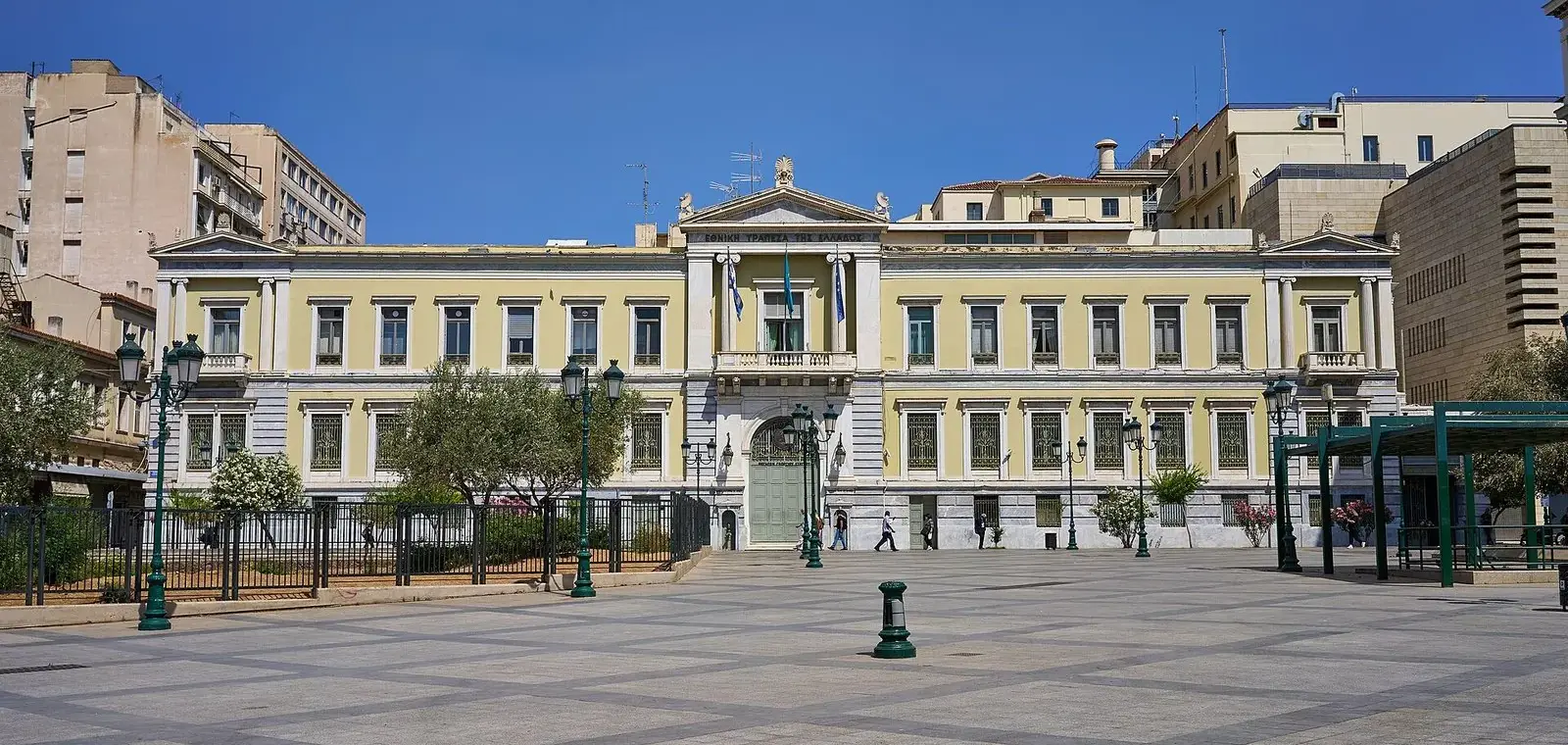
Use a machine that belongs to a Greek bank. The four big names are the National Bank of Greece (Ethniki Trapeza, usually just Ethniki), Eurobank, Piraeus Bank and Alpha Bank, and between them they cover the centre densely enough that you rarely have to walk far for one.
Telling a bank’s machine from an independent one takes a second once you know what to look for:
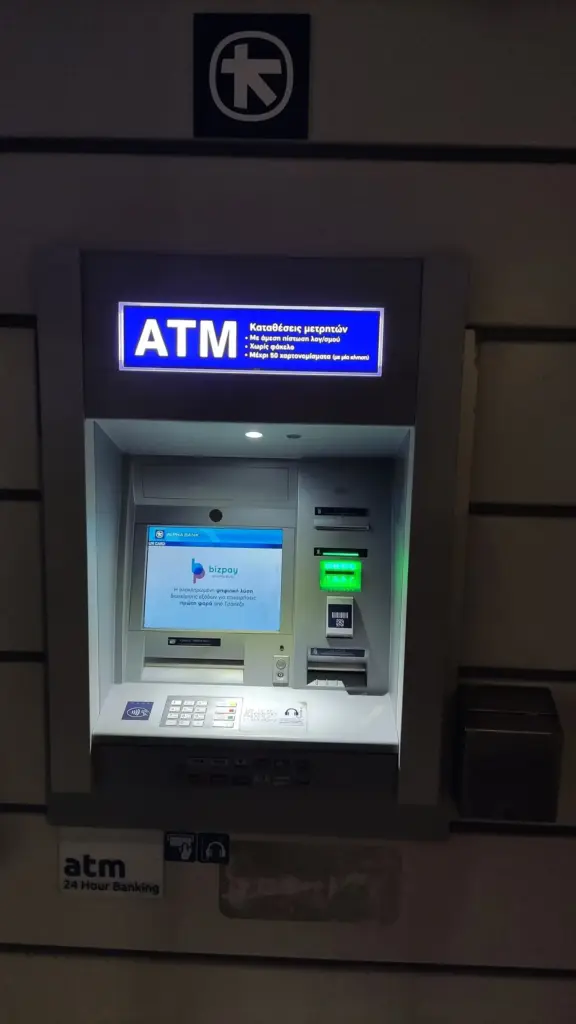
- Bank ATMs carry the bank’s name and logo above the screen and are usually set into the wall of a branch or inside its entrance lobby. The first screen shows the same branding.
- Independent ATMs are run by payment companies rather than banks. They stand in airports, transport hubs, shopping centres and neighbourhood locations, branded with the operator’s name rather than a bank’s. Euronet’s blue-and-yellow machines are the ones you’ll notice most.
Can we rank the four banks on fees? Not honestly. The charge you see depends on the machine and on your card: the access fee is shown on screen, and your own bank’s terms come on top. What doesn’t change is that the machine tells you before you commit. If one bank’s screen shows a fee you don’t like, cancel, walk to the next bank’s branch and compare; in the centre it’s often on the same street.
A few habits save money and hassle:
- Withdraw less often, in larger amounts. Per-withdrawal charges hurt most on small sums: one withdrawal of €150-200 beats four of €50.
- Ask for an awkward amount. Which notes you get depends on what the machine holds, but €190 can’t be paid out in €50s alone, so asking for it rather than €200 gets you some smaller notes, which a street cart will thank you for.
- If a withdrawal is refused, try a smaller amount. The maximum varies by machine, and your own bank sets a daily ceiling on top.
- Use machines at branches, in daylight. If an ATM keeps your card, contact your card issuer straight away, and the bank named on the machine. Cover the keypad as you type your PIN.
- At the airport, skip the exchange counters. A tapped card covers the airport metro or the Airport Express bus, so you can wait and withdraw in the city.
What does a cash withdrawal really cost?
Three separate charges can land on one withdrawal. The machine’s fee and any currency-conversion offer show on its screen; your bank’s charges may appear only on your statement.
- The machine’s own fee, set by whoever runs the ATM and displayed before you confirm. For cards from abroad, it is whatever the screen says.
- Your bank’s fees: a flat charge per foreign withdrawal, a percentage foreign transaction fee, or both. Travel-focused debit cards often charge neither. Credit cards are the worst tool for cash: most issuers treat an ATM withdrawal as a cash advance, with a fee and interest from day one.
- The exchange rate. Choose euros and your card network and bank convert the amount. Accept the machine’s offer to convert and the ATM operator sets the rate, markup included. That’s dynamic currency conversion, and it can add a markup to the rate; choosing euros avoids it.
Here’s how that stacks up on a €200 withdrawal. The fees are round numbers for illustration, not any bank’s actual tariff, so swap in your own card’s terms.
| How you withdraw €200 | What adds cost | Rough extra cost |
|---|---|---|
| Fee-free travel card, Greek bank ATM, charged in euros | Only a fee if the screen shows one | €0 if the screen shows none |
| Everyday debit card with a 3% foreign fee and €2 per withdrawal, Greek bank ATM, charged in euros | Your bank’s fees | about €8 |
| Same card, but you accept the ATM’s conversion at a 7% markup | Your bank’s €2 plus the markup (the 3% may or may not still apply) | about €16-22 |
| Same card at an independent ATM with a €1.50 fee, conversion accepted | All of the above | about €17.50-23.50 |
The pattern holds whatever the exact numbers. The conversion markup does more damage than any fixed fee, and it’s the one charge you can refuse with a single button.
Plan it: one withdrawal of €150-200 from a Greek bank’s machine on your first day, card for everything else, and a second withdrawal only if you’re heading to the islands or the float runs low.
Dynamic currency conversion: why you always choose euros
Dynamic currency conversion (DCC) is the offer to charge your card in your home currency instead of euros. You’ll meet it at ATMs (“Accept conversion?”), on card terminals in shops, restaurants and hotels (“Pay in GBP or EUR?”), and on some booking websites. It looks helpful, because you see exactly how many pounds or dollars will leave your account. The price of that certainty is the rate. Choose euros and your card network and bank do the conversion; choose your own currency and the ATM operator or the shop’s payment provider sets the rate instead, with its markup built in.
The wording rarely admits this. Screens promise a “guaranteed rate” or “no commission”, the home-currency option is often the brighter button, and some ATMs ask twice, the second time phrased so that declining sounds like a mistake. Read slowly and pick the answer that keeps the transaction in euros.
Card terminals need the same attention. When a waiter or receptionist hands you the terminal, look before you tap. If it already shows pounds, dollars or another currency, hand it back and ask for euros (“se evró, parakaló”, or just “euros, please”). A receipt showing your home currency and an exchange rate means the conversion happened, so object before you pay, not after.
A worked example: say the reference rate puts a €150 dinner bill at £127. A terminal offering £136 “at a guaranteed rate” is asking about 7% more for the privilege of seeing pounds, while a card with no foreign fee would have charged close to £127 in euros. (Illustrative numbers, not a live rate.)
Verdict: choose euros every time, on every screen. Even with a card that charges a 3% foreign fee, the conversion markup tends to cost more, and you can’t see its real size until you’ve read the small print.
Euronet and the independent ATMs: should you avoid them?
Mostly, yes. Euronet is a large payments company, not a scam, and its machines give out real euros. They cost visitors more for two reasons: an operator fee on each withdrawal, and a conversion offer that’s easy to accept by accident. Insider.gr reported in February 2019 that its Greek network had grown from about 100 machines to 700 in four years.
Since August 2025 a non-bank ATM can charge a Greek bank customer no more than €1.50; whether your foreign card gets the same deal is what the fee screen will tell you. The cap covers the fee, not the conversion rate, and on €200 a few points of markup outweigh any fixed fee.
Verdict: use a bank’s machine when one is within a few minutes’ walk, which in central Athens it nearly always is. If an independent ATM is your only option, late at night or on a small island, decline the conversion, check the fee, and take out enough that you won’t need to come back.
Paying for the metro, buses and taxis by card
Public transport is where cards have changed the most. OASA’s Tap2Ride works like this:
- What works: Visa and Mastercard, as a physical contactless card or in Apple Pay or Google Pay on a phone or watch. Maestro, JCB, American Express, Diners, Discover and China UnionPay cards aren’t supported.
- How to tap: touch in and out at the metro, and touch in when you board each bus, trolleybus or tram. Use the same card or device every time. Switch between your phone, your watch and the plastic card and you’re charged twice, and the daily cap can’t be calculated.
- What it costs: full fares only, meaning €1.20 for a 90-minute journey, €5.50 on the Airport Express bus and €9.00 on the airport metro. Urban travel is capped at €4.10 a day however many trips you make, and airport journeys are charged on top. Reduced fares need an OASA-issued personalised ATH.ENA card instead.
- Two small surprises: a Mastercard shows a temporary €0.01 charge the first time you use it, refunded once the transaction settles. And if you also carry an ATH.ENA card or ticket, hold your bank card well apart from it at the validator, or you may pay twice.
A quick example: land at the airport, take the metro into town (€9.00), then ride three more times that day (capped at €4.10), and your card is charged €13.10 in total. On the Airport Express bus instead, the same day costs €9.60. For a three-day stay with airport metro trips both ways, compare tapping with OASA’s €20 three-day tourist ticket, which includes a return airport journey: if you ride every day and both airport trips fall within its validity, tapping could cost up to €30.30 over the same three days.
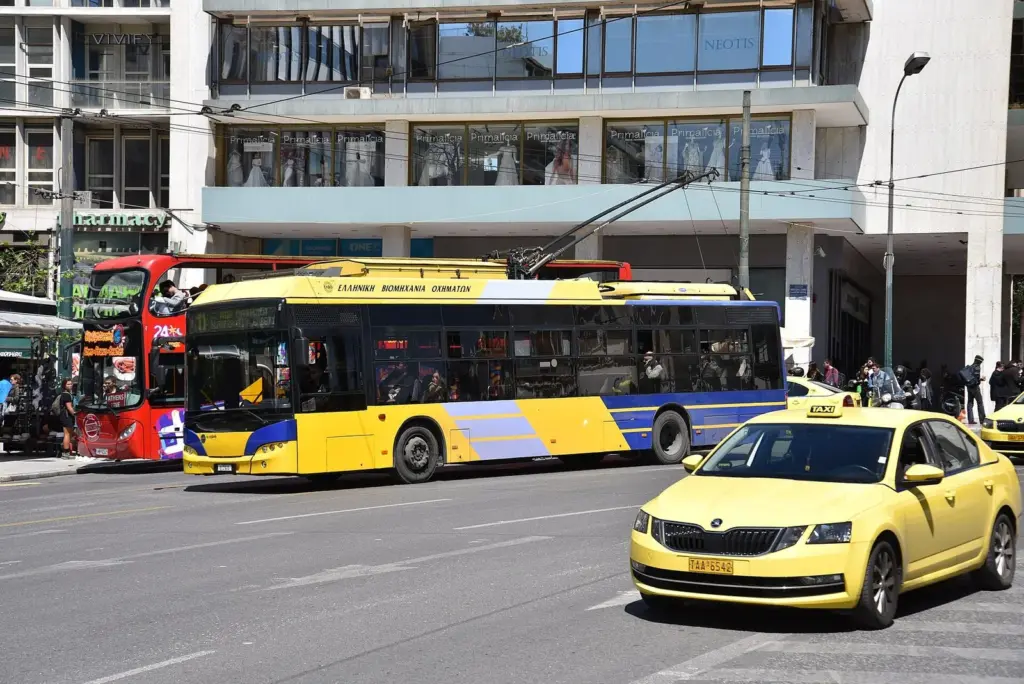
Taxis are where visitors most often get caught without the right payment. Many drivers take cards, but not every terminal cooperates, and a short ride home at 01:00 is a bad moment to find out. Ask “Kárta?” before the meter starts. Better still, book through a taxi-hailing app: the UK Foreign Office suggests Uber or Free Now, which supply licensed cabs, and you can pay through the app. Keep enough cash to cover the fare anyway. The ride between the airport and the city centre has a flat fare, and older guides quote several different figures for it, so check the current one on the airport’s own taxi page rather than trusting a blog post.
Where you’ll still want cash in Athens
These are the places where a note or a few coins make life easier, and where offering a card for a €2 purchase can earn you a sigh.
Street food and kiosks
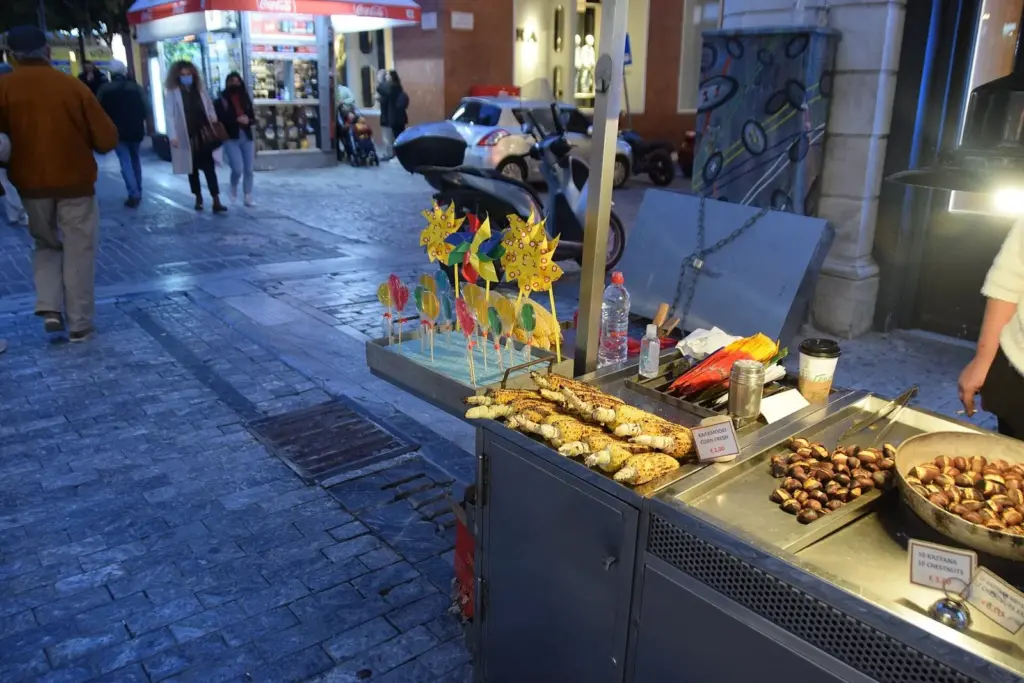
Coins, a few euros at a time. The koulouri sellers with their sesame bread rings and, in the cooler months, the chestnut and corn carts are the classic Athens cash purchase. The street kiosks (periptera) sell water, snacks and phone credit, often until late; many take cards now, but for a single bottle of water, coins are quicker for everyone.
Markets
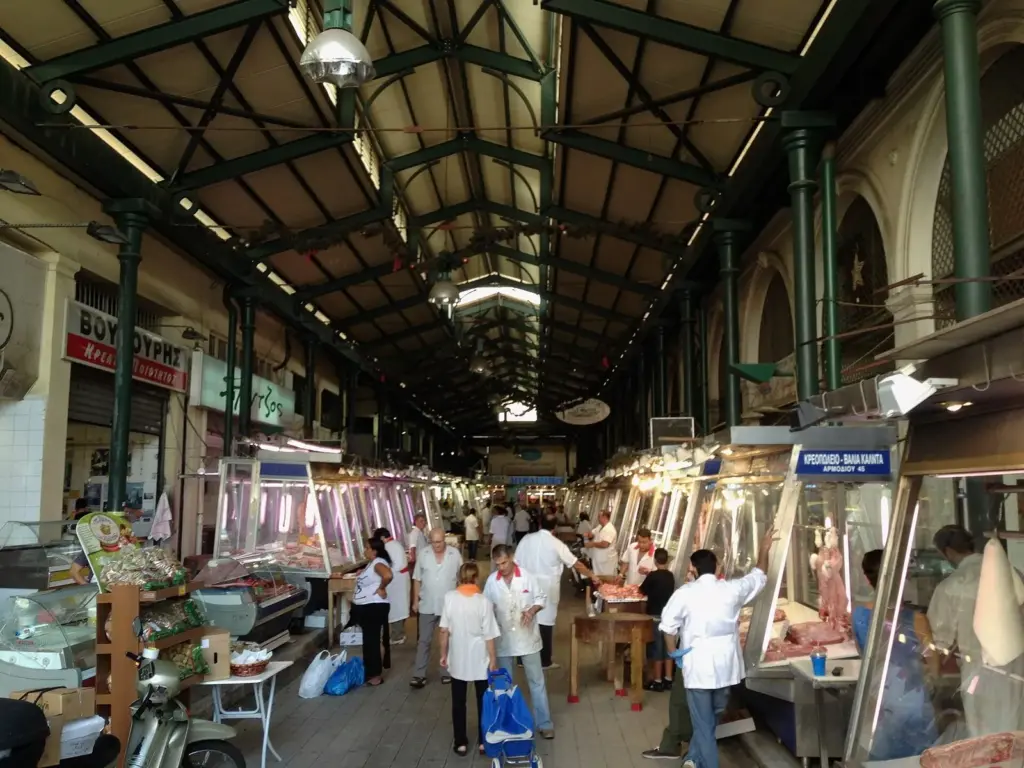
Small notes, and bring a bag. Varvakios, the central food market at 42 Athinas Street, sells everything from whole lamb to octopus, olives, feta, herbs and spices. Some stallholders have card readers, but asking to tap for a kilo of tomatoes won’t make you popular.
Churches
A coin or two. Lighting a candle in an Orthodox church means dropping a coin in the box by the candle stand. Nobody will chase you, but it’s good manners to pay.
The flea market
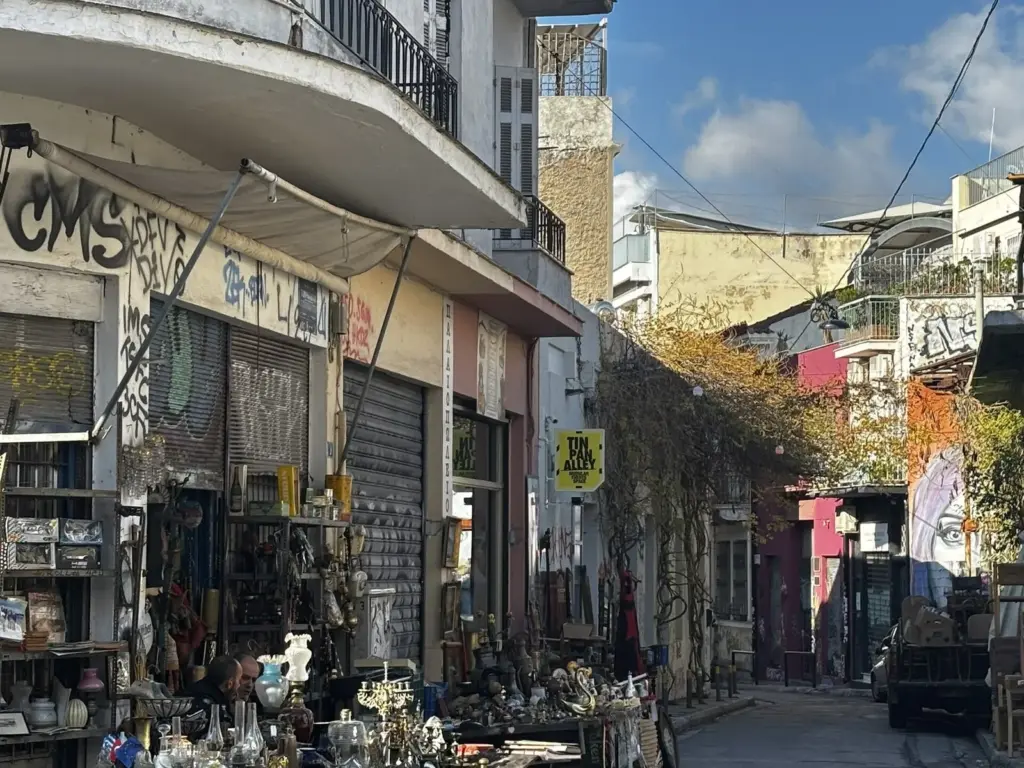
Cash helps you bargain. In the Monastiraki flea market streets, where haggling over second-hand finds is part of the fun, a note in your hand gives you leverage that a card doesn’t. Agree the price first, then pay.
Beyond Athens
Carry more. Smaller islands and villages have fewer machines and less choice of operator, and family tavernas are likelier to prefer cash. Withdraw in Athens before you leave.
How much cash should you carry in Athens?
Less than you think. With cards accepted almost everywhere, cash is a float for small moments, not your budget. These are our suggestions, sized for the gaps cards leave rather than for your daily spending:
| Trip | Cash to have on you | What it covers |
|---|---|---|
| Cruise call or one day in the city | €20-30 | Water, a coffee, a street snack, a small tip |
| Three or four days in the centre | €40-60 | Kiosks, a market visit, tips, a taxi fallback |
| A week with day trips | €80-120 | Village cafés and tavernas, bus-station snacks, more tips |
| Islands after Athens | €100-150 extra, in twenties | Smaller places, fewer machines, beach bars and small boat trips that prefer cash |
For what the trip itself costs day by day, from hotels and food to sites and transport, see what a trip to Athens costs. The cash figures above sit inside that budget, not on top of it.
Where you keep it matters as much as how much. Split cash between a wallet and a zipped inside pocket, leave the second card and a few spare notes in the hotel safe, and keep your phone charged, since it’s now the main wallet for many visitors (pack the right plug adapter for Greece). Crowded trains and busy markets are where pockets get picked.
Should you buy euros before you leave? Only a small float, and only at a fair rate with no commission. The bureaux around Syntagma and Monastiraki are legitimate but rarely the cheapest option, and a “0% commission” sign usually means the margin sits in the rate. A Greek bank’s ATM, kept in euros, generally beats them.
Hotels, deposits and the per-night fee
Hotel bills are card territory, but two things catch people out.
The Climate Crisis Resilience Fee. Greece charges a fee per room per night, and it’s usually collected when you leave, even if you prepaid the room through a booking site. From April to October it’s €2 a night at 1-2 star hotels, €5 at 3-star, €10 at 4-star and €15 at 5-star; it is lower from November to March. Short-term rentals and other kinds of accommodation pay their own rates. On a five-night October stay at a 4-star hotel that’s €50 at checkout, which is easy to miss on a booking confirmation.
Holds and deposits. Many hotels take a card at check-in as a guarantee for extras, and some put a temporary hold on it. Use a credit card for this if you have one, so the hold doesn’t lock up your spending money, and when you settle the bill, make sure the terminal is charging you in euros.
Shopping is the other big card moment. Non-EU visitors buying something substantial can claim back the VAT, and the paperwork and thresholds are in our guide to tax-free shopping and VAT refunds.
What to skip: money advice that’s out of date
A lot of Greek money advice is simply old. Skip any guide that quotes €2-4 ATM fees as a certainty or tells you Greece is a cash country, and be wary of any price list written before late 2024. If a guide quotes a €10 winter ticket for the Acropolis Museum (it’s now €20 all year), its money advice is probably just as stale.
Verdict: one debit card for cash, one card for spending, a backup from a different bank kept apart from both, and euros on every screen. Money is only one piece of the planning, and our Athens practical guide gathers the rest, from electricity to emergency numbers.
Money in Athens FAQ
Is it better to use cash or card in Athens?
Card, for almost everything: the metro, museums, supermarkets and most cafés, tavernas and shops take contactless cards and phone wallets. Keep €40-60 in cash for a few days of small purchases such as street food, market stalls, kiosks, tips and church candles, plus the odd taxi or taverna whose card machine isn’t working. Choose euros whenever a screen offers your home currency.
How much spending money do I need for Athens?
That depends on your hotel and how you eat, which our trip-cost guide breaks down. The cash part is small: around €20-30 for a day visit, €40-60 for three or four days in the centre, and €80-120 for a week with day trips. Everything else can go on a card, ideally one without foreign transaction fees.
Are there ATMs everywhere in Athens?
In the centre, yes. Greek banks (National Bank of Greece, Eurobank, Piraeus Bank and Alpha Bank) have machines on the main squares and shopping streets, and independent machines such as Euronet’s fill the tourist streets in between. Prefer a bank’s machine, ideally at a branch, read the fee on screen, and decline any offer to convert the amount into your home currency.
Did Greece abolish ATM fees?
For Greek bank customers, largely. Since 11 August 2025 they withdraw free at any Greek bank’s ATM, and non-bank machines can charge them no more than €1.50. Reports disagree on whether foreign cards get the same treatment, and your own bank can still charge you. Check the fee the screen shows before you confirm, and cancel if it’s more than you expected.
Should I pay in euros or my home currency in Greece?
Euros, always. When an ATM or card terminal offers to charge you in pounds, dollars or another currency, the rate is set by the machine’s operator or the shop’s payment provider and includes a markup. Paying in euros lets your own card network and bank convert the sum, which is almost always cheaper. The same applies to hotel bills and booking websites.
Related Athens Guides
- Athens Practical Guide: the hub for everyday logistics, from plugs and water to safety and pharmacies.
- Tipping in Greece: how much to leave in tavernas, cafés, taxis and hotels, and whether card tips reach the staff.
- How Much a Trip to Athens Costs: daily budgets for hotels, food, sites and transport.
- Tax-Free Shopping and VAT Refunds in Athens: how non-EU visitors reclaim VAT on bigger purchases.
Sources and How We Checked
Checked on 27 September 2026 against the official sources below, and compiled from them rather than from other travel lists. We don’t claim a first-hand visit, and no fee or rate here comes from a test withdrawal.
- OASA (Athens Urban Transport Organisation): Contactless payments with bank cards and Airport Express bus lines
- Ministry of National Economy and Finance ATM fee rules, as reported by Protothema English: ATM withdrawal fees abolished for Greek bank customers (11 August 2025)
- Insider.gr: ATM charges on foreign cards (February 2019, in Greek)
- Acropolis Museum: Plan your visit
- Panathenaic Stadium: Visit
- Hellenic Ministry of Culture: Acropolis of Athens
- GTP Headlines: Climate resilience fee rates from January 2025
- UK Foreign, Commonwealth and Development Office: Greece travel advice: safety and security
Athens Tourism Guide is an independent publication. We are not affiliated with the Hellenic Ministry of Culture, OASA, the Greek National Tourism Organisation or any business named here, and no business paid to be included.
Photo Credits
- Street cart with chestnuts and corn: photo by Jean Housen, via Wikimedia Commons (CC BY-SA 4.0)
- Alpha Bank ATM, Argos: photo by NikosLikomitros, via Wikimedia Commons (CC0)
- Trolleybus and taxi at Syntagma Square: photo by Bahnfrend, via Wikimedia Commons (CC BY-SA 4.0)
- Varvakios central market: photo by athenswalk, via Wikimedia Commons (CC0)
- Monastiraki flea market: photo by Gveret Tered, via Wikimedia Commons (CC BY-SA 4.0)
- National Bank of Greece head office (featured image): photo by George E. Koronaios, via Wikimedia Commons (CC BY-SA 4.0)