This article contains advertising. Some of the hotel, tour, activity, flight and transfer links in it are paid links: if you book through one, we get a commission from the booking company, and your price is the same either way. It never affects what we recommend. Affiliate disclosure
The best museums in Athens are the Acropolis Museum and the National Archaeological Museum, in that order, and if your trip only has room for two, stop there. Next come three very different collections on or just off Vasilissis Sofias Avenue, a short walk apart: the Benaki Museum of Greek Culture, the Museum of Cycladic Art and the Byzantine and Christian Museum. Below, every museum worth your time is ranked, with an honest estimate of how long it takes, what it costs where the price is fixed, the day it shuts and who can happily leave it out.
This is for first-time visitors deciding which museums deserve a slot in a three- or four-day trip, and for returning visitors working out what to see next. The caveat that matters this month is the winter timetable: the National Archaeological Museum’s summer hours run to 15 November, and last winter it then closed at 15:30 on most days, which puts it alongside the Byzantine and Christian Museum (15:30) and the Kerameikos (15:00 in winter), so an afternoon plan that worked in October may not work now. For the wider picture of the ancient sites, start with our guide to Athens historical sites and museums. Details checked 8 November 2026 against the museums’ own websites, the Hellenic Heritage ticket service and the Ministry of Culture.
Athens museums at a glance
Times are realistic visits for an interested adult, not a sprint and not a scholar’s day. Where a museum’s ticket price changes often, or the museum runs several ticket types, the table sends you to its own site rather than guessing.
| Museum | Allow | Full ticket | Watch out for | Nearest metro |
|---|---|---|---|---|
| 1. Acropolis Museum | 2-3 hours | €20 | Closes 17:00 Monday-Thursday in winter | Akropoli (Line 2) |
| 2. National Archaeological Museum | 2.5-4 hours | €20 | Tuesday opens 13:00; shorter winter hours from mid-November | Omonia (Lines 1, 2) or Victoria (Line 1) |
| 3. Benaki Museum of Greek Culture | 2-3 hours | See benaki.org | Check benaki.org for its closing day and any late opening | Syntagma (Lines 2, 3), then a walk |
| 4. Museum of Cycladic Art | 1.5-2 hours | €12 | Shut on Tuesday; entrance moved | Evangelismos (Line 3) |
| 5. Byzantine and Christian Museum | 1.5-2.5 hours | See byzantinemuseum.gr | Shut on Tuesday; closes 15:30 | Evangelismos (Line 3) |
| 6. Museum of the Ancient Agora | 45 minutes (2-3 hours with the site) | €20 with the site | Museum opens 10:00 on Tuesday | Monastiraki (Lines 1, 3) or Thiseio (Line 1) |
| 7. Kerameikos Museum | 1-1.5 hours with the site | €10 with the site | Closes 15:00 in winter | Thiseio (Line 1) or Kerameikos (Line 3) |
| 8. National Gallery | 2 hours | See nationalgallery.gr | Shut on Tuesday; late on Wednesday | Evangelismos (Line 3) |
| 9. EMST (contemporary art) | 1.5 hours | See emst.gr | Shut on Monday; late on Thursday | Syngrou-Fix (Line 2) |
| 10. Ilias Lalaounis Jewellery Museum | 1 hour | €10 | Shut on Sunday | Akropoli (Line 2) |
| 11. Piraeus Archaeological Museum | 1 hour | €10 | Check hours on hh.gr | Dimotiko Theatro (Line 3) |
What’s changed in 2026?
A lot of museum advice online was written for a different Athens. These are the changes that catch people out this winter:
- The Kerameikos is open again. The site and its museum closed on 5 May 2025 for works and reopened on 15 September 2026, with a new reception building at the Ermou Street entrance and a second exit on Agion Asomaton Street. Plenty of guides still call it closed.
- The National Archaeological Museum’s summer hours end on 15 November. Until then it opens 08:00-20:00 Wednesday to Monday (Tuesday 13:00-20:00). Last winter it ran 08:30-15:30 Wednesday to Monday, with Tuesday 13:00-20:00, from 16 November; check namuseum.gr for this winter’s dates.
- Flat prices. The Acropolis Museum has charged €20 all year since 1 November 2024, and the National Archaeological Museum is €20 all year. Older lists still quote cheaper winter tickets.
- Free first and third Sundays are back for the winter. State-run sites and museums are free on the first and third Sundays of each month from 1 November to 31 March, which puts 15 November, 6 December and 20 December 2026 on the calendar. The Acropolis Museum is not part of that scheme.
- No multi-site pass. The old five-day combined ticket for the Acropolis and six other sites is gone; each site now sells its own ticket. Our combined ticket explainer adds up what the individual tickets cost.
- The Cycladic museum’s front door has moved. Since 19 May 2025 visitors have entered through the Stathatos Mansion on the corner of Vasilissis Sofias and Irodotou, not the Neophytou Douka Street entrance most maps still show.
- A fake Acropolis Museum ticket site. The museum warns about a copycat website ending in .org. Its real e-tickets are sold only through theacropolismuseum.gr.
The best museums in Athens, ranked
The order weighs four things: how much the collection explains about Athens and Greece, how well it is displayed, how much time it asks of you, and how easy it is to fit around everything else. A museum that needs half a day and a metro ride has to be better than one ten minutes from your hotel to earn the same place. Each entry is a verdict and a set of practical details; the linked guides go room by room.
1. Acropolis Museum
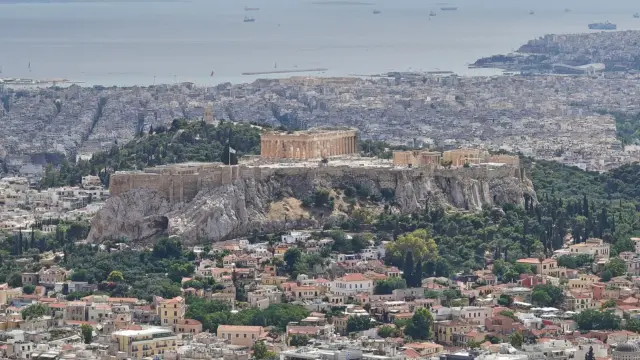
€20, allow 2-3 hours. It wins because it does one thing with complete focus. Everything in it came from the rock you can see through its windows, and the top-floor Parthenon Gallery sets out the temple’s surviving sculpture with the Parthenon itself in view across the rooftops of Makrygianni. No other museum in the city connects so directly with a site you have just walked round, or are about to. Even the lobby has something to show you: the glass floor looks down onto an excavated neighbourhood beneath the building, and that excavation is included in the ticket.
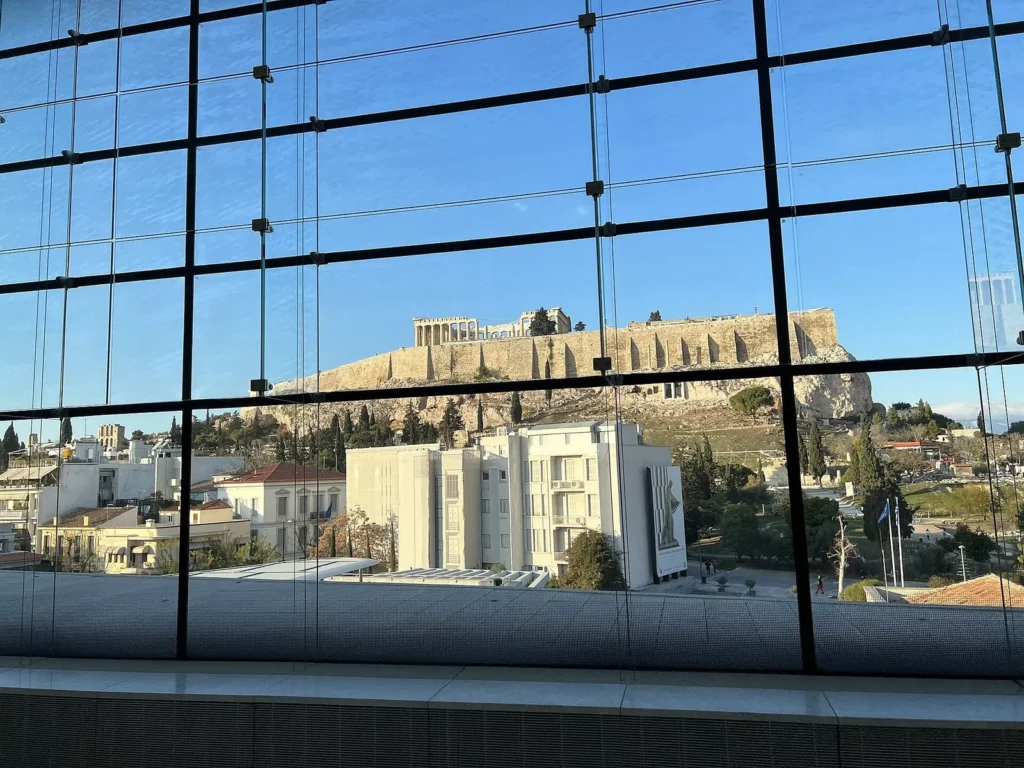
People argue about whether to visit before or after the Acropolis. It matters less than avoiding both in the same heat, and in winter that is not the problem it is in July. A good winter pattern is the site first thing, a long lunch, then the museum in the afternoon, because from 1 November to 31 March the museum stays open until 17:00 Monday to Thursday, 22:00 on Friday and 20:00 at weekends, with last entry 30 minutes before closing. Friday’s late opening is the most relaxed way to see it. The excavation beneath the building keeps shorter hours, 09:00-17:00 daily in winter, so see it first if you arrive late.
Three practical points. Bags go through an X-ray at the door, and backpacks and bulky items are sent to the ground-floor cloakroom, so travel light. Tickets are valid only for the date printed on them. And buy online only from the museum’s own .gr site: reduced and free tickets are issued only at the ticket desk, on showing proof of eligibility. The second-floor restaurant stays open until midnight on Friday and Saturday; you need a free entry ticket from the desk to reach it. Our full Acropolis Museum guide covers the galleries floor by floor.
Plan it: winter hours Monday-Thursday 09:00-17:00, Friday 09:00-22:00, Saturday-Sunday 09:00-20:00; €20 (reduced €10); Akropoli station (Line 2) is on Dionysiou Areopagitou beside the entrance; best for everyone, first trip or fifth.
2. National Archaeological Museum
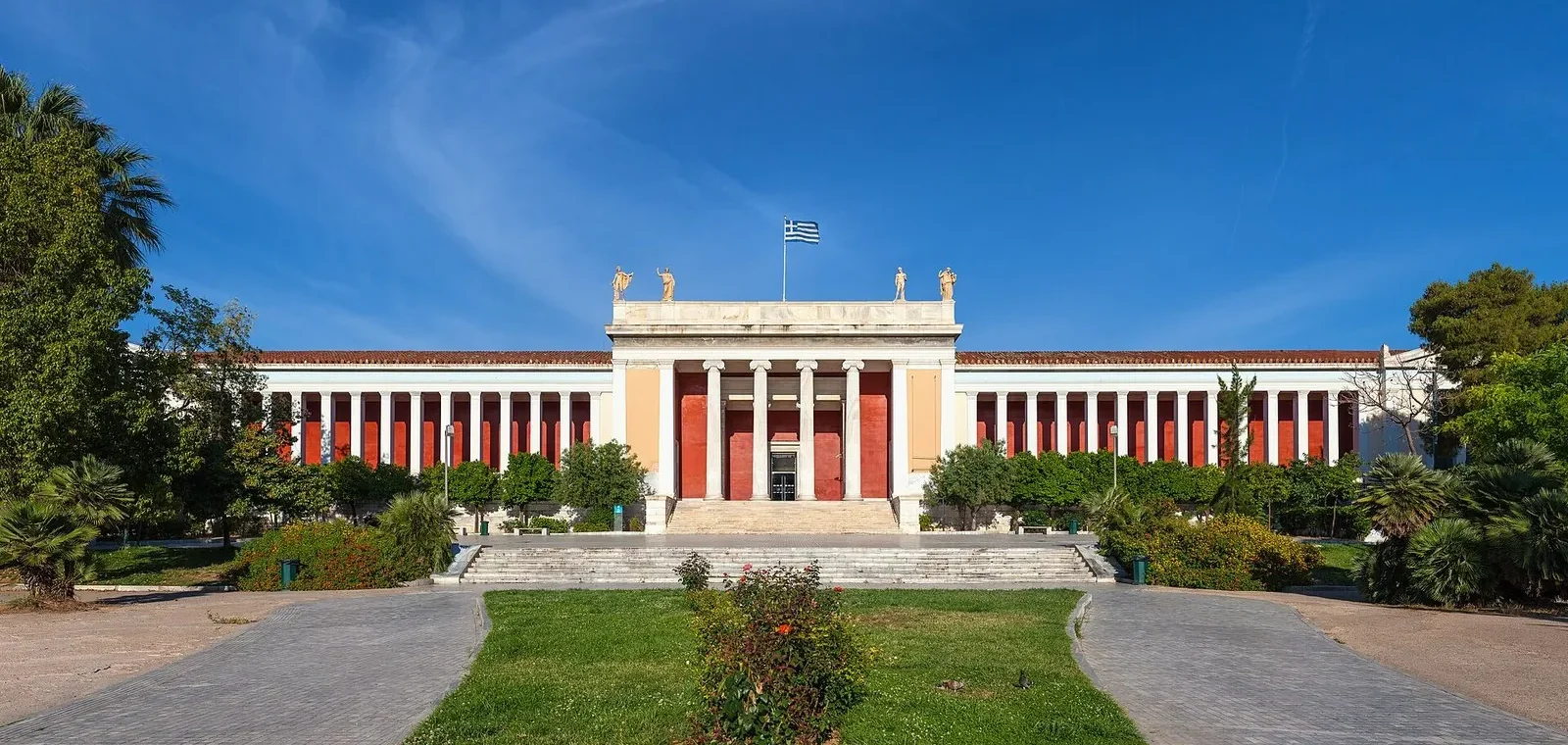
€20, allow 2.5-4 hours. If the Acropolis Museum tells one story beautifully, this is the whole library. The Mycenaean gold, the great bronzes, the Antikythera Mechanism and room after room of sculpture and painted pottery are all here, and for sheer density of famous objects it is hard to beat. So why second? Partly geography: it sits north of Omonia, outside the Plaka and Acropolis orbit where most visitors spend their days. Partly scale: it is too big to see properly in one go, and people who try tend to drift through the last third in a daze. Pick three or four sections that interest you and leave the rest. Our National Archaeological Museum guide helps you choose.
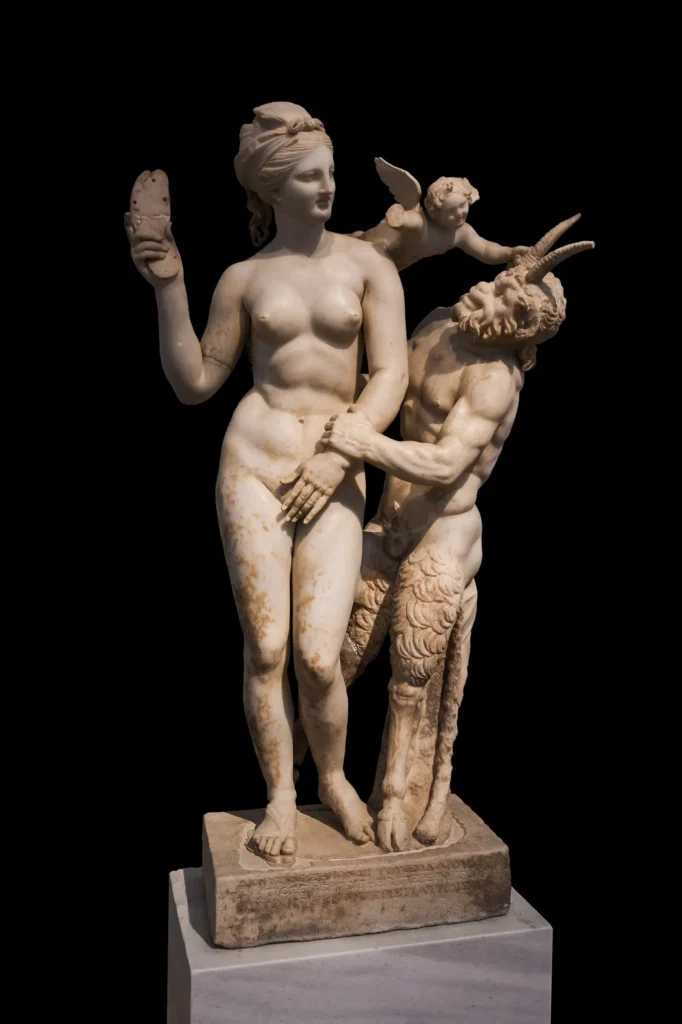
The timing changes this week. Until 15 November the museum opens 08:00-20:00 Wednesday to Monday. Last winter it switched on 16 November to 08:30-15:30 Wednesday to Monday, last admission 15:00, and 13:00-20:00 on Tuesday, last admission 19:30; check namuseum.gr for this winter’s timetable. If the pattern holds, that makes Tuesday afternoon the one long winter slot, and a sensible choice when the Cycladic and the Byzantine museums are both shut. On any other day, arrive at opening and you will have the best rooms mostly to yourself for the first hour.
Eligible reduced categories pay half (€10), and visitors over 65 from EU countries get 50% off between 1 October and 31 May. The museum is free on the first and third Sundays from November to March, so expect 15 November, 6 December and 20 December to be busy. It closes on 25-26 December, 1 January, 25 March, 1 May and Orthodox Easter Sunday. Check the museum’s site to see whether the temporary exhibition Pylos of Nestor is still on.
Plan it: 44 28 Oktovriou (Patission) Street; Omonia or Victoria metro, then a short walk; €20; best for anyone who wants the whole sweep of ancient Greece rather than one site’s story.
3. Benaki Museum of Greek Culture
Allow 2-3 hours. The Benaki answers the question the first two leave hanging: what happened in Greece after antiquity? Antonis Benakis’s collections fill a neoclassical mansion at 1 Koumbari Street, on the corner of Vasilissis Sofias, and run from prehistory through Byzantium, the Ottoman centuries and the War of Independence into the twentieth century. Costumes, carved wooden reception rooms from northern Greek mansions, icons, jewellery, weapons and the papers of the revolution sit side by side. For understanding modern Greece, no museum in the city does the job better, and it rewards more time than most people give it.
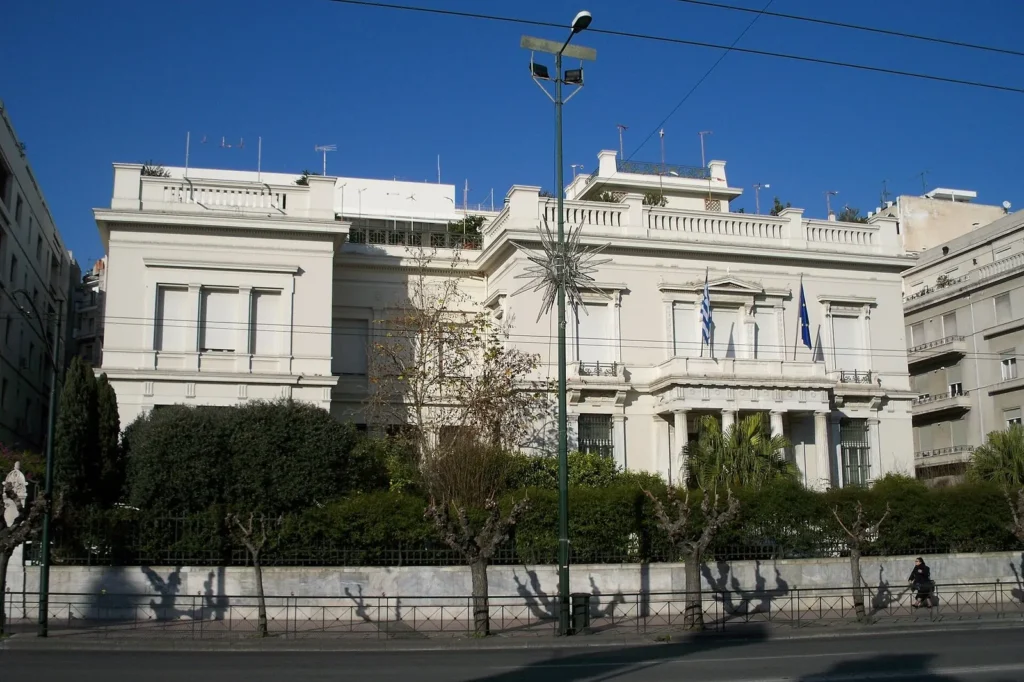
Before you go, check benaki.org for the weekly closing day, any late opening and the current ticket price, and plan around what it says rather than around another museum’s timetable. The Benaki is a private foundation with several buildings across the city, and each keeps its own timetable. Our Benaki Museum guide picks out the rooms to prioritise.
Verdict: the third museum for anyone with three or more days. On a two-day trip, choose between this and the Cycladic, not both.
4. Museum of Cycladic Art
€12, allow 1.5-2 hours. Small, quiet and beautifully lit, this is the antidote to the National Archaeological Museum’s sprawl. The core of the collection is the white marble figurines of the early Cycladic islands, flat-faced and folded-armed, from a culture whose works the museum dates between 5300 and 2200 BCE. They look startlingly modern, and an hour in front of them is a lesson in how little a sculptor needs. An upper floor covers ancient Greek art more broadly, and there is usually a temporary exhibition, sometimes ticketed separately at a higher price.
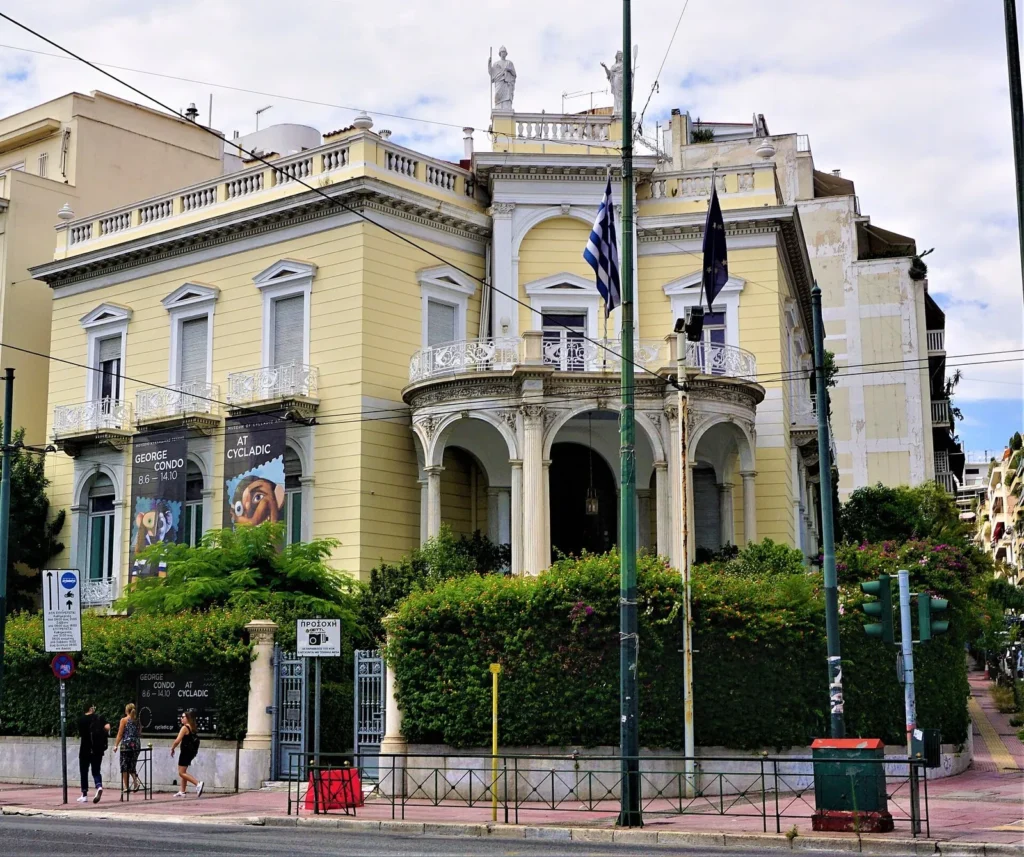
Building work is under way while the museum stays open, and since 19 May 2025 you enter through the Stathatos Mansion at Vasilissis Sofias and 1 Irodotou Street. Do not go to the Neophytou Douka Street door that older maps mark; it is closed to visitors. Hours are 10:00-17:00 on Monday, Wednesday, Friday and Saturday, 10:00-20:00 on Thursday and 11:00-17:00 on Sunday, with last entrance 15 minutes before closing. It is shut on Tuesday. General admission is €12, reduced €9.
Verdict: the best museum in Athens for an hour and a half, and the one to pick if the National Archaeological Museum sounds exhausting. Skip it if you have already seen the Cycladic rooms there and want variety.
5. Byzantine and Christian Museum
Allow 1.5-2.5 hours. The most underrated museum in the city, and usually the quietest of the big ones. Icons, mosaics, wall paintings, manuscripts and church silver trace Christian art in Greece from late antiquity onwards, set around the garden courtyard of a nineteenth-century villa a short walk past the Cycladic museum along Vasilissis Sofias. After two days of marble and pottery, the change of colour and subject is a relief. Even visitors with no interest in religion tend to find the icons gripping once they slow down.
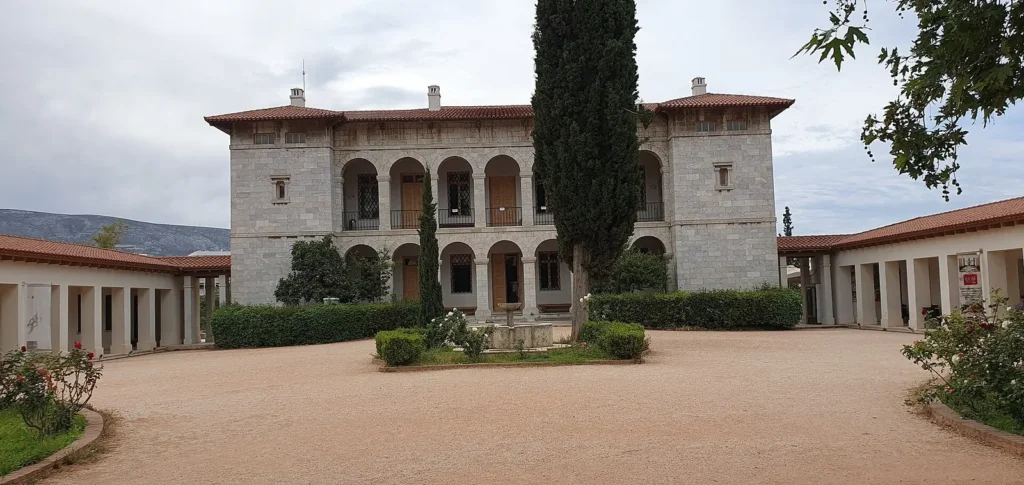
The hours are the catch: 08:30-15:30 on Monday and Wednesday to Sunday, closed on Tuesday. That rules out a relaxed afternoon visit, so put it in the morning and do the Cycladic or the Benaki afterwards. The museum is at 22 Vasilissis Sofias Avenue and points metro users to Evangelismos on Line 3. Check byzantinemuseum.gr for ticket prices. Our Byzantine and Christian Museum guide explains the layout.
Verdict: the best third or fourth museum for anyone tired of antiquity. Not a priority on a first trip of two days.
6. Museum of the Ancient Agora (Stoa of Attalos)
€20 with the site, allow 45 minutes inside the stoa. This one only makes sense as part of a visit to the Ancient Agora, and it is the best part of that visit. The rebuilt Stoa of Attalos, a long two-storey colonnade on the Agora’s east side, holds the finds from the excavations below: the small, everyday objects that show how Athenian democracy actually worked. The kleroterion used to select jurors at random and a potsherd scratched with the name Cimon, a vote to exile him, say more about the city’s politics in two glances than a panel of text could.
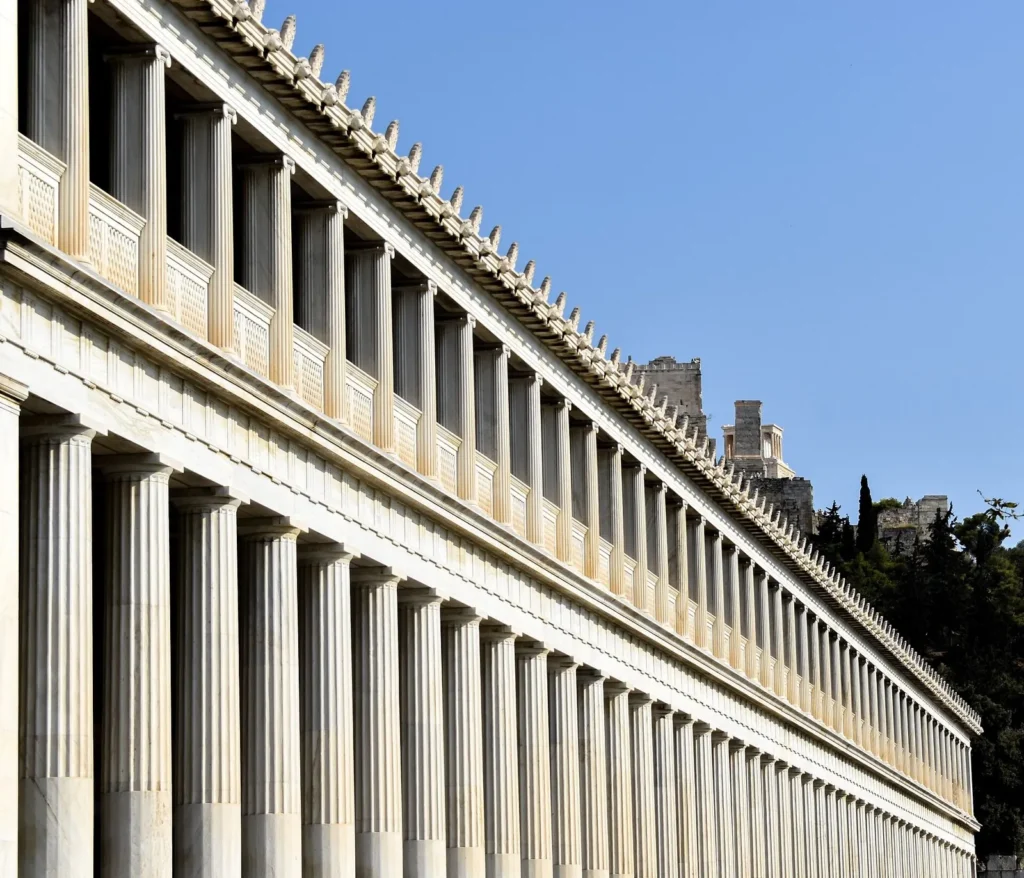
The €20 ticket (reduced €10) covers the archaeological site and the museum, and from 1 November to 31 March both open 08:00-17:00, with last admission 20 minutes before closing. On Tuesdays the museum itself opens at 10:00. Works on the main entrance at Adrianou Street moved the way in to the Thiseio side of the site in 2025, so check the Hellenic Heritage page for which gate is in use before you go. Monastiraki (Lines 1 and 3) and Thiseio (Line 1) are the nearest stations. Our Ancient Agora guide covers the site around it.
Verdict: never a separate outing, but do not skip it once you are in the Agora; it is where the site starts to make sense.
7. Kerameikos Museum
€10 with the site, allow 1-1.5 hours. Ancient Athens’s main cemetery reopened on 15 September 2026 after a long closure for works, and it is one of the calmest classical sites in central Athens, green, open and usually close to empty. The small museum holds funerary monuments, including inscribed grave stelae and statues, many of them more personal and moving than anything on the Acropolis. If you want a sense of how ordinary Athenians remembered their dead, this is the place.
The ticket covers the site and the museum: €10 full, €5 reduced. Winter hours are 08:00-15:00, last entrance 14:30, which makes it a morning or late-morning visit. The entrance is at 148 Ermou Street, about seven minutes’ walk from Thiseio (Line 1) or eleven from Kerameikos station (Line 3). Our Kerameikos guide walks you through the site.
Plan it: pair it with lunch in Psirri or Gazi, or with the Benaki’s Museum of Islamic Art, which stands just across the road at the corner of Agion Asomaton and Dipylou streets; best for second-time visitors and anyone who hates crowds.
8. National Gallery
Allow 2 hours. Athens is not an art-museum city in the way Paris or Florence is, but the National Gallery, officially the National Gallery-Alexandros Soutsos Museum, is the exception. Its expanded building holds Greek painting and sculpture, much of it from the nineteenth and twentieth centuries, plus older works, and it is where you see how Greek artists saw their own country after independence. Very few first-time visitors go, which is a shame for anyone who likes painting.
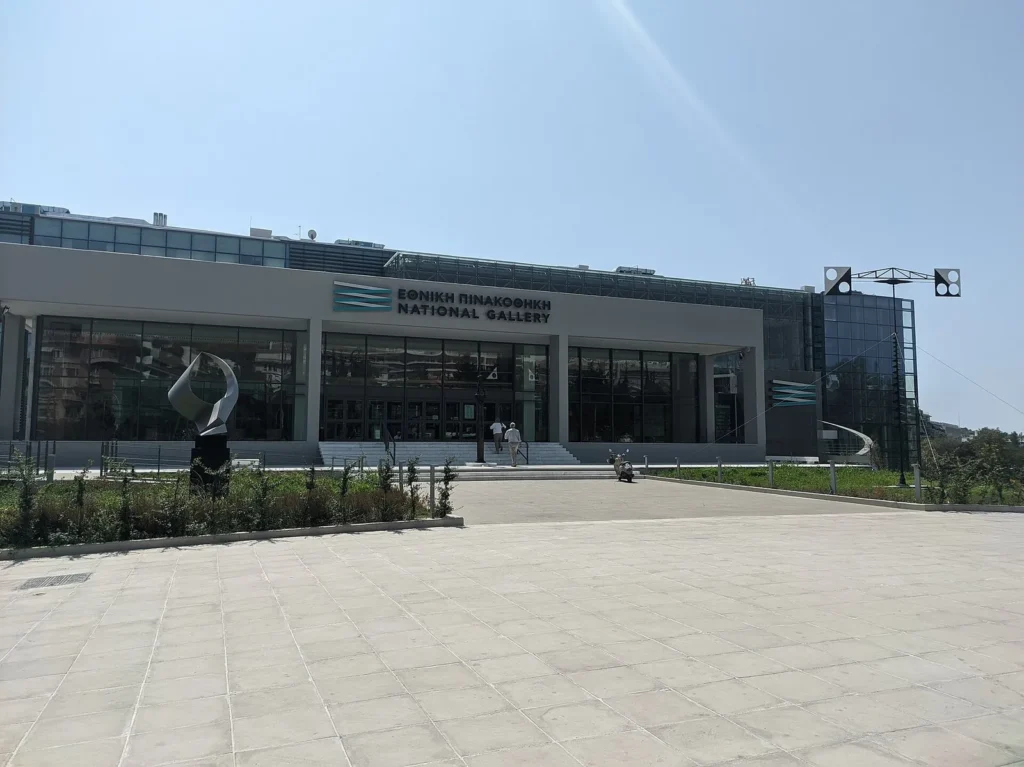
The central building is closed on Tuesday and stays open until 22:00 on Wednesday, with last admission an hour before closing; one-off changes to its hours appear on its announcements page, so check nationalgallery.gr for the day you plan to go, and for ticket prices. It sits a short walk from Evangelismos (Line 3), close enough to the Byzantine museum to combine the two on a Wednesday.
Verdict: the first art museum to add once you have done the ancient ones. Skip it on a short trip unless painting is your thing.
9. EMST, National Museum of Contemporary Art
Allow 1.5 hours. EMST occupies the converted Fix brewery on Syngrou Avenue, beside Syngrou-Fix station on Line 2, and shows changing exhibitions of contemporary art. Whether it is worth your time depends entirely on what is on, so look at the programme first. It is closed on Mondays and stays open until 22:00 on Thursdays.
Two things make it easier to try: entry is free on the first Thursday of every month from 18:00 to 22:00 (except in July and August), and a 2-for-1 ticket lets you come back for a second visit within 30 days. Current prices are on emst.gr.
Verdict: for contemporary-art regulars. If installations and video leave you cold, nothing here will change your mind.
10. Ilias Lalaounis Jewellery Museum
€10, allow 1 hour. A specialist museum built around the work of one of Greece’s best-known jewellers, a few minutes’ walk from the Acropolis Museum in Makrygianni. Its permanent collection displays around 4,500 pieces made between 1957 and 2002, many inspired by ancient and Byzantine designs, so it makes an unexpectedly good footnote to a morning at the Acropolis Museum. General admission is €10; students and senior citizens with ID pay €5. It opens 10:00-16:00 on Monday, Tuesday, Thursday and Friday and 10:00-18:00 on Wednesday and Saturday, and is closed on Sunday and national holidays.
Verdict: worth an hour if jewellery, metalwork or design interests you. Everyone else can skip it without regret.
11. Piraeus Archaeological Museum
€10, allow 1 hour. Best known for its large ancient bronze statues found in Piraeus itself, this is a fine regional museum that most visitors only reach because they are catching a ferry. That is the right way to use it. The museum’s own page puts it about ten minutes’ walk from the passenger port, so if you have a couple of hours to kill before an afternoon sailing, it beats sitting in a port café. Full admission is €10, reduced €5; check its hours on the Hellenic Heritage site, as state museums change timetables with the season.
Verdict: only on a ferry day or a second trip. Not worth the journey from central Athens on its own.
Smaller museums worth an hour
These did not make the ranking because they suit narrower interests, but each is a good answer to a specific question.
- Benaki Museum of Islamic Art, at 22 Agion Asomaton and 12 Dipylou streets, across from the Kerameikos. A compact collection and an easy pairing with the cemetery. Its opening days differ from the main building’s, so check benaki.org before you set out.
- Hellenic Maritime Museum, in Piraeus. The city’s own visitor guide describes more than 2,500 items in 1,700 square metres, covering seafaring from prehistory to the present. Good for anyone with an interest in ships, and another option on a ferry day.
- Industrial Gas Museum, on the Technopolis site in Gazi. A former gasworks turned museum, popular with families; our round-up of museums for kids in Athens covers it alongside other hands-on options.
How many museums can you fit into your trip?
Fewer than you think. Two museums in a day is plenty for most people, and one big museum plus a site is better than three museums done badly. Here is how the ranking translates into real trips.
Half a day, or a cruise stop
Choose the Acropolis Museum and nothing else. It is a short walk from Akropoli station, it shows you the Parthenon sculptures without the climb, and two hours inside leaves time for a walk along Dionysiou Areopagitou afterwards. If you are coming from Piraeus with only a morning, the Piraeus Archaeological Museum is the low-stress alternative, about ten minutes on foot from the passenger port, but it is a consolation rather than an equal. Do not try to squeeze in the National Archaeological Museum on a half-day: getting there, queueing, and seeing even a fraction of it takes most of a morning on its own, and in winter it closes in mid-afternoon.
One or two days in Athens
See the Acropolis and the Acropolis Museum, and if you have a second day, the National Archaeological Museum. That is it. Resist the urge to add the Benaki at 16:00 on day two; you will not enjoy it. If the National Archaeological Museum is too far or too big for your energy, swap in the Museum of Cycladic Art, which you can see properly in an hour and a half.
Three or four days
Add the Vasilissis Sofias cluster. A good museum morning, on any day but Tuesday, runs like this:
- Byzantine and Christian Museum: arrive at 08:30 opening and give it about two hours while you are fresh.
- Coffee break: walk back along Vasilissis Sofias towards Syntagma.
- Museum of Cycladic Art or the Benaki: pick one. The Cycladic takes about 90 minutes; the Benaki deserves two hours or more.
- National Garden: finish in the gardens behind Syntagma, a short walk away, to give your feet a rest.
Fit the Ancient Agora and its museum into the day you spend around Monastiraki and Thiseio, and the Kerameikos into a morning in Psirri or Gazi.
Five days or more, or a second trip
Now the rest of the list opens up: the Benaki and the Cycladic both, the Kerameikos, the National Gallery on a Wednesday evening, EMST if the programme appeals, and the Piraeus Archaeological Museum on the day you leave for the islands. For the ticketed ancient sites that go with these museums, the complete Acropolis guide explains the timed-entry system.
Which day should you go to each museum?
Tuesday is the trap. Three of the top eight are shut, and the National Archaeological Museum does not open until 13:00. Monday is safer, except at EMST. Use this as a weekly planner:
| Day | Closed | Late openings (winter) |
|---|---|---|
| Monday | EMST | None of the big museums |
| Tuesday | Cycladic, Byzantine and Christian, National Gallery, Piraeus Archaeological | National Archaeological Museum 13:00-20:00 |
| Wednesday | None of the ranked museums | National Gallery until 22:00 |
| Thursday | None of the ranked museums | Cycladic until 20:00; EMST until 22:00 |
| Friday | None of the ranked museums | Acropolis Museum until 22:00 |
| Saturday | None of the ranked museums | Acropolis Museum until 20:00 |
| Sunday | Lalaounis Jewellery Museum | Acropolis Museum until 20:00 |
The practical upshot: on a Tuesday, do the Acropolis Museum in the morning and the National Archaeological Museum in the afternoon, which is one of the few days you can fit both comfortably. Keep Friday evening for a quiet Acropolis Museum visit. The Benaki is left out of the planner: check benaki.org for its weekly closing day and any late opening. Public holidays shut most museums, and the state ones also close on 25-26 December and 1 January, so check before planning a museum day around Christmas.
The state-run sites and museums (the National Archaeological Museum, the Ancient Agora, the Kerameikos and the Piraeus Archaeological Museum among them) sell tickets through the Hellenic Heritage service at hh.gr. The Acropolis Museum, the Benaki, the Cycladic, the National Gallery and EMST each sell their own. Buy from those official sellers rather than resellers, who add fees but cannot get you in any sooner than the timed ticket allows.
Can you visit Athens museums for free?
Sometimes, and winter is the season to try. State-run sites and museums are free on the first and third Sundays of every month from 1 November to 31 March, plus 6 March, 18 April, 18 May, the last weekend of September and 28 October. In the weeks after this guide goes live, the free Sundays fall on 15 November, 6 December and 20 December 2026. The National Gallery is free on the first Sunday only, and EMST has its own free evenings. The catch is the crowd: the National Archaeological Museum on a free Sunday is a different, noisier experience, so go at opening.
The Acropolis Museum runs its own free days instead: 6 March, 25 March, 18 May and 28 October. It also lets several groups in free all year, including EU citizens under 25 and children under five from outside the EU, though those tickets come only from the desk with documents. EMST’s free first-Thursday evenings run outside July and August. For the Benaki, check benaki.org for any free or reduced sessions.
Reduced tickets are worth asking about. Most museums here offer reduced tickets to students and other eligible groups, and the National Archaeological Museum gives EU visitors over 65 half price from October to May. You will always need proof, so carry the card or passport.
How to make a museum day in Athens easier
A few habits make the difference between a good museum day and a sore-footed one.
Start early, finish early. In winter the state museums wind down in mid-afternoon, and the light goes not long after. Put the museum with the earliest closing first (the Kerameikos at 15:00, the Byzantine museum at 15:30 and, on its winter hours, the National Archaeological Museum) and keep the late openers, the Acropolis Museum and the National Gallery on Wednesday, for the end of the day. Remember that last entry comes before closing time: 30 minutes at the Acropolis Museum, 30 minutes at the National Archaeological Museum, 20 at the Ancient Agora, 15 at the Cycladic museum and an hour at the National Gallery.
Travel light. The Acropolis Museum X-rays bags and sends backpacks and bulky items to its cloakroom. A small cross-body bag saves queueing twice.
Carry proof and a card. Reduced and free tickets almost always need ID at the desk, even when the full-price ticket can be bought online. The Acropolis Museum takes cash or cards (Visa, Mastercard, Maestro and UnionPay), and the National Gallery encourages card payment.
Eat inside the day, not around it. The Acropolis Museum’s ground-floor café needs no ticket, which makes it a useful meeting point, and the Benaki has its own café-restaurant. Building lunch into the middle of a two-museum day is the single best defence against museum fatigue.
Use the metro, not taxis, between clusters. The museums group neatly: Akropoli for the Acropolis Museum and the Lalaounis museum, Evangelismos for the Byzantine museum, the Cycladic and the National Gallery, Monastiraki and Thiseio for the Agora and the Kerameikos, Omonia or Victoria for the National Archaeological Museum. Two clusters a day is a sensible maximum.
Which museums can you skip?
Every list of the best museums in Athens has the same problem: it makes everything sound essential. Here is the honest version.
Skip the Agora museum as its own trip. It is excellent, but only as part of the Agora. Nobody should cross town just for the stoa.
Skip doubling up on antiquities if you are tired. The Acropolis Museum and the National Archaeological Museum on the same day is possible on a Tuesday, but most people are better off splitting them and putting something different, the Byzantine museum or the Benaki, in between.
Skip the specialists unless the subject is yours. The Lalaounis museum, EMST and the Piraeus museum are all good at what they do. None of them belongs on a first trip of three days unless jewellery, contemporary art or a ferry timetable puts it there.
Do not skip the Byzantine and Christian Museum just because the name sounds dry. For anyone who leaves Athens having only seen marble, it is the obvious one to have added.
Verdict: two big museums, one smaller one and an ancient site or two make a better Athens trip than a museum marathon. The city’s streets, hills and tavernas deserve some of your hours too.
The best museum for mythology, art, kids or a rainy day
- Greek mythology: the National Archaeological Museum, where gods and heroes cover the painted pots and fill the sculpture halls. The Acropolis Museum’s Parthenon sculptures show Athena’s own stories in place.
- Art: the National Gallery for Greek painting, EMST for contemporary work, and the Museum of Cycladic Art for sculpture that looks as if it was made last century.
- Small and quiet: the Cycladic museum and the Kerameikos museum. Both can be seen properly in an hour or two.
- Children: the Acropolis Museum’s glass floors work on most ages, and the kid-friendly Athens museums round-up covers the hands-on options.
- A rainy day: the Vasilissis Sofias cluster, where three museums sit a short walk apart, or the National Archaeological Museum, which can easily fill a wet afternoon outside the shorter winter hours.
To set all of this in context, with the ancient sites alongside the museums, the Athens history and museums hub maps the whole silo.
Best Museums in Athens FAQ
What is the best museum in Athens?
The Acropolis Museum, for most visitors. It is focused, superbly displayed and directly tied to the Acropolis next door, and you can see it well in two or three hours. The National Archaeological Museum has the larger and more varied collection and is the better choice for anyone who wants the whole of ancient Greece rather than one site’s story.
Is the Acropolis Museum or the National Archaeological Museum better?
They do different jobs. The Acropolis Museum tells the story of one hill in depth and pairs naturally with a visit to the site. The National Archaeological Museum covers all of ancient Greece, from Mycenaean gold to Roman-era sculpture, and needs more time. Both cost €20. With two days, see both; with one, choose the Acropolis Museum.
How long do you need at the Acropolis Museum?
Two to three hours covers the main galleries, the top-floor Parthenon Gallery and the excavation beneath the building. Allow longer if you want the café or restaurant. In winter it closes at 17:00 from Monday to Thursday, with last entry at 16:30, so do not arrive after 15:00 on those days if you want a proper visit.
Are museums in Athens free on Sundays?
State-run sites and museums, including the National Archaeological Museum, the Ancient Agora and the Kerameikos, are free on the first and third Sundays of each month from 1 November to 31 March. In late 2026 that means 15 November, 6 December and 20 December. The Acropolis Museum is not included and keeps its own free days.
Which Athens museums are closed on Tuesday?
The Museum of Cycladic Art, the Byzantine and Christian Museum and the National Gallery all close on Tuesday, as does the Piraeus Archaeological Museum; check benaki.org for the Benaki’s weekly closing day. The National Archaeological Museum opens only at 13:00 on Tuesday, though it then stays open until 20:00. The Acropolis Museum is open on Tuesday, which makes it the best choice that day.
What is the best museum in Athens for Greek mythology?
The National Archaeological Museum. Its sculpture halls and painted vases are full of gods, heroes and monsters, and the famous bronzes include figures of Zeus or Poseidon. The Acropolis Museum is the runner-up, with the Parthenon sculptures showing Athena’s birth and her contest with Poseidon for the city.
What are the best art museums in Athens?
For Greek painting, the National Gallery, which is closed on Tuesday and open until 22:00 on Wednesday. For contemporary art, EMST in the former Fix brewery on Syngrou Avenue, free on the first Thursday evening of most months. For ancient art at its most minimal and modern-looking, the Museum of Cycladic Art on Vasilissis Sofias.
Related Athens Guides
- Athens Historical Sites and Museums: the hub for every ancient site and museum guide on the site.
- The Acropolis: Complete Guide and Tickets: timed tickets, routes and what to see on the rock.
- Acropolis Opening Hours: the seasonal timetable and the best time of day to go.
- Athens Combined Ticket: what replaced the multi-site pass and what the separate tickets cost.
- Ancient Agora of Athens Guide: the site around the Stoa of Attalos museum.
- Kids’ Museums and Interactive Exhibits in Athens: hands-on museums for families.
Sources and How We Checked
Details were checked on 8 November 2026 against the official sources below; the ranking was compiled from them rather than from other travel lists, and no first-hand visit is claimed.
- Acropolis Museum: plan your visit, opening hours and tickets
- National Archaeological Museum: visiting information
- Benaki Museum: opening hours of all buildings
- Museum of Cycladic Art: visit the museum
- Byzantine and Christian Museum: opening hours and tickets
- Hellenic Heritage (ODAP): Ancient Agora and Acropolis pages
- National Gallery: central building; EMST: visit
- Ilias Lalaounis Jewellery Museum: official site
Athens Tourism Guide is an independent publication. We are not affiliated with the Hellenic Ministry of Culture, OASA, the Greek National Tourism Organisation or any business named here, and no business paid to be included.
Photo Credits
- The Acropolis from the Acropolis Museum: photo by Pinterpandai.com, via Wikimedia Commons (CC BY-SA 3.0)
- Aphrodite, Pan and Eros, National Archaeological Museum: photo by Jebulon, via Wikimedia Commons (CC0)
- Benaki Museum of Greek Culture: photo by Dimboukas, via Wikimedia Commons (CC BY-SA 3.0)
- Stathatos Mansion, Museum of Cycladic Art: photo by Joyofmuseums, via Wikimedia Commons (CC BY-SA 4.0)
- Byzantine and Christian Museum courtyard: photo by Yair-haklai, via Wikimedia Commons (CC BY-SA 4.0)
- Stoa of Attalos, Ancient Agora: photo by Julian Lupyan, via Wikimedia Commons (CC0)
- National Gallery, Athens: photo by Leeturtle, via Wikimedia Commons (CC BY-SA 4.0)
- National Archaeological Museum facade (featured image): photo by Thomas Wolf, www.foto-tw.de, via Wikimedia Commons (CC BY-SA 3.0 de)