This article contains advertising. Some of the hotel, tour, activity, flight and transfer links in it are paid links: if you book through one, we get a commission from the booking company, and your price is the same either way. It never affects what we recommend. Affiliate disclosure
The transformation of Athens museums into genuinely child-friendly spaces is one of the quieter cultural revolutions of the past two decades. Where families once dragged tired children past glass cases of pottery, today’s Athens museums offer pull-out drawers, magnifying glasses, costume rooms, working models, and free hands-on workshops most weekends. A Saturday morning in central Athens can include a Cycladic figurine sculpting workshop at the Museum of Cycladic Art, a free Acropolis Museum children’s backpack quest, an entire museum (the Hellenic Children’s Museum) where kids are actively encouraged to operate every exhibit, and a planetarium show in the afternoon that recreates the night sky over ancient Athens. This guide covers every museum and interactive exhibit in Athens that genuinely engages children — not just admits them — with detailed program information, age recommendations, ticket prices, and the small details that determine whether a museum visit ends in delight or a meltdown.
Hellenic Children’s Museum — The Purpose-Built Kids’ Museum
The Hellenic Children’s Museum (Paidiko Mouseio) at 14 Kydathineon in the heart of Plaka is the only museum in Athens designed entirely for children ages 2-12. Unlike traditional museums that adapt for kids, this one was built from scratch around the principle that children learn by doing. Every exhibit is operable; nothing is behind glass; staff are trained educators whose primary role is facilitation, not surveillance.
The Permanent Exhibits
The Kitchen is the museum’s flagship space — a fully working children’s kitchen where families can sign up to prepare simple recipes including koulourakia (Greek butter cookies), tzatziki, and traditional bread. Sessions run every 45 minutes; children wear small aprons and chef hats and use real (child-safe) utensils. The Bubble Lab teaches the chemistry and physics of surface tension through giant bubble-making, including a famous “person inside a bubble” station where kids stand inside a 2-meter bubble. The Construction Site has child-sized real pulleys, scaffolding, and tools where kids work as builders. The Metro is a small-scale model of the Athens transit system that children control. The Garage gives kids the chance to “diagnose” and “fix” a child-sized car. There is also a sensory area for under-3s, a quiet reading nook, and a temporary exhibition that rotates every three months.
Logistics
Open Wednesday-Friday 10:00-14:00, Saturday-Sunday 10:00-15:00, closed Monday-Tuesday. Admission €3 per child, free for accompanying adults — among the best values in Athens. Located 5 minutes walk from Acropolis metro. Plan 2-3 hours; longer if children sign up for the cooking session. The museum gets crowded weekend mornings; arrive at opening for the best experience. No on-site café but Plaka tavernas and gelato are everywhere outside.
Acropolis Museum Family Programs
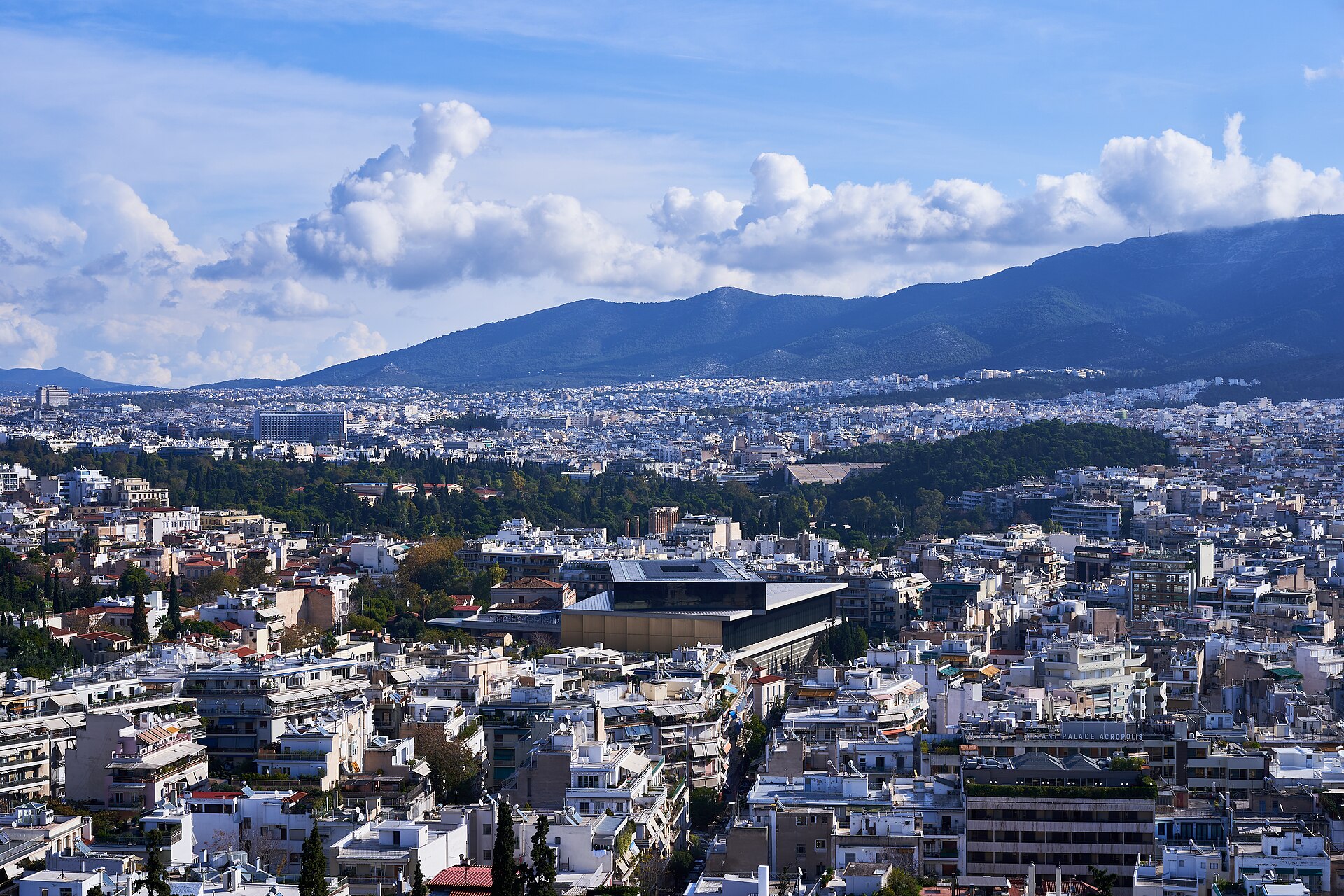
The Acropolis Museum is one of Europe’s best-designed modern museums and runs the most extensive children’s programming of any major Athens institution. The Children’s Backpacks (free with museum admission, picked up at the information desk on the ground floor) come in two themes that rotate seasonally. The “Parthenon Frieze” backpack works best for ages 7-11 and turns the long stretch of the Parthenon gallery into a treasure hunt — children identify specific characters in the frieze (a young horse rider, a water-carrying youth, a girl with a basket) using printed cue cards. The “Building the Parthenon” backpack works best for ages 5-9 and includes a small wooden model of an Ionic column children can assemble and a workbook on how ancient builders calculated the optical refinements (entasis, stylobate curvature) that make the Parthenon work.
Weekend Family Workshops
Most Saturdays and Sundays at 11am and 1pm the museum runs scheduled family workshops in either Greek or English. Topics rotate but recurring favorites include: “How the Caryatids Got Their Robes” (a textile workshop where kids try out ancient Greek draping using fabric squares), “Painting the Parthenon” (an experiment with the actual pigments archaeologists have identified on the original marbles — children leave understanding that ancient sculpture was painted in vivid colors), “The Sculptor’s Studio” (working with clay to make a small relief sculpture), and “Decoding the Frieze” (a treasure-hunt-style workshop through the Parthenon gallery). Workshops are free with museum admission and limited to about 15 children per session; reservations open the Sunday before via the museum website.
Acropolis Museum Logistics
Admission €20 adults; EU citizens under 25 enter free, and children and young people from outside the EU pay the €10 reduced rate (under-5s free). Open daily 8:00-20:00 in summer, reduced winter hours. The museum is well-suited to all ages: ground floor “Slopes of the Acropolis” gallery with archaeological excavations visible under a glass floor; first floor “Archaic” gallery with kouroi and korai sculptures; top floor Parthenon gallery (the highlight). Plan 2-3 hours including a workshop. The museum café on the second floor has a children’s menu and excellent views.
Guided tours: Guided tours and visits of the Acropolis Museum.
The Museum of Cycladic Art — Hands-On Family Workshops
The Museum of Cycladic Art in Kolonaki holds the world’s largest collection of Cycladic figurines — those minimalist white marble sculptures from the Aegean islands that influenced Picasso, Brancusi, and Modigliani. The museum runs themed family workshops most Saturdays at 11am, designed for ages 5-12 with accompanying adults. In a typical workshop children visit the galleries first with an educator to look at original Cycladic figurines, learn how islanders 5,000 years ago shaped marble using only stone tools, then return to a workshop space to sculpt their own figurine from soft clay — practicing the same minimal techniques. Children take their creations home.
Logistics
Admission €12 adults, free under-18s. Workshop fee €10 per child including materials, book online a few days ahead — sessions fill quickly. Open Monday-Saturday 10:00-17:00 (Thursdays until 20:00), Sundays 11:00-17:00. The museum is the most beautifully presented of any in Athens; ground floor Cycladic galleries, second floor ancient Greek, third floor Cypriot, fourth floor Scenes of Everyday Life (a particularly engaging gallery for kids showing ancient Greek toys, school equipment, and games).
National Archaeological Museum — For Older Kids Only
The National Archaeological Museum is the most important Greek antiquities collection in the world but is challenging for younger children: vast, traditional in presentation, and heavy on Greek text labels. With children 10+ and good preparation it works; with under-8s it generally doesn’t. The hooks for older kids: the Gold of Mycenae room with Schliemann’s treasures including the so-called Mask of Agamemnon, the Antikythera Mechanism (the world’s earliest known analog computer — kids find this genuinely amazing if they know the story beforehand), the Santorini fresco room with the Boxing Boys and saffron-gathering scenes, the bronze statue of the Jockey of Artemision. Most successful family approach: a guided tour focused on three to four highlights, total visit time 90 minutes maximum.
Goulandris Museum of Natural History & Gaia Centre
Already covered in detail in the Educational Activities and Athens Zoo guides — the Goulandris campus in Kifissia is one of Athens’ best-kept family secrets. The natural history museum holds extensive zoological, botanical, and geological collections including a triceratops model that anchors the dinosaur hall, while the adjacent Gaia Centre is fully interactive: simulated caves, earthquake platform, climate science stations. Combined ticket €8. Two to three hours for a thorough visit.
Hellenic Cosmos Cultural Centre — Virtual Reality & History
The Hellenic Cosmos Cultural Centre in Tavros is one of the most unique museum experiences in Athens for tech-curious kids. Its specialty is virtual-reality and immersive presentations of ancient Greek topics. The Tholos virtual reality theater is the highlight — a 132-seat dome theater where families experience interactive VR shows including a flight through ancient Olympia, a tour of the Athenian Agora as it appeared in 400 BC, and a journey through Hellenistic Alexandria. Children become active participants — voting on choices, exploring environments — rather than passive viewers. The center also runs school-holiday workshops on ancient Greek topics including theater, mythology, and daily life. Tickets €5-8 per show; book in advance.
Numismatic Museum — The “Coin Detective” Program
Housed in Heinrich Schliemann’s spectacular former mansion at Panepistimiou Street, the Numismatic Museum is a small but excellent stop for families. The “Coin Detective” Saturday program (most weekends, 90 minutes, €5 per child) gives children magnifying glasses and a file of case clues; they must identify coins from across 2,500 years of Greek history, decoding the symbols, animals, and gods on each piece. The program teaches archaeology, ancient economy, and Greek mythology simultaneously. The building itself — Schliemann’s neoclassical masterpiece with frescoed ceilings — adds to the experience.
Museum of Modern Greek Culture (Plaka)
Spread across several restored neoclassical buildings in Plaka, the Museum of Modern Greek Culture (formerly Museum of Greek Folk Art) is a deeply engaging stop for families interested in cultural anthropology. Children love the reconstructed traditional Greek houses with full furnishings, the carnival masks and costumes (kids can try on samples in the education room), the section on shadow theater (Karagiozis puppets are still performed at the museum during summer school holidays), and the loom and weaving demonstrations on weekend afternoons. Admission €8 adults, free under-18s; the museum’s various buildings can be visited on a single ticket over multiple days.
Children’s Art Museum
A small but charming institution at 9 Kodrou Street near Syntagma, the Children’s Art Museum displays approximately 7,000 works of art created by children themselves — drawings, paintings, ceramics, sculptures from Greek schoolchildren over five decades. Weekend art workshops run Saturday and Sunday afternoons (€8 per child including materials). The atmosphere is creative and unpressured — many families come repeatedly because children leave inspired to make their own art.
Eugenides Foundation Planetarium
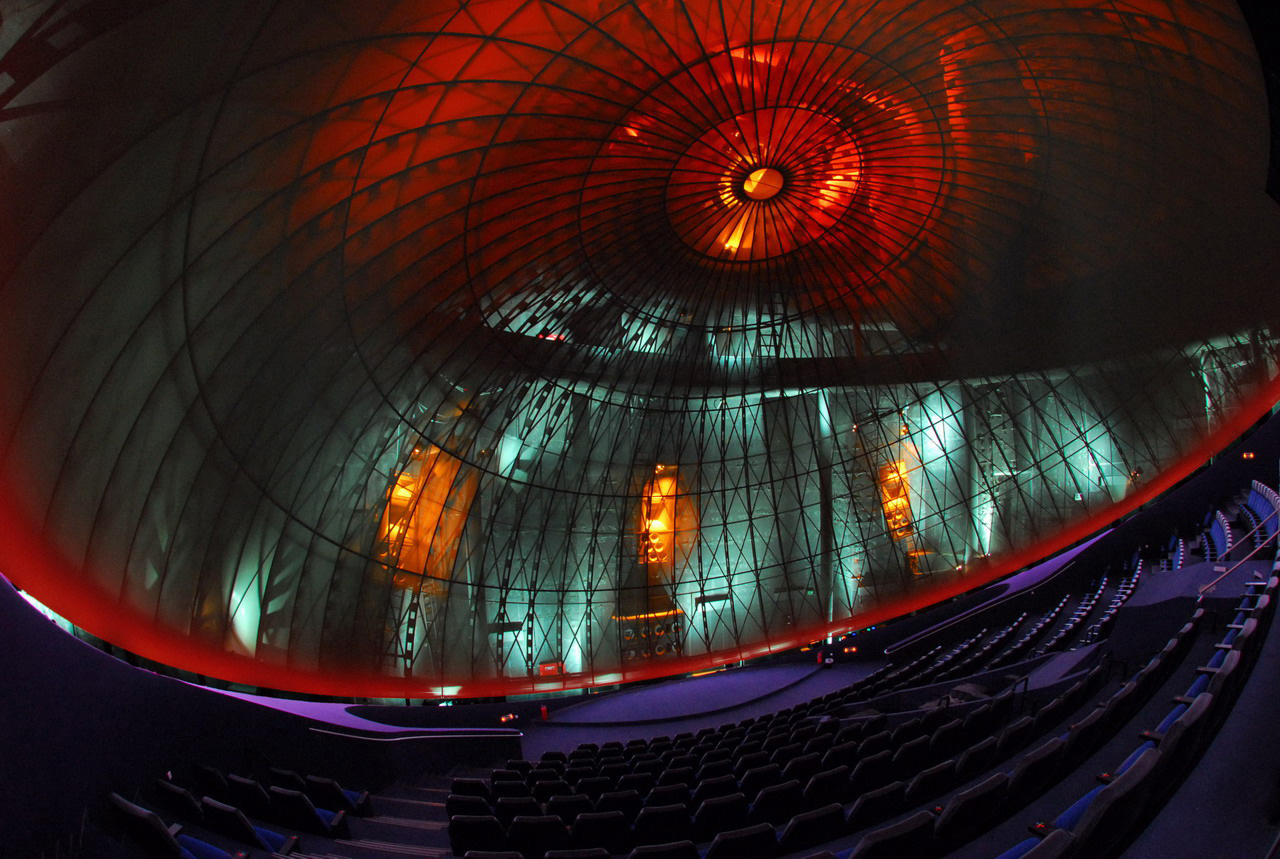
The Eugenides Planetarium in Palaio Faliro is one of Europe’s largest digital planetariums with a 25-meter dome and a state-of-the-art Zeiss projection system. Family programs run weekends and Wednesday afternoons. Show topics rotate: Greek mythology constellations (excellent overlap with any historical sightseeing you’re doing), dinosaurs, the solar system, deep space exploration, and a particularly memorable “Sky over Athens 500 BC” show that recreates the night sky as Aristotle would have seen it including ancient names for the constellations. €8 per ticket; English-language shows Saturday afternoons. Plan 90 minutes including arrival and seating.
Museum of Greek Children’s Art
Distinct from the Children’s Art Museum above, the smaller Museum of Greek Children’s Art focuses specifically on workshop programs — most weekends include hands-on art-making for ages 4-12. Drop-in workshops cost €8-12 per child including materials and run 75-90 minutes. The museum’s location near Syntagma makes it an easy combination with broader sightseeing.
Athens Living Museum & Experiential Workshops
The Athens Living Museum runs the most engaging cultural workshops in the city — “Around Greece in Five Dishes” (cooking workshop), “Theatrical Weaving” (loom workshop with mythology storytelling), “Who Killed Callimachos?” (interactive theater/history), and several Greek mythology workshops. Most run 90-120 minutes, €25-40 per child. Best booked at least a few days ahead through the museum’s website.
The “Lego Acropolis” at the Acropolis Museum & Beyond
The Acropolis Museum hosts a 120,000-brick Lego model of the Athenian Acropolis as part of its permanent education installation — kids find this fascinating because the scale is enormous and they can compare details to the real Acropolis visible through the museum’s panoramic windows. Several traveling Lego exhibitions visit Athens annually; check the museum’s calendar.
Sample Three-Day Museum Itinerary for Kids
Day 1: Acropolis Museum with Children’s Backpack and family workshop in the morning, lunch nearby, Hellenic Children’s Museum in Plaka in the afternoon. Day 2: Goulandris Natural History Museum & Gaia Centre in Kifissia (allow 4 hours including travel). Evening at Eugenides Planetarium for the Sky over Athens show. Day 3: Museum of Cycladic Art workshop in the morning (book ahead), lunch in Kolonaki, Numismatic Museum Coin Detective program in the afternoon, gelato.
Practical Family Museum Tips
Book the most popular workshops (Acropolis Museum, Cycladic) at least a week ahead in summer. Most major museums offer free admission for under-18s — bring passports as ID. Build in non-museum activities between intensive museum days; the National Garden, beach trips, or simple Plaka walks provide essential decompression. Children under 5 generally do better at the Hellenic Children’s Museum and Goulandris than at traditional collections. Bring snacks and water; museum cafés are expensive. Most museums in Athens are stroller-accessible with elevators; the Acropolis Museum is fully accessible, the National Archaeological Museum less so.
Family Museum Tickets & Discounts
There is no longer a multi-site pass or combined ticket, but free entry for children and family discounts still make museum-heavy family travel more affordable. The old €30 five-day pass for the Acropolis, Ancient Agora, Roman Agora, Kerameikos, Hadrian’s Library, Temple of Olympian Zeus and Aristotle’s Lyceum was withdrawn in 2025, so adults now pay site by site: €30 for the Acropolis and €5-20 for each of the others. Under-18s enter all state-run museums and archaeological sites free with proof of age (passport or ID). Several private museums (Cycladic, Benaki, Goulandris) offer family discounts; ask at the ticket office about family packages.
Best Museum Combinations for Family Days
Specific museum pairings that work particularly well for families: Acropolis Museum + Hellenic Children’s Museum (a half-day combo, both in central Athens, contrasts traditional and interactive); Museum of Cycladic Art + Numismatic Museum (both in Kolonaki, both with engaging children’s programs); Goulandris Natural History + Eugenides Planetarium (a full day for science-curious kids); Benaki Museum (main building) + National Gallery (a strong art-focused day for older children).
Adapting Museum Visits for Different Ages
For children 4-6: maximum 60-90 minutes per museum, plan around one specific activity or workshop, expect to leave when interest fades. For children 7-10: 90-120 minutes per museum, scavenger hunts and backpack quests work well, attention spans support one workshop plus 45-60 minutes of independent exploration. For children 11-14: 2-3 hours per museum can work, consider letting them lead with the audio guide, allow time alone in galleries they find interesting. For teens 15+: museums can become genuinely engaging if the topic connects to their interests; consider letting them choose which museums to visit.
Greek Schoolchildren in Museums — A Cultural Note
Many Athens museums host Greek school groups during weekday mornings. Visiting families may see large groups of uniformed students working through worksheets and listening to museum educators. This is generally a positive sight — these are children who will be the future visitors and stewards of Greece’s cultural heritage — but it does mean the most popular rooms can be crowded between 10am-12pm on school days. Adjusting your visit to early opening (8-10am) or after the school groups leave (12pm-2pm) usually solves the timing.
Museum Cafés Worth Knowing About
Several Athens museum cafés are destinations in their own right. The Acropolis Museum café on the second floor has children’s menus, panoramic Acropolis views, and reasonable prices. The Benaki Museum rooftop café offers excellent food and views of central Athens. The Museum of Cycladic Art café has a small but stylish menu. The Goulandris Natural History Museum café is functional rather than special. Building lunch into the museum visit at a museum café often produces better outcomes than rushing to find lunch outside.
Practical Logistics for a Museum-Heavy Family Trip
For families planning to focus heavily on museums during an Athens trip, a few logistical principles maximize the experience. Price the ancient sites one by one: the €30 multi-site pass was withdrawn in 2025, and adults now pay €30 for the Acropolis and €5-20 for each of the other sites. Use the free-admission days: the Acropolis and the other state sites in central Athens are free on 6 March, 18 April, 18 May, the last weekend of September and 28 October, plus the first and third Sundays of each month from 1 November to 31 March (advance booking still required for the Acropolis). Build family programs into the trip schedule rather than treating them as bonus add-ons; the best programs sell out and require advance booking. Allow recovery time between intensive museum days — beach, pool, or simple park time between two museum days produces dramatically better outcomes than back-to-back museum visits. Bring a small art supply pack to museum visits: a sketchbook and pencils transform a 90-minute museum into a 3-hour art experience for kids who like drawing.
Photo Credits
- The Acropolis Museum in Athens: The Acropolis Museum from Philopappos Hill on November 26, 2019 by George E. Koronaios, CC BY-SA 4.0, via Wikimedia Commons.
- The projection dome of the Eugenides Foundation planetarium: Eugenides Foundation is an ESO Outreach Partner Organisation (eugenides-foundation) by Eugenides Foundation, CC BY 4.0, via Wikimedia Commons.