This article contains advertising. Some of the hotel, flight and transfer links in it are paid links: if you book through one, we get a commission from the booking company, and your price is the same either way. It never affects what we recommend. Affiliate disclosure
Athens with a toddler is a city of two halves. Greeks adore small children and will make that obvious within an hour of your arrival — waiters will engage with your two-year-old directly, strangers will fuss over a baby, and nobody minds a family at a taverna table at nine in the evening. Set against that: the pavements are broken, half the old city is stairs, the Acropolis will not let a pushchair through the gate, and for six hours in the middle of a summer day it is too hot to be outside. This guide is about working with the first half and around the second. It sits alongside our complete guide to Athens with kids.
Pushchair or Carrier? Mostly Carrier
The honest answer for central Athens is that a carrier will serve you better than a pushchair on most days, and the ideal is to have both and choose each morning.
Strollers are not permitted on the Acropolis site itself and must be left at the entrance. Plaka’s lanes are cobbled with marble steps, Anafiotika above it is stairs only, and the Mnisikleous steps are a tourist attraction precisely because they are a staircase. Across the city, pavements are frequently broken or blocked by parked cars, and the approaches to the hills are steep.
Where a pushchair does work well: the Dionysiou Areopagitou promenade below the Acropolis and its continuation into Apostolou Pavlou at Thissio, which is broad, flat, marble-paved and traffic-free. The Zappeion Gardens, whose wide gravel avenues are the best stroller surface in central Athens. The main paths of the National Garden. The whole of the Stavros Niarchos park, including the climb to the top of its thirty-two-metre hill, which is accessible the entire way. Flisvos Park and the Riviera seafront. And the flat residential grid of Makrygianni, Koukaki and Pangrati.
A compact umbrella-fold buggy is far more useful here than a large all-terrain model, because you will be lifting it up steps and folding it on buses.
The Metro Lift Map — the Thing to Plan Around
This matters more than almost any other decision on a toddler trip.
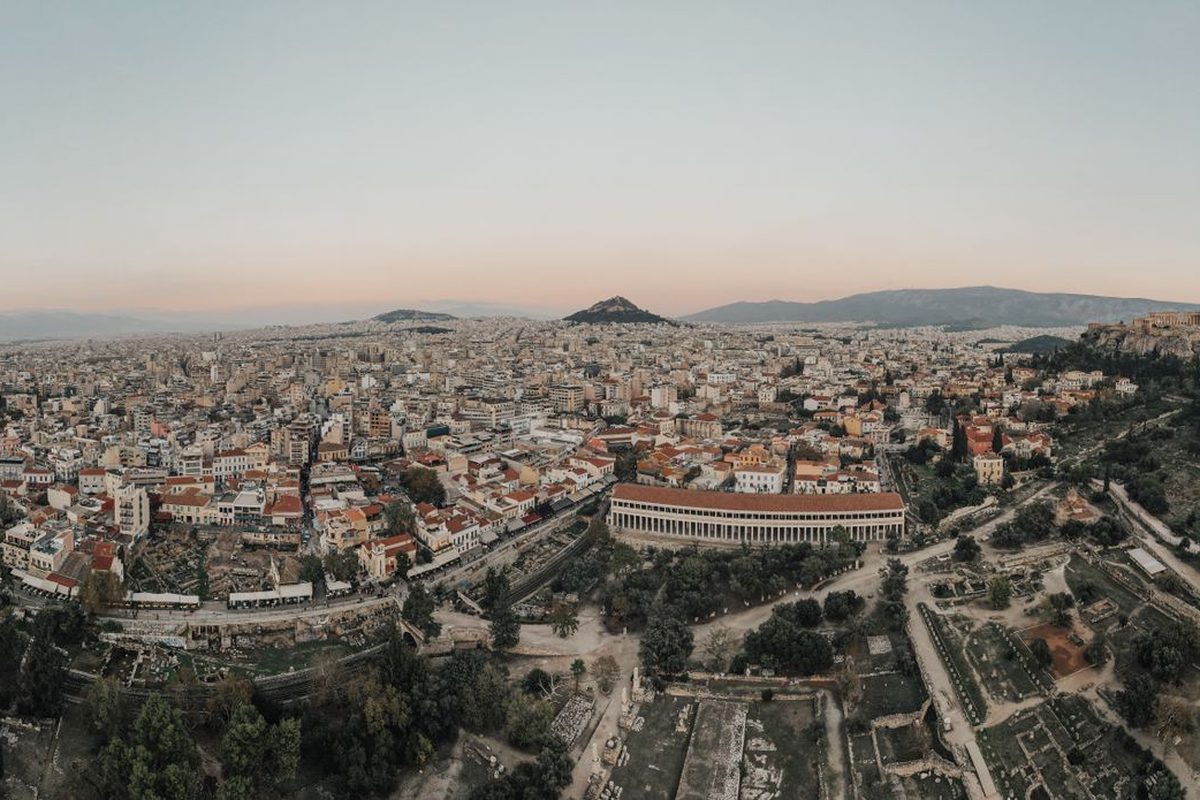
All forty-seven stations on Lines 2 and 3 have lifts and full step-free access. Line 1, the old green line, has been retrofitted unevenly. The one to know about is Thissio, which has a single lift reached by an incline that climbs three metres over a 140-metre approach — despite the beautiful pedestrianised promenade above it, it is the worst central station to arrive at with a buggy.
The reliably lift-served central stations are Akropoli, Syngrou-Fix, Syntagma, Panepistimio, Evangelismos and Monastiraki. Build your days around those and the metro becomes genuinely easy. Our Athens metro guide has the full network, and the accessibility guide covers step-free routes in more detail.
The metro is also air-conditioned, which on a July afternoon is a reason to take it for one stop rather than walk.
Where to Base Yourself
Makrygianni is the best area for this age group: flat quiet streets, a hundred metres to a lift-served metro station, the pedestrian promenade at the end of the road and the Acropolis Museum a minute away. Koukaki is the same at slightly lower prices with a bit more walking. Pangrati is residential and has real neighbourhood playgrounds. Syntagma puts the National Garden on your doorstep.
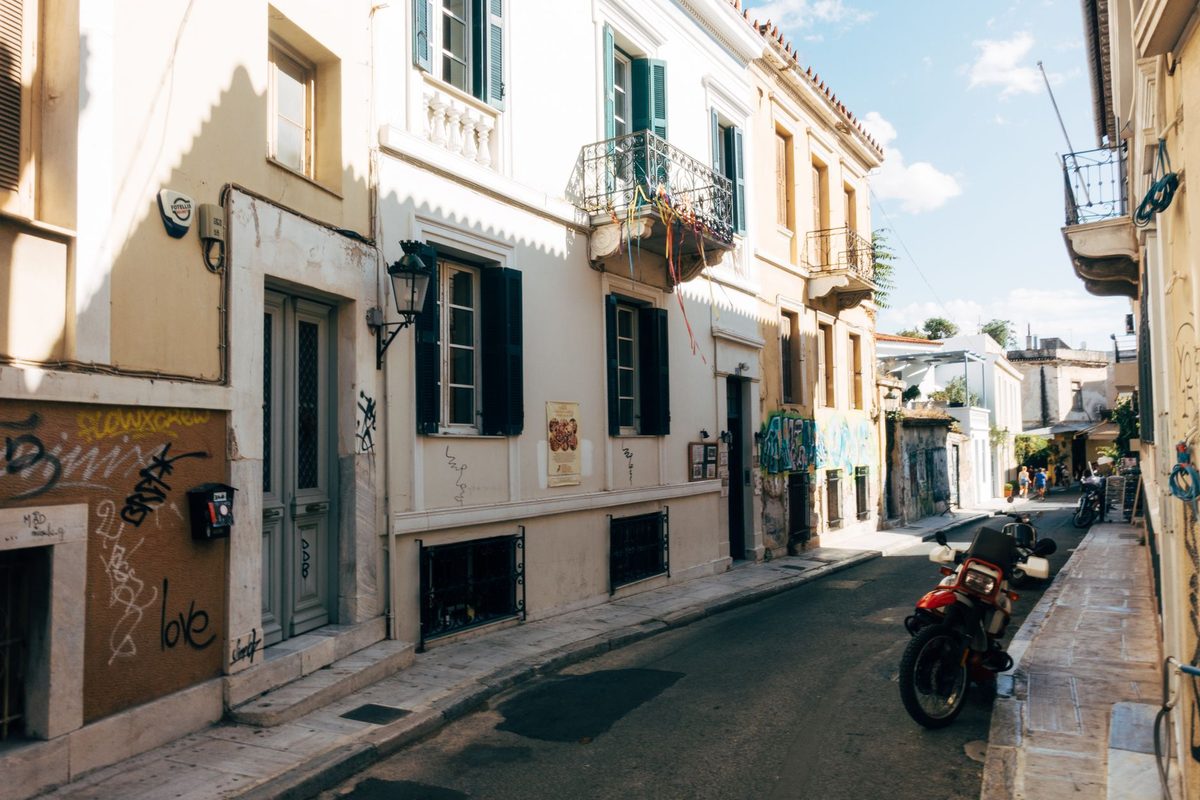
Think twice about Plaka, however pretty — no metro station of its own, cobbles and steps throughout, and genuinely noisy at night. Think twice about Monastiraki too: superb transport, but the noise is relentless and a toddler who naps badly will make you regret it.
An apartment beats a hotel room at this age. A kitchen for the child who eats only pasta, a washing machine, and crucially a separate bedroom so that your evening does not end at half past seven in the dark. Our family hotels guide names the properties where the second bedroom is real rather than a sofa bed.
Run the Day on Athens Time
The rhythm that works is not the one most visiting families arrive with.
Out early. Between opening and about half past ten is the best part of the day — cool, quiet, and the Acropolis at eight in the morning is a different place from the Acropolis at noon.
Lunch at two, and make it the main meal. Greek kitchens are properly open then, the room is full, and your toddler is not yet destroyed. Arriving for dinner at six gets you an empty restaurant and disengaged service.
Sleep or shelter from about noon to five. This is not indulgence, it is what the city itself does — the Ministry of Culture closes the Acropolis from noon to five on heatwave days, and the municipality pulls its own outdoor crews off the streets between eleven and five. Go back to the apartment, or find air conditioning: the Acropolis Museum, an indoor café, a shopping centre.
Out again from six until late. This is when Athens comes out, and when the local toddlers appear in the squares. Playgrounds fill from about seven and stay busy past nine. If you go out at ten in the morning and wonder where all the Greek children are, this is the answer.
What Actually Works With a Two-Year-Old
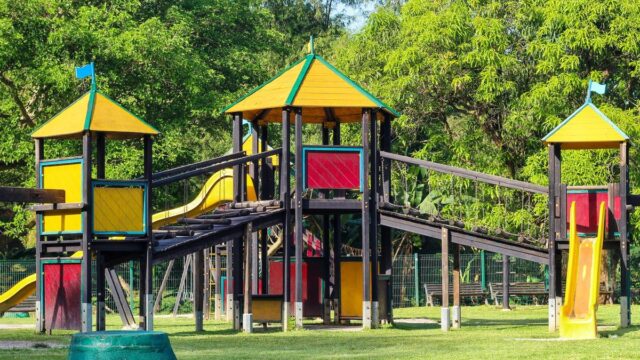
The National Garden is the single most useful place in Athens at this age. Ten minutes from Syntagma, free, dense shade, a playground, duck ponds, terrapins, free-roaming peacocks, and little stone irrigation channels that a toddler will follow for longer than seems reasonable. There is a small animal collection too, though the enclosures are dated and some visitors find them uncomfortable.
The Stavros Niarchos park is the other essential. It opens at six in the morning and stays open until midnight, the playgrounds are modern and made from proper materials, and the water jets run daily from nine to three and five to ten — the only free public water play we could verify in Athens. Bring a towel and a change of clothes. Pick up one of the free child ID wristbands from the lobby while you are there. A free shuttle bus runs from Syntagma via Syngrou-Fix, though it is infrequent, so check the timetable before you rely on it.
The Dionysiou Areopagitou promenade is where Athenian toddlers ride scooters. Flat, car-free, with the Parthenon overhead and buskers in the evening.
Flisvos Park at Palaio Faliro has a dedicated zone for two- to five-year-olds inside a large fenced car-free playground, with the Averof battleship moored alongside for anyone in the family who wants more than swings. The tram stops outside.
The Nea Smyrni grove deserves a mention purely because it is entirely enclosed by iron railings, which with a two-year-old who has just discovered running is worth crossing the city for.
Philopappou Hill works better than you would expect: no traffic, real shade under the pines, gentle lower loops and the best free view of the Acropolis in the city. The stone paths are uneven and slippery when wet, so a carrier is better than a buggy here.
Our parks and playgrounds guide covers all of these in full, including the honest state of the city’s play equipment.
Sightseeing With a Toddler
Lower the target. One thing a day, done early, is a good day.
The Acropolis is doable but demands planning. Go at opening. Use a carrier, because the pushchair stays at the gate. The surfaces are uneven marble and there is no shade on the rock at all. A lift exists on the north side for visitors with mobility impairments. Ninety minutes is plenty. Our complete Acropolis guide covers tickets and timing.
The Acropolis Museum is better than the rock itself at this age: air-conditioned, spacious, with glass floors over the excavations that toddlers find genuinely interesting, and a restaurant with a children’s menu and a view of the Parthenon.
The changing of the guard at the Tomb of the Unknown Soldier on Syntagma is five minutes long, free, highly visual and right next to the National Garden. It is close to a perfect toddler activity.
Skip the archaeological sites that are essentially fields of foundations. A two-year-old cannot tell the Ancient Agora from a building site, and neither can most adults without a guide.
Eating Out
Easy, with two adjustments.
Order mezedes and share. Small plates at four to nine euros each, spread across the table, beat committing fourteen euros to a main your toddler will look at once and reject. Reliable orders: chips, cheese pie, meatballs, plain grilled chicken souvlaki off the skewer, fried cheese, yoghurt with honey. Skip ordering them their own moussaka — it is richer than most small children want.
Sit somewhere with a pedestrian square or courtyard. A toddler who can get up and walk ten metres without crossing a road will let you finish your meal. Varnava Square in Pangrati, Avdi Square in Metaxourgeio, Agias Irinis near Monastiraki, and the courtyard at Ama Lachei in Exarchia, which used to be a school playground.
Two practical warnings. High chairs are not universal and you cannot tell from the doorway — bring a portable fabric booster or chair harness, which costs little and opens up the whole city. And changing tables in restaurants are genuinely scarce, so carry a portable mat. Museums and malls are better bets than tavernas. Full detail in our family restaurants guide.
Practical Logistics
Equipment rental. Athens has a well-developed baby-equipment rental market — several local companies deliver travel cots, high chairs, bed rails, strollers, car seats and sterilisers to your hotel or apartment, sanitised, with airport delivery available. For a week with a toddler this is almost always cheaper and less stressful than hauling gear through two airports. Hotels will usually provide a cot on request, but it is not reliably free and not reliably in stock, so confirm at booking.
Nappies, formula and baby food are widely available in Greek pharmacies and in the big supermarket chains — Sklavenitis, AB Vassilopoulos, My Market, Lidl. Pharmacies carry a good range of formula and are staffed by pharmacists who generally speak English. Brands differ from home, so bring enough for the first day or two.
Heat and sun. Hats, high-factor sunscreen and a water bottle are not optional between June and September. Every playground is legally required to have a drinking tap, but do not rely on one working. Athens tap water is safe to drink.
Taxis. Greek taxis do not routinely carry child seats. If you want one, book a private transfer that supplies it, or plan around the metro. The fixed airport fare into the city centre is €40 during the day and €55 between midnight and five, which for a family with luggage often beats three or four metro tickets anyway.
Emergencies. 112 works from any phone in Greece with no SIM, no credit and no roaming, and is answered in Greek, English and French. Pharmacies operate a duty rota so there is always one open. Our safety guide has more.
When to Come
With a toddler, the shoulder seasons are not merely nicer — they are a different trip. April to early June and mid-September to October give you comfortable temperatures, open playgrounds, and days you can spend outside without a five-hour hole in the middle.
July and August are hard work with small children. If those are your only dates, base yourself somewhere with a pool or on the Riviera, accept that the middle of the day is written off, and lean on the Stavros Niarchos park’s early opening and late closing. Note also that on extreme fire-risk days the wooded parks can be closed by civil protection order, so check before setting out. See our month-by-month guide.
Frequently Asked Questions
Is Athens good for toddlers? Yes, with planning. Greeks are exceptionally welcoming to small children and there is good free green space. The difficulties are heat, steps and pavements rather than attitude.
Should I bring a pushchair to Athens? Bring a compact one and a carrier. The promenades and parks are fine for wheels; Plaka, the Acropolis and most of the old city are not.
Can you take a stroller into the Acropolis? No. Strollers must be left at the entrance, so plan on a carrier.
Which Athens metro stations have lifts? Every station on Lines 2 and 3. Line 1 is patchy — avoid Thissio with a buggy, as it has one lift up a long incline.
Where can toddlers play in Athens? The National Garden playground, the Stavros Niarchos park including its water jets, Flisvos Park’s dedicated two-to-five zone, and the fully fenced Nea Smyrni grove.
Is Athens too hot for toddlers in summer? In July and August the middle of the day genuinely is. Athens institutions treat roughly eleven to five as the unsafe window, and you should too — go out early, shelter at midday, and come back out after six.
Final Thoughts
Athens is not a difficult city with a toddler; it is a city that runs on a different clock and expects you to keep up. Get out at eight, eat properly at two, disappear for the hot part of the afternoon, and come back out at six when the squares fill with Greek families doing exactly the same thing. Book a flat rather than a hotel room, stay near a metro station with a lift, and bring a carrier. Do that and the parts people warn you about — the steps, the heat, the pavements — turn out to be details rather than the trip.
Back to the main guide: return to our complete guide to Athens with kids, or read on about Athens parks and playgrounds and family beach days near Athens.