This article contains advertising. Some of the hotel, tour, activity, flight and transfer links in it are paid links: if you book through one, we get a commission from the booking company, and your price is the same either way. It never affects what we recommend. Affiliate disclosure
Athens has more free green space for children than its reputation suggests, and one fact that governs all of it: for about six hours in the middle of a summer day, being outside with a small child is a bad idea. The Ministry of Culture closes the Acropolis from noon to five on heatwave days. The city withdraws its own outdoor work crews from eleven to five. The Stavros Niarchos park shuts off its water jets between three and five. Plan around those hours and Athens is a generous city for children outdoors; ignore them and it is miserable. This guide covers the parks and playgrounds worth your time, the honest state of the city’s play equipment, and the timing that makes the difference. For the wider picture see our complete guide to Athens with kids.
The National Garden
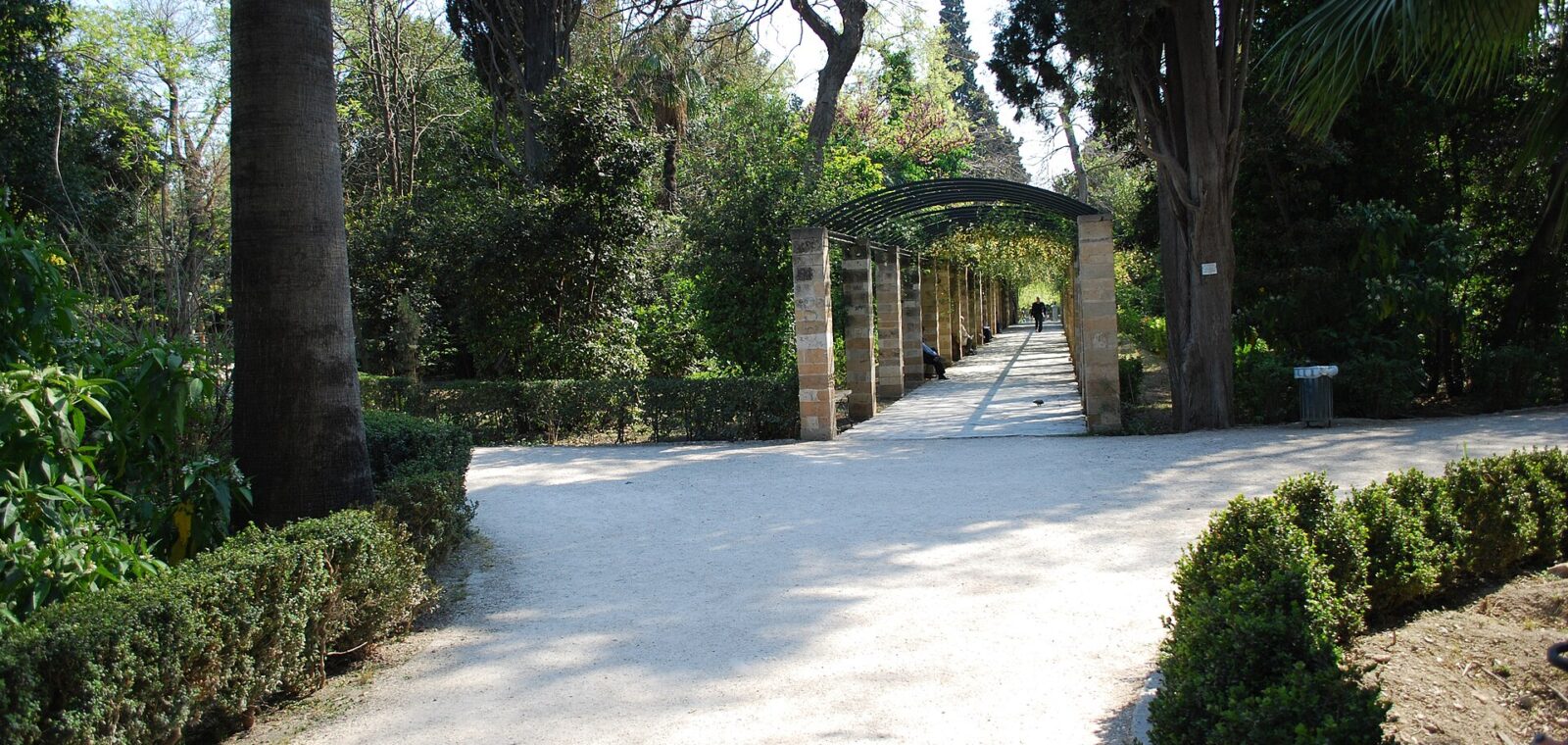
Fifteen and a half hectares of dense mature planting immediately south of Syntagma Square, free, and the best midday refuge in central Athens.
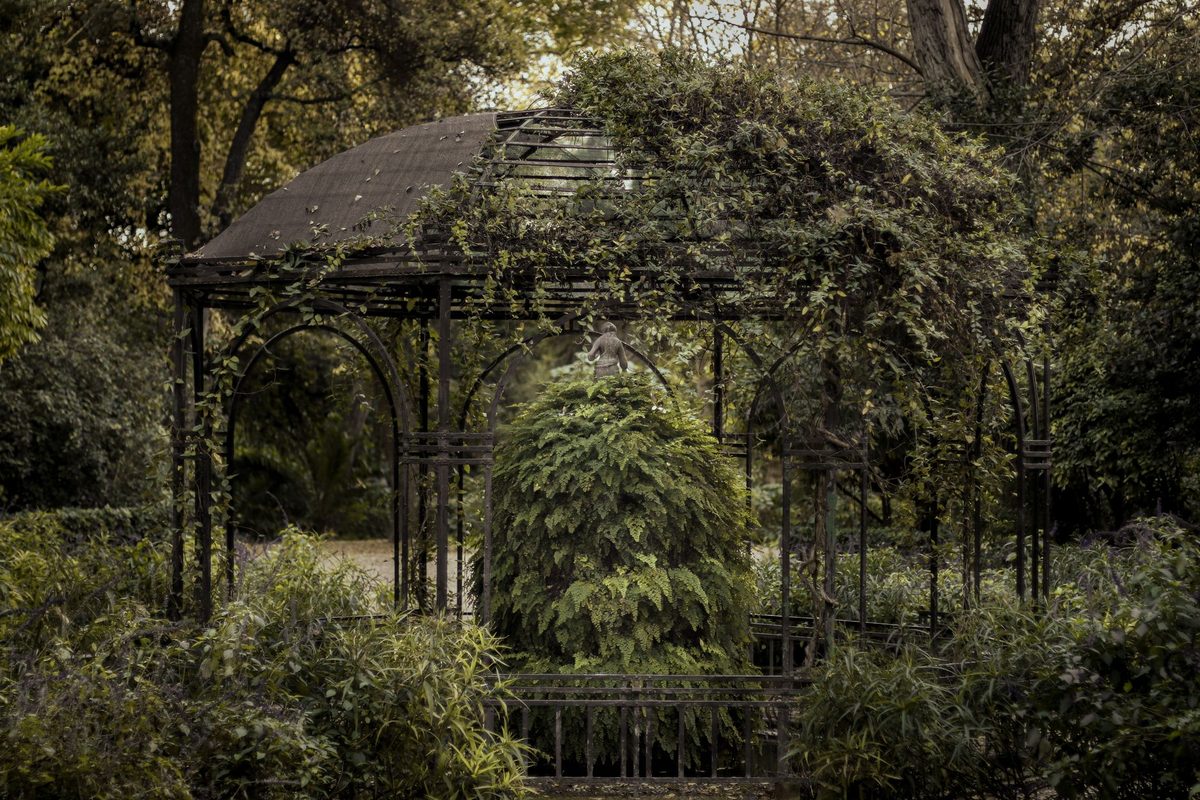
Queen Amalia commissioned it and construction began in 1839, laid out by the German agronomist Friedrich Schmidt, who imported over five hundred plant species along with peacocks, ducks and turtles. It was the Royal Garden — the palace garden of what is now the Greek Parliament — until it became state property in 1923, opening to the public sunrise to sunset, and was renamed the National Garden in 1927. It was designated a Historic Site in 2011.
For children specifically, the draw is the shaded municipal playground, the duck ponds, the terrapins, the free-roaming peacocks, and a small children’s library. There is also a little zoological and bird collection in the centre of the garden. One honest note: recent visitors have described the caged animals as being in small, dated enclosures and found the experience uncomfortable. The free-roaming ducks, terrapins and peacocks are the real pleasure; our Athens zoo and wildlife guide covers animal attractions properly.
The water is worth pointing out to older children. The garden is still fed by the Peisistratean Aqueduct, a 6th-century BC underground gallery running six and a half kilometres from Hymettus at a depth of ten to twelve metres. Somewhere between a thousand and twelve hundred cubic metres of water enter the ponds daily. There is a network of little stone irrigation channels running through the grounds, and small children will follow them for a surprisingly long time.
Hours. Officially sunrise to sunset — the municipality publishes no fixed clock times and can change them at short notice, posting notices at the entrances. In practice the gates open around six and close near dusk, so roughly half past seven in high summer and around five in midwinter.
Access. Free, with entrances on Amalias, Vasilissis Sofias, Herodou Attikou and Jean Moreas, plus a gate straight through into the Zappeion. Stroller and wheelchair access is available from all entrances except Vasilissis Sofias and Jean Moreas. Paths are compacted gravel — passable, not smooth.
Two corrections to what you will read elsewhere. The Botanical Museum is closed, per the city’s own records, though most guides still list it as an attraction. And the city runs a free summer programme for primary-school children inside the garden — in 2026 it ran from late June to early September, weekdays eight to three, excluding the first two weeks of August, capped at twenty children a week, with breakfast and materials provided. Registration is by email to the city’s environmental education address.
The Zappeion Gardens
Continuous with the National Garden through a connecting gate, and the two read as one space. You can walk from Syntagma through the garden, out into the Zappeion and on to the Panathenaic Stadium and the Temple of Olympian Zeus without crossing a road.
The Zappeion Hall itself was built in 1878, designed by Theophil von Hansen, and served as the Olympic Village for the 1896 Games. There is no dedicated playground in the grounds — children use the avenues — but centuries-old plane trees and palms create a genuinely cool microclimate even in high summer, and the wide flat gravel avenues are the best stroller and scooter surface of any central green space in Athens.
The Stavros Niarchos Park — the Standout
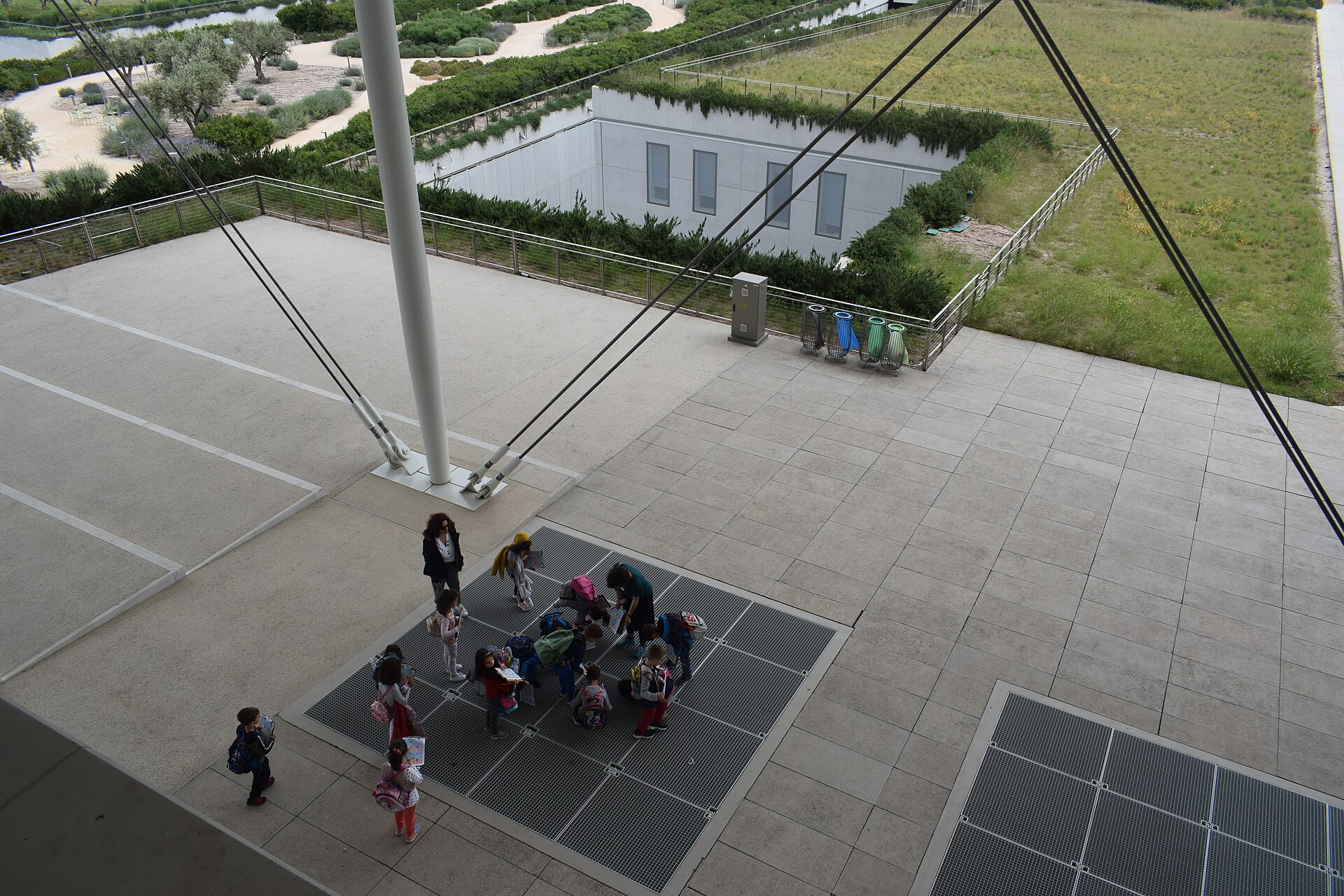
Twenty-one hectares in Kallithea, occupying eighty-five per cent of the Stavros Niarchos Foundation Cultural Centre site, designed by Renzo Piano on the ground of the old Athens racecourse and donated to the Greek State in 2017. The foundation calls it the largest Mediterranean park in Europe.
The single most useful fact for families in this whole guide: the park opens at six in the morning and stays open until midnight, or two in the morning on Fridays and Saturdays. In an Athens summer that is the difference between a usable outdoor space and an unusable one.
What is there for children: playgrounds with equipment made from sustainably sourced wood, dedicated to children of all ages, and water jets running daily from nine to three and again from five to ten — note the deliberate midday shutdown. The jets are free to use, so bring a towel and a change of clothes. There is a hedge labyrinth, a great lawn with a four-thousand-square-metre stage area, a running track with free table tennis tables, and a canal thirty metres by four hundred which is architectural rather than swimmable.
Two things almost nobody mentions. Free ID wristbands for young children are available at the lobby and info points, so you can walk around without counting heads every thirty seconds. And free power banks are available at the lobby daily until quarter to nine.
The artificial hill rises to thirty-two metres and is reached entirely by park paths and planted roofs — fully pushchair- and wheelchair-accessible the whole way up, which is exceptional in this city.
Getting there. A free minibus runs from Syntagma, stopping at Syngrou-Fix, to the south side of the canal, and back. It is genuinely free and runs daily — but it is not frequent, and there is a five-hour gap on weekday mornings between the half-past-twelve service out and the half-past-five. Check the current timetable on the day and plan around it, or take the tram or bus. Wheelchair access on the shuttle needs a phone call in advance.
One honest caveat. The great lawn and Mediterranean garden are deliberately open and sunlit, planted with drought-adapted scrub rather than shade canopy. At two in the afternoon in July there is very little shelter. It is superb early and late; it is not a midday refuge the way the National Garden is.
Pets are welcome in all outdoor areas except the great lawn, the labyrinth and the playgrounds. At Christmas the centre transforms into the city’s best free festive destination.
The Honest State of Athens Playgrounds
This is where most guides go vague, so here is the actual position, which the city itself has published.
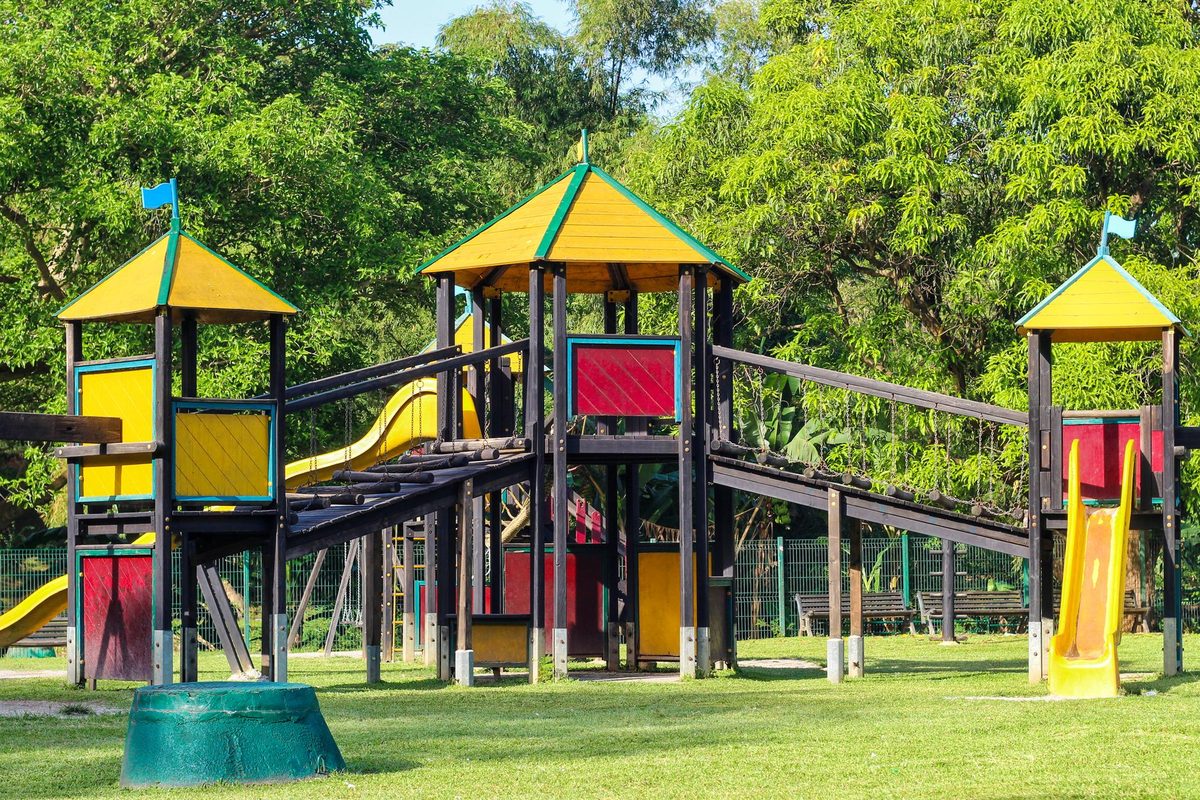
In March 2024 the incoming municipal administration announced that most of the city’s playgrounds had been operating without renewed safety certification. Eleven had failed certification in 2022 and 2023 and been kept open anyway; another fifteen had been inspected, found to have problems, received no certificate and stayed open. Twelve were then closed outright on safety grounds, including both playgrounds in Kolonaki at Dinokratous and at Sina and Arachovis.
Since then the city has been rebuilding at roughly one a month. By April 2026 the mayor reported twenty-four playgrounds delivered new or fully rebuilt to modern safety and accessibility standards: certified equipment, rubber shock-absorbing surfacing, lighting, fencing, universal accessibility including for wheelchair users, seating for adults, greenery and shade points.
The rule of thumb: a playground rebuilt in the last two years is excellent. An older neighbourhood one may be tired, unshaded and occasionally broken. Look for the certification plaque at the gate — by law every playground must display one showing the age range it is built for, emergency numbers and its operating hours. No plaque means no valid certificate.
Greek law also requires every municipal playground to be fenced, lit, furnished with seating for accompanying adults, and equipped with a drinking water tap. But shade is only mandatory above 400 square metres — which means most small neighbourhood playgrounds are legally permitted to have no shade at all, and many don’t. That single loophole explains most of what parents experience in an Athens summer.
One geographic caveat: almost every new build is in the northern and central residential districts — Patisia, Polygono, Kypseli, Ampelokipi, Kolonos, Neapoli. Visitors staying in Plaka, Monastiraki or Koukaki are nowhere near any of them. For those areas the honest answer is the National Garden playground, Dexameni Square in Kolonaki, or a trip out to the Stavros Niarchos park.
The Heat, and How to Time Around It
Do not treat this as generic advice. Athens institutions act on it.
The Ministry of Culture closes the Acropolis and other archaeological sites from noon to five on heatwave days for the safety of visitors and staff. The City of Athens pulls its own outdoor crews off the streets between eleven and five. During the August 2026 heat the city opened seven air-conditioned public cooling spaces running nine to nine, and it operates a dedicated heatwave advice line. Athens has Europe’s first Chief Heat Officer.
Applied to a playground, the physics is the same as the marble on the Acropolis. Rubber safety surfacing is the correct choice under the safety standards but it absorbs and holds heat, and dark rubber and metal slides in direct July sun become genuinely painful to bare skin.
Best windows: from opening until about half past ten, and from six until dark. Athens is a late city — playgrounds and squares fill with local families from around seven in the evening and stay busy well past nine. Visiting families who go out at ten in the morning and wonder where all the Greek children are have simply come at the wrong time.
Carry water. A drinking tap is legally required in every playground, but do not rely on it working.
For real tree cover, ranked: the National Garden first, with dense mature planting and water features that measurably cool it; then the Zappeion’s plane trees; then the Nea Smyrni grove, which is sixty per cent conifers planted at high density; then the pine slopes of Philopappou; then Pedion tou Areos, deliberately planted in the 1930s with deciduous trees to give summer shade and winter light.
The Fire-Closure Rule Nobody Warns You About
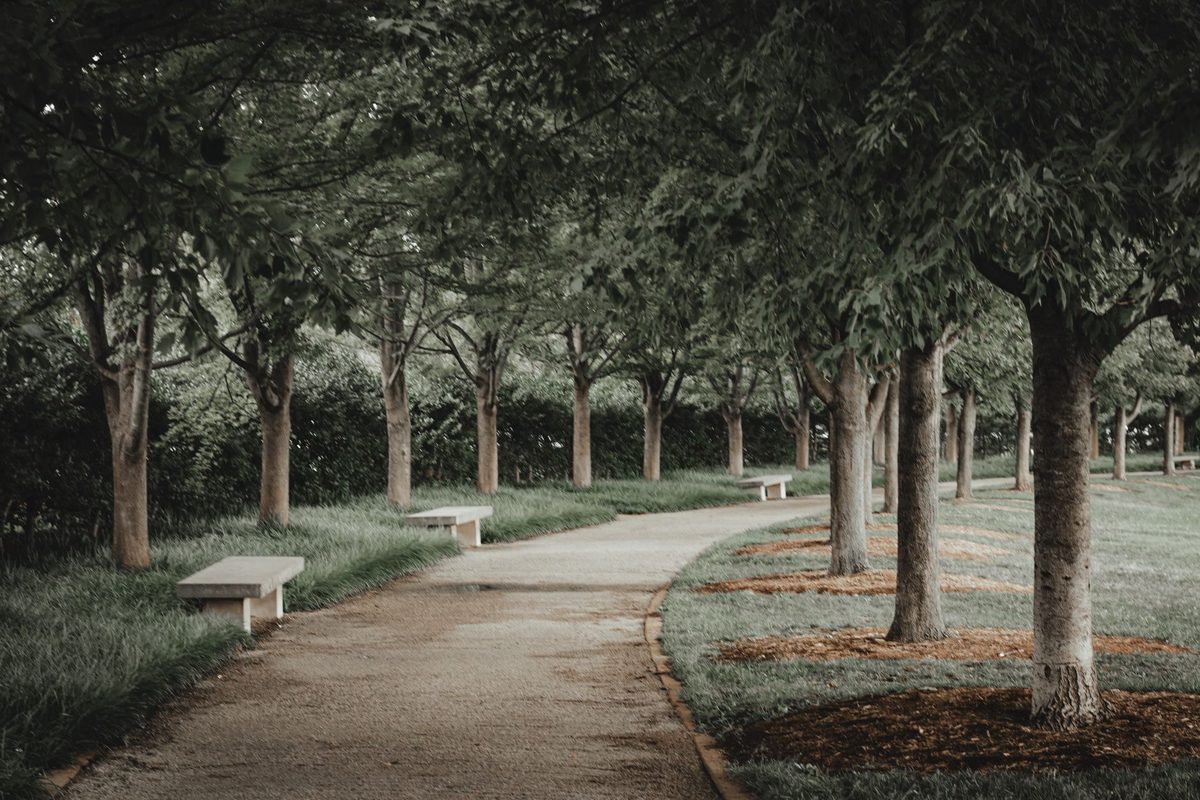
On days of extreme fire risk, Greek civil protection imposes circulation bans on forest areas, groves and parks, enforced by police patrols. In summer 2026 this closed Pedion tou Areos for extended periods, prompting a formal protest from the local residents’ association. The same rules can affect Attiko Alsos, Alsos Veikou, Philopappou and the Tritsis park.
If you are planning a July or August afternoon in a wooded park, check on the day. No other Athens guide covers this, and it is exactly the kind of thing that ruins an outing.
The Other Parks Worth Knowing
Pedion tou Areos, twenty-seven hectares about a kilometre northeast of Omonia, is the largest central park after the National Garden. Laid out in 1934 to honour the heroes of 1821, with twenty-one marble busts along the Avenue of Heroes, it was fully renovated in 2010. It has two playgrounds plus a separate teenagers’ play area, an open-air theatre, a rose garden, a petanque court and the historic Green Park café. It is fine and busy by day and during its festivals — the annual Book Festival runs there each September — but the quieter fringes feel much less maintained, and it is not somewhere to be with small children after dark.
Philopappou Hill is not a playground but is one of the best places in Athens for children to run: no traffic, gentle gradients on the lower loops, real shade under mature pines and the best free Acropolis view in the city. The paths are the work of the architect Dimitris Pikionis, laid between 1954 and 1957 in rough-finished marble that looks irregular but is strictly geometric — widely considered his masterpiece. Warning: that stone paving is slippery when wet and uneven throughout. Fine for confident walkers, a struggle with a buggy beyond the main lower path.
Nea Smyrni grove, five hectares, is entirely enclosed by iron railings — a genuine advantage with a toddler. A playground operates daily, the perimeter has a cycle track all the way round, and the sixty per cent conifer planting gives serious shade. There is a canteen, outdoor chess, two fountains and an open-air theatre. The tram runs along its eastern edge between the Agia Fotini and Aigaiou stops.
Flisvos Park at Palaio Faliro is the best coastal option: thirteen hectares of which six are the playground itself, dominated by a single thousand-square-metre play structure with slides and platforms, reached by ramps and handholds specifically so children with disabilities can use it. There are two age zones, one for two- to five-year-olds and one for children up to twelve, on rubber and sand. It is car-free and fenced. The Averof battleship museum is moored alongside at Flisvos Marina — closed Mondays, open Tuesday to Friday nine to two and weekends ten to five, tickets €5 for adults, €2.50 for ages seven to seventeen, and free for under-sixes. The tram stop is directly outside the marina entrance.
Alsos Veikou in Galatsi, twenty-five hectares on the Tourkovounia foothills, has playgrounds, outdoor gym equipment, tennis and petanque courts, a skateboard park, a municipal swimming pool, a summer open-air cinema and cafés. Currently bus-only, though a future metro station is under construction nearby.
The Antonis Tritsis Environmental Park in Ilion is the second-largest urban park in Greece at 120 hectares, known for its lakes and birdlife, drawing fifteen thousand visitors at weekends. Its history is a nice link to the National Garden: this was Queen Amalia’s model farm, worked on by the same royal gardeners, planted with mulberries, pistachios, vines and olives, and stocked with cattle, merino sheep, Arabian horses and — briefly — giraffes. The gothic-revival Queen’s Tower still stands. One practical warning: the park’s official site is parkotritsis.gr, with an “s”. The similar domain without it has expired and now serves online-casino spam. Several travel guides still link to the wrong one.
Dexameni Square in Kolonaki is small, shaded and café-lined, with a working playground that the city itself directed families toward when it closed the other two Kolonaki playgrounds in 2024.
Lycabettus Hill gets a warning rather than a recommendation for families with buggies. The funicular’s lower station sits about ninety metres above the surrounding streets, reached by roughly twelve flights of steep steps, with more steps at the top. It is effectively impossible with a pushchair, and the sunset queues are chaotic.
Free Outdoor Space Beyond the Parks
The Dionysiou Areopagitou promenade below the south slope of the Acropolis, continuing into Apostolou Pavlou around Thissio, is the default Athens spot for children on scooters and bikes — traffic-free, broad and marble-paved, with the Parthenon above.
The Athens Riviera seafront runs from the Faliro delta south through Palaio Faliro, Alimos, Glyfada and Voula, with the tram alongside for much of its length, so you can walk one way and ride back. Our family beach days guide covers the swimming.
For a child learning to ride a bike, the enclosed perimeter cycle track at the Nea Smyrni grove is one of the few genuinely safe traffic-free loops in the city.
Practical Notes
Cost. Everything above is free to enter. The only paid extras are the Lycabettus funicular and the Averof museum ship.
Strollers. Best is the Stavros Niarchos park, accessible the whole way to the top of the hill. Good: the Zappeion’s flat avenues, the National Garden’s main paths, Flisvos and the seafront, and the Nea Smyrni loop. Poor: Philopappou beyond the lower path, and Lycabettus.
Dogs are not permitted in any certified Greek playground, assistance dogs excepted — it is a legal requirement printed on the entrance sign.
Toilets and baby changing. Public toilets in Athens parks are scarce and changing tables are the exception rather than the rule. Plan around cafés, and treat the Stavros Niarchos centre as the reliable option.
Seasonally, March to May and late September into October are the genuinely comfortable months for outdoor play. At Christmas, the Stavros Niarchos centre’s free festive programme and the Syntagma Square tree are the two civic fixtures.
Frequently Asked Questions
Does the National Garden have a playground? Yes, a shaded municipal playground, plus a children’s library, duck ponds, terrapins and free-roaming peacocks. Entry is free and it is the best midday shade in central Athens.
What are the National Garden opening hours? Officially sunrise to sunset, with no published clock times. In practice roughly six in the morning to dusk — about half past seven in high summer, around five in midwinter.
Is there water play in Athens for children? One reliable option: the water jets at the Stavros Niarchos park, free, running daily nine to three and five to ten.
Are Athens playgrounds safe? It is mixed and improving. The city closed twelve uncertified playgrounds in 2024 and has rebuilt twenty-four to modern standards since. Look for the certification plaque at the gate.
When should we visit an Athens playground in summer? Before half past ten in the morning or after six in the evening. Midday equipment gets dangerously hot and most small playgrounds have no legal obligation to provide shade.
Are Athens parks free? Yes, all of the ones in this guide.
Final Thoughts
If you are staying in the centre with small children, two places will carry your whole trip: the National Garden for shade, ducks and a playground ten minutes from Syntagma, and the Stavros Niarchos park for space, water jets and the fact that it opens at six in the morning. Add Philopappou for running about with a view, and time everything for early morning or after six. Athens outdoors with children is not difficult — it just runs on a different clock than visitors expect.
Back to the main guide: return to our complete guide to Athens with kids, or read on about kids museums in Athens and educational activities for children.
Photo Credits
- A pergola in the National Garden: 20100411 athina101 by Jean Housen, CC BY 3.0, via Wikimedia Commons.
- Children on the SNFCC terrace: 20190513 424 athenes by Jean Housen, CC BY-SA 4.0, via Wikimedia Commons.