This article contains advertising. Some of the hotel, tour, activity, flight and transfer links in it are paid links: if you book through one, we get a commission from the booking company, and your price is the same either way. It never affects what we recommend. Affiliate disclosure
Eating out with children in Athens is easier than almost anywhere in Europe, and for a reason most visitors do not expect: Greek restaurants do not tolerate children, they assume them. There is rarely a children’s menu because the whole way Greeks eat — a table of small shared plates — already suits a fussy six-year-old better than any nugget-and-chips section ever could. This guide covers where to eat with children in Athens, what they will actually eat, the practical gaps (high chairs and changing tables are not a given), and how to spot the tourist traps. Start with our complete guide to Athens with kids for the wider picture.
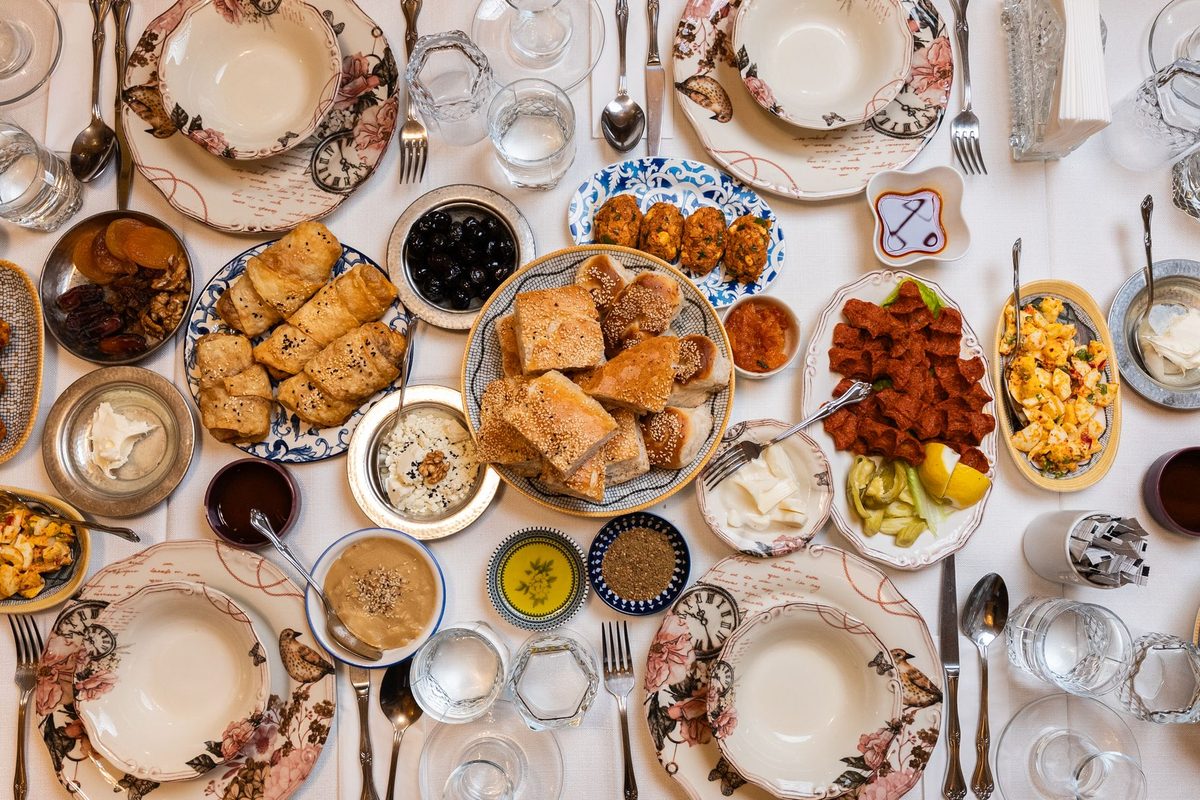
Order Mezedes and Let the Table Share
This is the single most useful thing in this article, so it goes first.
Instead of committing fourteen euros to a main course your child may reject on sight, order six to eight small plates for the table at four to nine euros each and let everyone pick. A child who eats only chips and bread has eaten. A child who unexpectedly tries a meatball has discovered something. Nothing is wasted, nothing becomes a battle, and the bill is lower than ordering four mains.
Greek portions are large and built for sharing. Order one fewer main course than there are people at the table and add two extra mezedes. Some places will do half portions for children if you ask, but treat that as a favour rather than a listed option.
One Plaka restaurant makes this literal. At Scholarhio on Tripodon, the waiters bring a large tray of mezedes to your table and you choose by pointing. For a child too young to read a menu, or one who needs to see food before committing to it, this is close to a perfect system.
What Greek Children Actually Eat
Reliable winners. Souvlaki and kalamaki, small skewers of grilled pork or chicken eaten off the stick, plain and sauce-free. Gyros in a pita, which can be ordered deconstructed. Keftedes, fried herby meatballs, close to universally popular. Bifteki, a larger char-grilled patty often stuffed with cheese, which translates instantly as “it’s a burger”. Tiropita and spanakopita, cheese and spinach pies in filo, available from any bakery for two or three euros and the answer to every bad mood. Patates tiganites, hand-cut chips fried in olive oil, frequently the best thing on the table. Saganaki, pan-fried cheese, which sells itself. Grilled halloumi or graviera. Chicken souvla. Pastitsio, baked pasta with mince and béchamel, effectively Greek lasagne and the safest of the baked dishes. Kolokythokeftedes, fried courgette balls that taste nothing like vegetables. And loukoumades — small fried dough balls in honey and cinnamon — as the reward at the end.
Be honest about these. Every guide recommends moussaka to families and it is often too rich for small children: aubergine, cinnamon-scented lamb mince and a heavy béchamel. Order it for yourself and share a spoonful rather than buying a child their own. Heavy lamb dishes like kleftiko are strong and fatty — though paidakia, charcoal-grilled lamb chops, are a genuine exception that Athenian children grow up on, largely because you eat them with your hands. The feta on a Greek salad is far sharper and saltier than the mild block most visiting children know. Taramasalata is pink and fishy and an easy no. Octopus defeats most children on texture alone.
For the full picture of what to order, see our guide to traditional Greek dishes.
Meal Times — Adjust or Struggle
Greeks eat lunch between roughly noon and five, most commonly around two, and dinner from six to eleven, most commonly around nine. As one Athenian put it, anything before nine counts as lunch.
The practical advice for families is to make lunch your main meal, at around two o’clock. The kitchens are properly open, the room is full of Greeks, and your child is not yet exhausted. Then have something small and late. Arriving at seven for dinner gets you an empty room and, in tourist areas, the least interested service of the day.
If you must eat early, go to an all-day kitchen. Ergon House on Mitropoleos runs from nine in the morning to one at night. Ta Karamanlidika opens at nine. The Acropolis Museum restaurant opens at nine. Karminio and Yard in Koukaki are all-day. These will actually be cooking at six o’clock.
The upside of Greek hours is the one that surprises visiting parents most: you do not need to eat at six and flee. Children are out with their families until eleven and nobody blinks. In summer the streets stay busy and well-lit late, and you will not be the only family at the table.
Where to Eat, by Neighbourhood
Exarchia. Ama Lachei stis Nefelis, Kallidromiou 69, is the best “children can move while adults finish” venue in central Athens. The courtyard was literally a school playground, shaded with lemon trees and jasmine, with a mural of children playing and the old classrooms around it. Order the keftedes, the hand-cut chips and the Cretan cheese pies with honey. Around €15–25 a head.
Pangrati. Karavitis on Pafsaniou is a decades-old meat taverna and a genuine Athenian family-lunch institution, with a courtyard across the road in warm weather where children mix with local kids. Order the biftekia and the battered fried courgette with tzatziki. Vyrinis on Archimidous is a garden taverna a minute behind the Panathenaic Stadium, with dishes around nine euros. On Varnava Square, Colibri does burgers, pizza and chips cheaply and noisily with tables out on the square.
Thissio and Petralona. To Steki tou Ilia on Eptachalkou has an overgrown summer garden overlooking the train tracks and is the place for paidakia. Note the family runs two restaurants of the same name in Thissio; the second, on Thessalonikis, has a cosier indoor room for winter. Smile Restaurant on Plateia Tsokri is the strongest practical pick for babies and toddlers anywhere in this article: high chairs are confirmed, there is outdoor seating, and staff will prepare half portions for children and babies. There is a changing area, which in Athens is rare enough to be worth crossing town for.
Monastiraki and Agias Irinis. O Thanasis on Mitropoleos is the best-known kebab house in Monastiraki — noisy, fast and entirely forgiving of children. On the small pedestrian church square at Plateia Agias Irinis, Kosta does souvlaki for a few euros with tables outside, and Hoocut does a modern version properly at five to ten euros a head with vegetarian options. Both take no reservations and both have queues at peak. Ergon House on Mitropoleos is a hotel, deli and food hall in one; children like the indoor olive tree and the vertical herb garden, and the market displays let them see and point at food.
Psirri. Little Kook on Karaiskaki is the most-searched children’s venue in Athens — a fairytale-themed café whose decor changes seasonally and spills into the street. Be clear-eyed: it is a spectacle rather than a meal, the drinks and desserts are dear for what they are, and there are no reservations, so expect a weekend queue. Ta Karamanlidika tou Fani on Evripidou is a deli-restaurant by the central market where children can watch the counter; charcuterie and cheese boards suit the sharing model perfectly.
Metaxourgeio. To Avgo tou Kokora on Leonidou is the best square-with-tables-on-it option in the centre. Several restaurants put chairs out on the large Avdi Square and children run around chasing pigeons while the adults eat. Order the signature rooster stewed in tomato with Greek-style fettuccine.
Koukaki and Makrygianni. Dyo Dekares i Oka on Anastasiou Zinni, Karminio and Kouzineta on Veikou. And the obvious one: the Acropolis Museum café and restaurant on Dionysiou Areopagitou, which has an actual children’s menu — rare in Athens — plus huge windows onto the Parthenon and air conditioning. It is the natural landing place after the Acropolis with a hot, tired child.
Plaka. Scholarhio on Tripodon, for the tray of mezedes described above. Around €15–20 a head, open from late morning to after midnight.
Restaurants With Actual Playgrounds
This is what Athenian parents do at weekends, and it happens mostly in the suburbs.
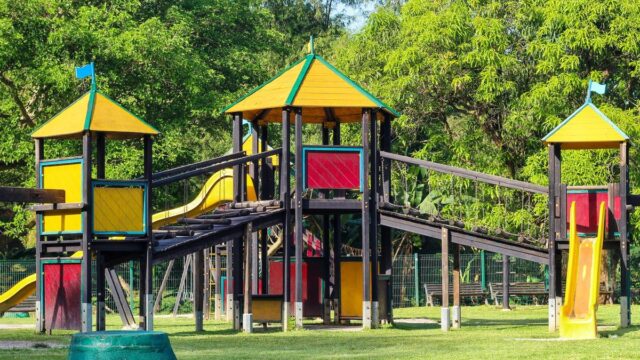
To Vrasto in Chalandri is the one venue that ticks every box: high chairs, baby-changing facilities, an outdoor playground and a courtyard in warm months. It started as a 1960s grocery that sold meat broth; order the soup that made its name, the orzo with shrimp, and the homemade cheese pies.
Piu Verde sits inside Papagou Park with a large modern playground and an artificial lake beside it, open from nine in the morning to half past one at night, at five to fifteen euros a head. Telis at Palaia Penteli has swings, a slide and a roundabout immediately beside the tables, and pairs well with a walk round Penteli Monastery. Bella Vespa in Glyfada has a playground and organised weekend activities, though it is pricier and reservations are required.
In the centre, the equivalent is the Zappeion and National Garden. The Zappeion Gardens playground and the National Garden’s shaded municipal playground, children’s library and small animal enclosure are all free and car-free, and there are cafés around the edges. Eat nearby, then release the children into the gardens.
Pedestrian Streets and Squares That Work
The reason these matter: a child who can stand up and walk ten metres without crossing a road will let you finish your meal.
Dionysiou Areopagitou, the wide marble promenade under the south slope of the Acropolis, continuing into Apostolou Pavlou at Thissio. Flat, traffic-free, stroller-friendly, with the Parthenon in view and buskers in the evening. Adrianou in Thissio, where the tables face the Ancient Agora railings and the Temple of Hephaestus — the best evening seats in Athens for a family. Plateia Agias Irinis, small enough that you can see your child at all times. Varnava Square in Pangrati, a real neighbourhood square with an open middle. Avdi Square in Metaxourgeio. And Mikrolimano in Piraeus, a flat car-free quayside past the fishing boats with benches for feeding pauses.
Flisvos Marina at Palaio Faliro is the closest thing Athens has to a purpose-built family evening promenade: car-free, fenced, well lit, with a large free playground, marina restaurants and the Averof battleship museum moored alongside.
High Chairs, Changing Tables and Other Practicalities
High chairs are not universal, and reports genuinely conflict. Some visitors find them everywhere; others find them almost nowhere. Confirmed at Smile Restaurant, To Vrasto and Ta Karamanlidika. Absent at plenty of otherwise excellent places. The practical answer: bring a portable fabric booster or chair harness. It costs very little and it buys you the whole city instead of only the venues that happen to have one.
Changing tables are genuinely scarce in Athens restaurants, and the toilets are often small and reached by stairs. Bring a portable change mat. Museums and shopping malls are much better bets than restaurants. The public toilets at Mikrolimano, for instance, have no changing tables at all.
Booking. Most neighbourhood tavernas are walk-in and you should not need to book for lunch. Book for Friday and Saturday dinner at popular places, anywhere with a view, and specifically at Cupola and Bella Vespa, which require reservations. Kosta, Hoocut and Little Kook take no bookings at all — you queue.
Payment. Greek businesses have been legally required to accept cards since April 2024. Carry forty or fifty euros in small notes for souvlaki windows, bakeries and playground kiosks, and pay by card elsewhere. If a taverna claims its card machine is broken, treat that as a warning about the bill you are about to receive, and ask for a printed receipt — one is legally required.
Feeding a Family Cheaply
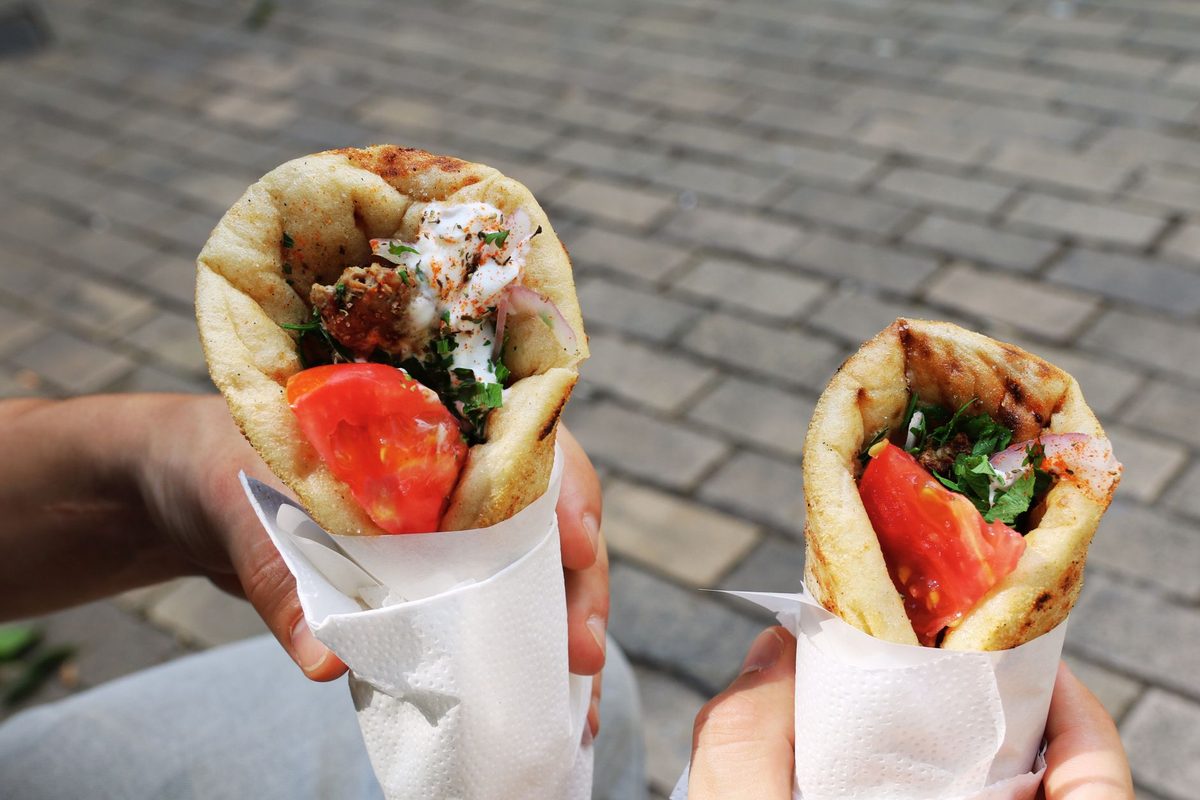
A gyros or souvlaki in a pita is the best-value child meal in Athens, at roughly €3.50 to €4.50 in the centre. A bare kalamaki skewer is cheaper still.
Do the arithmetic: four pitas at four euros is sixteen, add chips to share and four drinks and a family of four eats for comfortably under thirty euros. A sit-down taverna dinner for the same four at fifteen to twenty-five euros a head is sixty to a hundred. On a long day, the pita is not a compromise — it is the meal Athenians eat too. Our Athens street food guide covers the best places for it.
For a fussy eater, deconstruct it. Ask for the pita choris tzatziki, choris kremmydi — without tzatziki, without onion. Meat, chips and bread. Almost no child refuses that.
A cheese pie or spinach pie from a bakery chain like Grigoris is about two euros and is the fastest possible fix. And if you need a break from Greek food entirely, that is a legitimate decision on day six, not a failure.
Allergies and Dietary Needs
Greek cuisine’s structure genuinely helps. Grilled meat or fish, simple vegetables, olive oil, bread served separately — hidden ingredients are rarer than in sauce-heavy cuisines, and modifications are easy. Under EU law restaurants must be able to provide allergen information, though most traditional tavernas do not print it on the menu and will explain verbally or check with the kitchen. Cross-contamination remains a real risk, especially shared fryers.
Useful phrases: Echei allergia se… for “he or she has an allergy to…”, choris avgo, gala, xirous karpous for “without egg, milk, nuts”, and einai poly sovaro for “it’s very serious”. For coeliac disease: Echo koiliokaki. Den boro na fao katholou glouteni, oute ichni.
One safety point worth leading on: adrenaline auto-injectors are not standard in emergency kits in Greece, particularly outside hospitals. Bring your own and keep it with you, along with a doctor’s note in both Greek and English for airport security.
Vegetarian and vegan children are easily fed here — Orthodox fasting traditions mean genuinely good vegan food is normal rather than niche. Our vegan and vegetarian guide has the detail.
How to Spot a Tourist Trap
Someone standing outside waving a menu at you. This is the single most reliable tell, and it is concentrated on the Plaka and Adrianou strips. If a place is good, it does not need to do that.
A menu the size of a phone book. Pizza and sushi and burgers and souvlaki means none of it is good. The best Athens kitchens have short seasonal menus and run out of things — “sold out” is a good sign.
Photographs of the food on a board outside, in five languages. Correlates almost perfectly with the touting problem.
Ask the price of fish per kilo before it is weighed. Fresh fish sold by weight is the commonest genuine bill shock for families, especially on Mikrolimano.
Walk a few streets back. Exarchia, Pangrati, Koukaki and Metaxourgeio are minutes from the sights and dramatically better. Plaka and Adrianou are lovely to walk through with children — just eat one street off them.
Frequently Asked Questions
Are Athens restaurants child-friendly? Yes, genuinely and unusually so. Children are welcome essentially everywhere and at any hour, staff engage with them directly, and nobody minds a family arriving at nine in the evening.
Do Greek restaurants have children’s menus? Rarely, and it does not matter. The mezedes sharing model already does the job better. The exceptions are mostly non-Greek or institutional — the Acropolis Museum restaurant has one.
What time do Greek families eat dinner? Around nine in the evening. Kitchens open from six or seven but rooms do not fill until later. Make lunch at two your main meal instead.
Do Athens restaurants have high chairs? Some do, many do not, and you cannot tell from the doorway. Bring a portable booster seat.
What Greek food will my child eat? Souvlaki, chips, cheese pie, meatballs, bifteki, fried cheese, pastitsio and yoghurt with honey. Avoid ordering them their own moussaka.
How much does eating out with children cost in Athens? A family of four eats for under thirty euros on souvlaki in pita, or sixty to a hundred at a sit-down taverna ordering the sharing way.
Final Thoughts
Do three things and eating out in Athens with children stops being a logistical problem. Shift your main meal to two in the afternoon. Order small plates for the table instead of a main each. And pick somewhere with a pedestrian square, a courtyard or a promenade outside, so a bored child can get up and move without anyone having to leave. Everything else — the high chair, the menu, the language — sorts itself out, because this is a country where taking your children out to dinner is simply what you do.
Back to the main guide: return to our complete guide to Athens with kids, or read on about the Athens food guide and the best family hotels in Athens.