This article contains advertising. Some of the hotel, flight and transfer links in it are paid links: if you book through one, we get a commission from the booking company, and your price is the same either way. It never affects what we recommend. Affiliate disclosure
Psirri is the neighborhood that taught Athens how to be cool. Twenty-five years ago Psirri was a half-derelict warehouse district of small workshops and abandoned buildings, the kind of place tourists were warned away from. Today it is one of the most vibrant nightlife and street-art quarters in Europe, with restored 19th-century industrial buildings now housing bars, restaurants, design studios, and small galleries, and almost every blank wall painted by an internationally recognized street artist. Psirri became fashionable around 2000, peaked in mass-tourism appeal around 2015, and has settled into a mature creative neighborhood that still attracts Athens’ artists and design community while welcoming visitors. This guide covers what Psirri is now: where to see the best street art, where to drink, where to eat the best mezedes in central Athens, and which streets to walk to understand how a neighborhood reinvents itself.
The History of Psirri
Psirri sits immediately north of Monastiraki Square, bounded roughly by Athinas Street to the east, Ermou to the south, Pireos to the west, and Sarri to the north. The neighborhood was named for an Albanian community that settled here in the early 19th century — Psirri being a corruption of “psaroi” (fishermen) or possibly an Albanian family name. Through the late 19th and early 20th centuries Psirri was a workers’ district of small workshops — blacksmiths, leather workers, fabric merchants, basket weavers — feeding the central Athens commercial trade. Many of those small workshops still operate today, particularly in the streets near Karaiskaki Square, alongside the new arrivals.
The neighborhood declined through the postwar period as industries moved out and workshops closed. By the 1980s Psirri was considered rough; in the early 1990s the city began incentivizing arts and creative businesses to move in. The Acropolis lighting project around the 2004 Olympics, combined with the pedestrianization of nearby streets, accelerated the transformation. The current Psirri is mostly the product of the past 20 years.
Psirri Street Art — The Best Outdoor Gallery in Athens

Psirri has become one of Europe’s premier street art destinations. The economic crisis of 2010-2018 left many Psirri buildings shuttered or abandoned; artists filled the empty walls. Several internationally recognized street artists are based in Athens, with major works visible throughout Psirri:
The Major Artists to Look For
INO — perhaps the most internationally recognized Greek street artist, working in monochrome blue-white tones with photorealistic technique. Major works on Sarri Street and around Iroon Square. WD (Wild Drawing) — Balinese-Greek artist whose detailed surrealist works appear on Karaiskaki Square and Plateia Iroon. Cacao Rocks — known for vibrant character-based murals; multiple works around Avliton Street. Same84 — older but influential street artist; pieces on Evripidou Street. Bleeps — political and conceptual street art often referencing Greek history; smaller works hidden throughout Psirri.
Suggested Street Art Walking Route
Start at Iroon Square (Heroes’ Square — the central public space of Psirri). Look for INO’s iconic blue-and-white pieces on surrounding buildings. From Iroon, walk west on Karaiskaki Street to see further large murals including works that span entire building facades. At the end of Karaiskaki, turn south on Avliton Street, then east on Sarri. Sarri Street has perhaps the highest concentration of major murals in central Athens. Continue east to Athinas Street, then north back to Iroon. The full loop takes 90 minutes including stops to look closely; better with a phone for photos.
Several local guides offer dedicated Psirri street art walking tours (€20-30, 2 hours, English) — recommended if you want context on the artists and the meaning of specific pieces. Solebike, Alternative Athens, and Athens Walking Tours all run regular street art tours.
Where to Drink in Psirri
Psirri has one of the biggest concentrations of bars in central Athens. The streets to know:
Around Iroon Square
Iroon Square has bars around it; check each bar’s own hours before a late night. Tip: at Iroon there’s an open courtyard layout, with bars on all four sides and chairs spilling into the square — finding a specific bar is less important than finding any open table at peak hours.
Sarri Street & Side Streets
Sarri Street and the small lanes connecting to it (Aristofanous, Aghias Theklas, Lepeniotou) host a cluster of cocktail bars. Recommended:
Drupes & Drips — at 12 Aristofanous Street, a small cocktail bar focused on natural wines and innovative cocktails. Quiet, well-curated, slightly higher prices.
Brettos — at 41 Kydathineon Street (Plaka border with Psirri), the oldest distillery in Athens (since 1909) and one of the most photographed bars in the city. The back wall is lined with backlit bottles of Brettos liqueurs, ouzo, and tsipouro. Tourist-popular but genuinely historic and worth one visit.
The Clumsies — at 30 Praxitelous Street (Psirri-Syntagma border), among the World’s 50 Best Bars consistently. Reservations needed for evening seating.
Wine Bars & Natural Wine
Psirri has emerged as the natural-wine capital of Athens. Heteroclito at 2 Fokionos Street is the longstanding leader; Yvi Wine Bar at 7 Vyssis Street and Oinoscent at 45 Voulis Street round out the top tier. Greek wine quality has risen dramatically in the past decade; Psirri’s wine bars are the best places to taste current Greek production.
Where to Eat in Psirri
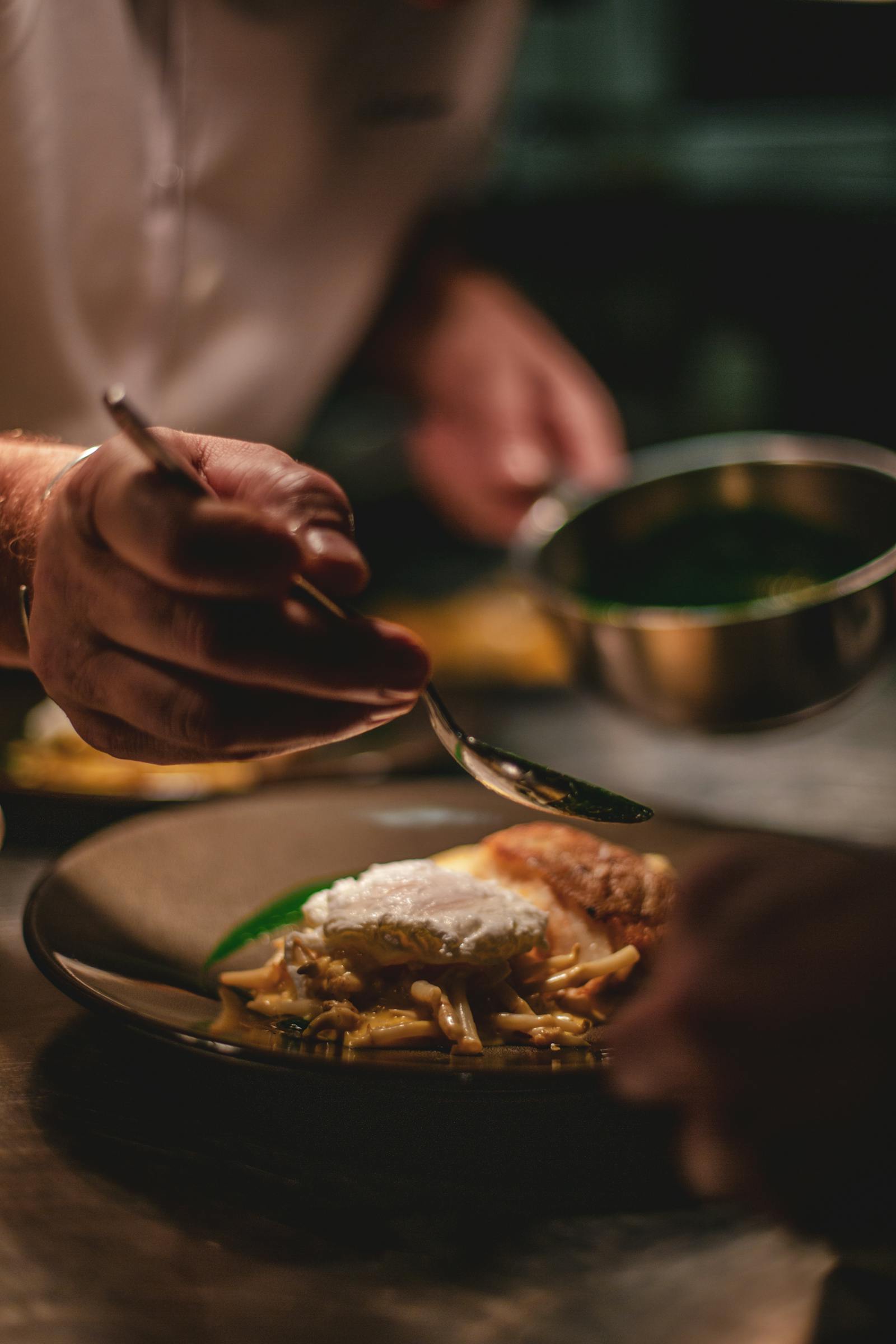
Psirri rivals Plaka for restaurant density and far exceeds it for quality and innovation. The neighborhood specializes in mezedopolio culture — small plates and mezedes meant for sharing.
Mezedopolia & Traditional Tavernas
Telis — at 86 Evripidou Street, a tiny old-school grill that has been serving the same simple menu (pork chops, fries, salad, wine) since 1973. Cash only; no reservations. The pork chops are legendary and inexpensive (€8-10).
Atlantikos — at 7 Avliton Street, a fish-focused taverna where the catch comes from family fishermen. Excellent value for fresh Aegean fish.
Diporto — at 9 Sokratous Street (Psirri-Omonia border), a basement taverna that looks like a slightly seedy cellar from 1960 and serves some of the best traditional Greek dishes in Athens to a mostly local clientele. No menu — eat what they have, drink the house wine from a barrel. Lunchtime only.
Modern Greek Cuisine
Aleria — at 57 Megalou Alexandrou (Psirri-Metaxourgeio border), one of Athens’ top modern Greek restaurants. €60-80 per person tasting menu. Reservation essential.
Nolan — at 31-33 Voulis Street (technically Syntagma but in Psirri’s culinary orbit), Asian-Greek fusion that has become a critical favorite.
Akrotiri Boutique — at 21 Karaiskaki Street, a tasteful contemporary Greek place specializing in fish and the regional cuisine of Santorini.
Late-Night & Souvlaki
Hoocut — at 9 Plateia Karitsi, an upscale-souvlaki concept where traditional gyros and souvlaki are prepared from heritage breeds and served on house-made pita. €8-12 for a gyros plate. Open until midnight.
Krinos — at 87 Eolou Street, the legendary loukoumades (Greek honey doughnuts) shop, operating since 1923. Eat from the paper bag standing on the sidewalk. €4-5 for a serving.
Psirri Cafés & Coffee
Psirri has excellent third-wave coffee. The Underdog at 8 Iraklidon (Thiseio border) is a destination coffee shop; Taf Coffee at 1 Em. Mpenaki is the central Athens specialty coffee leader; Mokka at 44 Athinas Street is more traditional but still quality. Most Psirri cafés open by 8am and serve through afternoon; many double as bars in the evening.
Psirri Music & Performance
Bios at 84 Pireos Street hosts experimental music and underground theater. The Romantso is an arts space with rotating exhibitions and small concerts. For Rebetiko (traditional Greek café music), Psirri has venues with live performances, so check each venue’s own listings for nights and times.
Psirri Shopping
Psirri shopping is design-forward and small-batch. Several small Greek design studios operate retail shops on the side streets. Highlights:
Bettina — at 40 Athinas Street, contemporary Greek jewelry and accessories from emerging Greek designers.
Forget Me Not — at 100 Adrianou Street (Psirri-Plaka border), curated Greek contemporary design.
Several small art galleries on Karaiskaki and Sarri Streets show emerging Greek artists; many have works for sale at accessible prices (€100-500).
When to Visit Psirri
Psirri changes character dramatically by hour. Morning (8am-noon) is quiet — coffee shops are open, but most bars and restaurants are closed; this is the best time for unobstructed street art photography. Afternoon (noon-6pm) is when small shops are open and the neighborhood feels gentle; many restaurants serve lunch. Early evening (6pm-9pm) sees aperitivo hour at the rooftops and Iroon Square bars. Late evening (9pm-1am) is dinner and bar peak — Psirri at its busiest and best. Late night (1am onwards) is when the nightlife crowd from Gazi sometimes spills over and the bars stay open. Sundays are quieter; many Psirri shops close.
Where to Stay in Psirri
Psirri has emerged as one of Athens’ best neighborhoods for design-led boutique hotels. Recommended: The Foundry Suites (a restored 19th-century foundry now offering apartment-style accommodations); Athenaeum Eridanus Luxury Hotel (boutique with rooftop pool); 360 Degrees Hotel; Athens Diamond Plus. Booking advice: Psirri is a nightlife neighborhood; pick a hotel with double-glazed windows or interior-facing rooms if you’re a light sleeper.
Practical Information
Getting to Psirri: metro stations Monastiraki (5 min walk) and Thiseio (5 min walk) both serve Psirri well. Walking access from Syntagma takes 10-12 minutes. Walking the neighborhood: streets are mostly paved (less cobblestone than Plaka) but tight; some pedestrian-only, some shared with limited traffic. Safety: Psirri is safe at all hours but feels less crowded after 1am; standard urban awareness applies. Public toilets: at bars and restaurants for customers; the metro station has public facilities.
Common Psirri Mistakes
Mistake 1: Visiting only in the evening. The neighborhood’s daytime character — the workshops, the morning quiet, the unobstructed street art — is missed by visitors who only come for nightlife. Mistake 2: Sticking to Iroon Square. The square is fun but represents 10% of Psirri’s good bars; explore Sarri, Aghias Theklas, Lepeniotou, and Aristofanous. Mistake 3: Eating at the obvious tourist tavernas. Telis, Diporto, and Atlantikos are the local choices; avoid restaurants with English-language touts on the sidewalk. Mistake 4: Missing the street art tour. The murals deserve context; a guided tour transforms the experience. Mistake 5: Trying to do Plaka and Psirri the same day. Both deserve their own afternoon and evening; combining them rushes both.
The Politics of Psirri’s Gentrification
Visitors to Psirri sometimes ask whether the neighborhood’s transformation is positive. The answer is genuinely complicated. The economic crisis years (2010-2018) saw rising commercial rents force out small workshops and longtime residents; international press attention drove tourism prices upward; the explosion of Airbnb apartments displaced longer-term renters. At the same time the new businesses brought jobs, the restoration of derelict buildings preserved architectural heritage, and the neighborhood’s creative culture genuinely flourished. Most longtime Psirri residents have mixed feelings: appreciation for the area’s revival, frustration at the affordability problems that came with it. Walking through Psirri thoughtfully — supporting older workshops alongside new businesses, eating at the traditional tavernas, being a respectful guest in residential streets — is one way to participate in the neighborhood’s continuing evolution rather than just consuming its image.
The Older Psirri That Still Survives
Beneath the bars and restaurants, the older Psirri of small workshops remains visible if you look. Around Karaiskaki Square: leather workshops still cutting and stitching by hand, often with a single craftsman visible through the open doorway; metalworking shops repairing and producing decorative items; a few traditional dressmakers; the occasional puppet maker (Greek karagiozis shadow theater puppets are still made by a handful of Psirri craftspeople). Walking these streets in the early morning, before bars open, reveals the working neighborhood that underlies the nightlife.
Psirri Walking Tour for Daytime
A 90-minute daytime walking tour of Psirri: start at Iroon Square (10am, after the morning quiet ends); walk west on Karaiskaki to see the major INO and WD murals; turn south on Avliton, looking at workshop windows; east on Sarri to see further murals; north on Athinas Street past the central market entrance; back to Iroon. This route shows both the contemporary creative Psirri and the older workshop Psirri.
Psirri Architecture & Industrial Heritage
Psirri retains some of the densest 19th-century industrial architecture in central Athens. The brick and stone warehouses, the small factory buildings with high ceilings and steel-frame windows, the workshop buildings with their characteristic narrow facades — these are the bones of the post-1830 commercial Athens. Many have been converted to bars, restaurants, galleries, or boutique hotels; some still operate as workshops; some are vacant awaiting conversion. The Foundry Suites (now a hotel) is a particularly successful restoration of a former metal foundry; the Aglaia Kremezi Greek Cooking School operates from a restored 1920s warehouse; the Romantso arts center occupies a former printing house.
Psirri’s Music History — Beyond Tourist Rebetiko
Psirri has been musically central to Athens since the early 20th century. The neighborhood was a key location for rebetiko (Greek urban folk-blues) culture in the 1920s-1940s when refugees from Asia Minor brought their musical traditions to Athens. Several of the famous rebetiko cafés that anchored that scene operated in or near Psirri; some claim direct lineage from those early venues. Today’s Psirri rebetiko scene mixes faithful traditional performance with creative reinterpretation. Live music nights at smaller venues (Bios, smaller spots on Karaiskaki) often feature contemporary acts working with traditional forms.
Psirri for Solo Travelers
Psirri is exceptionally welcoming to solo travelers, both for daytime exploration and nighttime social life. The bar culture is bar-style rather than club-style — most venues have communal high tables where strangers naturally start conversations. The Iroon Square area in particular is dense with mixed-age, mixed-nationality crowds where solo travelers easily find conversation. Several hostels in Psirri (including the well-rated City Circus and Pulses Hostel) organize social events.
Psirri Day-and-Night Combined Itinerary
A 12-hour Psirri itinerary that captures both halves of the neighborhood: 10:00am coffee at The Underdog or Taf Coffee with breakfast pastry; 11:00am self-guided street art walk through Iroon Square, Karaiskaki, Sarri Streets; 12:30pm visit one of the contemporary galleries (Romantso or a smaller commercial gallery); 1:30pm lunch at Diporto (basement traditional taverna) or Telis (legendary grill); 3:00pm rest at hotel or continue exploring workshop streets near Karaiskaki Square; 5:00pm specialty coffee at Drupes & Drips or visit a wine bar like Heteroclito; 7:00pm aperitivo at one of the Sarri Street cocktail bars; 9:00pm dinner at Aleria, Akrotiri Boutique, or Karamanlidika; 11:00pm bar hopping through Iroon Square and side streets; late night live music at a small jazz venue. This rhythm captures both the daytime workshop-and-creative-business Psirri and the nighttime nightlife Psirri.
Psirri Safety & Etiquette Notes
Psirri is safe at all hours by the standards of central Athens; the higher police-and-demonstration presence sometimes seen in Exarchia does not apply here. Standard urban awareness: be aware of belongings in crowded bar areas, take taxis or use FREENOW (formerly Beat) or Uber at the end of late nights rather than walking long distances alone after 3am, watch drinks in busy venues. A few neighborhood etiquette points: many Psirri streets are residential despite the nightlife — be quieter in lanes than in the squares; do not photograph the workshop interiors without asking the artisan working inside; respect the political content of the murals as statements rather than decoration; tip 10-15% at sit-down restaurants. The Psirri bar staff and restaurant servers are mostly young professionals who speak English well; basic Greek courtesies (kalispera, evcharisto, parakalo) are appreciated even when not required.
Continue Planning Your Athens Trip
Zoom back out to the guides that put this in context: