This article contains advertising. Some of the hotel, flight and transfer links in it are paid links: if you book through one, we get a commission from the booking company, and your price is the same either way. It never affects what we recommend. Affiliate disclosure
Pangrati is what Athens looks like when you peel away the postcards. There is no famous monument here; no UNESCO site, no major museum on the cover of any guidebook, and no obvious reason for first-time visitors to detour. And yet ask any Athenian where they would actually live if money were no object, and a remarkable number choose Pangrati. The neighborhood sits east of central Athens between the Panathenaic Stadium and Mount Hymettus — fifteen minutes’ walk from Syntagma, ten minutes from the Acropolis foothills, and the moment you cross from the touristed center into Pangrati’s grid of leafy streets you feel the city change. Trees actually shade the sidewalks. Bakeries that have operated for sixty years sit next to wine bars that opened last year. The Goulandris Museum of Modern Art — one of the most important private modern art collections in Europe — anchors the neighborhood’s southern edge. A genuinely excellent restaurant scene supports the population without needing tourists. This guide treats Pangrati as the residential masterpiece it is: where to walk, where to eat, where to find the cultural surprises, and why so many Athenians and a quietly growing number of repeat visitors choose it over the famous central districts.
Where Pangrati Is & Why It Matters
Pangrati occupies the area east of the Panathenaic Stadium, bounded roughly by Vasileos Konstantinou Avenue to the north, Ardittou and the National Garden edge to the west, the slopes of Mount Ymittos to the east, and Vouliagmenis Avenue to the south. The neighborhood is large by central Athens standards — about 2 square kilometers — and includes multiple distinct micro-areas. Plateia Plastira (Plastira Square) and Plateia Varnava (Varnava Square) are the social centers; Damareos and Pratinou Streets are the dining spines; the Goulandris Museum and the Athens First Cemetery anchor the western edge. Walking distances from Plateia Plastira: Panathenaic Stadium 8 min, Syntagma 18 min, Acropolis south slope 22 min, Kolonaki 15 min.
How Pangrati Became Pangrati
The neighborhood developed in the late 19th and early 20th century as a residential expansion east of the original Athens core. After 1922, when the population of Athens roughly doubled with the influx of Greek refugees from Asia Minor, Pangrati absorbed a significant refugee population whose descendants still live in the neighborhood and whose Asia Minor culinary traditions remain visible in several Pangrati restaurants and bakeries. The interwar period brought elegant apartment building construction — many of Pangrati’s most beautiful 1930s buildings date from this era. Postwar expansion filled in the remaining lots through the 1950s-1970s. Through the late 20th century Pangrati was solidly middle-class residential; the 2010s-2020s saw modest gentrification through restaurant and gallery development without the displacement pressures that have transformed Koukaki or Psirri.
The Goulandris Museum of Modern Art

The single most important cultural institution in Pangrati is the Basil & Elise Goulandris Foundation Museum of Modern Art, which opened in 2019 after a 30-year gestation. The Goulandris family — Greek shipping magnates — assembled across the mid-20th century one of the most important private modern art collections in Europe, with major works by Renoir, Cézanne, Van Gogh, Gauguin, Picasso, Léger, Braque, Matisse, Chagall, Giacometti, Henry Moore, and the leading Greek modernists of the 20th century. The museum’s purpose-built building on Eratosthenous Street displays this collection on rotation alongside major temporary exhibitions.
Visiting the Goulandris Museum
Admission €10 adults, €5 reduced (students, seniors), free under-18s. Open Wednesday-Monday 10am-6pm, closed Tuesday. The museum is rarely as crowded as the Acropolis Museum or Cycladic Museum even on weekend afternoons; midweek mornings are nearly empty. Plan 2 hours for the permanent collection; longer for special exhibitions. The on-site café and restaurant are excellent. The museum is a 15-minute walk from Syntagma or a 5-minute taxi; metro Evangelismos is a 12-minute walk.
The Panathenaic Stadium & Athens First Cemetery
Two of Athens’ most distinctive non-Plaka sights sit on Pangrati’s western edge. The Panathenaic Stadium — the marble stadium built for the 1896 first modern Olympic Games — is detailed in its own guide; from Pangrati it’s a 5-10 minute walk to the entrance. The Athens First Cemetery, opened in 1837, is the largest cemetery in Greece and one of the most beautiful in Europe — an outdoor sculpture garden of 19th- and 20th-century funerary art including the famous “Sleeping Maiden” by Yannoulis Chalepas. Many of Greece’s most important figures are buried here: Heinrich Schliemann (in his own self-designed mausoleum near the main entrance), George Seferis, Melina Mercouri, multiple prime ministers, military heroes, and writers. Free entry, open daily 7:30am-5:30pm. Plan 60-90 minutes for a respectful walk through the main avenues.
Pangrati Squares & the Social Geography
Pangrati is organized around three small squares that anchor different micro-communities:
Plateia Plastira
The largest of the squares and the social center of central Pangrati. Lined with cafés on multiple sides, a small playground, and several restaurants. The cafés are full from morning through late evening with a mixed-age local crowd. Notable: Da Capo (Pangrati branch of the Kolonaki classic), several smaller Greek café chains, and a handful of dining options.
Plateia Varnava
Smaller, more residential, more local in character than Plastira. The square hosts a Sunday morning farmers’ market (laiki) where Athenian families buy weekly produce, fish, cheese, and eggs from regional producers. Visiting the Sunday laiki is one of the best ways to see real Athenian neighborhood life.
Plateia Profiti Ilia
The smaller, leafy square on the northern edge of Pangrati, near the slopes that rise toward the Profitis Ilias chapel. Quiet, residential, with two or three café options. Worth a walk-through if you’re exploring the area.
Where to Eat in Pangrati
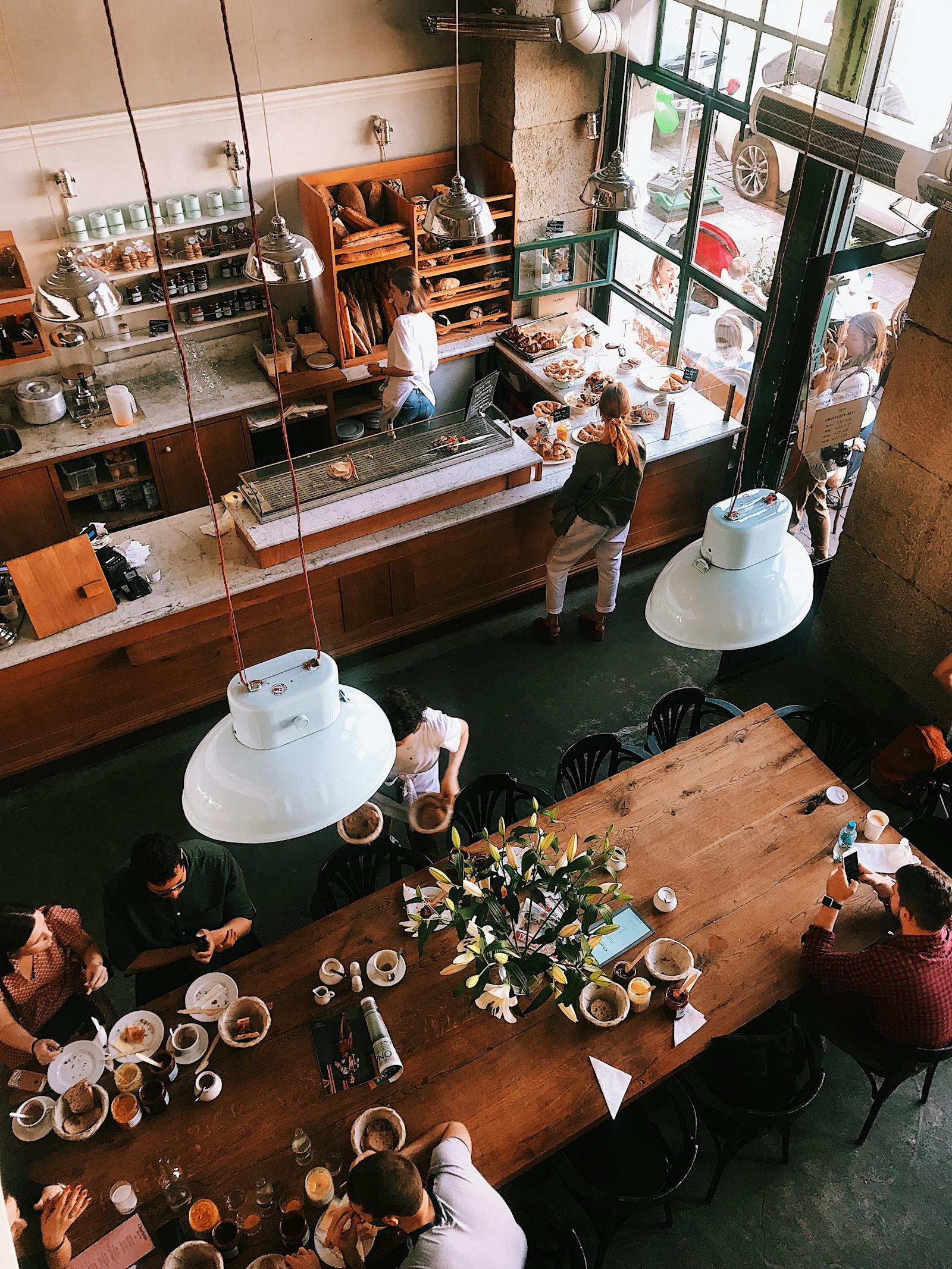
Pangrati’s restaurant scene is one of Athens’ best-kept secrets — high quality, fair prices, the genuine choice of local residents rather than tour-bus drop-offs.
The Top Tier
Spondi — at 5 Pyrronos Street, Athens’ longest-standing Michelin-starred restaurant (two stars). Modern Mediterranean cuisine; tasting menus €120-160 per person; reservations needed weeks ahead. Spondi is technically on the Pangrati-Kolonaki border but widely considered a Pangrati institution.
Aleria Pangrati — newer Pangrati outpost of the celebrated central Athens restaurant.
Modern Greek Classics
Mavro Provato — at 31-33 Arrianou Street, one of the most respected modern Greek mezedopolia in Athens. Creative small plates pulling from regional Greek traditions; €30-45 per person; reservations strongly recommended. The wine list focuses on Greek natural wines.
Cookoovaya — at 2 Hatzigianni Mexi Street, a creative Greek mezedopolio collaboration between five Greek chefs. Inventive menu, excellent value, lively atmosphere. €30-45 per person; book ahead.
Kolios — at 33 Kallirois Avenue (Pangrati-Mets border), longstanding traditional Greek taverna with strong grilled meats.
Traditional Tavernas
Karavitis — at 4 Arktinou Street, a 90-year-old taverna serving traditional Athenian food largely unchanged since the 1930s. Charcoal-grilled meat is the specialty. House wine from the barrel; cash preferred. One of the most authentic traditional tavernas in central Athens.
Vyrinis — at 11 Archimidous Street, a small family-run taverna with traditional Greek menu and very fair prices. Locals’ favorite.
To Vlassis — Pangrati neighbors love this longstanding traditional Greek place for classic dishes; reservations recommended.
Bistros & Wine Bars
Heteroclito Pangrati — Pangrati branch of the natural wine specialist; tapas-style menu, focused Greek wine list.
Kallipateira — at 9 Pratinou Street, small wine-bar-with-food serving creative mezedes.
Several smaller wine bars and bistros have opened on Pratinou Street in recent years; the area between Plateia Plastira and Plateia Varnava on Pratinou has become Pangrati’s small-plates-and-wine restaurant row.
Pangrati Cafés & Bakeries
Pangrati cafés divide into the traditional kafeneion type (older, mixed-age, often slightly worn but full of character) and the specialty-coffee type (newer, design-forward, espresso-program focused).
Da Capo Pangrati — Plateia Plastira branch of the Kolonaki classic; full breakfast and lunch service.
Mouchai — small specialty coffee spot; excellent espresso and pastries.
Several smaller cafés on Damareos and Pratinou Streets serve excellent espresso and traditional Greek desserts.
Pangrati Bakeries
The neighborhood has several traditional bakeries operating for decades. Notable: Takis Bakery on Pratinou Street, with hot bread fresh from the oven multiple times daily; multiple smaller bakeries throughout the residential streets selling Greek breakfast pastries (tyropita, spanakopita, koulouri) for €1.50-3.
The Mount Hymettus Slopes & the Aesthetic Forest
Pangrati’s eastern edge merges into the lower slopes of Mount Hymettus. The “Aesthetic Forest” — a managed pine forest on the lower mountain — has well-marked walking paths, picnic areas, and viewpoints. A weekend morning hike from upper Pangrati onto the mountain takes 90-120 minutes and provides excellent panoramic views back over Athens to the Acropolis and the sea. The walk to the Kaisariani Monastery (an 11th-century Byzantine monastery on the lower mountain) is a particularly worthwhile outing — about 45 minutes uphill from upper Pangrati or a short taxi.
Pangrati Cultural Life Beyond the Museum
The neighborhood hosts a quietly important cultural infrastructure beyond the Goulandris Museum:
Mikro Pallas Theater — small theater on Damareos Street running contemporary Greek and international plays.
Athens Concert Hall (Megaron Mousikis) — the major classical music venue is in adjacent Ilisia, easy walking distance.
Several small art galleries scatter through the neighborhood; the area around the Goulandris Museum has developed a cluster of commercial galleries.
The Stathmos Theater (Larissis station) is a 15-minute taxi for major Greek-language children’s and family theater.
Pangrati Shopping
Pangrati is not a shopping destination but has several interesting categories. Multiple bookshops, with the largest on Plateia Plastira. Several Greek design and ceramics shops have opened in recent years on Pratinou and Damareos. The Sunday farmers’ market at Plateia Varnava is the best for Greek pantry items, regional cheeses, fresh produce, and Greek wines from small producers.
Where to Stay in Pangrati
Pangrati is gradually emerging as a boutique hotel and Airbnb destination, though it remains less developed than Koukaki or Plaka. Several small boutique properties have opened in recent years. Most accommodation is Airbnb apartments in classic 1930s and 1960s buildings; €70-150/night for one-bedroom apartments, more for larger units. Stay in Pangrati if: you want a residential-feeling Athens base; you’re a repeat visitor who has done the central districts; you prefer good food and proximity to the Goulandris Museum over proximity to the Acropolis. The walk from central Pangrati to the Acropolis is 20-25 minutes — perfectly walkable but not the immediate access you get from Koukaki.
Practical Information
Getting to Pangrati: Evangelismos metro (Line 3/blue) is the closest station, a 10-15 minute walk to central Pangrati. From Syntagma, walk 18-20 minutes east through the National Garden. By taxi from the airport: 30-40 minutes, €40 fixed-rate. Walking the neighborhood: paved sidewalks throughout; flat through most of central Pangrati, gentle slopes toward Mount Hymettus on the eastern edge. Stroller and wheelchair access is generally better than Plaka or Monastiraki. Public toilets: at the Goulandris Museum and at the Panathenaic Stadium.
Sample Day in Pangrati
8:30am breakfast and coffee at Da Capo on Plateia Plastira or at a smaller café on Pratinou. 9:30am walk to the Panathenaic Stadium and tour the stadium and small museum (90 minutes). 11:30am walk back through Pangrati to the Goulandris Museum of Modern Art for the permanent collection and any current special exhibition (2 hours). 1:30pm lunch at Mavro Provato or Cookoovaya (book ahead). 3:30pm walk through the residential streets, visit the Athens First Cemetery for an hour of quiet reflection among the funerary sculpture. 5:30pm coffee at Heteroclito Pangrati or another wine bar. 8:30pm dinner at Karavitis (traditional taverna) or Spondi (fine dining if it’s a special occasion). 10:30pm walk back through quiet Pangrati streets to the hotel.
The Sunday Laiki at Plateia Varnava
The Sunday farmers’ market at Plateia Varnava is one of the best small experiences in Athens. From 8am to 2pm every Sunday, regional Greek producers sell fresh produce, fish, eggs, cheeses, olive oil, honey, and a rotating selection of seasonal foods. The market is small enough to walk in 30 minutes but rewards a longer visit — talking with producers, tasting cheeses, watching local families do their weekly shopping. Bring cash; small bills are appreciated. The neighborhood cafés around the square are open and serve Sunday brunches for those done shopping.
Pangrati for Different Visitor Types
For first-time Athens visitors with 3-4 days: skip Pangrati unless you have a specific Goulandris Museum interest; your time is better spent in the central districts. For repeat visitors: Pangrati is an excellent priority — the food alone justifies an evening, and the Goulandris Museum is genuinely world-class. For longer stays (5+ nights): consider basing in Pangrati for a quieter, more residential experience while staying within walking distance of major sights. For art lovers: the Goulandris Museum belongs on any serious art itinerary alongside the Cycladic Museum and the Benaki Museum. For families: the residential character and absence of tourist crowds make Pangrati genuinely pleasant; the Panathenaic Stadium is the kid-favorite adjacent attraction.
Common Pangrati Mistakes
Mistake 1: Skipping Pangrati because no famous monuments anchor it. The Goulandris Museum and the Athens First Cemetery are individually worth a visit, and the neighborhood’s food and atmosphere justify the time. Mistake 2: Eating only at the famous restaurants. Smaller traditional places like Karavitis, Vyrinis, and the various Pratinou Street wine bars are equally memorable. Mistake 3: Visiting only by day. Pangrati has a particularly nice evening character; restaurant terraces fill, the air cools, and the neighborhood comes alive in a quieter way than central Athens. Mistake 4: Not visiting the Sunday laiki at Plateia Varnava. This is one of the most accessible windows into actual Athenian life. Mistake 5: Missing the walk to Kaisariani Monastery. The 90-minute round-trip walk from upper Pangrati onto the lower slopes of Mount Hymettus is one of the best easy hikes in central Athens.
Pangrati Photography
The neighborhood is photogenic in understated ways. The 1930s apartment buildings with their characteristic Bauhaus-influenced facades make excellent architectural photographs in morning light. The shaded streets with bitter orange trees produce beautiful images in spring blossom (April). The Athens First Cemetery is one of the most photogenic locations in Athens — the funerary sculpture is genuinely beautiful and the light filters through cypress trees in characteristic Mediterranean cemetery patterns. The Goulandris Museum building (no interior photography of artworks, but exterior architecture is fair game) is a striking contemporary structure. Sunset views from upper Pangrati looking toward the Acropolis are particularly memorable.
Pangrati’s Future
The neighborhood is in slow, measured transition. The opening of the Goulandris Museum in 2019 and the ongoing arrival of new restaurants and wine bars suggests Pangrati is becoming a destination for repeat visitors and Athenians who want a quieter alternative to central districts. The trajectory looks more like Brooklyn’s Park Slope than like Williamsburg — residential gentrification rather than tourist invasion. For visitors who want to see Athens before “everyone knew about Pangrati,” this is the moment.
Combining Pangrati with Other Athens Days
Pangrati pairs well with several adjacent areas. A morning at the Panathenaic Stadium + Goulandris Museum + Pangrati lunch combines easily with an afternoon at the Athens First Cemetery and a Pangrati dinner. A walking day from Syntagma through the National Garden to the Panathenaic Stadium to Pangrati works as a single coherent itinerary. Pangrati is also the natural starting point for hikes onto Mount Hymettus and visits to the Kaisariani Monastery.
The Quiet Case for Living in Pangrati
If you ever consider an extended stay in Athens — a sabbatical, a month-long work-from-Athens stint, a remote-work move — Pangrati is the neighborhood to seriously consider. The combination of walkable streets, excellent food, a major museum, easy transit to anywhere in Athens, gentle gentrification without displacement, mature residential community, and proximity to Mount Hymettus for weekend hikes produces one of the most livable urban environments in southeastern Europe. Several international remote workers have quietly relocated to Pangrati in the past few years. The neighborhood is not promotional about itself, which may be its enduring strength.
Continue Planning Your Athens Trip
Zoom back out to the guides that put this in context: