This article contains advertising. Some of the hotel, flight and transfer links in it are paid links: if you book through one, we get a commission from the booking company, and your price is the same either way. It never affects what we recommend. Affiliate disclosure
Greece uses Type C and Type F sockets, the two-round-pin standard of mainland Europe, on a 230-volt, 50Hz supply. If you live in the UK, Ireland, North America or Australia, you need a plug adapter; if you live in most of the EU, you need nothing at all. That is the whole plug type and adapter for Greece answer in two lines. What actually catches people out is everything around it: the hair straightener that cooks itself on 230 volts, the hotel room with one free socket hidden behind the bed, and the power bank you may not use mid-flight.
This page is for first-time visitors packing for Athens and the islands, and especially for anyone flying in from outside Europe with hair tools, a CPAP machine or a laptop. The caveat that matters most: an adapter changes the shape of the plug, never the voltage, so anything labelled only for 110-120V needs more than an adapter. Money, transport and safety live in our practical Athens tips; this page sticks to sockets, voltage and keeping your phone alive. Details checked 26 September 2026 against Electrical Safety First’s travel guidance for Greece, Aegean Airlines’ dangerous-goods rules and EASA’s advice on lithium batteries.
| Question | Short answer |
|---|---|
| Socket type | Type C and Type F: two round pins, with side earthing clips on Type F |
| Voltage and frequency | 230V at 50Hz, on the mainland and the islands alike |
| Adapter needed? | Yes from the UK, Ireland, Malta, Cyprus, North America, Australia and New Zealand; no from most of mainland Europe |
| Voltage converter needed? | Only for appliances rated 110-120V alone, usually North American hair tools |
| Buy before you go? | Yes: easier, and usually cheaper, than hunting for one on arrival |
| How many to pack | One per device you charge overnight, or one adapter plus a small European multi-socket |
| Power banks on the plane | Hand luggage only; up to 100Wh without approval; don’t count on using one in flight |
What’s changed in 2026?
Not the sockets. Greece’s plugs and its 230-volt supply are exactly what they were last year, and the adapter sitting in your drawer from a previous European trip will still fit.
What has moved is the flying end of the trip. Older packing lists cheerfully suggest topping up your phone from a power bank somewhere over the Alps. EASA, the EU’s aviation safety agency, now recommends that passengers don’t charge devices from power banks on board at all, and Aegean Airlines’ current rules say recharging batteries and using power banks on board are not permitted. Other airlines write their own policies, so read your carrier’s page in the week you fly rather than trusting a list written two summers ago.
What plug type does Greece use?
Two, and they get along. Type C, the Europlug, is a slim two-wire plug with two round pins and no earth: it’s the plug on most phone chargers sold in mainland Europe. Type F, known as Schuko, has two thicker round pins, 4.8mm across and 19mm apart, plus metal contacts on its sides that connect to the earth. Most Greek wall sockets are built for Type F, and a Type C plug slides into them just as happily, so in practice anything with two round pins goes straight in.
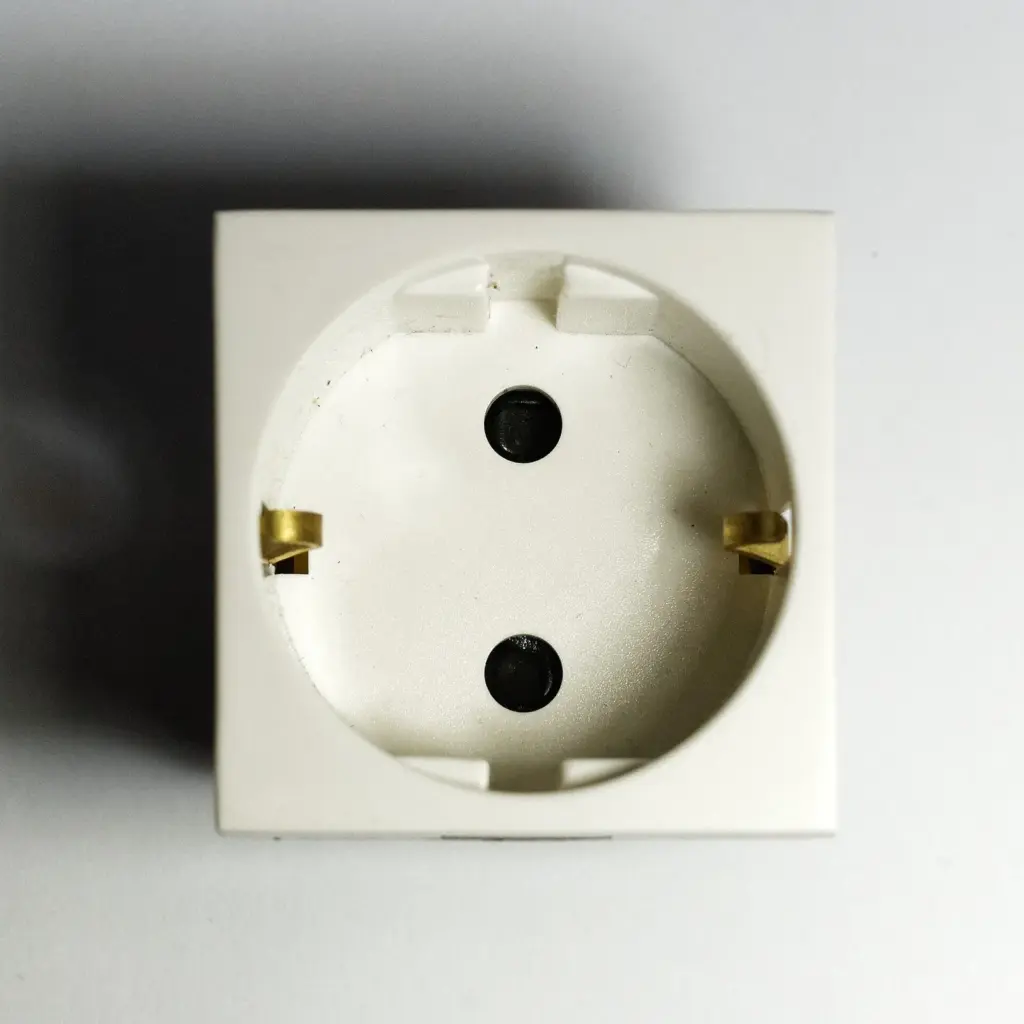
A Greek socket sits inside a round recess, with the two holes at the bottom and a pair of earthing clips on the rim. That recess matters more than you’d expect. A slim Europlug or a round-nosed adapter reaches the holes easily; a flat-faced universal adapter sometimes can’t push its pins in far enough, and sits there half-connected while your phone stays at 4%.
French and Belgian sockets (Type E) use a pin in the socket instead of side clips, but most appliances sold in those countries carry a hybrid plug that fits both kinds, so visitors from France and Belgium rarely notice any difference. Everyone else can check this table.
| The plug you’re holding | Where it’s from | Fits a Greek socket? |
|---|---|---|
| Type C: Europlug, two slim round pins | Most of mainland Europe, and plenty of chargers sold elsewhere | Yes |
| Type F: Schuko, round pins plus side clips | Germany, Austria, the Netherlands, Spain, Portugal, Sweden, Norway, Finland and more | Yes |
| Type E/F hybrid | France and Belgium | Yes |
| Type G: three rectangular pins | UK, Ireland, Malta, Cyprus | No: adapter needed |
| Types A and B: flat pins | US, Canada, Mexico, Japan | No: adapter needed |
| Type I: angled flat pins | Australia, New Zealand | No: adapter needed |
| Types J, K and L: three pins | Switzerland, Denmark, Italy | No, though devices sold there with a two-pin Europlug fit |
The plug type and adapter for Greece, by home country
The adapter is the easy half. The harder question is whether each device can take 230 volts, and that depends on where the device was bought, not on where you live.
| Coming from | Your plug | Your voltage | Adapter? | Converter? |
|---|---|---|---|---|
| UK and Ireland | Type G | 230V | Yes | No |
| Malta and Cyprus | Type G | 230V | Yes | No |
| US and Canada | Types A and B | 120V | Yes | Only for 120V-only appliances |
| Australia and New Zealand | Type I | 230V | Yes | No |
| Most of mainland Europe | Types C, E and F | 230V | No | No |
| Switzerland, Italy, Denmark | Types J, L and K | 230V | Three-pin plugs only | No |
From the UK and Ireland
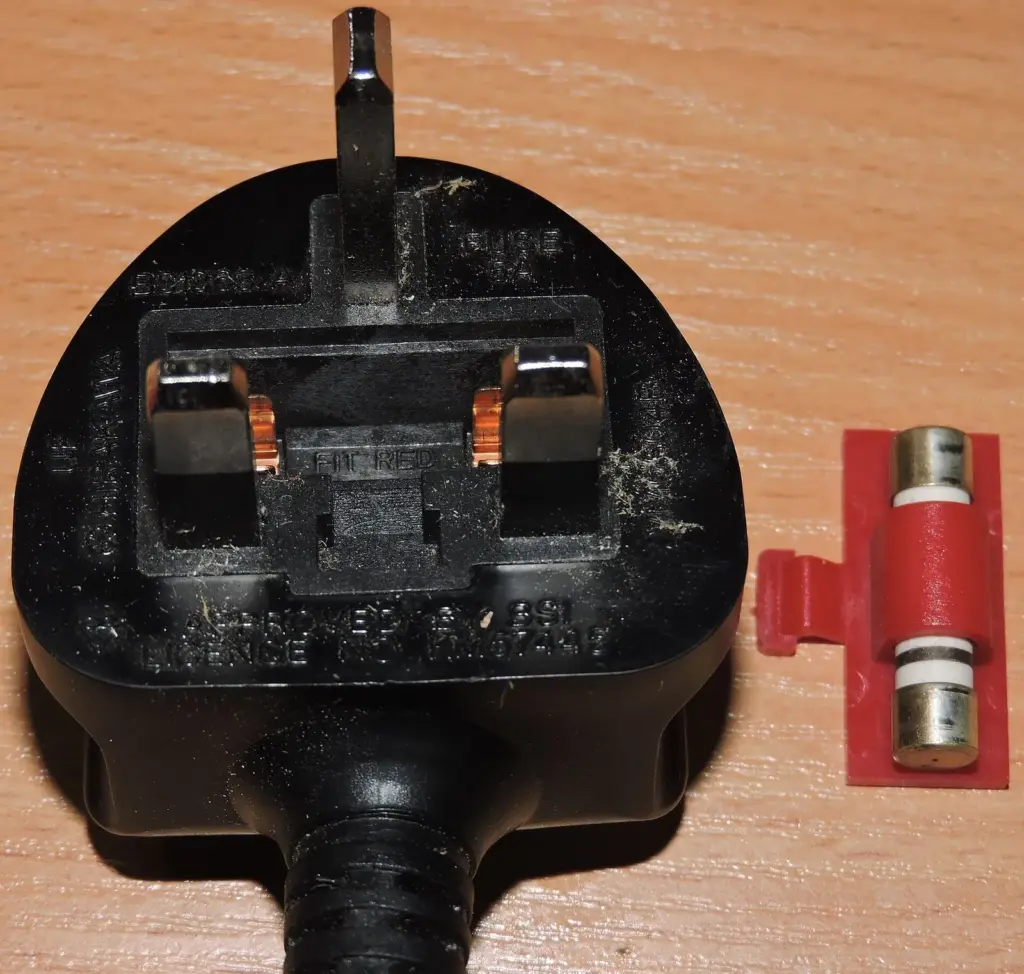
Adapter yes, converter no. Same voltage, different pins, so a simple UK-to-Europe adapter runs everything from a phone to your own hair dryer. Buy one marked BS 8546, the British Standard for travel adaptors, rather than a loose no-name one from a market stall. If you’re bringing anything with a metal body, such as a travel iron, choose an adapter with earthing contacts: a bare two-pin adapter leaves the UK plug’s earth pin connected to nothing. And a heavy UK plug hanging off a small adapter has a habit of drooping out of the wall overnight, which a short European extension lead solves.
From the US and Canada
Adapter yes, and read every label. Your flat pins need an adapter to Type C or F. Then check the small print on each charger. If it says INPUT 100-240V, it will run on Greece’s 230 volts, and most phone, laptop, tablet and camera chargers do. If it says 120V only, it isn’t safe on a Greek socket, adapter or no adapter. That usually means hair dryers, curling tongs, straighteners and some older shavers and toothbrush chargers. Mains-timed clocks built for 60Hz can also run slow on the 50Hz supply, though few people travel with one now.
From Australia and New Zealand
Adapter yes, converter no. The voltage matches, so it’s purely a pin problem. An Australia-to-Europe adapter handles it, and if you pack one multi-port USB-C charger with a European plug, most of your other chargers can stay at home.
From elsewhere in Europe
Usually nothing to buy. German, Dutch, Spanish, French and Swedish plugs fit as they are. The exceptions are three-pin plugs from Switzerland, Italy and Denmark, which need a simple adapter, while their two-pin Europlugs fit fine. Visitors from Cyprus and Malta are in the UK camp and need a Type G adapter.
Verdict: UK, Irish and Australian travellers need an adapter and nothing else. North Americans need an adapter and five minutes with a torch, reading labels.
Adapter or voltage converter: which do you need?
An adapter is a shape-changer. It lets your plug into a Greek socket and does nothing to the electricity, which arrives at 230 volts whatever you plug in. A voltage converter, or transformer, is the device that steps 230 volts down to 110-120. Running an appliance on a supply it isn’t rated for can be genuinely dangerous: at best it cuts out, at worst it overheats while you’re looking the other way.
The label decides, and every charger and appliance has one, often moulded in tiny grey letters into the plastic. Here’s what you’ll typically find:
| Device | What the label usually says | What you need in Greece |
|---|---|---|
| Phone, tablet and smartwatch chargers | 100-240V, 50/60Hz | Adapter only |
| Laptop power bricks | 100-240V, 50/60Hz | Adapter, or a European mains lead for the brick |
| Camera battery chargers | Usually 100-240V | Adapter only |
| CPAP machines | Usually 100-240V on the power supply | Adapter; confirm on the power supply before you fly |
| Electric shavers and toothbrush chargers | Mixed: many dual voltage, some 120V only | Check each one |
| North American hair dryers, straighteners and curling tongs | Often 120V only, or a manual voltage switch | A dual-voltage model, or leave it at home |
| Travel kettles and garment steamers | Often single voltage | Buy locally or do without |
If a hair tool has a small switch marked 125/250 or 110/220, turn it to the higher number before you plug in, and back again when you get home. Forgetting that switch is the classic way to lose a dryer on the first morning.
Why a converter is usually the wrong buy
Heavy, and pointless for chargers. Every converter has a maximum power rating, and whatever you plug into it must stay below that rating. A phone charger needs a tiny fraction of what a hair dryer draws, which is often well over 1,000 watts. A converter big enough for a dryer is a heavy lump you’d carry all week for ten minutes’ use a day, and a small one built for electronics will be overloaded by a dryer. Most converters even come with their own plug adapters, which tells you who they’re really for: travellers with one 120V gadget they truly can’t replace.
Verdict: skip the converter. Pack a dual-voltage styler, use the hotel’s hair dryer, or buy an inexpensive one in Athens and keep it for your next European trip.
Which adapter should you buy for Greece?
There are three sensible options, and most people need the first or the second.
A plain single adapter
Lightest, simplest, cheapest. One plug in, one plug out. Two or three of these beat one clever gadget: one for the phone by the bed, one for the laptop, and a spare that lives in your day bag. Look for a round nose that seats properly in the recessed Greek socket and, for UK plugs, the earthing contacts mentioned above.
An adapter with USB-C ports
The best all-rounder. A European-pin adapter with a pass-through socket and two or three USB ports charges phone, watch and earbuds from one wall socket, which is exactly what an older room with a single free socket demands. Check the total output before you rely on it for a laptop: many laptops expect 45W or more, while plenty of budget multi-port adapters share a much smaller total across every port.
A universal all-in-one
Only if Greece is one stop of many. Sliding-pin universal adapters cover most of the world, but they’re bulky, and on some models the European pins sit loosely in a deep Greek socket. Worth it for a round-the-world trip; overkill for a week in Athens and Naxos.
Two extras worth their weight
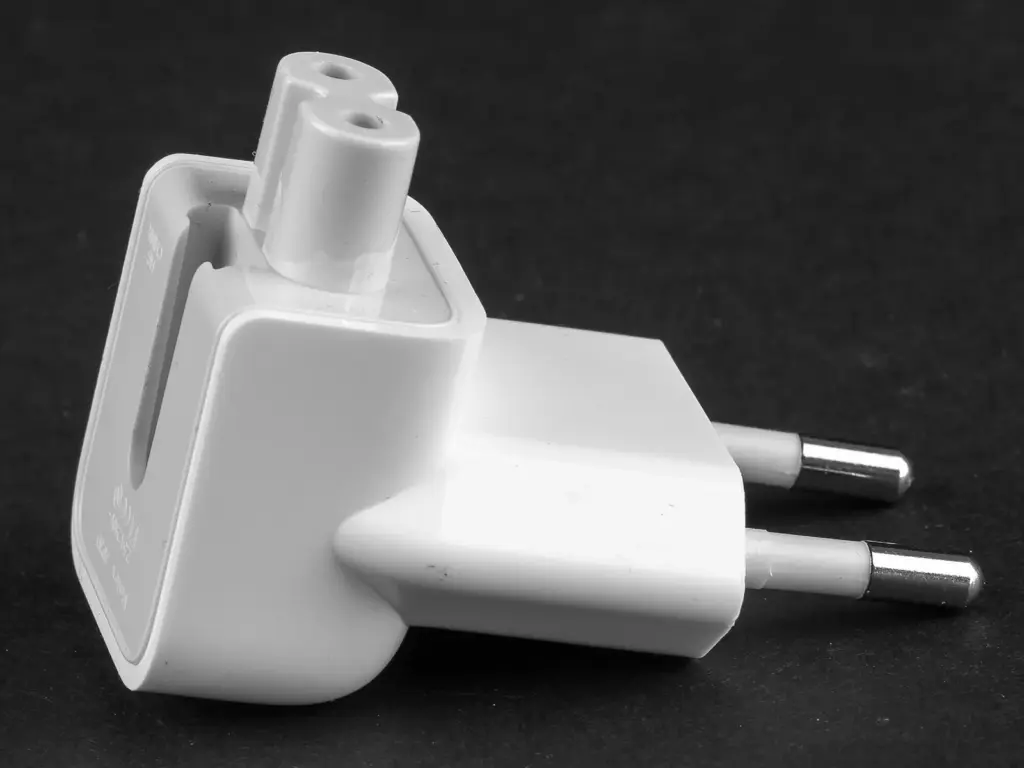
A short European multi-socket, bought in Greece or anywhere in the EU, turns one adapter into three or four sockets. A European mains lead or plug head for your laptop charger, where the maker sells one, beats dangling a heavy brick from an adapter. For the rest of the suitcase, work through our Athens packing list before you zip it.
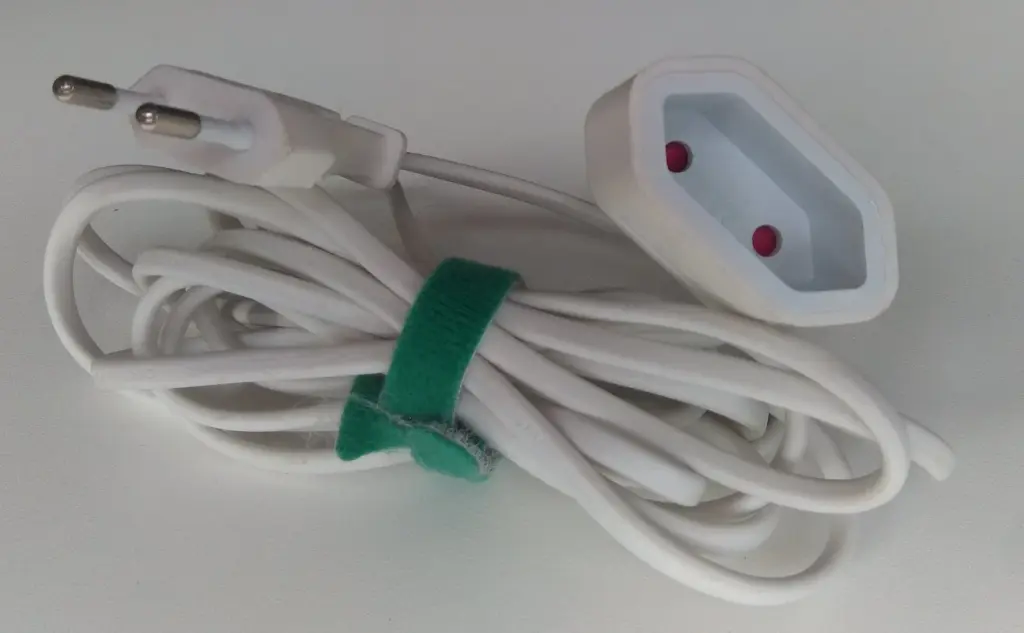
Plan it: count the devices you charge overnight, pack that many adapters (or one adapter and a multi-socket), then add one spare for the day bag. Before checkout, sweep the room’s sockets with your phone torch, because an adapter left in a hotel wall is the easiest thing in the world to forget.
Forgot yours? Where to buy an adapter in Athens
You won’t be stuck for long. Travel adapters and multi-sockets are ordinary stock in Greek electronics shops, and supermarkets usually keep multi-sockets, and often adapters, in the household aisle, so central Athens has somewhere to buy one within a short walk of most hotels. If an airport shop has one when you land, expect airport prices. Street kiosks, the periptera, are the fallback for charging cables and basic USB plugs, though adapters are hit and miss.
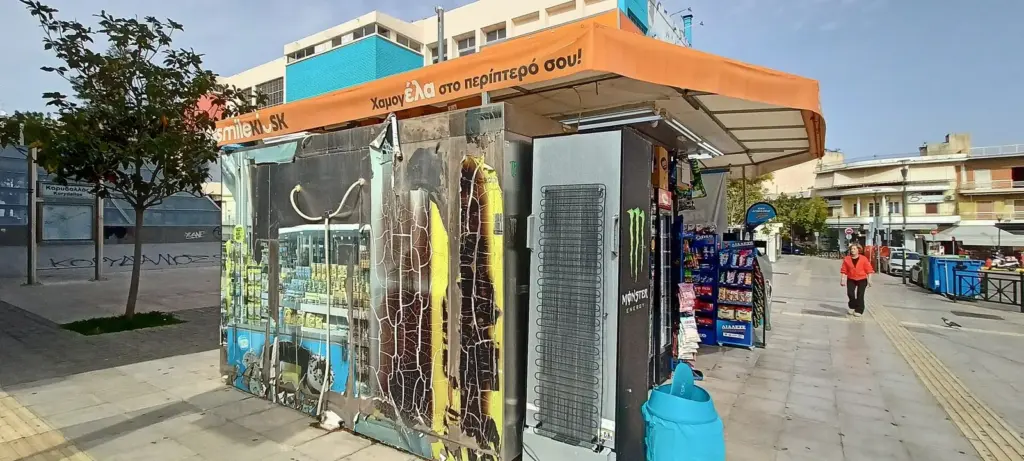
Five words for a Greek shop counter: αντάπτορας (adáptoras), adapter; πρίζα (príza), socket; πολύπριζο (polýprizo), multi-socket; φορτιστής (fortistís), charger; καλώδιο (kalódio), cable. Staff in central Athens usually speak English, but showing the word on your screen beats miming a plug.
Verdict: buy before you fly. If you forget, an electronics shop or supermarket in the centre is the sensible fix, and the airport is for genuine emergencies.
Sockets in Athens hotels and apartments
The sockets themselves are standard. How rooms are wired is less predictable, especially in the older apartment blocks that fill much of central Athens.
The key-card switch
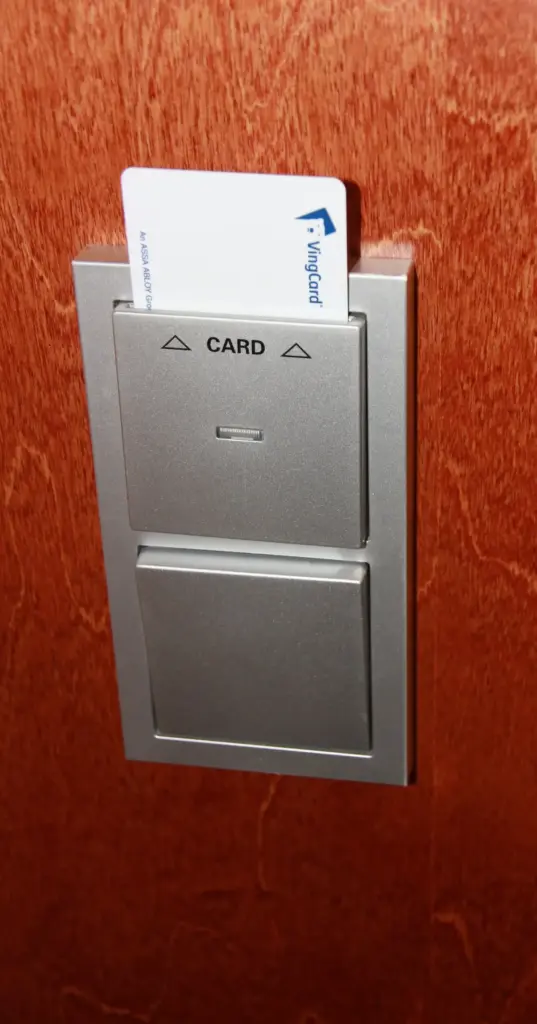
Pull the card, lose the power. Many hotel rooms have a slot by the door that switches on the lights and sockets when you insert the key card, and cuts them when you take it out. Anything left charging while you’re up at the Acropolis stops too. A socket or two may stay live regardless, sometimes the one feeding the minibar; test one before you head out rather than coming back to a flat phone.
One free socket is normal
Expect to hunt. Older rooms often have a single free socket near the bed, sometimes behind the headboard, with the rest taken by lamps, the TV and the kettle. Pack for one socket, not four: a USB adapter or a small multi-socket covers nearly every room in the city.
Hair dryers and bathrooms
Use what’s on the wall. Most hotels supply a hair dryer, often fixed in the bathroom. If you bring your own, use it at a bedroom socket rather than one beside the basin, and never through a wobbly adapter with wet hands.
When an apartment’s power trips
Know where the panel is. In a rented apartment, running the air conditioning, the oven, the kettle and a hair dryer at once can trip a breaker. The panel (pínakas) is often in the hallway near the front door: switch off the big appliance, push the tripped switch back up, and message the host if it trips again. Asking where the panel is at check-in takes ten seconds and can save a dark evening.
Charging on the go: power banks, flights and long days out
A day in Athens drains a phone faster than a day at home: maps, tickets on screen, photos from every hill, a taxi app at midnight. Heat makes it worse. On a July afternoon a phone left in direct sun can get hot enough to pause charging or dim its screen, so keep it in the shade of your bag rather than on the café table.
Which power bank to carry
About 10,000mAh is the sweet spot. That’s one and a half to two phone charges, light enough for a day bag, and roughly 37Wh, far below any airline limit. If a power bank doesn’t print its watt-hours, multiply the mAh figure by 3.7 and divide by 1,000. A 20,000mAh pack works out at about 74Wh, still fine; only packs above about 27,000mAh reach the 100Wh line.
Power banks on the plane
Hand luggage only, and plan to use it on the ground. Power banks count as spare lithium batteries. Aegean’s rules put them in carry-on bags only, each protected against short circuits in its original packaging or with the terminals taped, and allow up to 20 spare batteries of up to 100Wh per passenger; anything between 100Wh and 160Wh needs the airline’s approval first. Aegean also forbids recharging batteries on board, and its current pages extend that to using power banks during the flight. Charge your phone at home or at the gate, not over the Aegean.
The rule catches people out at the gate. If your cabin bag is taken for the hold on a full flight, take the power bank and any spare batteries out before you hand it over.
Ferries, coaches and cafés
Treat every socket as a bonus. Larger ferries often have a few sockets in the lounges, but they’re scarce and quickly claimed on a full summer sailing, so board with a charged phone and a charged power bank. The same goes for coach day trips to Delphi or Cape Sounion, and for airport gates, where every free socket has a queue. Cafés are the city’s informal charging network: many will let a paying customer plug in if you ask first. The phrase is Boró na fortíso to kinitó mou? (Can I charge my phone?).
Before you leave the hotel each morning, run through this:
- Power bank: charged overnight, around 10,000mAh.
- Short cable: USB-C, or Lightning for an older iPhone.
- One adapter with a USB port: for the café socket or the ferry lounge.
- Offline map: central Athens downloaded on the hotel wifi, so a dead signal doesn’t leave you lost.
Staying connected is its own subject: eSIMs, local SIMs and free wifi are covered in our guide to SIM cards and wifi in Athens. And if you’re leaving bags at a locker on your last day, keep the power bank and cables in your day bag rather than the suitcase; our luggage storage guide covers where to leave the rest.
What to skip: five ways to lose a charger in Greece
- Buying a converter for your phone. Phone and laptop chargers already handle 230 volts, so a converter adds weight and nothing else.
- Packing a 120V hair dryer “just in case”. On a Greek socket it will refuse to work or fail spectacularly. Use the hotel’s.
- Stacking adapters and multi-sockets. An adapter in a multi-socket in another adapter is a hot, loose tower. One adapter, one multi-socket, and nothing that heats up on either.
- Putting the power bank in the hold. It belongs in your hand luggage, including when a cabin bag is tagged for the hold at the gate.
- Trusting a no-name universal adapter with a heavy load. Fine for a phone. For a hair tool or anything else that heats, use a solid single adapter.
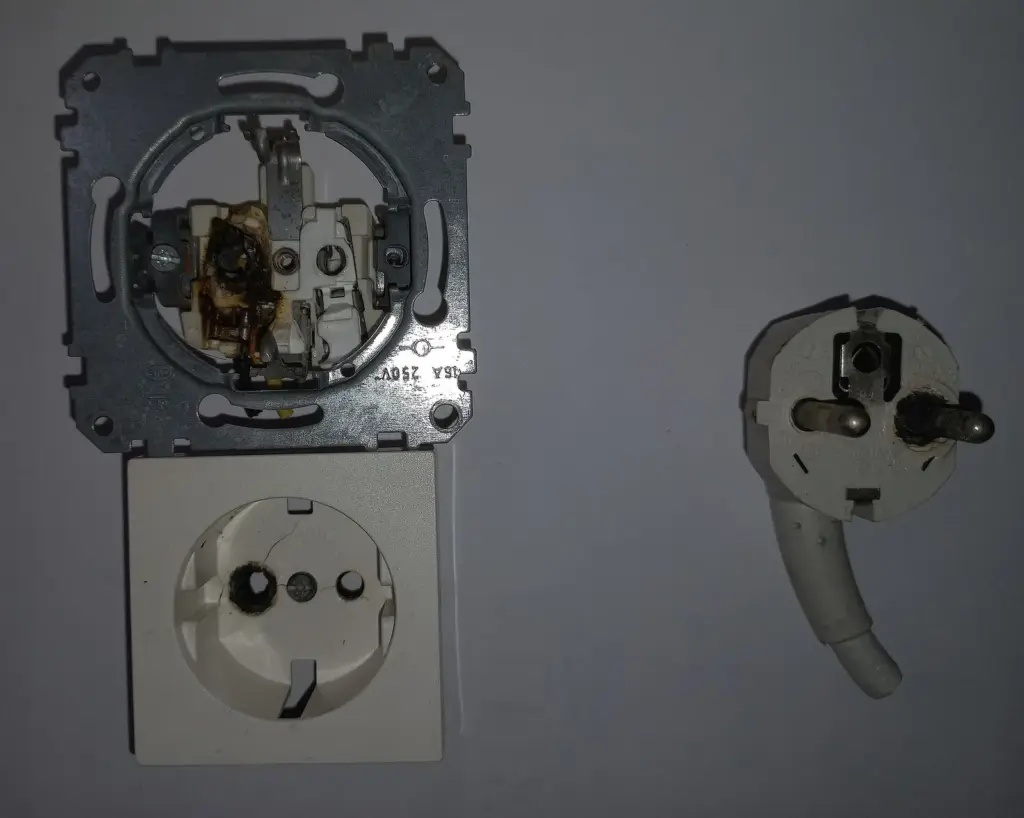
If a socket or adapter feels hot, smells of burning or crackles, unplug it, stop using that socket and tell reception or your host.
Verdict: the safest setup is a boring one: dual-voltage chargers, one decent adapter each, and nothing that heats running through anything wobbly. Plugs are one small job on the pre-trip list; for everything else, our guide to the practical side of Athens is the place to start.
Greece Plug Adapter FAQ
What plug adapter do I need for Greece?
You need an adapter that takes your home plug and ends in two round European pins, Type C or Type F. From the UK or Ireland that means a Type G to C/F adapter, from the US or Canada a Type A/B to C/F adapter, and from Australia a Type I to C/F. Travellers from most of mainland Europe need no adapter at all.
What plug type does Greece use?
Greece uses Type C, the two-pin Europlug, and Type F, known as Schuko. Both have two round pins; Type F’s are 4.8mm thick and 19mm apart, with earthing contacts on the plug’s sides. Greek wall sockets take both, and the supply is 230 volts at 50Hz on the mainland and the islands alike.
Is the plug the same on the Greek islands as in Athens?
Yes. Santorini, Mykonos, Crete, Naxos and the other islands use the same Type C and F sockets and the same 230V, 50Hz supply as Athens, so one adapter covers the whole trip. What changes on island-hopping days is how far apart the sockets are, which is why a charged power bank matters more than a second adapter.
Do I need a voltage converter for Greece?
Probably not. Greece runs at 230V, and nearly every phone, tablet, laptop and camera charger is rated 100-240V, so a plug adapter is enough. A converter is only needed for an appliance rated 110-120V alone, usually a North American hair tool, and even then a dual-voltage model or the hotel’s hair dryer is the better answer.
Can I use my hair straightener in Greece?
Yes, if it’s rated 100-240V or has a voltage switch you set to the higher number, with a plug adapter where needed. UK, Irish and Australian straighteners already run at 230V and only need an adapter. A 120V-only straightener from North America will overheat or fail on a Greek socket, so buy a dual-voltage one before you travel.
Can I use a UK plug in Greece?
Not directly. Greek sockets take two round pins and a UK plug has three rectangular ones, so you need a UK-to-Europe adapter, ideally one marked BS 8546. The voltage is the same 230V, so once it’s adapted, anything from a phone charger to a hair dryer works just as it does at home.
Can I take a power bank on a flight to Athens?
Yes, in your hand luggage only: power banks count as spare lithium batteries and never go in checked bags. Aegean allows up to 100Wh without approval and 100-160Wh with the airline’s consent. Rules on using them in flight vary, and Aegean bans recharging and using power banks on board, so charge up before you fly.
Related Athens Guides
- Athens Packing List: the rest of the suitcase, sorted before you zip it.
- SIM Cards and Wifi in Athens: eSIMs, local SIMs and getting online from arrival.
- Luggage Storage in Athens: where to leave bags between checkout and your flight or ferry.
Sources and How We Checked
We checked these details on 26 September 2026 against the official and safety-body sources below, and compiled them from those sources rather than from other travel lists; no first-hand visit is claimed.
- Electrical Safety First: Travel adaptor for Greece (plug types, voltage and frequency, adaptors and converters)
- International Electrotechnical Commission: World Plugs (plug and socket types by country)
- Aegean Airlines: Dangerous goods (power banks, spare batteries and watt-hour limits)
- EASA: Lithium batteries in aviation (carrying power banks and spare batteries)
- EASA: Safety Information Bulletin 2025-03 (using power banks on board)
Athens Tourism Guide is an independent publication. We are not affiliated with the Hellenic Ministry of Culture, OASA, the Greek National Tourism Organisation or any business named here, and no business paid to be included.
Photo Credits
- Type F (Schuko) socket: photo by Retired electrician, via Wikimedia Commons (CC0)
- UK three-pin plug and fuse: photo by Monoklon, via Wikimedia Commons (CC BY-SA 4.0)
- Laptop charger with European plug head: photo by Raimond Spekking, via Wikimedia Commons (CC BY-SA 4.0)
- Europlug extension lead: photo by Peter Lebbing, via Wikimedia Commons (CC BY-SA 4.0)
- Street kiosk in Athens: photo by GreekyAntiKubura, via Wikimedia Commons (CC0)
- Hotel key card power switch: photo by MKFI, via Wikimedia Commons (Public domain)
- Heat-damaged Schuko socket and plug: photo by Asurnipal, via Wikimedia Commons (CC BY-SA 4.0)
- Athens at night from Lycabettus (featured image): photo by George E. Koronaios, via Wikimedia Commons (CC BY-SA 4.0)