This article contains advertising. Some of the hotel, flight and transfer links in it are paid links: if you book through one, we get a commission from the booking company, and your price is the same either way. It never affects what we recommend. Affiliate disclosure
Every day except six public holidays, the Acropolis opens at 08:00 and closes at 17:00 in winter, 20:00 in summer and at one of four stepped times in between during September and October, with last entry 30 minutes before closing. The best time to go depends on the month: the 08:00 slot from June to August, when heat is the real enemy, and the last two hours before closing for the rest of the year. That is the short answer on Acropolis opening hours and the best time to visit. Everything below is the detail that decides your slot: crowds hour by hour, cruise ships, heatwave closures and the one week of the year when the sun sets before the gates shut.
This page is for anyone choosing a day and an entry time, above all first-timers with two or three days in Athens and cruise passengers with one. The caveat that matters: in a heatwave the Ministry of Culture can close the site for the hottest hours, so a midday summer ticket is a gamble. Details checked 26 September 2026 against the Ministry of Culture’s Acropolis page, the Piraeus Port Authority, the Acropolis Museum and the EU’s summer-time rules. For tickets, the monuments and their history, read our complete Acropolis guide; for the rest of ancient Athens, start with our hub of Athens historical sites and museums.
| At a glance | The detail |
|---|---|
| Opens | 08:00 on every day it is open, all year round |
| Closes | 17:00 from 1 November; 20:00 in summer, until 31 August; then 19:30, 19:00, 18:30 and 18:00 in fortnightly steps through September and October |
| Last entry | 30 minutes before closing |
| Closed | 1 January, 25 March, 1 May, Orthodox Easter Sunday, 25 and 26 December |
| Short days | Good Friday 12:00-17:00; Holy Saturday 08:30-15:30 |
| Cost | €30, reduced €15, the same in every season; free on 6 March, 18 April, 18 May, the last weekend of September and 28 October |
| Time needed | About two hours for the summit, three with the South Slope |
| Getting there | Akropoli metro (Line 2, red) is a two-minute walk from the South Slope entrance; the main entrance is at the western end of the rock |
| Book ahead? | Yes, from spring to autumn: every ticket carries an entry time, and popular slots can sell out |
| Best time | June to August: the 08:00 slot. The rest of the year: the last two hours before closing |
| Worst time | 10:00-14:00 on a summer day with several cruise ships in Piraeus |
What’s changed in 2026?
A lot of what’s written about Acropolis hours predates the current rules. Five things are different now.
- Autumn closing times step down. The 20:00 closing ends on 31 August. From 1 September the gates shut 30 minutes earlier each fortnight, at 19:30, 19:00, 18:30 and then 18:00, until winter hours of 08:00-17:00 begin on 1 November. Any guide that gives 08:00-20:00 for the whole of April to October is out of date.
- Winter is no longer cheaper. The ticket costs €30 (reduced €15) in every season. The old winter half price has gone, so the case for a winter visit is thin crowds and cool air, not money.
- No more free first Sundays. The free first Sundays of November to March are off the Acropolis list. Its free days are now five fixed dates, and you should expect a crush on each of them.
- Heat closures have become a pattern. The Ministry shut the site for the hottest hours in July 2023, in June and July 2024 and again on 8 July 2025, when it stayed closed until 17:00.
- Smaller changes on site. The North Slope, a separate site on the rock’s north side, has opened only 08:30-15:30 since 1 November 2025. The toilets inside the Acropolis are closed for renovation, so use the permanent ones just south of the main entrance, or the portable ones to its north, before you go in. And the Ministry’s page now gives tickets.hh.gr as the ticket address, where older guides say hhticket.gr.
Acropolis opening hours and the best time to visit, month by month
The Ministry runs two seasons with a slow autumn fade between them, and the closing time follows the daylight. We’ve added the approximate sunset for central Athens, from our own calculation, so you can see how much light each closing time leaves you.
| Dates | Open | Last entry | Sunset (approx.) |
|---|---|---|---|
| Summer: spring to 31 August | 08:00-20:00 | 19:30 | 20:15 on 1 May, 20:51 at midsummer, 19:58 on 31 August |
| 1-15 September | 08:00-19:30 | 19:00 | 19:56, falling to 19:35 |
| 16-30 September | 08:00-19:00 | 18:30 | 19:33, falling to 19:11 |
| 1-15 October | 08:00-18:30 | 18:00 | 19:09, falling to 18:49 |
| 16-24 October 2026 | 08:00-18:00 | 17:30 | 18:47, falling to 18:36 |
| 25-31 October 2026 (clocks go back) | 08:00-18:00 | 17:30 | 17:35, falling to 17:28 |
| Winter: 1 November to spring | 08:00-17:00 | 16:30 | 17:27 on 1 November, 17:07 at the end of November, 18:18 on 1 March |
Last entry is a deadline, not a plan. The summit is a climb from the gate, and the site closes at the stated time, so walking in at last entry leaves you perhaps 20 minutes among the monuments. Aim to be through the gate 90 minutes to two hours before closing.
Summer: long hours, early heat
08:00-20:00, last entry 19:30. The longest hours of the year arrive with the biggest crowds and the hardest sun. In June and July the gates shut 40 to 50 minutes before sunset, so the last slot is spent in full sun on marble that has been soaking up heat since morning. From June to August, take the 08:00 slot: it is the only hour when the temperature is kind and the day’s tour groups are still on their way. May and the first days of June are different. Afternoons are warm rather than brutal, and the last two hours, with the groups gone and the light softening, make the better visit.
The Ministry’s page gives no date for the spring switch from winter to summer hours. If you’re travelling in late March or April, check the page before you book an evening slot.
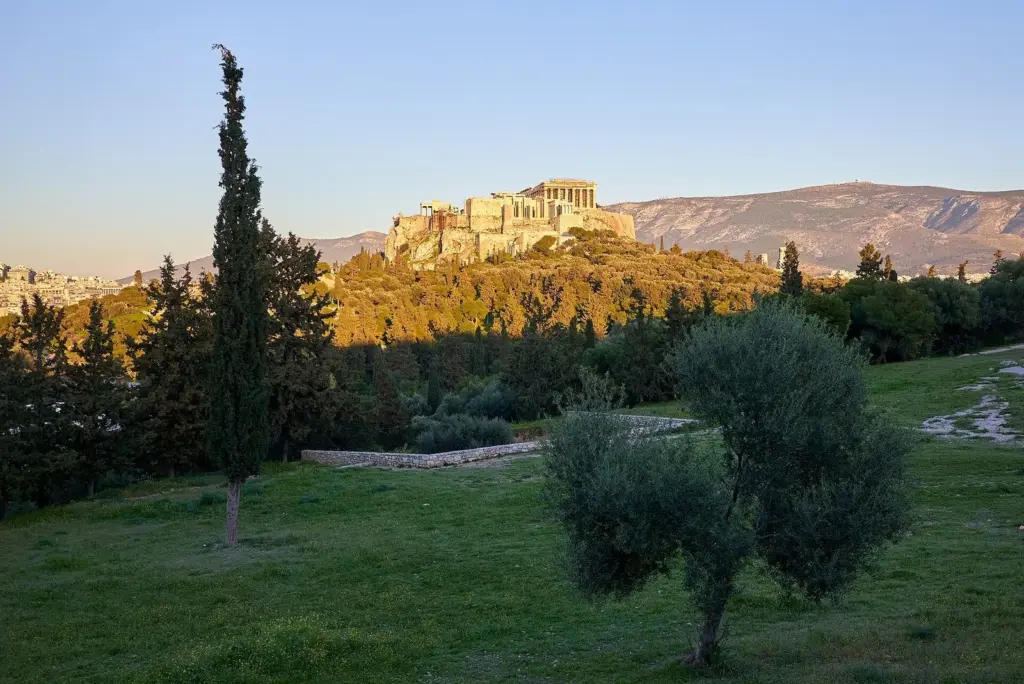
What summer can’t give you is sunset from the summit. For that, walk over to the Pnyx or Philopappos Hill (Filopappou), west and south-west of the rock, which face it as the light goes.
September and October: the fortnightly step-down
Closing moves from 19:30 to 18:00 in four steps. Each step keeps the gates closing a little ahead of sunset, by anything from a few minutes in mid-September to three-quarters of an hour in late October, so the last hour inside always comes with low, warm light. September is still summer in all but name, with hot afternoons, so treat its first half like August. October is the month we’d pick above all others. It’s cooler, the days are still long enough, and the last two hours before closing are the calmest of the day. On 10 October, for instance, the site closes at 18:30 and the sun sets at about 18:56.
The last week of October: sunset inside the gates
25-31 October 2026, the exception. The clocks go back an hour on Sunday 25 October, but the Acropolis keeps its 18:00 closing to the end of the month. For those seven days the sun sets at about 17:30, half an hour before the gates shut, which makes this the only stretch of the year when sunset falls comfortably inside opening hours. The catch is the 17:30 last entry: to be up among the monuments as the light goes, be through the gate by about 17:00.
Winter: short days, thin crowds
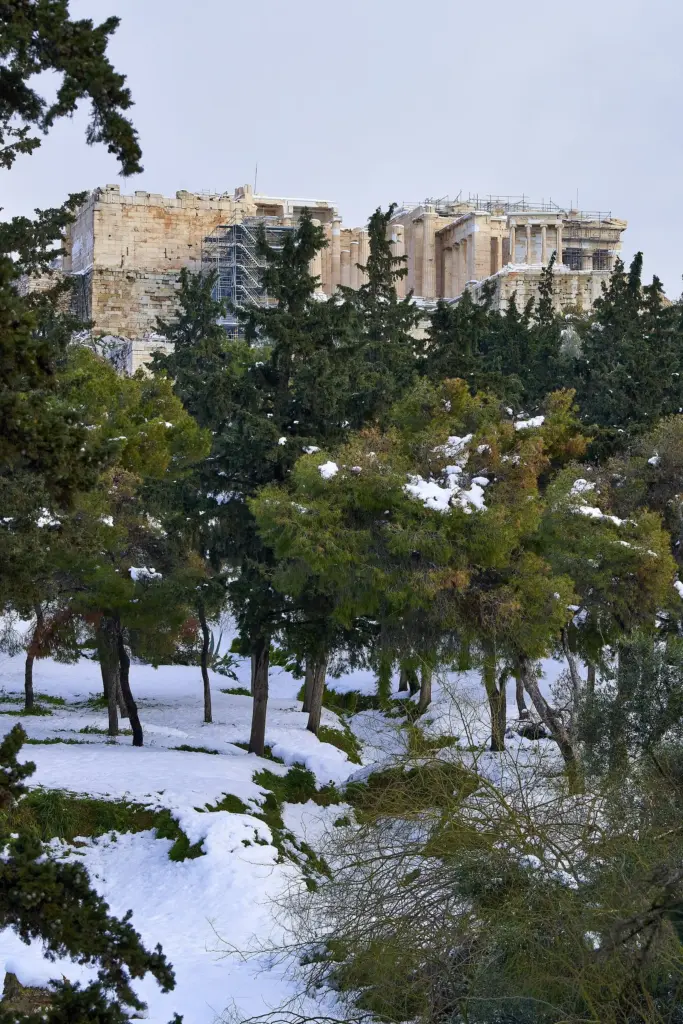
08:00-17:00, last entry 16:30. From November the day is short at both ends. Around the winter solstice the sun rises at about 07:40, so the first visitors in get low, raking light, and it sets just after 17:00, which makes the last hour inside the last hour of daylight. Crowds are at their thinnest from November to February, and that is the real reason to come now, since the ticket costs the same as in August. Rain is the risk. The rock’s worn marble turns slippery when wet, and the Ministry’s rules recommend proper walking shoes. Pick the drier half of the day and go then.
When is the Acropolis closed?
Six days a year: 1 January, 25 March (Independence Day), 1 May, Orthodox Easter Sunday, and 25 and 26 December. Christmas Eve, New Year’s Eve and 6 January are normal opening days. Easter week has hours of its own: on Good Friday the site opens only from 12:00 to 17:00, and on Holy Saturday from 08:30 to 15:30.
Orthodox Easter moves every year and often falls on a different Sunday from Western Easter. In 2027 it falls on 2 May, straight after May Day, so Saturday 1 May (Holy Saturday as well as May Day) and Sunday 2 May are both on the closure list. If your trip includes that weekend, see the Acropolis on the Friday afternoon or from Monday 3 May, and check the Ministry’s page that week in case anything changes.
Outside the calendar, two things can shut the site at short notice. Heatwaves are the likely one in summer (more below). Strikes by staff at state sites are the other: they come and go, and the only defence is to check the Ministry’s Acropolis page the evening before. The lift that carries visitors with reduced mobility to the summit also stops in severe weather and strong wind, even when the site stays open.
Free days: cheap, and packed
Free entry, heavy crowds. Entry costs nothing on 6 March, 18 April, 18 May, the last weekend of September and 28 October. The next one after this page goes live is Wednesday 28 October 2026, which is also a national holiday, so the city is off work too. Verdict: unless the €30 matters more to you than elbow room, choose another day.
Acropolis crowds by hour: how a day fills up
We know of no published hour-by-hour visitor counts for the Acropolis, so the table below is our model, not a head count. It’s built from what drives the crowds: timed tickets, the ships in Piraeus, the heat and the closing time. It describes a typical day from April to October. In winter, every row is quieter.
| Time | What’s driving it | Crowds | Our call |
|---|---|---|---|
| Before 08:00 | First-slot ticket holders queue at the main entrance | A queue, not a crowd | Turn up 15 minutes early only if you hold an 08:00 ticket |
| 08:00-09:00 | The opening slot that nearly every guide recommends | Busy at the gate, calm on the summit | Best slot from June to August |
| 09:00-11:00 | Tour groups and ship excursions arrive | Heavy, and slow on the Propylaea steps | Avoid from April to October |
| 11:00-14:00 | Groups overlap, the heat builds, and heatwave closures cover these hours | Peak | Avoid |
| 14:00-16:00 | Groups start to leave; in summer the heat is at its worst | Heavy, easing | Fine in winter, hard work in July |
| Last two hours before closing | Ship passengers heading back to Piraeus; the light softens | The quietest of the day | Best outside June to August |
08:00: the slot everyone is told to book
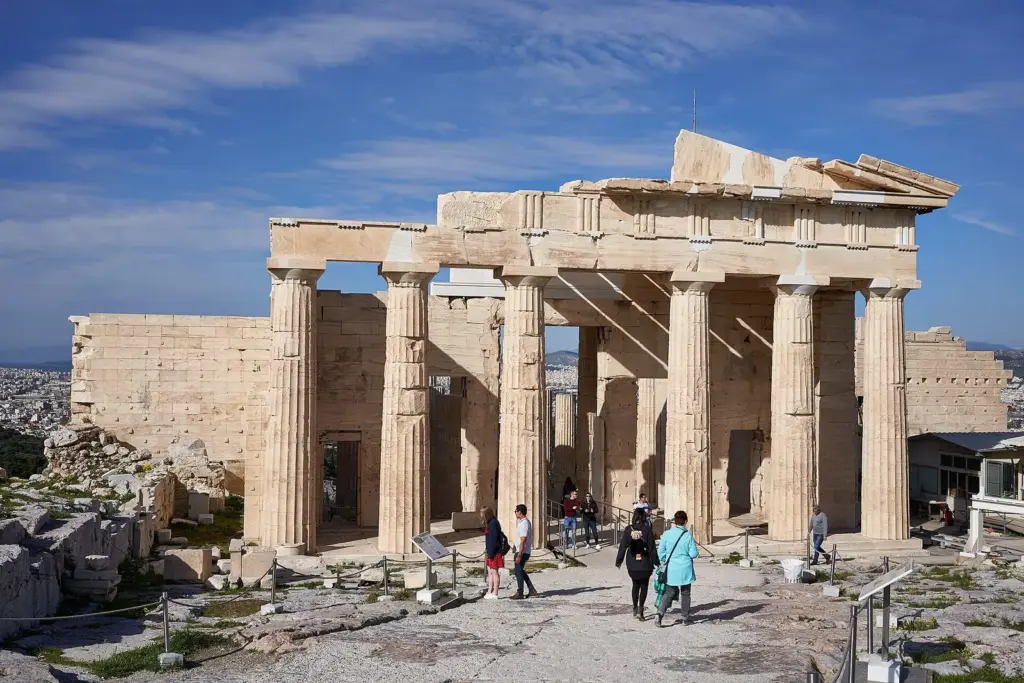
Busy at the gate, calm on top. Nearly every guide to this question says “be there at opening”, so the 08:00 slot is the one everyone wants, and the main entrance has a queue before the gates open. The payoff comes after the Propylaea, the ancient gateway to the summit. For the first half hour or so most of the day’s visitors are still behind you, and the Parthenon has space around it. In summer that half hour, plus the last of the night’s cool, is worth the early alarm.
09:00-14:00: groups, ships and heat
The window to avoid. Tour groups and ship excursions arrive through the morning, and everyone funnels through the same gateway and along the same paths around the Parthenon and the Erechtheion. From late morning the heat joins in. In any month from April to October this is the worst time to be on the rock, and in July it is also the stretch most likely to be lost to a heat closure.
The last two hours: the quiet end of the day
Our pick outside high summer. By mid-afternoon most ship passengers are heading back to Piraeus and the day’s tours have moved on. From about two hours before closing the summit thins out and the light warms. Aim to go in 90 minutes to two hours before the gates shut: 16:30 for an 18:30 close in early October, 15:00 for a 17:00 close in winter.
Plan it: look up that day’s closing time in the table above, book the slot two hours before it, allow two hours on the summit and leave the Acropolis Museum for the next morning.
How do cruise ships in Piraeus change the crowds?
Piraeus, a separate city on the coast, is where Athens’s cruise ships dock, and its port authority can berth 11 of them at once. Most calls are day visits with a fixed shape: off the ship, into Athens, back on board before sailing. For most first-time passengers the Acropolis is the reason to come ashore, and ship tours tend to go early, before the heat.
That makes the number of ships in port the best single predictor of a crowded Acropolis morning, and it’s one you can check. The Piraeus Port Authority’s Arrivals & Departures page loads the port’s schedule for any date (give it a few seconds). A one-ship day is an ordinary morning. A day with four or five ships can put thousands of extra people on the rock in the same few hours. On a heavy ship day, switch to the last two hours before closing, or move the Acropolis to a day with fewer calls.
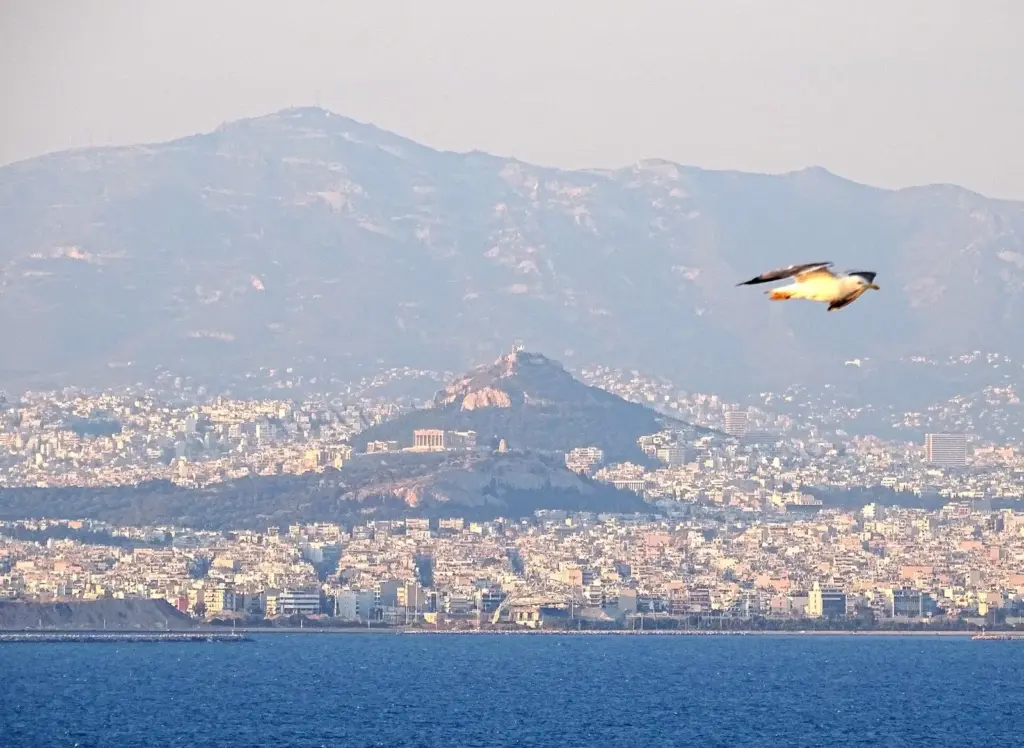
If you’re on the ship: the late slot rarely works, because all-aboard comes first. Book the earliest slot you can reach with a margin, allowing for the port’s free shuttle bus from ship to terminal and then the X80 bus or the metro into the centre. Our guide to spending a cruise day in Athens has the transport details. If your ship stays into the evening, a mid-afternoon slot, once the excursion wave has passed, is the alternative outside high summer.
What happens to the opening hours in a heatwave?
The site can close for the afternoon. When temperatures passed 40°C on 8 July 2025, the Ministry of Culture kept the Acropolis shut until 17:00, citing the safety of workers and visitors, and it had done the same during heatwaves in July 2023 and in June and July 2024. There is almost no shade on the summit, and the marble throws the heat straight back at you.
Closures are called when a heatwave arrives, not months ahead, so nobody booking in spring can know which July afternoons will be lost. That’s why we never suggest a midday slot between June and August. Three habits protect a summer visit:
- Book 08:00. The first slot is the coolest of the day and the one least likely to be hit.
- Check the night before. Heat closures are announced by the Ministry and reported in the news; if one is coming, keep your morning and have a plan for the afternoon.
- Keep the Acropolis Museum in reserve. It’s indoors, a short walk from the rock’s south side, and open 09:00-20:00 from Tuesday to Sunday between April and October, with Mondays to 17:00 and Fridays to 22:00. Our Acropolis Museum guide covers what to see.
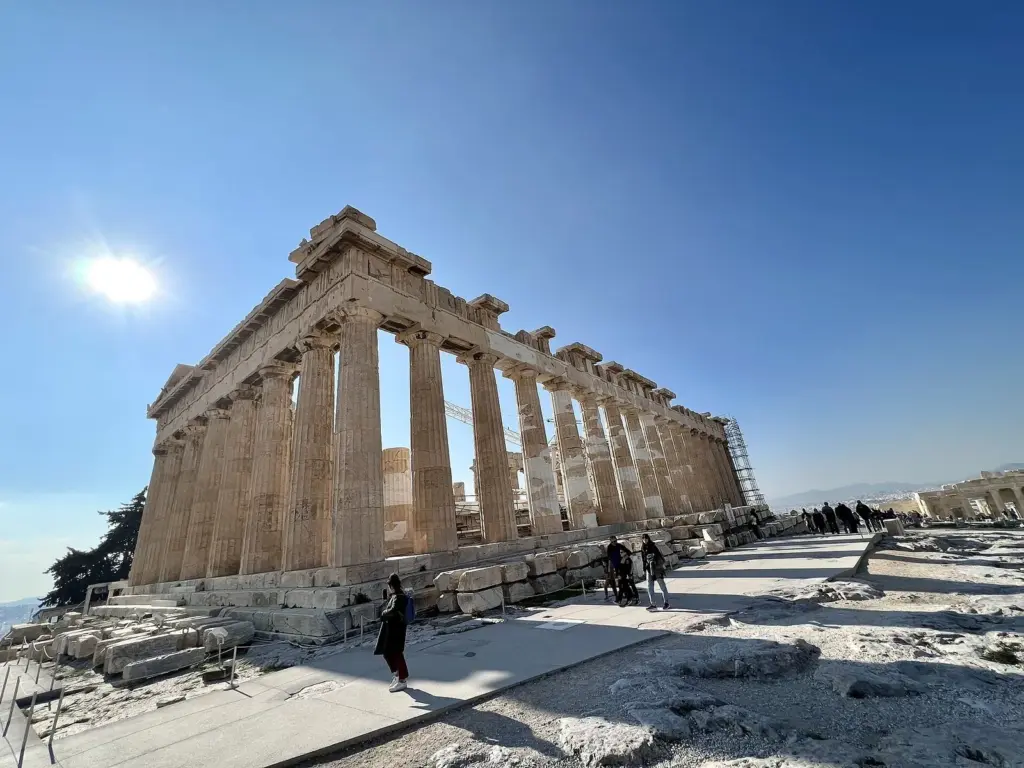
If a closure lifts at 17:00, expect everyone who waited to arrive at once, with three hours of summer opening left. Verdict: in July and August the 08:00 slot isn’t a preference, it’s insurance.
Is early morning or late afternoon the better time?
It depends on the month more than on your body clock. Here’s how we’d call it.
| When | Our pick | Why |
|---|---|---|
| November to March | Either; go in the drier half of the day | Thin crowds all day, so the weather decides |
| April and May | Last two hours | Groups gone, gentler temperatures, warmer light |
| June to August | 08:00 | Heat and heat closures; the last slot is still in full sun |
| 1-15 September | 08:00 | Afternoons are still August-hot |
| 16 September to 31 October | Last two hours | Cooler evenings, closing close to sunset, the calmest window of the day |
Morning people have one more argument: the 08:00 slot never moves, while the late slot shifts every fortnight in autumn. Evening people have the light, and the likelihood that the day’s cruise passengers are already back on board. Whichever you choose, the routine is the same:
- Find the closing time: use the month table above; from September it changes every fortnight.
- Count the ships: check the Piraeus Port Authority’s Arrivals & Departures page for your date.
- Read the forecast: if a heatwave is coming, only the 08:00 slot is safe.
- Book the slot: every ticket carries an entry time, and our guide to how Acropolis tickets work covers the rest.
- Check the night before: the Ministry’s Acropolis page posts urgent announcements, such as route changes and works.
The best slot for your kind of trip
First-timers with two or three days
Late slot on day one, museum on day two. An evening visit early in your trip gives you the calmest summit and the best light, and a morning at the Acropolis Museum the next day fills in everything the ruins can’t show. From June to August, flip it: the Acropolis at 08:00, then the museum through the afternoon heat.
Families with pushchairs
Mornings, and travel light. Children wilt in the heat long before adults admit to it, so the first slot suits families in every month except winter. Pushchairs can be left at the baggage and stroller cloakroom just north of the main entrance, outside the site, which won’t take large luggage. A parent on their own with two or more infants may use the lift, after phoning ahead.
Visitors with reduced mobility
A calm day, the main entrance and a phone call. Ticket checks and entry for visitors with disabilities happen only at the main entrance, and the lift needs a call to the Chief Guard’s Office (+30 213 131 7762) an hour before you arrive. It doesn’t run in strong wind or severe weather, so a still morning is the safest bet. The Ministry’s page reported it working on 26 September 2026.
Photographers
The last hour, or a winter first slot. The final hour of any day from mid-September to October brings the warmest light and the fewest people in your frame. In December and January the 08:00 slot comes barely 20 minutes after sunrise, with long shadows across the summit. For a sunset from inside the site, the last week of October is your only real chance.
For the other sites that fill out an Athens itinerary, from the Ancient Agora to Kerameikos, see our guide to the city’s ancient sites and museums.
What to skip, and when not to go
A midday slot from June to August. Peak crowds, peak heat and the highest risk of a closure, all on one ticket. Verdict: never.
A sunset plan on the summit. Apart from the last week of October, the gates close before the sun goes down or, at the very end of August, just as it does. Watch it from Philopappos Hill or the Pnyx instead, and see the Acropolis itself earlier in the day.
Popping out and back. The Acropolis and Slopes ticket is single-entry: once you leave the Acropolis or the South Slope, you can’t get back in on it. After the Beulé Gate, follow the signs south to the South Slope rather than walking out into the street.
The 10:00 slot on a four-ship day. It’s the worst combination our model allows. Move it, even by a day.
Acropolis Opening Hours FAQ
What time does the Acropolis open and close?
The Acropolis opens at 08:00 every day it’s open. It closes at 20:00 in summer, steps down to 19:30, 19:00, 18:30 and 18:00 through September and October, and closes at 17:00 from 1 November. Last entry is always 30 minutes before closing, but you’ll want to arrive well before that to see the summit properly.
Is the Acropolis open every day?
Almost. It closes on 1 January, 25 March, 1 May, Orthodox Easter Sunday, and 25 and 26 December, and keeps shorter hours on Good Friday (12:00-17:00) and Holy Saturday (08:30-15:30). Heatwaves and strikes can also close it at short notice, so check the Ministry of Culture’s Acropolis page the evening before your visit.
Is the Acropolis open on Sundays and Mondays?
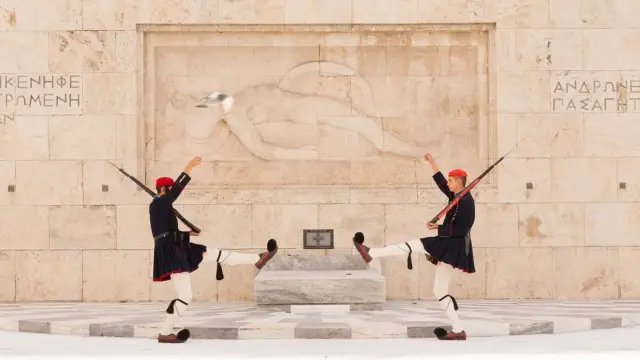
Yes, on normal hours: unlike many museums, the Acropolis has no weekly closing day. Sundays bring one extra. Evzones of the Presidential Guard raise and lower the flag on the Acropolis on Sundays and official holidays, separate from the changing of the guard at Syntagma, which runs every day.
Is the Acropolis open at night?
No. It closes at 20:00 at the latest, and for almost the whole year the gates shut before sunset. The exception is the last week of October, when the clocks have gone back and sunset, at about 17:30 in 2026, comes before the 18:00 closing. For the floodlit Acropolis after dark, look up from Plaka, Thissio or a rooftop bar.
Is the Acropolis open in November, December and February?
Yes, on winter hours of 08:00-17:00, with last entry at 16:30. The exceptions are 25 and 26 December and 1 January, when it’s closed. Winter brings the thinnest crowds of the year but the same €30 ticket as summer, and wet marble can be slippery, so wear shoes with a decent grip.
How long do you need at the Acropolis?
Allow about two hours for the summit, including the climb through the Propylaea and time around the Parthenon and the Erechtheion, and three hours if you add the South Slope with the Theatre of Dionysus. Because last entry is 30 minutes before closing, a late visitor should go in at least 90 minutes before the gates shut.
What is the least crowded time to visit the Acropolis?
In our model, the last two hours before closing, once ship passengers and tour groups have gone. From June to August the heat makes that slot hard work, so take the 08:00 slot instead and head straight up to the summit. The quietest months are November to February, and the busiest days are the five free-admission days.
Related Athens Guides
- The Complete Acropolis Guide: tickets, entrances, the monuments and the history behind them.
- Acropolis Museum Guide: the indoor half of an Acropolis day, open until 22:00 on Fridays.
- Athens Cruise Port in One Day: getting from the Piraeus terminals to the Acropolis and back before all-aboard.
- Ancient Agora Guide: the market and civic heart of ancient Athens below the rock, with its own €20 ticket.
Sources and How We Checked
This page was checked on 26 September 2026 against the official sources below and compiled from them rather than from other travel lists; no first-hand visit is claimed, and the crowd model and sunset times are our own analysis.
- Hellenic Ministry of Culture: Acropolis of Athens (opening hours, holidays, free days, notices) and Ancient Agora of Athens (operating rules, holiday hours)
- Piraeus Port Authority: Arrivals & Departures and Cruise Terminal
- Acropolis Museum: Plan your visit
- European Union: Directive 2000/84/EC on summer-time arrangements
- NOAA Global Monitoring Laboratory: Solar Calculator (the method behind our sunset times)
- Al Jazeera: report on the July 2025 heat closure
Athens Tourism Guide is an independent publication. We are not affiliated with the Hellenic Ministry of Culture, OASA, the Greek National Tourism Organisation or any business named here, and no business paid to be included.
Photo Credits
- The Acropolis from the Pnyx before sunset: photo by George E. Koronaios, via Wikimedia Commons (CC BY-SA 4.0)
- Snow below the Acropolis, January 2022: photo by George E. Koronaios, via Wikimedia Commons (CC BY-SA 4.0)
- The Propylaea: photo by George E. Koronaios, via Wikimedia Commons (CC BY-SA 4.0)
- The Acropolis from the sea off Piraeus: photo by Ad Meskens You are free to use this picture for any purpose as long as you credit its author, Ad Meskens. Example: © Ad Meskens / Wikimedia Commons If you use this work outside of the Wikimedia projects, a message or a copy is very much appreciated. This image is not in the public domain. A statement such as "From Wikimedia Commons" or similar is not by itself sufficient. If you do not provide clear attribution to the author you do not comply with the terms of the file's license and you may not use this file. If you are unable or unwilling to provide attribution you should contact Ad Meskens to negotiate a different license., via Wikimedia Commons (CC BY-SA 4.0)
- The Parthenon in bright sun: photo by PinterPandai.com, via Wikimedia Commons (CC BY-SA 4.0)
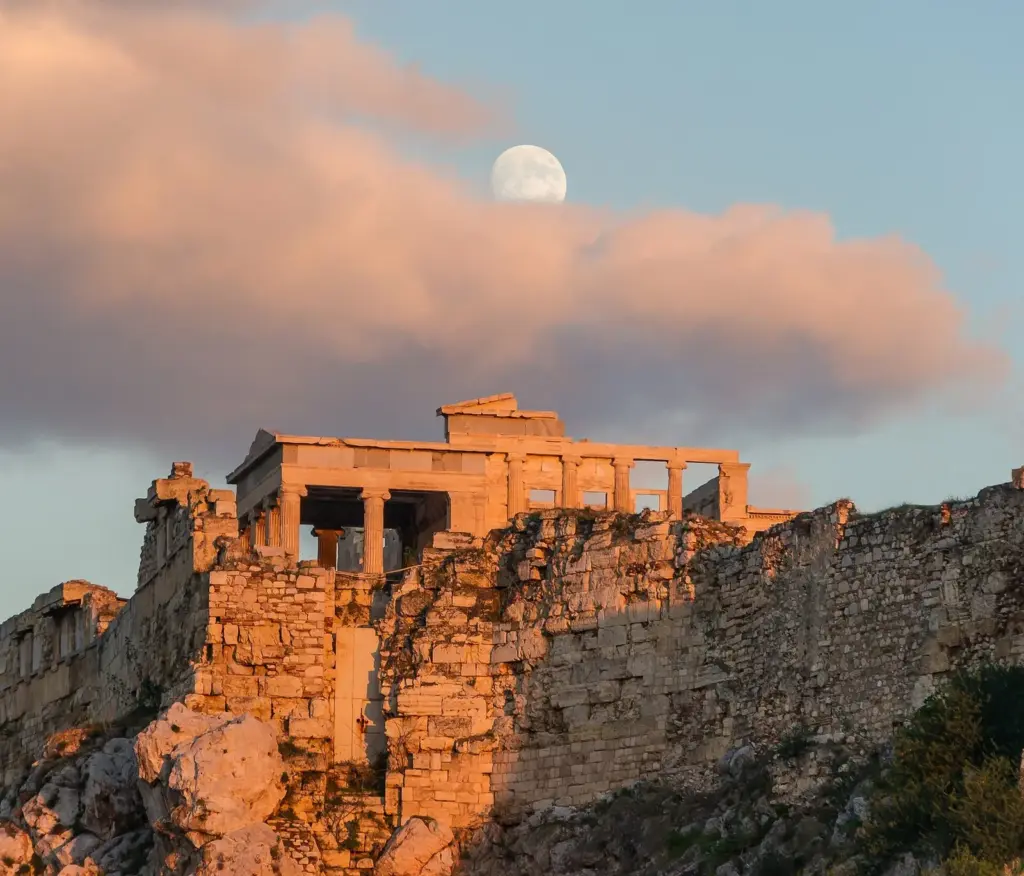
- The Erechtheion in evening light: photo by Jebulon, via Wikimedia Commons (CC0)
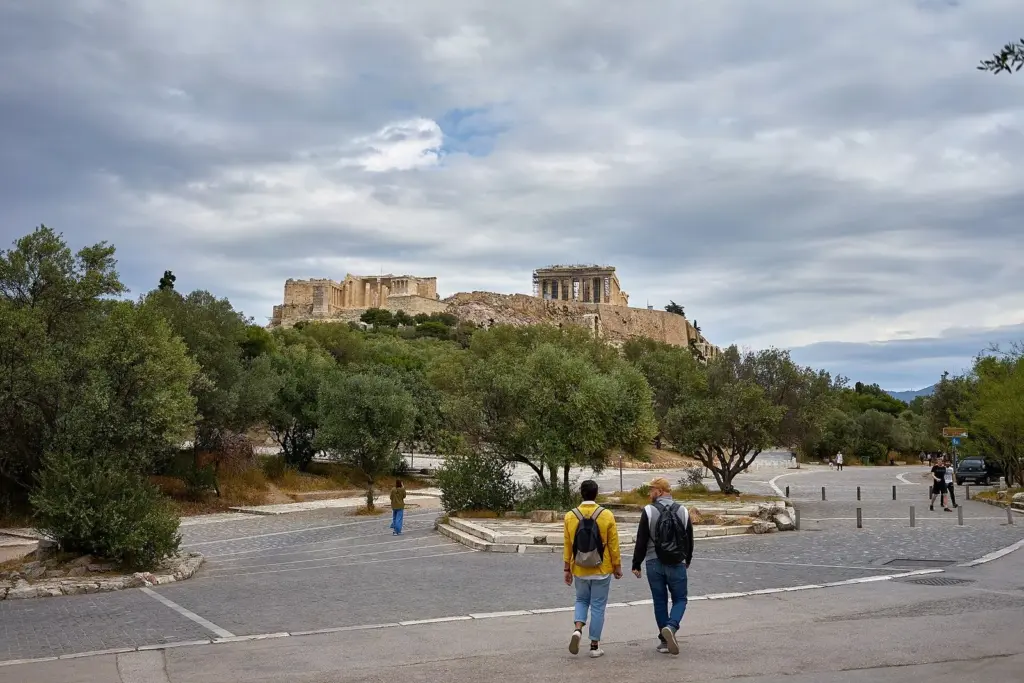
- Dionysiou Areopagitou: photo by George E. Koronaios, via Wikimedia Commons (CC BY-SA 4.0)
- The Acropolis from Lycabettus (featured image): photo by George E. Koronaios, via Wikimedia Commons (CC0)