This article contains advertising. Some of the hotel, tour, activity, flight and transfer links in it are paid links: if you book through one, we get a commission from the booking company, and your price is the same either way. It never affects what we recommend. Affiliate disclosure
Athens turns abstract history lessons into something children can touch, climb, taste, and remember. A city where five-year-olds chase pigeons across the same marble flagstones Pericles once walked, where teenagers can decode 2,500-year-old graffiti carved into pillar bases, and where a Saturday morning workshop can introduce a six-year-old to weaving on a Greek warp-weighted loom — these are not curated experiences invented for tourism. They grew out of Athens being a living capital where antiquity is part of the daily fabric, and a deep network of museum educators, archaeological foundations, and family-run learning centers has organized this richness into experiences that genuinely captivate children rather than bore them. This guide covers the educational activities and learning experiences in Athens that work best with kids ages 4 to 17, including which museums offer real hands-on programs, where to find theater that brings myths to life, language-and-culture experiences, science and nature learning, and how to combine these into days that feel like adventures rather than lessons.
Why Athens Works So Well for Educational Family Travel
Most cities offer either history or activities for kids. Athens delivers both, often in the same building. The Acropolis Museum runs a free Children’s Backpack program where kids pick up a satchel of magnifying glasses, drawing supplies, and quest cards before exploring. The Hellenic Children’s Museum lets children physically operate a soap bubble lab, knead dough in a working kitchen, and crawl through a model of the Athens metro. The National Observatory in Thiseio still does monthly star-gazing nights on equipment that Heinrich Schliemann’s contemporaries used. There is no other European capital where a single morning can include touching a 5th-century BC pottery shard at a museum education table, then climbing the actual hill where Athenian boys finished their formal education in the gymnasium of Plato.
Athens is also exceptionally walkable and compact. The pedestrianized Dionysiou Areopagitou promenade connects the Acropolis, the Acropolis Museum, the Theater of Dionysus, and the National Garden in under twenty minutes on foot — meaning families can rotate between experiences without burning the day in transit. The Greek climate from April through October allows most outdoor programs to run reliably; from November through March, museum programs, theatrical workshops, and indoor science experiences fill the calendar.
What “Educational” Means in This Guide
We are using a deliberately broad definition. Yes, this guide covers museum programs and archaeological-site workshops. But it also includes experiential learning — cooking classes where children learn the chemistry of Greek yogurt by making it, sailing lessons in the Saronic Gulf that teach navigation and weather literacy, urban-foraging walks that introduce Mediterranean botany, and astronomy nights that align with the ancient Greek myths tied to constellations. Children learn more from being curious than from being lectured, and Athens has built an unusually deep bench of programs designed around curiosity.
Best Museums with Hands-On Children’s Programs
Athens museums have invested heavily in education over the past two decades. Several now employ permanent museum educators whose only job is designing programs for school groups and family visitors. The result: most of the major museums offer either scheduled family programs, drop-in activity stations, or both. Below are the venues where the children’s experience is best developed.
Acropolis Museum Family Programs
The Acropolis Museum runs the most comprehensive children’s programming of any institution in Athens. The free Children’s Backpacks are available at the information desk and contain age-tiered activity sheets, magnifying glasses, drawing materials, and a small replica artifact tied to a quest in the galleries. Two backpack themes rotate: one focused on the Parthenon frieze (good for ages 7-11), one focused on temple construction and color (best for 5-9). The museum’s family programs run most Saturdays and Sundays at 11am and 1pm in Greek and English alternately; topics include “How the Caryatids Got Their Robes” (textile workshop), “Painting the Parthenon” (an experiment with the actual pigments archaeologists have identified on the marbles), and “The Sculptor’s Studio” (working with clay). Family programs are free with museum admission, but spots are limited to about 15 children and fill quickly; book the same week via the museum’s website.
Hellenic Children’s Museum (Paidiko Mouseio)
The Hellenic Children’s Museum at 14 Kydathineon in the heart of Plaka is purpose-built for ages 2-12. Unlike most Athens museums where children look at exhibits, here they operate them. The Kitchen lets kids actually prepare simple recipes including koulourakia and tzatziki, with educator guidance. The Bubble Lab teaches surface tension through giant bubble-making. The Metro is a small-scale operating model of the Athens transit system that children control. The Construction Site involves real pulleys, ropes, and child-safe building tools. Admission is approximately €3 per child, free for accompanying adults, and the museum is open Wednesday through Sunday. Plan two to three hours; this is not a quick stop.
Goulandris Museum of Natural History & Gaia Centre (Kifissia)
A short metro ride to Kifissia takes families to one of Athens’ best-kept educational secrets. The Goulandris Museum holds extensive zoological, botanical, and geological collections including a life-size triceratops model that anchors the dinosaur hall and that under-10s find unforgettable. The adjacent Gaia Centre is fully interactive: kids walk through a simulated cave, experience an earthquake on a vibrating platform, watch climate models, and play with hands-on environmental science stations. Both venues are designed for children and families. Combined ticket €8; weekend afternoons include free guided tours in English on request.
The Museum of Cycladic Art Family Workshops
The Cycladic Museum in Kolonaki holds the world’s largest collection of Cycladic figurines — those minimal, modernist-looking marble sculptures from the islands. The museum runs themed family workshops most Saturdays at 11am: children sculpt their own figurines from soft clay, learn how Cycladic islanders mined and shaped marble using only stone tools, and end with a guided tour through the galleries to compare their work to 5,000-year-old originals. Workshops are €10 per child including materials; book online a few days ahead.
Athens Living Museum & “Around Greece in Five Dishes”
The Athens Living Museum in central Athens has built a reputation for experiential education across food, weaving, and ancient daily life. “Around Greece in Five Dishes” is a two-hour family experience where children prepare five regional Greek dishes, learning the botany behind ingredients (where does oregano grow? Why are olive trees ancient?), the chemistry of fermentation, and the geography of why certain foods come from certain islands. Their theatrical weaving workshop introduces children to the warp-weighted loom that Penelope used in the Odyssey — children weave for thirty minutes and leave with their work. Programs are conducted in English and run €25-€40 per child.
Numismatic Museum & “Coin Detective” Program
The Numismatic Museum, housed in the spectacular former mansion of Heinrich Schliemann (the archaeologist who excavated Troy), runs a clever family program called “Coin Detective.” Children receive a magnifying glass and a printed file of “case clues” — they must identify coins from across 2,500 years of Greek history, decoding the symbols, animals, and gods on each piece. The program teaches archaeology, ancient economy, and Greek mythology in roughly 90 minutes. €5 per child, runs most Saturdays.
Archaeological Sites with Real Educational Value for Kids
Children rarely respond to “this is very old” as a reason to care about ruins. They respond to puzzles, scale, mystery, and movement. The following archaeological sites in Athens offer those hooks naturally, and with the right preparation a visit becomes one of the best educational experiences of a trip.
The Acropolis (Ages 6+ with Preparation)
The Acropolis works best with kids when they know what they’re looking at. Read one of the excellent illustrated books about the Parthenon together the night before — Christina Balit’s “Athena: Goddess of Wisdom” or any of the Mary Pope Osborne “Magic Tree House” Greece volumes. Bring a printed scavenger hunt: find the Caryatids, count the columns of the Parthenon (8 across, 17 deep), find the Theater of Dionysus visible from the south slope, identify the olive tree planted at the site of Athena’s mythical gift. Start early — 8am opening with the first crowds — and plan no more than 90 minutes on the rock itself. Children melt down on marble in the noon sun.
Ancient Agora (Excellent for All Ages)
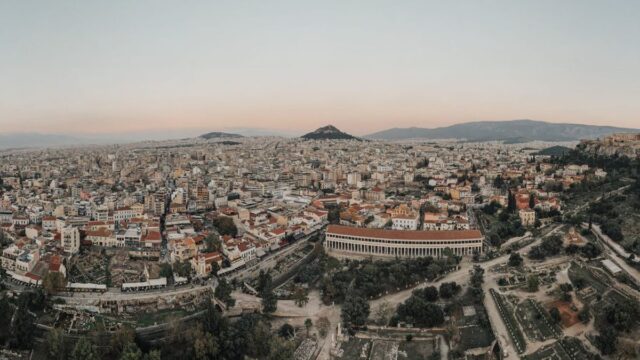
The Agora is far more child-friendly than the Acropolis: shaded paths, trees, room to run, and a museum (the Stoa of Attalos) full of objects children find weirdly compelling — the ostraka pottery shards used to vote politicians into exile, the bronze juror’s ballots, child-sized 5th-century BC toys including a clay rattle and miniature carriages. Plan two hours. The Agora teaches ancient democracy in a way no textbook does because children can see the bouleuterion (council chamber) where representatives debated and the platform where they voted.
The Panathenaic Stadium
This is the only stadium in the world built entirely of marble — site of the 1896 first modern Olympic Games. Kids can run the actual track that the 1896 athletes ran, sit in the marble bleachers, and explore the small museum of Olympic torches under the stadium. €12 adult ticket, €6 reduced; allow 90 minutes. Pair with the audio guide, which is unusually well-pitched for older children.
Kerameikos Cemetery
Kerameikos is the most peaceful and least-crowded major archaeological site in central Athens. The on-site museum holds extraordinary child-engaging artifacts: clay figurines of horses and people from grave goods, terracotta toys, and stelae carved with poignant family scenes that work as a kind of ancient Greek photography. Children respond to the human stories — the dog faithfully carved on a five-year-old’s tombstone, the carved family farewells.
Theater & Performance Programs for Kids
Athens invented Western theater, and the city still produces an outsize amount of children’s theater. From May through October the Athens-Epidaurus Festival programs dedicated children’s performances in the open-air theaters of the Acropolis south slope and at the Pnyx. Year-round, the Stathmos and Mikro Pallas theaters run children’s productions on weekends.
“Who Killed Callimachos?” Interactive History Theater
This long-running family theater piece treats children as participants in an ancient Athens murder mystery. Performed in the gardens near the Roman Agora during summer and indoors at the Athens Living Museum the rest of the year, it’s an 80-minute experience where kids interview ancient Athenian characters, examine clues, and solve the murder using their knowledge of Athenian law. Recommended for ages 8 and up. €18 per child, English performances Saturday afternoons.
Theatrical Weaving Workshop
A two-hour experience where children meet a costumed “Athenian weaver” who teaches them to operate a warp-weighted loom while telling them the stories woven into ancient textiles — including the famous Peplos for Athena that Athenian women wove every four years for the Panathenaic procession. Strongly recommended for crafty kids ages 6-12.
Stathmos Theater Children’s Programs
Stathmos in the Larissis area runs Sunday morning children’s theater in Greek with occasional English performances. Their productions of Greek myths — the labors of Heracles, the journey of Odysseus, the story of Persephone — are pitched perfectly for ages 5-10 with strong physical performance, music, and audience interaction that overcomes language barriers.
Science, Nature & Environmental Learning
Athens offers an excellent set of science-focused experiences that pair well with the history-heavy default of most visits.
National Observatory of Athens (Thiseio)
Founded in 1842 on the Hill of the Nymphs in Thiseio, the National Observatory hosts monthly evening public visits where families can look through the historic Doridis refractor telescope. The programs include a short astronomy lecture pitched for general audiences, viewing of whatever planet or deep-sky object is visible that night, and a tour of the 19th-century scientific instruments. Free, but reservations required and slots open three weeks ahead.
Eugenides Foundation Planetarium
The Eugenides Planetarium in Palaio Faliro is one of Europe’s largest digital planetariums, with a 25-meter dome and a state-of-the-art projection system. Family programs run weekends and Wednesday afternoons. Show topics include Greek mythology constellations (excellent overlap with anything historical the family has been doing), dinosaurs, the solar system, and a fantastic “Sky over Athens 500 BC” show that recreates the night sky as Aristotle would have seen it. €8 per ticket; English shows Saturday afternoons.
Diomedes Botanical Garden
The Diomedes Botanical Garden in the western suburb of Haidari is the largest botanical garden in the eastern Mediterranean — 460 acres with more than 3,000 plant species. The “Plants of Greek Mythology” section is a hit with families: families can find Daphne’s laurel, Athena’s olive, Persephone’s pomegranate, and Apollo’s hyacinth in one walk. Educational programs run weekends including guided botanical walks for children and seed-planting workshops.
Sea Turtle Rescue Centre (Glyfada)
ARCHELON, the Sea Turtle Protection Society of Greece, operates a public-access rescue center for injured loggerhead sea turtles in Glyfada — a 30-minute tram ride from central Athens. Family visits include a tour of the rehabilitation tanks, a presentation on loggerhead biology and Mediterranean conservation, and the chance to see real turtles in recovery. €4 donation per visitor; allow 90 minutes.
Cooking & Food Learning Experiences
Food is one of the most reliably engaging educational topics for children, and Athens offers exceptional opportunities to learn through cooking.
Family Cooking Classes in Plaka
Several cooking schools in Plaka run family-friendly half-day classes designed specifically for parents with children ages 7+. Programs typically begin with a guided walk through the Varvakeios Central Market — children pick out ingredients, learn the differences between Greek olive varieties, sample regional cheeses — then return to a kitchen where the family prepares a multi-course meal together. Classes run €60-€90 per adult, €30-€45 per child, four hours total.
Bread & Olive Oil Workshops
Shorter focused workshops on bread-making and olive oil tasting are excellent two-hour experiences. Children learn the chemistry of yeast fermentation, knead and shape Greek breads (paximadia, koulouri), and complete a guided olive oil tasting that introduces them to the geography of Greek olive production. €25-€40 per child.
Language & Culture Programs
For families with extended stays or repeat visits, Athens has several language-and-culture programs designed for visiting children.
Greek Language Camps
The Hellenic American Union runs week-long summer programs introducing Greek language, mythology, and culture to children of visiting families. Half-day programs run 9am-1pm, July through August, ages 7-15. €180 per week.
Mythology Walking Tours for Kids
Several local guides specialize in mythology-focused walking tours for families. The best are 90-minute walks through the area around the Acropolis that tie specific locations to specific myths — the rock where Theseus dropped a stone, the spring where Pan made his shrine, the trees Athena and Poseidon planted in their famous competition. €25 per adult, €15 per child.
Sample Educational Day Itineraries
The best educational days mix one structured program (a workshop, theater experience, or guided museum tour) with one free-exploration site (an archaeological park, a hill, a market) and one purely fun activity (a beach, a playground, a swimming pool). Below are three sample days that work well with children ages 7-12.
“Ancient Athens for Curious Kids” Day
8:30am Acropolis with backpack scavenger hunt. 10:30am breakfast at a Plaka taverna. 11:30am Acropolis Museum Children’s Backpack program. 1:30pm lunch in Plaka. 3:00pm Hellenic Children’s Museum (Kydathineon). 5:00pm gelato at Della Cremeria, walk in the National Garden. 7:00pm dinner.
“Science & Nature” Day
9:00am Goulandris Museum of Natural History and Gaia Centre in Kifissia. 12:30pm lunch in Kifissia. 2:30pm metro back to center; rest. 5:00pm Mount Lycabettus funicular ride to the summit (the engineering itself is interesting). 8:30pm Eugenides Planetarium evening show.
“Food, Mythology & Theater” Day
9:30am family cooking class with market visit. 1:30pm lunch — what you cooked. 3:30pm mythology-themed walking tour through Plaka. 6:00pm rest at hotel. 8:30pm children’s theater at the Athens-Epidaurus Festival or Stathmos Theater.
Practical Tips for Educational Travel with Kids
A few hard-won practical lessons from families who have done this well: book museum family programs in advance, especially the Acropolis Museum backpacks and Cycladic Museum workshops, which fill quickly. Don’t pack more than two educational programs into a single day; children need processing time between intense experiences. Build in beach or pool time most days — Athens summer heat is real, and water is the best decompression after museums. Bring snacks; museum cafés are expensive and slow. Most museums offer free admission for under-5s and discounted family tickets — ask at the desk. Athens does not require advance ticket booking for most family programs, but the most popular workshops sell out.