
This article contains advertising. Some of the hotel, tour, activity, flight and transfer links in it are paid links: if you book through one, we get a commission from the booking company, and your price is the same either way. It never affects what we recommend. Affiliate disclosure
A standard ride on the Athens metro costs €1.20, and that one ticket gives you 90 minutes on the metro, buses, trolleybuses and trams, changes included. The big exception is the airport, where the metro fare is €9. Everything else about the Athens metro ticket price follows from those two numbers: €4.10 buys 24 hours of unlimited urban travel, €8.20 buys five days, and €20 buys a 3-day tourist ticket with a trip to and from the airport thrown in. Load any of them on a paper ATH.ENA ticket or a plastic ATH.ENA card, or skip the machine and tap a Visa or Mastercard on the reader.
This page is for first-time visitors who want to pick the right fare, pay it once and stop thinking about it. It sticks to prices, passes, validation, contactless payment and reduced fares. For lines and stations, our Athens metro guide has the map; for the wider picture of walking, taxis and ferries, start with getting around Athens. The one caveat that matters: ordinary tickets stop at Koropi, the last station before the airport, so the airport run needs its own fare. Details checked 27 September 2026 against OASA’s price list, its Tap2Ride contactless payment page and its rules on free and reduced fares.
Athens metro ticket price and every other fare at a glance
| Ticket | Full fare | Reduced | What it covers | Best for |
|---|---|---|---|---|
| 90-minute ticket | €1.20 | €0.50 | 90 minutes on metro, bus, trolley and tram; not the airport stretch | One or two rides a day |
| 24-hour ticket | €4.10 | None | 24 hours from first validation, X80 included, airport excluded | A single busy day |
| 5-day ticket | €8.20 | None | 5 × 24 hours from first validation, airport and X80 excluded | Seven or more rides in five days |
| 3-day tourist ticket | €20 | None | 72 hours of urban travel plus one airport trip each way | Short stays that fit inside 72 hours |
| Airport metro ticket | €9 (return €16) | €4.50 | 90 minutes on OASA services, airport stretch included but not Airport Express buses or the X80; return valid 30 days | Arriving or leaving by metro |
| Airport Express bus | €5.50 | €2.70 | One journey to or from the airport | A cheaper airport ride than the €9 metro ticket |
| Bank card or phone (Tap2Ride) | €1.20 a journey, capped at €4.10 a day | Not available | Metro, trams, trolleys and buses; airport trips €9 by metro, €5.50 by bus | Light use with no planning |
Two rules sit under the table. The clock on every time-based ticket starts at its first validation, not when you buy it, so a 5-day ticket bought on arrival and first tapped the next morning still runs a full 120 hours from that tap. And anything in the reduced column needs a personalised ATH.ENA card issued by OASA: reduced fares can’t be loaded on a paper ticket, whatever your age.
What’s changed in 2026?
You no longer need a paper ticket at all. OASA’s Tap2Ride system lets you pay full fare by tapping a contactless Visa or Mastercard, or a phone or watch with Apple Pay or Google Pay, on the validators of the metro, trams, trolleybuses and buses. Older guides tell you to buy a ticket before you board a bus. With a bank card you just tap the reader on board, and the system stops charging once you’ve spent €4.10 in a day.
The second change is quieter. Out-of-date prices still circulate in older blogs, and even OASA’s own price page carries a couple of stale notes: a line about ticket packs quotes €6.50 and €13.50 for the 5-ticket and 10+1 packs, which now cost €5.70 and €12, and a stored-value example still prices the airport run at €6 or €10. The price list at the top of that page is the current one, and it’s the one used here.
Two older rules still catch people out. The X80 express between Piraeus and Syntagma runs only from May to October, and a 90-minute ticket isn’t valid on it. And the airport stretch of Line 3, beyond Koropi, still isn’t covered by any ordinary urban ticket.
What does each ticket cover?
OASA’s urban tickets share one boundary. They’re valid on buses, trolleybuses, trams, metro Lines 1, 2 and 3 as far as Koropi, and the suburban railway between Magoula, Piraeus and Koropi. The 90-minute, 24-hour and 5-day tickets don’t cover the Airport Express buses or Line 3 between Koropi and the airport, while the 3-day tourist ticket adds one airport trip each way by metro or Airport Express bus. Only the 24-hour and tourist tickets work on the X80.
The 90-minute ticket: €1.20
€1.20, reduced €0.50. This is the default, and the one most visitors should start with. It’s good for 90 minutes from the first validation on any mix of metro, bus, trolley and tram, so a change from the red line to the blue, or from the metro onto a tram, costs nothing extra. The 90 minutes run from your first tap, not your last change, so a long trip with a slow bus connection can run close. Going into the centre and coming back later the same day takes two.
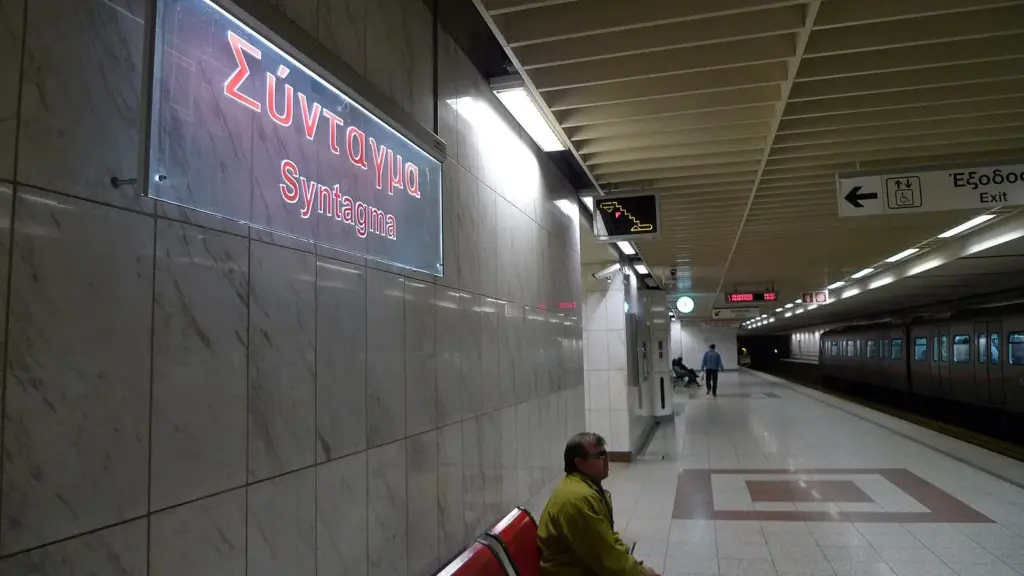
The 24-hour ticket: €4.10
€4.10, no reduced version. It pays for itself on the fourth ride: three singles cost €3.60, four cost €4.80. The 24 hours count from the first validation, so a ticket first tapped at 11:00 on Tuesday still works for a ride at 10:30 on Wednesday. It’s also valid on the X80, which the 90-minute and 5-day tickets aren’t, but not on the airport stretch or the Airport Express buses.
The 5-day ticket: €8.20
€8.20, no reduced version. This is the best-value ticket in Athens. It costs exactly the same as two 24-hour tickets, lasts 5 × 24 hours from the first tap, and against singles it pays off on the seventh ride (six cost €7.20, seven cost €8.40). So if you’ll ride seven times or more within five days, buy it and stop counting. It doesn’t cover the airport stretch, the Airport Express buses or the X80.
The 3-day tourist ticket: €20
€20, no reduced version. The tourist ticket bundles 72 hours of unlimited urban travel with one journey to the airport and one from it, by metro or Airport Express bus, and it’s valid on the X80. The catch is the clock. OASA gives the whole ticket one validity of 3 × 24 hours from the first validation, so the return airport trip has to fall inside that window. Land on Thursday, validate at 14:30, and it runs out at 14:30 on Sunday: no use for a Sunday evening flight.
Ticket packs and the four-ride daily cap
€2.30 for two, €5.70 for five, €12 for ten plus one free. Packs of 90-minute tickets shave a little off the single price (the 10+1 pack works out at about €1.09 a ride) and load on the paper ATH.ENA ticket as well as the plastic cards. There’s a safety net, too: once you’ve validated four tickets from a 5-ticket or 10+1 pack in one day, OASA charges nothing more for the rest of that day, as long as you keep validating. A pack suits a few light days, and on a heavy one the cap stops it costing more than four rides.
30-day and longer passes
€27 for 30 days, or €45 with the airport included. Monthly and longer passes, up to a year for €300, load only on a personalised ATH.ENA card, which you get at an OASA issuing point or, if you qualify, by applying online for delivery by post. For a visitor they only make sense on a long stay. Three 5-day tickets cover 15 days for €24.60, so the €27 pass starts winning around day 16. The €45 version adds the airport stretch and the Airport Express buses, but €27 plus a €16 airport return is €43, so the €45 pass comes out ahead with two airport metro returns (€59 with the €27 pass) or four Airport Express bus journeys (€49).
Can you pay with a contactless bank card or phone?
Yes, and for a short visit it’s often the easiest option. Tap2Ride turns the validators at the metro gates and on trams, trolleybuses and buses into card readers: tap a contactless Visa or Mastercard, or a phone or watch with Apple Pay or Google Pay, and the fare comes off your account. No ATH.ENA ticket, no machine, no queue.
It only charges full fares: €1.20 for a 90-minute journey, €4.10 for 24 hours, €5.50 on an Airport Express bus and €9 on the airport metro. Urban travel is capped at €4.10 a day however many trips you make, so you never have to decide over breakfast whether it’ll be a day-ticket kind of day. Airport journeys are charged on top of the cap.
- Check the card: Visa or Mastercard only. Maestro, American Express, JCB, Diners, Discover and China UnionPay aren’t accepted.
- Separate it: take the bank card out of any wallet or phone case that also holds an ATH.ENA ticket or card, or you risk paying twice.
- Tap in: at the metro gate as you enter, and on the reader inside every bus, trolley or tram you board, changes included.
- Tap out on the metro: OASA asks card users to touch out at the gates as well as in.
- Stick to one device: tap in with your phone and out with your watch or the plastic card, and the system sees two cards, charges twice and can’t apply the daily cap.
Mastercard holders may see a €0.01 charge the first time the card is used; OASA says it’s a temporary guarantee, refunded once the transaction settles. For anything else odd on a statement, OASA’s customer support number for card payments is +30 210 8200900.
Three limits are worth knowing. Discounted fares aren’t available by card, so a student or over-65 pays full fare this way. Everyone in your group needs their own card or phone to tap. And check your bank’s charges: if it adds a fee to every foreign card payment, small fares can carry a big mark-up, and a fee-free card, or a paper ticket with a 5-day pass on it, avoids that.
Verdict: for one or two days with a handful of rides, tapping a bank card is the simplest option and rarely costs more. For three days or more of steady riding, the €8.20 5-day ticket beats the card’s €4.10 daily cap.
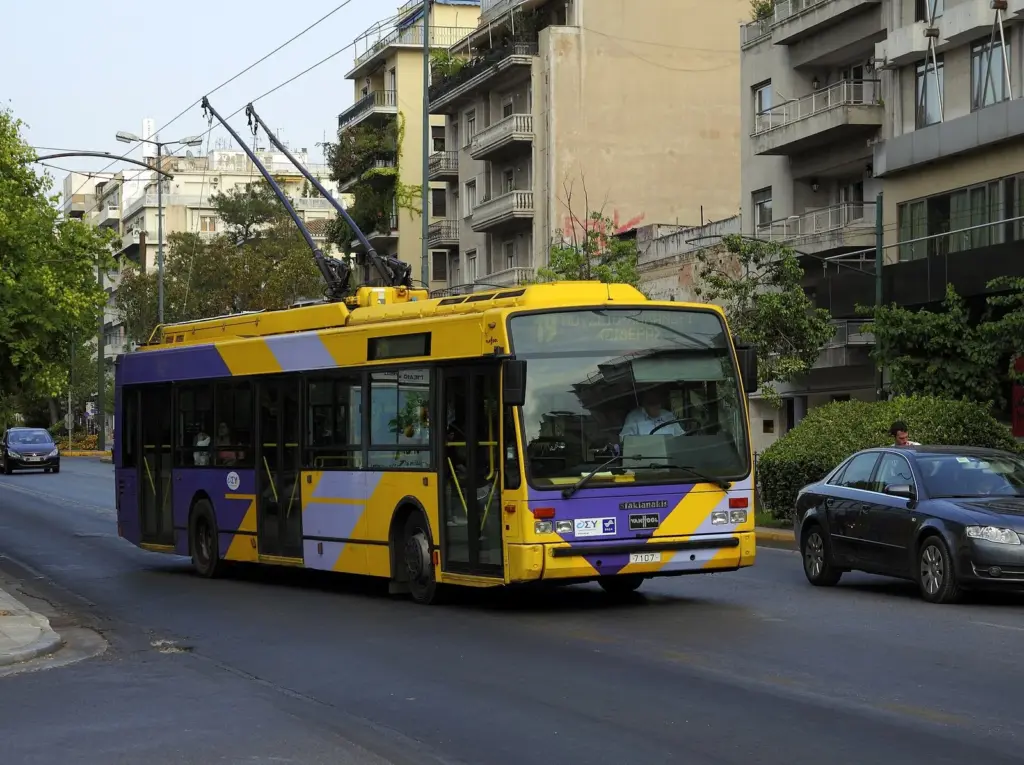
ATH.ENA ticket or ATH.ENA card: which do you need?
OASA sells fares on three kinds of media, and the names are confusingly close.
The paper ATH.ENA ticket
Right for most visitors. The ATH.ENA ticket is the reloadable, non-personalised card that the station machines issue. It carries full-fare products: single tickets and packs, the 24-hour, 5-day and tourist tickets, and airport tickets. It can’t hold reduced fares, and if it’s lost, stolen or damaged, OASA won’t replace it or refund what’s on it, which stings when it’s carrying a 5-day or tourist ticket. Keep it flat and dry, and reload the same one rather than collecting a new one every time.
The anonymous ATH.ENA card
Useful for repeat visitors. This is a plastic ATH.ENA card with no name on it. It takes the same full-fare products and can also hold stored value: up to €50 loaded as a wallet and drawn down as you travel, with urban trips capped at €4.10 a day. Stored value covers the trips your loaded product doesn’t, such as the airport metro on top of a 5-day ticket, or the X80.
The personalised ATH.ENA card
For reduced fares and long passes. Issued by OASA in your name, the personalised card is the only way to hold reduced fares, free-travel entitlements and passes of 30 days or more. You can get one at an OASA issuing point or, for eligible applicants, apply online and have it posted, so it’s rarely worth the effort on a short break; for an over-65 or an eligible student on a longer stay, reduced 30-day fares are half the full fare.
Verdict: a normal city break needs nothing more than the paper ticket, or no ticket at all if you tap a bank card.
Which ticket should you buy? Worked examples
The answer turns on three things: how long you’re staying, how you’ll reach the airport and how much you’ll walk. The main sights sit close together, and plenty of visitors ride less than they expect. Per person, at full fare, the numbers fall like this.
| Your trip | Cheapest sensible choice | Cost per person |
|---|---|---|
| Weekend, metro to and from the airport | 3-day tourist ticket, if both flights fall inside its 72 hours | €20 |
| Up to five days, Airport Express bus both ways | 5-day ticket plus two bus fares | €19.20 |
| Four or five days, metro both ways | 5-day ticket plus the €16 airport return | €24.20 |
| Cruise call at Piraeus, two or three rides | Bank card or 90-minute tickets | €2.40 to €3.60 |
| Cruise call using the X80 | 24-hour ticket | €4.10 |
| 16 to 30 days | 30-day pass on a personalised card, plus airport fares | €27 plus the airport |
| Mostly walking, a few rides | Bank card or a 5-ticket pack | €1.20 a journey, or €5.70 |
A weekend: the tourist ticket, if the clock fits
€20 per person. Land at 10:00 on Friday and fly home at 19:00 on Sunday, and a tourist ticket validated at the airport at 10:30 runs until 10:30 on Monday, covering both airport trips and every ride in between. Buying the pieces costs more: the €16 metro return plus a 5-day ticket is €24.20. The Airport Express bus both ways (€11) plus a 5-day ticket (€8.20) comes to €19.20, just under the tourist ticket’s €20.
Four or five days: a 5-day ticket plus an airport fare
€24.20 by metro, €19.20 by bus. Land at 15:00 on Monday and fly out at 12:00 on Friday, and a tourist ticket would expire on Thursday afternoon. Instead, buy the €16 airport return on arrival (it stays valid for 30 days, so the second half waits for your flight), ride into town on it, and start a 5-day ticket with your first urban ride on Monday evening. It lasts until Saturday evening, well past your flight. Which airport route suits your hotel is covered in the airport section below.
A cruise day from Piraeus
€2.40 to €4.10. Piraeus is inside the ordinary fare zone, so the metro into central Athens costs €1.20 each way, €2.40 for the round trip. A 90-minute ticket also covers a change or a hop across the centre within its 90 minutes. Tap a bank card and the €4.10 cap covers you if the day grows. The exception is the X80, the seasonal express to Syntagma that stops by the cruise terminals: 90-minute tickets aren’t valid on it, but a 24-hour ticket is. Our Piraeus port guide covers the way from the quay to the trains.
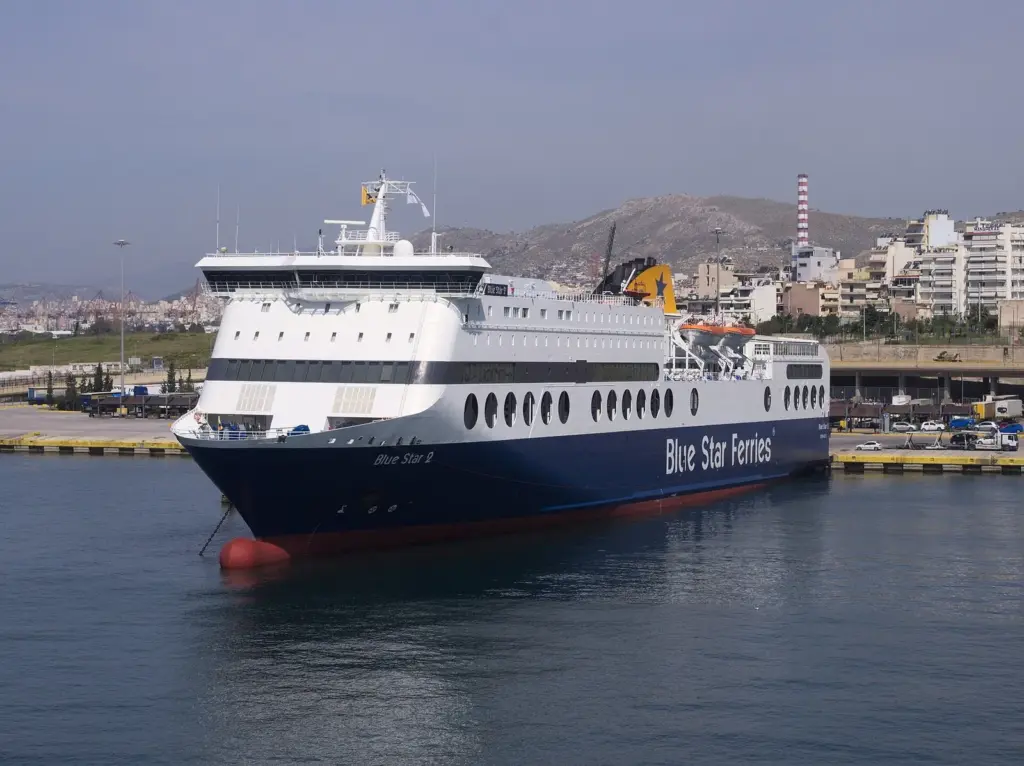
Mostly walking: don’t buy a pass you won’t use
Often under €6 for the week. Stay in Plaka, Koukaki or near Syntagma, come in on the Airport Express bus, and you may ride only four or five times all week: the tram to the coast one day, a bus to the National Archaeological Museum another. At €1.20 a journey that’s less than a 5-day ticket, which only wins from the seventh ride. Tap a bank card as you go or buy a 5-ticket pack for €5.70. The historic centre is compact enough that our walking routes will carry you through most days.
Verdict: buy the Athens 5-day ticket whenever you’ll ride seven or more times in five days, the tourist ticket only when both flights fit its 72 hours, and tap a bank card for everything lighter.
How do you validate, and what happens if you don’t?
A ticket only counts once it’s validated. OASA’s time-based tickets all start from their first validation “at any blue ticket reader” on a metro gate, bus, trolleybus or tram, and inspectors check that a ticket was validated, not just bought.
- Metro: tap your ticket or card on the blue reader at the gate as you enter. Bank-card users tap out at the gates too.
- Buses, trolleys and trams: tap the reader inside every vehicle you board, including each change on a 90-minute ticket or a pass. The first tap starts the clock; later ones don’t use up another ticket while it’s still valid.
- Airport Express buses: validate once as you board. With a bank card, that tap is the fare.
Most accidental fare-dodging comes from two slips: changing from the metro to a tram or bus and forgetting to tap on board, and riding the airport stretch on an urban ticket. Inspectors work the metro, buses and trams, and a fine costs far more than the fare you skipped. If a gate won’t open, don’t follow someone through it; go back to a machine or the ticket office and sort it out. For routes and stops on the surface network, see our buses and trams guide.
Airport fares: the stretch that catches people out
For fares, Line 3 comes in two parts. Between central Athens and Koropi it’s an ordinary metro line and every urban ticket works. Between Koropi and the airport it has its own fare, and a 90-minute, 24-hour or 5-day ticket won’t cover it. The same goes for the Airport Express buses. The 3-day tourist ticket includes one trip each way by either, and a bank card pays the airport fare on top of the daily cap; otherwise, these are the tickets to buy.
Airport metro ticket: €9, or €16 return
€9, reduced €4.50; return €16, valid 30 days. The single is valid for 90 minutes from its first validation on OASA services, so a change onto a tram, ordinary bus or another metro line at the city end is included; Airport Express buses and the X80 are not. Line 3’s journey to Piraeus takes about 55 to 60 minutes, so one ticket covers the whole ride to the port. OASA’s airport tickets are also valid on the suburban railway between the airport, Piraeus and Magoula. And if you’re only going between the airport and Pallini, Paiania-Kantza or Koropi, the three stations just short of it, OASA sells a cheaper airport metro ticket for €5.50.
Airport Express bus: €5.50
€5.50, reduced €2.70. Cheaper than the €9 metro ticket, but a bus ticket covers one journey to or from the airport and nothing more, so onward travel needs a separate ticket or tap. Bank cards work on board: tap once at the blue validator as you get on.
The €16 return is one ticket holding two airport journeys. Validate it on the way in, keep it, and validate it again on your way back within 30 days. Lose it in between and the return half goes with it: OASA doesn’t replace lost paper tickets.
Plan it: routes, journey times and late-night options are in our guide from the airport to the city centre; if you’d rather skip fares altogether, compare taxis and ride-hailing first.
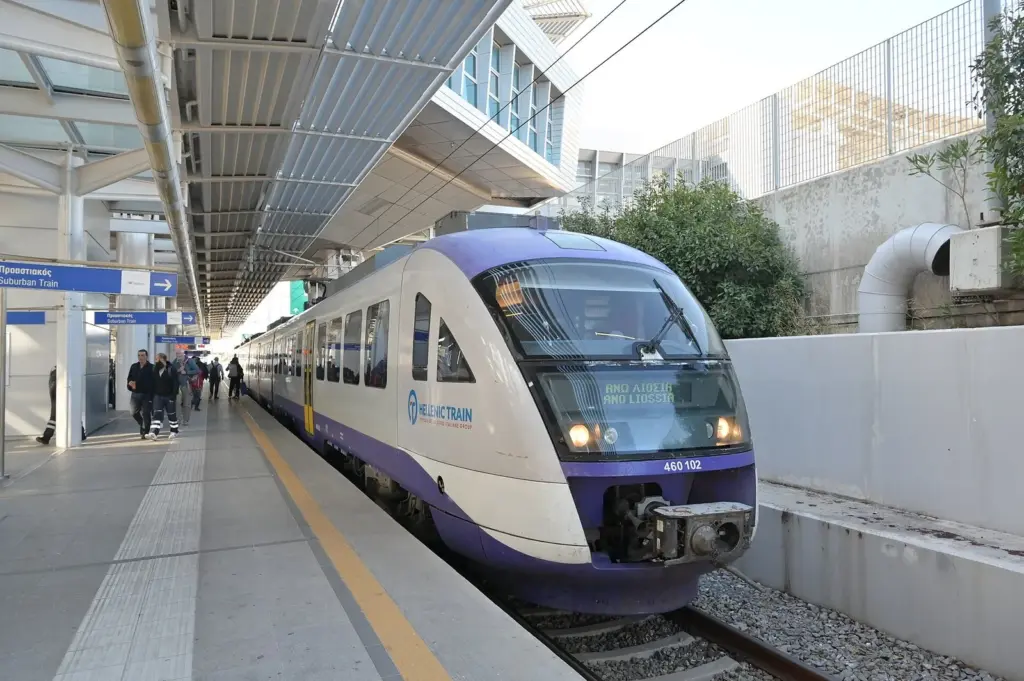
Reduced fares and free travel: who qualifies?
OASA’s list of people who travel free or at a discount is long, but for visitors it comes down to a few groups and one condition.
- Free: children under six.
- Reduced: children aged 7 to 12 and young people aged 13 to 18; people over 65; students at universities abroad up to the age of 25, with a valid student card and a passport or ID card; eligible students at Greek public universities (Greek Open University students are excluded, as are private university and college students); and large families, which by OASA’s rules doesn’t include families with three children.
The condition is the personalised ATH.ENA card. OASA certifies every free or reduced entitlement with that card and nothing else, reduced products can’t go on a paper ticket or a bank card, and an inspector can ask for extra proof such as a student ID. A small child can travel on a parent’s personalised card; a visiting family without one should carry the child’s passport as proof of age.
Is the card worth getting? Take an over-65 on a five-day stay who rides the metro to and from the airport. At full fare that’s the €16 return plus an €8.20 5-day ticket: €24.20. With a personalised card it’s two reduced airport tickets at €4.50 and a reduced 10+1 pack for €5, so €14, a saving of about €10. There’s no reduced 24-hour, 5-day or tourist ticket, so for a child aged 7 to 18 the card is the only way to pay less than an adult. OASA lists its issuing points on its website, and its information line is 11185; ask there how long issuing takes for a visitor and whether it costs anything.
Free travel for disabled passengers is confirmed through IDIKA, a Greek public-sector web service, so it’s set up for residents rather than visitors. For step-free stations and lifts, see our accessible Athens guide.
Where do you buy and reload tickets?
Ticket machines at metro stations, the airport station included, sell and reload the paper ATH.ENA ticket, and many stations also have a staffed ticket office. OASA publishes its other points of sale and reloading on its website. Reload the ticket you have rather than collecting a new one, and remember that nothing you load starts until its first validation, so you can top up the night before without losing a minute. And on a bus or tram with no rides left, a bank card on the reader is the answer.

Fares are one piece of the puzzle. For how the metro, trams, buses, taxis and your own feet fit together on a first visit, go back to our Athens transport overview. Hiring a car brings a different set of costs, covered in our guide to renting a car in Athens.
Athens Metro Tickets FAQ
How much is a metro ticket in Athens?
The standard Athens metro ticket price is €1.20, for a ticket valid 90 minutes on the metro, buses, trolleybuses and trams, changes included. The reduced fare is €0.50 but needs a personalised ATH.ENA card. For more travel, a 24-hour ticket costs €4.10 and a 5-day ticket €8.20. Journeys to or from the airport station cost €9 by metro.
How much is the metro from Athens airport to the city centre?
The airport metro ticket costs €9 one way, €4.50 reduced, or €16 for a return that stays valid for 30 days. It covers 90 minutes on OASA services, so a change at the city end is included, though Airport Express buses and the X80 are not. The Airport Express bus is cheaper at €5.50, and the 3-day tourist ticket includes one airport trip each way.
Does the airport metro ticket cover the trip to Piraeus?
Yes. The €9 airport ticket is valid for 90 minutes on all three metro lines, and Line 3’s journey to Piraeus takes about 55 to 60 minutes, so one validation at the airport covers the whole ride to the port. The X96 Airport Express bus to Piraeus is the cheaper alternative at €5.50, but that ticket covers the bus journey only.
Can I pay for the Athens metro with a contactless card or phone?
Yes. OASA’s Tap2Ride accepts contactless Visa and Mastercard cards, and Apple Pay or Google Pay on a phone or watch, at metro gates and on trams, trolleybuses and buses. It charges full fare: €1.20 per 90-minute journey, capped at €4.10 a day, plus €9 or €5.50 for airport trips. Tap in and out with the same card or device.
Can I buy Athens metro tickets online or in an app?
OASA’s online purchase guides and its ATH.ENA Card app are aimed at the plastic ATH.ENA cards rather than the paper ticket most visitors carry. For a short stay, the practical digital ticket is Tap2Ride: your contactless bank card or phone pays at the reader. Otherwise, buy and reload a paper ATH.ENA ticket at a metro station machine.
Is the Athens 3-day tourist ticket worth it?
It’s worth it when both airport trips fall inside its 72 hours and you’d otherwise take the metro to the airport: the €16 metro return plus a 5-day ticket costs €24.20 against its €20. If you’ll use the Airport Express bus instead, a 5-day ticket plus two bus fares costs €19.20 and lasts two days longer.
Do children pay on Athens public transport?
Children under six travel free. Children aged 7 to 12 and young people aged 13 to 18 get reduced fares, such as €0.50 for a 90-minute ticket, but only on a personalised ATH.ENA card issued by OASA. Without one they pay full fare, and there’s no reduced 24-hour, 5-day or tourist ticket to fall back on.
Related Athens Guides
- Getting Around Athens: how the metro, buses, taxis and walking fit together.
- Athens Metro Guide: the three lines, the key stations and the map.
- Athens Buses and Trams: routes and how to ride them.
- Athens Airport to the City Centre: every transfer option compared.
- Athens Taxis and Ride-Hailing: when a cab beats the metro.
Sources and How We Checked
We checked every fare, rule and entitlement on this page on 27 September 2026 against the official sources below, and compiled it from them rather than from other travel lists; we don’t claim a first-hand visit.
- OASA, fares and tickets: prices of products and the ATH.ENA ticket
- OASA, contactless payment: Tap2Ride contactless payments with bank cards
- OASA, reduced fares: persons eligible for free or reduced fares
- OASA, airport buses: Airport Express bus lines
- Athens International Airport: public transport to and from the airport
- Piraeus Port Authority: cruise terminal transport links
Athens Tourism Guide is an independent publication. We are not affiliated with the Hellenic Ministry of Culture, OASA, the Greek National Tourism Organisation or any business named here, and no business paid to be included.
Photo Credits
- Syntagma metro station platform: photo by slayer, via Wikimedia Commons (CC BY 2.0)
- Trolleybus on Alexandras Avenue: photo by A.Savin, via Wikimedia Commons (CC BY-SA 3.0)
- Blue Star 2 at Piraeus: photo by C messier, via Wikimedia Commons (CC BY-SA 4.0)
- Suburban train at Athens airport station: photo by Diganagata, via Wikimedia Commons (CC BY-SA 4.0)
- Athens tram: photo by Diganagata, via Wikimedia Commons (CC BY-SA 4.0)
- Metro train at Athens airport station (featured image): photo by AleWi, via Wikimedia Commons (CC BY-SA 4.0)