This article contains advertising. Some of the hotel, tour, activity, flight and transfer links in it are paid links: if you book through one, we get a commission from the booking company, and your price is the same either way. It never affects what we recommend. Affiliate disclosure
Athens wears far more paint than its marble postcards suggest, but the paint is not spread evenly: it piles up in four neighbourhoods west and north of the Acropolis, and the best Athens street art tour is simply a walk through them in the right order. Start in Psirri, cross to Gazi and Metaxourgeio, and save Exarchia, where the walls are loudest and most political, for the afternoon.
This is for anyone who wants to see the city’s street art on foot, with or without a guide, and wants to know where to point their feet rather than chase a list of murals. The one caveat that matters: street art here changes constantly, so pieces you saw online last year may have been painted over, and that churn is part of the point. Details checked 9 November 2026 against Alternative Athens, Walkative (Free Walking Tour Athens), the City of Athens official guide and Technopolis.
| Question | Short answer |
|---|---|
| Cost | Free on your own; Walkative’s walk is pay-what-you-wish; Alternative Athens from €49 per person (operator’s page, 2026) |
| Time needed | 2-3 hours for one area, a full day for all four |
| Where | Psirri, Gazi and Kerameikos, Metaxourgeio, Exarchia |
| Metro | Monastiraki (Lines 1 and 3), Kerameikos (Line 3), Metaxourgeio (Line 2), Panepistimio or Omonia for Exarchia |
| Book ahead? | Only for a guided tour: Walkative requires booking |
| Best time | Early morning or Sunday for shop shutters; avoid Exarchia on protest anniversaries |
Where is the street art in Athens?
If you have already worked through the big sights on our guide to things to do in Athens, this is a different city: the one that lives in the old workshop districts, the former gasworks and the student quarter. Paint follows cheap rent, empty buildings and arguments, and in Athens those collect in a loose arc running from Monastiraki out to Gazi, north to Metaxourgeio and east to Exarchia.
Each area has its own character. Psirri is where the scene first grew into something visitors came to see. Gazi, around the Technopolis gasworks, tends towards bigger and more formal pieces. Metaxourgeio is the newer hotspot, a run-down grid of neoclassical houses where some of the largest walls have been painted in recent years. Exarchia is less a gallery than a noticeboard: layer upon layer of slogans, posters, stencils and the occasional painted shutter, most of it saying something.
It helps to know what you are looking at. Tags are signatures, quick and repeated, and they are on almost every surface in central Athens. Throw-ups are bubble letters filled fast. Stencils and paste-ups are small, often witty and often political. Murals are the large planned pieces, sometimes commissioned, sometimes not. A good walk teaches your eye to skip the tags and catch the rest.
Verdict: don’t build a day around one famous mural. Build it around streets where work concentrates, and treat any single piece as a bonus.
Why do the walls of Athens look like this?
The paint is not random decoration. It grew out of specific moments, and you will read the walls better if you know a few of them.
The deepest root is 17 November 1973, when a student occupation of the Athens Polytechnic, the National Technical University on Patision Street at the edge of Exarchia, became the revolt that hastened the fall of the military dictatorship. Every November thousands of Greeks gather at the Polytechnic to mark it, and the date still turns up in spray paint across the neighbourhood. If you see “Polytechnio” on a wall, that is what it refers to.
The second is 6 December 2008. That night a police special guard shot dead a 15-year-old, Alexandros Grigoropoulos, at the junction of Tzavela and Messolonghiou streets in Exarchia. Rioting spread across Greek cities, and the walls of central Athens filled with anger. The officer was later given a life sentence. A memorial marks the corner, people lay flowers there on the anniversary, and marches still mark the date every year.
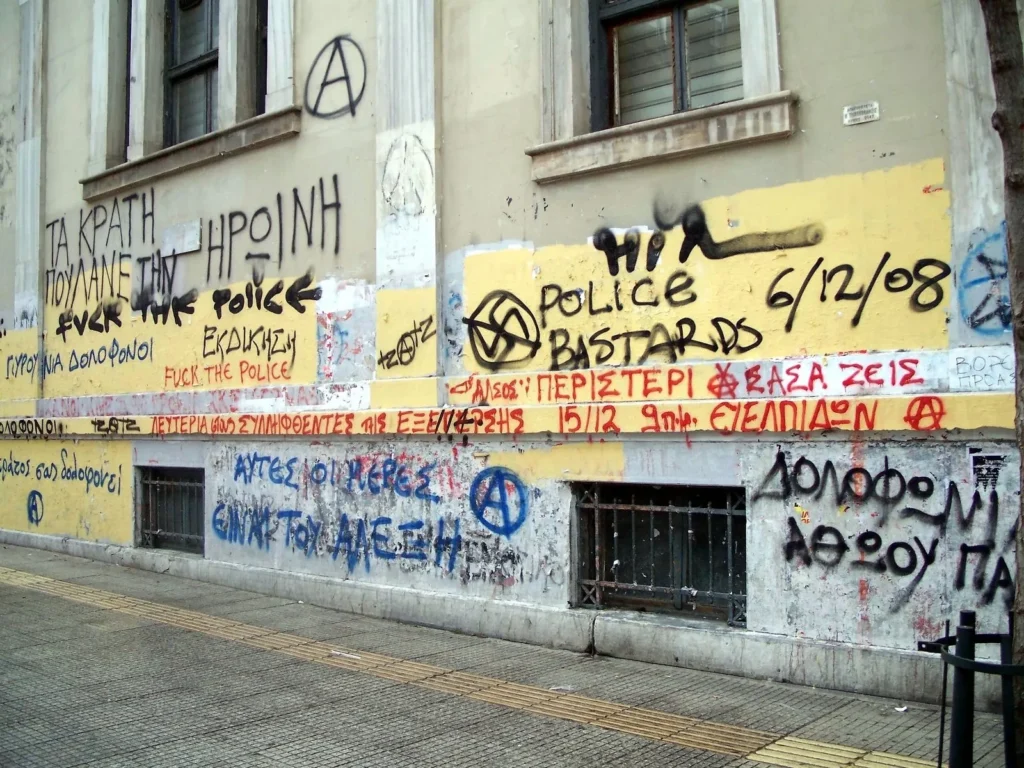
The third is the long economic crisis of the 2010s. Shops closed, buildings emptied and walls became free canvases, while artists had plenty to say about austerity. The City of Athens’ own guide to Psirri describes how gentrification in the early 21st century replaced the old artisan workshops with bars and eateries, and how street art revitalised derelict buildings. That tension, art as protest and art as an attraction for bar-goers and tour groups, runs through every neighbourhood on this page.
Not everything is spontaneous. In Exarchia, residents took over a disused car park in 2009 and turned it into Navarinou Park, now planted with olive trees and a shared vegetable garden. The City of Athens guide says you will recognise it by a large mural by the Italian street artist Blu telling the park’s story. Unlike a shutter or a paste-up, it belongs to the place it describes.
Route 1: Psirri, the original home
Free, 60-90 minutes. Psirri sits just north of Ermou Street and west of Athinas, a few minutes’ walk from Monastiraki. Guides describe it as the original home of street art in Athens, and it is the easiest place to start because it is compact and central. For where to eat and drink while you are there, our Psirri neighbourhood guide covers the tavernas and bars.
Come out of Monastiraki station, cross Ermou and simply wander the grid. The neighbourhood is small enough that you cannot get badly lost, and the side streets matter more than the main ones. Look up as well as along: some of the best work in Psirri is on upper walls and the blank sides of buildings that face over low roofs. Look down too, at painted doorsteps, electricity boxes and bollards.
Timing changes what you see here more than anywhere else. Many Psirri businesses have painted roller shutters, and a painted shutter is only visible when the shop is shut. Walk the streets at 09:00, before the bars and workshops open, or on a Sunday morning, and the neighbourhood is a gallery of closed metal doors. Come at 21:00 on a Friday and the art has rolled up into the ceiling while the tables spill out.
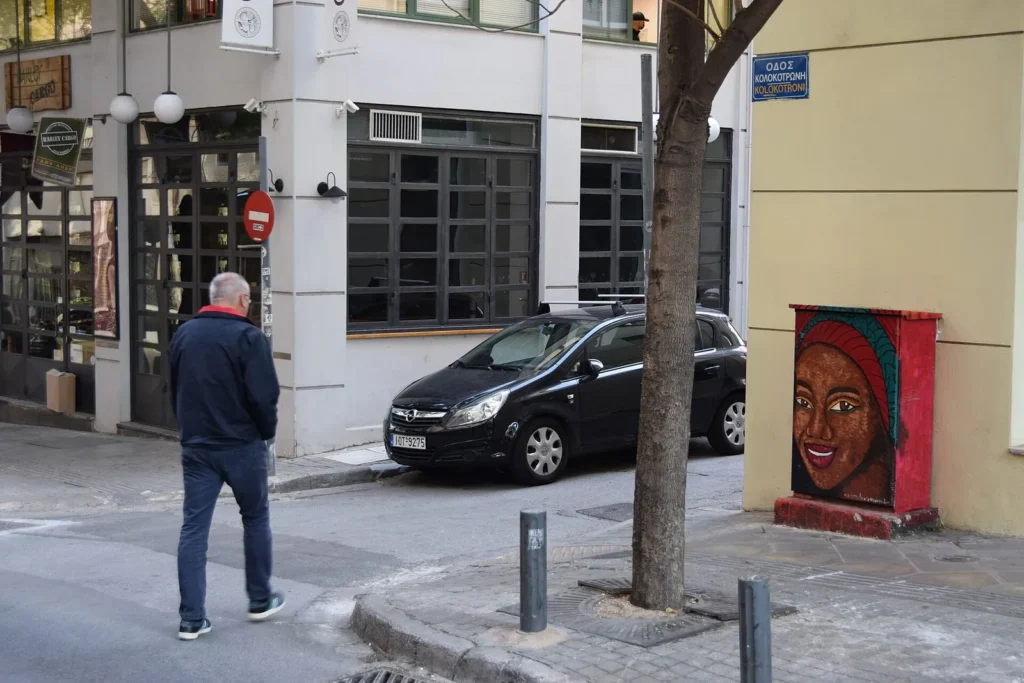
Tour operators point to murals by named Athenian artists in Psirri, and you will find plenty of good, signed work. It is not worth heading to a specific address for a specific piece, though: Psirri is busy, buildings are renovated and walls are repainted, so a work that stood here in 2024 may not be there now. Go with open eyes rather than a checklist.
Plan it: Monastiraki (Lines 1 and 3), then walk north across Ermou. Allow 60-90 minutes. Best before the shops open.
Route 2: Gazi and Kerameikos, the gasworks quarter
Free, 45-60 minutes. Walk west from Psirri along Ermou, past the ancient cemetery of Kerameikos, and you reach Gazi, named for the city gasworks whose buildings went up between 1862 and 1887. Since 1999 the works have been Technopolis, a cultural centre run by the City of Athens, and the old warehouses around it have become clubs, bars and performance spaces. Our Gazi and Kerameikos guide has the full picture of the area after dark.
Gazi’s walls lean towards larger, more deliberate pieces than Psirri’s, the kind planned in advance for a big side wall rather than done in a hurry on a shutter. The streets between Technopolis and the Kerameikos metro station are the place to look, along with the side streets behind the bars. In the daytime the area is quiet, which makes it easier to stand back from a big wall and take it in without a crowd walking through your photograph.
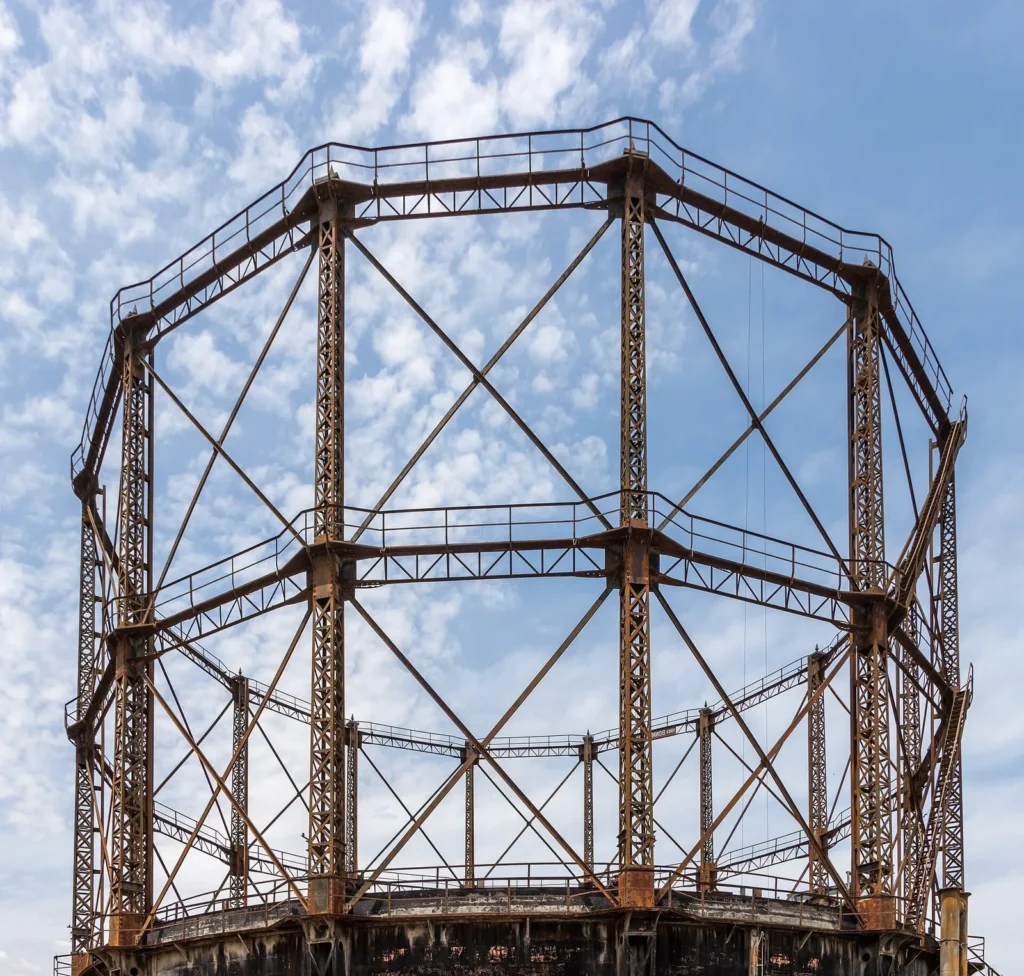
Kerameikos station on Line 3 sits beside Technopolis, which is why Walkative’s pay-what-you-wish street art tour meets at its Technopolis exit. It is also a useful start if you want to walk the routes in reverse and finish in Psirri for dinner.
Plan it: Kerameikos (Line 3). Allow 45-60 minutes. Best for big walls and quieter photography in daylight.
Route 3: Metaxourgeio, the new hotspot
Free, 60 minutes. North-east of Gazi, Metaxourgeio takes its name from an old silk factory, and for decades it was one of the most neglected corners of central Athens. Faded neoclassical mansions stood empty beside tired apartment blocks. That emptiness is exactly what drew painters, and operators now describe Metaxourgeio as the city’s new street art hotspot.
The largest walls here can be very large indeed: whole gable ends, painted from top to bottom. One of the best-known is the owl by Wild Drawing, the artist who signs as WD, called “Knowledge Speaks, Wisdom Listens”, at the corner of Samou and Konstantinou Palaiologou streets. Daily Art Magazine features it among the Athens street art landmarks. The owl is Athena’s bird, so the subject is a neat nod to the city itself, and it shows how artists here borrow from antiquity as readily as from politics.
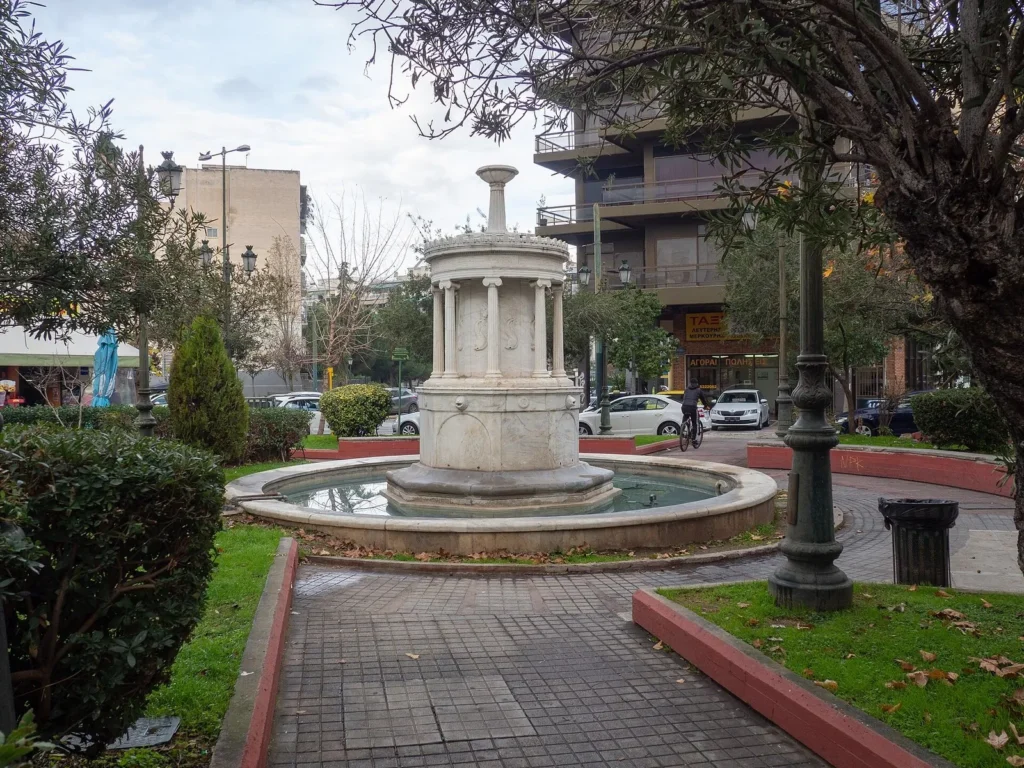
Start from Metaxourgeio station on Line 2 and work outwards through the side streets in every direction. The neighbourhood is residential and some blocks are still rough around the edges. That is not a reason to stay away in daylight, but it is a reason to walk with the same awareness you would bring to any inner-city area, and to keep your camera pointed at walls rather than doorways.
Verdict: if you only have time for one area beyond Psirri, make it this one. The walls are bigger, the crowds smaller, and the sense of a neighbourhood still being painted is strongest here.
Route 4: Exarchia, where the walls argue
Free, 90 minutes. Exarchia is a different experience from the other three. The official city guide describes a neighbourhood whose rebels, with or often without a cause, gave it a reputation for anarchists and radicals, alongside bookshops, record shops, small clubs and live music. Its walls are dense with slogans, posters, stencils and tags, layered so thickly in places that you cannot see the plaster. Some of it is beautiful, much of it is angry, and nearly all of it is about something. Read our Exarchia guide for the cafés and music bars.
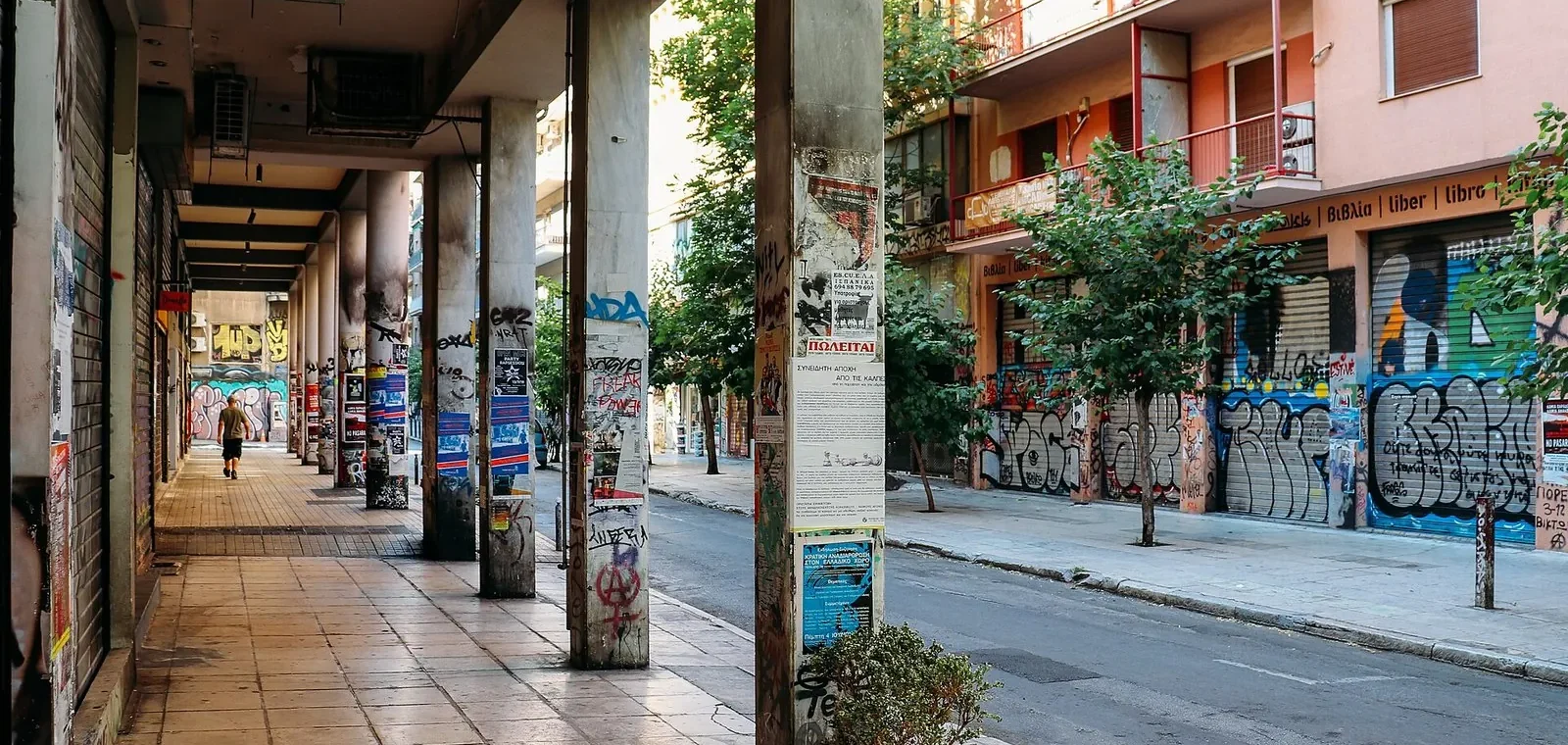
A good loop starts at Panepistimio station on Line 2, or at Omonia (Lines 1 and 2). Walk up to the Polytechnic on Patision Street, then along Stournari Street, whose arcades are wrapped in posters and paint. From there head into Exarchia Square, the noisy centre of the neighbourhood, and on to Navarinou Park at 26 Zoodohou Pigis, where you can look for Blu’s mural. Finish on Kallidromiou Street, which the city guide calls the heart of Exarchia: it climbs the western slope of Lycabettus under mulberry trees, and on Saturday mornings it hosts the neighbourhood’s laiki, the weekly farmers’ market.
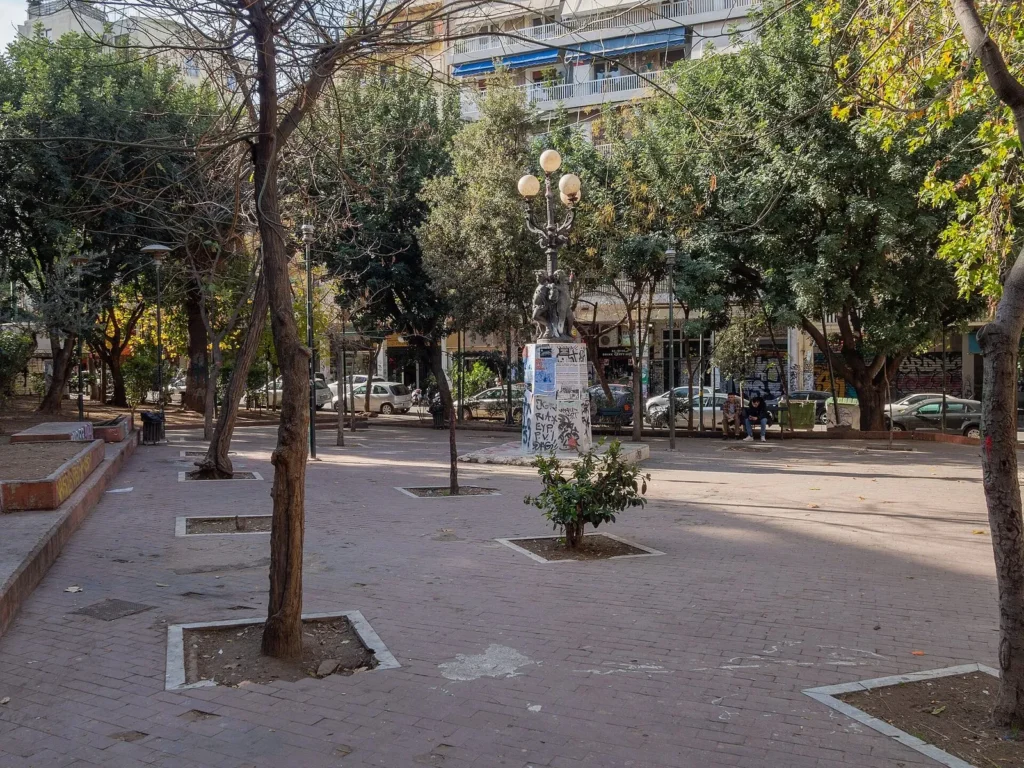
The memorial at Tzavela and Messolonghiou, a short walk from the square, is not a sight in the usual sense. It is a place of mourning for a teenager killed by a police officer, and people treat it that way. Stop if you want to, quietly, and leave the camera down.
Be clear about the risks. The city’s own guide warns that clashes with police sometimes break out spontaneously in Exarchia, and that demonstrations can turn into street clashes. Two dates matter above all: the days around 17 November, the Polytechnic anniversary, and 6 December, the Grigoropoulos anniversary. In recent years the December marches have ended in clashes and tear gas in the streets around Exarchia; the 2025 march drew more than 5,000 people. Walk Exarchia on any other day, in daylight, and the main hazard is spending too long in a record shop.
Plan it: Panepistimio (Line 2) or Omonia (Lines 1 and 2). Allow 90 minutes. Best on a weekday afternoon or a Saturday morning for the market. Skip 6 December.
A one-day self-guided Athens street art tour
All four areas fit into one long day on foot, with a single metro hop. This order follows the light and the shutters, and it ends where the evening is liveliest.
- Psirri, early: start around 09:00 from Monastiraki, while the shutters are still down. Coffee in a side street, then a slow loop of the grid.
- Kerameikos and Gazi, mid-morning: walk west along Ermou past the ancient cemetery to Technopolis, and spend an hour in the streets around it.
- Metaxourgeio, late morning: walk north-east into Metaxourgeio and work the side streets for the big walls. Lunch nearby.
- Metro hop: take Line 2 from Metaxourgeio towards the centre and get off at Panepistimio, two stops on, past Omonia.
- Exarchia, afternoon: Polytechnic, Stournari, Exarchia Square, Navarinou Park and Kallidromiou, then stay for an early dinner or a drink.
That is a lot of walking on uneven pavements, so wear proper shoes. If you prefer a shorter day, Psirri plus Metaxourgeio is the best half-day pairing: close together, varied, and easy to reach from the centre. For a broader route that mixes the ancient sights with the modern city, our self-guided Athens walking tour covers the historic centre.
Metro hours and engineering works change during the year. Check stasy.gr or oasa.gr for the current timetable before you rely on a late train.
When is the light good for street art photography?
Athens streets are narrow and the buildings tall, which means walls spend much of the day in shade. That is not a bad thing. Even, shaded light shows paint colours more truly than harsh sun, which bleaches them and throws hard shadows across a mural. An overcast winter day, which Athens does get, is ideal for photographing walls.
In summer, avoid the middle of the day: the glare is fierce, the heat on the pavement is worse, and you will be squinting at everything. Early morning works best, both for the light and because the streets are empty. In late autumn and winter the sun sits low, so wide streets and squares catch raking light that brings out texture in older, peeling work, while the side streets stay soft and shaded all day.
Shutters, again, decide a lot. A morning or a Sunday walk shows them; a weekday afternoon hides many of them. If photography is your main reason for going, Sunday morning in Psirri and Gazi is hard to beat.
Street art etiquette: how to look without being a nuisance
These are people’s homes and workplaces, not an open-air museum, and a few habits make a difference.
- Don’t touch, peel or add. Paste-ups and stencils are fragile, and adding your own tag is vandalism wherever you are from.
- Ask before you photograph people. That goes for anyone sitting in a doorway, working in a shop or standing by a wall, and doubly in Exarchia, where many people do not want to appear in tourists’ photographs.
- Keep doorways and pavements clear. Pavements are narrow; step into a gap rather than blocking someone’s front door for a shot.
- Leave occupied buildings alone. Squats and self-managed spaces are not attractions. Look at the outside walls, but don’t walk in uninvited.
- Credit the artist. If a piece is signed and you share it online, name the artist. It costs nothing, and it is how artists get found.
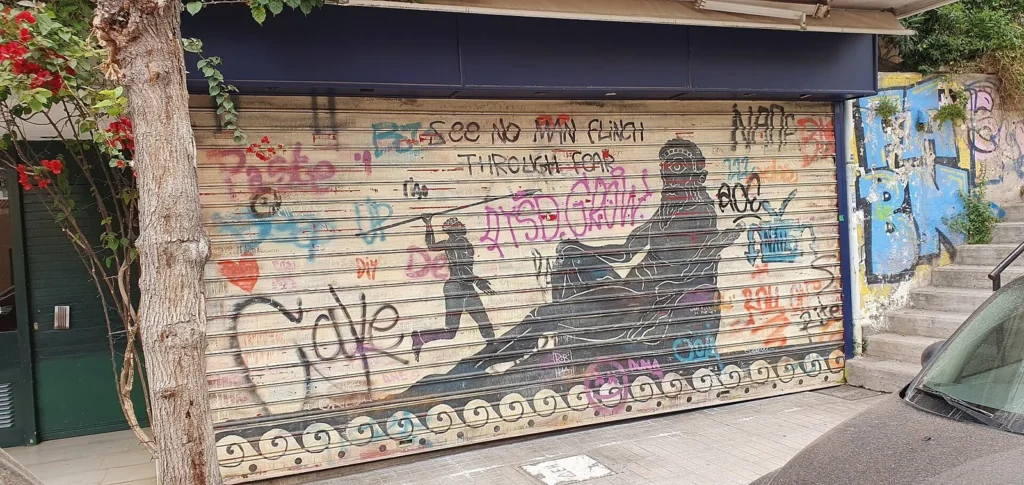
Remember too that what reads as art to a visitor can read as damage to the person who owns the wall. Many Athenians are tired of tags on their front doors. You will get further, and feel better, if you notice the difference between a commissioned mural and a scrawl across a freshly painted neoclassical facade.
Guided Athens street art tours: are they worth it?
You can see plenty on your own, but a guide adds what the walls do not tell you: who painted what, which pieces were commissioned, and what the slogans mean. Two operators run regular walks.
Alternative Athens street art tour
From €49 per person, 3 hours. Alternative Athens’ street art tour runs at 10:00 daily, with a second departure at 17:30 from April to October only, so in November and winter it is the morning walk alone. It runs in English and French with groups of up to 12, and the route covers Gazi, Metaxourgeio and Psirri. The meeting point is in front of the Association of Greek Archaeologists, and the operator sends exact directions when you book. It does not run on 1 January, 25 and 26 December or Easter Sunday; check the tour page for its other closure dates. Private bookings are also possible.
Walkative alternative Athens tour
Pay what you wish, about 2 hours 45 minutes. Walkative’s street art and counterculture walk meets at the Technopolis exit of Kerameikos metro station, where the guide carries a yellow umbrella. It runs in all weather unless conditions are extreme, booking is obligatory, and groups of seven or more cannot join. Pay what you think the walk was worth at the end.
Verdict: if you care about the stories behind the walls, a guide is worth it, especially in Metaxourgeio and Gazi where the best pieces are spread out. If you mainly want photographs, walk it yourself on a Sunday morning and spend the money on lunch. Beyond street art, our free things to do in Athens list has more ideas that cost nothing.
What to skip
Chasing old mural lists. Many street art lists online were written years ago and updated lightly since. Hunting down a specific piece from a 2018 blog is a good way to spend an hour staring at a freshly whitewashed wall.
Plaka and the Acropolis slopes as a street art destination. There is a little paint in the backstreets, but these are protected historic areas and they are not where the scene is. Go for the ancient sites, not the walls.
Exarchia after dark with a camera. The bars are fine and the neighbourhood is full of people at night, but it is the wrong time to be walking around photographing walls, buildings and strangers.
Tag-only streets. Some streets near Omonia and along the main avenues are covered in tags and little else. They tell you something about the city, but they are not why you came.
Street art fits neatly into a wider day in the city, and there is plenty more on our full Athens things-to-do guide when your feet need a rest from the pavements.
Athens Street Art FAQ
Where is the best street art in Athens?
The work concentrates in four neighbourhoods: Psirri, just north of Monastiraki; Gazi and Kerameikos, around the Technopolis gasworks; Metaxourgeio, north-east of Gazi; and Exarchia, the student and activist quarter near the Polytechnic. Metaxourgeio has many of the biggest walls, Exarchia the most political ones. Individual pieces change often, so explore the streets rather than hunting one mural.
Is there a free street art tour in Athens?
Walkative runs a pay-what-you-wish street art and counterculture walk of about 2 hours 45 minutes, meeting at the Technopolis exit of Kerameikos metro station. Booking is obligatory and groups of seven or more cannot join. You decide what to pay at the end. Walking the routes yourself costs nothing at all.
How much is the Alternative Athens street art tour?
Alternative Athens advertises its three-hour street art tour from €49 per person on its own page in 2026. It runs at 10:00 daily, with an extra 17:30 departure from April to October, in English and French for groups of up to 12. It does not run on 1 January, 25 and 26 December or Easter Sunday, so check its page for other closure dates.
Can I do a self-guided street art tour in Athens?
Yes, and it is easy. Start early in Psirri from Monastiraki station, walk west along Ermou to Gazi, continue north-east into Metaxourgeio, then take Line 2 to Panepistimio for an afternoon in Exarchia. That covers all four areas in a day. Go on a Sunday morning if you want to see the painted shop shutters.
Is Exarchia safe to visit for street art?
In daylight on an ordinary day, most visitors walk Exarchia without trouble. The city’s own guide warns that clashes with police sometimes break out and that demonstrations can turn violent. Avoid the area on the anniversaries of 17 November and 6 December, don’t photograph people without asking, and leave squats and occupied buildings alone.
Is street art legal in Athens?
Some large murals are painted with the owner’s permission, and some are commissioned. Much of what you see, including most tags and slogans, is painted without permission. As a visitor, the rule is simple: look, photograph and share with credit, but never add your own paint or peel off someone else’s work.
Related Athens Guides
- Things to Do in Athens: the full picture, from the Acropolis to the hills.
- Psirri Neighbourhood Guide: where to eat and drink after the morning walk.
- Exarchia Neighbourhood Guide: bookshops, cinemas and music bars.
- Gazi and Kerameikos Guide: Technopolis, the ancient cemetery and the nightlife.
- Athens Photography Spots: more places to point a camera.
Sources and How We Checked
Details were checked on 9 November 2026 against the official and operator sources below, and compiled from them rather than from other travel lists; no first-hand visit is claimed.
- City of Athens: Exarchia neighbourhood guide and This is Athens
- Technopolis City of Athens: official site
- Alternative Athens: Athens Street Art Tour
- Walkative: Alternative Athens Tour: street art, counterculture
- Sigmalive: Grigoropoulos anniversary march, December 2025
- Daily Art Magazine: Street art in Athens (Wild Drawing owl)
- STASY and OASA: metro operator and Athens public transport
Athens Tourism Guide is an independent publication. We are not affiliated with the Hellenic Ministry of Culture, OASA, the Greek National Tourism Organisation or any business named here, and no business paid to be included.
Photo Credits
- Anti-police graffiti, December 2008: photo by Badseed, via Wikimedia Commons (CC BY-SA 4.0)
- Painted utility box near Psirri: photo by Jean Housen, via Wikimedia Commons (CC BY-SA 4.0)
- Gasholder at Technopolis, Gazi: photo by Photograph by Mike Peel (www.mikepeel.net)., via Wikimedia Commons (CC BY-SA 4.0)
- Fountain in Metaxourgeio: photo by C messier, via Wikimedia Commons (CC BY-SA 4.0)
- Exarchia Square: photo by C messier, via Wikimedia Commons (CC BY-SA 4.0)
- Painted shop shutter in Exarchia: photo by Yair-haklai, via Wikimedia Commons (CC BY-SA 4.0)
- Stournari Street, Exarchia (featured image): photo by Stolbovsky, via Wikimedia Commons (CC BY-SA 3.0)