This article contains advertising. Some of the hotel, tour, activity, flight and transfer links in it are paid links: if you book through one, we get a commission from the booking company, and your price is the same either way. It never affects what we recommend. Affiliate disclosure
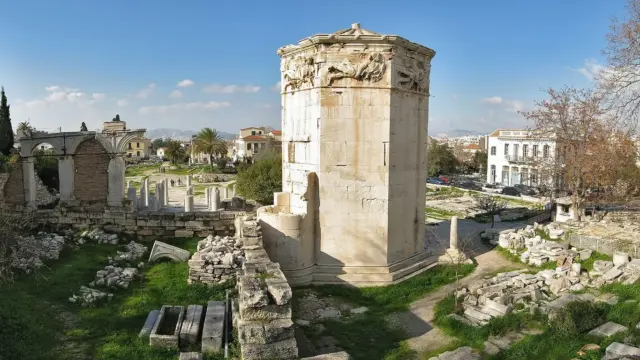
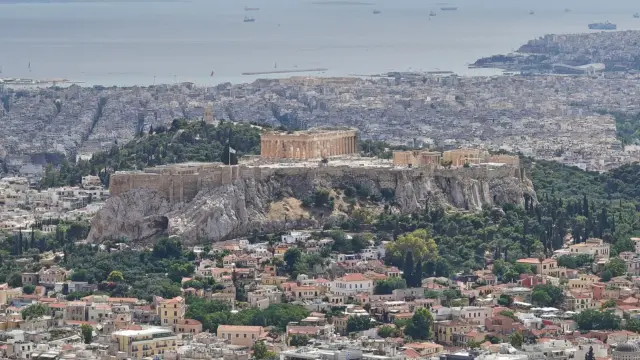
If the Acropolis was the spiritual heart of ancient Athens, the Ancient Agora was its political, commercial, and intellectual soul. This was the centre of Athenian civic life: the law courts and government offices stood here, Socrates argued with passers-by, and the city’s daily business actually happened. Today the archaeological park sits at the northwestern foot of the Acropolis and contains the Temple of Hephaestus, one of the best-preserved ancient Greek temples. This is the complete Ancient Agora of Athens guide for 2026 with tickets, opening hours, the key monuments explained, and practical advice on combining it with your Acropolis visit.
The site is one of the most rewarding hours you can spend in Athens for a third of the cost of the Acropolis.

What Is the Ancient Agora?
The Ancient Agora (Greek for “gathering place”) was the central public square of Athens from the 6th century BC through the Roman period. It served simultaneously as the city’s central market, civic assembly point, judicial centre, and religious sanctuary. The city’s archons (chief magistrates) had their offices here, the courts heard cases (Socrates was indicted at the Royal Stoa in 399 BC), philosophers gathered in the porticos, the citizens’ assembly normally met on the Pnyx hill nearby, and most importantly for visitors, the city’s most architecturally significant building, the Temple of Hephaestus, was constructed on the western hill.
For broader context, see our Athens Historical Sites pillar, our complete Acropolis guide, and our things to do guide.
Ancient Agora 2026 Tickets & Prices
Standard Ticket
€20 full price. Non-EU visitors up to age 18 enter free with a passport. EU citizens under 25 free year-round with ID. Children under 6 free.
Combined Ticket (No Longer Sold)
The Ancient Agora was one of the seven sites on the Ministry of Culture’s €30 five-day combined ticket, no longer sold (it covered the Acropolis, Ancient Agora, Roman Agora, Hadrian’s Library, Kerameikos, Temple of Olympian Zeus, and Aristotle’s Lyceum). Every site now sells its own ticket, so budget €20 for the Ancient Agora and €30 for the Acropolis.
Free Admission Days
The Ancient Agora is free on the same days as the Acropolis: March 6, April 18, May 18, September 26-27 and October 28. The first and third Sundays of each month from 1 November to 31 March are free too.
Opening Hours for 2026
Summer (April 1 to October 31)
Daily 08:00 to 20:00 from April to August. Closing is 19:30 on 1-15 September, 19:00 on 16-30 September, 18:30 on 1-15 October and 18:00 on 16-31 October. Last entry is 20 minutes before closing, so 19:40 from April to August.
Winter (November 1 to March 31)
Daily 08:00 to 17:00, weekends included. Last entry is 20 minutes before closing, at 16:40.
Closed Dates
January 1, March 25, May 1, Easter Sunday, December 25-26.
How to Get to the Ancient Agora
By metro: Monastiraki (green and blue lines) or Thissio (green line). The Thissio entrance is shorter to the main sights. By foot: a short walk from Monastiraki Square, from Plaka and from the Acropolis south entrance.
2026 Entrance Update
Entrance arrangements at the Agora can change, so check the Ancient Agora page on hh.gr before you go. On foot, Apostolou Pavlou Street (the pedestrianised promenade between Thissio metro and the Acropolis south entrance) is the natural approach.
The Key Monuments to See
1. Temple of Hephaestus (Theseion)
The highlight of the site and one of the best-preserved ancient Greek temples. Built 449-415 BC and dedicated to Hephaestus (god of metalworking) and Athena Ergane (patron of crafts). 34 surviving outer Doric columns; the structure remains largely intact after centuries of changing use. The sculpted metopes around the exterior depict the labours of Heracles and Theseus. Walk slowly around the temple; the play of light through the columns is one of the most photogenic experiences in Athens.
Guided tours: Guided tours that take in the Ancient Agora and the Temple of Hephaestus.
2. Stoa of Attalos (and the Agora Museum)
The reconstructed stoa is a two-storey colonnade about 115 metres long, built of Pentelic marble and limestone, a gift to Athens in the 2nd century BC from Attalos II of Pergamon, who reigned in 159-138 BC. Destroyed in the 3rd-century AD Herulian invasion, it was fully reconstructed in the 1950s by the American School of Classical Studies. Today it houses the on-site Agora Museum, with finds from more than 5,000 years of habitation including ostraka (the pottery shards used in Athenian ostracism votes) and a kleroterion, the machine used to select jurors. Allow 45 minutes in the museum.
3. The Odeon of Agrippa
A 1st-century-BC Roman concert hall built in the middle of the Agora by the Roman general Marcus Agrippa. Originally seated around 1,000; giant and triton figures were added to its later northern facade and were reused in the entrance of a fifth-century palace.
4. The Panathenaic Way
The ancient processional road that ran from the Dipylon gate of the city wall, through the Agora, and up to the Acropolis was the route of the annual Panathenaic procession. Sections of the original road surface are visible throughout the Agora. The procession scene depicted on the Parthenon frieze (now at the Acropolis Museum) shows this exact route.
5. The Bouleuterion & Tholos
The Bouleuterion housed the 500-member Athenian Boule (council) that ran the day-to-day government. The adjacent Tholos was the round building where the 50 prytaneis (executive committee members) dined together, and at least seventeen stayed overnight so officials were available at any hour. The foundations of both are clearly marked.
6. Church of the Holy Apostles (10th century AD)
A small Byzantine church preserved within the Agora archaeological zone. Built around the late 10th century partly over a 2nd-century Roman nymphaion, it survived the Ottoman occupation as the parish church for the small Plaka village. The interior 17th-century frescoes are well preserved.
7. The Hephaisteion Garden
The reconstructed ancient garden around the Temple of Hephaestus, planted with the same species (pomegranates, myrtles, laurels) that the ancient Athenians would have planted. Particularly beautiful in spring and autumn.
Best Time of Day to Visit
Late afternoon (3-6 PM) is the most beautiful time, when the soft light catches the Temple of Hephaestus and the columns of the Stoa of Attalos at the perfect angle. Morning (8-10 AM) is the quietest time with the coolest temperatures. Avoid midday in summer (11 AM-2 PM); the open archaeological park has limited shade.
How Long to Spend
Allow 90 minutes minimum, 2-3 hours for a thorough visit including the on-site Stoa of Attalos museum. Combine with a morning Acropolis visit for a perfect classical Athens half-day; the Agora is the natural second stop after the Acropolis.
Practical Tips
Wear comfortable walking shoes with grip; the paths are largely unpaved compressed gravel. Bring water; there are drinking fountains near the entrance but limited shade. The site is mostly flat with one small hill (the Kolonos Agoraios where the Temple of Hephaestus stands). Photography is permitted everywhere; no flash inside the Stoa of Attalos museum. Tripods are prohibited at the Stoa interior; allowed on the archaeological grounds.
Accessibility
The Ancient Agora is partially wheelchair-accessible. The main paths near the entrance are flat and paved; the Stoa of Attalos has a small ramp at one entrance. The Temple of Hephaestus sits on a small hill reached by uneven steps. The Apostolou Pavlou Street entrance is the most accessible.
Where to Eat & Drink Near the Agora
The Adrianou Street side of the Agora has plenty of cafés and restaurants. For traditional Greek food: Maiandros and the smaller tavernas on Adrianou. For coffee: the smaller cafés on Apostolou Pavlou. For rooftop drinks: A for Athens, a rooftop cocktail bar in Monastiraki, has Acropolis views.
Combining the Ancient Agora with the Acropolis
The classic morning combination: 8 AM Acropolis (90 minutes), 10 AM lunch coffee in Plaka, 11 AM Ancient Agora (90-120 minutes). Total cost: €50 (€30 Acropolis, €20 Ancient Agora). The Acropolis Museum can be added in the afternoon for a 4-5 hour full classical Athens experience.
The Ancient Agora’s Role in Athenian Democracy
The Ancient Agora was the political and legal centre of ancient Athens and played a central role in the development and practice of Athenian democracy. The Pnyx (a separate hill to the west) was where the general assembly met to vote on laws, but the day-to-day administration of the government, the council, the courts, the magistrates’ offices, the official record-keeping happened in the Agora. The famous Athenian practice of “ostracism” (annual vote to exile one citizen by writing their name on a pottery shard called an ostracon) happened here; many original ostraka are on display in the Stoa Museum, including some with the name of Themistocles, the hero of the Battle of Salamis.
Frequently Asked Questions
What is the Ancient Agora of Athens?
The Ancient Agora was the central public square of Athens from the 6th century BC through the Roman period. It served as the city’s market, civic assembly point, judicial centre, and religious sanctuary, and is considered the birthplace of democracy.
How much does the Ancient Agora cost?
€20 standard ticket; €10 reduced rate. The old combined ticket for seven sites is no longer sold, so the Ancient Agora needs its own ticket. Free for EU citizens under 25 with ID, and for everyone on 6 March, 18 April, 18 May, the last weekend of September, 28 October and the first and third Sundays of each month from November through March.
What are the Ancient Agora opening hours?
April to October: 08:00 to 20:00 daily from April to August, then closing at 19:30 (1-15 September), 19:00 (16-30 September), 18:30 (1-15 October) and 18:00 (16-31 October); last entry 20 minutes before closing. Winter (November-March): 08:00 to 17:00 daily, last entry 16:40. Closed Greek public holidays (January 1, March 25, May 1, Easter Sunday, December 25-26).
What is the best-preserved temple at the Ancient Agora?
The Temple of Hephaestus (449-415 BC) on the western Kolonos Agoraios hill is one of the best-preserved ancient Greek temples, with its 34 outer Doric columns and most of the structure still standing.
How long does it take to see the Ancient Agora?
Allow 90 minutes minimum, 2-3 hours for a thorough visit including the on-site Stoa of Attalos museum. The site is much smaller than visitors expect and fits naturally into a classical Athens half-day with the Acropolis.
What’s in the Stoa of Attalos museum?
The on-site museum displays finds from more than 5,000 years of habitation including original ostraka used in Athenian ostracism votes (some bearing the names of famous historical figures), bronze armour, marble sculptures, a kleroterion (jury-selection machine), and everyday objects from classical Athens.
Where is the entrance to the Ancient Agora?
Entrance arrangements can change, so check the Ancient Agora page on hh.gr before you go. On foot, Apostolou Pavlou Street (the pedestrianised promenade between Thissio metro and the Acropolis south slope) is the natural approach. Thissio metro is the shortest walk to the main monuments.
Plan the Rest of Your Athens Trip
For more historical sites, see our pillar guide to Athens historical sites and museums, our complete Acropolis guide, our Acropolis Museum guide, our top 25 attractions, our self-guided walking tours, and our transport guide.