This article contains advertising. Some of the hotel, flight and transfer links in it are paid links: if you book through one, we get a commission from the booking company, and your price is the same either way. It never affects what we recommend. Affiliate disclosure
Most of what trips people up in Athens is small and fixable. These are the Athens travel tips to know before you go: cards work almost everywhere, but kiosks and market stalls still want cash; the tap water is safe to drink; sockets take two round pins; 10-15% is a normal tip at the table; and the Acropolis is best booked for its first timed slot, not the middle of the day. Carry your passport rather than a photocopy, and never let a taxi pull away without the meter running.
The rest is detail, and detail is where visitors lose money and afternoons: a neighbourhood shop that shut at 15:00 on a Wednesday, a public holiday that closes the museum you planned the day around, a transport strike called at short notice. This page is for first-time visitors and for anyone whose last trip was before 2025, when several prices and rules changed. The caveat that matters most: Athens is a working capital, not a resort, so its holidays, marches and August closures shape your days more than any brochure admits. Details checked 26 September 2026 against the City of Athens visitor guide, the Hellenic Ministry of Culture, the Acropolis Museum, OASA, EYDAP, the UK Foreign Office and the IEC.
Athens travel tips to know before you go, at a glance
| Topic | The short answer | Worth knowing |
|---|---|---|
| Money | Euro. Cards and contactless work in most shops, restaurants, hotels and museums | Keep €50-100 in small notes for kiosks, markets, tips and the odd cash-only taverna |
| Tipping | 10-15% in cafés and restaurants; round up taxi fares or add a couple of euros | Leave table tips in cash so they reach the staff |
| Plugs and power | Types C and F (two round pins), 230V, 50Hz | UK, Irish, North American and Australian plugs all need an adapter |
| Tap water | Safe to drink in Athens | Ask your host before drinking from the tap on the islands |
| Emergencies | 112 for any emergency; 166 for an ambulance | Switch on emergency alerts on your phone |
| Time zone | Two hours ahead of London, one ahead of Paris and Berlin | Greece changes its clocks on the same dates as the rest of the EU |
| Shops | Split hours on Tuesday, Thursday and Friday; almost all shops shut on Sunday | Shops in the centre mostly stay open all day |
| Acropolis | €30 (reduced €15) all year, timed entry | tickets.hh.gr (older links say hhticket.gr) is the only official online seller |
| Airport to centre | Metro €9, or the X95 express bus for €5.50; taxis charge a fixed flat fare | The €1.20 90-minute ticket is not valid on airport routes |
| Hotel bill | Climate Crisis Resilience Fee of €2-15 per room per night, April-October | Usually paid at checkout, on top of any prepaid rate |
| Book ahead? | Yes for Acropolis slots from May to October, and for rooms at Orthodox Easter and in August | Tickets for most other sites and museums can be bought on the day |
| Language | English widely spoken in hotels, restaurants and shops | Signs carry Latin-alphabet names, with spellings that vary |
| Driving | Not worth it in the city: busy, fast traffic and a walkable centre | Hire a car only for trips beyond Athens |
| Best time | April-May and late September-October | Mid-August: many Athenians leave and good restaurants close |
What’s changed in 2026?
If your picture of Athens comes from a guide written before 2025, four things have moved, and older blogs still repeat all of them.
- No more free first Sundays at the Acropolis. The winter free Sundays have gone from the Ministry of Culture’s list. The Acropolis is now free on 6 March, 18 April, 18 May, the last weekend of September and 28 October. The next of those after this page goes live is 28 October 2026, a public holiday, so expect the hill at its busiest. Other museums set their own rules: the National Archaeological Museum still has free first and third Sundays from November to March.
- One Acropolis price all year. Entry costs €30, or €15 reduced, in every season, and every ticket carries an entry time. The only official online seller is the Ministry’s Hellenic Heritage site, tickets.hh.gr, and there is no official skip-the-line ticket, whatever a reseller’s banner says. A timed ticket from the ministry already is the fast lane.
- A bigger nightly charge on your bill. The Climate Crisis Resilience Fee, which replaced the old overnight-stay tax, went up on 1 January 2025. In a 4-star hotel between April and October it is now €10 per room per night. The full table is in the money section below.
- Heat closures are now routine. In a heatwave the ministry shuts the Acropolis through the hottest hours. On 8 July 2025, with temperatures above 40°C, it stayed closed until 17:00, after similar closures in 2023 and 2024. A midday summer slot is a gamble you don’t need to take.
The ticketing detail, and the order to see the sites in, is covered properly in our Athens trip-planning guide.
Money: cards, cash and the nightly fee
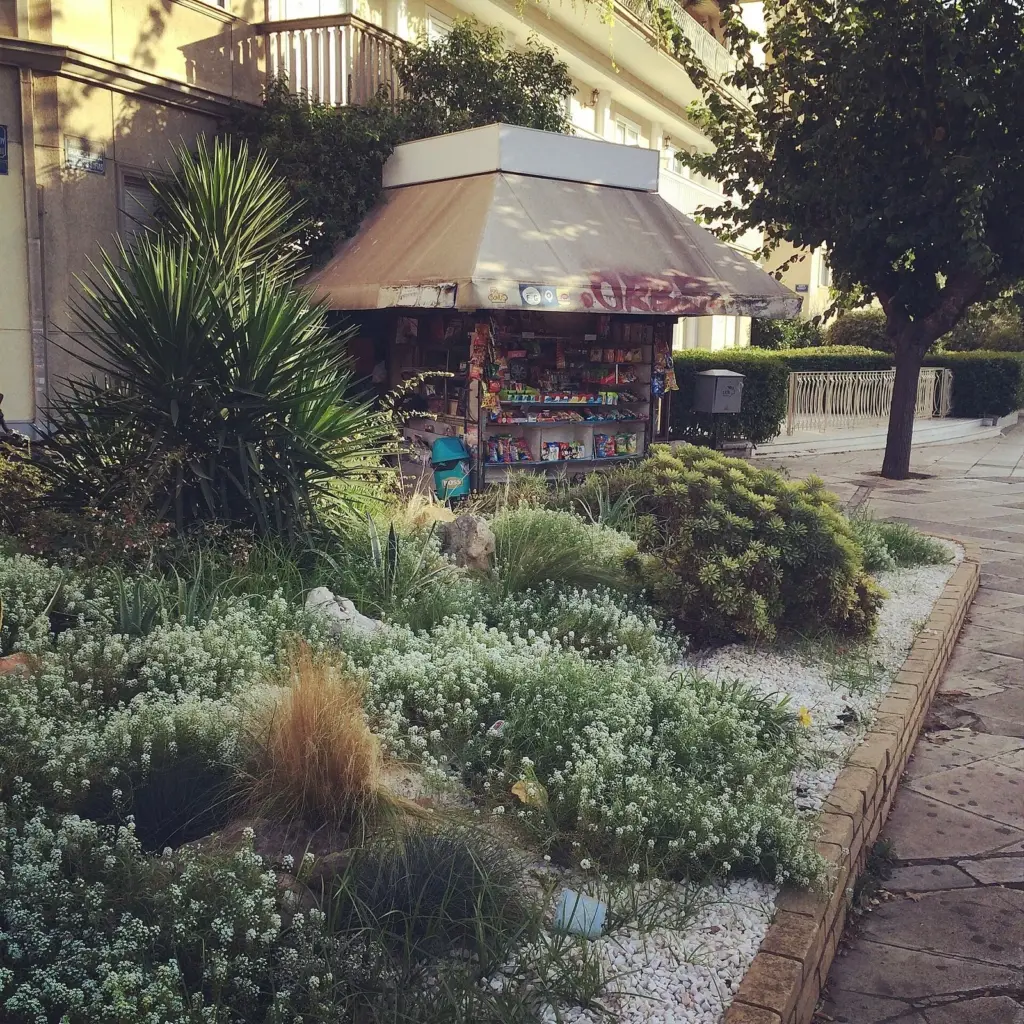
Short answer: pay by card, carry €50-100 in cash. Contactless card and phone payments are normal in Athens shops, restaurants, hotels and museums, and as of September 2026 they work on public transport too: tap a Visa or Mastercard, or a phone, on a metro, tram or bus validator and you don’t need a ticket. The Acropolis Museum accepts cash or cards, including Visa, Mastercard, Maestro and UnionPay. Cash earns its keep in smaller places: the periptero (pavement kiosk) where you buy a bottle of water, a laiki street-market stall, a bakery at 07:30, a candle in a church, and the tip you leave on the table. Carry €5, €10 and €20 notes: a €50 is fine in a supermarket, but a €100 or €200 is a nuisance almost everywhere, and a kiosk with a queue behind you won’t thank you for one.
Two habits save real money. First, withdraw from ATMs built into bank branches; free-standing machines in souvenir streets can add a flat fee of their own on top of whatever your bank charges. Second, when a card terminal or ATM offers to charge you in pounds, dollars or any home currency, say no and pay in euros. That offer, called dynamic currency conversion, bakes a worse exchange rate into the price, and it’s an easy way to overpay without noticing.
By law, a restaurant must give you an itemised bill, and you should get a receipt for anything you buy. Read the bill before paying rather than after: bread, bottled water and a cover charge can each appear as separate lines, and they’re easier to query while the waiter is still at the table.
The Climate Crisis Resilience Fee
Every hotel room, apartment and short-term rental in Greece adds this fee per room, per night, whatever the number of guests. It’s charged to you, usually at checkout, and it applies even when you prepaid the room through a booking site. These rates have applied since 1 January 2025:
| Where you stay | April-October, per night | November-March, per night |
|---|---|---|
| 1-2 star hotel | €2 | €0.50 |
| 3-star hotel | €5 | €1.50 |
| 4-star hotel | €10 | €3 |
| 5-star hotel | €15 | €4 |
| Furnished rooms and apartments | €2 | €0.50 |
| Short-term rental | €8 (€15 for a detached house over 80 m²) | €2 (€4) |
A week in a 4-star hotel in July therefore adds €70 to the bill; the same week in February adds €21. Treat the fee as part of the room price when you compare places, and see what a trip to Athens costs for a full daily budget.
Tipping: what’s normal?
Short answer: 10-15% at the table for good service, small change elsewhere. That’s the City of Athens’ own guidance for cafés and restaurants, and it works as a ceiling rather than a rule. In a taxi, round up the fare or add a couple of euros. Hotel porters and hairdressers get a tip too, and so does anyone who has just carried your suitcase up four floors of a hotel without a lift.
Leave table tips in cash even when the bill went on a card: coins left on the tray are the surest way to reach the person who served you. Round sums are normal. On a €38 dinner for two, leaving €42 or €45 is right; nobody expects the percentages printed on American receipts, and nobody will chase you down the street for leaving 5% after an indifferent lunch. A coffee drunk standing at a counter needs nothing extra.
Service is unhurried on purpose. The bill won’t arrive until you ask for it, so catch the waiter’s eye and ask for to logariasmo, parakalo (the bill, please). Nobody will hurry you out, and lingering an hour over a single frappé is entirely normal.
Plugs and power
Short answer: bring a European two-pin adapter. Greek sockets take plug types C and F, the round two-pin plugs used across most of continental Europe, and the supply is 230V at 50Hz. Visitors from the UK and Ireland, North America and Australia all need an adapter; most visitors from elsewhere in the EU need nothing.
Check the small print on each device before you pack it. Phone, tablet, camera and laptop chargers marked 100-240V run happily on Greek current with just an adapter. Hair dryers, straighteners and some electric toothbrushes built only for 110-120V won’t, and a cheap voltage converter tends to cost more in scorched hair than it saves. If yours isn’t dual-voltage, leave it at home.
Older hotel rooms can be short of sockets, often with one beside the bed and none near the mirror. One adapter feeding a small multi-way extension or a USB charging hub solves that for a whole family. Our Athens packing list covers the rest of the kit.
Water: tap or bottled?
Short answer: the tap water in Athens is safe to drink. EYDAP, the city’s water company, states that the drinking water it supplies fully meets the Greek legal standard for water intended for human consumption. It draws raw water from the Mornos, Evinos, Yliki and Marathon reservoirs and runs about 120,000 quality analyses a year in accredited laboratories, checking 19 chemical and 6 microbiological parameters.
Safe isn’t the same as delicious. Athens water can taste faintly of chlorine, and in an old apartment block it has been sitting in old pipes, so run the tap for half a minute before filling a bottle, or chill a jug overnight. Bottled water is on sale at every kiosk, but in the city you don’t need it.
In summer you’ll drink more than you expect. A 1.5-litre bottle refilled at your hotel before the Acropolis saves money and a pile of plastic. The answer changes once you leave Attica: some islands rely on desalination or tanker deliveries, so ask your host there before drinking from the tap.
What counts as rude in Athens?
Very little, if you follow a handful of customs that Athenians care about more than rules.
Churches and monasteries. Cover your shoulders and knees. The City of Athens’ own advice is blunt: no hot pants or crop tops in churches or monasteries. A light scarf solves both the dress code and the midday sun, and it weighs nothing. If a service is under way, stand at the back, keep your voice low and leave the flash off. Lighting a candle is welcome, and a coin in the box beside them is the custom.
Ancient sites. Wear flat shoes with grip. The marble on the Acropolis has been polished by millions of feet and is slippery even when dry, and the city’s guide specifically warns off high heels. Don’t climb on or lean against the monuments, and don’t pocket so much as a pebble.
Haggling. Bargaining is far less accepted than it used to be. In a shop with prices on the goods, the price is the price. At the flea market, asking whether there’s a better price for two items is fine; a long, theatrical negotiation over a €6 fridge magnet is not.
Meal times. Athenians eat late, and restaurant kitchens stay open until well after midnight. Lunch starts around 14:00, and a taverna that’s half empty at 19:30 will be full at 22:00. Eat on local time and you get the livelier room.
The toilet-paper sign. Many bathrooms in the city ask you not to flush paper. It’s meant literally, because the sewage system is old: use the bin provided. Newer hotels may say otherwise, so follow the sign in front of you.
Gestures and words. An open palm thrust towards someone’s face, the moutza, is an insult; an ordinary wave is fine. Ne means yes, which catches out almost everyone, and a quick upward nod with raised eyebrows means no. A kalimera (good morning) or efharisto (thank you) goes further than you’d think, and our list of useful Greek phrases has the rest.
Signs and spellings. Street and metro signs in the centre carry a Latin-alphabet version under the Greek, but transliteration is a free-for-all: Psirri or Psyrri, Filopappou or Philopappos, Lykavittos or Lycabettus, and Akropoli station for the Acropolis. Match the first few letters and you’ll be fine.
Pickpockets, taxis and the classic tricks
Short answer: guard your phone and wallet in crowds, and let official systems handle the money. The UK Foreign Office says thefts of passports, wallets and handbags are common on the metro and in crowded tourist places, particularly in central Athens. For most visitors that is the realistic risk: a lifted phone, not anything worse. Our Athens safety guide covers the night-time and neighbourhood questions in depth.
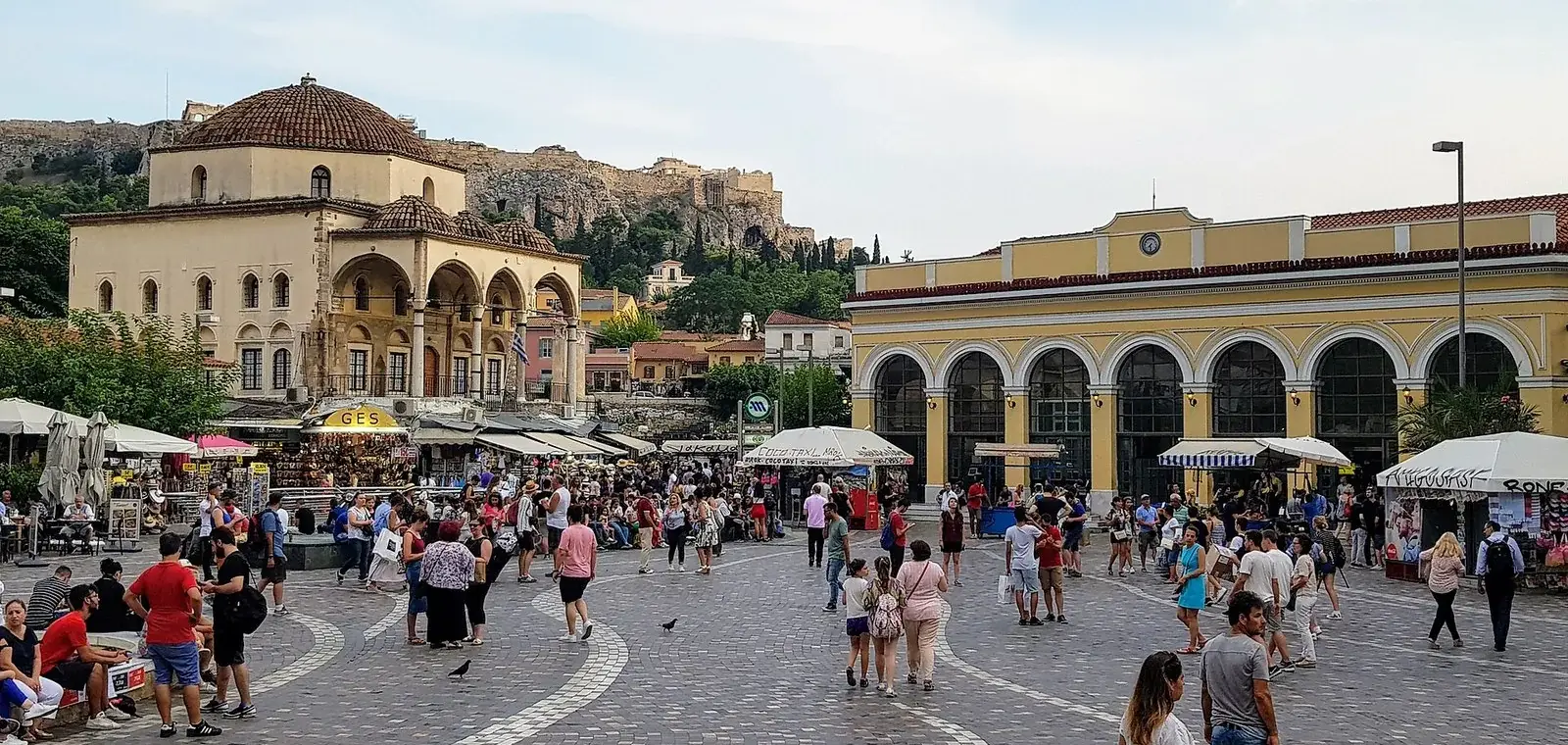
Pickpockets work where people are distracted: packed metro carriages and escalators, Monastiraki Square and the flea market, the crowd watching the guard change at Syntagma, anyone gathered round a street performer. Keep your phone in a front pocket or a zipped bag, split cards and cash between two places, and keep a photo of your passport’s photo page on your phone and in your email.
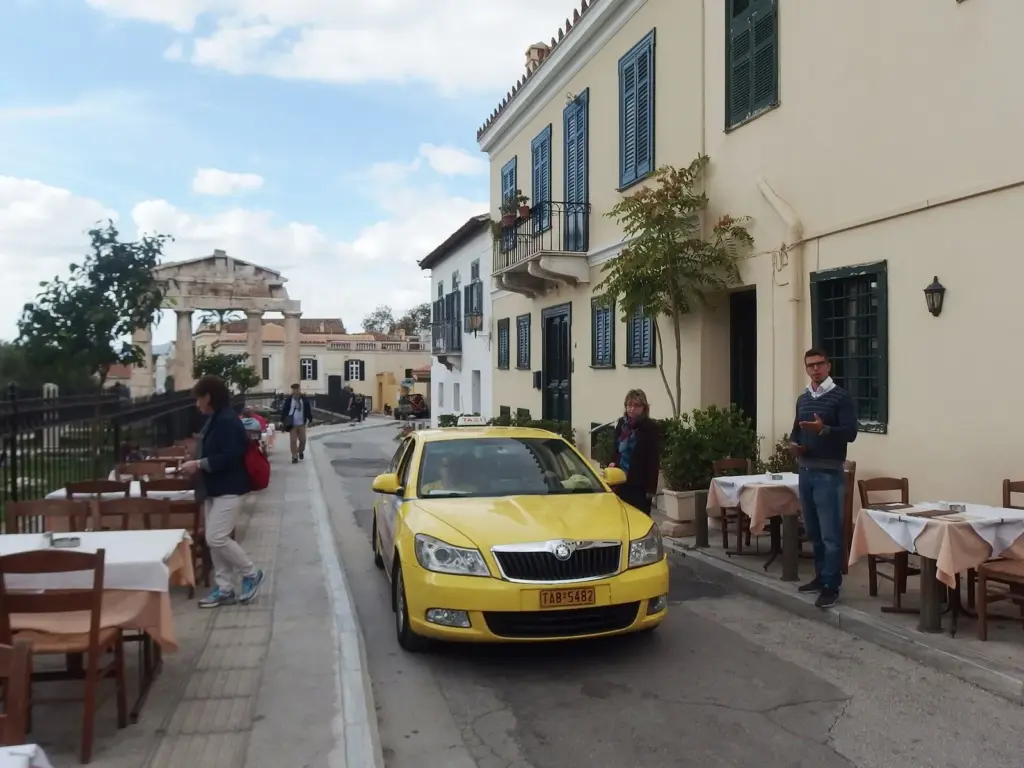
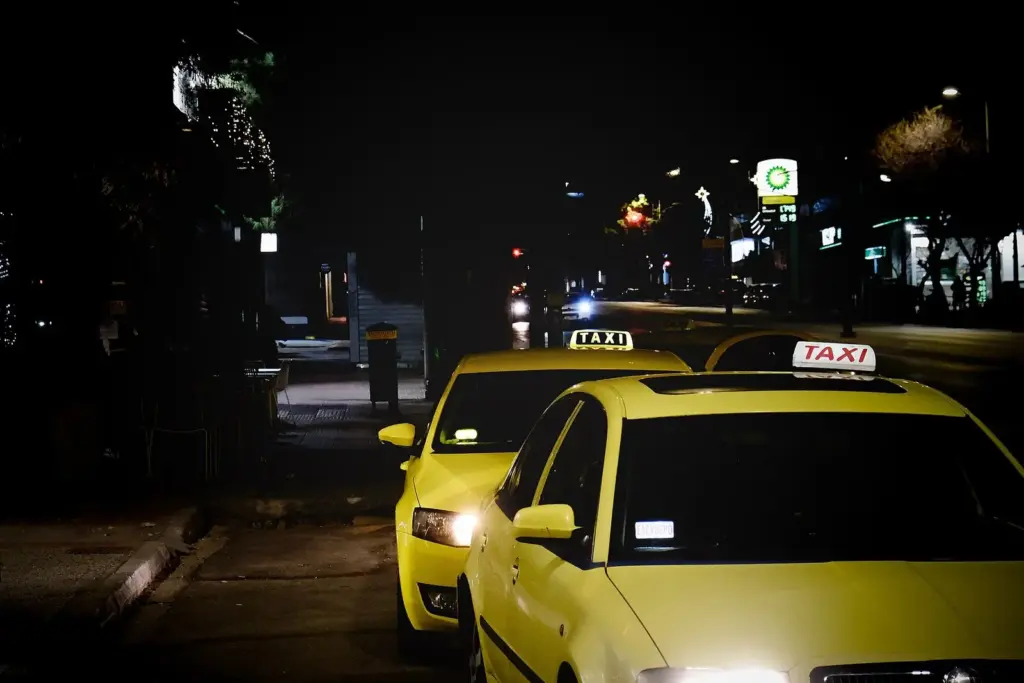
Taxis. Athens taxis are yellow and metered. Check the meter is switched on as the car moves off; from the airport to the centre the fare is a fixed flat rate, so there is nothing to negotiate. Ride-hailing apps such as Uber and Free Now book licensed taxis, which removes any argument about route or price. Many taxis now take cards, but say so as you get in, not at the end of the ride.
Tickets. Buy Acropolis entry at the ticket office or on tickets.hh.gr. Resellers bundle the same timed ticket with a guide or a “fast-track” label at a mark-up; the ministry itself sells no skip-the-line product.
The friendly stranger. If someone you met two minutes ago insists on a bar they know, or presses a “free” bracelet or flower on you and then asks for money, walk on. Nothing about Athens requires you to follow a stranger anywhere. And whatever you order, the itemised bill the law entitles you to is your defence: read it before you pay.
Where to base yourself, and where not to
Short answer: stay within walking distance of the Acropolis on a first visit. Plaka, Koukaki, Makrygianni, Monastiraki, Thissio and the streets around Syntagma put the main sites, most of the good tavernas and the metro within a 15-minute walk. You’ll spend less on taxis and more time outdoors in the cooler hours, which in July is what decides whether a day works.
The areas we’d avoid for a first stay are the cheap blocks around Omonia Square and west towards Metaxourgeio. Transport links are excellent and the daytime streets are busy and ordinary, but some of them feel rough late at night, and the saving on the room rarely justifies the walk back at 01:00. Exarchia, the student district beside the Polytechnic, has good bars and cheap food; it’s also where many political marches gather, especially around the anniversaries in November and December. Our guides to where to stay in Athens and to each Athens neighbourhood go street by street.
Getting ill: pharmacies, doctors and 112
Short answer: 112 for emergencies, a pharmacy for almost everything else. 112 is the EU-wide emergency number and connects you to police, fire and ambulance services in Greece; you can also dial 166 for an ambulance directly. The UK Foreign Office advises allowing emergency alerts on your phone while you’re in Greece, because the 112 service pushes location-based warnings about fires, floods and extreme heat.
For anything short of an emergency, start at a pharmacy, marked by a green cross. Greek pharmacists are the first port of call for sunburn, stomach upsets, insect bites and blisters from the Acropolis marble, and they stock a good range of medicines. The rules on some medicines, including antibiotics, are strict, so expect to need a prescription. Bring any regular medication in its original packaging with the prescription label, in the same name as your passport. At night and on Sundays pharmacies take turns to open; a closed pharmacy normally posts the list of duty pharmacies (efimerevonta farmakeia) on its door, and the rota is published online.
Visitors from the EU with a European Health Insurance Card (EHIC), and UK visitors with a GHIC, can get medically necessary state healthcare in Greece. Neither card replaces travel insurance: neither covers a medical flight home, changed bookings or private treatment, and a private clinic is often where a hotel will send you first. Buy insurance before you travel and check its medical limit.
Heat, fire and the summer rules
From June to September, heat is the practical issue that shapes everything else. Heatwaves push Athens past 40°C, and when they do the Ministry of Culture closes the Acropolis for the hottest part of the day, as it did until 17:00 on 8 July 2025. The site opens at 08:00, and in summer that first slot is the one to book. Spend the early afternoon in a museum, over a long lunch or in your room, and go back out after 18:00, when the city does the same.
Wildfire season runs from April to October. Causing a wildfire is a criminal offence in Greece even if it’s an accident, so don’t light barbecues, don’t leave glass or cigarette ends in dry grass, and call 112 if you see smoke. On the hills in the city, including Philopappos (Filopappou) and Lycabettus (Lykavittos), that isn’t an abstract rule: they’re dry, pine-covered and busiest at sunset.
Check your phone’s alert setting before you fly. On an iPhone it’s under Settings, Notifications, Emergency Alerts; on Android 11 and later, Settings, Notifications, Advanced settings, Wireless emergency alerts. Greek alerts go to phones in the affected area, so keep yours with you.
Carry water, wear a hat and use the shade, because the ruins have very little of it and the marble throws the heat back at you. At 14:00 in August the Acropolis plateau is a griddle.
Know the signs of heat illness. Anyone in your group who turns dizzy, confused or hot and dry needs shade, water on the skin and a call to 112: heatstroke is an emergency, not a reason to sit down for a while.
A summer day that works:
- 08:00, the Acropolis: the first timed slot, before the plateau heats up.
- 10:30, the Acropolis Museum: indoors, and a short walk downhill from the site.
- 14:00, lunch and a rest: give the hottest hours to a long lunch and your room.
- 18:30, Philopappos Hill: walk up for sunset over the Acropolis, with water in your bag.
- 21:30, dinner: when Athenians eat and the streets have cooled.
What changes between summer and winter?
More than the weather. Opening hours, the hotel fee and the free days all switch with the season, and the switch dates don’t line up neatly, so check which side of each line your trip falls on.
| What | Winter | Summer |
|---|---|---|
| Acropolis | 08:00-17:00, last entry 16:30 | 08:00-20:00, last entry 19:30 |
| Acropolis Museum | 1 November-31 March: Monday-Thursday 09:00-17:00, Friday 09:00-22:00, Saturday-Sunday 09:00-20:00 | 1 April-31 October: Monday 09:00-17:00, Tuesday-Sunday 09:00-20:00, Friday until 22:00 |
| National Archaeological Museum | Mid-November to early May: Wednesday-Monday 08:30-15:30, Tuesday from 13:00; free on the first and third Sundays, November-March | 08:00-20:00 on most days |
| Hotel fee, 4-star hotel | November-March: €3 per room per night | April-October: €10 per room per night |
| Wildfire rules | Lower risk | High-risk season, April-October: no barbecues or open fires |
| Weather | Cool evenings; winter is the rainy season | Heatwaves above 40°C can close the Acropolis at midday |
The shoulder months get the best of both. In April, May and October the Acropolis Museum keeps its long summer hours and the midday heat is gentler, while the hotel fee is already at its summer rate. A winter visit trades long days for thinner crowds: plan the Acropolis for the morning, because the site closes at 17:00 and the light goes early.
Where to leave your bags
Short answer: ask your hotel first, then use a locker by the metro. Most hotels will hold bags before check-in and after checkout, which covers the usual gap between an early flight and an afternoon room. When that doesn’t work, the City of Athens’ visitor site lists more than a dozen storage options, and these are the useful ones to know:
- Beside Monastiraki and Syntagma metro stations: self-service lockers. Leave Your Luggage opens 07:00-21:00 daily; Lockers 4all is open 24 hours at Monastiraki and 07:00-23:00 at Syntagma.
- App-based storage: services such as Bounce, Stasher and Radical Storage place bags in partner shops and hotels across the centre, with headline prices from €1.95 (Bounce), €1.49 (Stasher) and €3.90 (Radical Storage) per bag per day; those rates are for the cheapest bag or spot, so check the total for a full-size suitcase. Radical Storage also lists partners in Piraeus.
- At the airport: CARE4BAG runs a storage desk on the arrivals level, handy for a day in the city between flights.
- At Piraeus: In Town Check In, in the port’s Agios Dionysios passenger terminal at Gate E3, stores luggage, delivers it within Athens and lets AEGEAN passengers check in for their flight before they leave the port.
- At Larissis railway station: baggage lockers open 06:00-22:00 every day.
Book app-based storage ahead in summer, and check closing times against your plans: a locker that shuts at 21:00 is no use if your airport bus leaves at 22:30. If your day ends at a port, our guide to onward travel from Athens covers the ports and the routes beyond them.
Opening hours, Sundays and public holidays
Short answer: shop from Monday to Saturday, and check the calendar. Athens still runs on a split shopping week. These are the City of Athens’ standard hours:
| Day | Standard shop hours |
|---|---|
| Monday and Wednesday | 09:00-15:00 |
| Tuesday, Thursday and Friday | 09:00-14:00, then 17:30-21:00 |
| Saturday | 09:00-15:00 |
| Sunday | Almost all shops closed |
| Department stores | Monday-Friday 10:00-21:00; Saturday 09:00-20:00 or 10:00-21:00 |
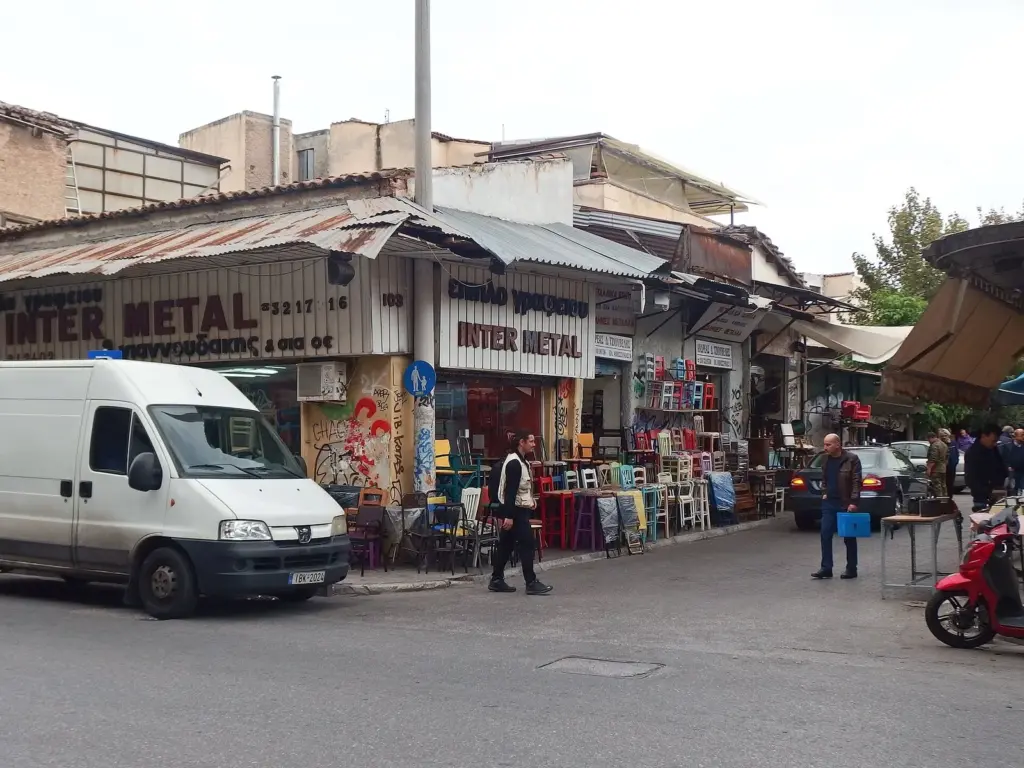
In the centre most shops skip the afternoon break and stay open all day on Monday and Wednesday too, so the split hours bite hardest in residential districts: the bakery, the hardware shop, the neighbourhood pharmacy. Sunday is the real trap. Cafés, restaurants, kiosks and museums open, but ordinary shops and most supermarkets don’t, so buy breakfast things, sun cream and anything from a pharmacy by Saturday afternoon.
Museums keep their own rhythms. The Acropolis opens 08:00-20:00 in summer and 08:00-17:00 in winter, with last entry 30 minutes before closing. The Acropolis Museum closes at 17:00 on summer Mondays but stays open until 22:00 on Fridays all year. The National Archaeological Museum doesn’t open until 13:00 on winter Tuesdays. Check the day, not just the hour.
Public holidays in the year ahead
On public holidays banks and most shops close and some museums shut. The Easter dates move every year; these are the ones that follow this page’s publication.
| Date | Holiday | What it means for you |
|---|---|---|
| 28 October 2026 | Ochi Day | Parades; free entry to the Acropolis and the Acropolis Museum, so expect crowds |
| 25-26 December 2026 | Christmas | The Acropolis Museum is closed on both days |
| 1 January 2027 | New Year’s Day | The Acropolis Museum is closed |
| 6 January 2027 | Epiphany | Banks and most shops shut |
| 15 March 2027 | Clean Monday | The start of Lent: picnics and kite-flying on the hills |
| 25 March 2027 | Independence Day | National holiday; free entry to the Acropolis Museum |
| 30 April 2027 | Orthodox Good Friday | Shops open only 13:00-19:00 |
| 1 May 2027 | Labour Day (Holy Saturday this year) | Marches in the centre; the Acropolis Museum is closed |
| 2-3 May 2027 | Orthodox Easter Sunday and Monday | The Acropolis Museum closes on Easter Sunday, and many Athenians leave for family villages |
| 21 June 2027 | Whit Monday | Banks and most shops shut for a long weekend |
| 15 August 2027 | Assumption | The height of the August exodus, when many of the best bars and restaurants close |
Orthodox Easter is the biggest weekend of the Greek year, and being in Athens for it has practical consequences. Candlelit processions leave the churches on the evening of Good Friday; the Resurrection service peaks at midnight on Holy Saturday, with candles and fireworks outside the churches; and Easter Sunday belongs to family lunches of spit-roast lamb. Many Athenians leave for their home villages, so the city is quieter, but rooms still fill with visitors. Book early, and don’t count on shops from Good Friday afternoon to Easter Monday.
Athens is on Eastern European Time: two hours ahead of London and one ahead of Paris and Berlin all year, because Greece changes its clocks on the same dates as the rest of the EU. It’s usually seven hours ahead of New York.
Strikes and demonstrations: how much do they matter?
Short answer: more often a nuisance than a danger, but plan around them. Greece has regular strikes, sometimes called at short notice, and they can stop buses, trains, ferries and flights. Strikes are announced before they happen, though sometimes only a day or two before, so check the news the evening before any travel day.
Demonstrations usually gather in central Athens, particularly in Syntagma Square, and police often use tear gas to break them up. Three dates carry a higher chance of marches: 1 May (Labour Day), 17 November (the anniversary of the 1973 Polytechnic uprising against the military dictatorship) and 6 December (the anniversary of the 2008 police shooting of 15-year-old Alexandros Grigoropoulos). On those days, do your sightseeing earlier, keep clear of Syntagma and Exarchia in the afternoon and evening, and don’t stop to film.
For your plans the practical rule is simple: build slack around anything that can’t move. Don’t put a ferry and a long-haul flight on the same morning, keep the last full day of a trip free of fixed tickets, and remember that the historic centre is compact enough to walk if the metro stops. Hotel receptions usually hear about strikes early and are the quickest people to ask.
Passports, visas, SIMs and a few laws
Carry your passport. Greek police can ask for identification, and the UK Foreign Office warns that they may not accept a photocopy. A zipped inside pocket keeps it safer than a day bag in a crowd.
Two other rules catch visitors out. Pepper spray counts as a weapon in Greece, so leave it at home. And the wildfire rules above are enforced: starting a fire by accident is still an offence.
Travelling with teenagers? It’s illegal to sell or serve alcohol to anyone under 18 in Greece, bars and clubs can’t admit under-18s even with a parent, and staff check ages at the till. For adults the line is behaviour: police arrest people for rowdy or indecent behaviour, especially when drink is involved, the penalty can be a heavy fine or prison, and travel insurance may not cover a flight missed because of an alcohol-related arrest.
Everything about getting in is in our visa and entry requirements guide: who needs a visa, how long your passport must be valid, and the EU’s newer border checks for non-EU visitors. Staying connected, whether through roaming, a Greek SIM or an eSIM, is covered in our guide to SIM cards and wifi in Athens.
From the airport and around the centre
Short answer: metro or X95 from the airport, then walk. Metro Line 3 (blue) runs from the airport to Syntagma and Monastiraki; the airport ticket costs €9 one way (€4.50 reduced) or €16 return. The X95 express bus to Syntagma costs €5.50 and is slower, depending on traffic. Taxis charge a fixed flat fare between the airport and the centre; confirm it with the driver before you set off.
The ticket that catches people out is the standard one. The €1.20 90-minute ticket covers the city’s metro, trams, buses and trolleybuses, but not the airport lines. If you arrive by air and stay three days, the 3-day tourist ticket at €20 includes one round trip to the airport plus unlimited city travel: only €4 more than the airport return on its own. For other stays, a 24-hour ticket costs €4.10 and a 5-day ticket €8.20.
Inside the historic centre, walking beats everything. Syntagma to Monastiraki along pedestrianised Ermou Street is a 10-15 minute stroll past the shops. Our full guide to getting around Athens covers the metro lines, trams, buses and taxis in detail.
Cross with care. Walking is the best way round the centre, but a zebra crossing here is a suggestion rather than a promise. The City of Athens’ own guide warns that drivers don’t stop the moment you step onto a crossing, and to watch for motorbikes riding along the pavement and cars jumping red lights. The UK Foreign Office adds that a green pedestrian signal sometimes lets turning cars onto the same crossing. Look both ways even on a green man.
Your first 24 hours, in order
- Arrivals hall: skip the exchange desk. Pay by card, or take €50-100 from a bank’s ATM if you want cash straight away.
- Ticket machine: staying three days? Buy the €20 tourist ticket, which covers the airport run both ways. Otherwise buy the €9 airport ticket, not the €1.20 one, or skip the machine and tap a contactless bank card at the gates for the same €9.
- Metro Line 3: bag in front of you, phone in a front pocket. Get off at Syntagma or Monastiraki for most central hotels.
- Hotel desk: leave your bags if the room isn’t ready, and ask how the Climate Crisis Resilience Fee will be charged.
- First evening: switch on emergency alerts, book an 08:00 Acropolis slot on tickets.hh.gr, and fill a water bottle for the morning.
Before you fly: a ten-point checklist
- Passport: check its expiry against the entry rules, and plan to carry it every day.
- Insurance: buy travel insurance, and pack your EHIC or GHIC as well, not instead.
- Medicines: keep them in their original packaging, with the prescription label in your passport name.
- Adapter: one Type C or F adapter for each person who charges a phone, plus a small multi-way extension.
- Acropolis: book a timed slot on tickets.hh.gr, as early in the day as you can manage from May to October.
- Calendar: check your dates against the public holidays and museum closing days above.
- Apps: install Uber or Free Now for licensed taxis, and switch on emergency alerts.
- Cash: plan to take €50-100 from a bank ATM on arrival rather than changing money at a desk.
- Shoes and cover-ups: flat soles with grip for the marble, and a scarf for churches and the sun.
- Slack: leave a buffer between ferries and flights in case of strikes, and read the news the evening before you travel.
What to skip, and when not to go
Honest negatives save the most time, so here they are.
The Acropolis at midday in July or August. Heat, crowds and the chance of a heat closure make it the worst slot of the year. Verdict: book 08:00 or one of the last slots of the day, and put the Acropolis Museum in the middle.
Mid-August in the city. Around the 15 August holiday many Athenians leave for the islands, and many of the best bars and restaurants close. The city loses much of what makes it more than a museum. Verdict: if August is your only window, give Athens two days and then head for the islands.
“Skip-the-line” Acropolis tickets. There’s no official version. Every ticket is timed, and a reseller’s fast track is the same ticket with a mark-up and sometimes a guide. Verdict: buy direct from tickets.hh.gr unless you actually want the guide.
Paying in your home currency. A terminal offering pounds or dollars is offering you a worse rate. Verdict: always choose euros.
Touted tables on the busiest lanes. A waiter in the street with a laminated photo menu, steering passers-by to tables on the main Plaka and Monastiraki thoroughfares, is selling a location rather than the cooking. Verdict: walk two streets further, or cross into Psirri (Psyrri) or Koukaki.
A hire car for Athens itself. The UK Foreign Office describes traffic in Greek cities as busy, fast and chaotic, with drivers who regularly ignore speed limits, and the centre is compact enough to walk. Verdict: hire a car only for trips beyond the city, and collect it on the way out.
Exchange desks. Airport and street-corner exchange counters price their rates for people with no alternative, and you have two: a card and a bank ATM. Verdict: skip them.
Free-entry days, if crowds spoil things for you. On 28 October and the last weekend of September, everybody else has the same idea. Verdict: €30 for an 08:00 slot on an ordinary day buys a calmer visit.
Sunday shopping. Verdict: don’t plan it. Give Sunday to the ancient sites, a long lunch and the hills.
The best months are April to May and late September to October, when the heat is manageable and the light is at its best. When you’re ready to turn all of this into day plans, our Athens itineraries do it day by day.
Athens Travel Tips FAQ
How do I get from Athens airport to the city centre?
Take metro Line 3 (blue) direct to Syntagma or Monastiraki for €9, or the X95 express bus to Syntagma for €5.50, which is cheaper but slower in traffic. Taxis charge a fixed flat fare to the centre; confirm it with the driver before you set off. Staying three days? The €20 tourist ticket covers the airport round trip and all city transport.
Do I need cash in Athens?
A little. Cards and contactless payments work in most shops, restaurants, hotels and museums, and on the metro, trams and buses, but kiosks, market stalls, some small tavernas and tips still run on cash. Carry €50-100 in small notes, use ATMs inside bank branches, and when a machine offers to charge you in your home currency, choose euros instead.
Do shops close on Sundays in Athens?
Almost all ordinary shops close on Sundays, and so do most supermarkets, so stock up on Saturday. Cafés, restaurants, kiosks, museums and the Acropolis stay open. On weekdays, smaller shops outside the centre keep split hours: 09:00-14:00 and 17:30-21:00 on Tuesday, Thursday and Friday, and 09:00-15:00 on Monday, Wednesday and Saturday.
What should I wear in Athens?
Light, breathable clothes and flat shoes with grip, because the marble at the ancient sites is slippery. Pack something that covers your shoulders and knees for churches and monasteries; a light scarf does the job. Add a hat and sunglasses in summer. From November to March bring a warm layer and a waterproof, because winter is the rainy season.
Do I need to carry my passport in Athens?
Yes. Greek police can ask for identification, and the UK Foreign Office warns that they may not accept a photocopy. Keep the passport in a zipped inside pocket rather than an outer bag pocket, and save a photo of its photo page on your phone and in your email in case it’s lost or stolen.
When is the Acropolis free to enter?
On five fixed occasions: 6 March, 18 April, 18 May, the last weekend of September and 28 October. The old free first Sundays from November to March no longer apply. Free days are the most crowded of the year, so if your time is short, €30 for an early timed slot on another day is money well spent.
What is the extra charge on Athens hotel bills?
That’s the Climate Crisis Resilience Fee, charged per room per night and usually collected at checkout. From April to October it runs from €2 in a 1-2 star hotel to €15 in a 5-star; from November to March, from €0.50 to €4. Short-term rentals pay €8 a night in summer and €2 in winter, more for large detached houses.
Is English widely spoken in Athens?
Yes, in hotels, restaurants, shops and museums, and most younger Athenians speak it well. Metro signs and street signs in the centre carry Latin-alphabet names, though spellings vary. You’ll meet less English in residential districts and among older people, and a few Greek words, starting with kalimera (good morning) and efharisto (thank you), are always appreciated.
Related Athens Guides
- Athens Travel Planning: tickets, timing and the order to see the sites.
- Getting Around Athens: metro lines, fares, trams and taxis.
- Is Athens Safe?: the neighbourhoods at night and what to do if something goes wrong.
- How Much an Athens Trip Costs: daily budgets and where the money goes.
- Athens Packing List: what to bring in each season.
- Athens Itineraries: day-by-day plans once the practical side is sorted.
Sources and How We Checked
Every price, time and rule on this page was checked on 26 September 2026 against the official sources below; the page was compiled from them rather than from other travel lists, and no first-hand visit is claimed.
- City of Athens visitor guide (This is Athens): Dos and don’ts, Holidays and opening hours, Luggage storage
- Hellenic Ministry of Culture: Acropolis visitor information; official e-tickets at tickets.hh.gr (Hellenic Heritage Tickets; older links say hhticket.gr)
- Acropolis Museum: Plan your visit
- National Archaeological Museum: Visiting information
- OASA (Athens Urban Transport Organisation): Ticket prices
- EYDAP (Athens Water Supply and Sewerage Company): Drinking-water quality checks
- UK Foreign, Commonwealth and Development Office: Greece safety and security, Greece health
- International Electrotechnical Commission: World plugs
What we couldn’t verify: the current airport taxi flat-fare figures, because the airport’s website blocks automated checks and older guides quote several different amounts; whether every taxi’s card terminal works on the day; Sunday hours for individual supermarkets and kiosks; and opening hours for each storage service beyond the City of Athens listing. Any change to the Labour Day holiday in 2027, when 1 May falls on Holy Saturday, had not been announced when we checked.
Athens Tourism Guide is an independent publication. We are not affiliated with the Hellenic Ministry of Culture, OASA, the Greek National Tourism Organisation or any business named here, and no business paid to be included.
Photo Credits
- Periptero kiosk in Ampelokipoi: photo by Alexialia, via Wikimedia Commons (CC BY-SA 4.0)
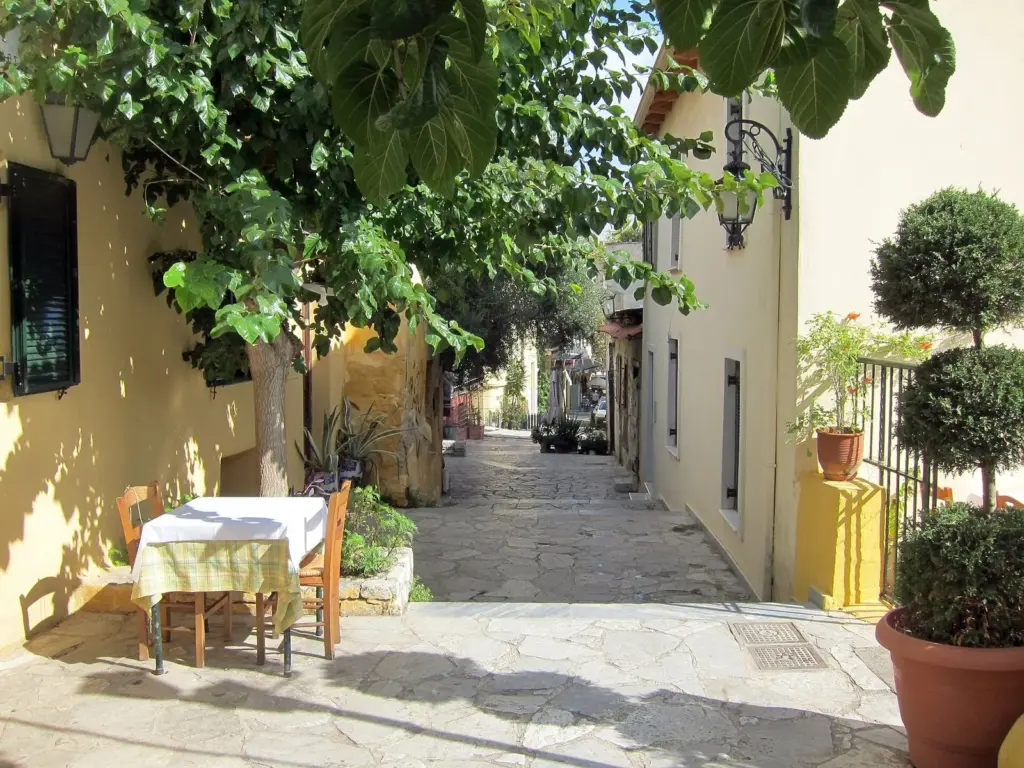
- Taverna table on Thespidos Street, Plaka: photo by northernsky7007, via Wikimedia Commons (CC BY-SA 3.0)
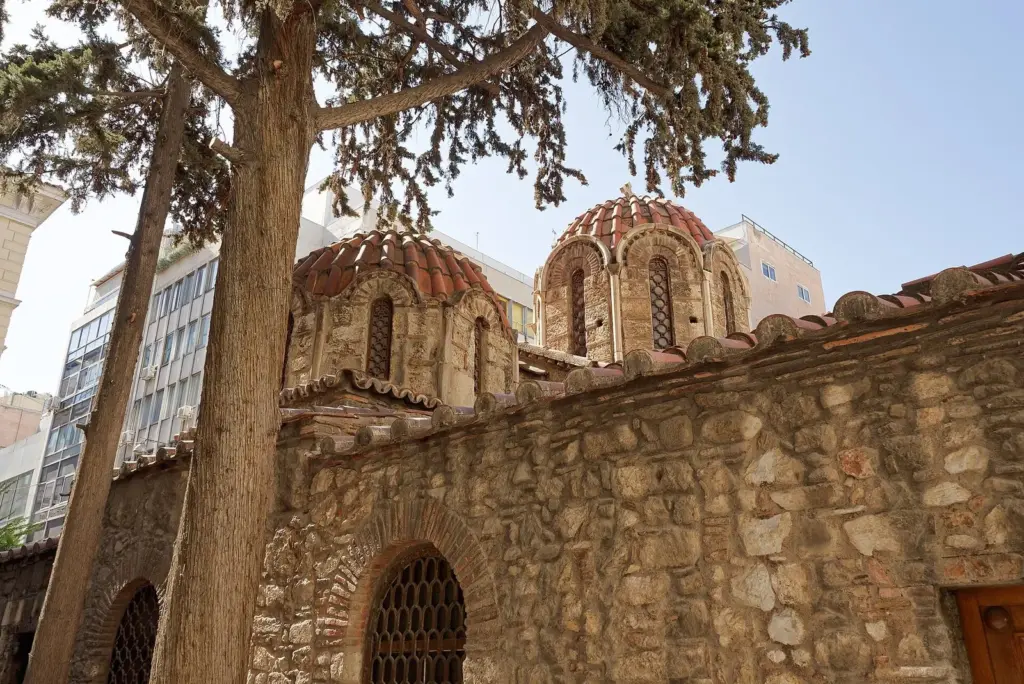
- Church of Panagia Kapnikarea: photo by Jakub Hałun, via Wikimedia Commons (CC BY 4.0)
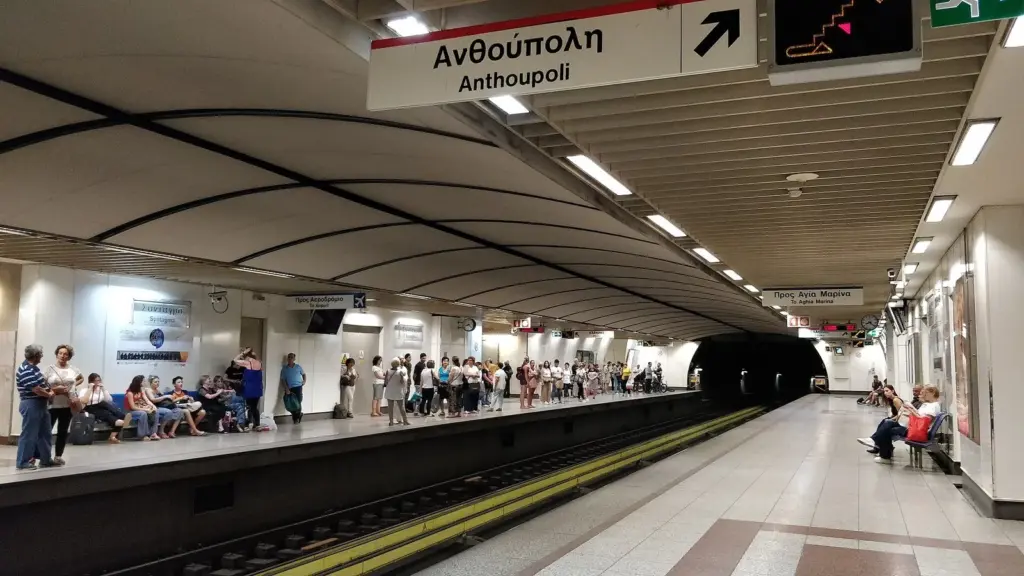
- Platform at Syntagma metro station: photo by Jcornelius, via Wikimedia Commons (CC BY-SA 4.0)
- Taxi and tavernas on Epaminonda Street: photo by Palickap, via Wikimedia Commons (CC BY-SA 4.0)
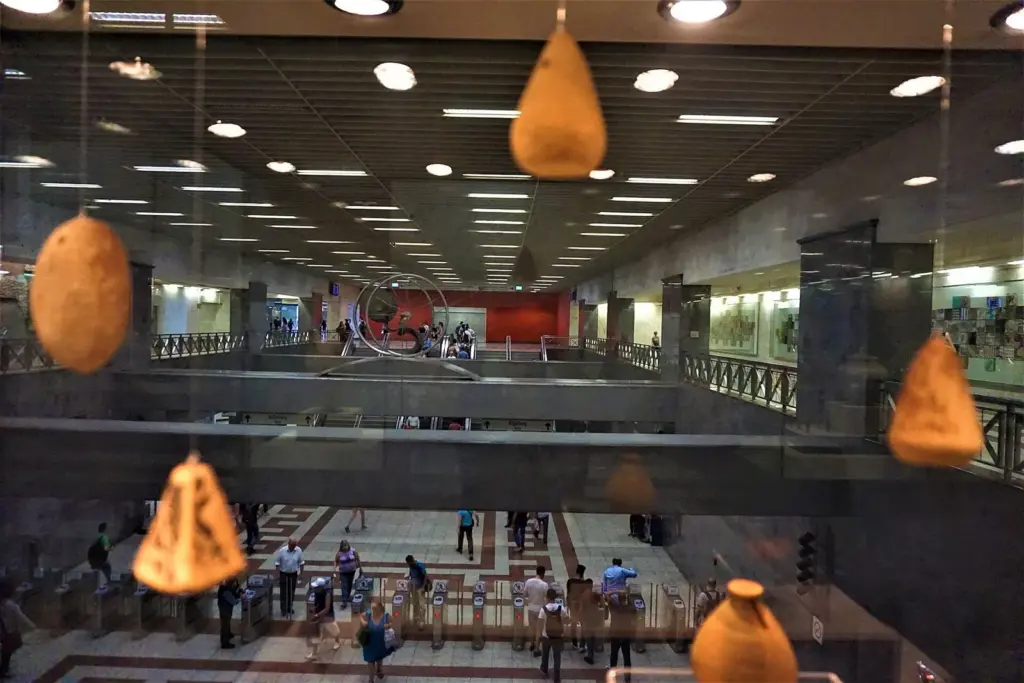
- Archaeological display at Syntagma station: photo by Joyofmuseums, via Wikimedia Commons (CC BY-SA 4.0)
- Shops at Ermou and Normanou streets: photo by Palickap, via Wikimedia Commons (CC BY-SA 4.0)
- Taxis at a night rank in Athens: photo by Magnus.chronicles, via Wikimedia Commons (CC BY 4.0)
- Monastiraki Square (featured image): photo by Maksym Kozlenko, via Wikimedia Commons (CC BY-SA 4.0)