This article contains advertising. Some of the hotel, flight and transfer links in it are paid links: if you book through one, we get a commission from the booking company, and your price is the same either way. It never affects what we recommend. Affiliate disclosure
Teenagers are the easiest age group to travel with in Athens and the easiest to get wrong. Easy, because this is a late-night, outdoor, street-food city where sixteen-year-olds can have a genuine amount of independence and where the nightlife starts at an hour they will approve of. Easy to get wrong, because four consecutive archaeological sites in thirty-four degree heat will end your holiday by Wednesday. This guide is about what actually lands with that age group — and about handing them some of the city to explore on their own terms. It sits alongside our complete guide to Athens with kids.
One Ruin a Day, and Make It Count
The single biggest mistake families make with teenagers in Athens is stacking sites. The Acropolis, the Ancient Agora, the Roman Agora, Kerameikos and the Temple of Olympian Zeus in one day is a route march, and by the third one nobody is reading anything.
Do one properly, early, then do something else entirely. The Acropolis at opening time, before the cruise groups and before the heat, then the Acropolis Museum for air conditioning and lunch, then the afternoon somewhere with no columns in it. That is a good Athens day with a fifteen-year-old. Our complete Acropolis guide covers tickets and timing.
Two things reliably work better with this age than a guided tour. The first is context they can hold — the Acropolis Museum’s top floor, where the Parthenon frieze is laid out at actual scale in the actual orientation, does more in twenty minutes than an hour on the rock. The second is the mythology angle, which is much less naff than it sounds if you tie it to specific standing things: the olive tree at the Erechtheion and the contest between Athena and Poseidon, Theseus and the Theseion in the Agora, Aegeus throwing himself off the cliff at Sounion. Teenagers who have read Percy Jackson, played Assassin’s Creed Odyssey or done any Classics at school will engage with that far more than with dates.

What Teenagers Actually Like in Athens
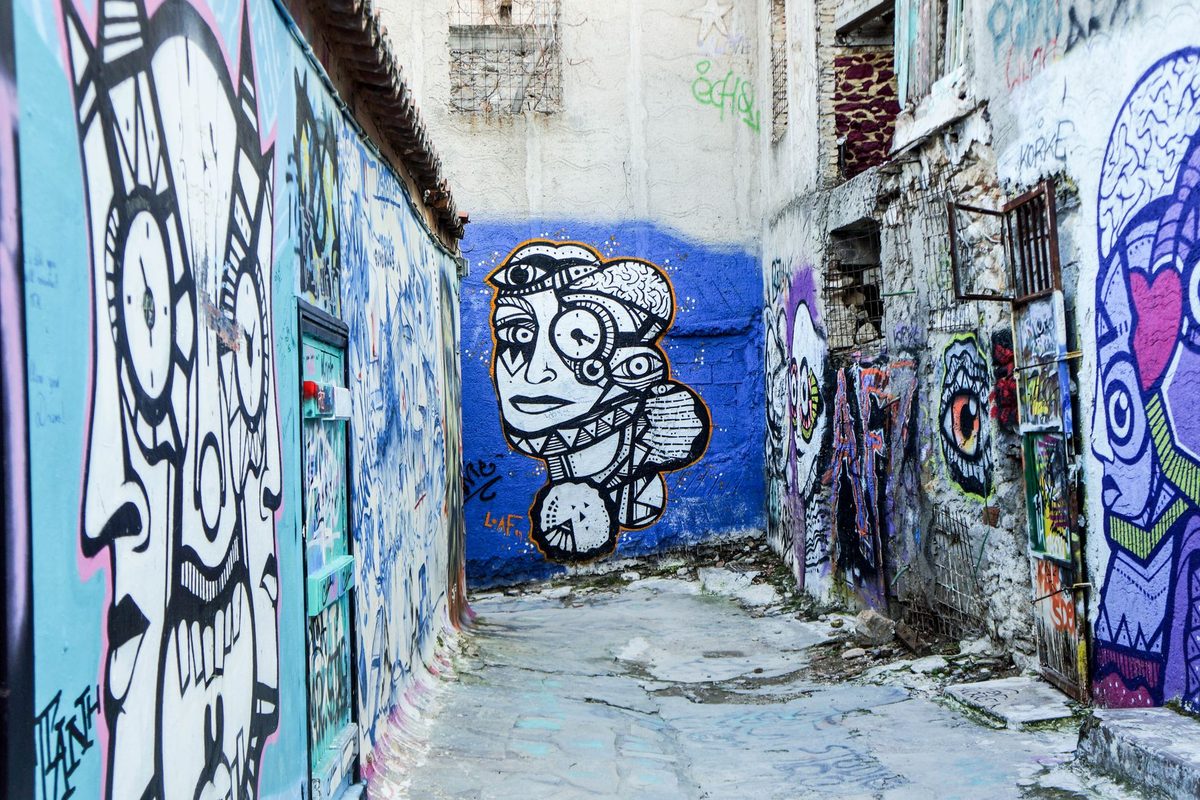
Street art. Athens has one of the most serious street-art scenes in Europe, concentrated in Psirri, Exarchia, Metaxourgeio and Keramikos. It is free, it is outdoors, it photographs well, and it gives a teenager a reason to walk five kilometres without complaining. Exarchia in particular is politically charged, visually dense and about as far from a cruise-ship itinerary as central Athens gets.
The Monastiraki flea market and the surrounding streets. Vintage clothes, records, junk, leather sandals, and the specific pleasure of haggling badly in a language you do not speak. Ermou for the mainstream shops. Our flea market guide and shopping guide cover both.
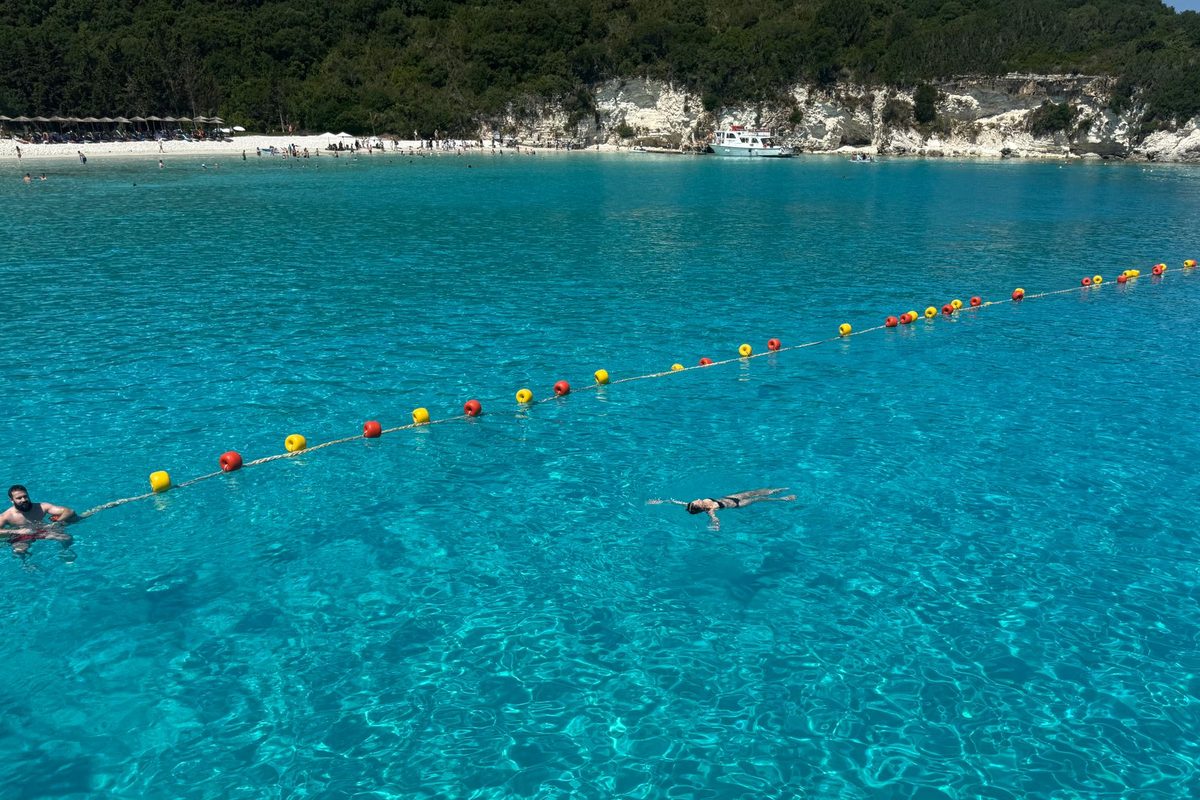
The beaches. This is the trump card, and it is the reason Athens beats Rome or Madrid for a family with teenagers. Forty minutes on the tram or the metro puts you on the Athens Riviera. Organised beaches at Glyfada, Voula and Vouliagmeni have sunbeds, cafés and music; Lake Vouliagmeni is a warm brackish lake at the foot of a cliff. There is proper swimming, and there is a scene. See our Athens beaches guide.
Water sports and activity. Snorkelling, paddleboarding, sailing and diving all run off the Riviera, and an afternoon of doing rather than looking resets a teenager’s mood better than anything else on this list.
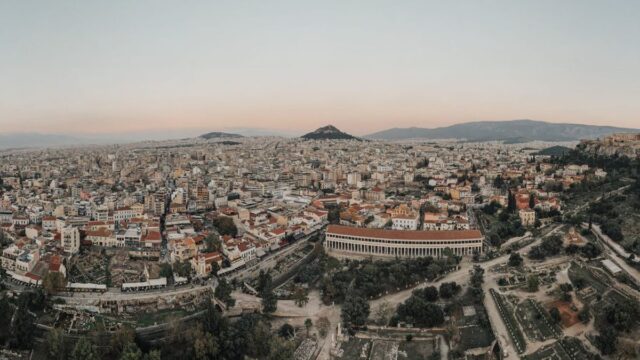
Viewpoints at sunset. Lycabettus, reached on foot or by the funicular, and Philopappou Hill, which is free and has the better view of the Parthenon itself. Both are genuinely spectacular and both are extremely photogenic, which matters more at sixteen than anyone likes to admit.
Open-air cinema. A summer institution, and one of the most purely enjoyable things in the city — films screened in a walled garden or on a rooftop, in the original language with Greek subtitles, usually starting around nine. Our open-air cinemas guide has the venues.
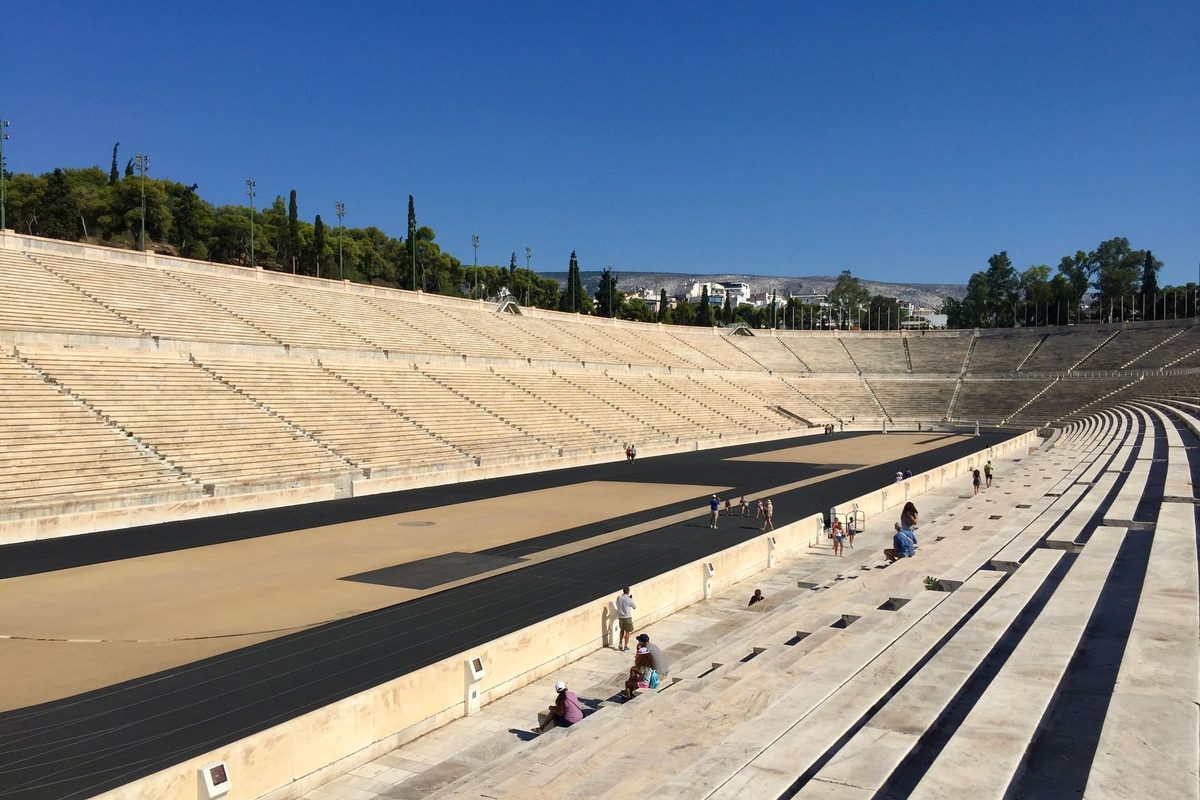
The Panathenaic Stadium. Marble, enormous, and you can run on the track and stand on the podium. Consistently more popular with teenagers than anything else in the classical category.
The Stavros Niarchos park for a skate, a run, free table tennis and a lot of space, open from six in the morning to midnight — and to two in the morning at weekends.
Giving Them Some Independence
Athens is a reasonable city in which to let a responsible teenager off the leash for a few hours, and doing so tends to improve everybody’s holiday.
The metro is simple, cheap and air-conditioned. Three main lines, clear signage in Greek and Latin script, and a ninety-minute ticket at €1.20. Contactless bank cards and phone wallets now work directly at the gates, with a daily cap, so a teenager with a phone can move around without you buying tickets for them. Our metro guide has the network.
Good areas to let them wander: Monastiraki and Ermou for shopping, Plaka and Thissio for daytime walking, Kolonaki for cafés, and the Dionysiou Areopagitou promenade, which is pedestrianised and busy. Set the boundary at Omonia and the streets north and west of it, particularly after dark, as covered in our Athens safety guide.
Practical safety points worth going over with them before they go: pickpocketing on the metro and in Monastiraki crowds is the realistic risk, not violence. Phones out of back pockets. 112 works from any phone even with no SIM or credit and is answered in English. Agree a meeting point rather than relying on a phone that will run out of battery. And make sure they have data — see our guide to SIM cards and staying connected.
Food a Teenager Will Actually Eat
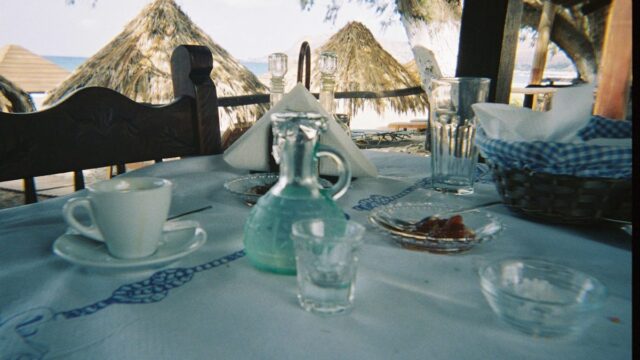
Athens is close to ideal here. A gyros in a pita costs about €3.50 to €4.50, arrives in four minutes, contains meat, chips and bread, and is what Athenian teenagers themselves eat. A family of four can eat for under thirty euros. The best-known places are around Monastiraki and the small pedestrian square at Agias Irinis; our street food guide covers them properly.
Beyond that, order mezedes and let the table share rather than committing to a main each — it is cheaper, and a teenager who claims not to like Greek food will quietly eat six small plates of it. Reliable orders: souvlaki, bifteki, saganaki, chips, tiropita, loukoumades for dessert.
Athens has excellent coffee culture, and a freddo espresso in a square in Koukaki or Kolonaki is a perfectly good hour for a seventeen-year-old. Greek café culture is generous about how long you sit — nursing one drink for two hours is completely normal and nobody will move you on.
Dinner at nine or later is normal here, which suits teenagers considerably better than it suits their parents. Full detail in our family restaurants guide.
Nightlife, and the Rules Around It
Worth being straightforward about. The legal drinking age in Greece is 18, and while enforcement in bars varies, clubs do check identification and door staff will turn away under-eighteens. Do not plan around the assumption that they won’t.
What does work for a family with teenagers in the evening: the open-air cinemas, which have no age restriction beyond the film’s certificate. The rooftop bars, most of which serve food and will seat a family — go early, around sunset, when it is a restaurant rather than a bar. The Thissio and Monastiraki café strips, which are busy, outdoors and entirely unthreatening. Live music at a rebetiko venue, which is a genuinely memorable evening and where families are normal. And simply walking — Athens after dark in summer is warm, lit and full of people, and the walk from Thissio around to the Acropolis Museum is one of the best free things in the city. Our nightlife guide covers the districts.
Day Trips That Land
Cape Sounion is the best single day trip for this age group. The Temple of Poseidon on a cliff over the sea at sunset is dramatic in a way that a foundation plan in central Athens is not, and there is swimming on the way. Byron carved his name into a column there, which teenagers reliably find more interesting than the temple’s architecture.
A Saronic island — Aegina, Hydra or Poros — gives them a boat, a harbour, swimming and a completely different day. Hydra has no cars at all, which is a novelty that survives about four hours and is worth it.
Delphi if you have one archaeology-tolerant teenager and a long day; the setting on the side of Parnassus does most of the work. Our day trips guide has the full range, and there is a dedicated family day trips guide too.
Where to Stay With Teenagers
The calculus changes completely from younger children. Stairs, cobbles and metro lifts stop mattering. What matters is being somewhere they can walk out into.
Monastiraki and Psirri become good options rather than bad ones — central, noisy, full of life, walkable to everything, and the noise that ruins a toddler trip is a feature at sixteen. Koukaki and Makrygianni remain the sensible middle ground. Plaka is fine now that steps are irrelevant.
An apartment still beats a hotel room, mostly for the separate space — and connecting rooms are worth paying for when your children are old enough to want a door. Note that several Athens hotels have rooftop pools with an adults-only policy or an age limit, so check if that is part of the appeal. Our family hotels guide flags which properties have genuinely separate rooms.
Hostels are a legitimate option with older teenagers and there are good ones in Psirri and Koukaki with private family rooms — see our budget hotels and hostels guide.
A Three-Day Shape That Works
Day one. Acropolis at opening. Acropolis Museum and lunch there. Afternoon off in the heat. Evening walk along Dionysiou Areopagitou to Thissio and dinner on Adrianou facing the Agora.
Day two. Beach. Tram or metro to the Riviera in the morning, swim, eat by the water, stay until late afternoon. Back into town for an open-air cinema.
Day three. Monastiraki flea market and a street-art walk through Psirri and Metaxourgeio in the morning, souvlaki for lunch, Panathenaic Stadium in the afternoon, sunset from Philopappou or Lycabettus, late dinner. If you have a fourth day, put Cape Sounion in it.
The pattern to notice: one cultural thing per day, always in the morning, always followed by something physical or social. Our three-day Athens itinerary has a more conventional version if you want it.
Frequently Asked Questions
Is Athens good for teenagers? Yes, and better than most European capitals for this age. Beaches forty minutes from the centre, a late-night outdoor culture, cheap street food and a serious street-art scene give them far more than ruins alone would.
Can teenagers explore Athens on their own? A sensible sixteen-year-old, yes, in the central areas during the day and early evening. The metro is easy and contactless payment works at the gates. Keep them away from Omonia and the streets north and west of it after dark.
What is the drinking age in Greece? Eighteen. Clubs check identification and will turn away under-eighteens.
How many ancient sites should we do with teenagers? One a day, in the morning. Stacking sites is the reliable way to lose them by day three.
What is there for teenagers in Athens besides ruins? Beaches and water sports on the Riviera, street art in Psirri and Exarchia, the Monastiraki flea market, open-air cinema, sunset from Lycabettus or Philopappou, the Panathenaic Stadium track, and the Stavros Niarchos park.
How much does food cost for teenagers in Athens? A gyros in pita is €3.50 to €4.50 and is a full meal. A family of four eats street food for under thirty euros, or sixty to a hundred at a sit-down taverna.
Final Thoughts
The trick with teenagers in Athens is to stop treating it as a classical city that happens to have a coastline, and start treating it as a coastal city that happens to have the Parthenon. Do one great ancient thing each morning while it is cool, then spend the rest of the day at the beach, in the markets, on a hill at sunset or in an open-air cinema. Give them a metro map and a few hours to themselves. They will come home talking about the sunset from Philopappou and the souvlaki, and somewhere in there they will also have seen the Parthenon — which was, after all, the point.
Back to the main guide: return to our complete guide to Athens with kids, or read on about family day trips from Athens and the best things to do in Athens.